Japan Photography

Explore photos and posts tagged Japan.

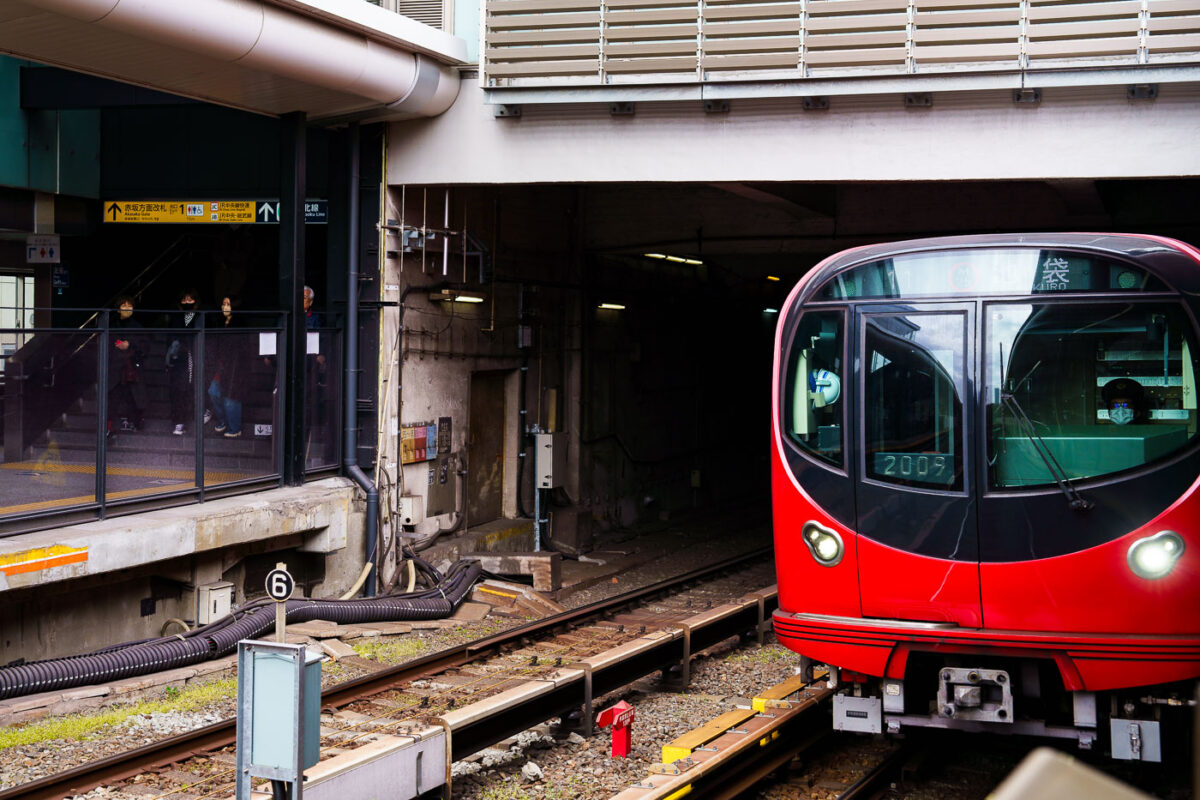
Marunouchi Line Train at Ikebukuro Approach

Marunouchi Line Train at Ikebukuro Approach

A Tokyo Metro Marunouchi Line train approaches its terminal platforms during a March 2023 visit. The Marunouchi Line, one of Tokyo’s earliest postwar subway routes, opened in 1954 and played a key role in connecting the expanding Yamanote district centers with government and commercial areas in central Tokyo. Its distinctive red livery has remained a defining visual identity for decades, even as the rolling stock has undergone multiple modernizations.

Ikebukuro, the northern terminus of the line, is one of Tokyo’s busiest rail hubs, jointly served by JR East, the Seibu and Tobu railway networks, and several Metro lines. The station complex was heavily rebuilt throughout the late 20th century to handle increasing commuter volumes, resulting in the multi-level platform and passageway layout still in use today.
Tohoku Gyozabou Near Shinjuku Gyoen

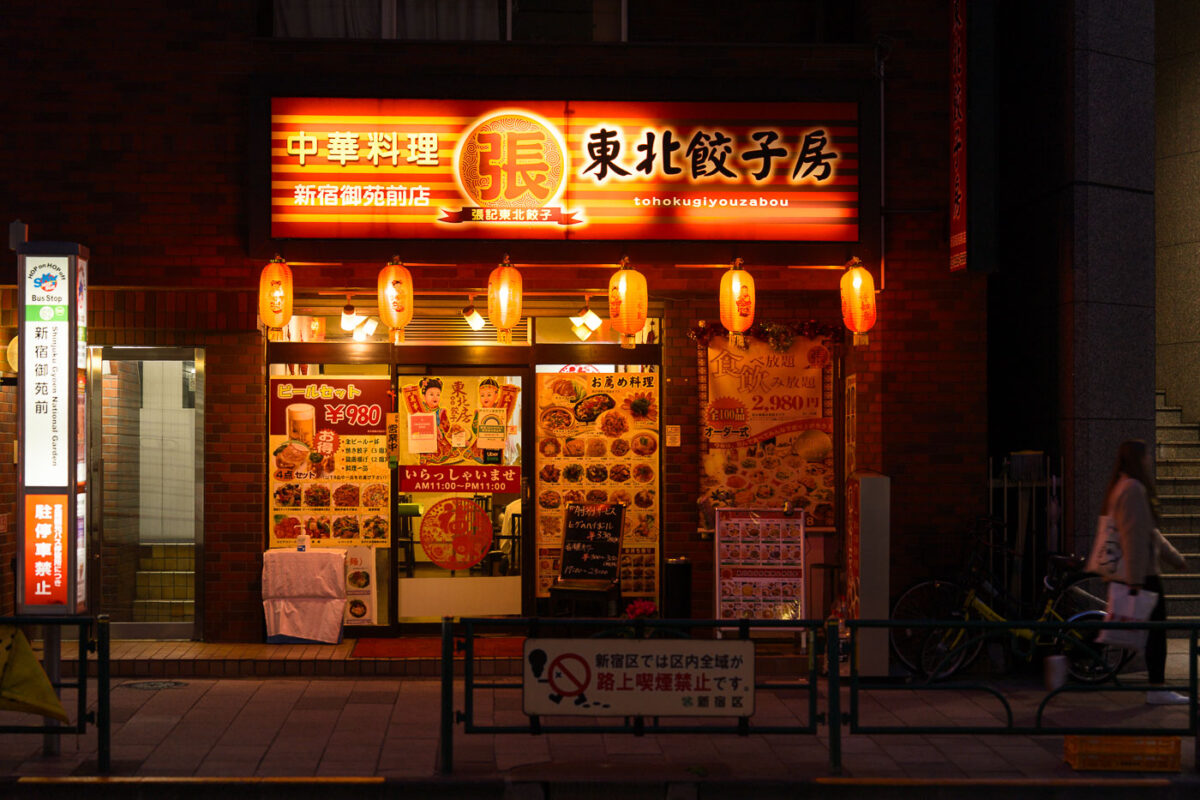
Tohoku Gyozabou Near Shinjuku Gyoen

Tohoku Gyozabou, located just east of Shinjuku Gyoen National Garden, is one of many small neighborhood restaurants that serve the area’s mix of office workers, residents, and visitors. Spots like this are common throughout Shinjuku’s quieter side streets, offering regional Chinese-style dishes and set meals late into the evening, contrasting with the larger entertainment corridors to the west around Shinjuku Station and Kabukichō.

The surrounding district developed after World War II as Shinjuku expanded outward from the rail hub, creating a network of narrow commercial blocks filled with independent eateries. Many of these restaurants continue to display brightly illuminated exterior menus and lantern signage, part of the city’s longstanding street-level food culture that encourages casual walk-in dining.

Evening Crossing on Central Road, Kabukichō

Evening Crossing on Central Road, Kabukichō

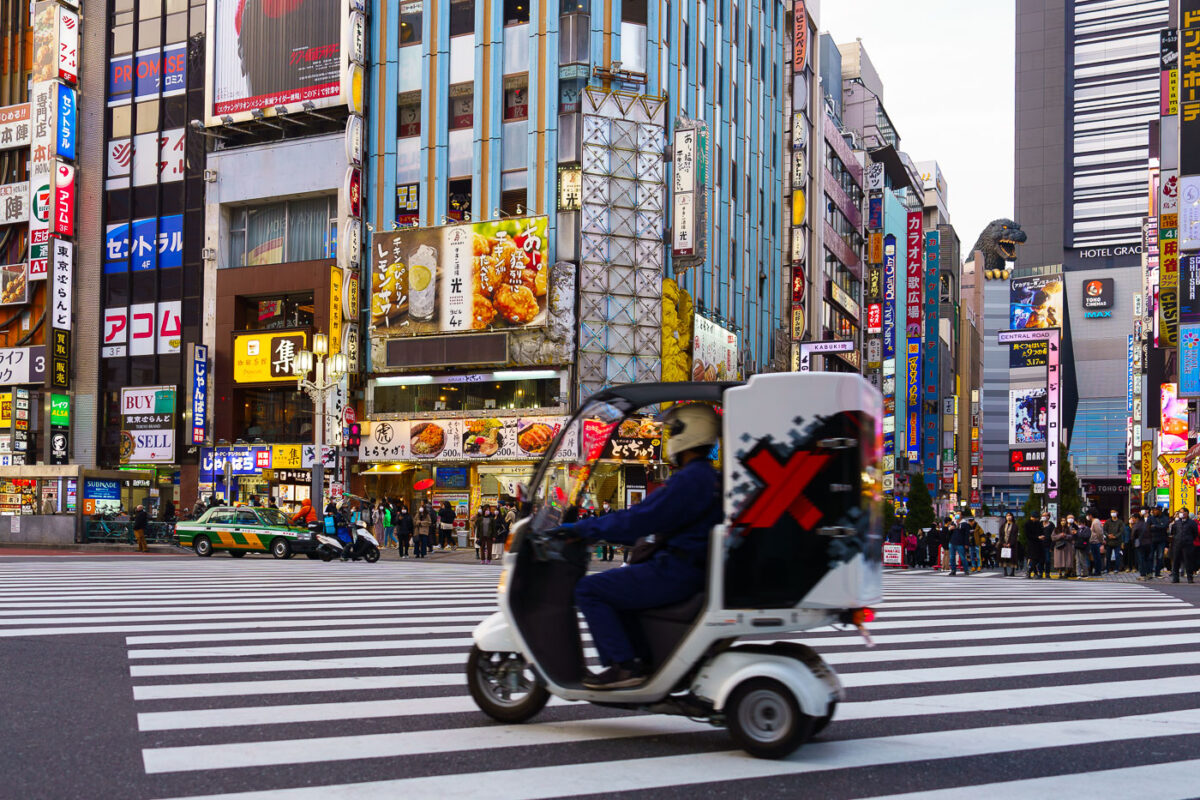
A delivery scooter moves through the large scramble crossing on Central Road in Kabukichō, one of Shinjuku’s busiest commercial corridors. This stretch of the district, located just north of Yasukuni-dōri, has been a dense entertainment zone since the postwar reconstruction era, eventually becoming known for its mix of cinemas, restaurants, arcades, karaoke towers, and neon advertising stacked across narrow mid-rise buildings.

The tall signs and narrow storefronts reflect the vertical commercial pattern typical of Shinjuku’s nightlife blocks, where multiple businesses occupy each floor and compete for visibility at street level. In the distance, the Godzilla head mounted atop the Hotel Gracery Shinjuku—installed in 2015 as part of the Toho Cinemas complex—has become one of the district’s most recognizable landmarks, connecting the area’s contemporary tourism appeal with Japan’s long-running film history.

Tokyo Taxi at a Kabukichō Street Crossing

Tokyo Taxi at a Kabukichō Street Crossing

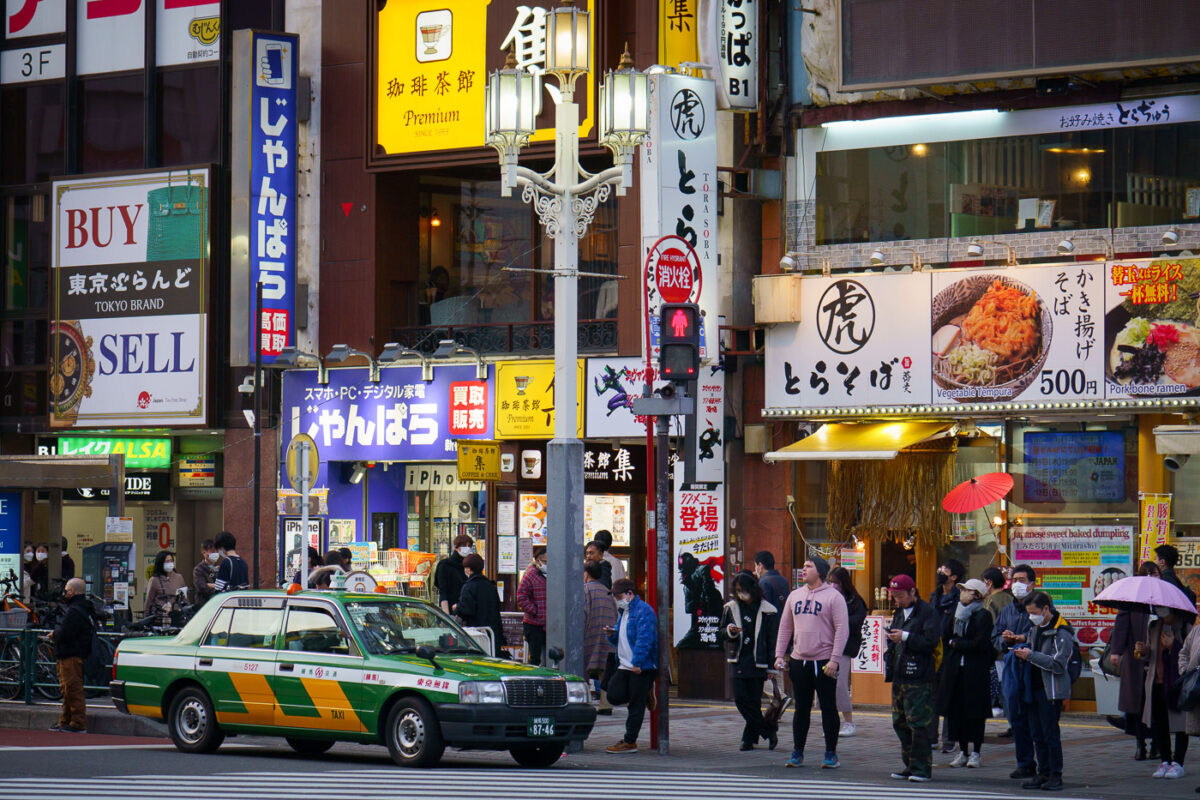
A Tokyo taxi waits at a crossing in Kabukichō, the entertainment district of Shinjuku known for its dense concentration of restaurants, bars, and late-night businesses. The area around Yasukuni-dōri and Shinjuku Station’s east side has long been one of Tokyo’s busiest pedestrian zones, with a mix of small eateries, electronics resellers, and long-established cafés occupying the mid-rise commercial blocks.

The green-and-yellow taxi livery seen here is one of Tokyo’s standard color schemes, used by several of the city’s major cab companies since the late twentieth century. The surrounding storefronts reflect Kabukichō’s layered commercial history, where postwar restaurants, national chains, and contemporary pop-culture signage coexist within the same streetscape.

Godzilla Head at Toho Cinemas, Kabukichō

Godzilla Head at Toho Cinemas, Kabukichō

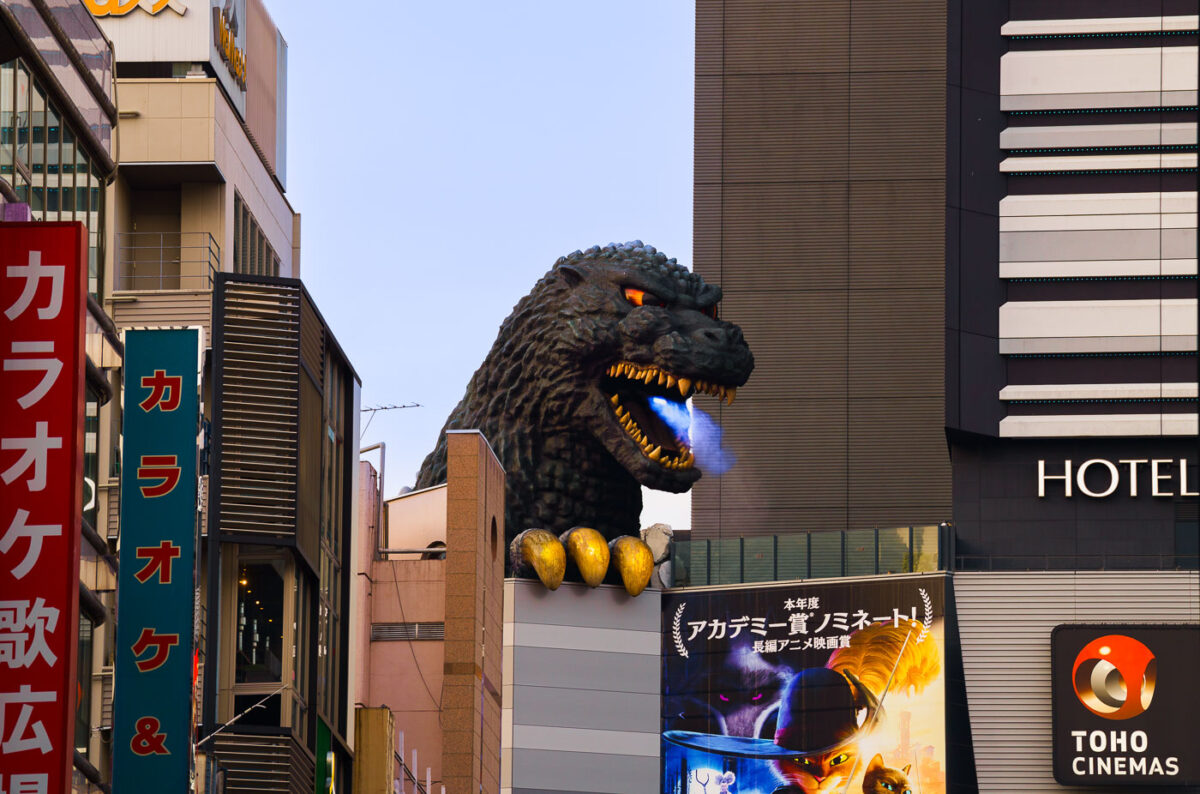
The Godzilla Head overlooking Kabukichō is one of Shinjuku’s most recognizable modern landmarks. Installed in 2015 to mark the opening of the Toho Cinemas Shinjuku complex—the studio responsible for the original 1954 Godzilla film—the sculpture rises above the building’s eighth floor, facing the main entertainment district.

The installation recreates Godzilla’s appearance from the 1990s Heisei-era films, and several times a day it emits sound, smoke, and light effects that mimic the creature’s trademark atomic breath. Positioned above the Kabukichō streetscape, the figure is intended as both a tribute to Japan’s most famous movie monster and a visual anchor for this entertainment-heavy part of Shinjuku.

Sanbangai Street Near Shinjuku Station

Sanbangai Street Near Shinjuku Station

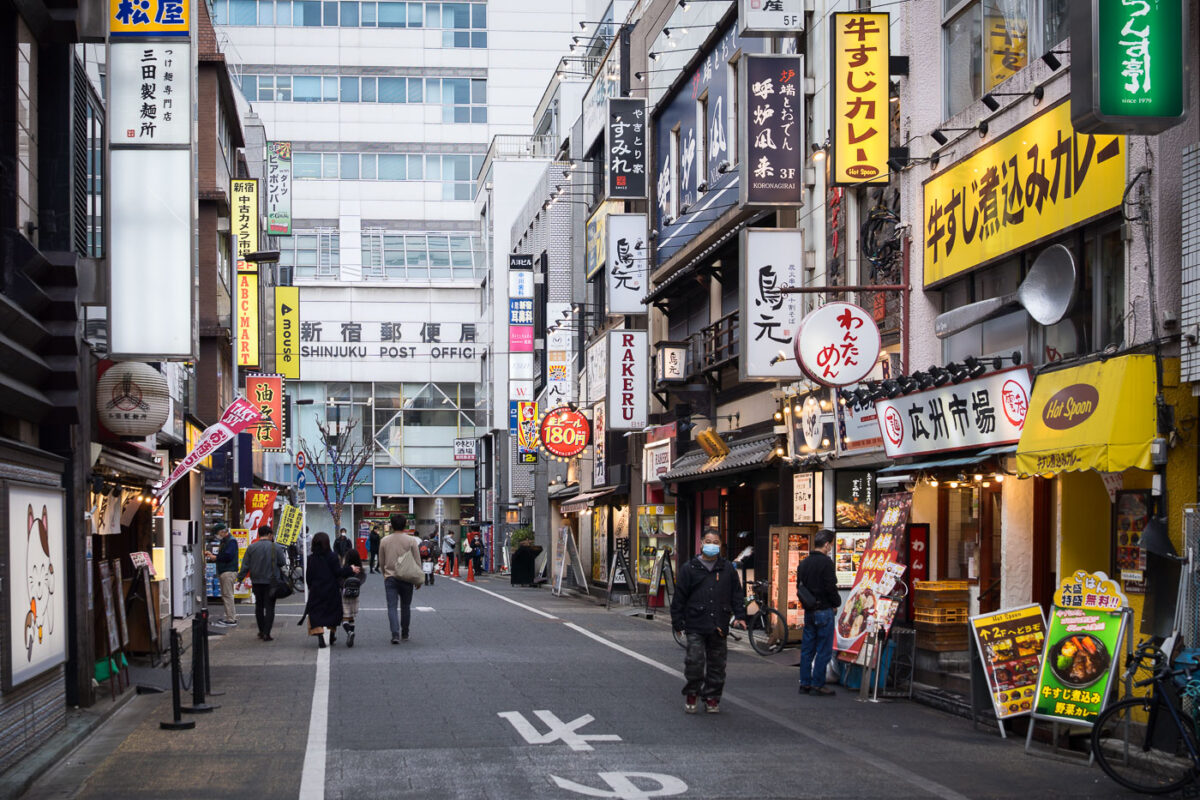
Sanbangai Street sits just west of Shinjuku Station and is part of the dense network of narrow commercial lanes that define this section of the city. The area developed rapidly after the mid-20th-century reconstruction of Shinjuku and is now lined with small restaurants, curry shops, bars, and specialty eateries catering to commuters and office workers moving through the station district each day.

The nearby Shinjuku Post Office has long served as a recognizable landmark on the north side of the station, anchoring a neighborhood known for its mix of long-established storefronts and constantly rotating food businesses.

Pachinko Parlor Entrance in Shinjuku

Pachinko Parlor Entrance in Shinjuku

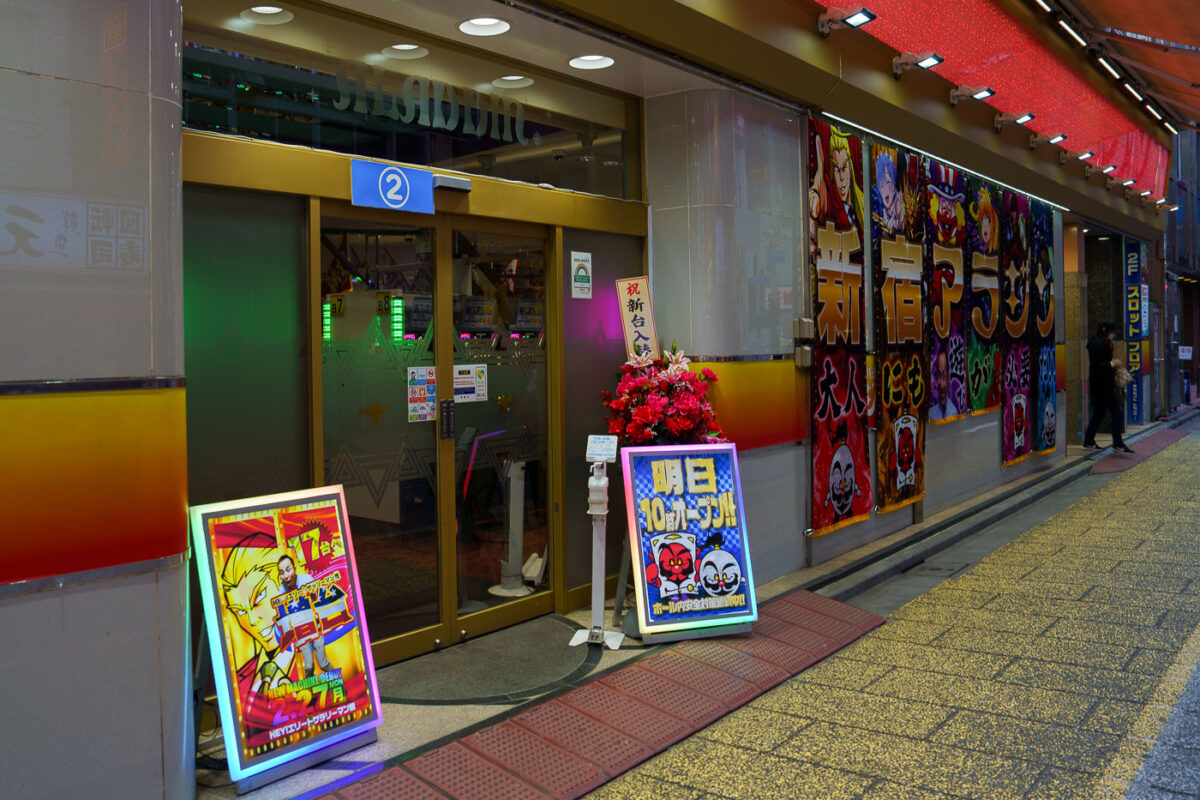
Pachinko parlors remain a defining part of Japan’s postwar entertainment landscape, evolving from small mechanical game halls into large, brightly lit venues that line the streets of major cities. This Shinjuku location reflects the modern industry’s mix of gambling-adjacent gaming, animated advertising, and elaborate storefront displays designed to attract commuters and tourists.

Although pachinko operates in a legal gray zone—winnings are exchanged off-site to comply with gambling regulations—it has grown into a multibillion-yen sector with deep cultural roots, from the machines’ lineage in early 20th-century children’s games to their present role as a staple of urban nightlife.

Evening Streetfront in Shinjuku

Evening Streetfront in Shinjuku

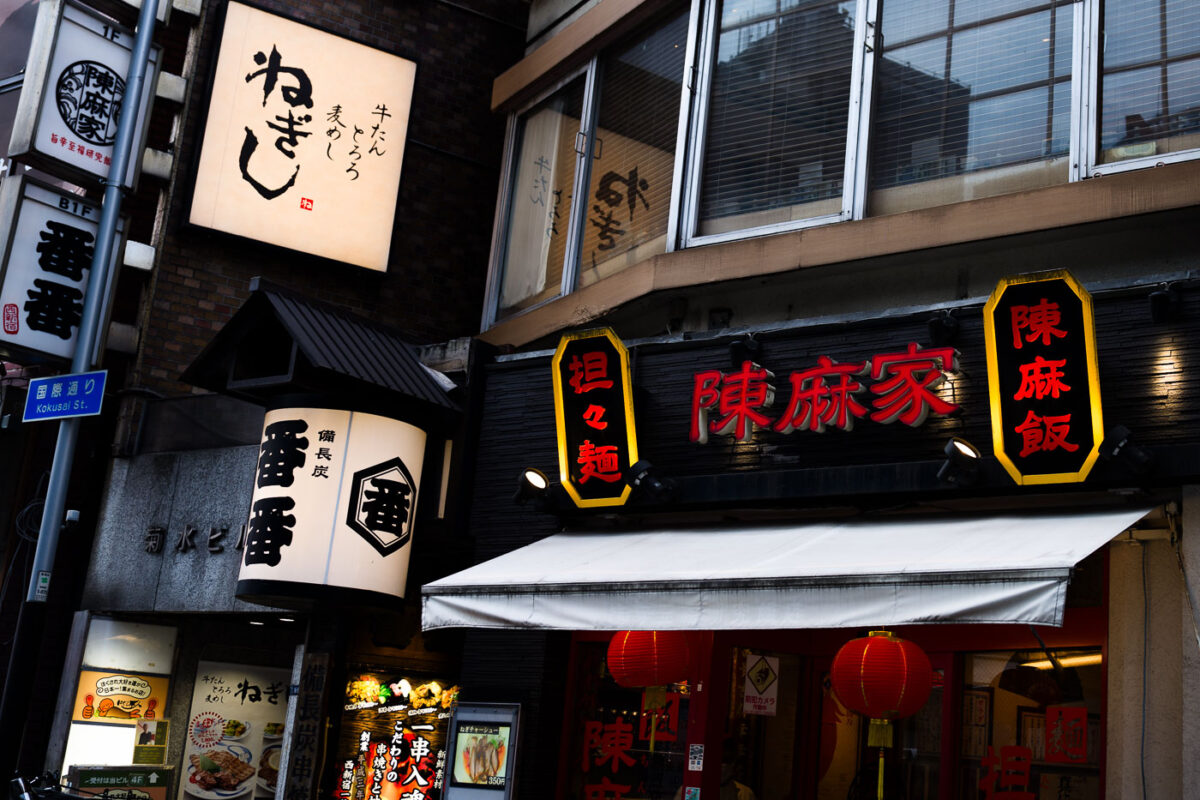
A cluster of restaurants along a narrow Shinjuku street glows with layered signage in both Japanese and Chinese scripts. The red and gold lettering of a Sichuan-style noodle house stands out beneath the muted tones of surrounding izakayas, each sign competing for attention with subtle variations in type and light. Red paper lanterns hang just above the entrance, signaling warmth and spice within, while the larger illuminated kanji above advertise dishes like “tan-tan men” and “mapo rice.” The mix of fonts, textures, and light reflects Tokyo’s dynamic blend of regional cuisines and visual clutter—a dense, living typography of urban appetite and identity.

Yodobashi Camera neon sign in Tokyo

Yodobashi Camera neon sign in Tokyo

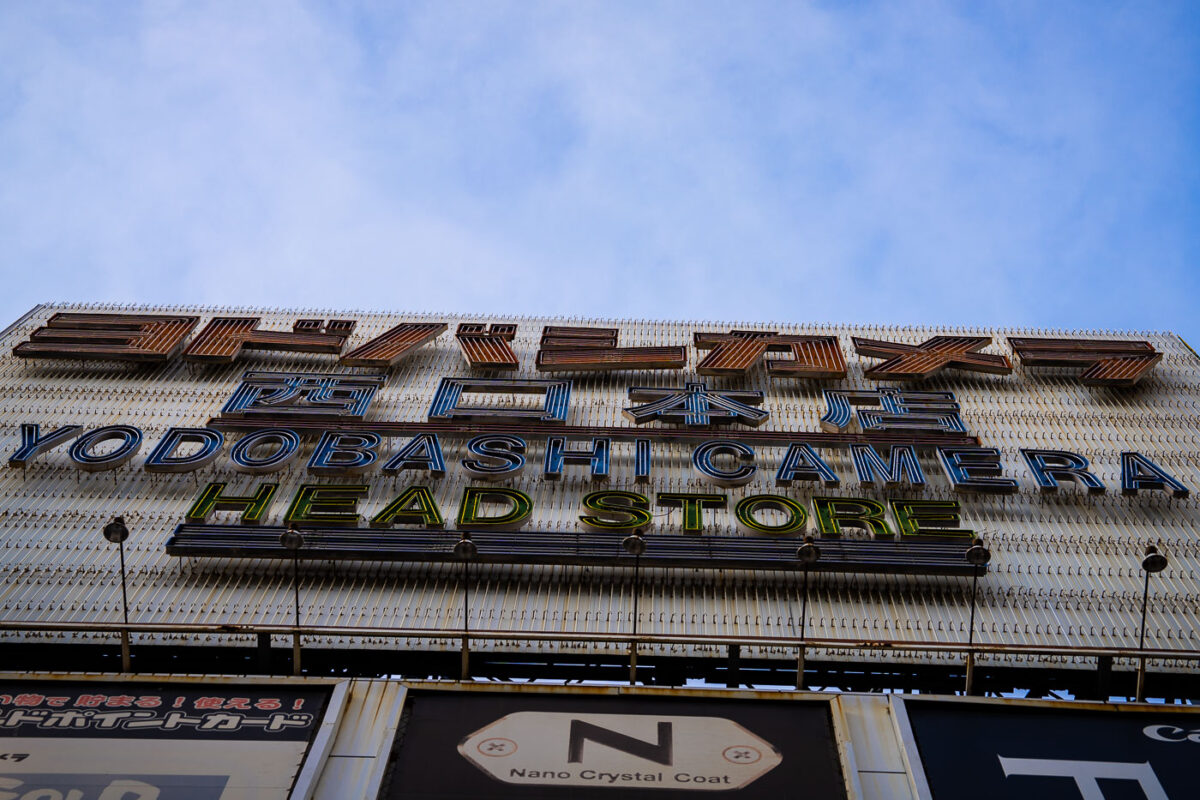
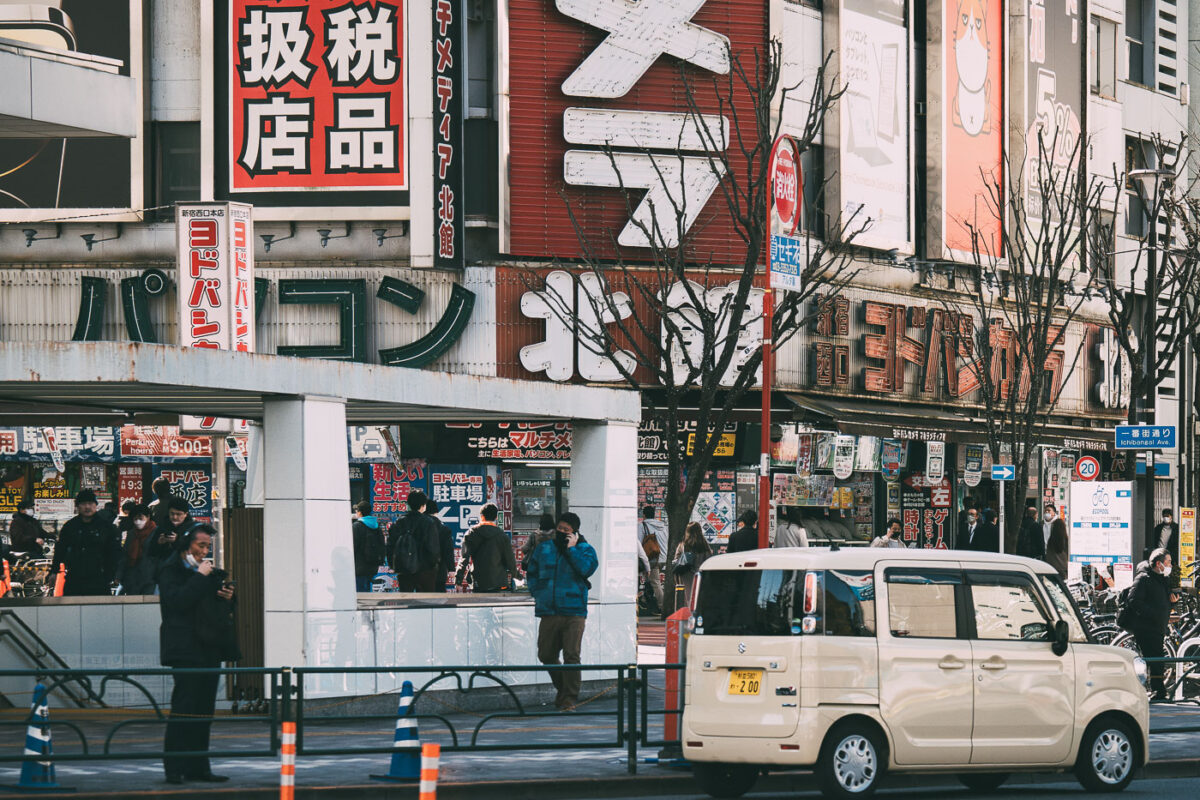
The iconic neon sign of Yodobashi Camera’s head store in Shinjuku is seen from street level, with its mix of Japanese and English lettering. The large retro-style signage, lined with anti-bird spikes, reflects the store’s long-standing presence as one of Tokyo’s biggest electronics retailers. Yodobashi Camera’s Shinjuku West Exit location serves as the flagship branch, anchoring the city’s vast camera and tech shopping district.

Early Spring Light at Shinjuku Gyoen

Early Spring Light at Shinjuku Gyoen

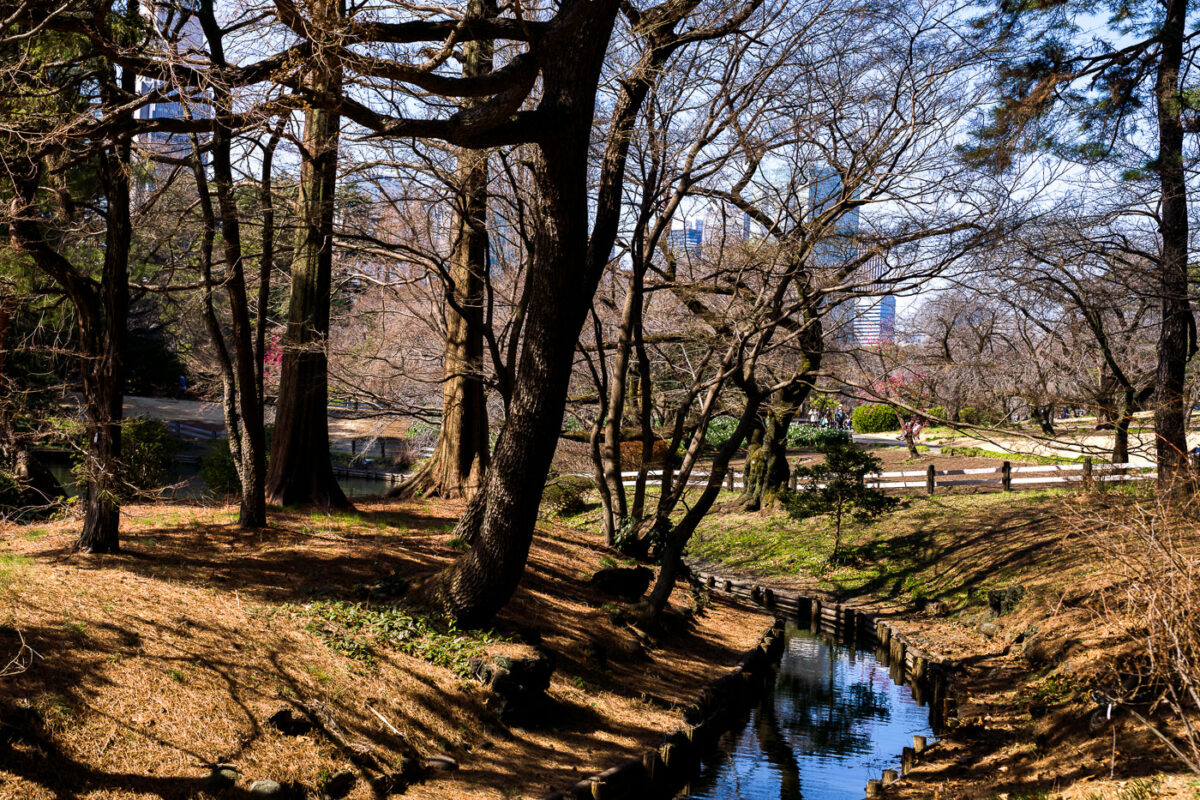
Shinjuku Gyoen National Garden has long served as one of Tokyo’s largest and most historically layered urban parks, transitioning from an Edo-period feudal estate to an Imperial garden before opening to the public after World War II. This March 2023 view reflects the quiet season just before cherry blossoms begin to emerge, when the garden’s network of footpaths, streams, and wooded slopes show more of their underlying structure.

Morning light filters through leafless trees onto a narrow waterway lined with timber edging—an example of the garden’s blend of traditional Japanese landscape elements and early modern design introduced during its redevelopment in the early 20th century. In the distance, visitors walk among early-blooming shrubs with Shinjuku’s skyline rising beyond the treetops, underscoring the park’s role as a transitional space between dense city life and calm, curated nature.

Early Spring Reflections at Shinjuku Gyoen

Early Spring Reflections at Shinjuku Gyoen

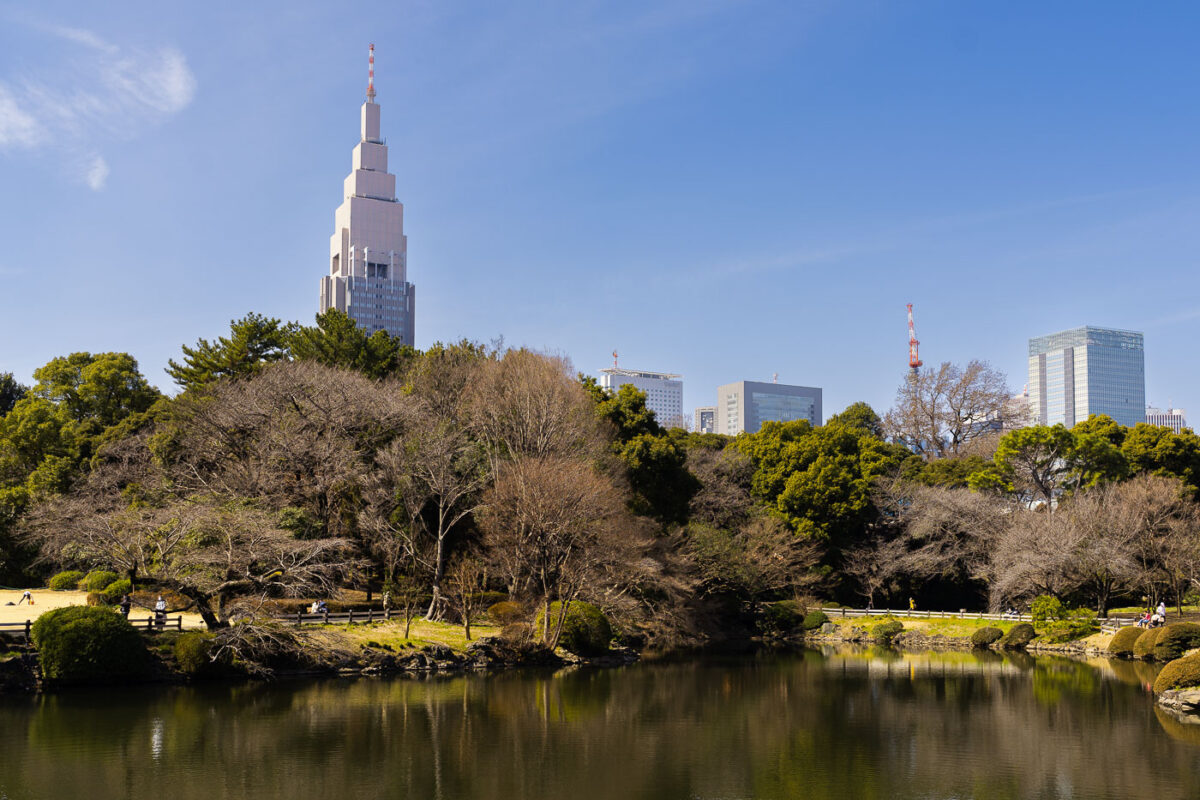
Shinjuku Gyoen National Garden offers a calm, expansive contrast to the dense urban core that surrounds it. Originally part of a feudal estate in the Edo period and later a botanical garden under the Imperial Household Agency, Shinjuku Gyoen opened to the public in 1949 and remains one of Tokyo’s most significant landscaped parks.

In this March 2023 photograph, the garden’s central pond reflects late-winter trees and early seasonal light, while the tiered silhouette of the NTT Docomo Yoyogi Building rises prominently in the background. The juxtaposition underscores how Shinjuku Gyoen functions as a large green refuge within one of the busiest districts in Tokyo, blending historical landscape design with the city’s modern skyline.

Tokyo Station Marunouchi Facade at Dusk

Tokyo Station Marunouchi Facade at Dusk

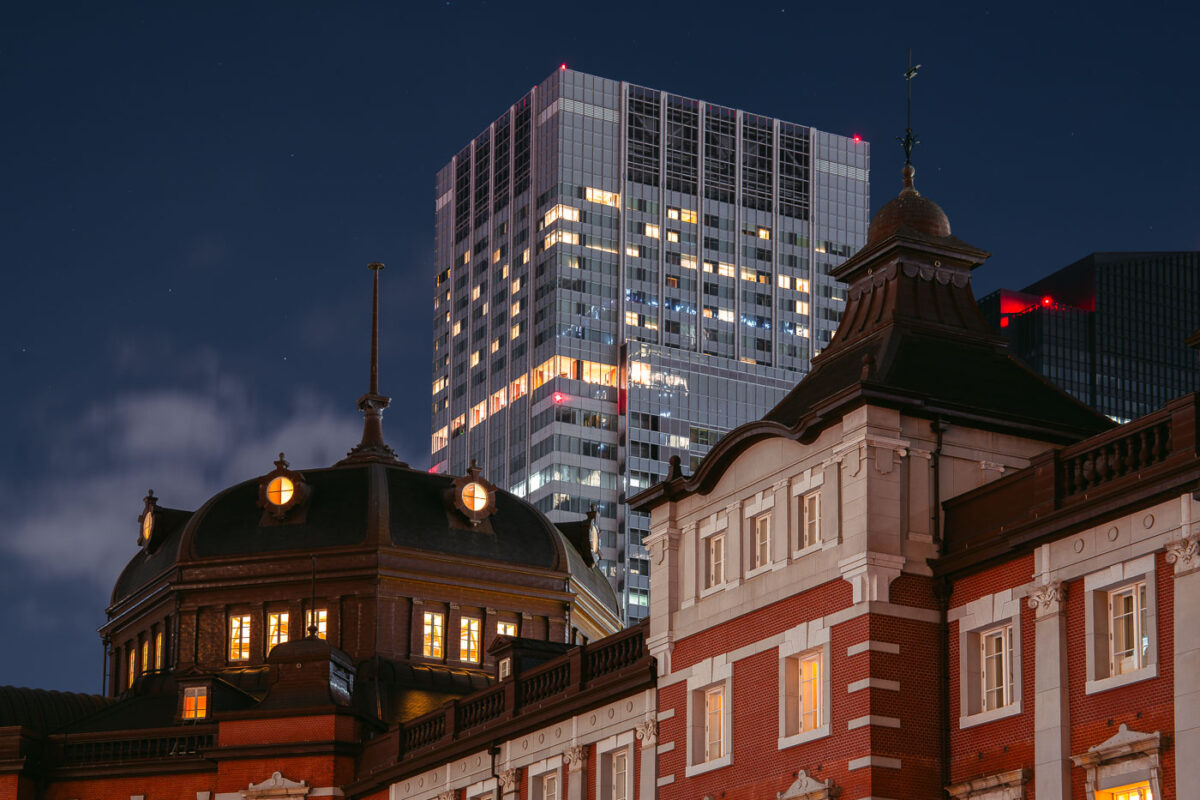
The historic Marunouchi side of Tokyo Station glows warmly at dusk, its red-brick exterior and copper domes standing in contrast to the modern skyscrapers of the surrounding Marunouchi business district. Opened in 1914 and designed by architect Tatsuno Kingo, the station served as the central gateway for Japan’s expanding rail network during the early 20th century.

The dramatic juxtaposition in this March 2023 photograph highlights more than a century of architectural evolution: the restored station building—meticulously reconstructed after wartime damage—foregrounds the sleek high-rise towers that define contemporary central Tokyo. Together, they illustrate how Tokyo layers historic preservation and modern development within one of the busiest transport hubs in the world.

Evening Bus Terminal at Shinjuku Station

Evening Bus Terminal at Shinjuku Station

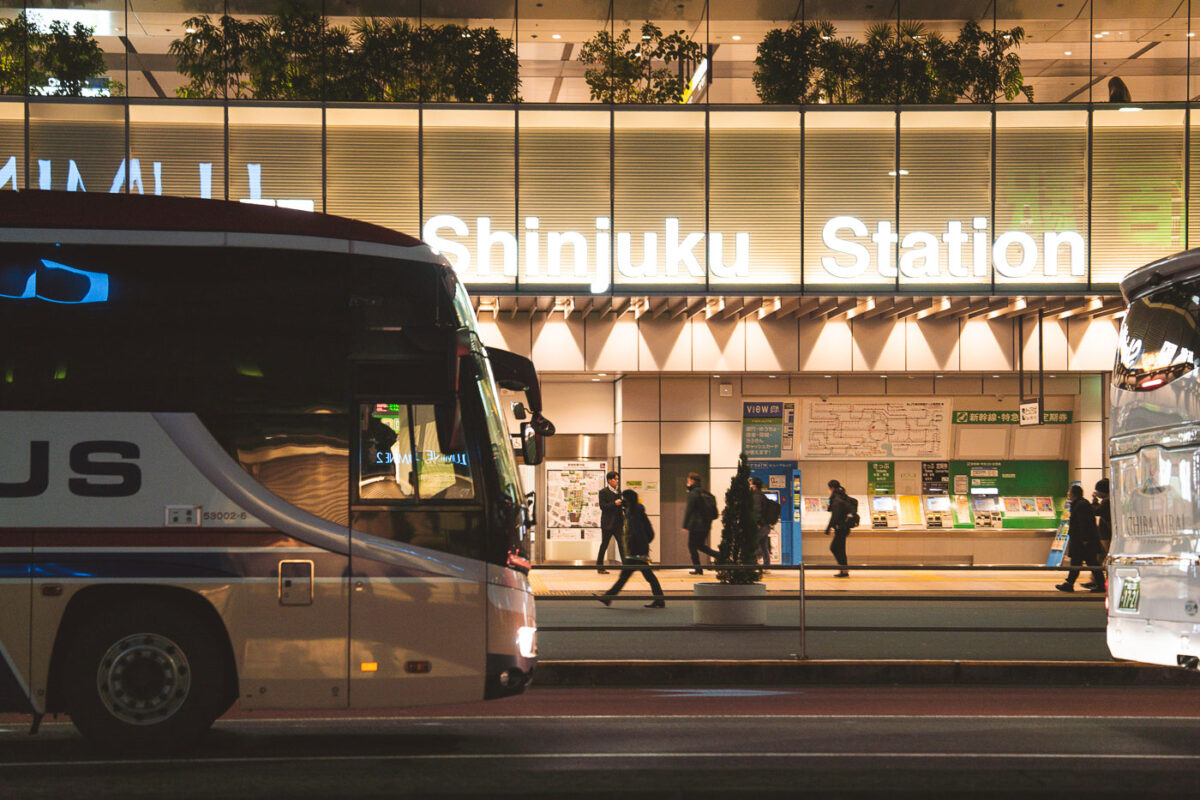
Intercity buses line up outside Shinjuku Station in Tokyo, one of the busiest rail hubs in the world and a major transfer point for long-distance coach services. The station’s west side is home to a dense cluster of express bus platforms that connect Tokyo with destinations across Honshu, Hokkaido, and Kyushu.

Captured in March 2023, the photo shows the steady flow of evening commuters moving between the station concourse and the bus loading area, illuminated by the station’s modern façade lighting. The scene reflects Shinjuku’s role not only as a metropolitan transit hub but also as a key gateway for regional travel throughout Japan.

Lantern Light Over Shinjuku Alley

Lantern Light Over Shinjuku Alley

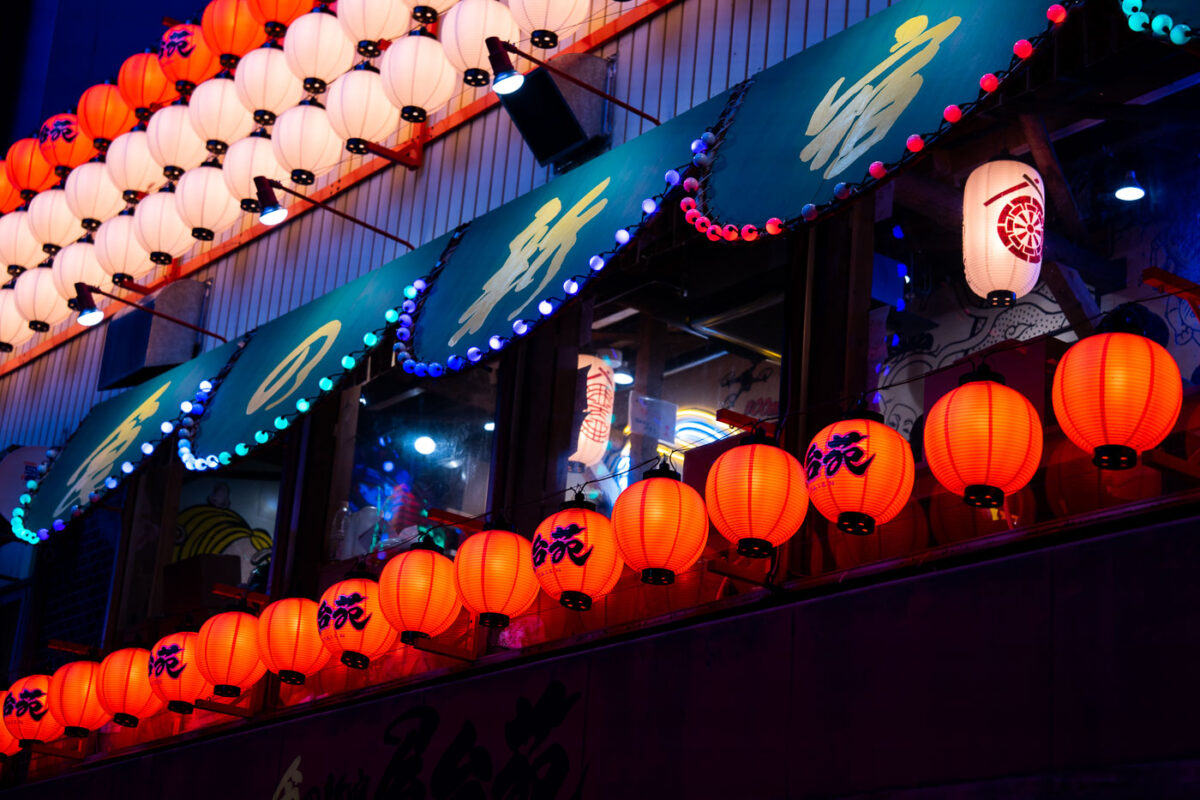
A cascade of red and white paper lanterns illuminates the facade of an izakaya in Shinjuku, Tokyo, casting a warm glow against the cool blue tones of the evening. Each lantern is hand-painted with calligraphy, evoking a blend of tradition and nightlife energy that defines Tokyo’s dense entertainment districts. The upper awnings—lined with blue bulbs and framed by wooden beams—hint at the layered complexity of urban Japan, where old-world craftsmanship meets electric color and constant reinvention. The faint reflections of neon and interior lighting merge through the windows, creating a luminous dialogue between the street and the world within.

Shinjuku Neon — Tokyo’s 24-Hour Glow

Shinjuku Neon — Tokyo’s 24-Hour Glow

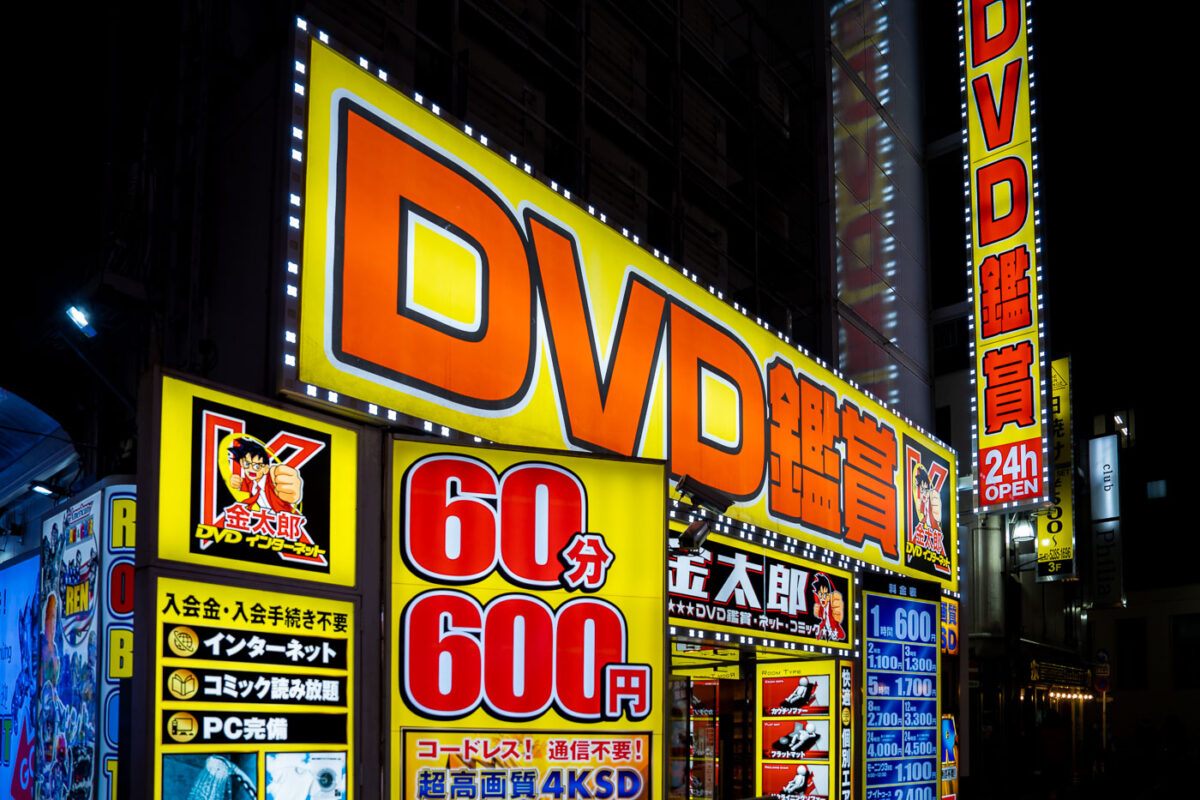
In Tokyo’s Shinjuku district, the saturated glow of neon signage spills across the streets, advertising one of the countless 24-hour DVD and manga shops that once defined the city’s late-night entertainment culture. Massive orange and yellow panels compete for attention, illuminated by LED frames and plastered with bold pricing for hourly booths and media rentals. These storefronts — dense with color, typography, and nostalgia — reflect the enduring presence of Japan’s analog media scene even as digital streaming dominates elsewhere. The atmosphere captures Tokyo’s constant dialogue between old and new, where high-tech convenience meets the tactile energy of Showa-era retail culture under an endless canopy of light.

Kabukicho Ichiban-gai Gate at Night

Kabukicho Ichiban-gai Gate at Night

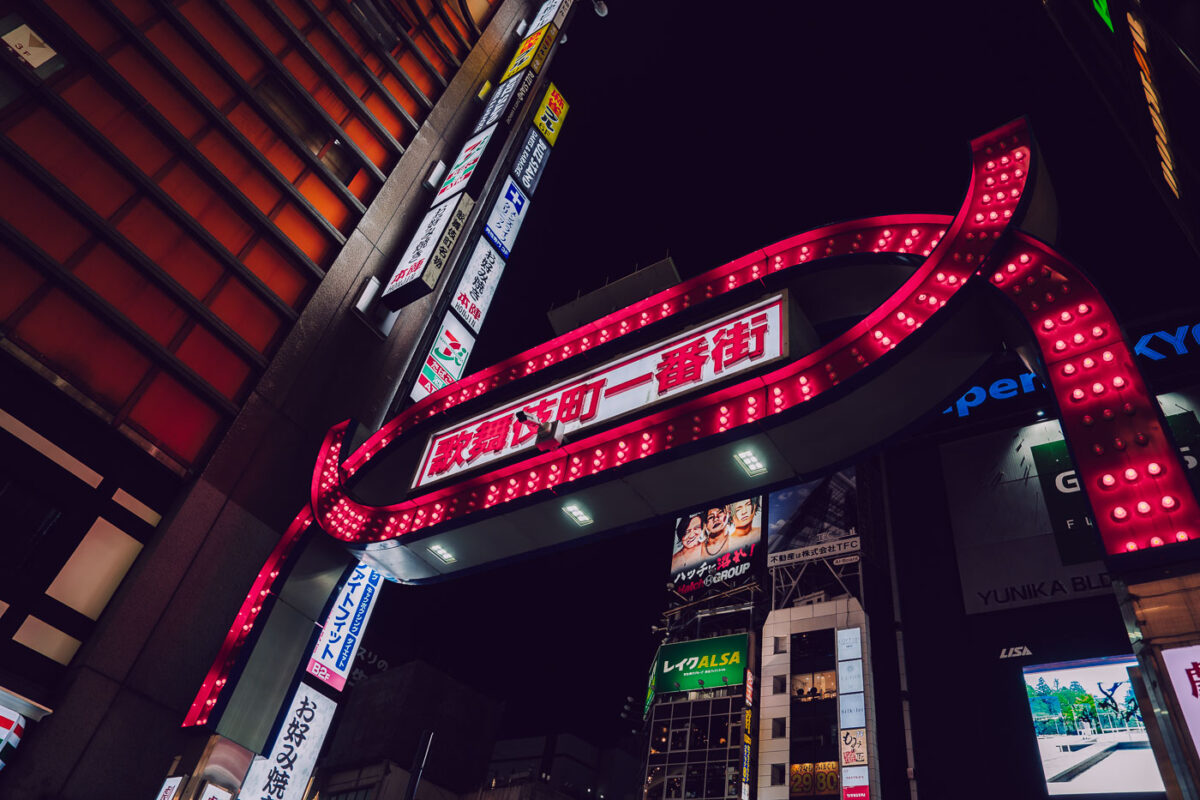
The iconic illuminated gate marking Kabukichō Ichiban-gai, photographed in Shinjuku, Tokyo. Installed in the late 1960s and redesigned several times since, the red archway has become one of the most recognizable entrances to Tokyo’s largest entertainment district.

Kabukichō developed after World War II as a planned theater district—its name comes from a never-built kabuki theater—before evolving into a dense zone of restaurants, bars, cinemas, and nightlife venues. The gate’s bright bulbs and bold lettering serve as a symbolic threshold into the neighborhood’s tightly packed streets, which remain active late into the night.

Shinjuku Community Road Sign

Shinjuku Community Road Sign

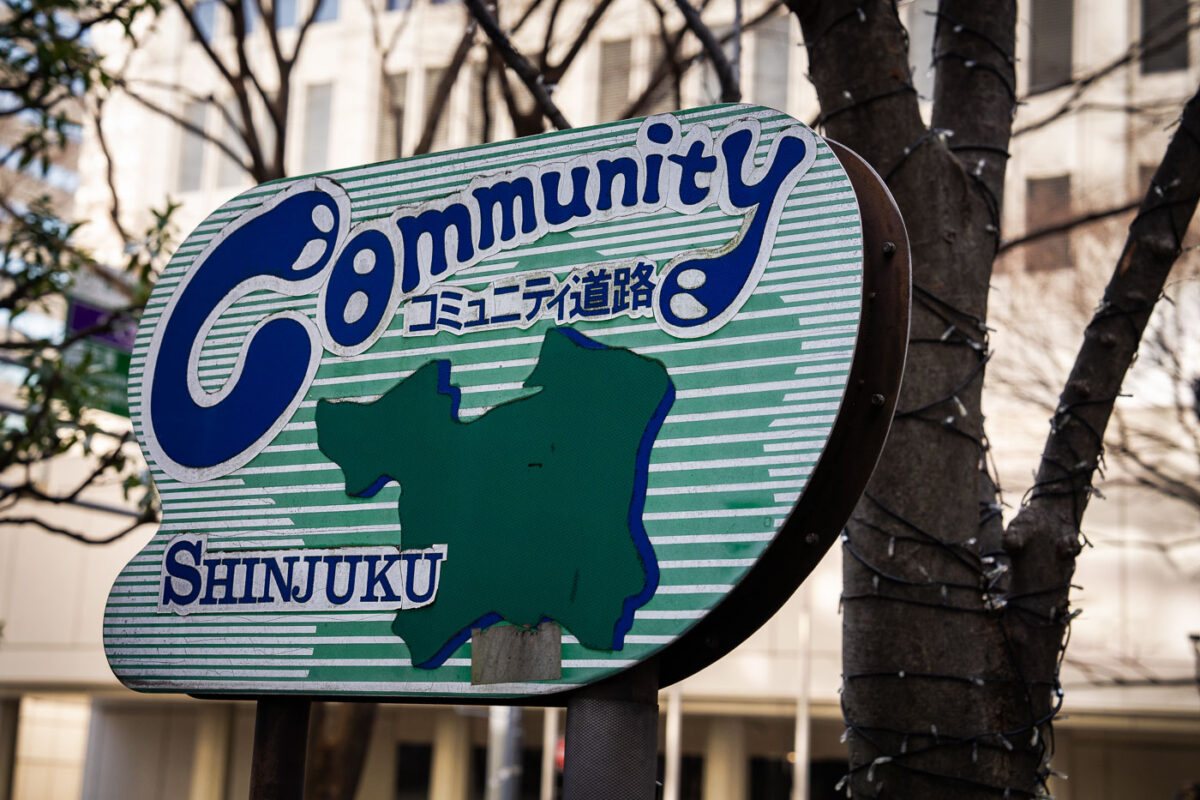
An older enamel “Community Road” sign in Shinjuku, Tokyo, photographed in March 2023. These signs—marked with コミュニティ道路 (“community road”) and a stylized map of the ward—were installed beginning in the late 1970s and 1980s as part of a municipal effort to identify quieter local streets prioritized for pedestrians, schools, and neighborhood traffic rather than through-traffic.

Although many have faded or disappeared as Shinjuku redeveloped, surviving signs like this one remain a small reminder of earlier phases of the ward’s streetscape planning. The hand-drawn lettering, green stripes, and simplified ward outline reflect the graphic design style common in Tokyo’s municipal signage of that era.

Inside Yodobashi Camera in Shinjuku

Inside Yodobashi Camera in Shinjuku

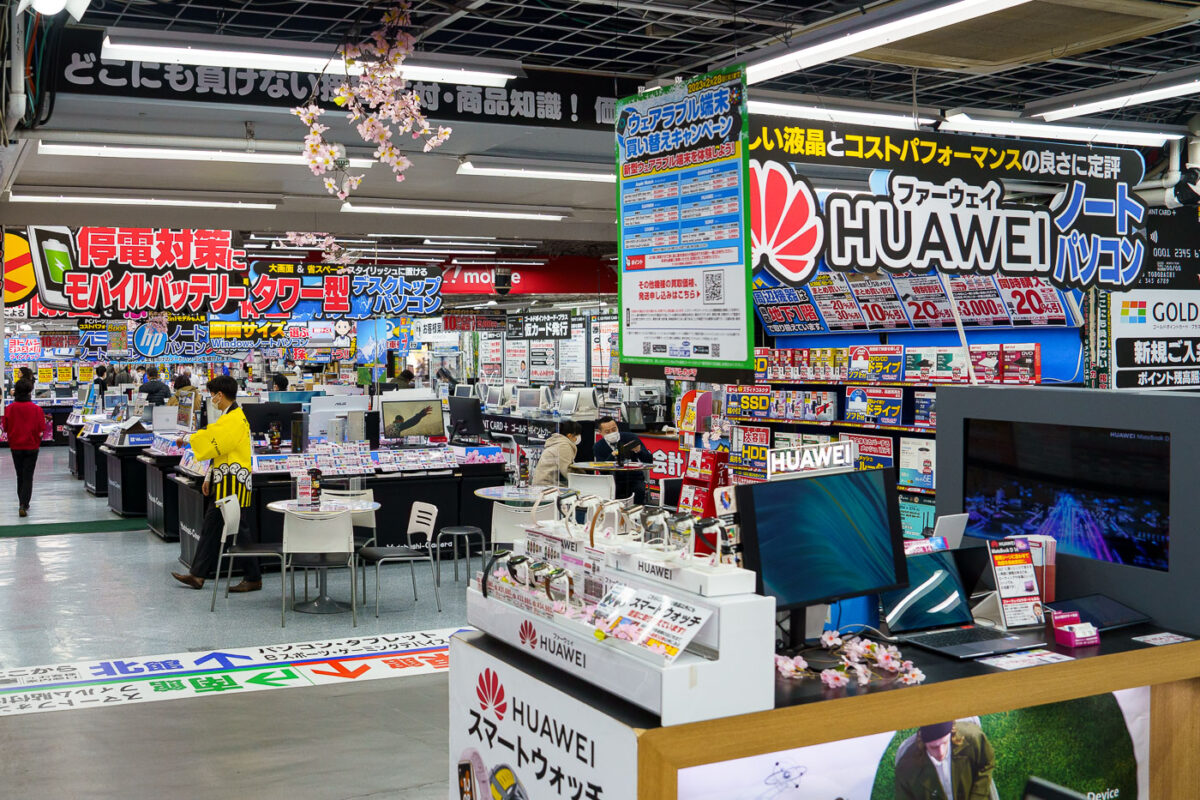
An interior view of Yodobashi Camera’s sprawling Shinjuku complex in March 2023, showing the densely organized electronics floor where computer hardware, mobile devices, and accessories are displayed under bold, color-saturated signage. The store’s characteristic layout—aisles packed with laptops, desktop components, peripherals, and promotional displays—reflects its role as one of Tokyo’s most comprehensive electronics retailers.

Prominent branding for Huawei laptops and smartwatches fills the foreground, while the surrounding aisles feature comparative pricing banners, point-reward offers, and emergency power supply promotions. Yodobashi Camera’s Shinjuku location spans multiple interconnected buildings near the west exit of Shinjuku Station, drawing commuters, hobbyists, and tourists with its high inventory turnover, product variety, and multilingual support.

Battery Display at Yodobashi Camera Shinjuku

Battery Display at Yodobashi Camera Shinjuku

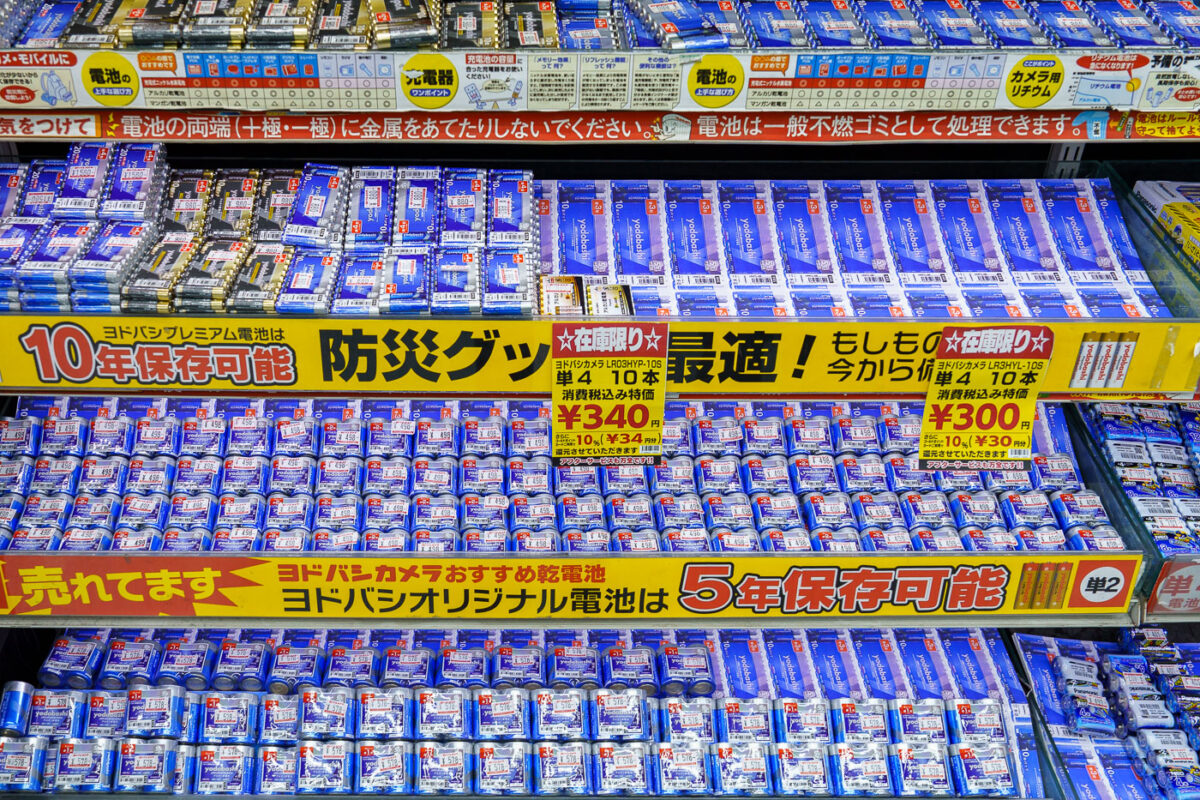
A densely stocked battery display inside Yodobashi Camera’s Shinjuku complex in March 2023. Yodobashi’s in-house battery line is prominently featured, with signage advertising long shelf-life options—10-year storage for premium models and 5-year storage for standard packs. Clear price labeling, bulk multi-pack options, and emergency-preparedness messaging reflect the store’s emphasis on reliability and daily-use electronics.

Yodobashi Camera Shinjuku is one of Tokyo’s largest electronics hubs, spanning multiple buildings near the west exit of Shinjuku Station. Its battery aisles exemplify the retailer’s merchandising style: bright color-coded labels, multilingual product cues, and high-volume stock arranged for quick comparison by commuters and tourists alike.

Outside Yodobashi Camera in Shinjuku

Outside Yodobashi Camera in Shinjuku

Outside Yodobashi Camera’s flagship complex in Shinjuku, one of Tokyo’s largest and most recognizable electronics retail districts. The chain has been a central part of Shinjuku’s commercial landscape since the 1970s, growing alongside the area’s transformation into a major hub for cameras, audio equipment, computers, and home electronics.

By the early 2000s the Shinjuku stores had expanded into a multi-building network around the west side of the station, offering tax-free shopping, dedicated gaming and computer floors, and an extensive camera department that continues to attract both professionals and tourists. Shinjuku’s dense signage, narrow traffic lanes, and steady crowds reflect the district’s role as one of Japan’s busiest shopping zones, with Yodobashi Camera remaining a key anchor of the neighborhood’s retail identity through 2023.

Loading more photos…