Clock Tower

7 photos · 2015–2021

7 photographs tagged Clock Tower, 2015–2021.
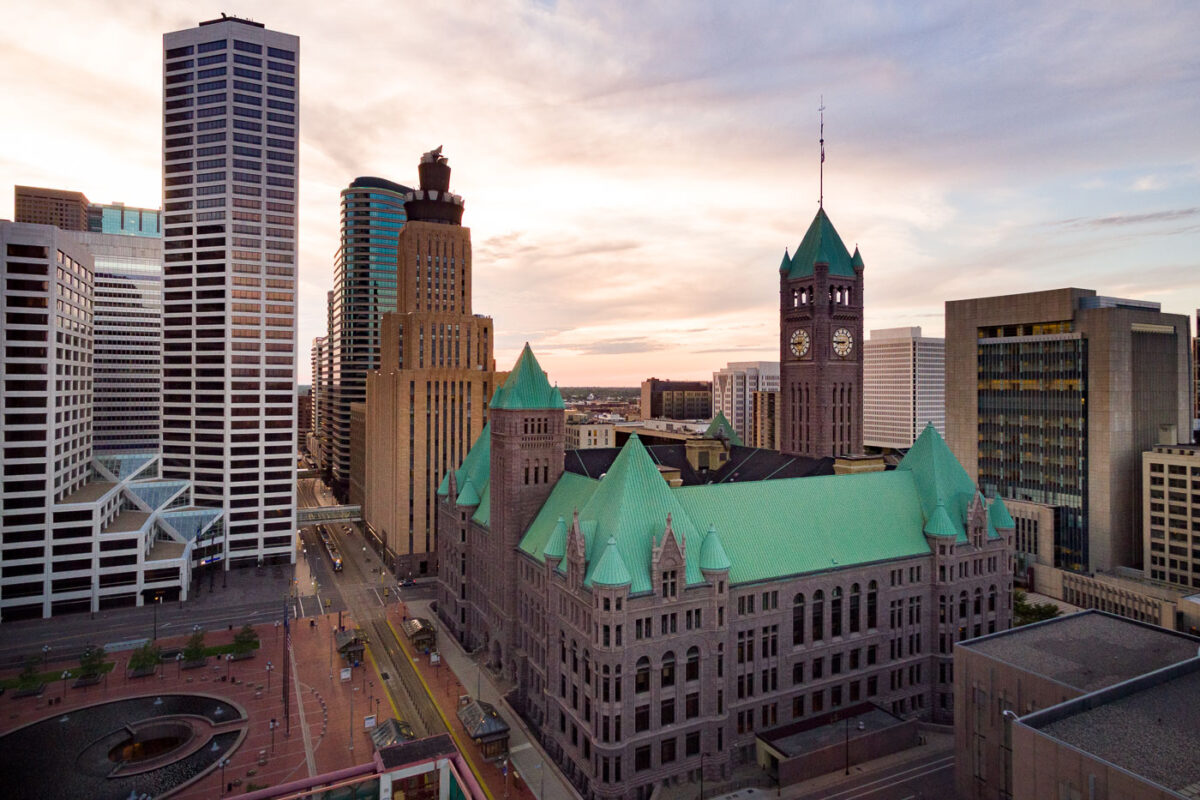
Minneapolis City Hall with its distinctive green copper roof stands among downtown office towers at sunset.
Minneapolis City Hall, also known as the Hennepin County Courthouse, stands at 350 South Fifth Street in downtown Minneapolis. Built of granite between 1888 and 1906, it houses both city and county offices under a shared roof. Its clock tower rises 345 feet and once held the largest four-faced clock in the country.

Clock Tower of Minneapolis City Hall Rises Above Downtown
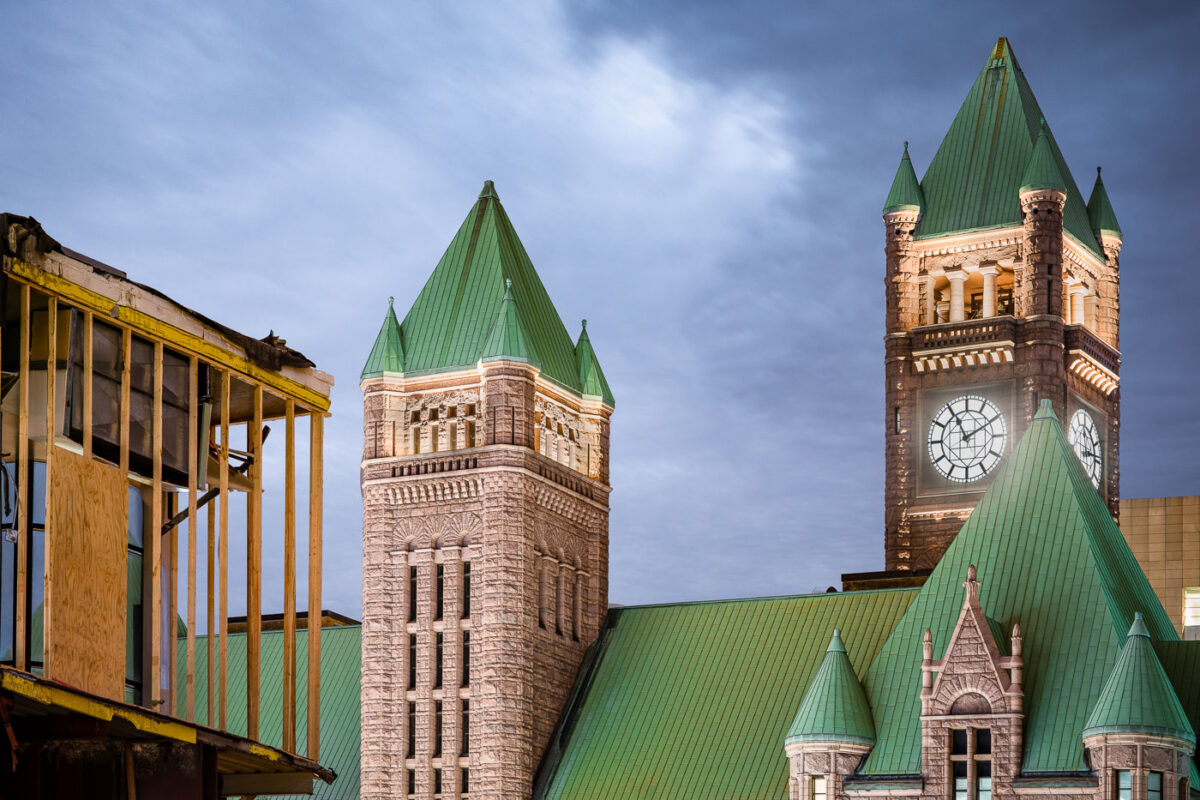
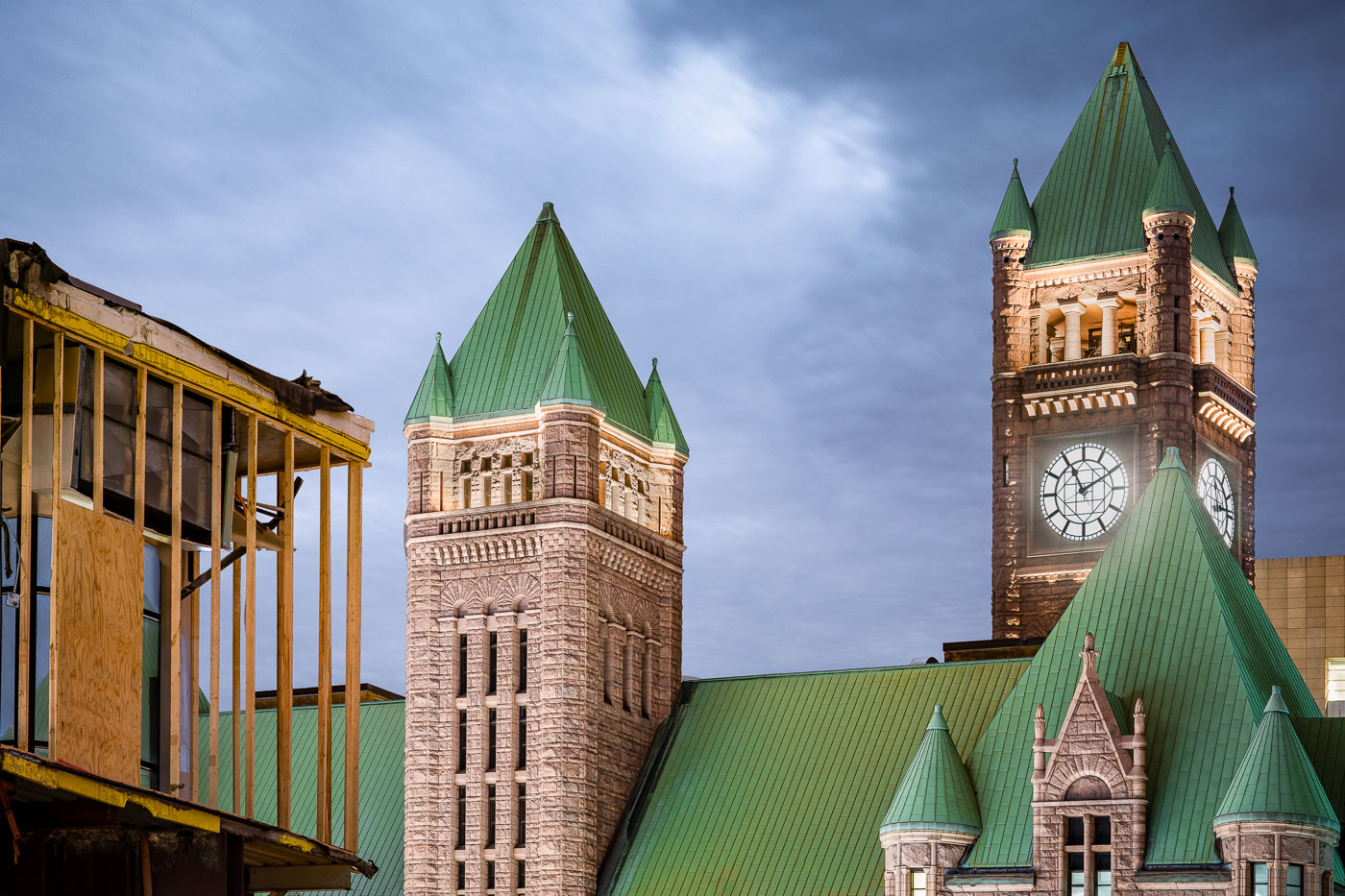
Minneapolis City Hall's Romanesque Revival towers with green copper roofs and large clock faces stand beside construction scaffolding.
Minneapolis City Hall, at 350 South Fifth Street, was built between 1888 and 1906 to a design by architects Franklin B. Long and Frederick Kees in the Romanesque Revival style. Its tower rises 345 feet and carries four clock faces, each about 24 feet in diameter, driven by a weight-powered mechanism installed when the building opened. The clock has long been cited as one of the largest four-faced, chiming clocks in the country. The building is listed on the National Register of Historic Places and still houses Minneapolis municipal offices along with Hennepin County government functions.

Minneapolis City Hall Towers Beside a Construction Site at Dusk
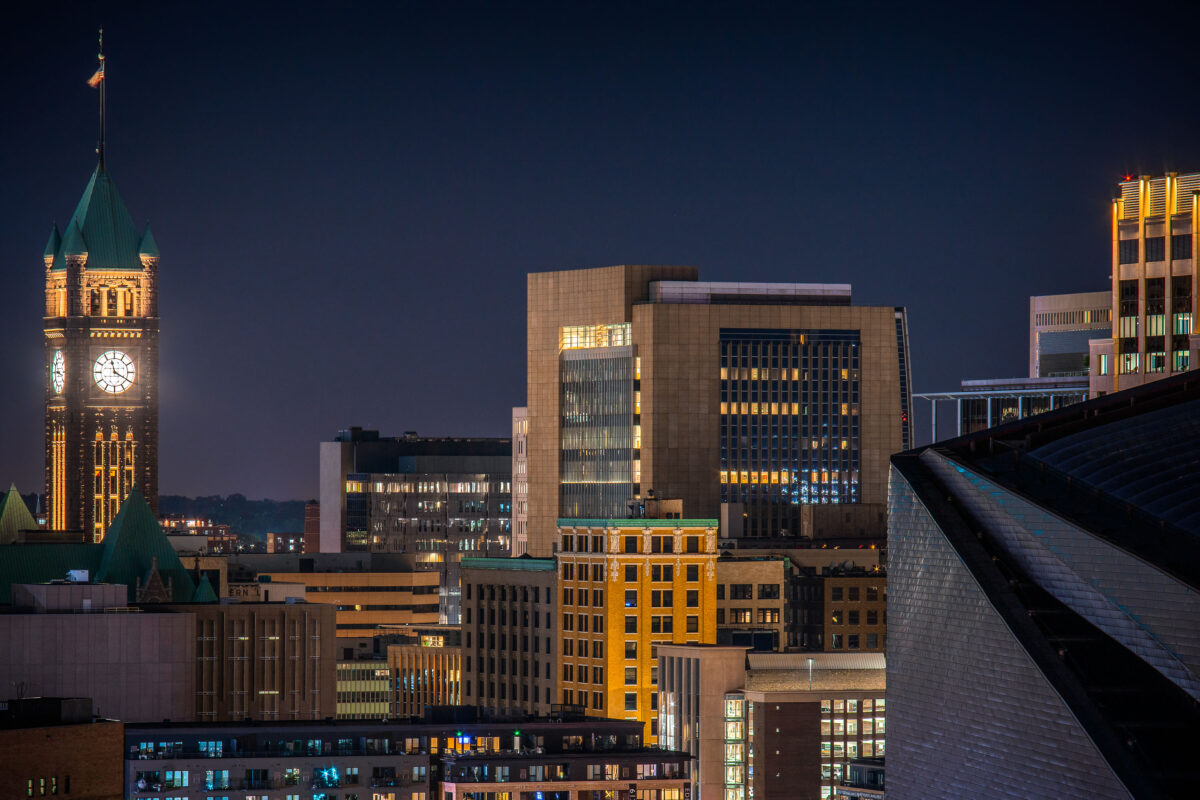
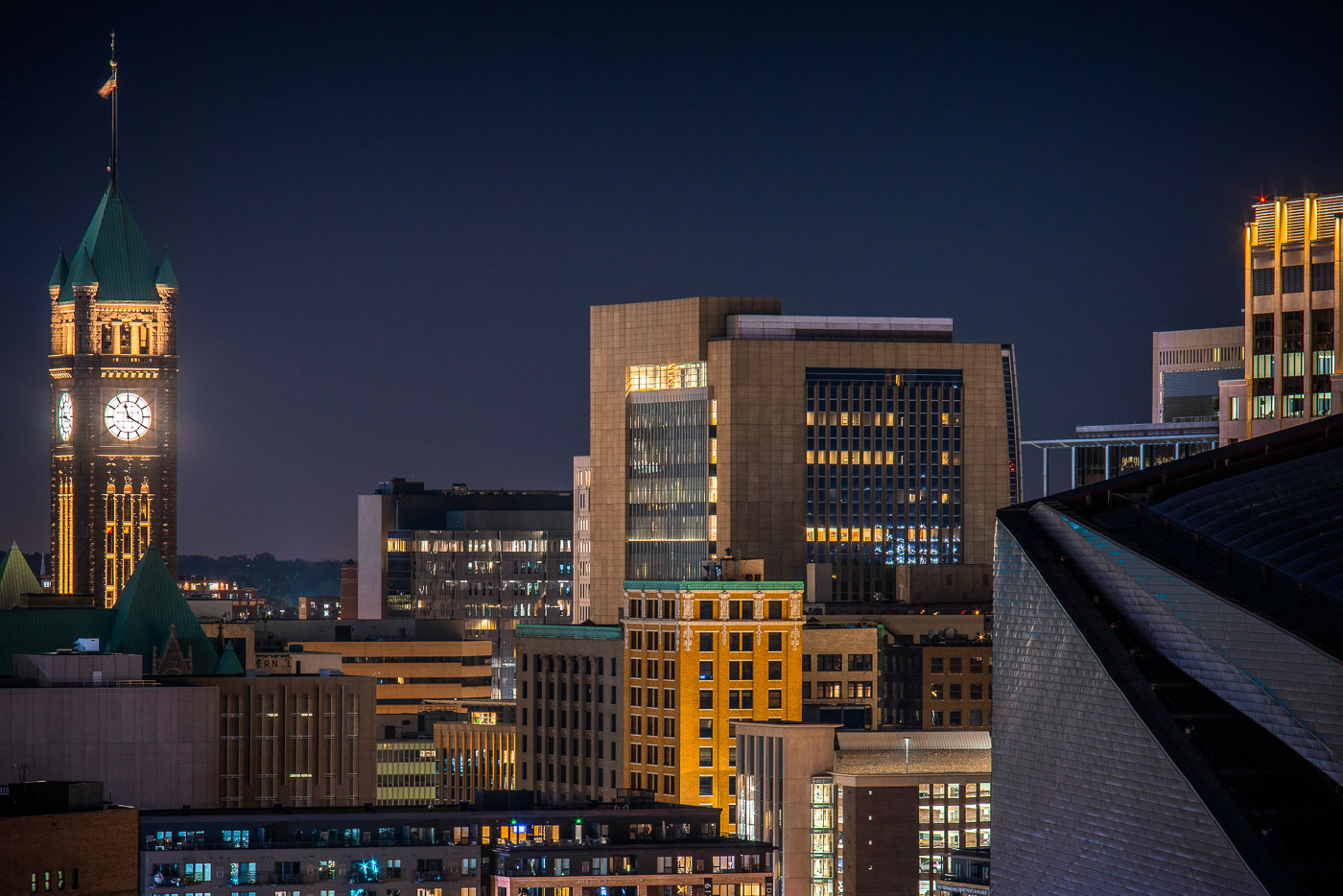
Minneapolis City Hall's illuminated clock tower and green copper roof rise above the downtown skyline at night.
Minneapolis City Hall’s clock tower rises above downtown Minneapolis at night. The historic building was completed in 1909.

Downtown Minneapolis Skyline with City Hall’s Clock Tower
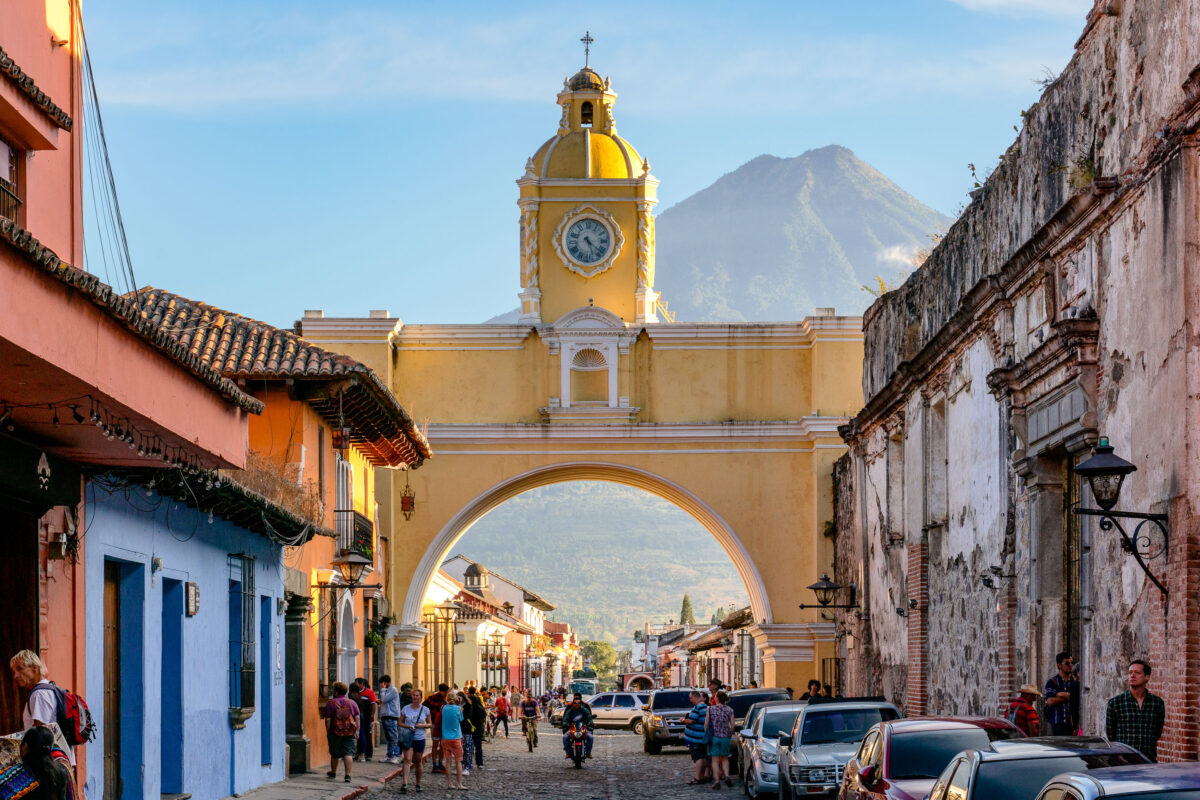
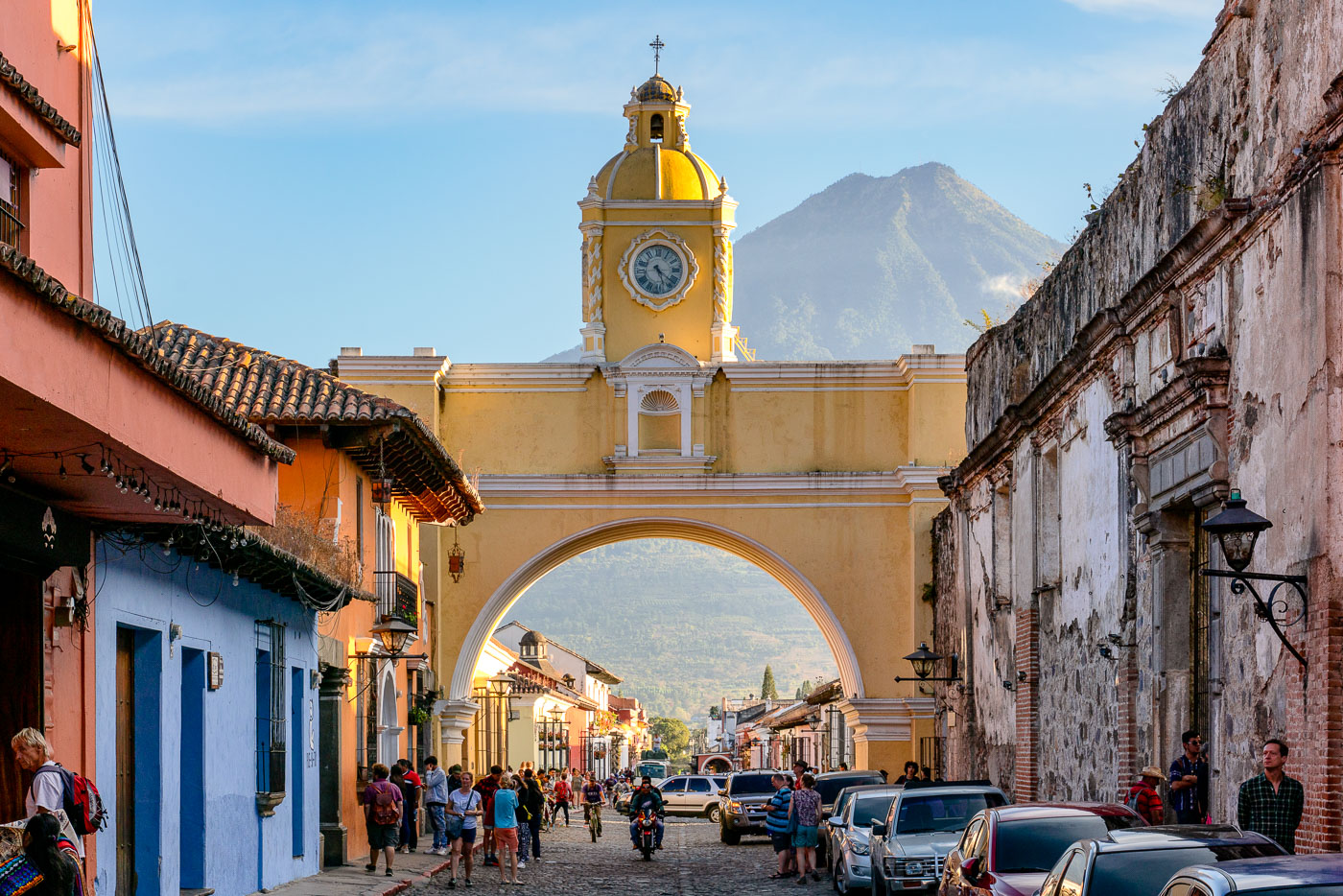
Santa Catalina Arch with its yellow clock tower frames a cobblestone street in colonial Antigua Guatemala, with Volcán de Agua rising in the background.
Santa Catalina Arch spans 5a Avenida Norte in Antigua Guatemala, one of the city's most recognized colonial structures. It was built in 1694 to let cloistered nuns of the Santa Catalina convent cross the street to an adjoining school without being seen in public, as their order's rules forbade. The convent itself was founded in 1609 and largely destroyed by the 1773 earthquake that led Spanish authorities to relocate the colonial capital to present-day Guatemala City. The arch's clock tower was added in the 19th century, after the city had already been abandoned as the seat of government. Volcán de Agua, a roughly 3,760-meter stratovolcano, rises directly south of the city and is visible through the arch on clear days.

Santa Catalina Arch and Volcán de Agua, Antigua Guatemala
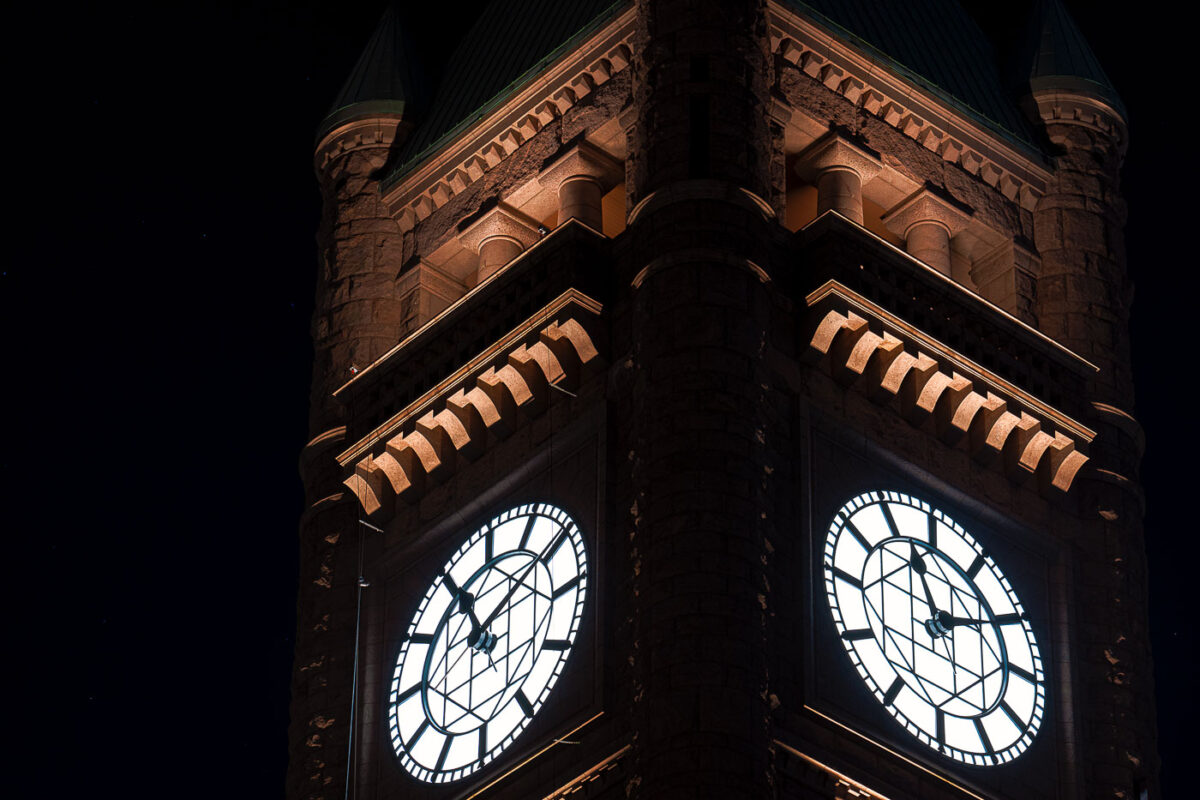
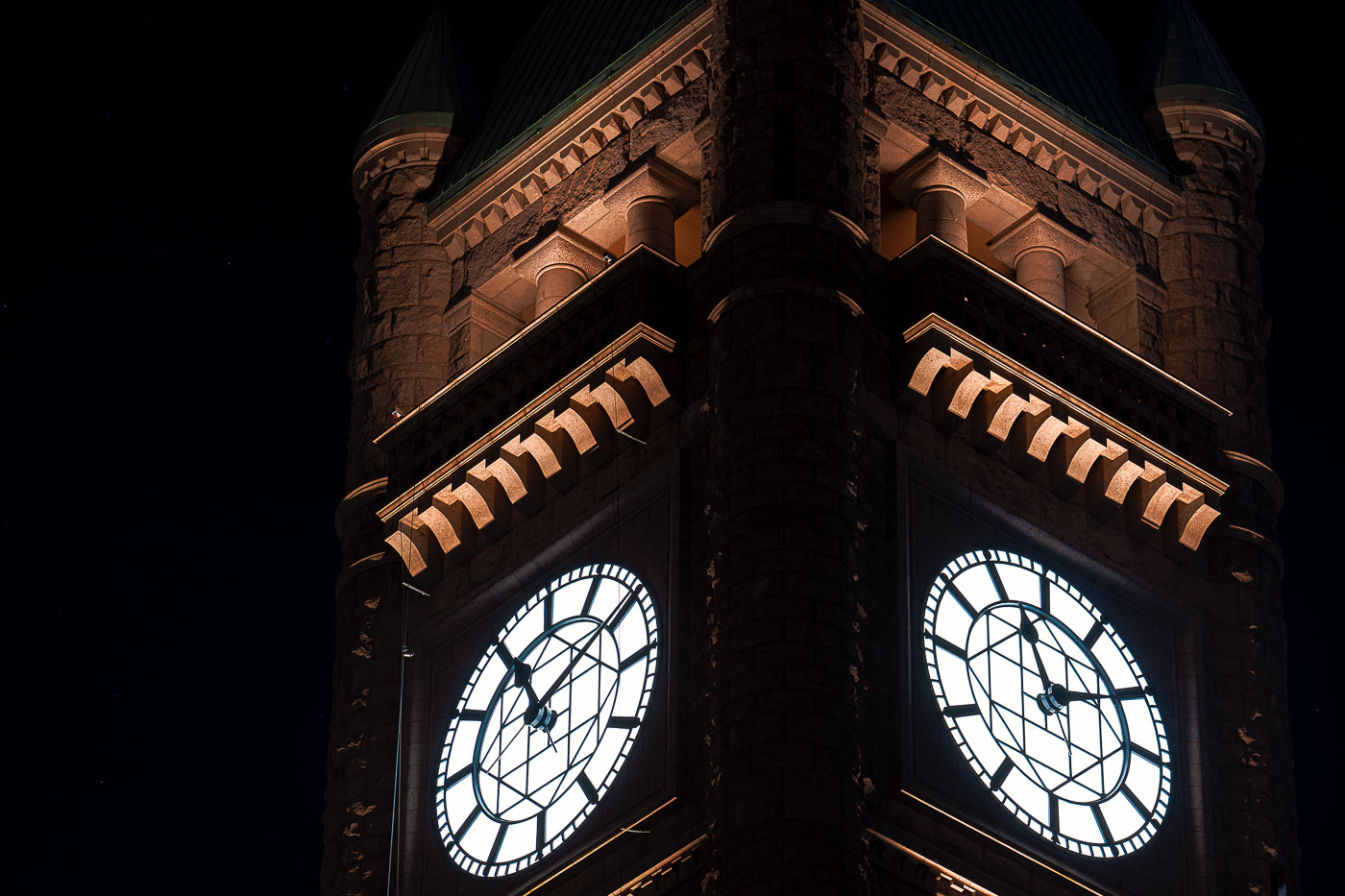
Minneapolis City Hall's illuminated clock tower displays two glowing faces against ornate Romanesque architecture at night.
The clock tower of Minneapolis City Hall glows at night, its illuminated faces visible across downtown.

Illuminated Clock Faces on Minneapolis City Hall’s Tower
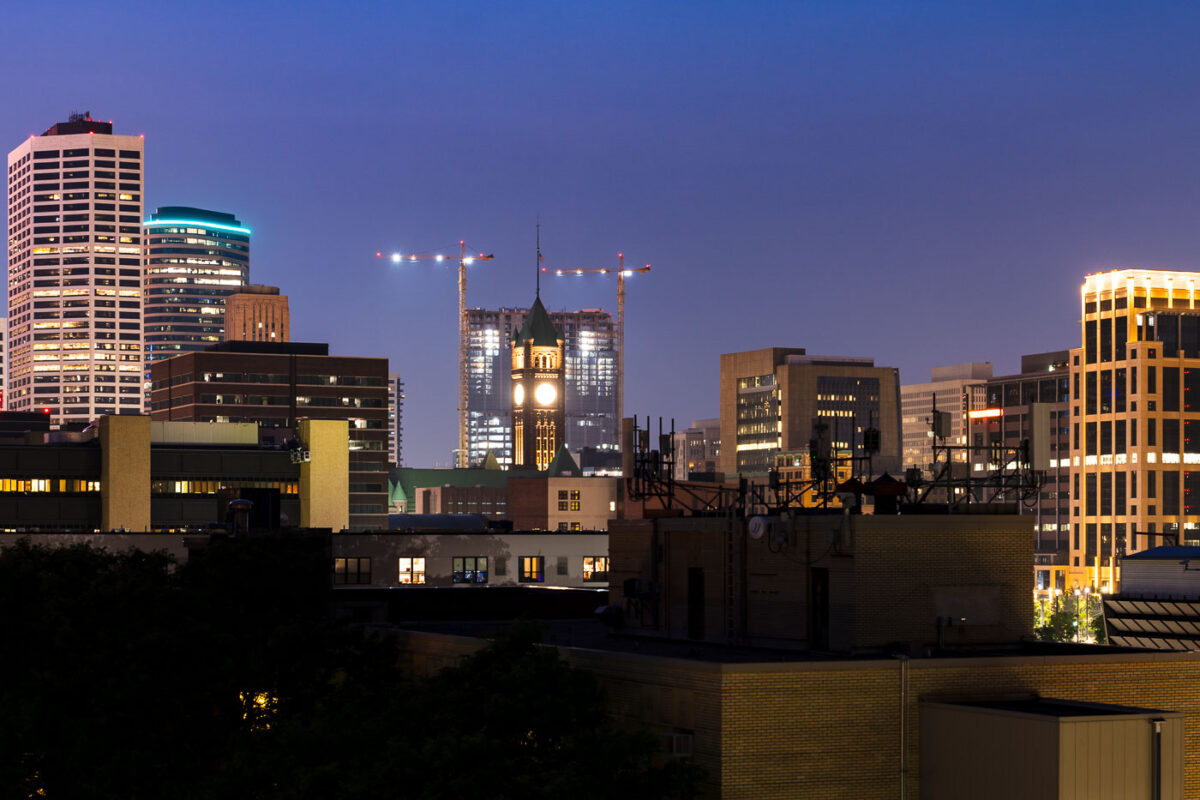
RBC Gateway tower cranes rise behind Minneapolis City Hall and the Hennepin County clock tower.
RBC Gateway tower cranes in downtown Minneapolis rise behind City Hall and the Hennepin County clock tower. The mixed-use development is part of the redevelopment area near the historic core of the city.

RBC Gateway tower cranes, Minneapolis
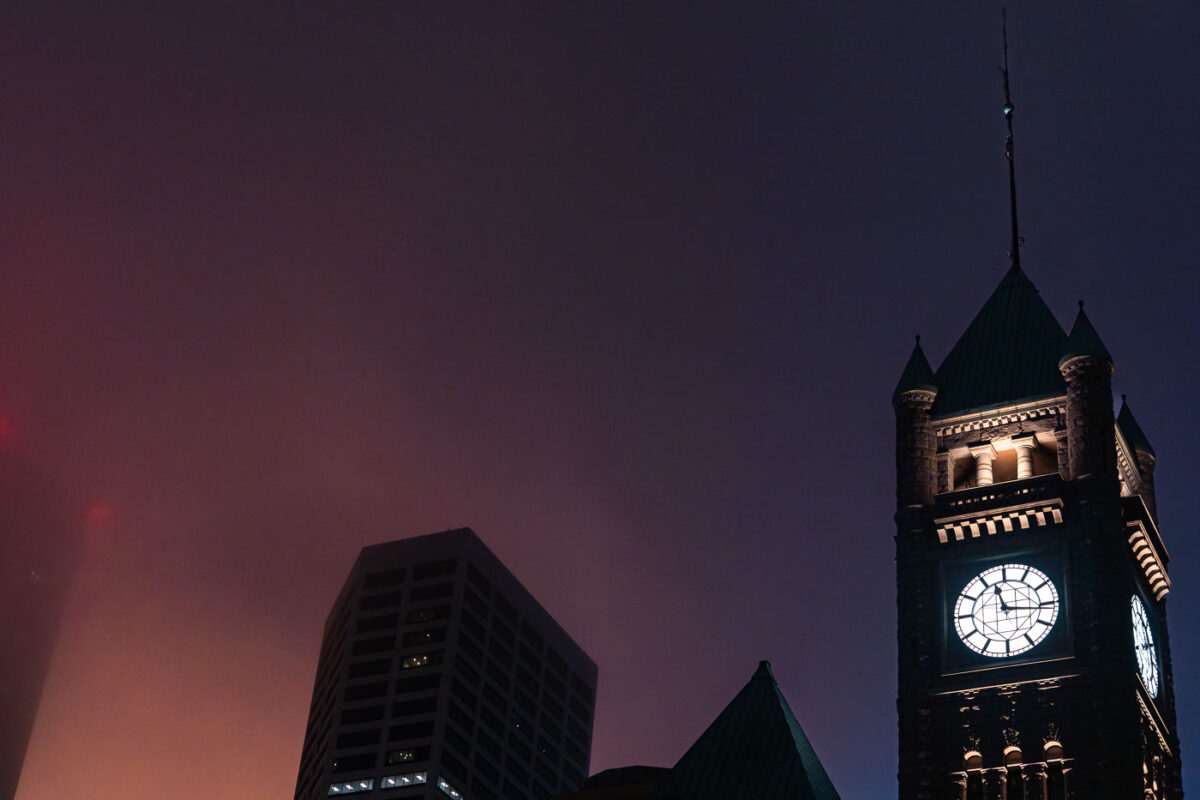
Minneapolis City Hall Clock Tower in downtown Minneapolis at night.
Minneapolis City Hall Clock Tower in downtown Minneapolis. The Romanesque Revival clock tower is part of City Hall, completed in 1906 and one of the city’s best-known civic landmarks.

Minneapolis City Hall Clock Tower, Downtown Minneapolis