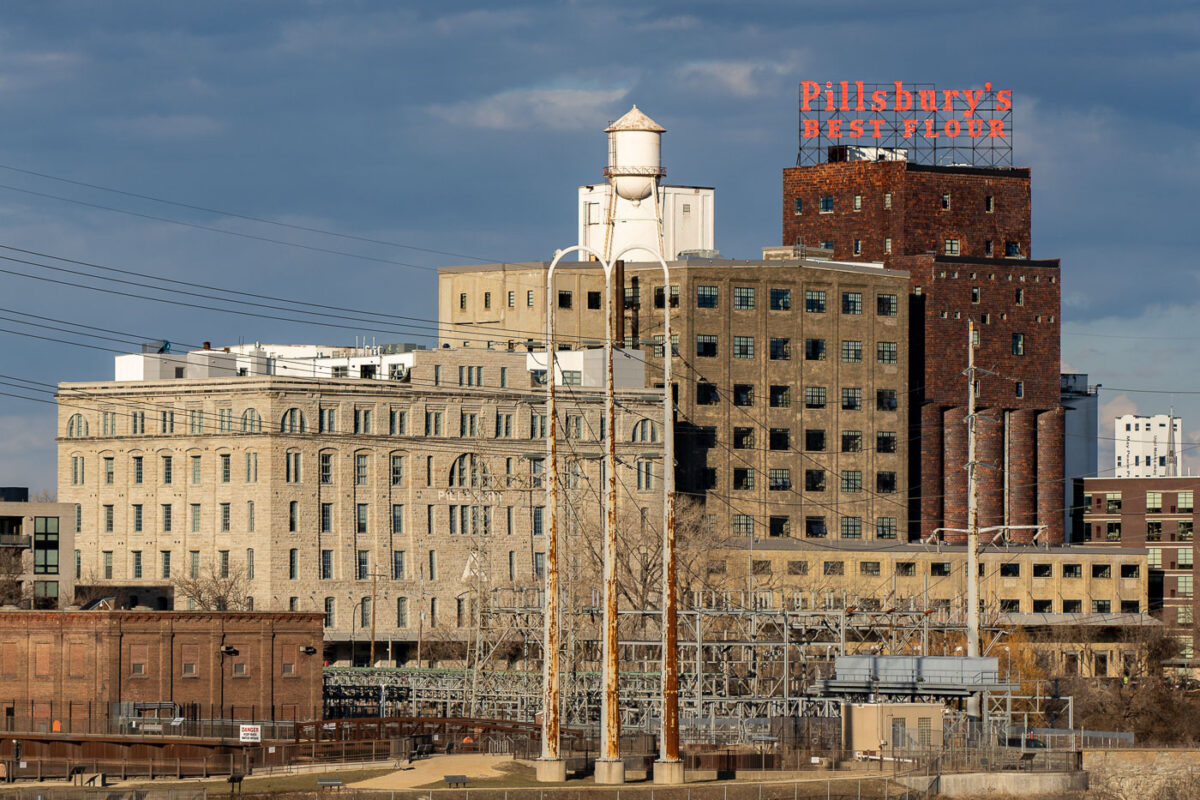
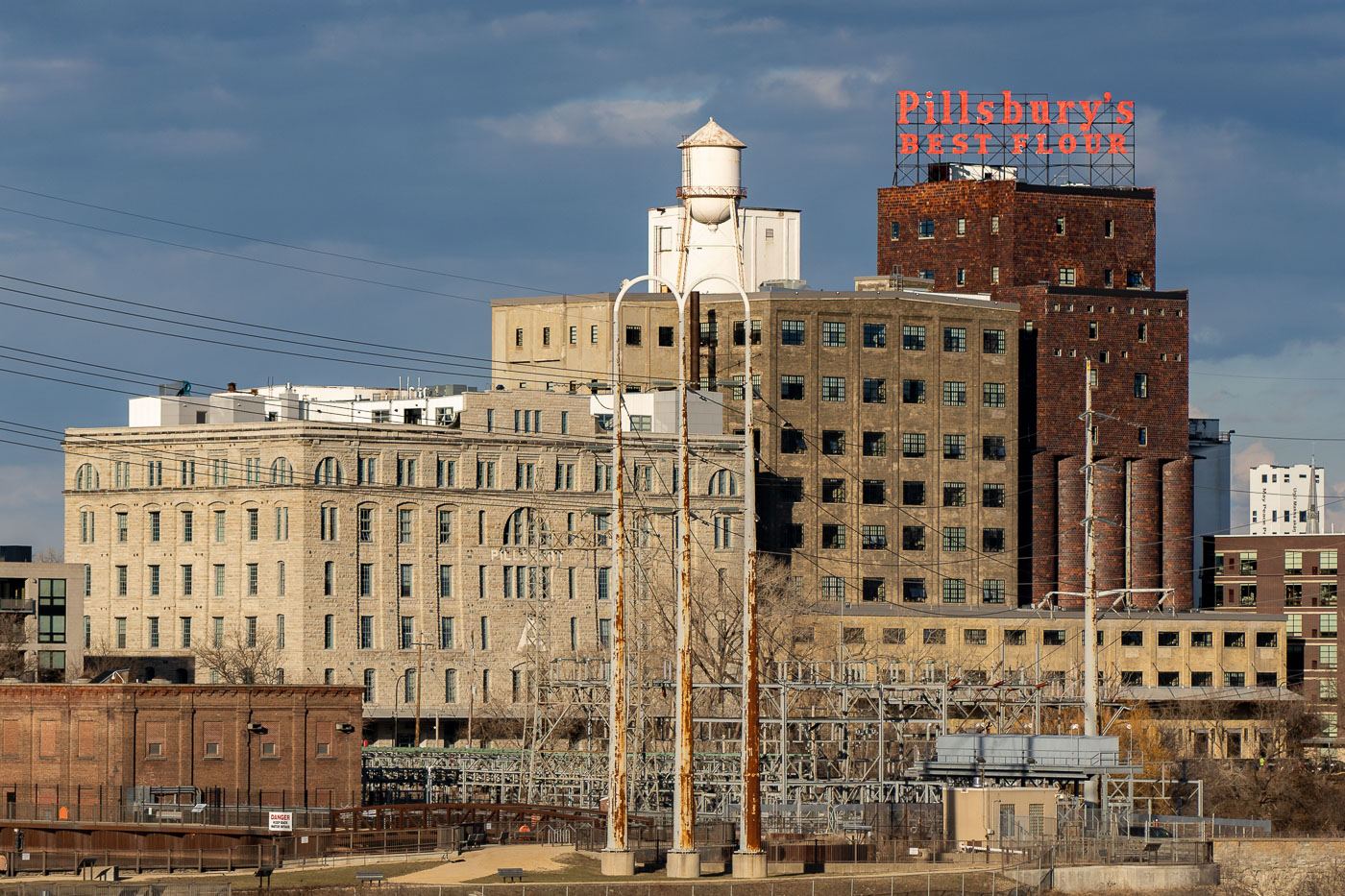
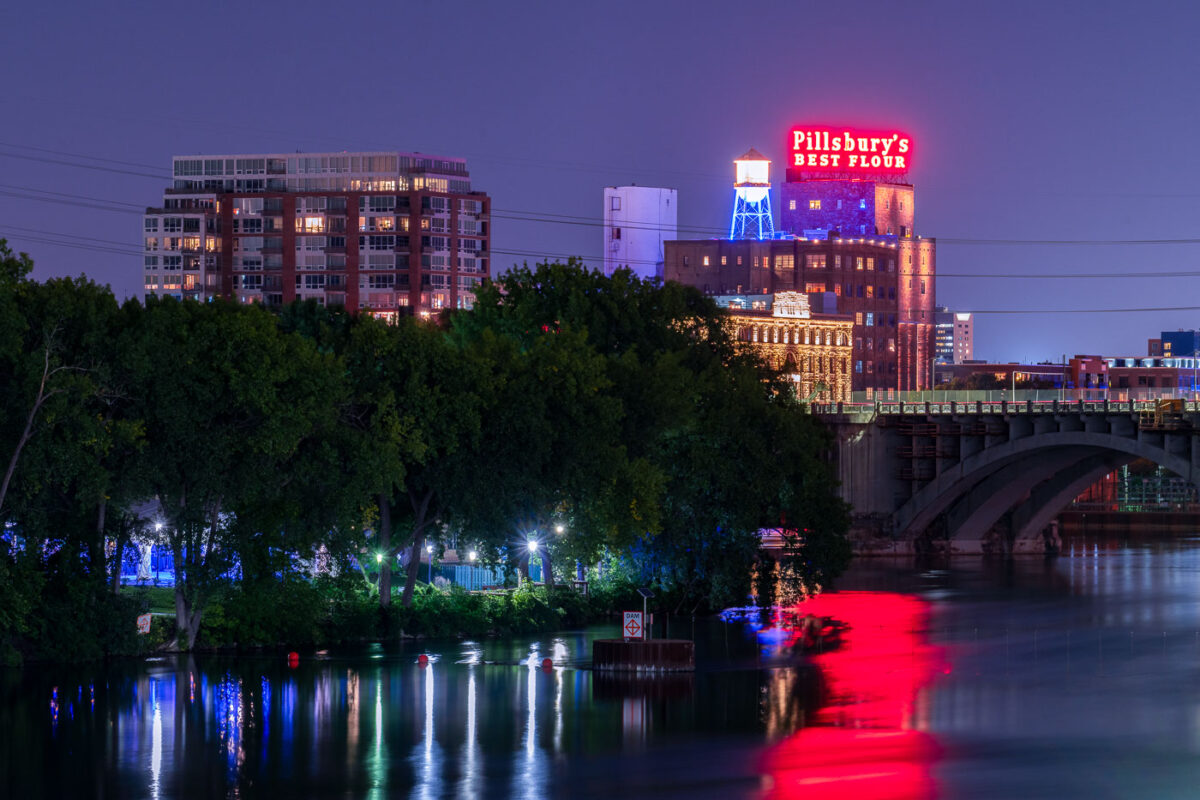
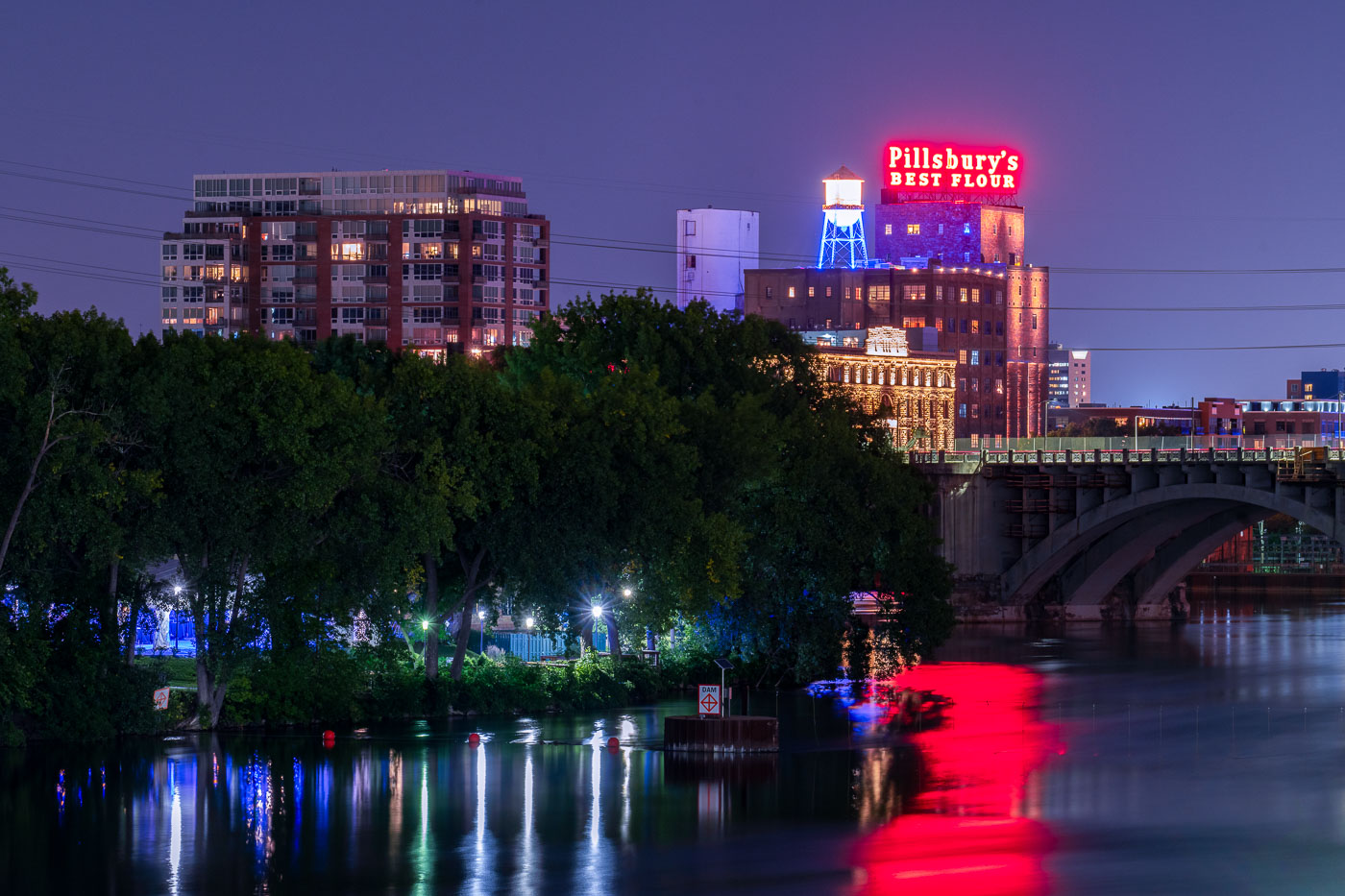
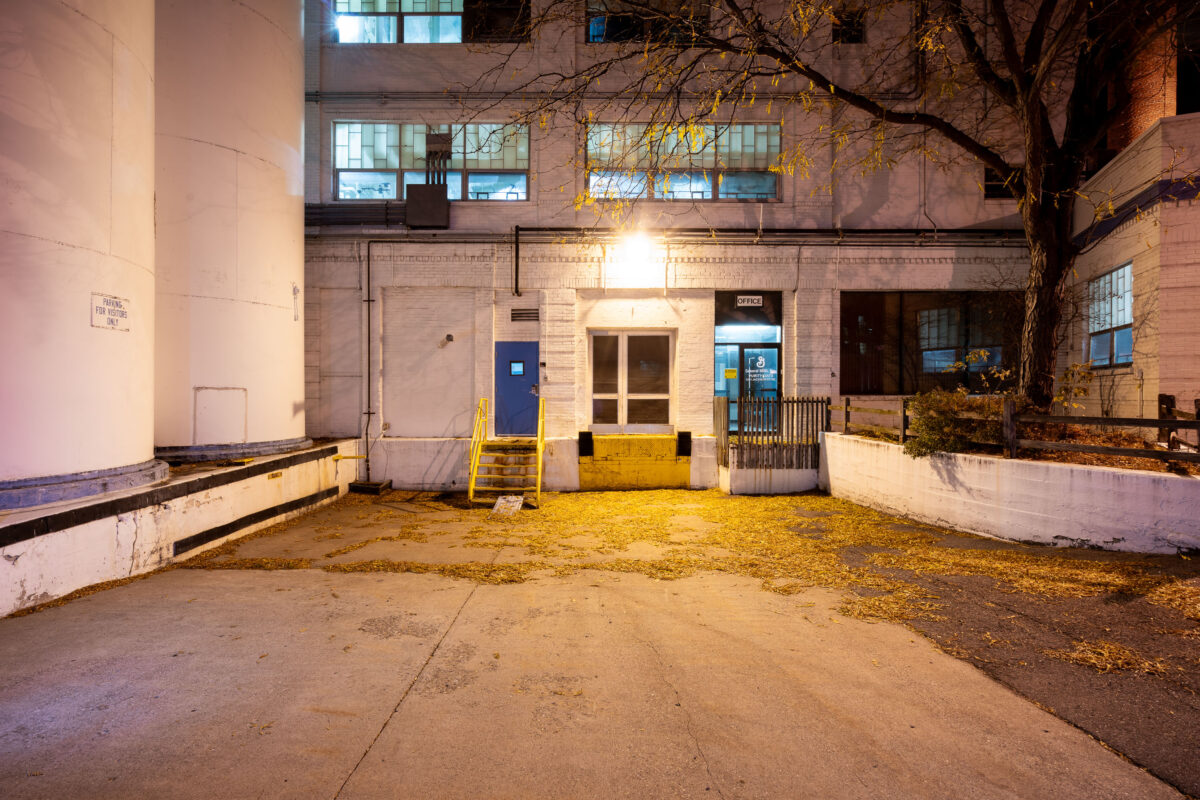
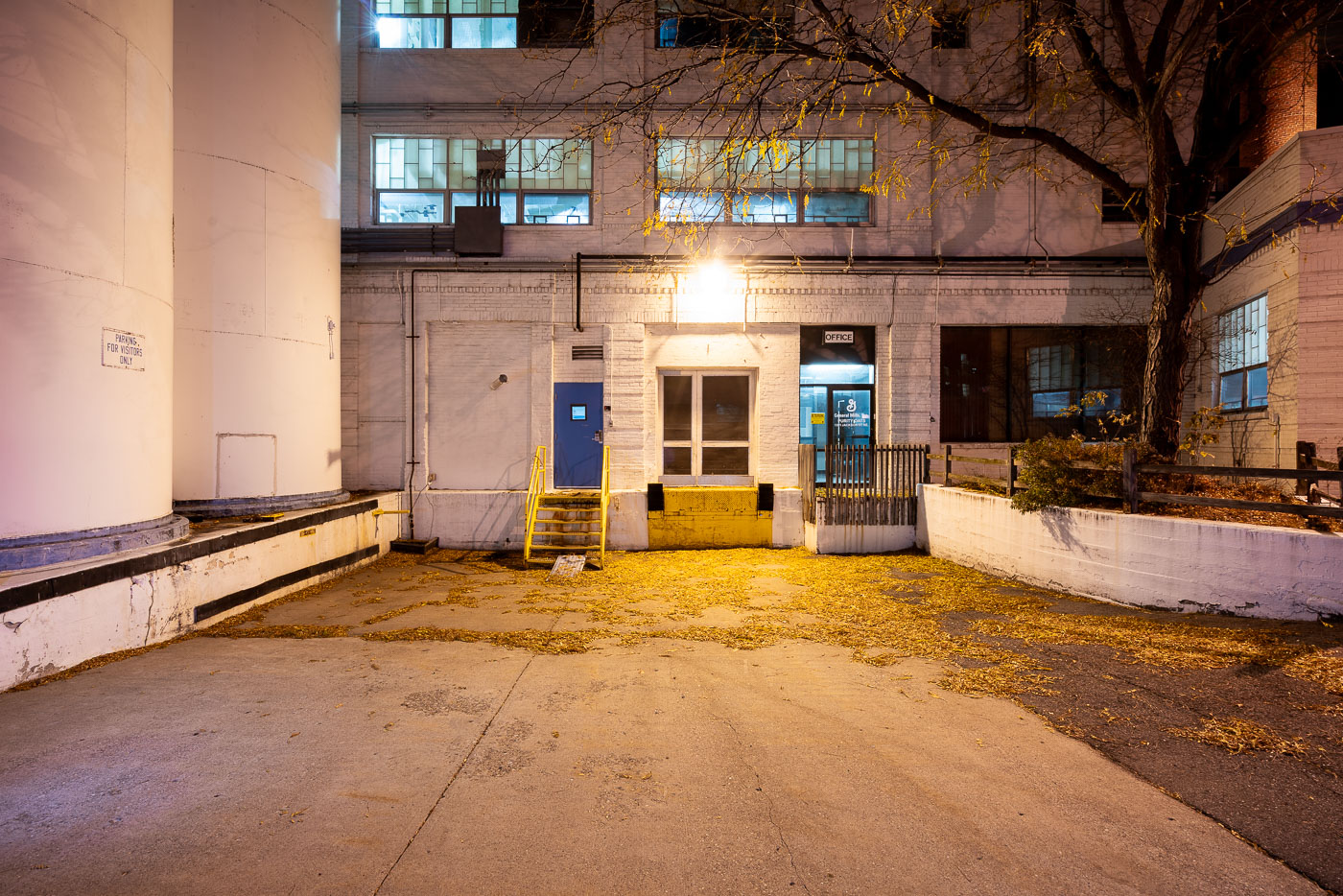
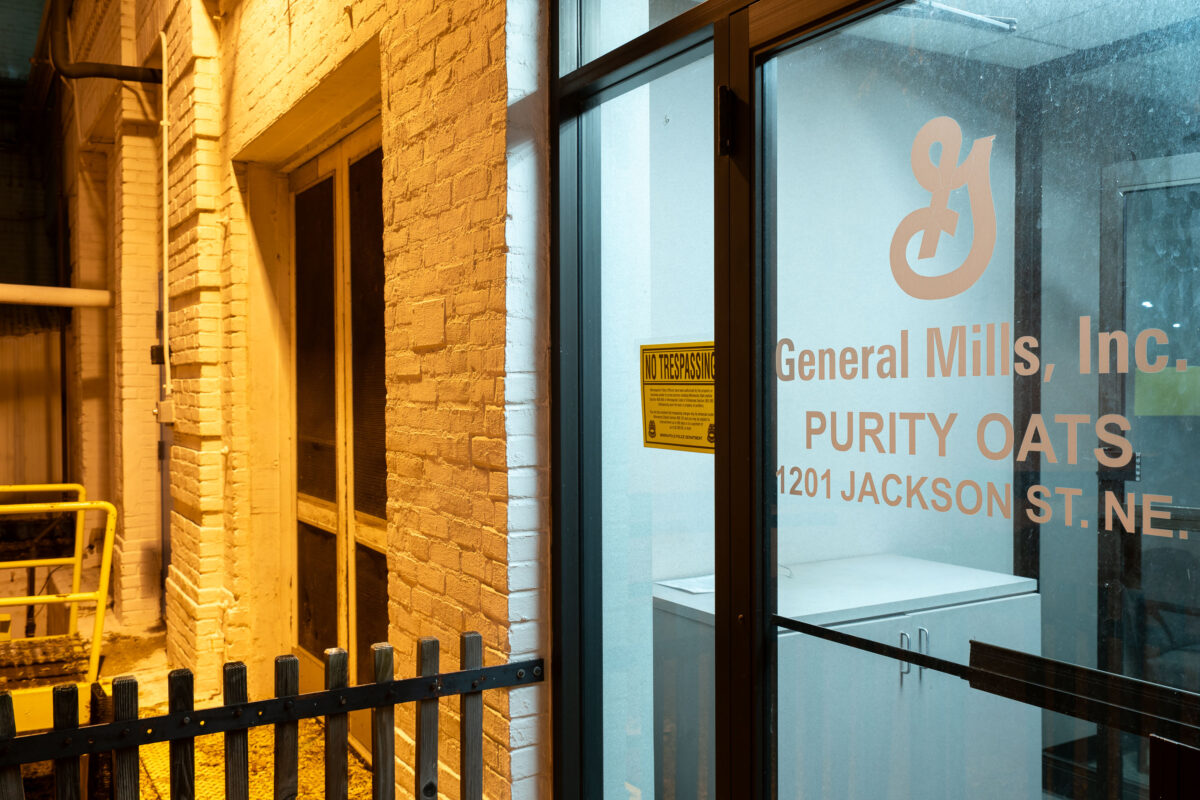
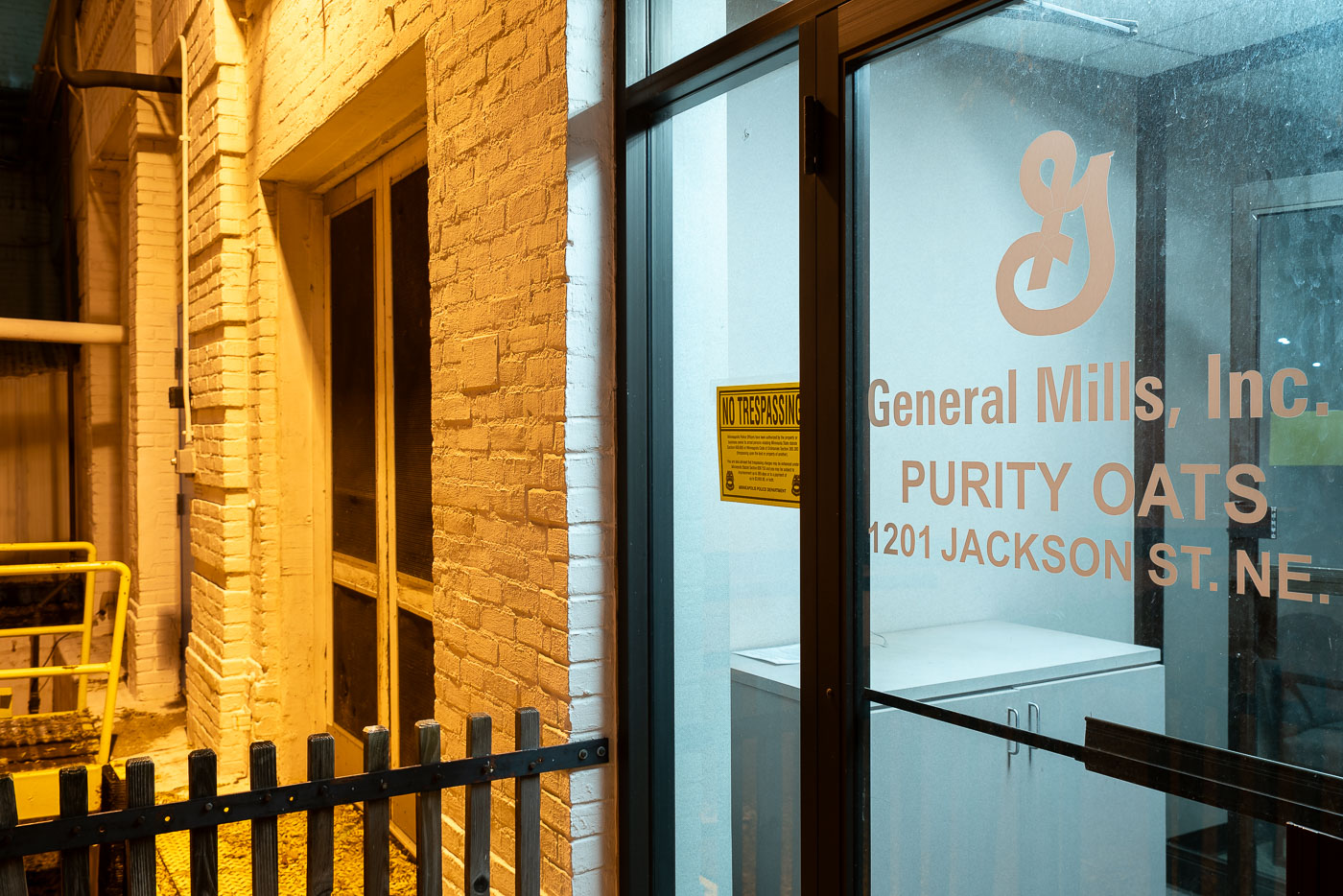
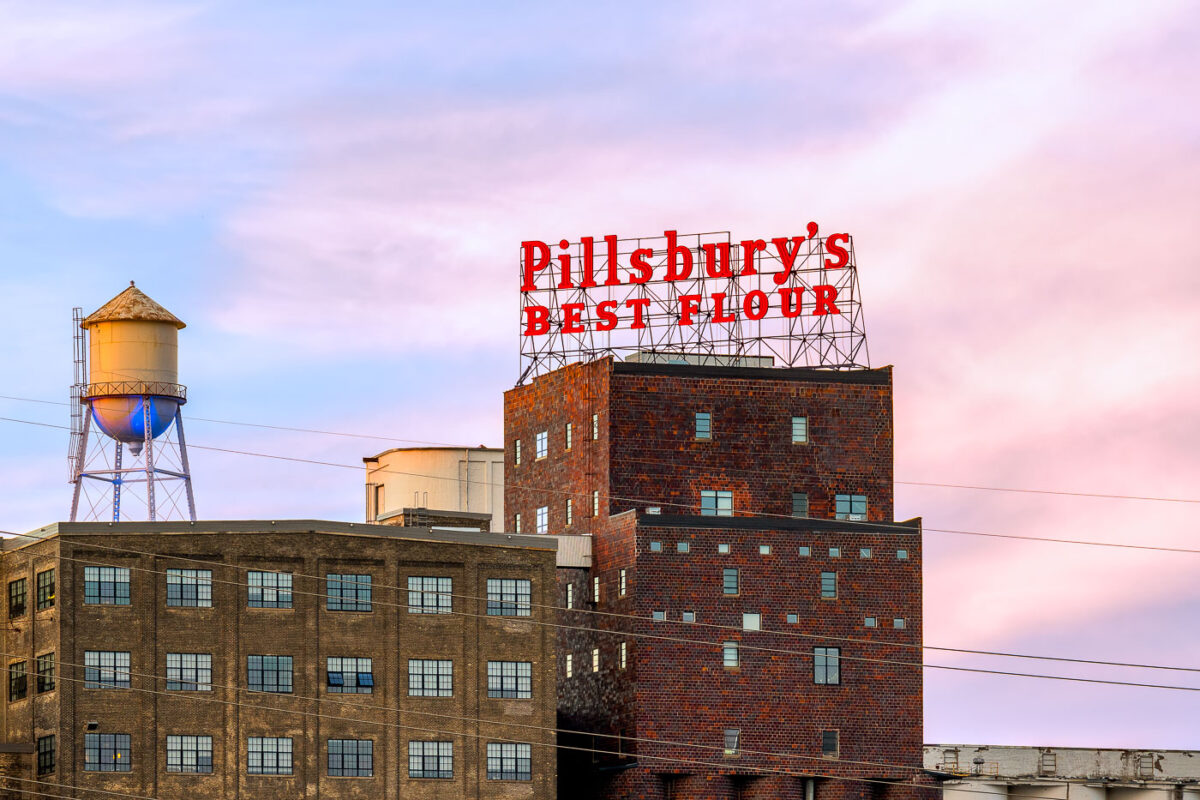
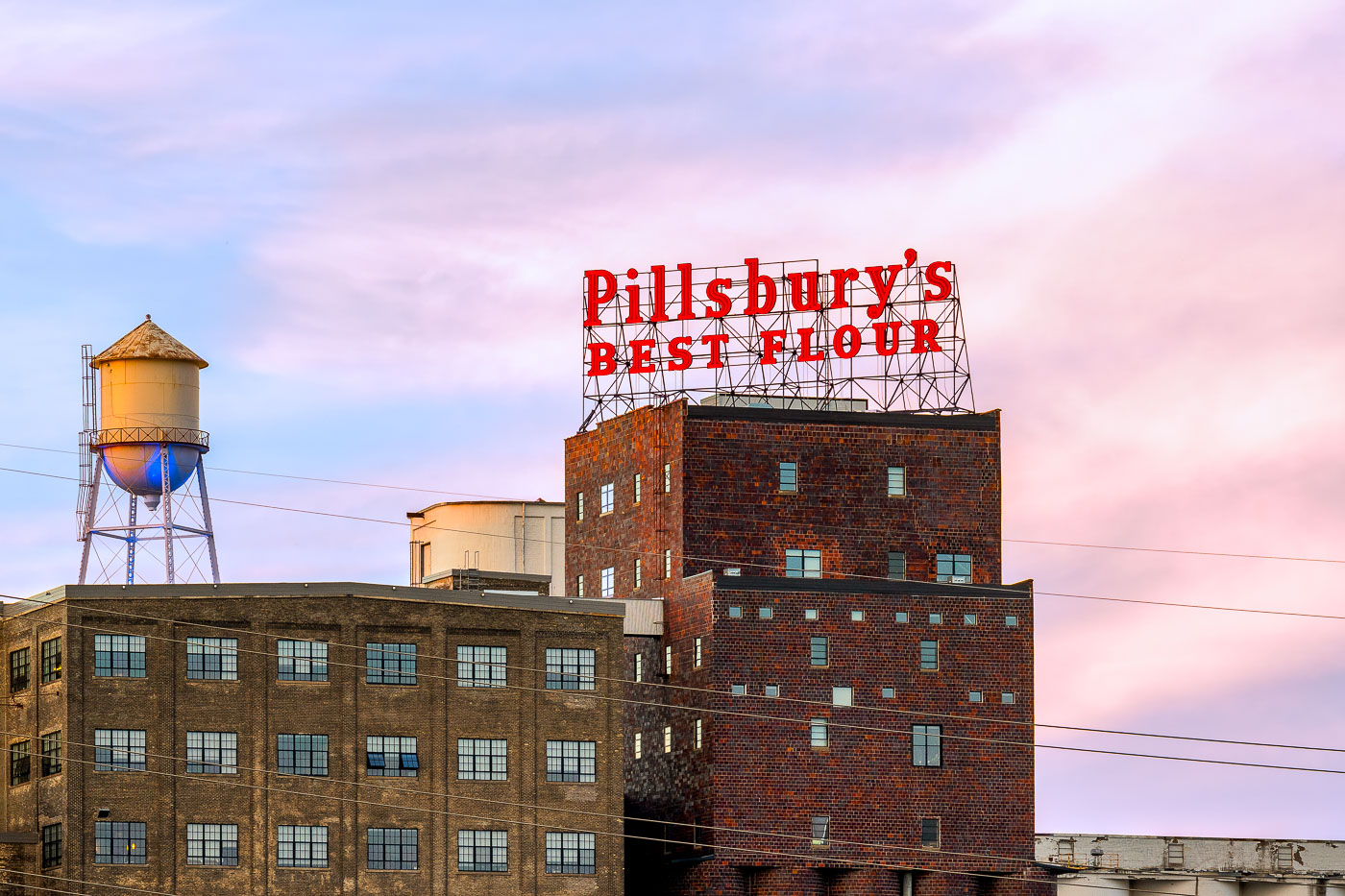
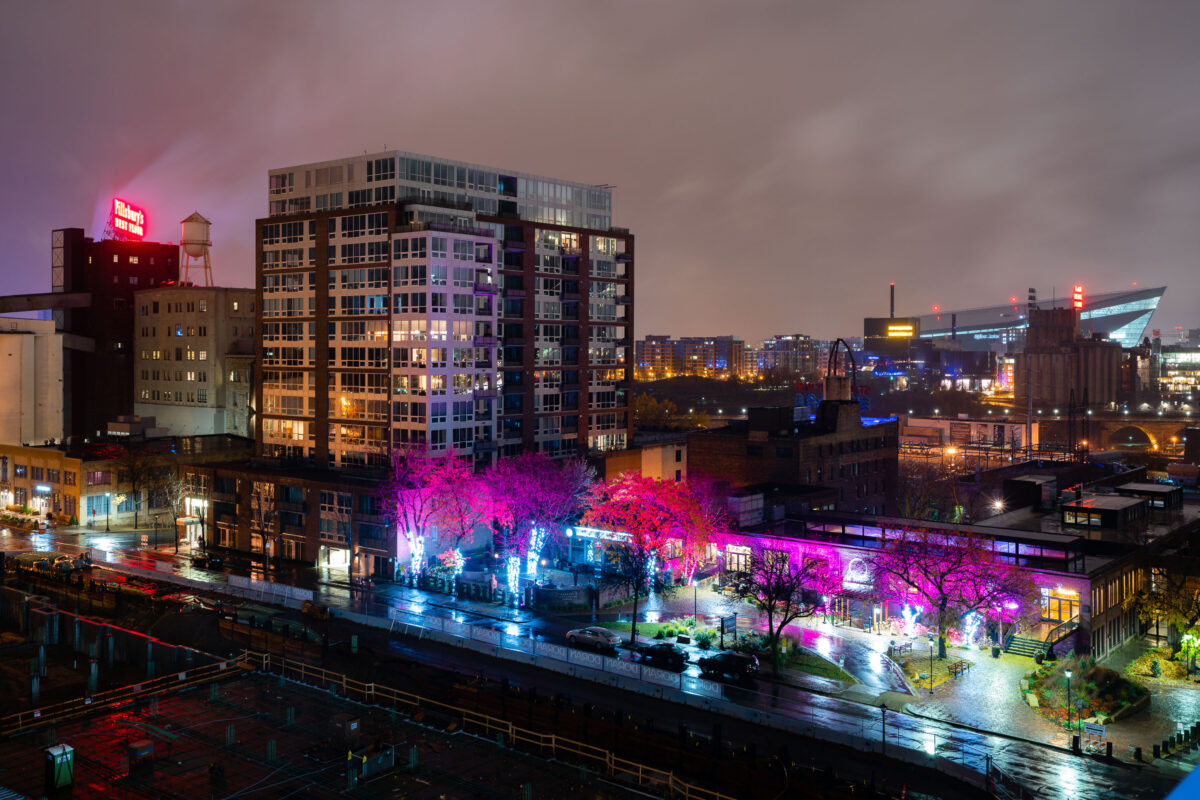
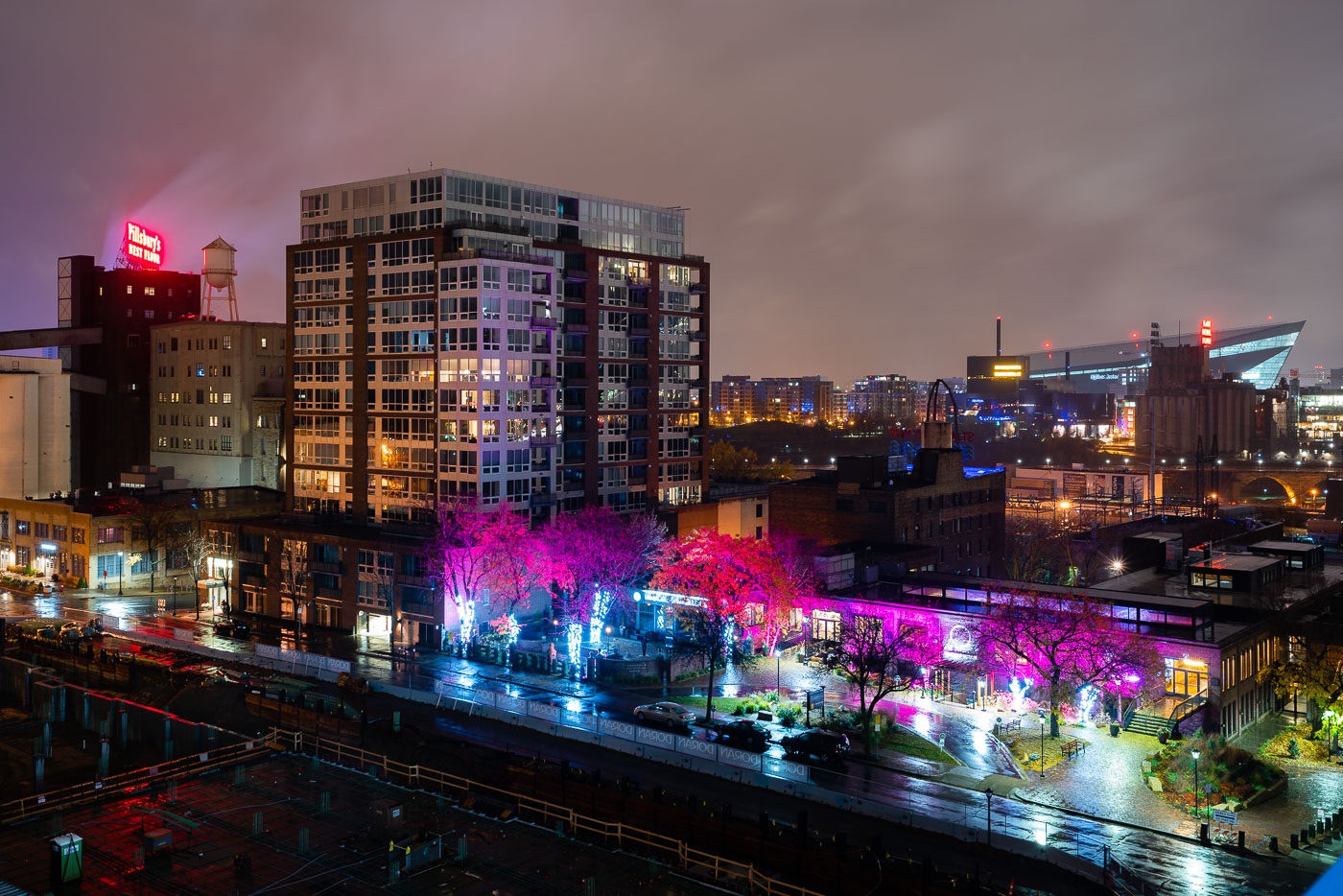
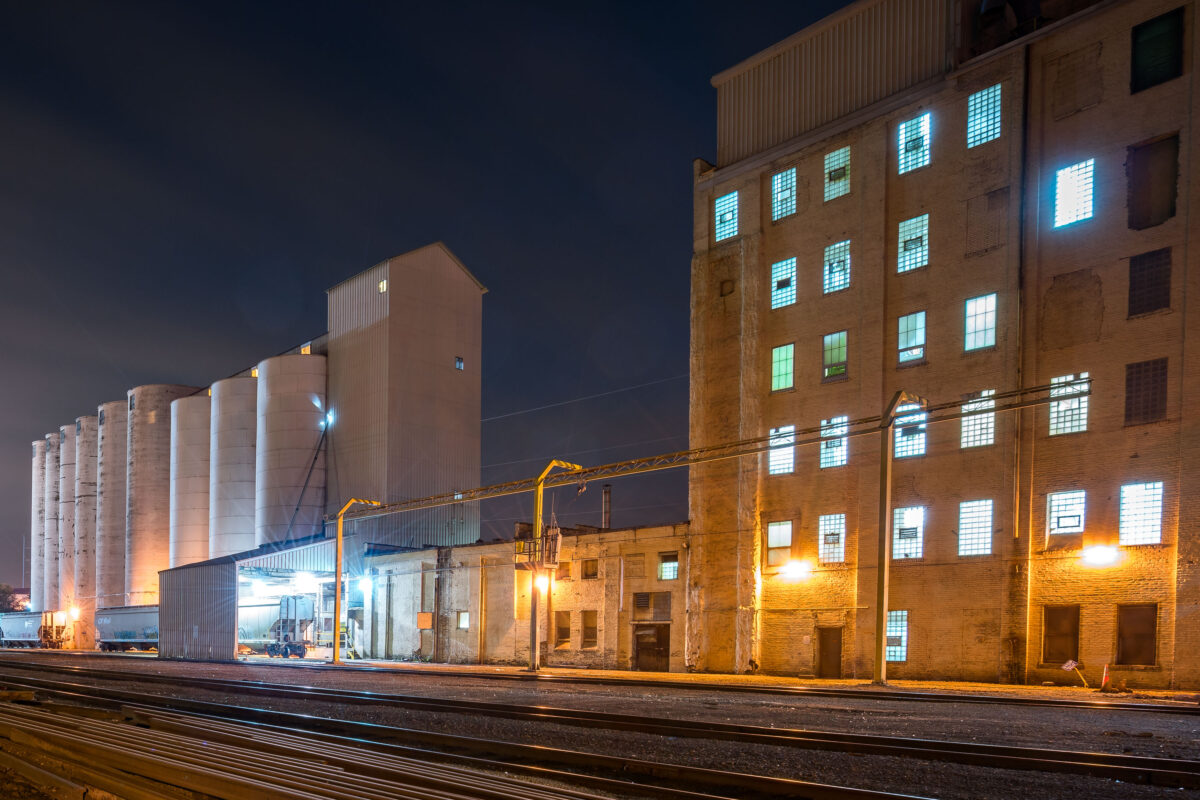
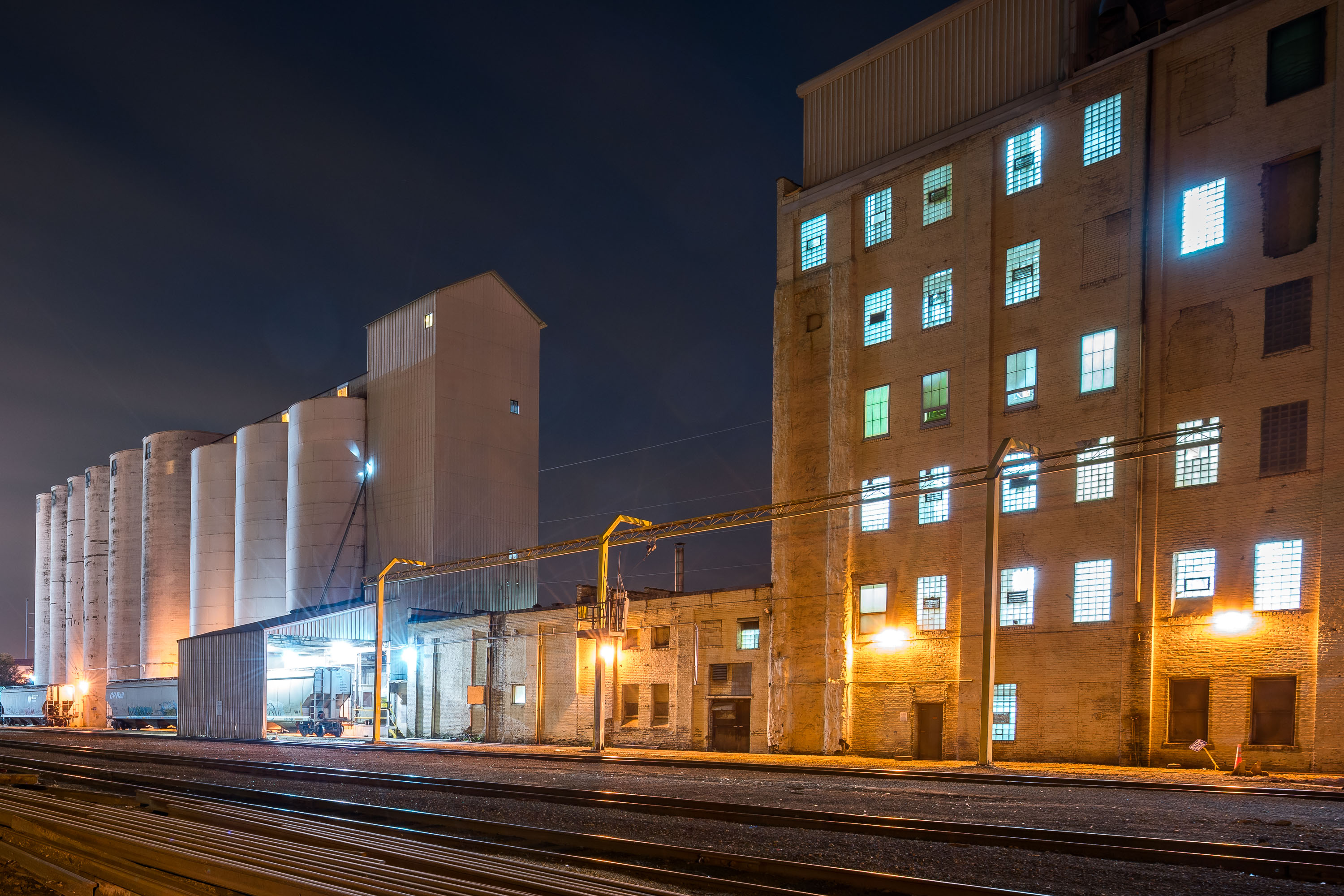
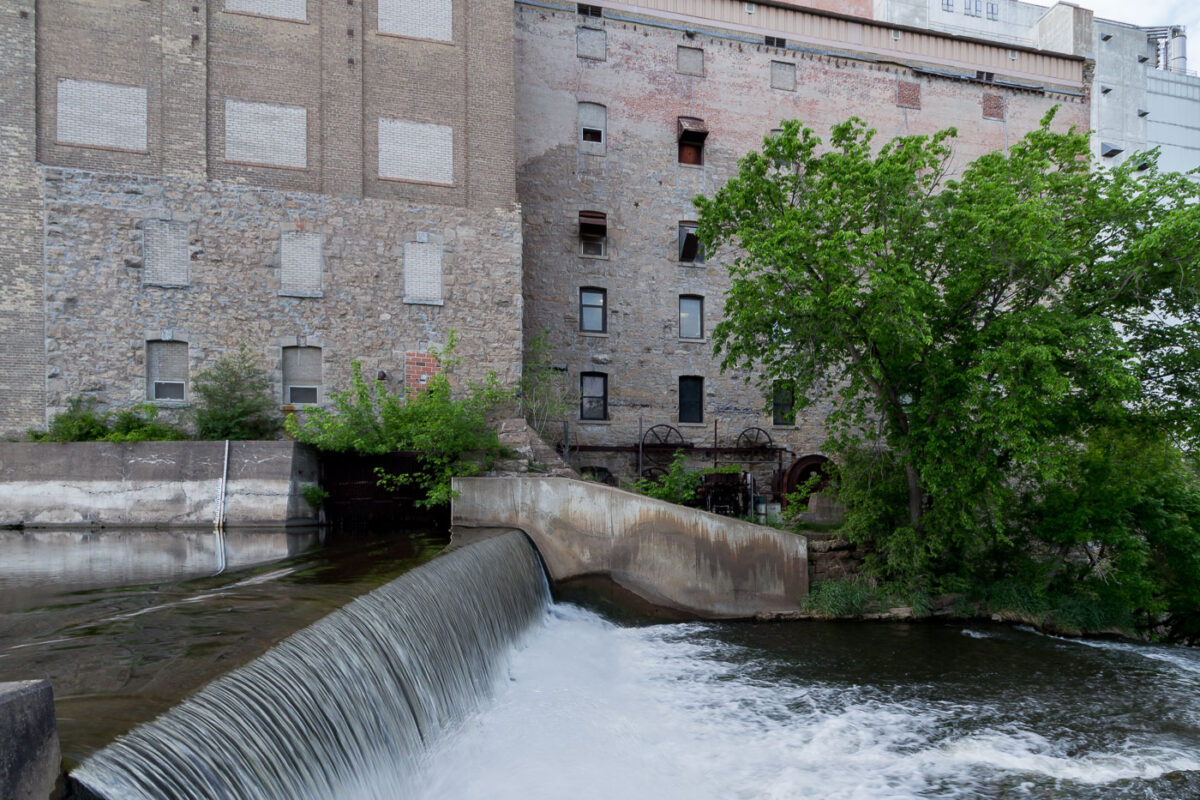
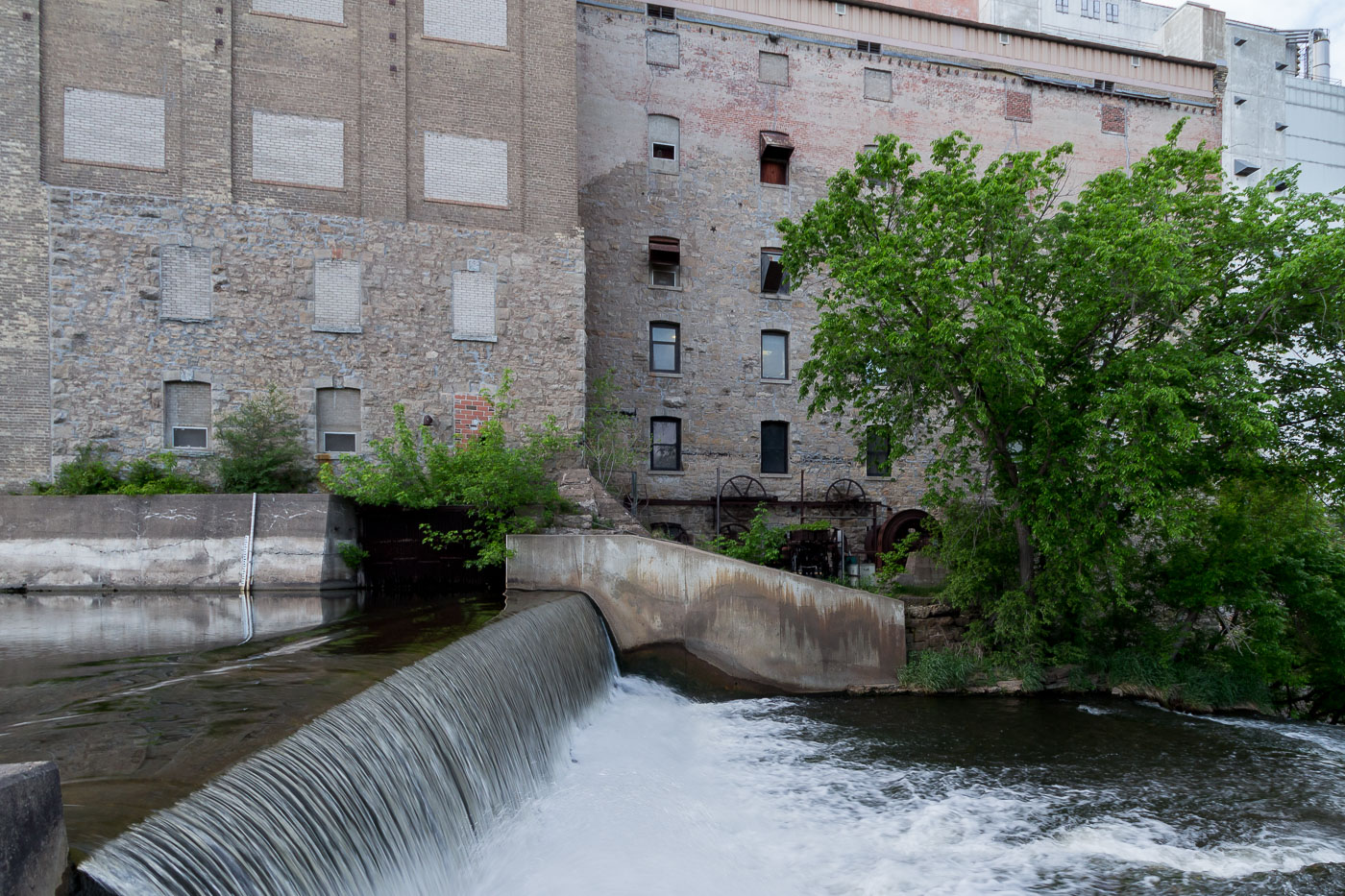
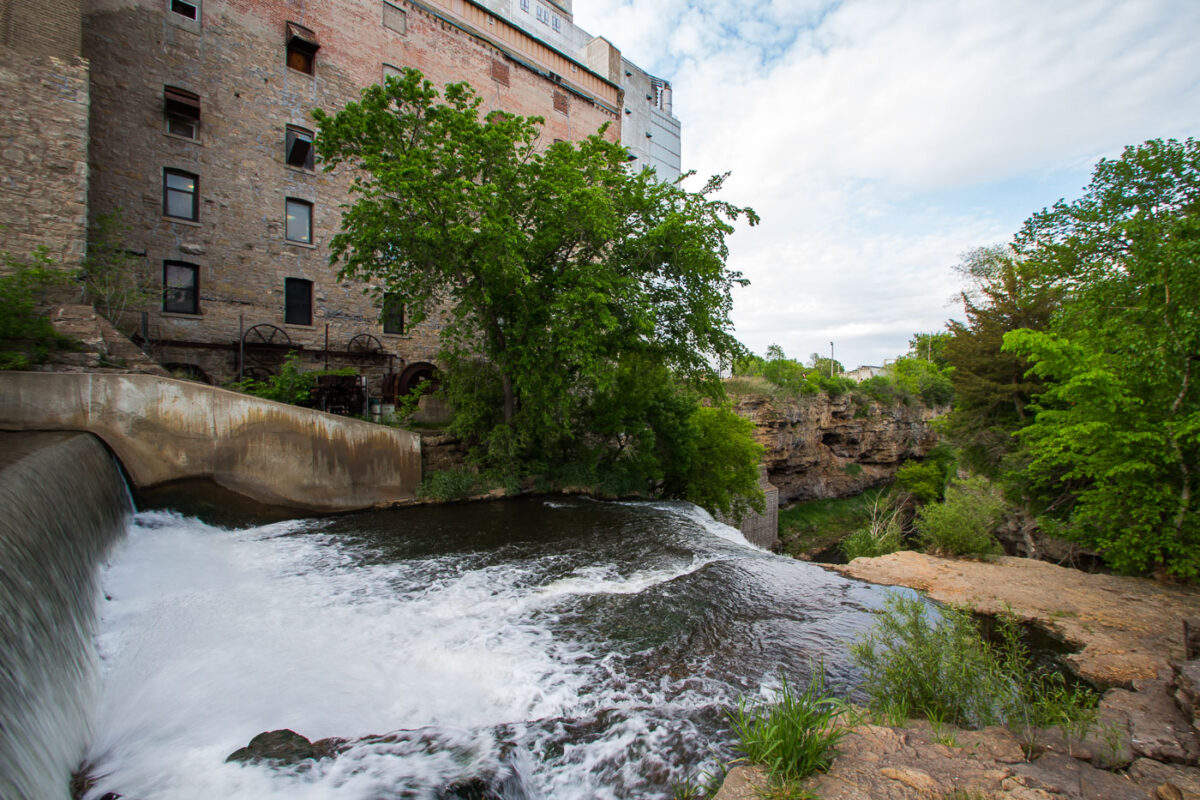
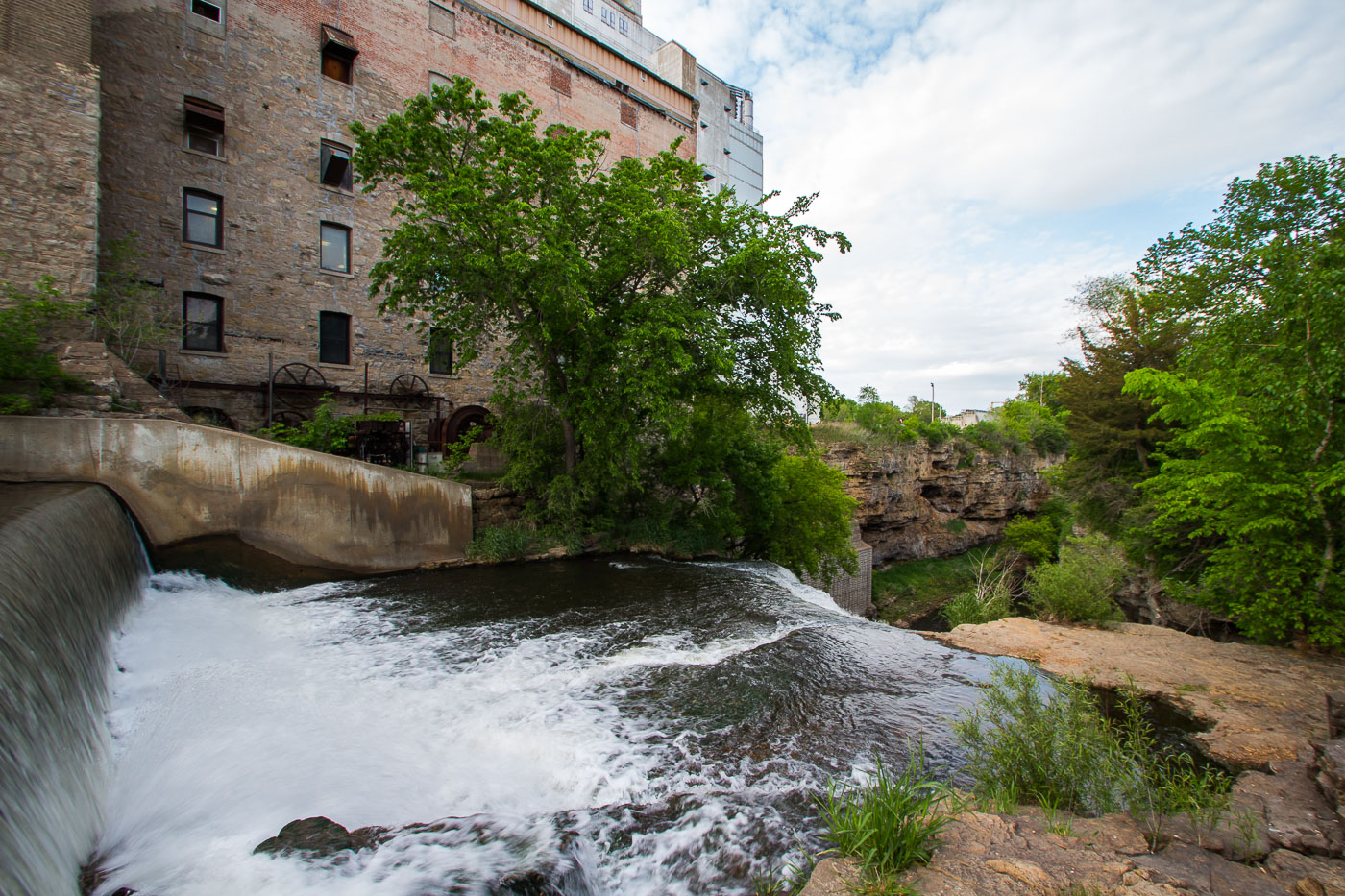
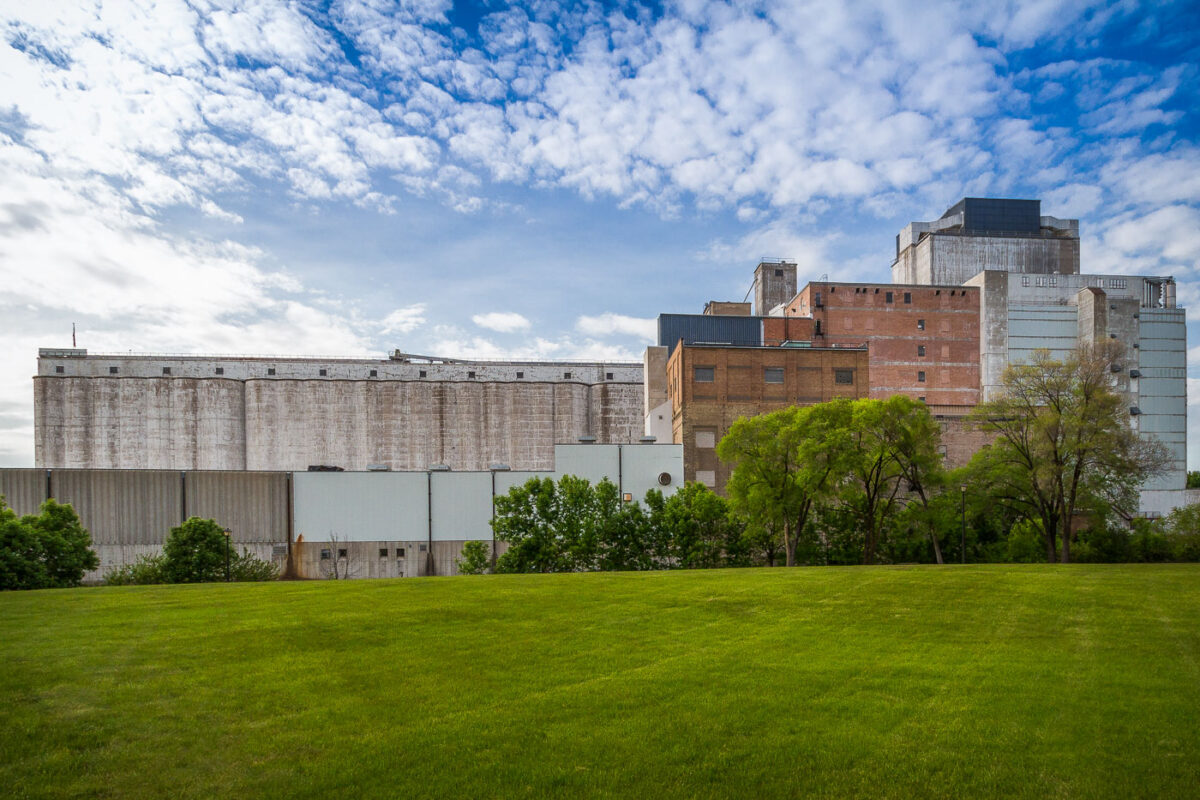
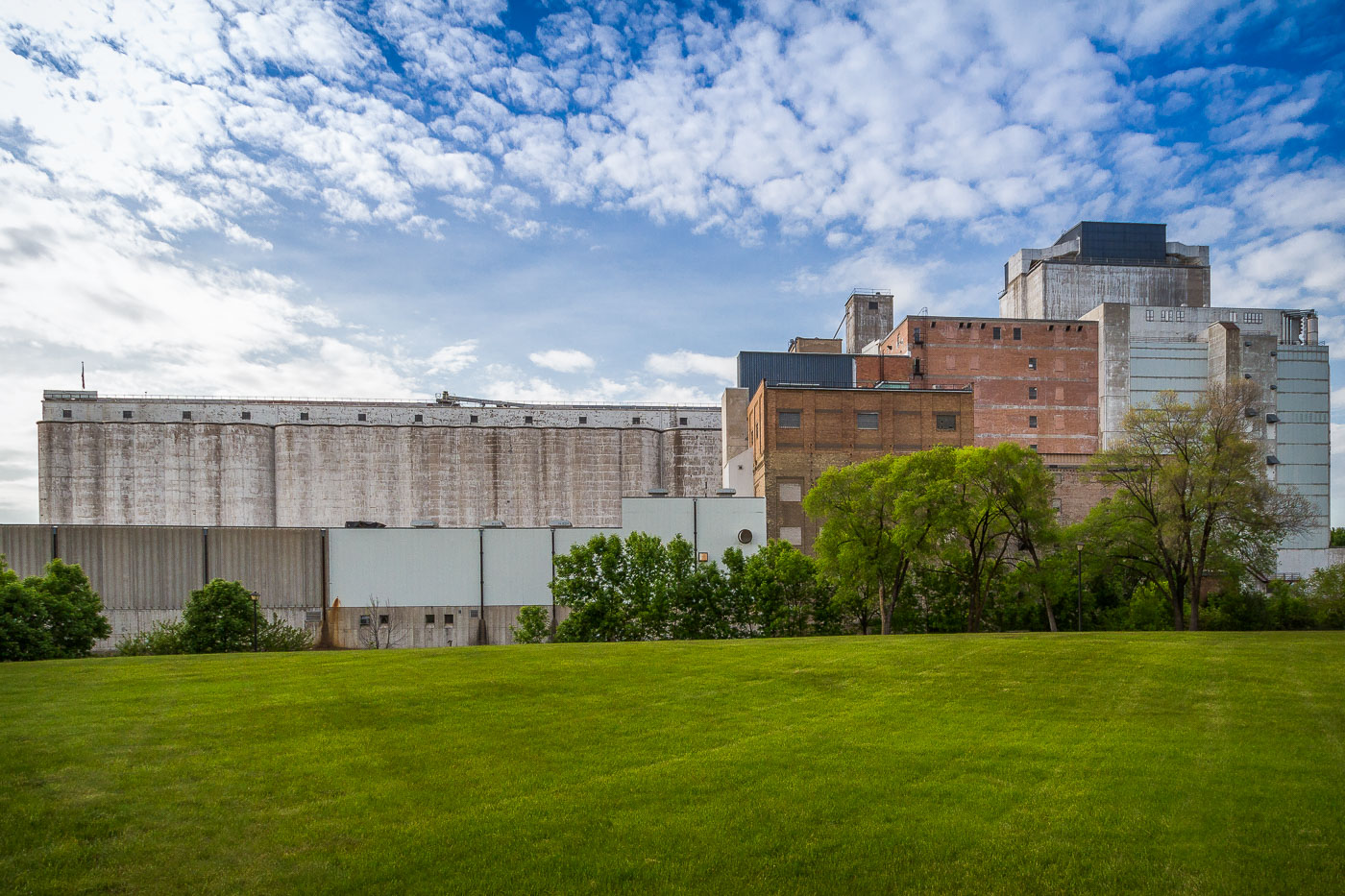
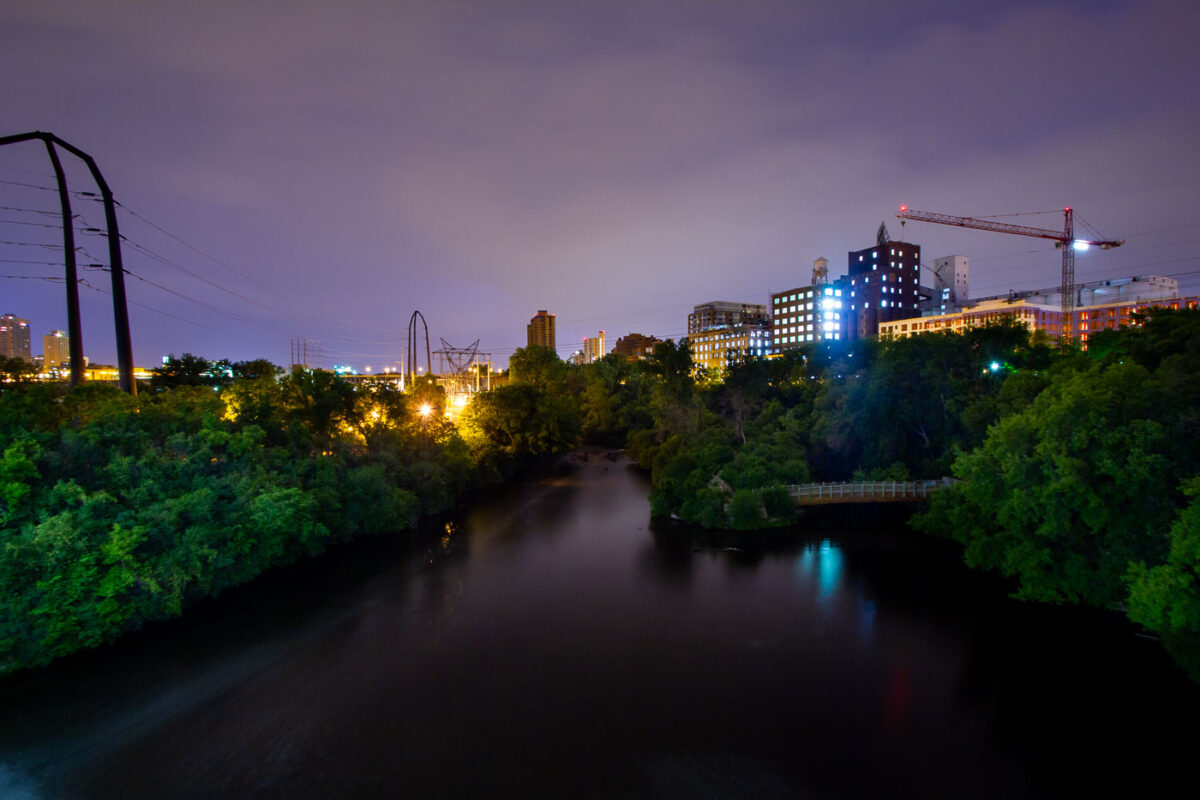
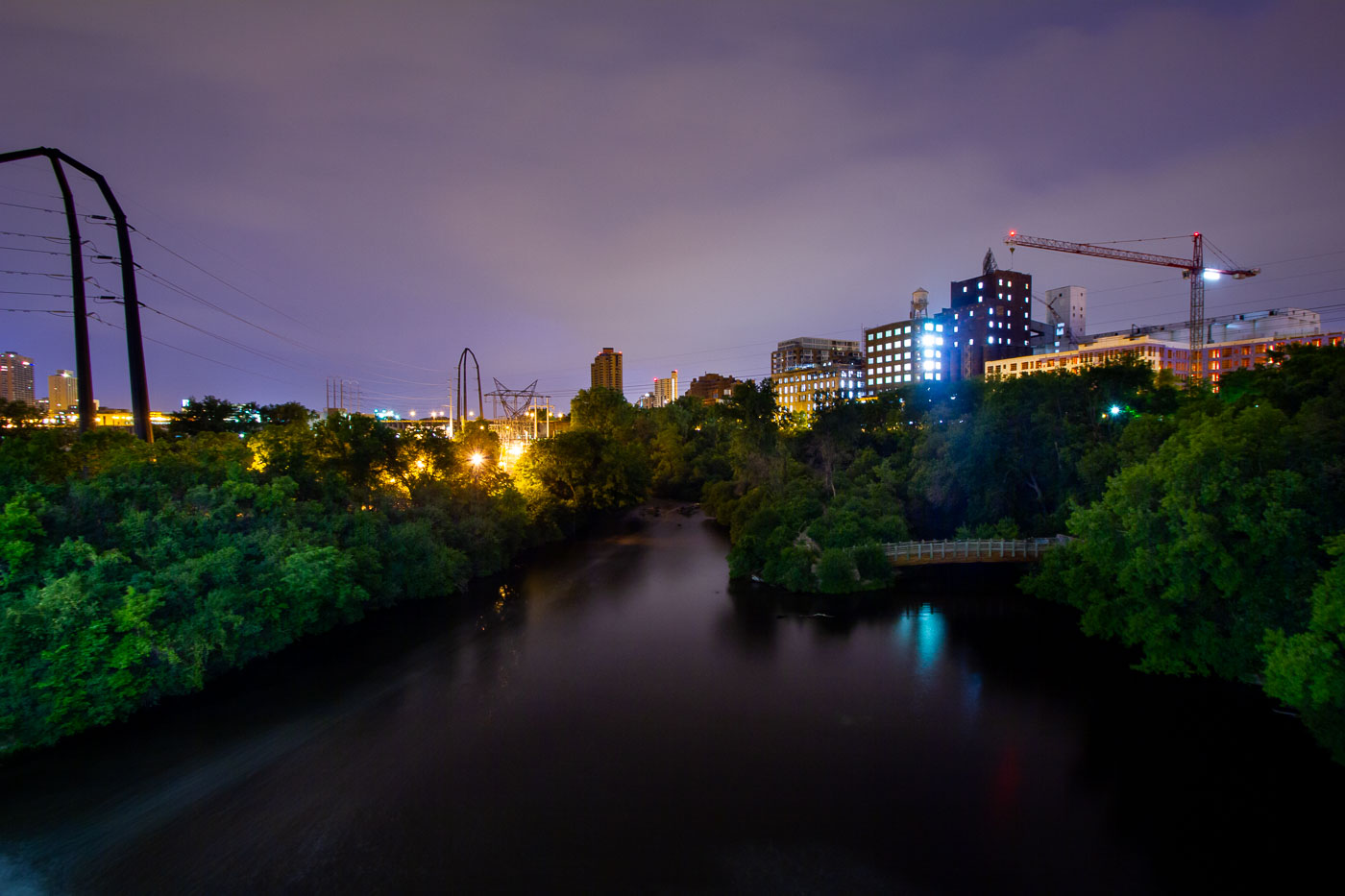
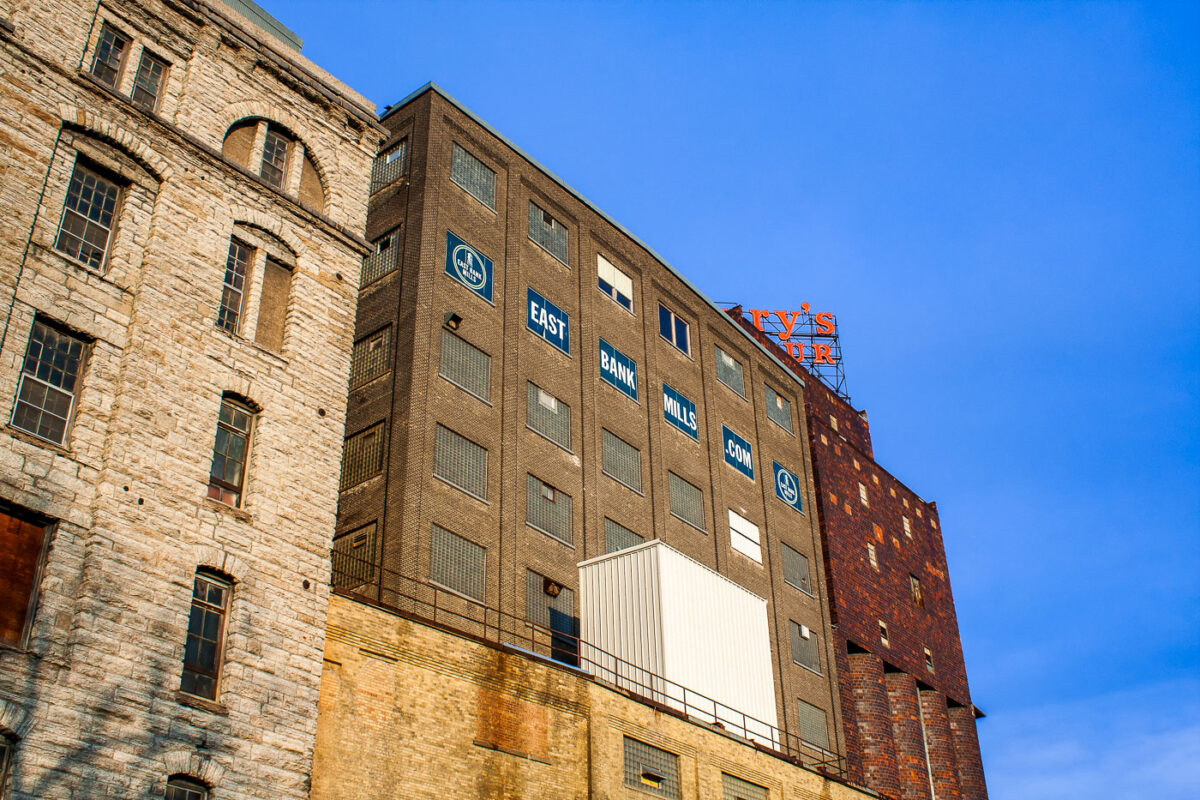
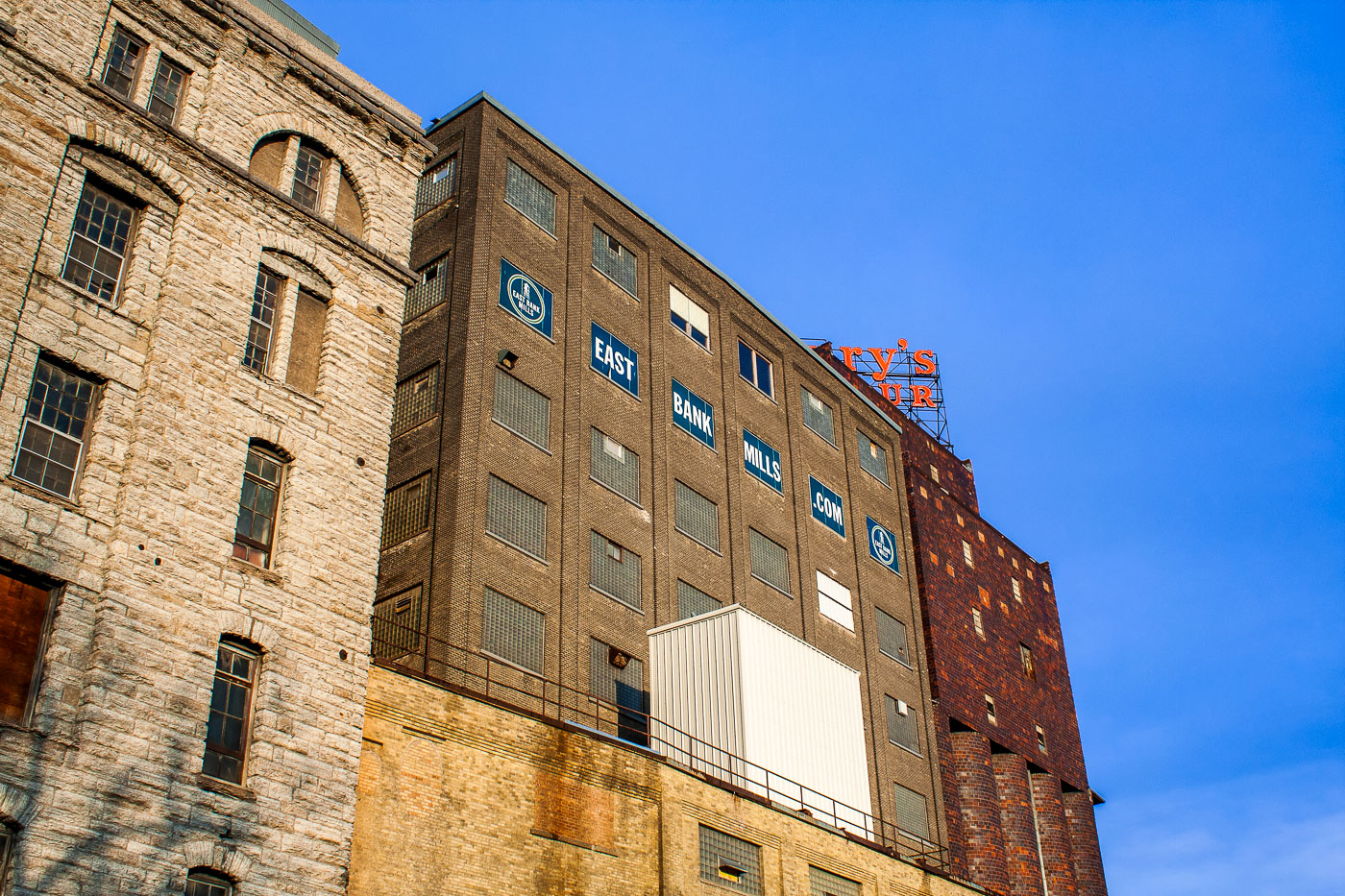
April 11, 2022 — Pillsbury A Mill complex in Minneapolis stands on the east bank of the Mississippi River near St. Anthony Falls. Built for the Pillsbury Company in the 1880s, the former flour mill was part of the city’s milling district and later adapted for other uses.August 20, 2020 — The historic Pillsbury A Mill stands illuminated on the Mississippi River near downtown Minneapolis. Once the world's largest flour mill, this National Historic Landmark played a crucial role in Minneapolis's development as a milling center.November 3, 2019 — This view shows the rear loading and office entrance of the former General Mills Purity Oats facility in Northeast Minneapolis. Built during the city’s industrial boom, the complex once handled oat processing and packaging for one of the nation’s largest cereal producers.November 3, 2019 — General Mills Purity Oats Facility, Minneapolis, at 1201 Jackson Street NE. The former industrial building in Northeast Minneapolis was part of General Mills’ grain and cereal processing operations.June 28, 2019 — The Pillsbury A-Mill, a former flour mill on the Mississippi River in Minneapolis, Minnesota, was once the world's largest flour mill for four decades. Completed in 1881, it utilized two powerful 1,200-horsepower waterwheels. Recognized as a National Historic Landmark in 1966, the structure has since been repurposed into resident artist lofts.November 6, 2018 — US Bank Stadium, a multi-purpose venue completed in 2016, is visible across the Mississippi River from Northeast Minneapolis. In the foreground, the historic Pillsbury A Mill, once the largest flour mill in the world, stands as a reminder of the area's industrial past.September 2, 2017 — ADM Nokomis Flour Mill in South Minneapolis was an Archer Daniels Midland grain-processing facility. The complex includes mill buildings, grain silos, and rail access for moving grain and flour. The mill closed in mid-2019.May 23, 2015 — Ardent Mills in Hastings, Minnesota, stands beside the Vermillion River at Vermillion Falls. The mill is part of the former Hastings Mill complex, which used the river’s water power for flour production.May 23, 2015 — Vermillion Falls and Ardent Mills in Hastings, Minnesota, occupy a site on the Vermillion River long used for milling. The flour mill remains linked to the falls, which provided water power for earlier industrial operations along the river.May 23, 2015 — The Ardent Mills facility in Hastings, Minnesota, stands as a significant historical site in the state's milling industry. Established as the first operating mill in Minnesota, this facility is credited with key innovations, including the development of the purifier, the patent barrel, and graham flour, according to the company.June 7, 2014 — Pillsbury A Mill in Minneapolis overlooks the Mississippi River gorge near downtown. The former flour mill complex, built in 1881, is part of a redevelopment project that retains the historic industrial site along the river corridor.February 6, 2009 — East Bank Mills is a historic flour mill complex in Northeast Minneapolis. The industrial buildings visible here are part of the milling operations that made Minneapolis a major flour production center in the late 19th and early 20th centuries.
Built in Minneapolis
Minneapolis Photographer
Browse by location, move through long-running series, or start with recent work.