NASA Michoud Assembly Facility: Illuminated Logo, New Orleans
August 2018
—
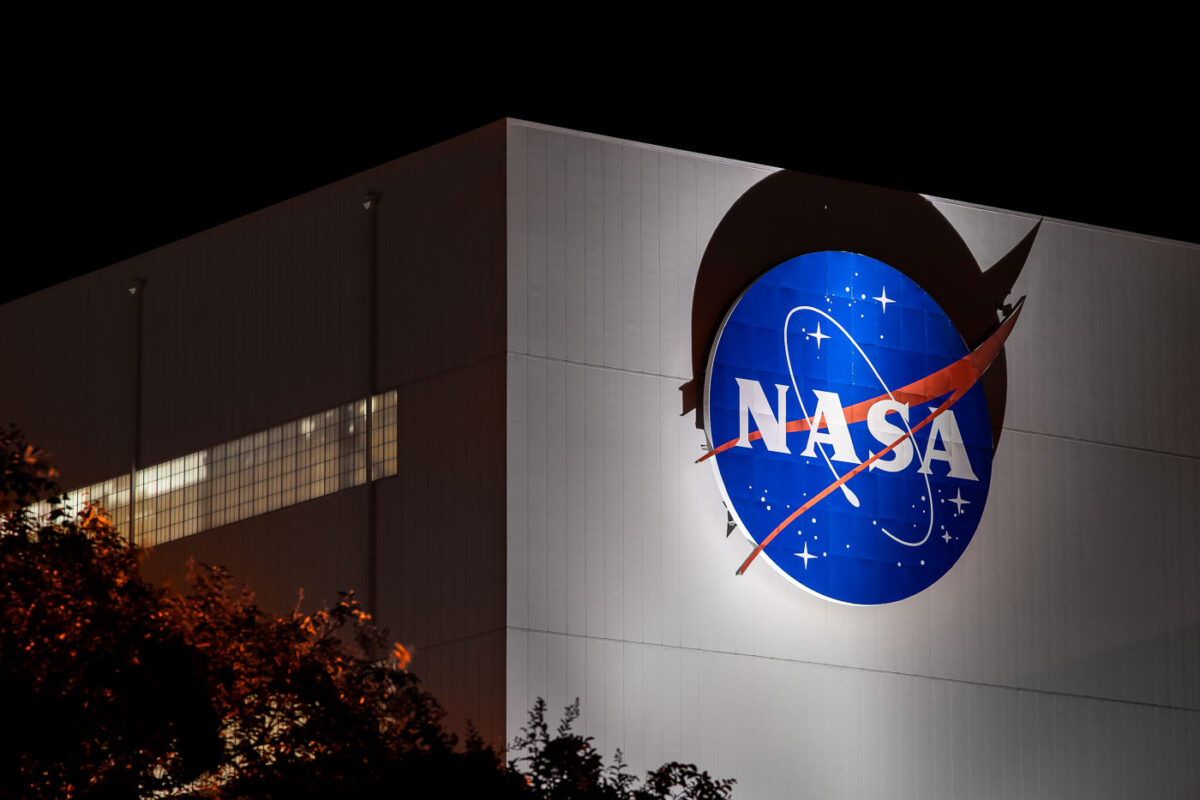
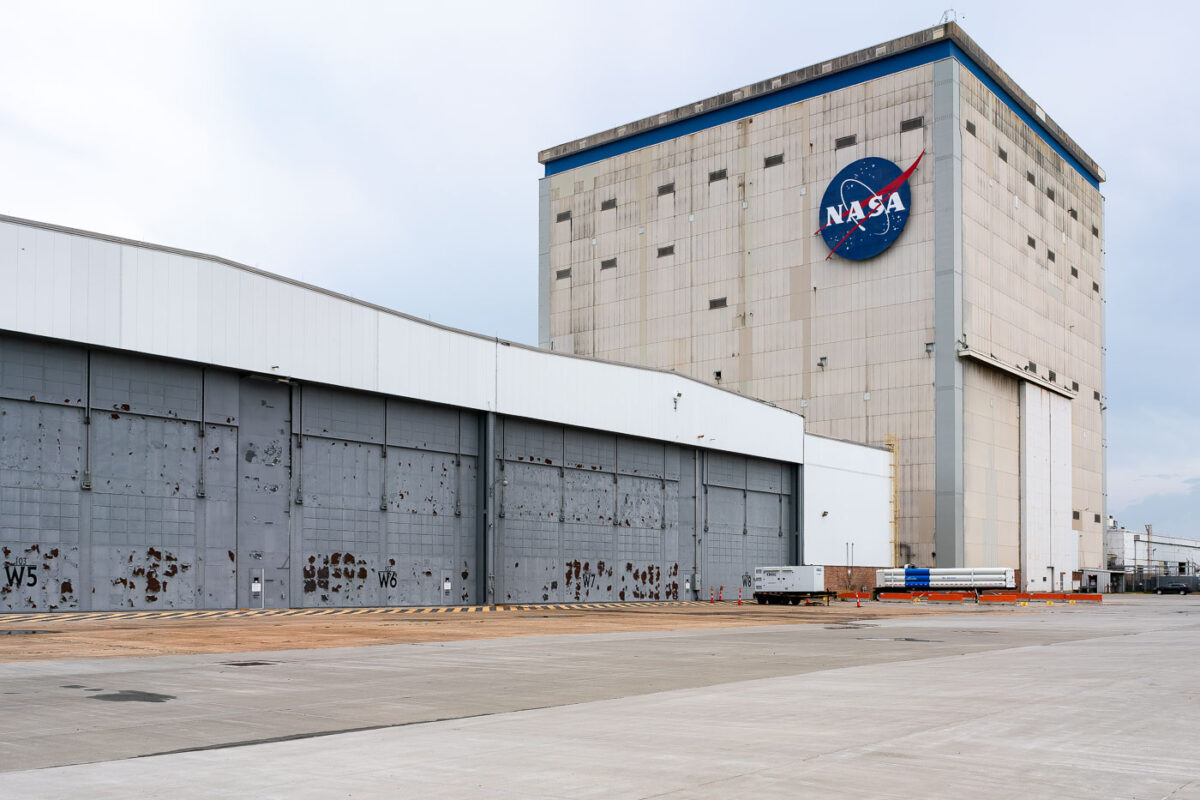
The NASA logo illuminated on the side of the Michoud Assembly Facility in New Orleans, Louisiana. Established during World War II and later repurposed for the Apollo and Space Shuttle programs, the vast complex continues to play a central role in U.S. space manufacturing. Today, Michoud supports construction of major components for NASA’s Artemis missions, including the Space Launch System rocket and Orion spacecraft.
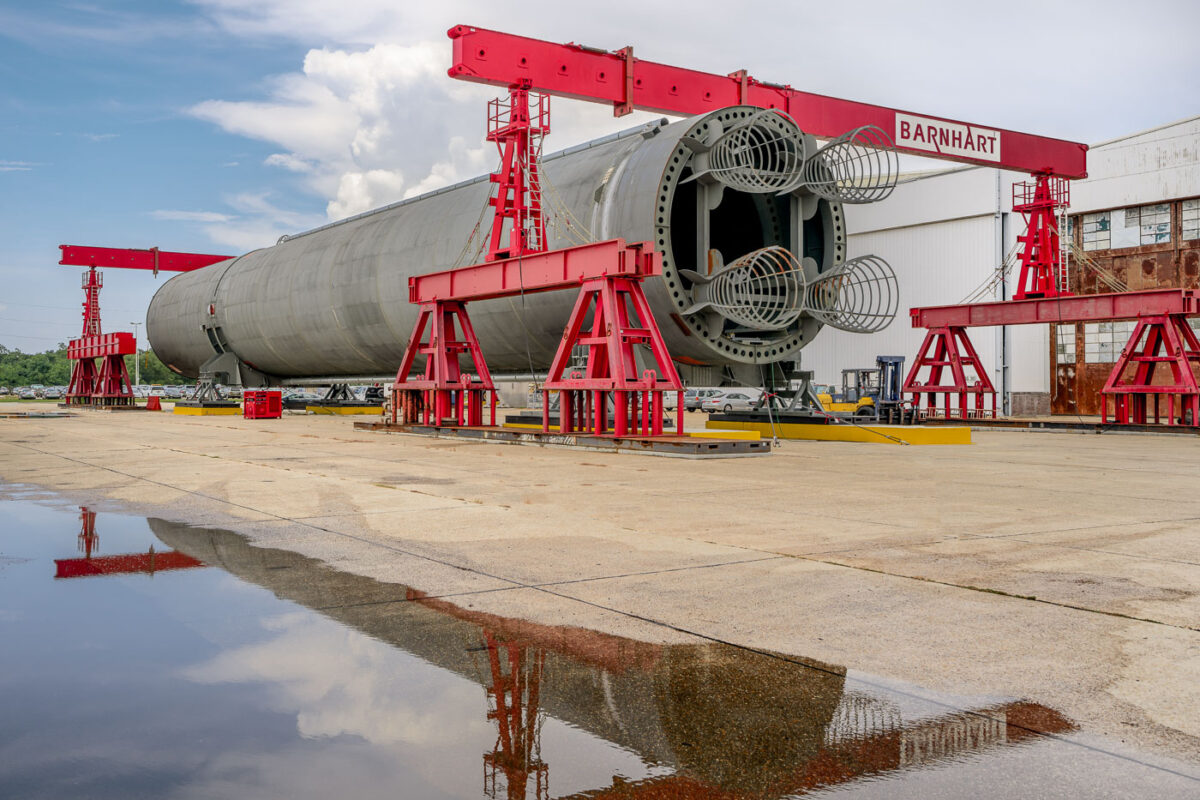
NASA Space Launch System Liquid Oxygen Tank
August 2018
—
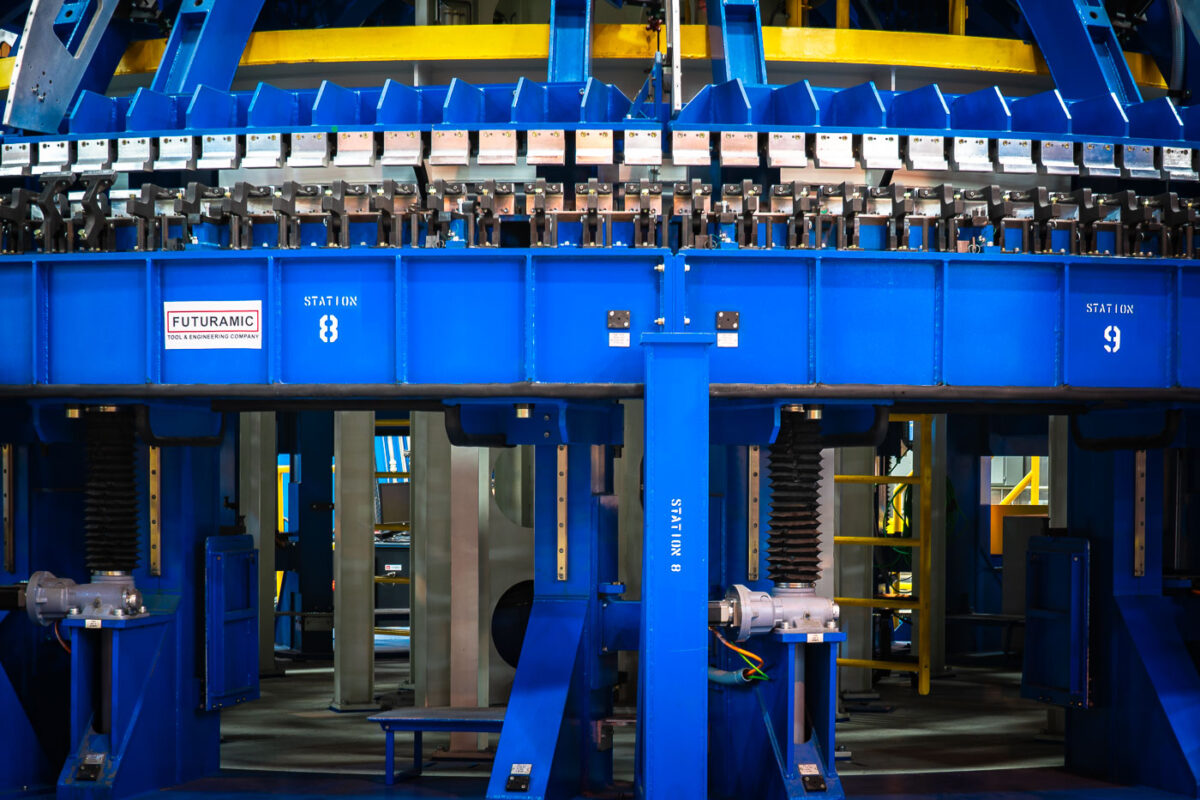
Boeing Gore Weld Tool Station 8, Michoud Assembly Facility, New Orleans
August 2018
—
NASA Michoud: SLS Core Stage Weld Tool Station 8
August 2018
—
Boeing Gore Weld Tool at Michoud Assembly Facility, New Orleans
August 2018
—
The Vertical Assembly Center rises inside the Michoud Assembly Facility,
August 2018
—
The large Space Launch System print on the wall was placed there to show what is being built in this room.
Vertical Weld Center, NASA Michoud
August 2018
—
NASA Michoud: SLS Core Stage Friction-Stir-Weld Tool
August 2018
—
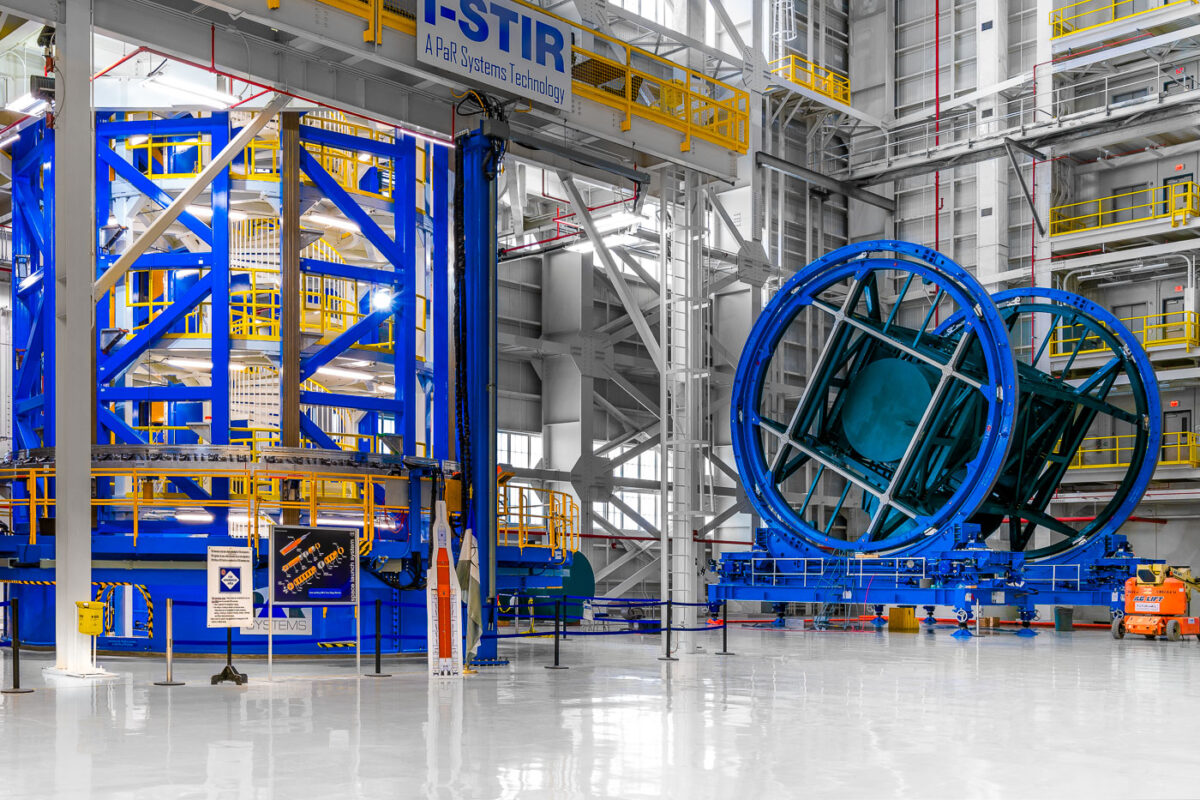
Inside the Vertical Weld Center. The friction-stir-weld tool for wet and dry structures on the Space Launch System (SLS) core stage. It will weld barrel panels together to produce whole barrels for the two pressurized tanks, the intertank, the forward skirt and the aft engine section.
More Info: https://www.nasa.gov/exploration/systems/sls/
NASA Michoud: Vertical Weld Center for SLS Fuel Tanks
August 2018
—
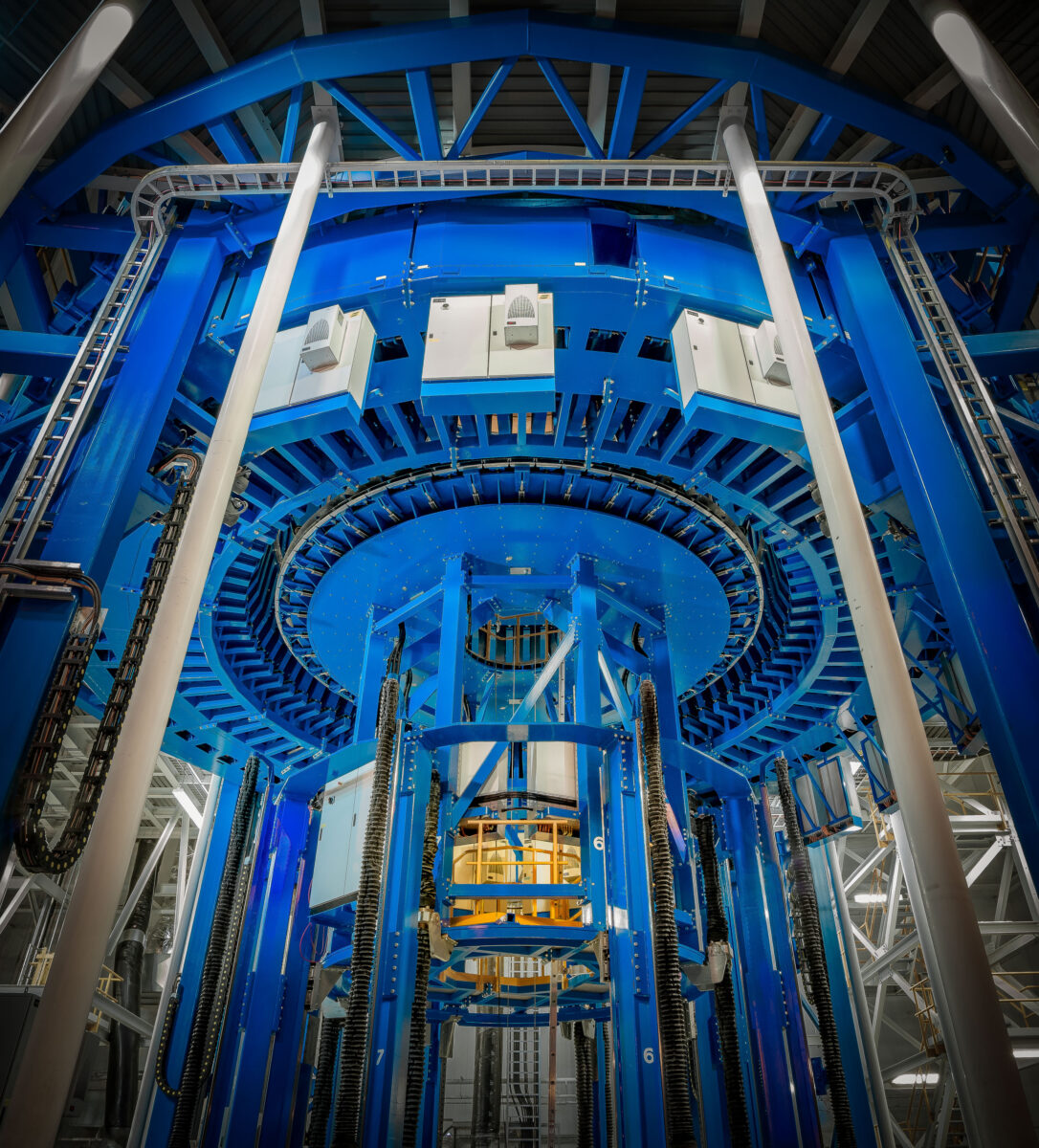
Inside NASA’s Michoud Assembly Facility in New Orleans, the Vertical Weld Center is shown — a precision friction-stir welding system used to join the massive aluminum alloy panels that form rocket fuel tanks and core stages for the Space Launch System. The bright blue and yellow structures are part of the tooling system that ensures millimeter-level accuracy during assembly, critical for the Artemis program’s deep space missions.
NASA Michoud Assembly Facility: SLS Core Stage Production
August 2018
—
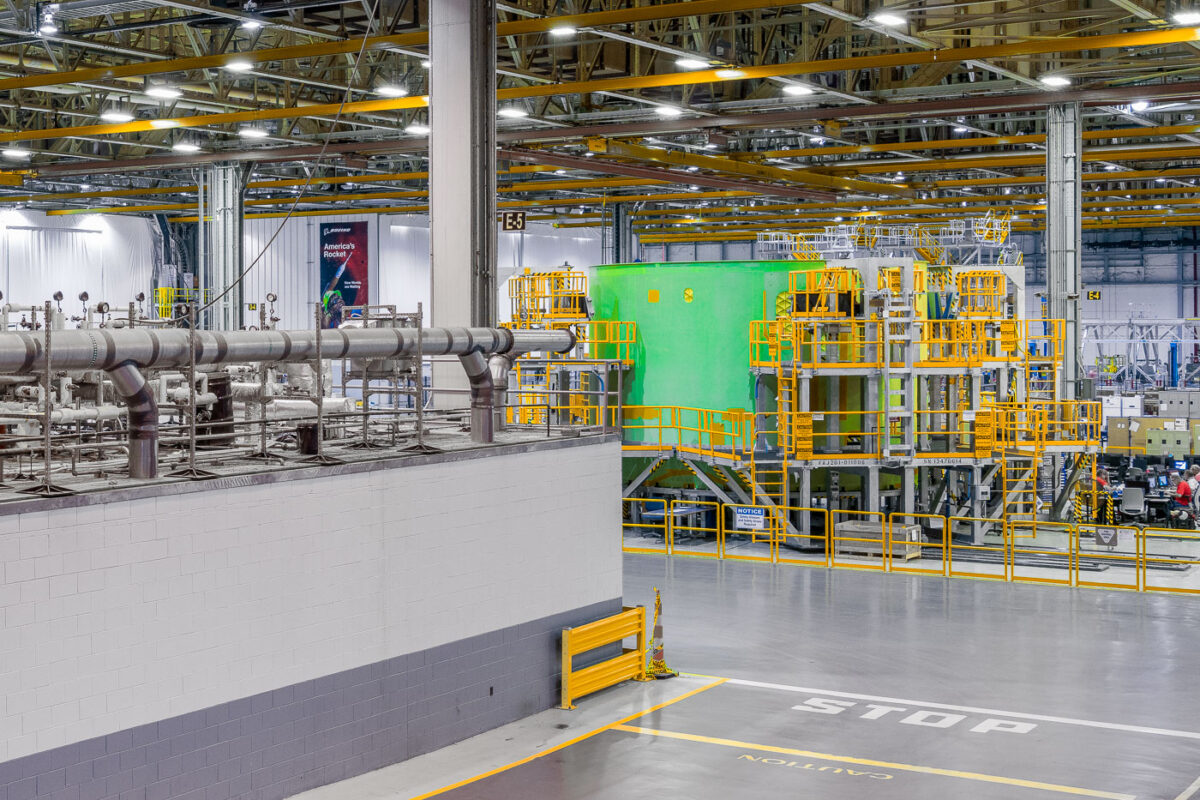
Inside the cavernous NASA Michoud Assembly Facility in New Orleans, the green-painted structure of a Space Launch System (SLS) rocket component dominates the factory floor. Surrounded by yellow access platforms and intricate piping, this section is part of the massive tooling infrastructure used to assemble and test rocket core stages. Overhead cranes and precision systems support Boeing’s production of “America’s Rocket,” with each stage destined for integration into NASA’s Artemis program to return humans to the Moon.
NASA SLS Core Stage Fuel Tank Interior, Michoud
August 2018
—
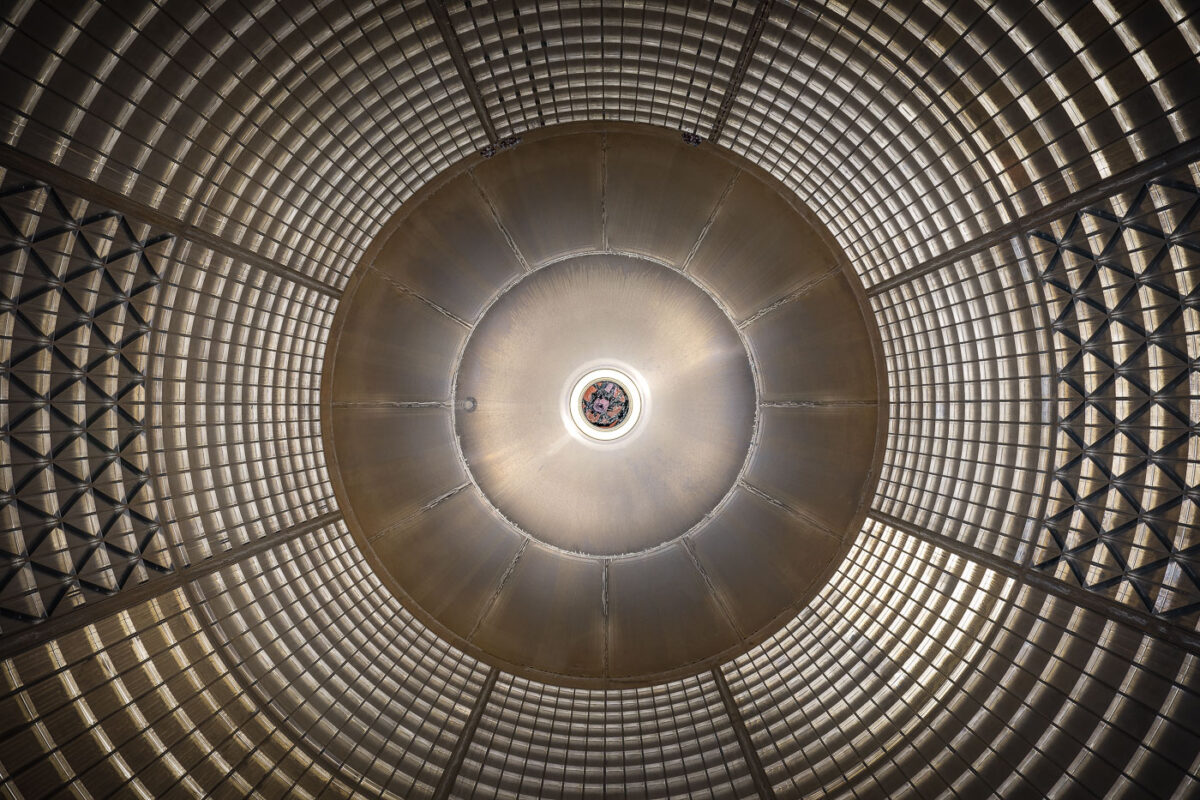
The interior of the Space Launch System (SLS) fuel tank at NASA Michoud Assembly Facility.
NASA Core Stage Infographic: https://www.nasa.gov/exploration/systems/sls/multimedia/infographics/corestage101.html
Space Launch System: https://www.nasa.gov/exploration/systems/sls/index.html
SLS Forward Skirt: Flight Control Assembly, New Orleans
August 2018
—
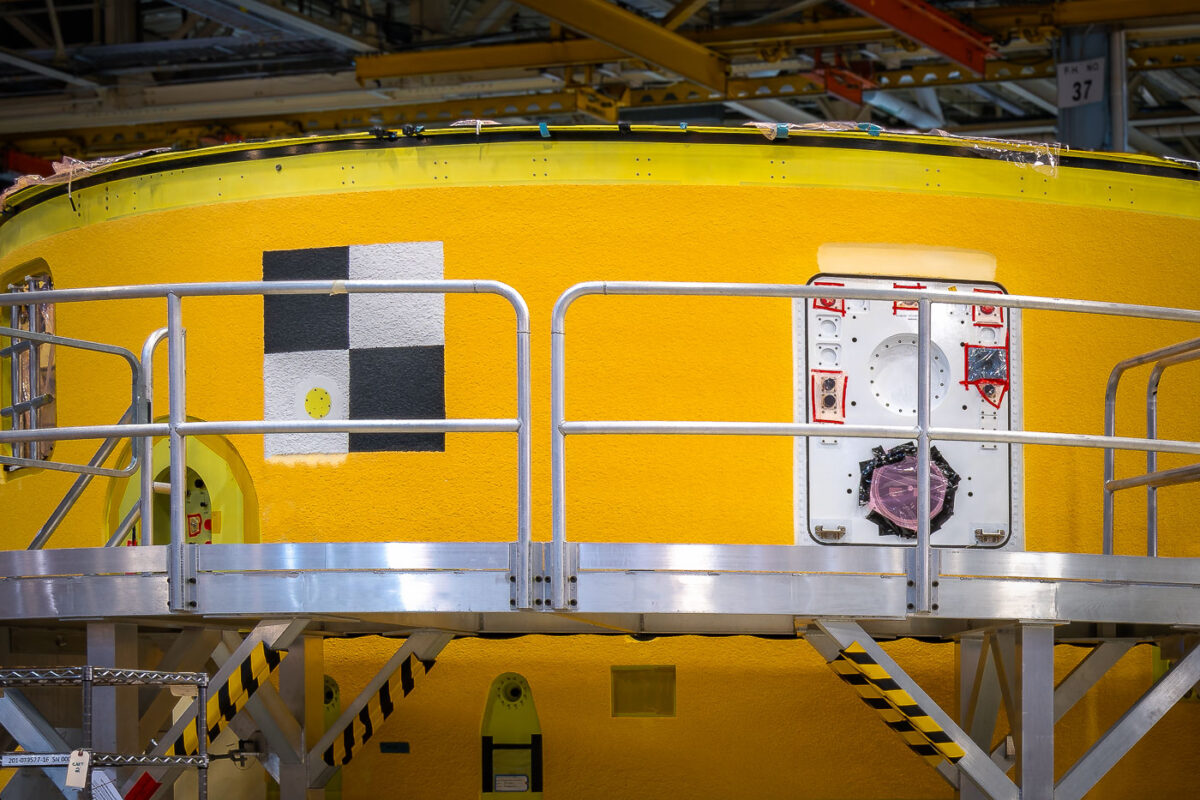
The forward skirt section of NASA’s Space Launch System is shown shortly after its final assembly at the Michoud Assembly Facility in New Orleans. This uppermost segment houses the rocket’s flight computers, avionics, and camera systems, forming the control center that guides the SLS during launch and ascent. Built for Artemis I (Exploration Mission-1), this structure would later be integrated into the core stage for its 2020 launch from Kennedy Space Center.
Robotic Friction Stir Welding Cell for SLS at NASA Michoud
August 2018
—
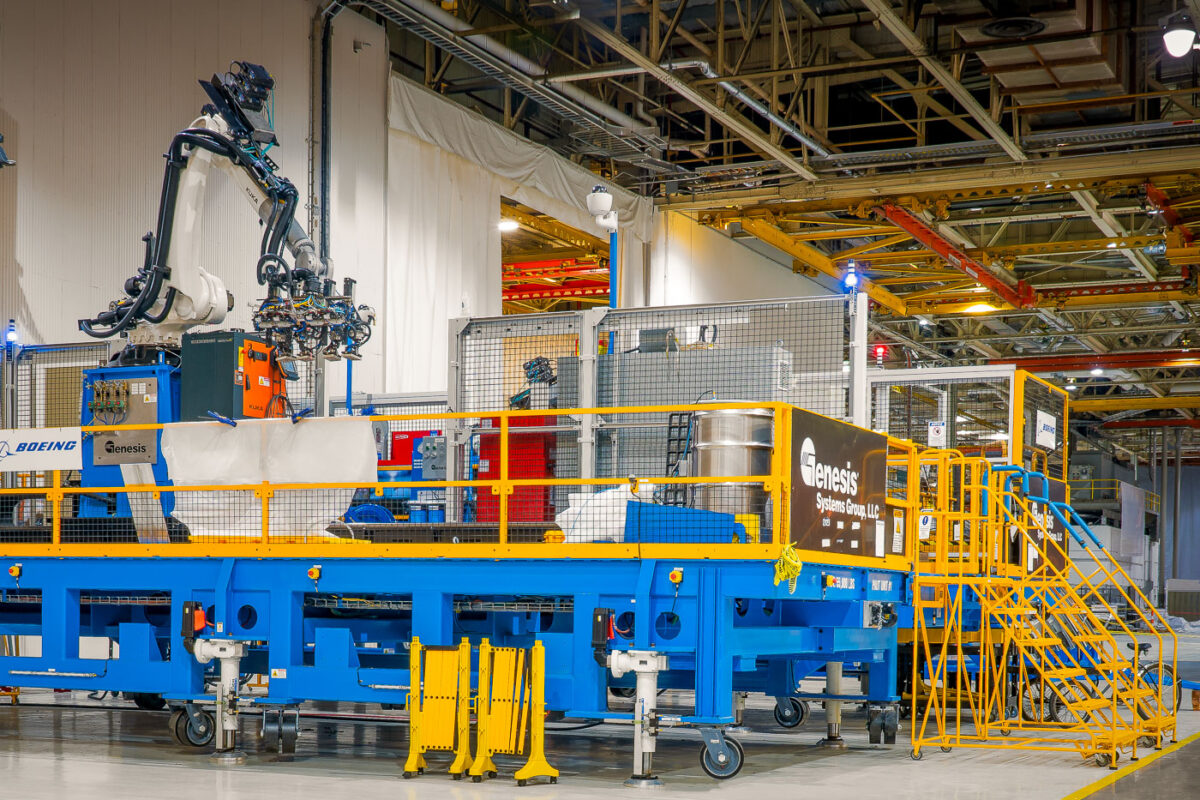
Inside NASA’s Michoud Assembly Facility in New Orleans, an advanced robotic welding system—developed by Genesis Systems Group and Boeing—assembles major components for the Space Launch System (SLS) core stage. Using friction stir welding, the robot precisely joins massive aluminum panels into the rocket’s fuel tanks and structural sections. The process ensures unmatched strength and reliability, critical for the launch vehicle that powers NASA’s Artemis missions to the Moon and beyond.
SLS Core Stage Barrel Tooling at NASA Michoud Facility
August 2018
—
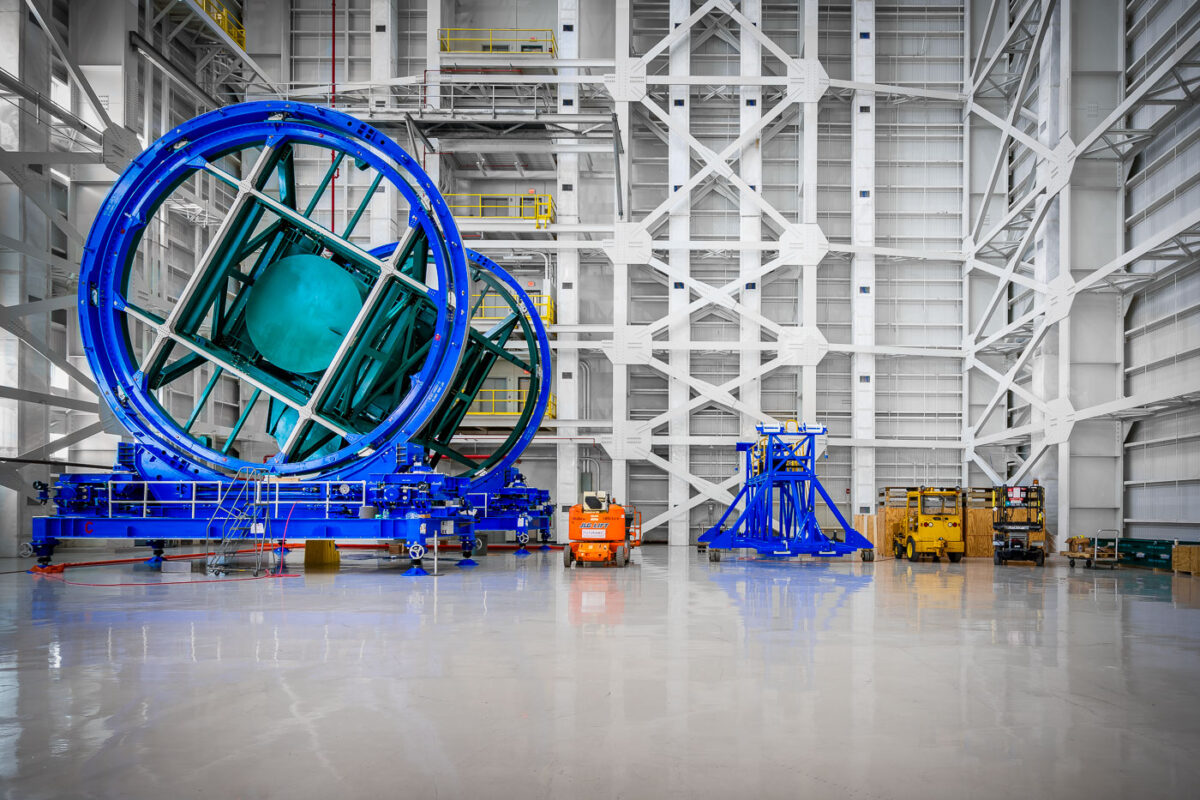
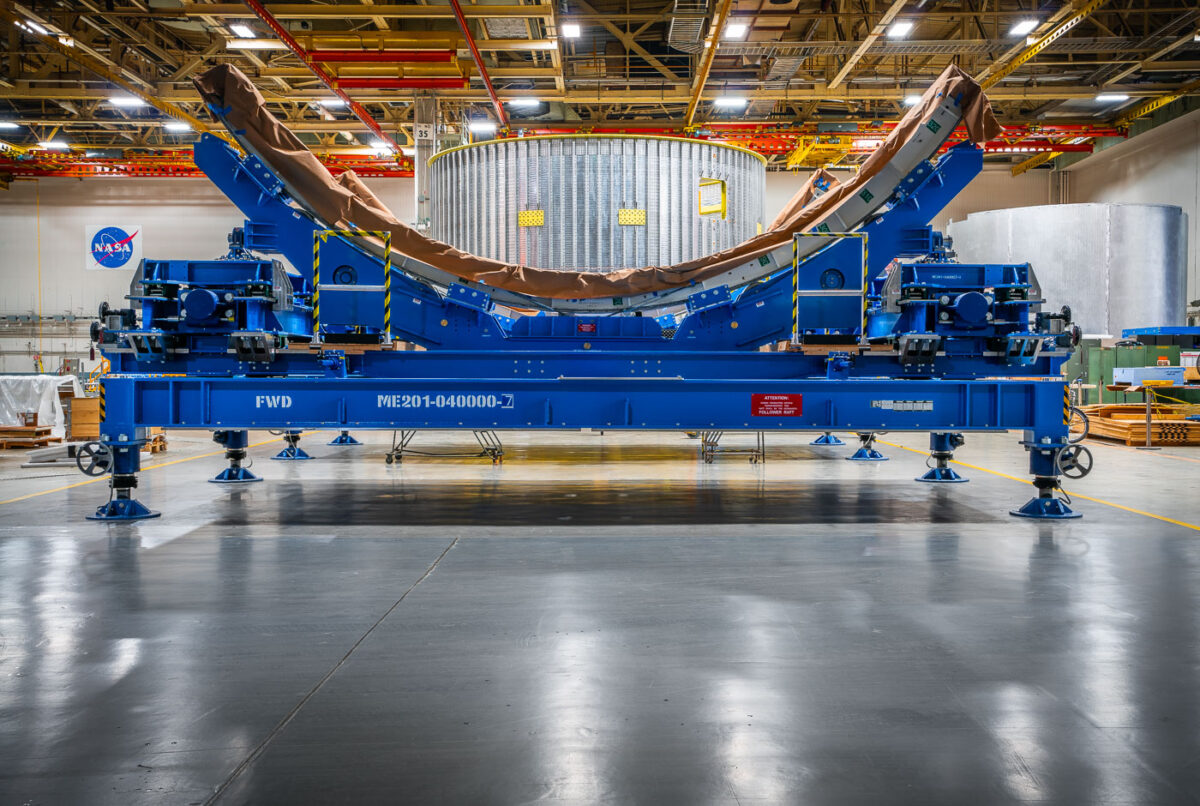
Precision barrel tooling used in the assembly of the Space Launch System (SLS) core stage stands on the production floor at NASA’s Michoud Assembly Facility in New Orleans. These fixtures hold massive aluminum panels in place during the friction stir welding process, ensuring perfect alignment and uniform curvature for the rocket’s cylindrical sections. Behind the tooling, the metallic structure of a completed barrel segment can be seen, ready for the next stage of integration.
SLS Liquid Hydrogen Tank Barrel Interior, NASA Michoud
August 2018
—
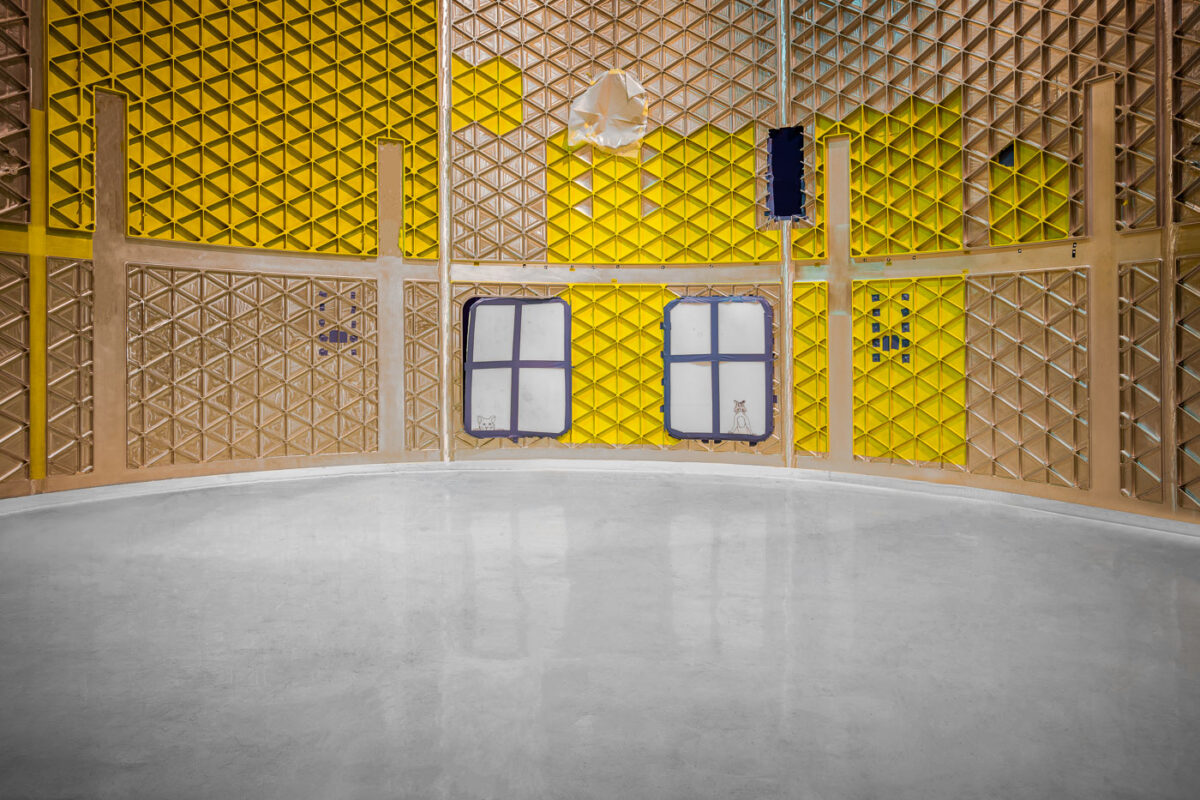
The inside of a Space Launch System (SLS) barrel used for the liquid hydrogen tank. It’s made of AI 2219, an aerospace aluminum alloy.
More Info: https://www.nasa.gov/exploration/systems/sls/
Mission Patch Hallway, NASA Michoud Assembly Facility, New Orleans
August 2018
—
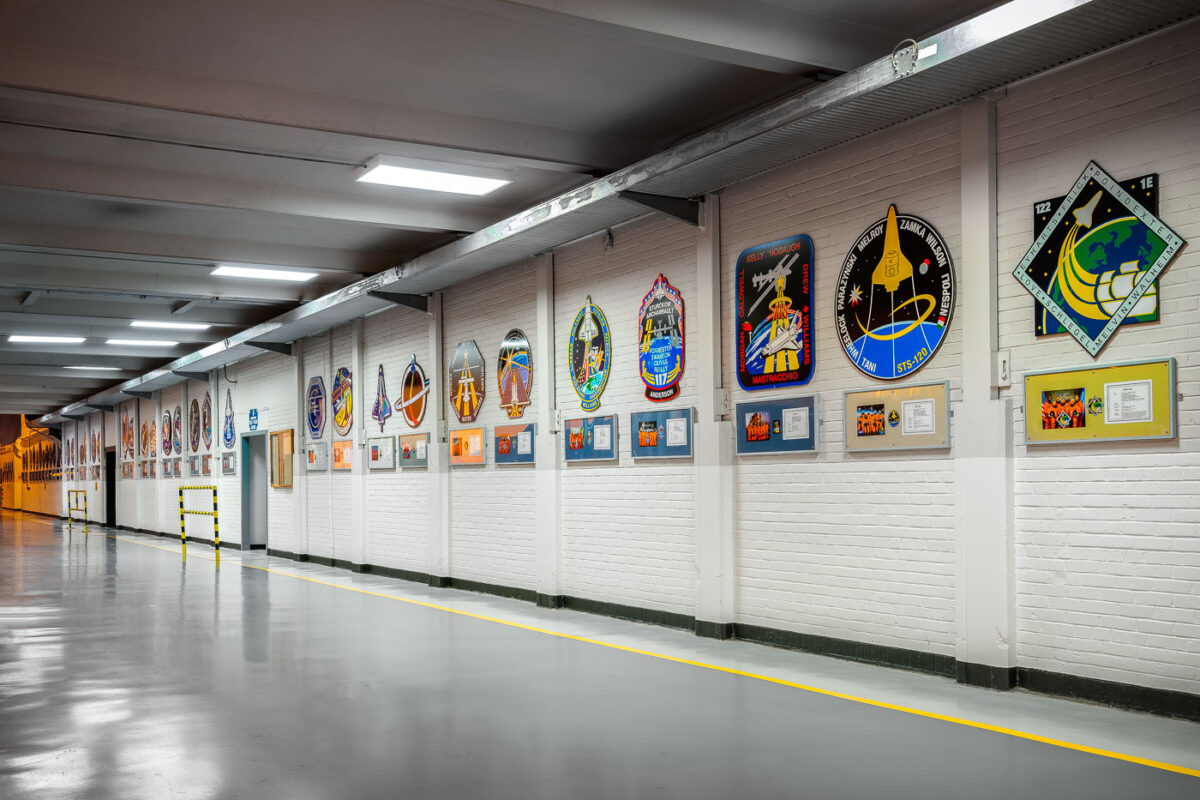
A long corridor inside NASA’s Michoud Assembly Facility in New Orleans showcases decades of spaceflight heritage through a display of mission patches and crew insignias. Each emblem represents a milestone in American aerospace history — from early shuttle missions to modern exploration programs. The polished concrete floors and fluorescent lighting emphasize the industrial precision of the facility, while the colorful insignias serve as a vivid reminder of the human stories behind the technology.
NASA Michoud Assembly Facility SLS Fuel Tank Cleaning Cell
August 2018
—
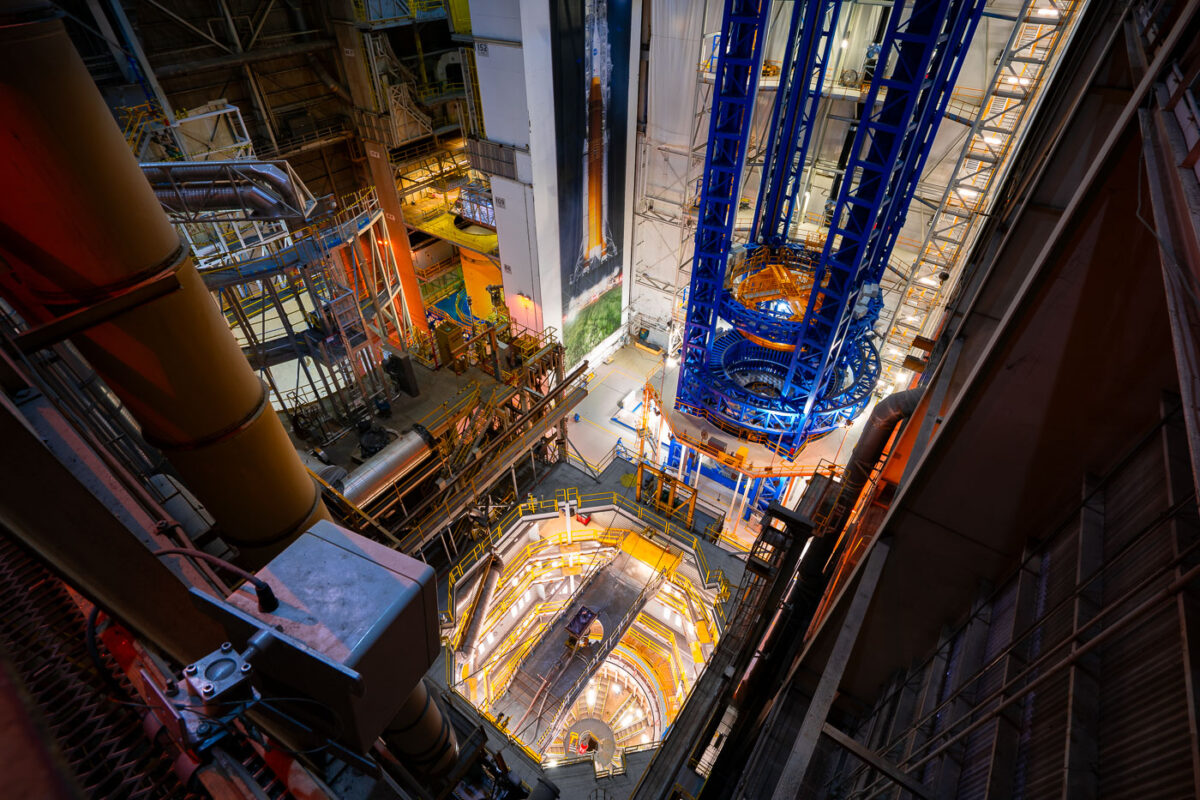
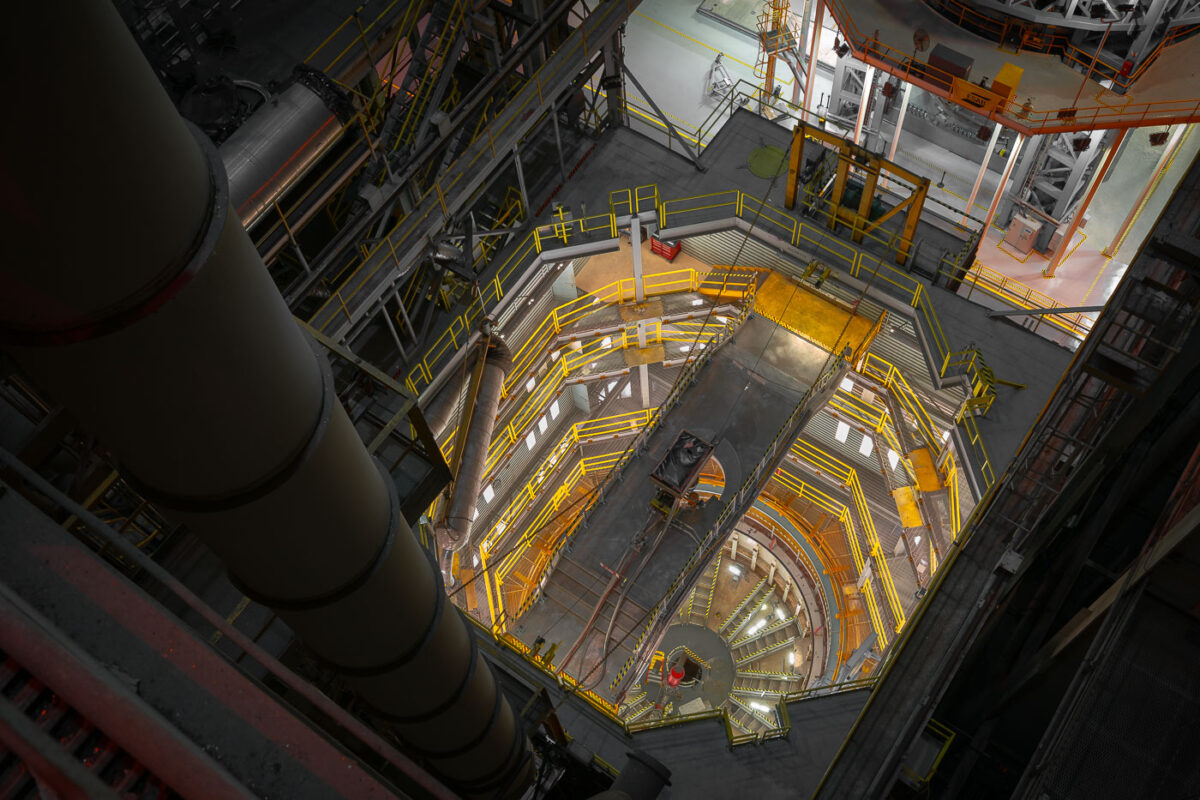
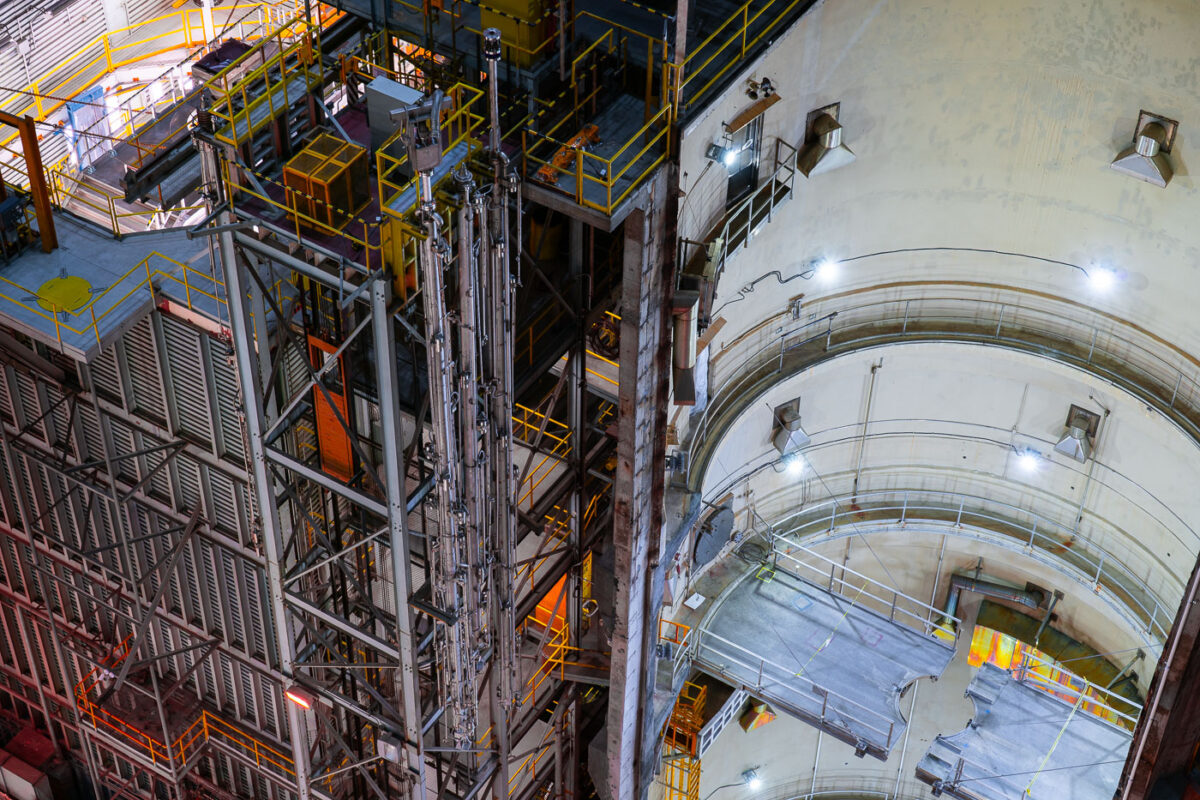
Looking down into the massive cleaning cell inside the Vertical Assembly Center at NASA Michoud Assembly Facility.
The massive washing facility is used to wash the insides of the Space Launch System(SLS) fuel tanks. The SLS rocket will be the world’s largest rocket ever built.
NASA Michoud Vertical Assembly Area, SLS Rocket Stages
August 2018
—
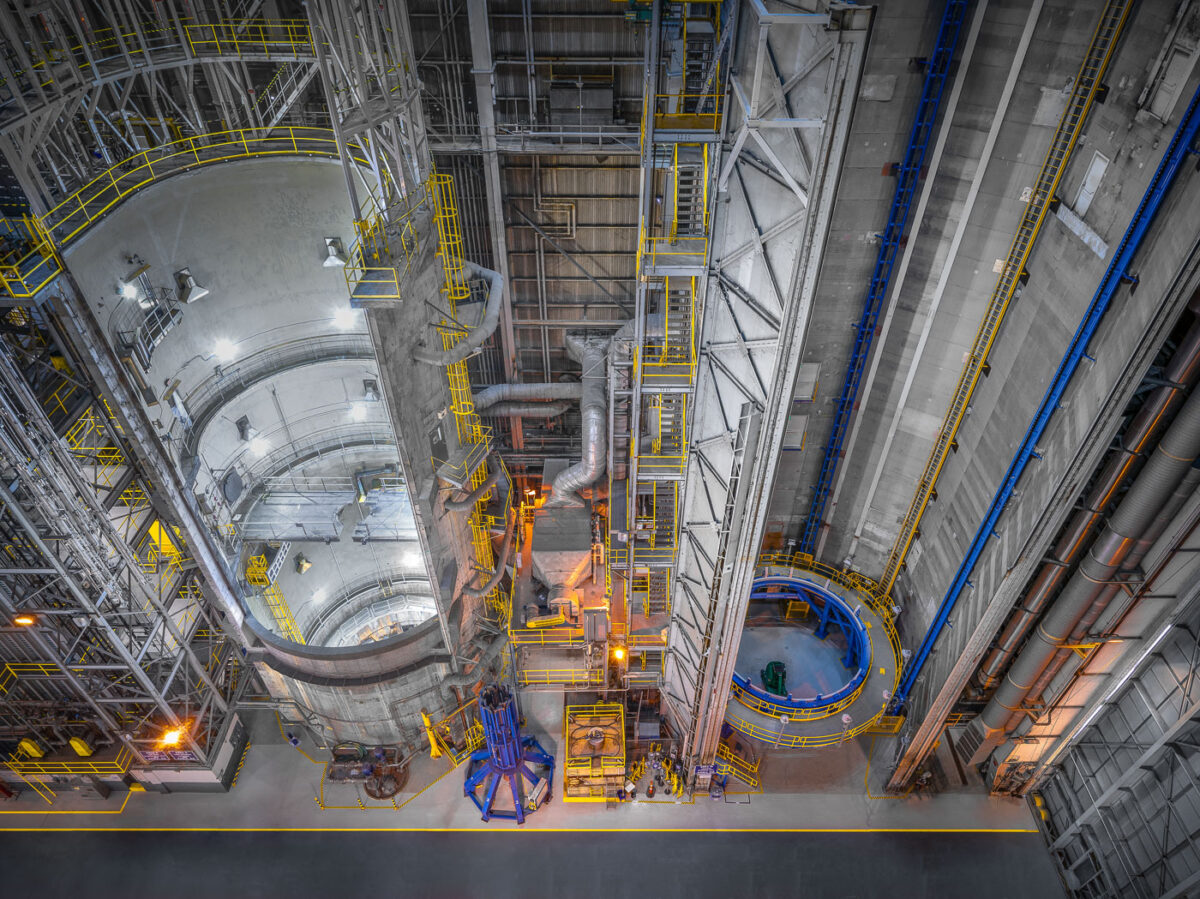
The towering interior of NASA’s Michoud Assembly Facility in New Orleans, where major components for the Space Launch System rocket are fabricated and assembled. The multilevel platforms, access walkways, and heavy structural supports surround the massive Vertical Assembly Area—an environment designed for precision alignment of rocket stages that will power Artemis missions to the Moon and beyond.
SLS Tooling Platform at NASA Michoud Assembly Facility
August 2018
—
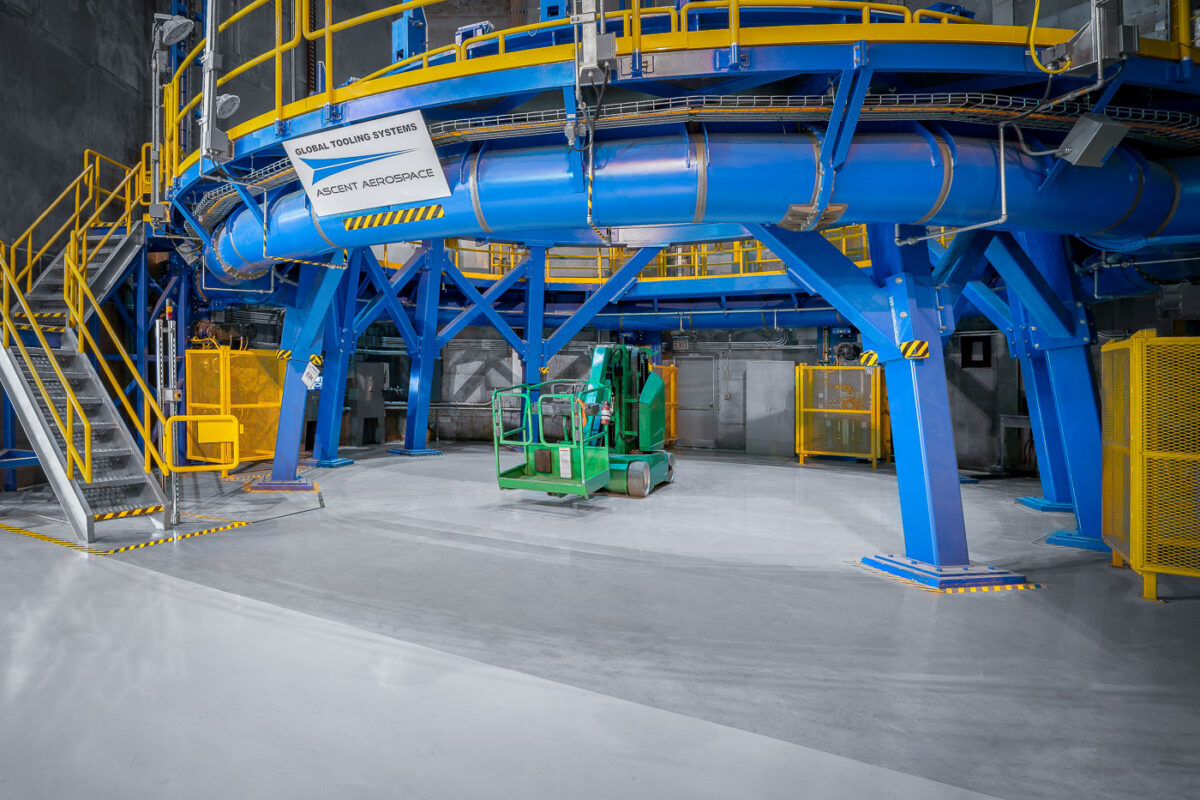
A bright blue and yellow tooling structure dominates this section of NASA’s Michoud Assembly Facility in New Orleans. Built by Ascent Aerospace’s Global Tooling Systems division, this heavy-duty platform is part of the specialized infrastructure used to assemble components of the Space Launch System (SLS) rocket. The steel frame supports massive cylindrical sections during alignment and welding, forming part of the precision manufacturing ecosystem that enables Artemis missions to take shape from the ground up.
NASA Michoud: SLS Liquid Oxygen Tank in Cell A
August 2018
—
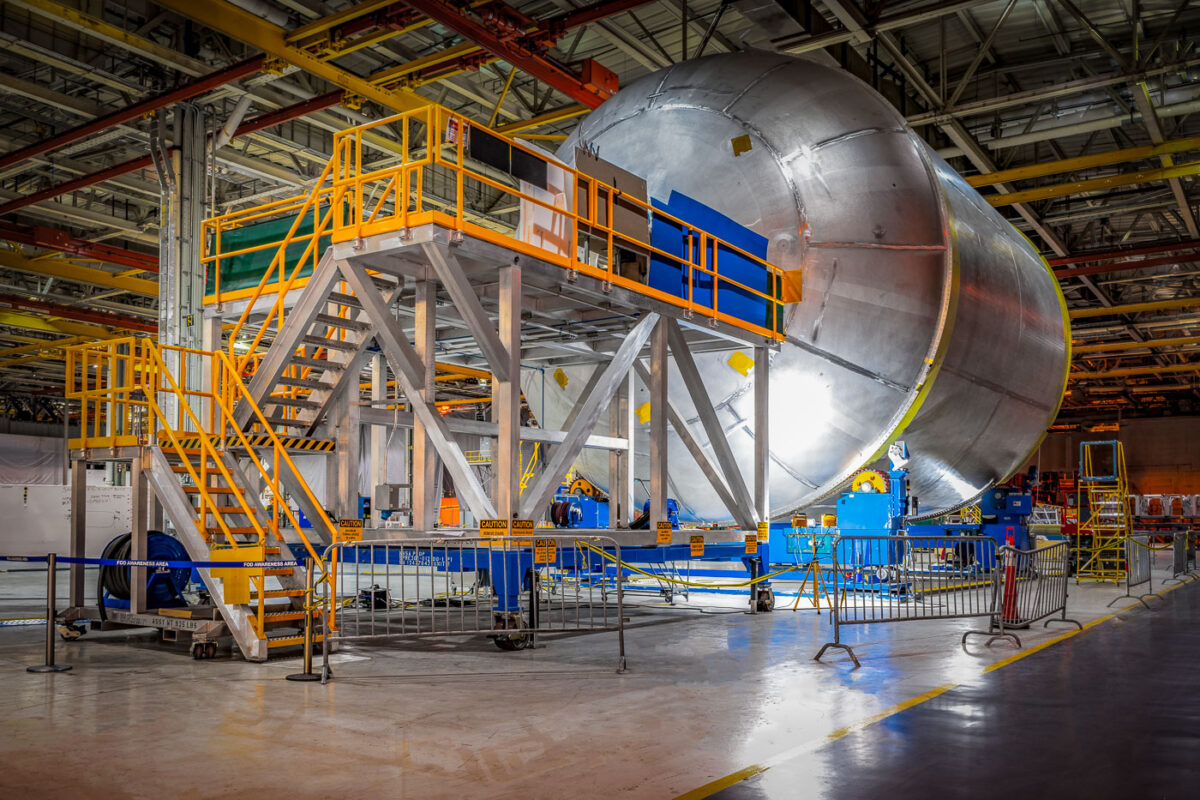
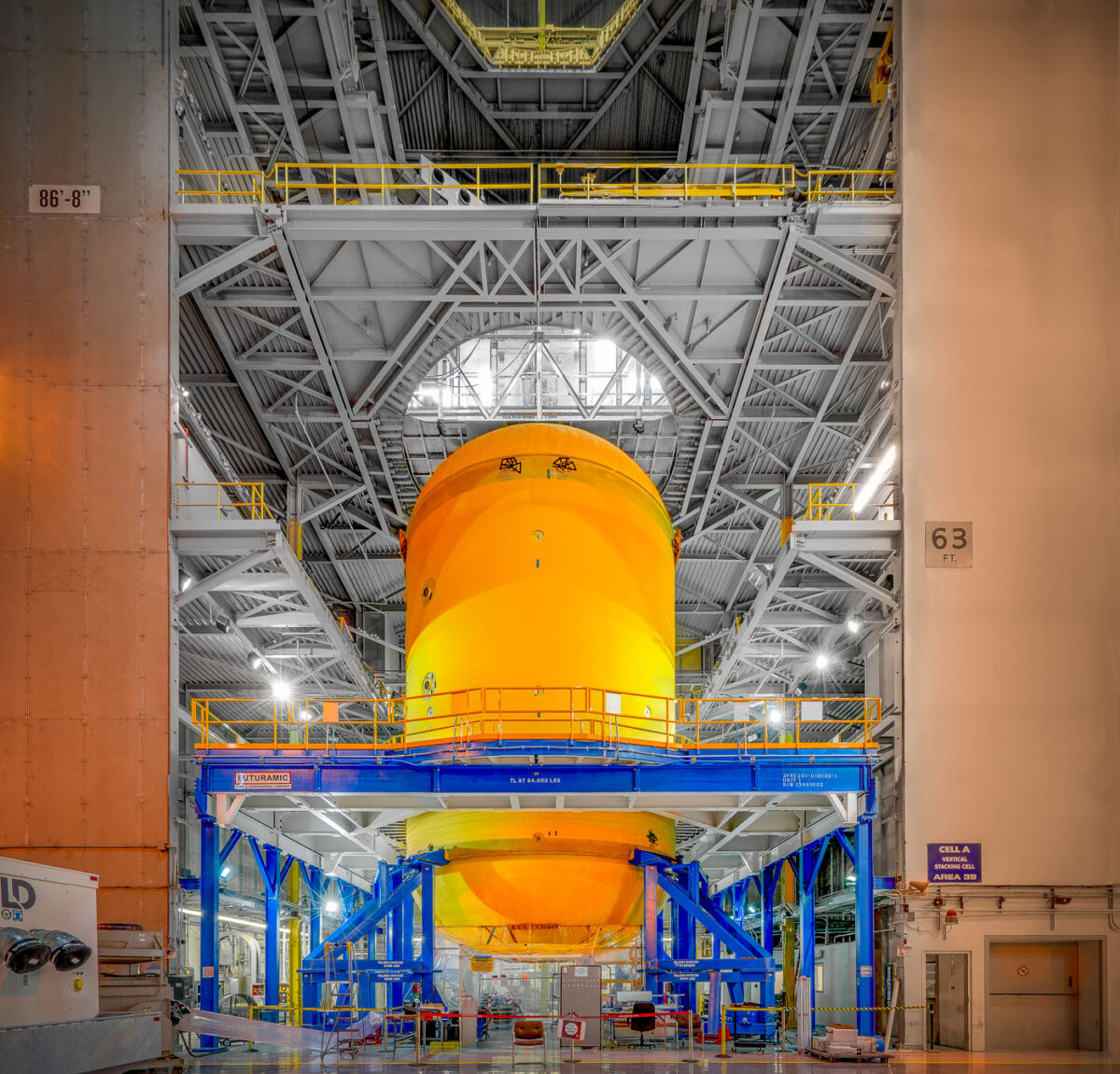
A Liquid Oxygen tank being worked on inside Cell A at NASA’s Michoud Assembly Facility. It’s part of the Space Launch System Core Stage. The tank will hold 195,000 gallons of liquid oxygen cooled to -297 degrees Fahrenheit.
NASA Michoud Vertical Weld Center, SLS Rocket, New Orleans
August 2018
—
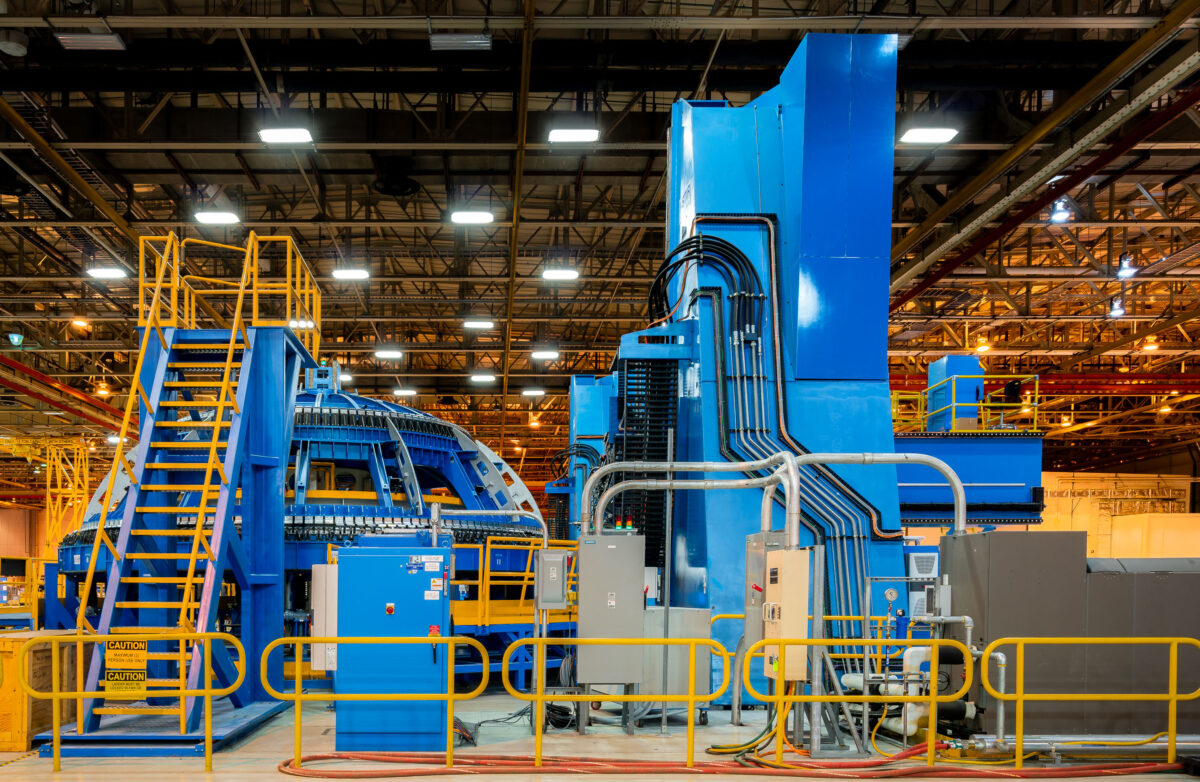
Inside NASA’s Michoud Assembly Facility in New Orleans, this massive blue structure is the Vertical Weld Center, used to fabricate the core stage of the Space Launch System (SLS) rocket. The machine employs friction-stir welding to join aluminum panels into large cylindrical sections that form the rocket’s fuel tanks. Operated by precision robotics, the weld center is one of the tallest of its kind in the world and plays a central role in preparing hardware for Artemis missions to the Moon and beyond.
NASA Michoud: SLS Rocket Vertical Assembly Bay
August 2018
—
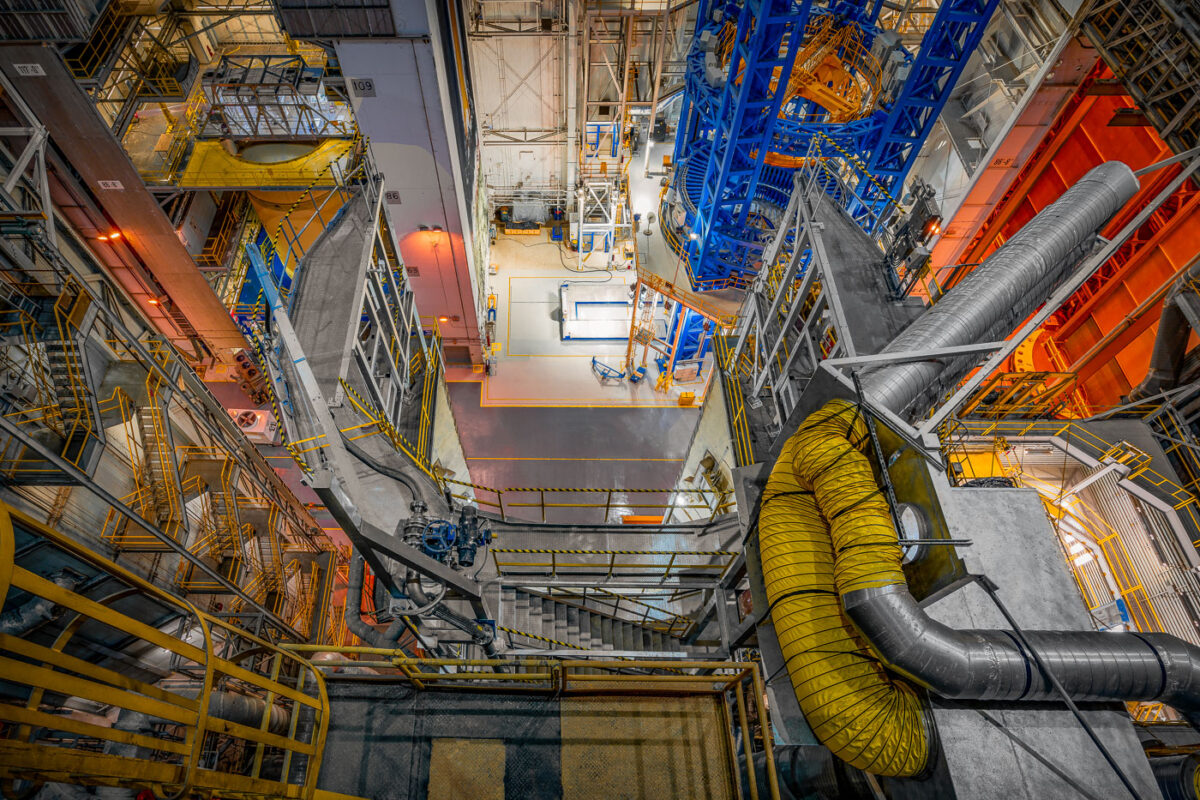
A high-angle view inside NASA’s Michoud Assembly Facility in New Orleans shows the enormous vertical welding and assembly bays used to build sections of the Space Launch System (SLS) rocket. The towering circular structure on the left is part of the Vertical Weld Center, where cylindrical rocket segments are precisely joined using friction-stir welding. Catwalks and access platforms ring the interior, supporting technicians during construction of the world’s most powerful launch vehicle for the Artemis program.
NASA Michoud: Yellow Rocket Assembly Cranes
August 2018
—
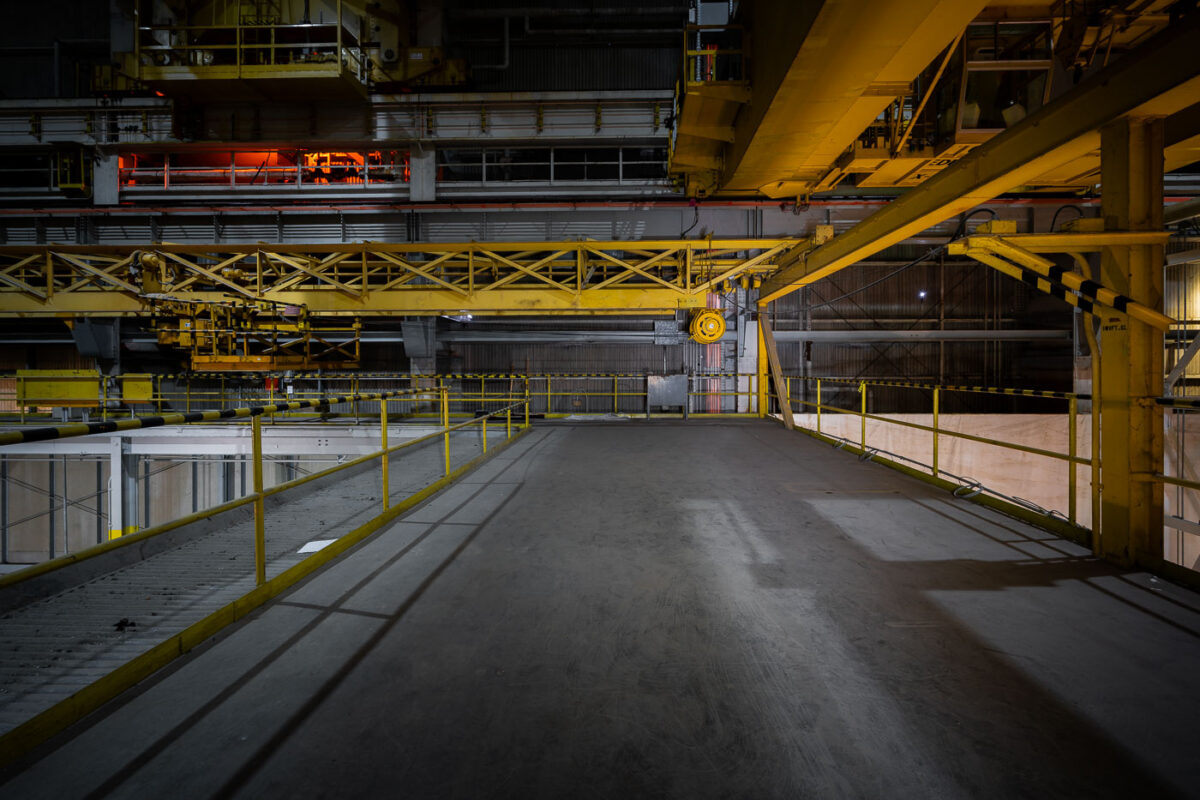
An elevated view of the overhead gantry crane system inside NASA’s Michoud Assembly Facility in New Orleans. These yellow steel cranes are used to lift and maneuver rocket sections, including the massive Space Launch System core stages, within the cavernous production hall. The network of platforms, rails, and suspended hooks demonstrates the industrial scale of spacecraft manufacturing that has taken place here since the Apollo and Space Shuttle programs.
NASA Michoud: SLS Core Stage Vertical Assembly Center
August 2018
—
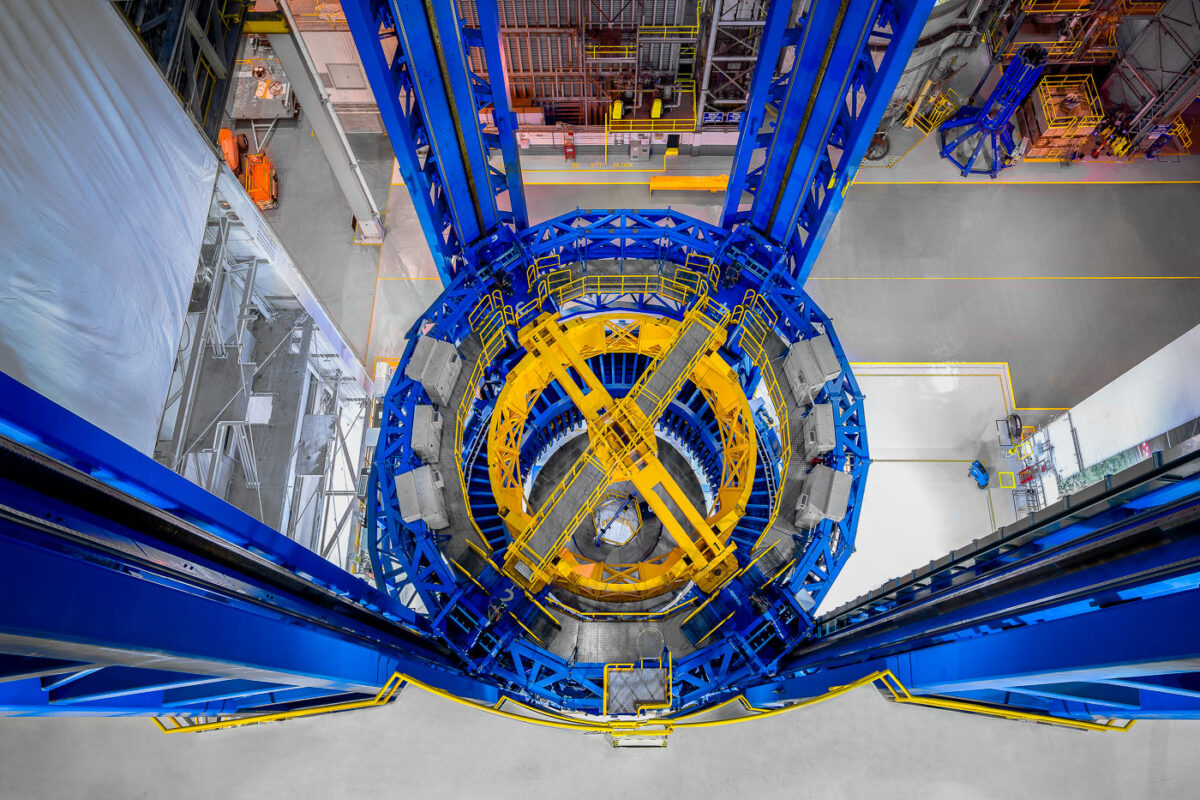
Looking downward inside the Vertical Assembly Center at NASA’s Michoud Assembly Facility in New Orleans, this view shows the precision alignment and welding platform used to assemble rocket stages. The towering blue and yellow structure is part of the tooling for the Space Launch System core stage, where massive aluminum sections are friction-stir welded to form part of NASA’s Artemis launch vehicles.
Industrial Stairwell, NASA Michoud Vertical Assembly Center
August 2018
—
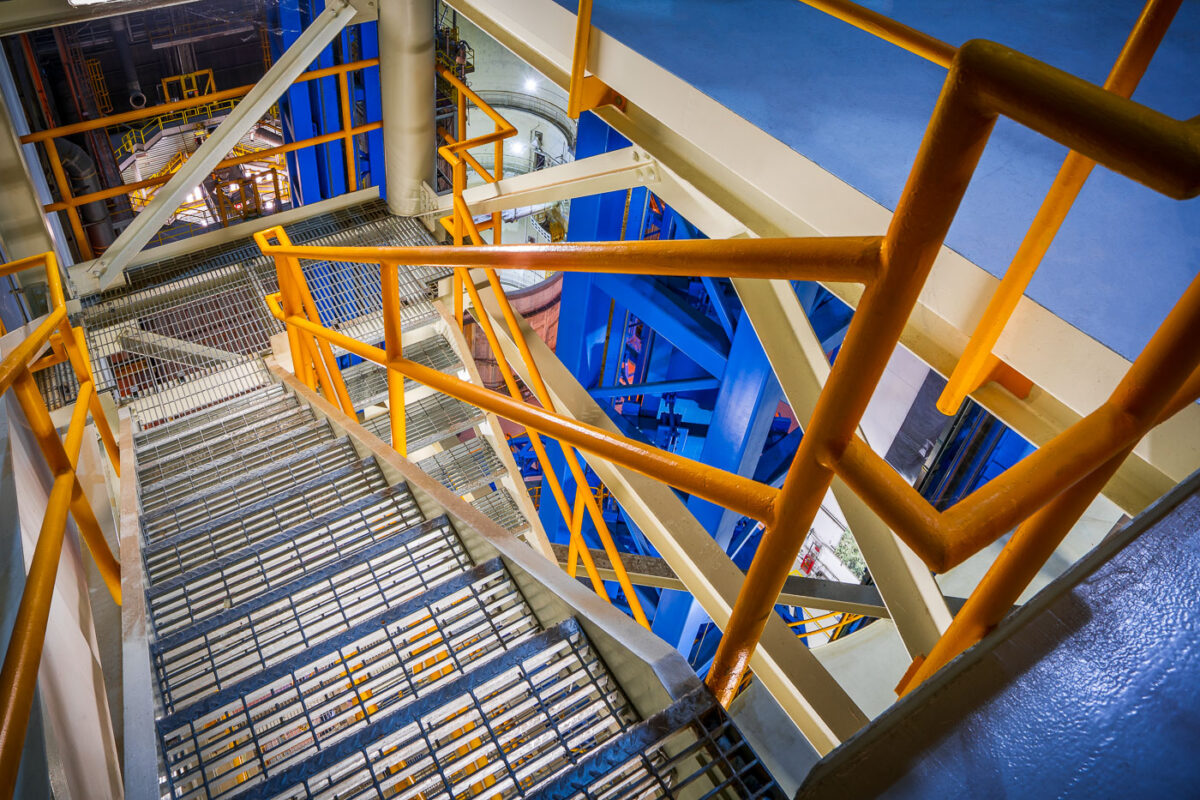
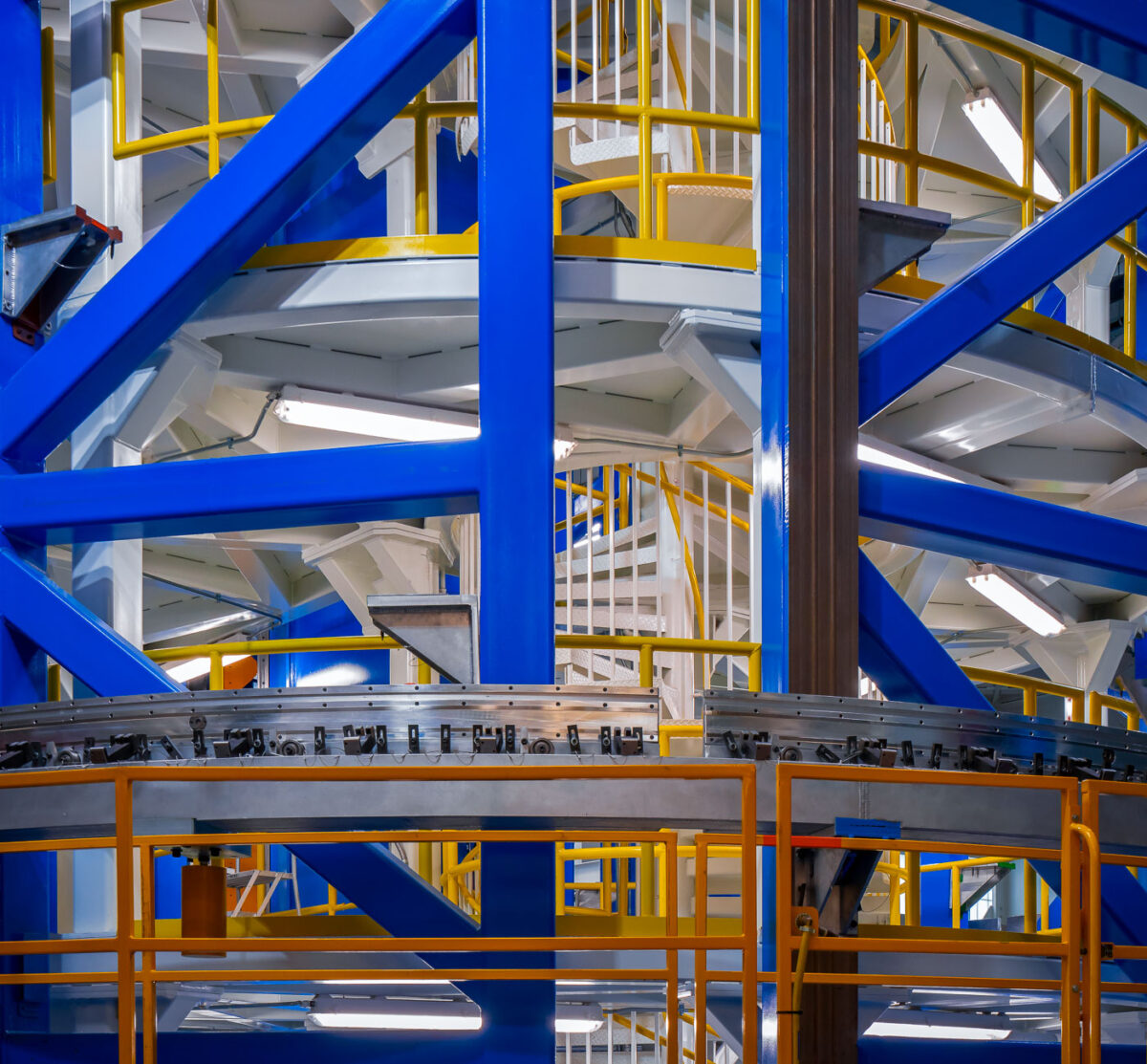
A stairwell winds through the interior of NASA’s Vertical Assembly Center at the Michoud Assembly Facility in New Orleans. The industrial structure, with its orange and blue framework, provides access to various levels of the 170-foot-tall welding system used to assemble core stages of the Space Launch System. The facility supports precision manufacturing for the Artemis program’s heavy-lift rockets.
NASA Michoud: SLS Core Stage Vertical Assembly Center
August 2018
—
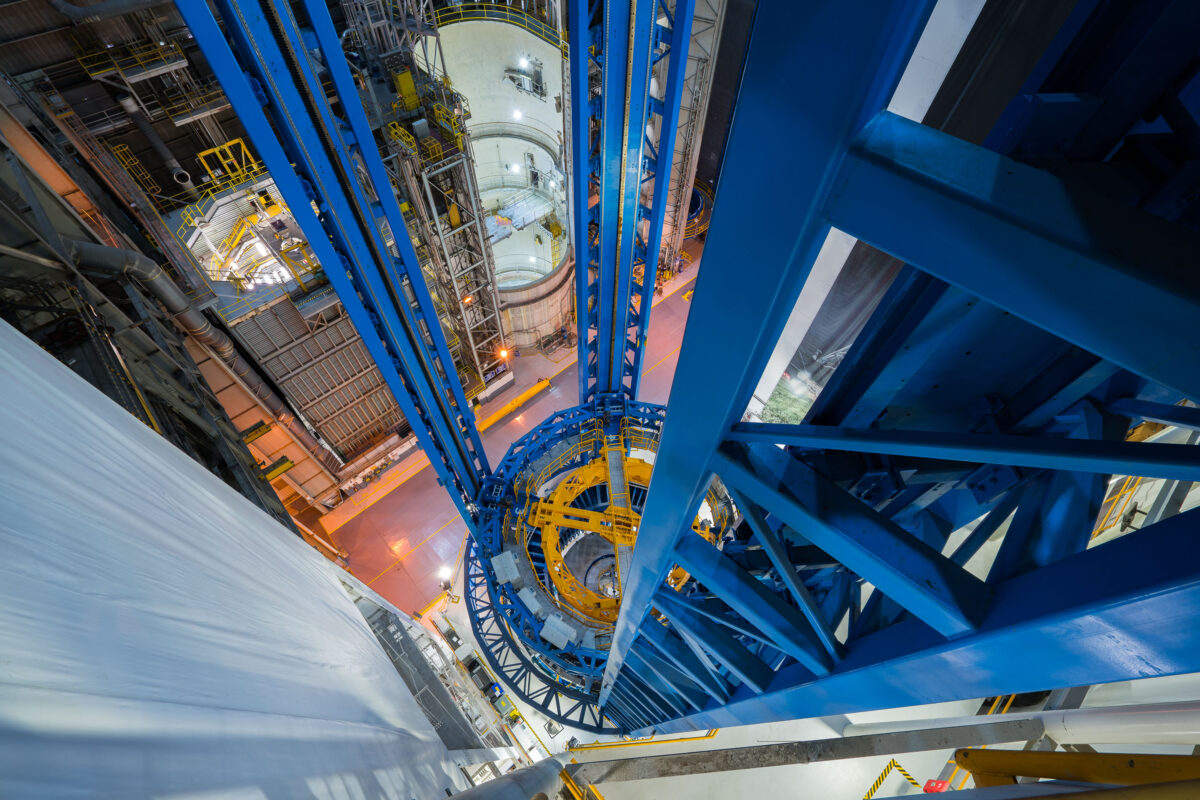
A view from the upper levels of the Vertical Assembly Center at NASA’s Michoud Assembly Facility in New Orleans. The massive blue structure supports the assembly and welding of the Space Launch System’s core stage, the primary rocket used for Artemis missions. This 170-foot-tall tool precisely aligns and joins large rocket sections, a key part of NASA’s ongoing production of deep space launch vehicles.
August 2018
—
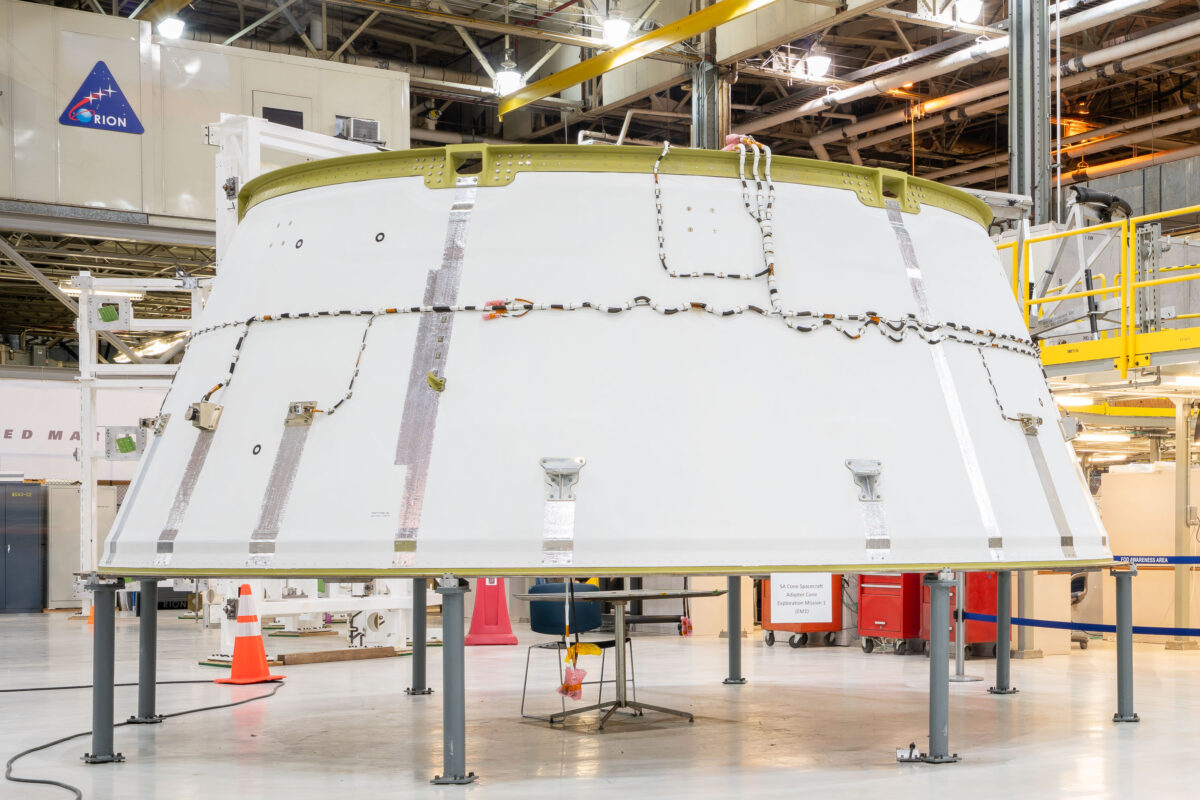
The Spacecraft Adapter Cone for NASA’s Orion Exploration Mission-1 (EM-1) is shown during assembly inside the manufacturing facility. This conical structure connects the Orion crew module and service module to the Space Launch System (SLS) rocket, housing critical components such as separation hardware, wiring harnesses, and payload deployment systems. Its reinforced aluminum construction includes visible thermal protection areas, structural attachment brackets, and integrated circuitry for communication and control. EM-1, later renamed Artemis I, was designed as an uncrewed test flight to evaluate Orion’s deep-space capabilities for future crewed lunar missions.
Orion Crew Module in Primer at NASA Michoud Assembly Facility
August 2018
—
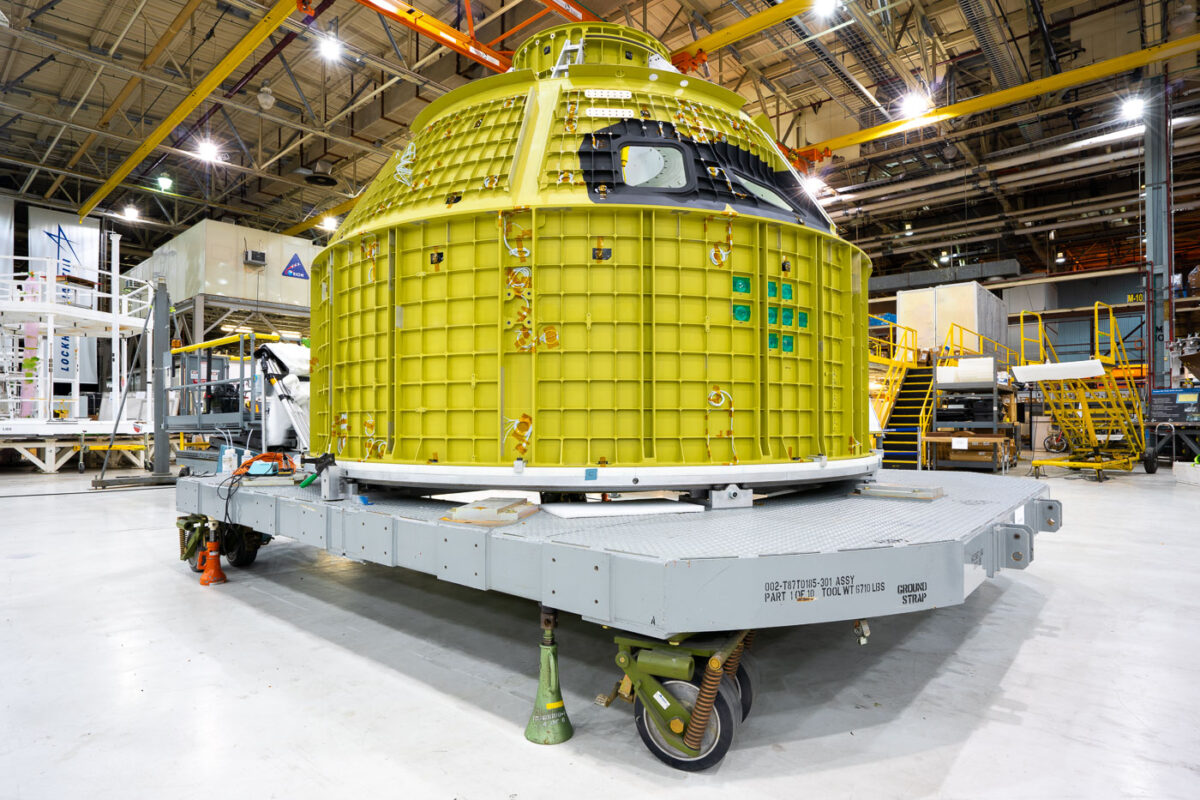
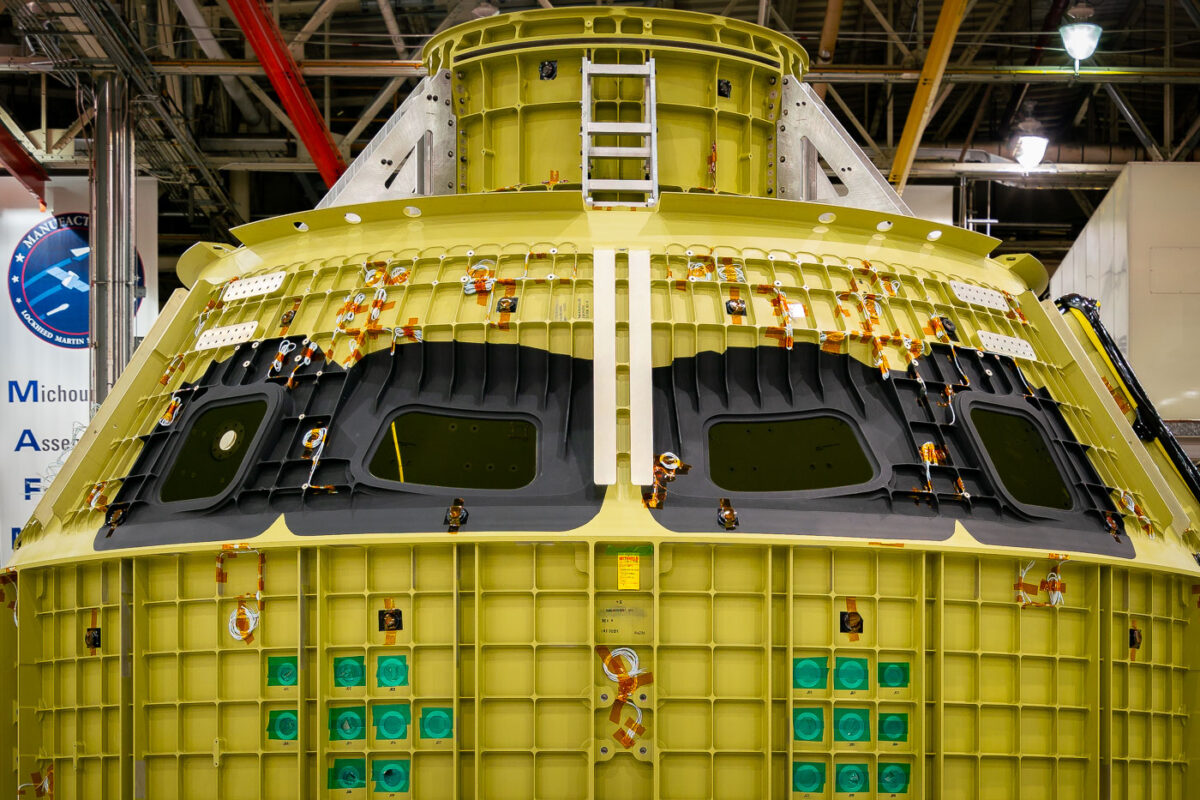
The Orion spacecraft’s crew module sits on a transport platform at NASA’s Michoud Assembly Facility in New Orleans, Louisiana. Built by Lockheed Martin, this pressure vessel is the primary structure that will house astronauts during Artemis missions to the Moon. The aluminum-lithium frame, painted in primer yellow, is designed to withstand both launch forces and the harsh conditions of deep space. Each module undergoes precision assembly and testing at Michoud before being shipped to Kennedy Space Center for outfitting and integration with the Space Launch System rocket.
Orion Crew Module Mid-Assembly at NASA Michoud
August 2018
—
The Orion crew module is seen in mid-assembly at NASA’s Michoud Assembly Facility in New Orleans. Built by Lockheed Martin, the pressure vessel forms the core structure of the spacecraft that will carry astronauts on Artemis missions to the Moon and beyond. The aluminum-lithium frame is precision-welded to withstand the stresses of launch and deep-space travel, while the black sections mark window openings for crew visibility during flight. Each unit is assembled and tested at Michoud before being shipped to the Kennedy Space Center for integration with the European Service Module and the Space Launch System rocket.
NASA Pegasus Barge Empty Cargo Bay for SLS
August 2018
—
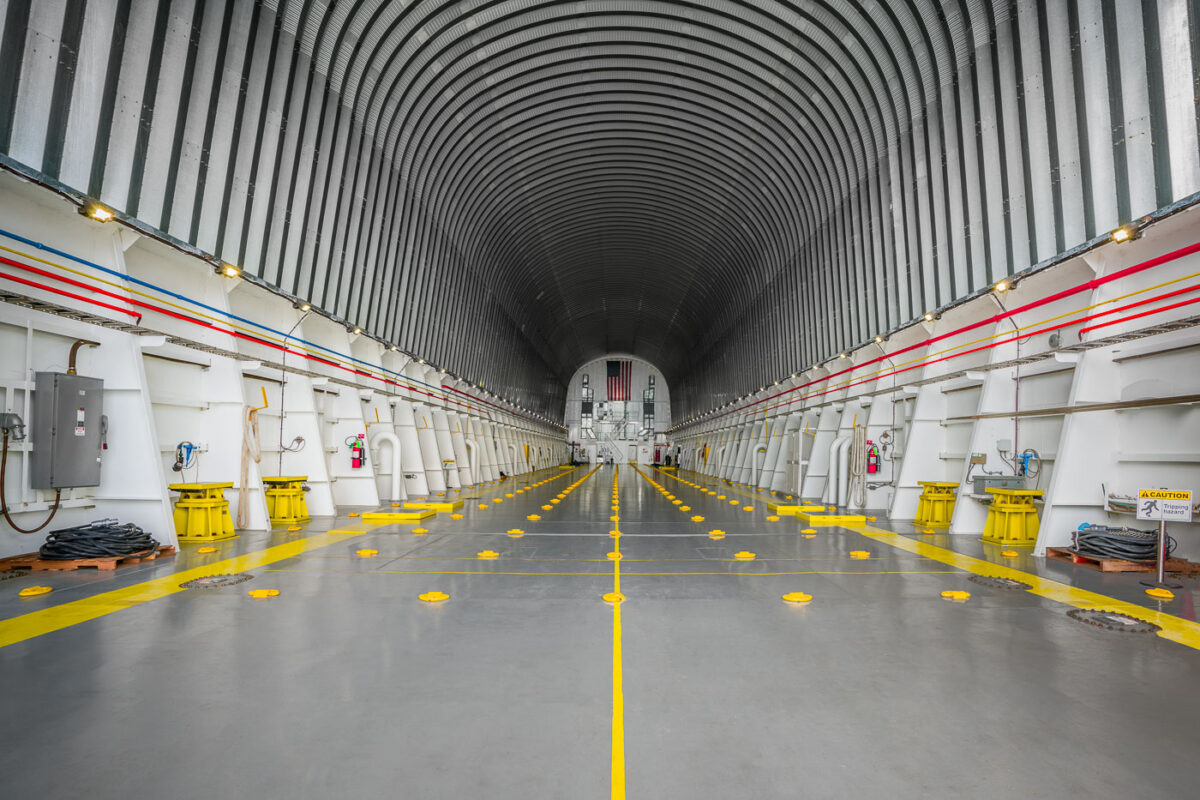
The interior of NASA’s Pegasus barge shows its cavernous cargo bay, designed to carry the massive Space Launch System (SLS) rocket stages from New Orleans to Florida. The reinforced hull and climate-controlled enclosure protect rocket components from Gulf Coast humidity and salt exposure during transit. Originally built in 1999 to move Space Shuttle external tanks, Pegasus was lengthened and upgraded in 2014 to accommodate the larger Artemis-era core stages. The vessel remains a vital part of NASA’s logistics network, connecting Michoud Assembly Facility with Kennedy Space Center via a 900-mile inland and coastal route.
NASA Barge Pegasus at Michoud Assembly Facility, Louisiana
August 2018
—
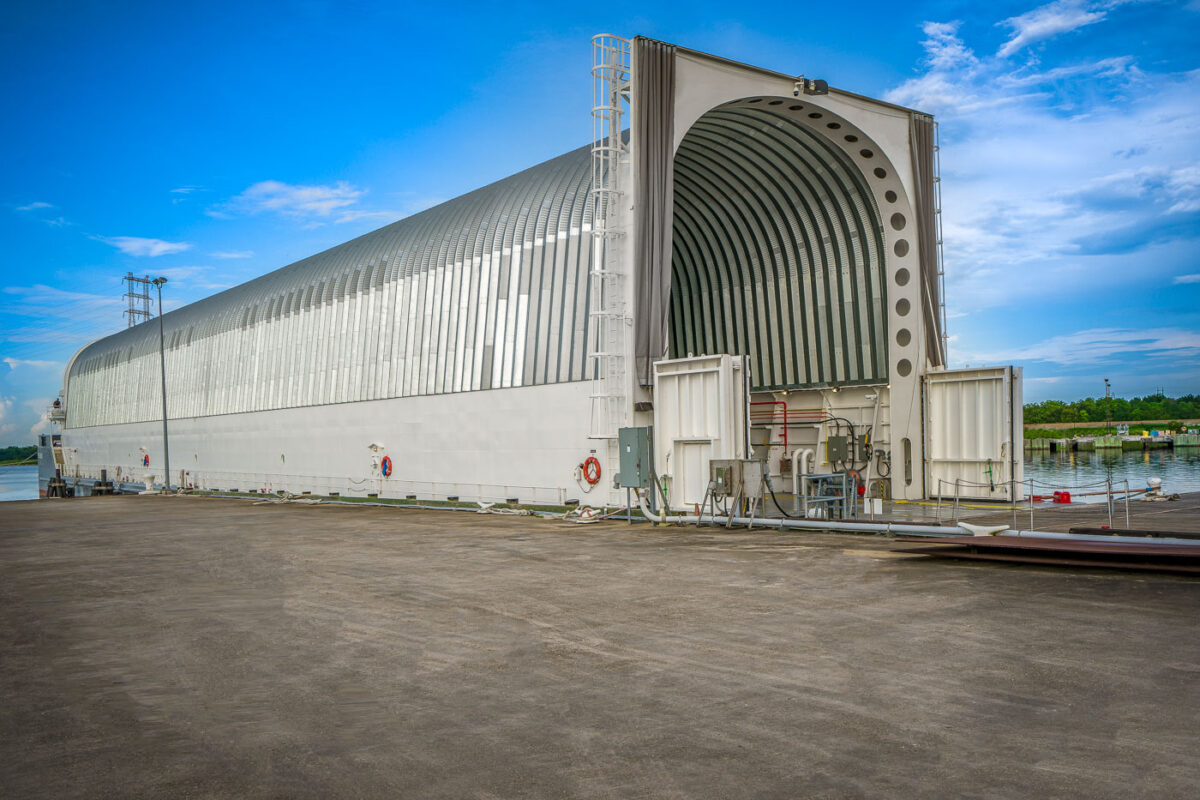
The NASA transport barge Pegasus is shown moored at the Michoud Assembly Facility in New Orleans, Louisiana. Designed to carry the massive core stages of the Space Launch System (SLS), Pegasus features a climate-controlled cargo hold and a retractable bow door to accommodate the rocket’s 212-foot-long components. Originally used to move Space Shuttle external tanks, the vessel was extensively refitted and lengthened in 2014 to support NASA’s Artemis program. It remains a key link between NASA’s Gulf Coast manufacturing site and the Kennedy Space Center in Florida.
NASA Barge Pegasus Moored on Intracoastal Waterway, LA
August 2018
—
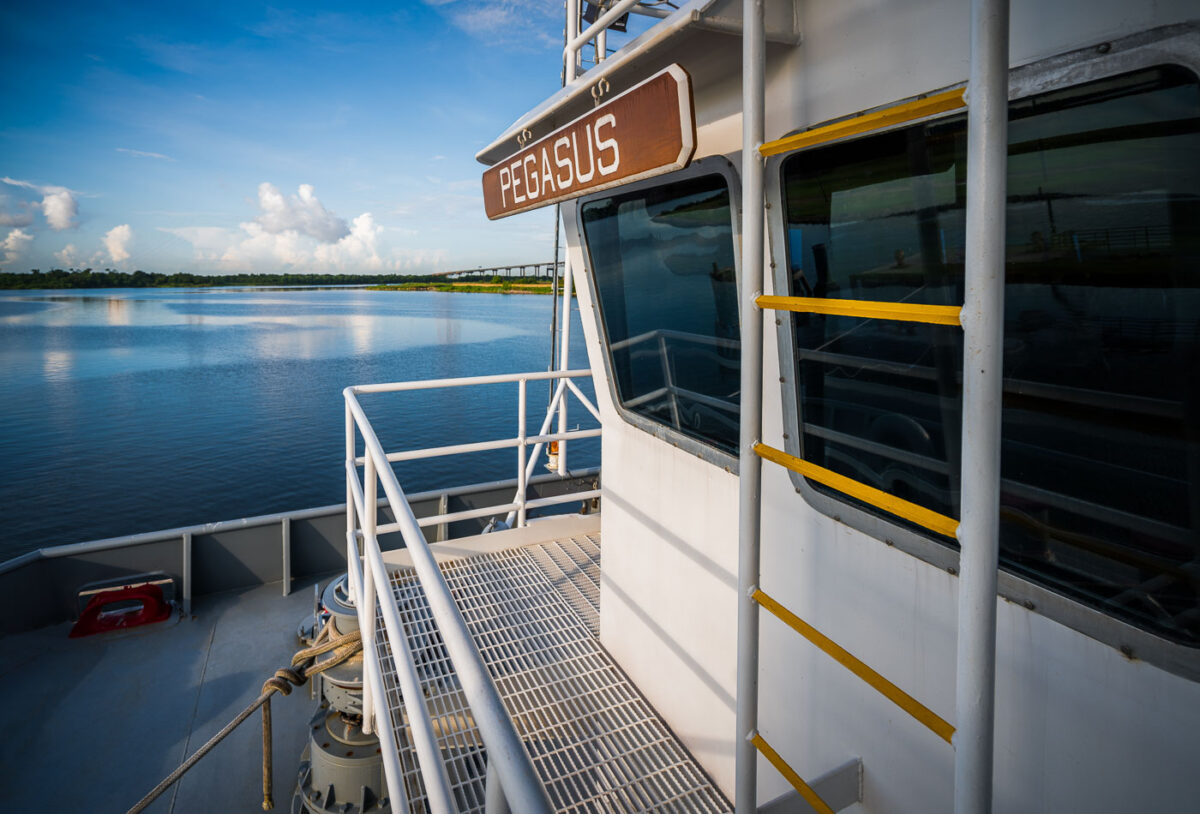
The NASA barge Pegasus moored along the Intracoastal Waterway near New Orleans, Louisiana. Originally built in 1999 to carry Space Shuttle external tanks from Michoud to Kennedy Space Center, the vessel was later extended and modernized to transport the massive core stages of NASA’s Space Launch System (SLS). Operated by the U.S. Maritime Administration and NASA’s logistics teams, Pegasus remains a vital link between Gulf Coast manufacturing and Florida launch operations for Artemis missions.
NASA Pegasus Barge Interior, Michoud Assembly Facility
August 2018
—
Nasa's Pegasus barge that will carry fuel tanks for the Space Launch System to other NASA facilities for testing and launches.
More Info:
NASA Infographic: https://www.nasa.gov/exploration/systems/sls/multimedia/barge-pegasus-infographic
Pegasus Barge Fact Sheet: https://www.nasa.gov/sites/default/files/atoms/files/sls_pegasus_fact_sheet_508_final_04212017.pdf
August 2018
—
Inside NASA’s Michoud Assembly Facility in New Orleans, this image captures a detailed look at the Vertical Assembly Structure where components of the Space Launch System (SLS) core stage are integrated. Michoud is responsible for producing and assembling the massive cryogenic fuel tanks and structural sections for Artemis missions. The image highlights upper-level access platforms, fluid transfer lines, structural support towers, and work platforms surrounding cylindrical core stage hardware. The illuminated scaffolding, wiring harnesses, and service walkways reflect the precision required for assembling high-tolerance aerospace structures intended for deep space missions. The facility plays a key role in preparing the United States’ next-generation launch vehicles for lunar exploration.
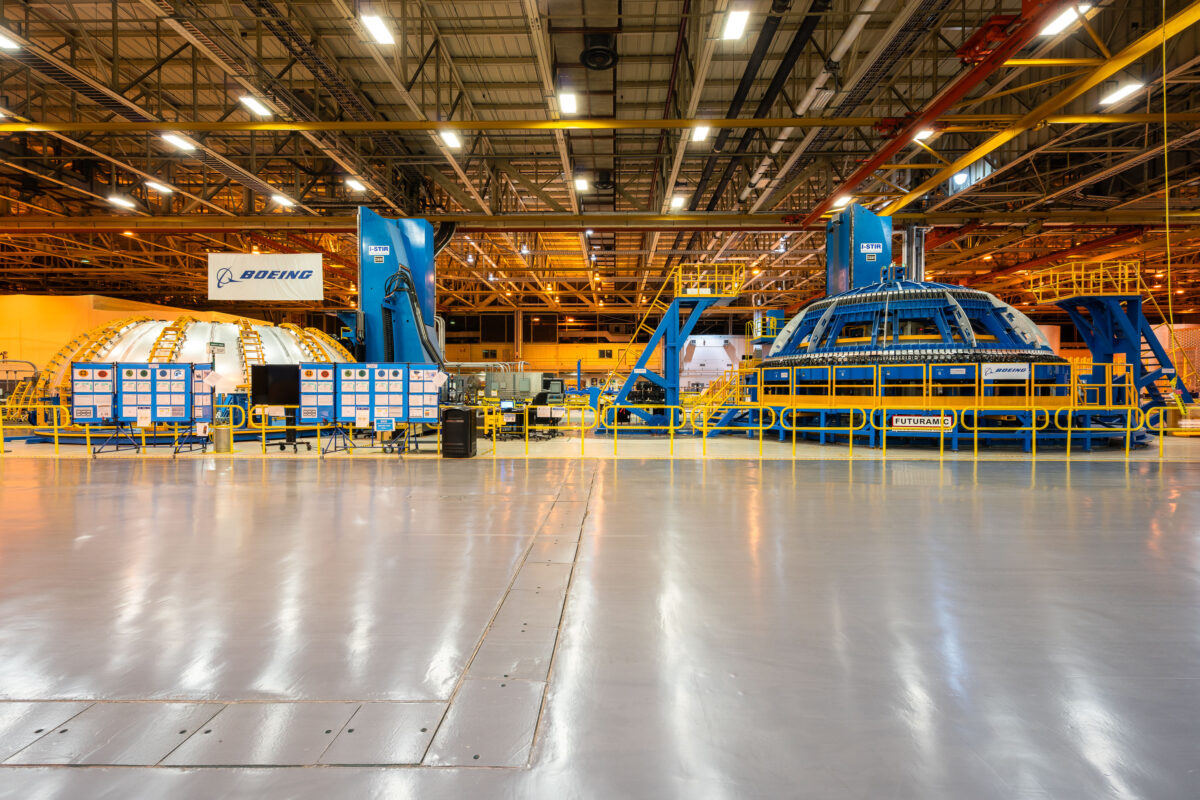
Futuramic Gore Weld Tool
August 2018
—
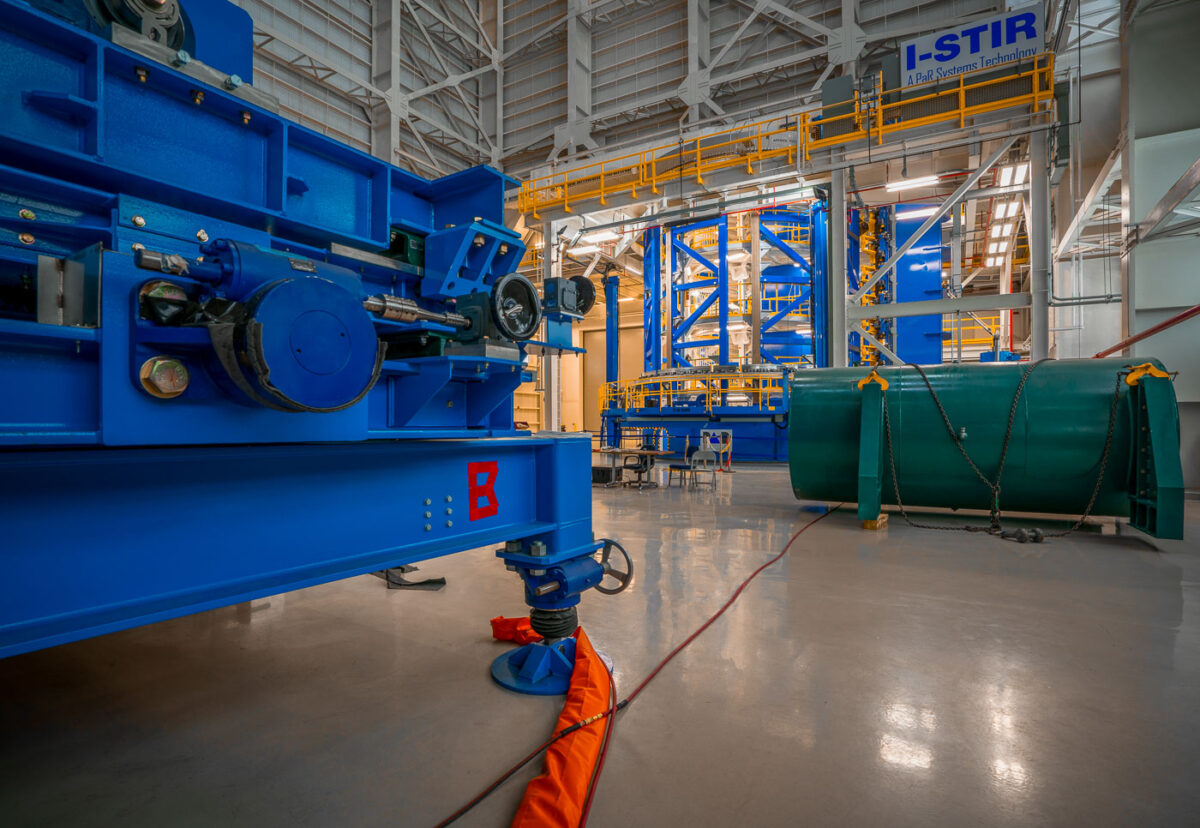
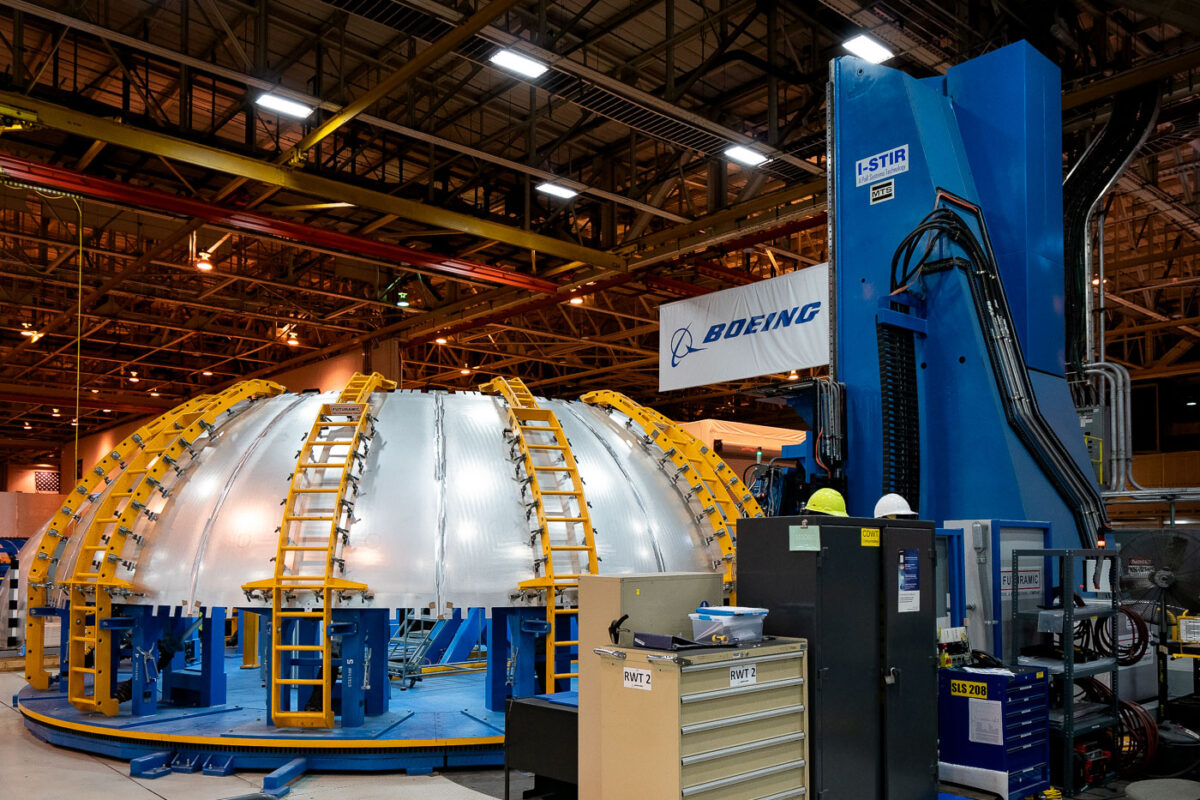
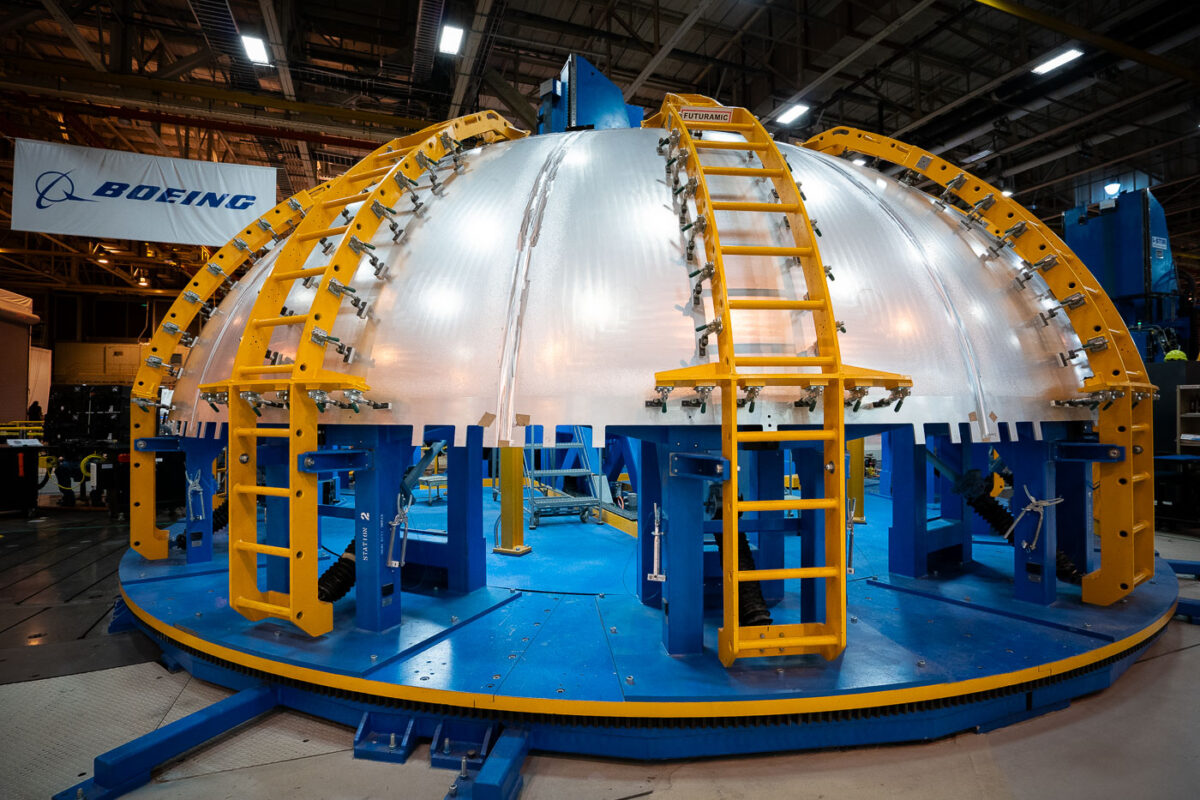
At NASA’s Michoud Assembly Facility in New Orleans, Boeing engineers use a PAR Systems I-STIR Friction-Stir Welder to join massive aluminum dome sections for next-generation aerospace vehicles. The process forges metal under intense pressure and heat without melting it, producing welds with exceptional structural integrity for components such as rocket fuel tanks and spacecraft pressure vessels. The Michoud facility, once home to Saturn V and Space Shuttle tank production, continues its role as one of the nation’s key centers for large-scale precision manufacturing and spaceflight hardware assembly.
NASA Vertical Weld Center, SLS & Artemis Production
August 2018
—
Inside the NASA Michoud Assembly Facility where the SLS and Artemis is being built.
NASA Michoud VAB, New Orleans, SLS Core Stages
August 2018
—
The main assembly hall of NASA’s Michoud Assembly Facility in New Orleans, Louisiana, seen from the west apron. Originally constructed during World War II for manufacturing Liberty ships and later used for Saturn V and Space Shuttle external tank production, the site continues to play a central role in the U.S. space program. Today, Boeing and NASA engineers fabricate and assemble the massive core stages of the Space Launch System (SLS) inside this facility for Artemis missions to the Moon and beyond.
Boeing SLS Core Stage Dome Section, NASA Michoud
August 2018
—
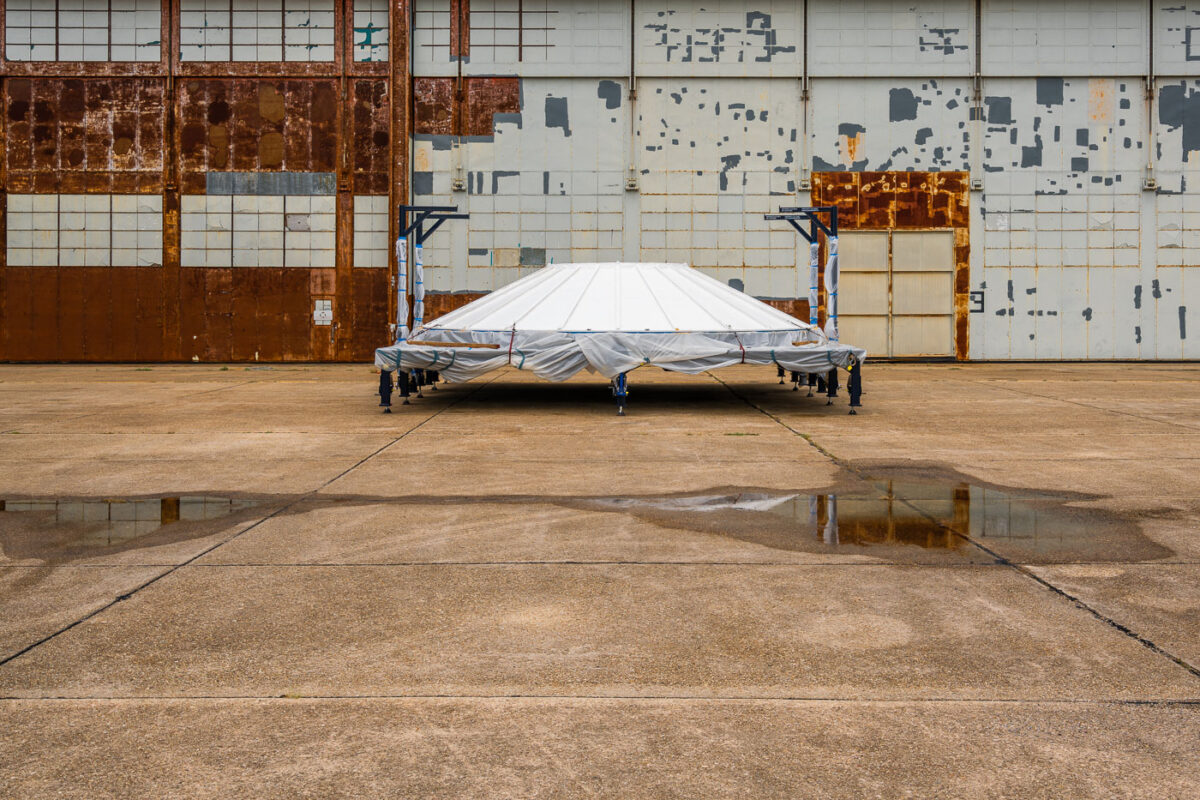
A completed dome section, likely part of the Space Launch System (SLS) core stage, sits wrapped and staged outside the Boeing production area at NASA’s Michoud Assembly Facility in New Orleans. The massive structure, used to cap propellant tanks, rests on a mobile transport frame against the weathered doors of an aging assembly hangar — a visual contrast between decades of industrial heritage and the cutting edge of modern rocketry. The surface reflections from the wet concrete emphasize the scale and symmetry of this aerospace component awaiting the next step in its journey toward integration.
NASA SLS Rocket Model for Barge Transport Test, Michoud
August 2018
—
A model SLS rocket outside the NASA Michoud Assembly Facility. The model was used to test transporting on the NASA barge.
Boeing SLS Dome Friction-Stir Welding at NASA Michoud
August 2018
—
Inside NASA’s Michoud Assembly Facility in New Orleans, a massive aluminum dome section undergoes welding using a PAR Systems I-Stir Friction Welder — a precision tool developed for joining thick aerospace materials without melting them. This technique, essential for spacecraft and fuel tank construction, uses frictional heat and mechanical pressure to create exceptionally strong, defect-free joints. Boeing engineers employ the system for the assembly of rocket and space vehicle components, part of a long legacy of large-scale fabrication at Michoud dating back to the Saturn V and Space Shuttle programs.
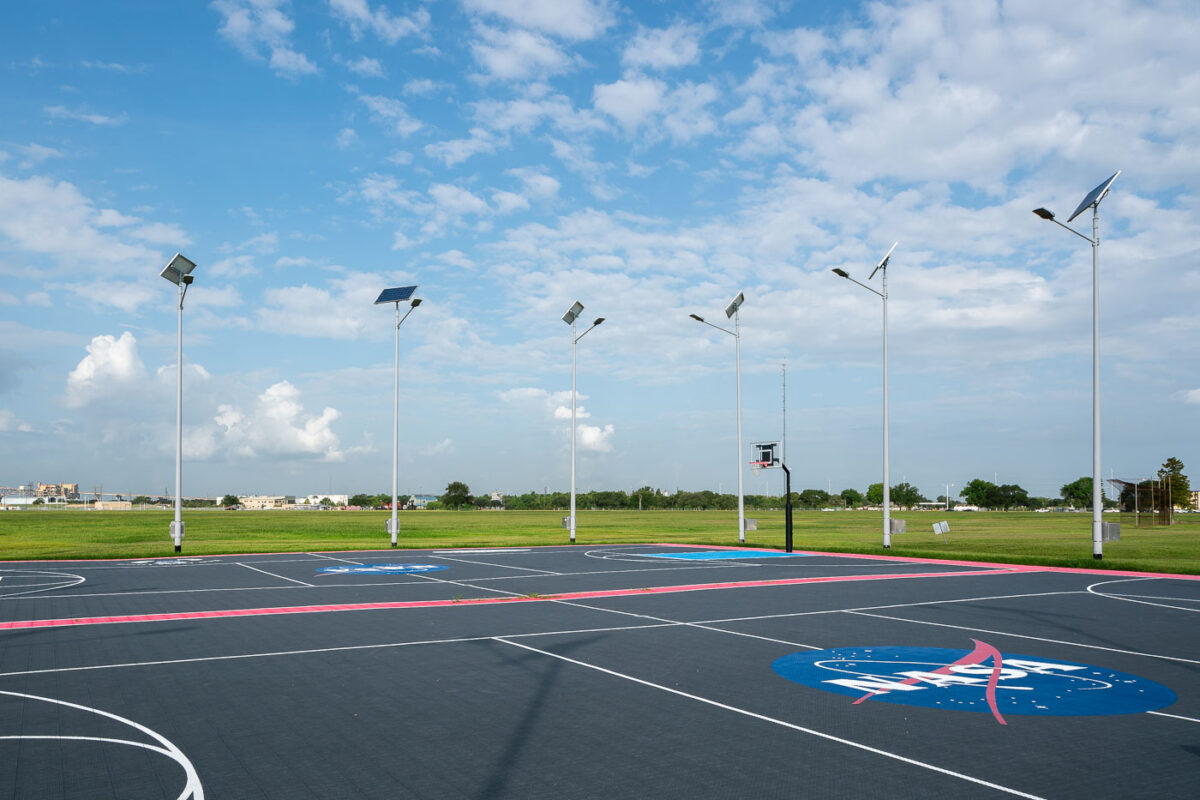
NASA Basketball Court, Solar Lights – Michoud Assembly Facility
August 2018
—
A recreational basketball court at NASA’s Michoud Assembly Facility in New Orleans features the NASA insignia at center court and solar-powered lighting along its perimeter. The court sits on the expansive campus where large-scale aerospace hardware is built, including rocket stages and spacecraft components. Michoud, once known for producing the Saturn V and Space Shuttle external tanks, remains an active center for both engineering and community life for NASA employees and contractors.
Built in Minneapolis
Photographs showcasing change over time
Browse by location, move through long-running series, or start with recent work.