shinjuku Station

7 photos · 2023

7 photographs tagged shinjuku Station, 2023.
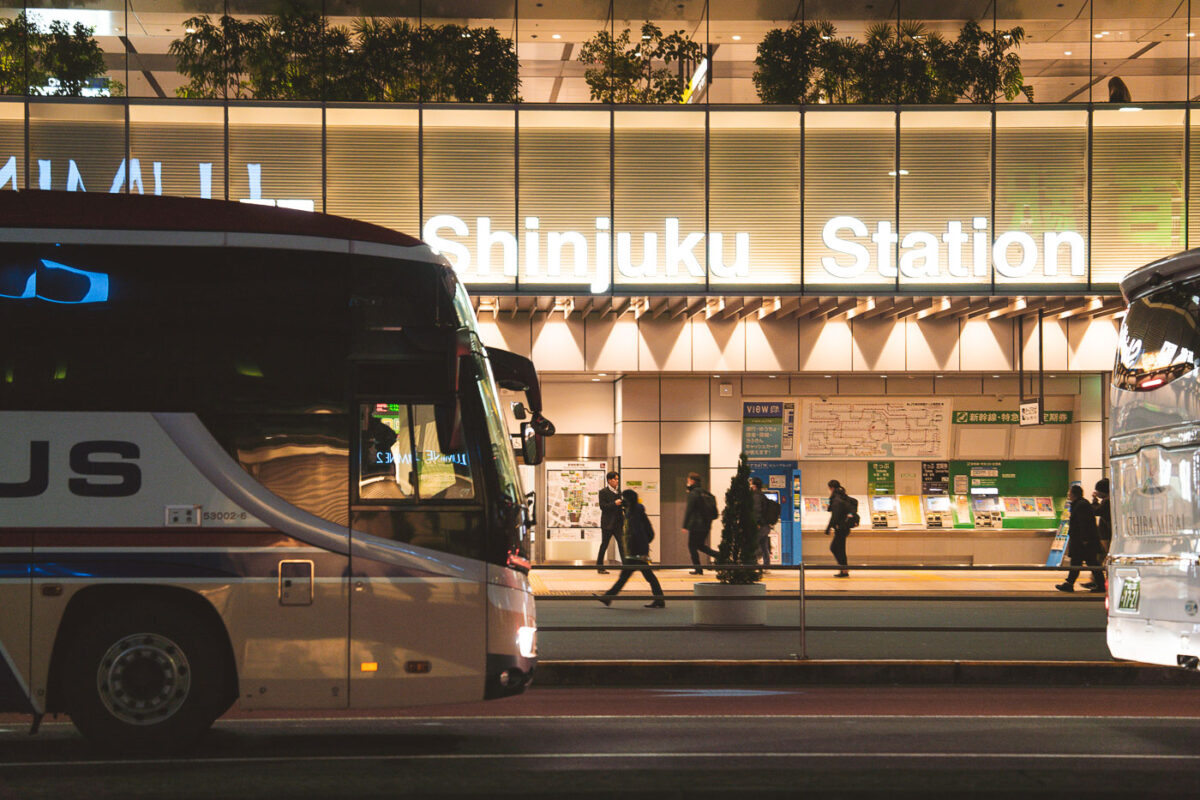
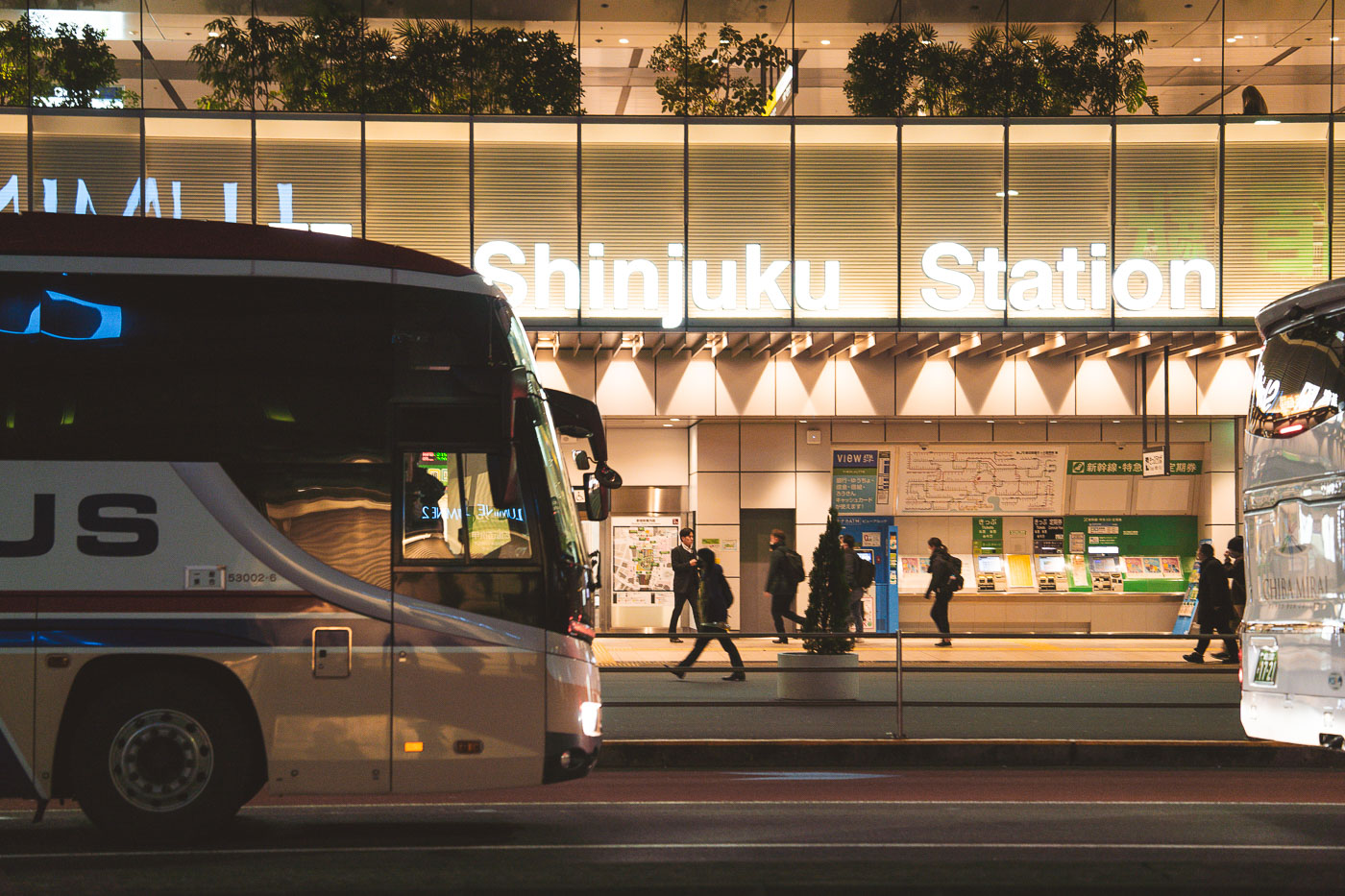
Passengers board intercity buses at Shinjuku Station's west side terminal in Tokyo at night.
Shinjuku Station handles more daily passengers than any other rail station in the world, with Guinness World Records crediting it with roughly 3.5 million travelers a day across JR East, Odakyu, Keio, Toei, and Tokyo Metro lines. The highway bus terminal on its south side, officially Shinjuku Expressway Bus Terminal and known locally as Busta Shinjuku, opened in April 2016 to consolidate coach routes that had previously departed from scattered curbside stops around the station. The four-story facility can handle more than 1,600 buses a day, linking Tokyo to destinations across Honshu. It sits atop the Shinjuku Station South Gate building, integrating long-distance bus service directly with the rail concourses below.

Busta Shinjuku Bus Terminal, Shinjuku Station, Tokyo
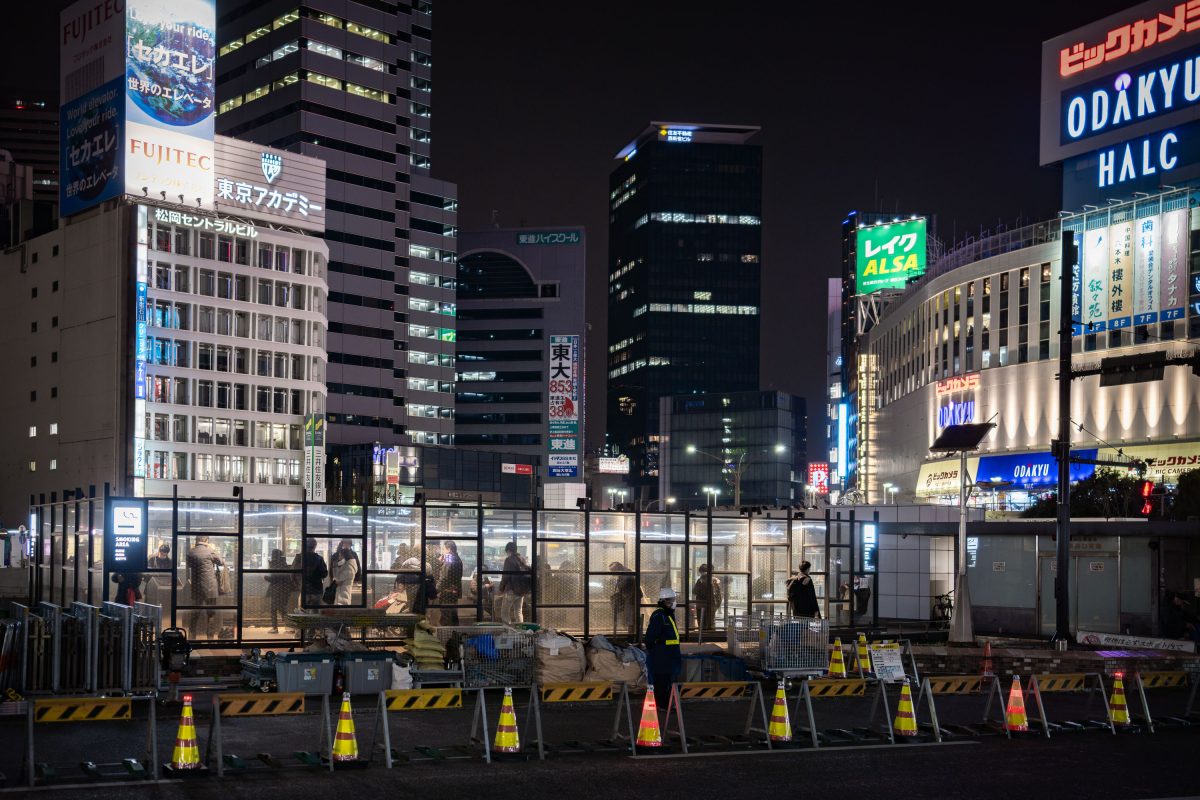
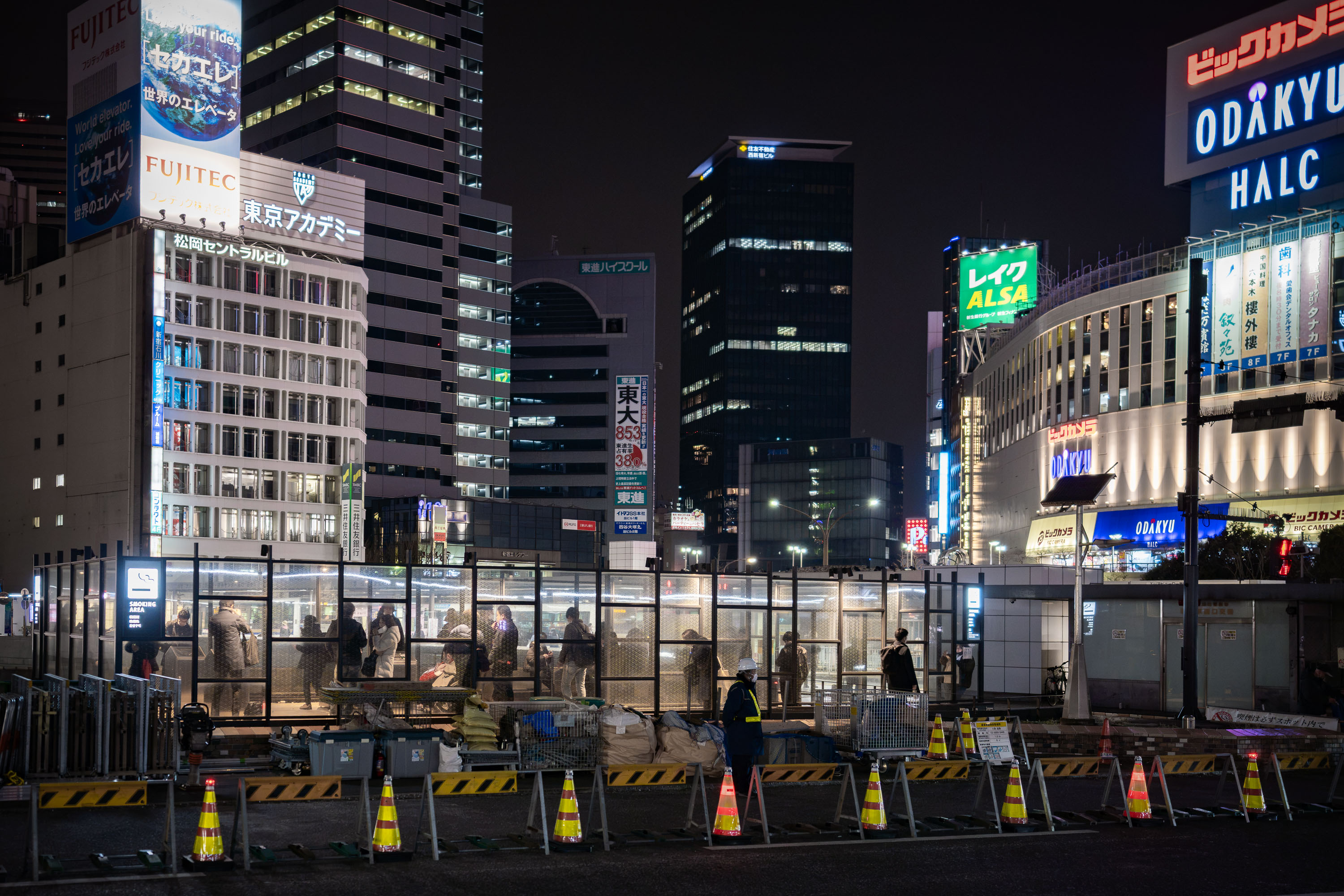
Nighttime street-level smoking area with barrier fencing in a Tokyo shopping district.
Odakyu HALC anchors this stretch of Shinjuku, its name taken from the Odakyu Electric Railway, which operates the adjacent Shinjuku Station terminal and a department store chain serving western Tokyo and the Odawara line. Shinjuku Station itself handles more daily passengers than any other station in the world, a distinction recognized by Guinness World Records, with multiple operators including JR East, Odakyu, and Keio converging on the complex. The green Lake ALSA sign advertises a consumer finance company, one of many such lenders that took root in Japan during the postwar credit boom. A fenced smoking area, common near Japanese train stations since indoor and street smoking restrictions tightened in the 2000s, occupies the foreground plaza, reflecting Tokyo's approach of concentrating smokers in designated outdoor enclosures rather than banning the habit outright.

Odakyu HALC and Shinjuku Skyline at Night, Tokyo
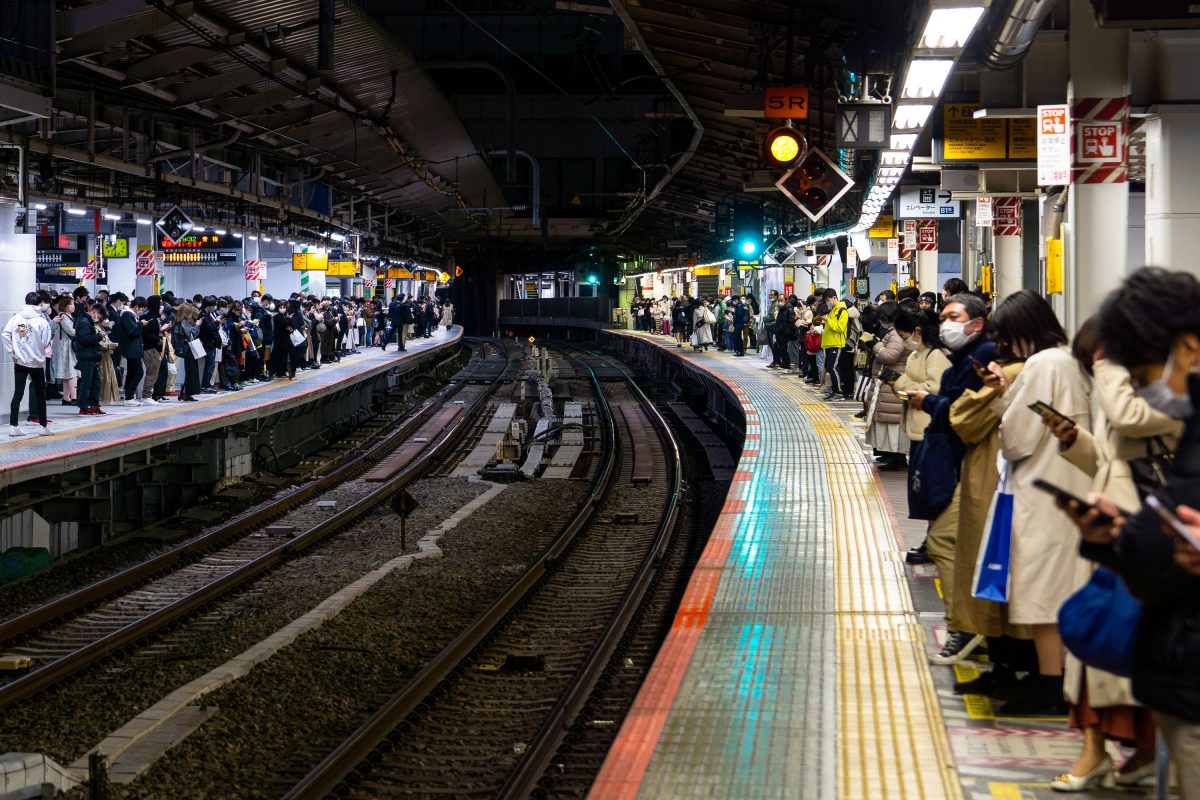
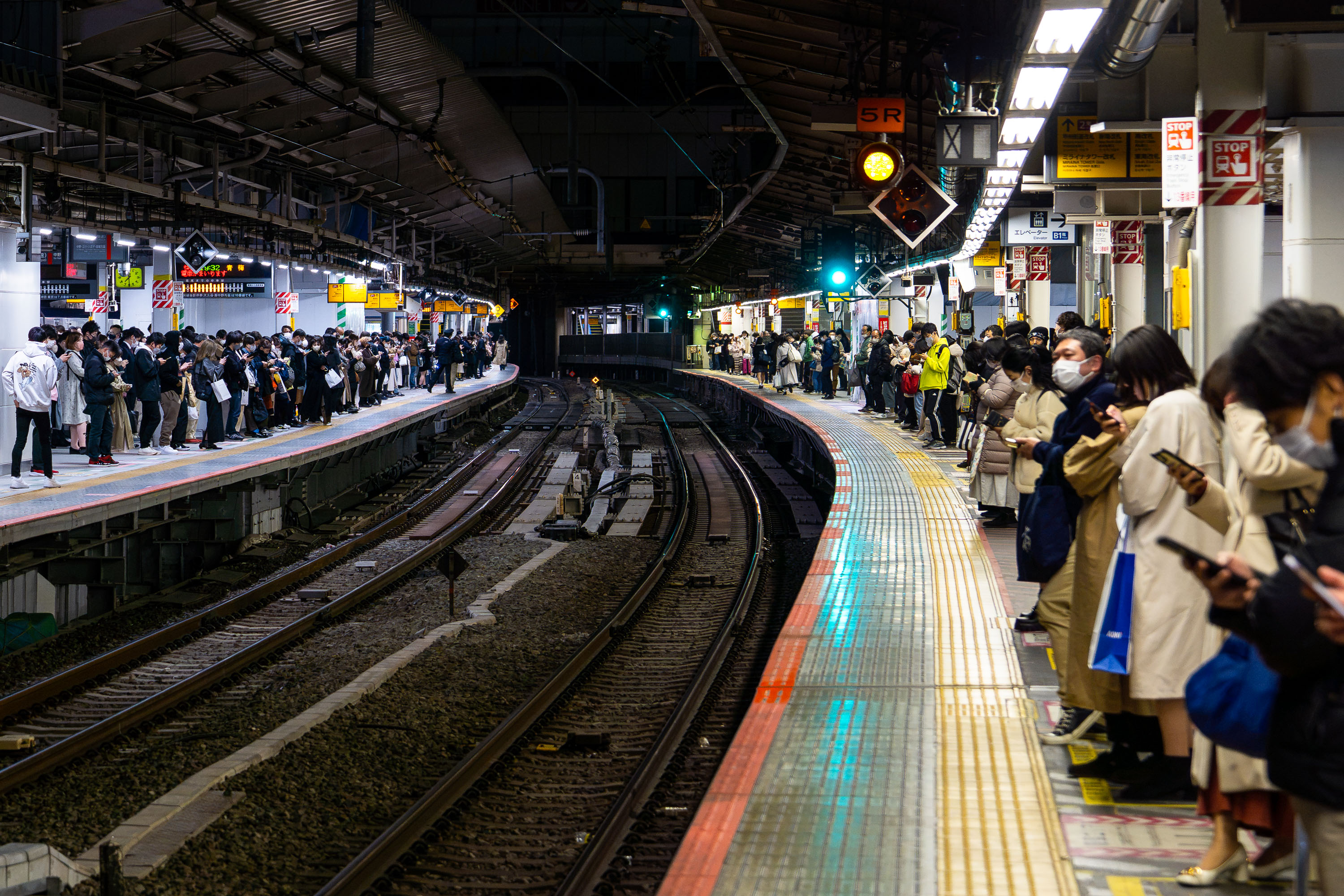
Commuters wait on both platforms at Shinjuku Station during evening rush hour in Tokyo, Japan.
Shinjuku Station handles roughly 3.5 million passengers a day, the busiest transit hub on the planet. The station serves multiple operators, including JR East, Odakyu, Keio, and the Tokyo Metro and Toei subway systems, through a maze of more than 200 exits. Its curved platforms and tight track geometry, a legacy of the station's piecemeal expansion since it opened in 1885, are still in daily use today. Commuters bound for Tokyo's western suburbs pass through here on lines like the Chuo, Sobu, and Odakyu, making the evening rush one of the densest recurring crowd events anywhere in the city.

Commuters Wait on a Curved Platform at Shinjuku Station
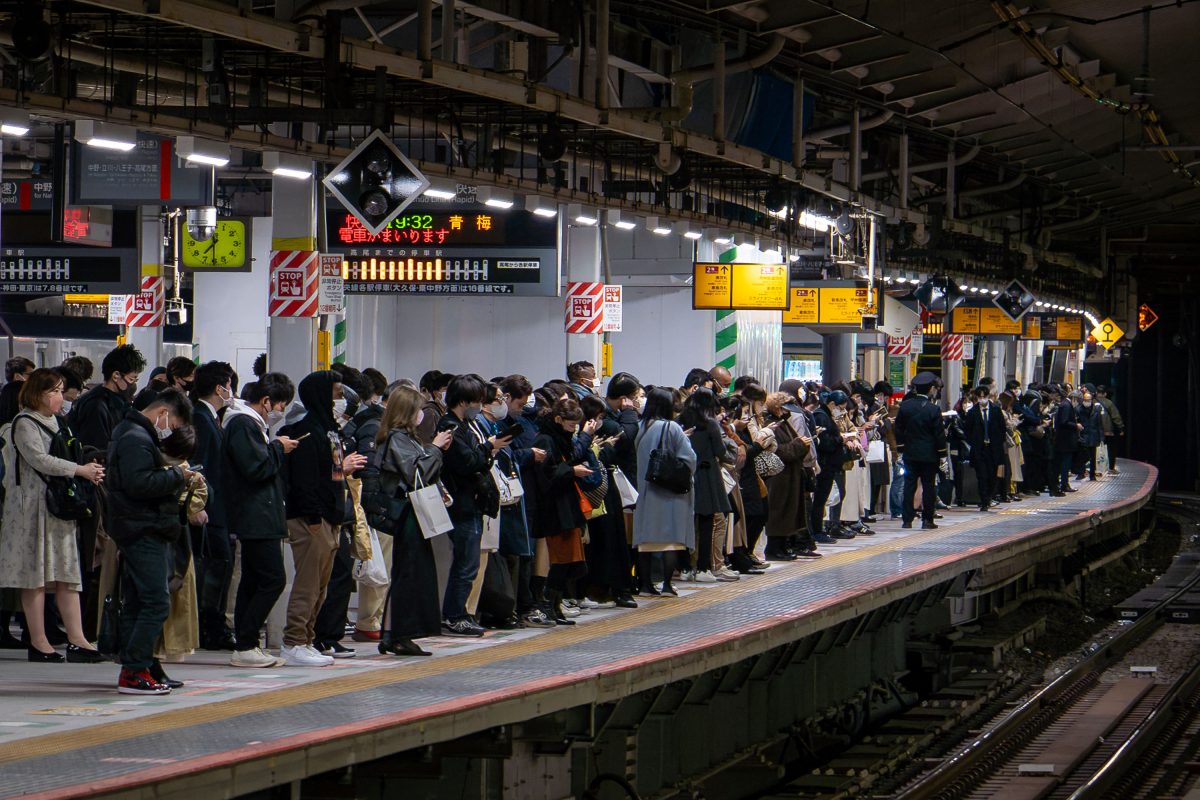
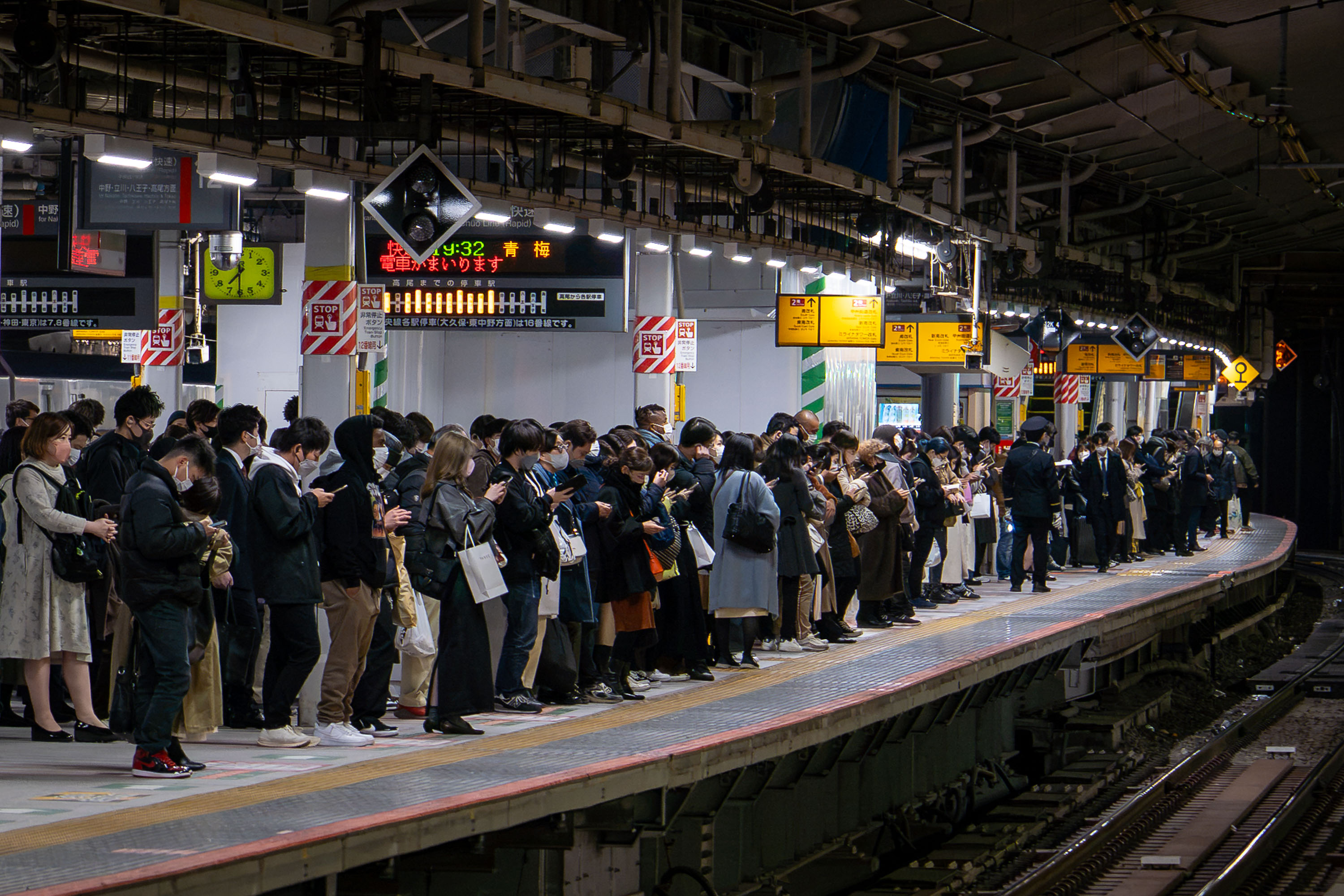
Crowds of commuters queue on a platform at Shinjuku Station in Tokyo during evening rush hour.
Shinjuku Station handles more than three million passengers a day, a figure that has earned it recognition from Guinness World Records as the busiest train station on Earth. The complex is shared by JR East, Keio, and Odakyu, along with the Tokyo Metro and Toei subway lines, linking more than 200 exits to the surrounding district. JR East's Chuo-Sobu and Yamanote lines run through platforms like this one, carrying commuters bound for destinations such as Ome, still visible on the departure boards common throughout the station. The station's platforms and passageways were built up over decades to accommodate ridership that grew alongside Tokyo's postwar expansion, and the crowding during peak evening hours remains a routine part of daily commuting in the city.

Commuters Wait for the Ome-Bound Train at Shinjuku Station
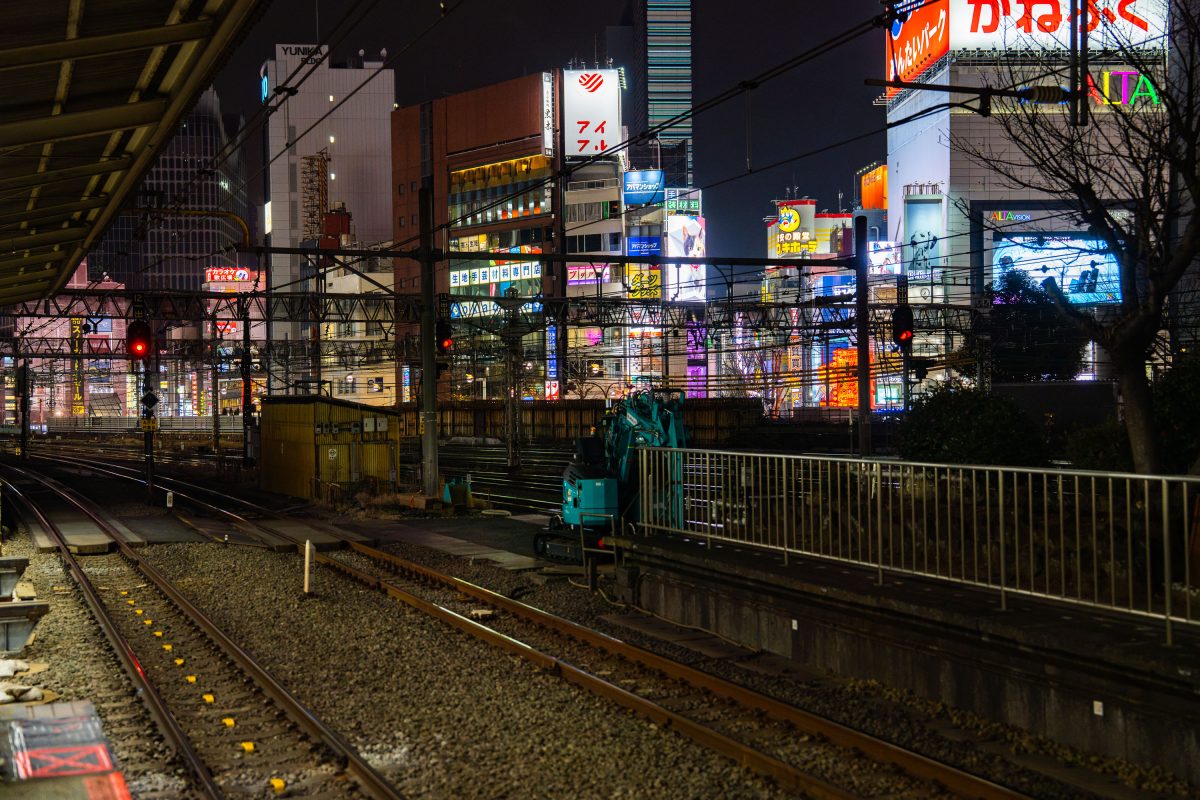
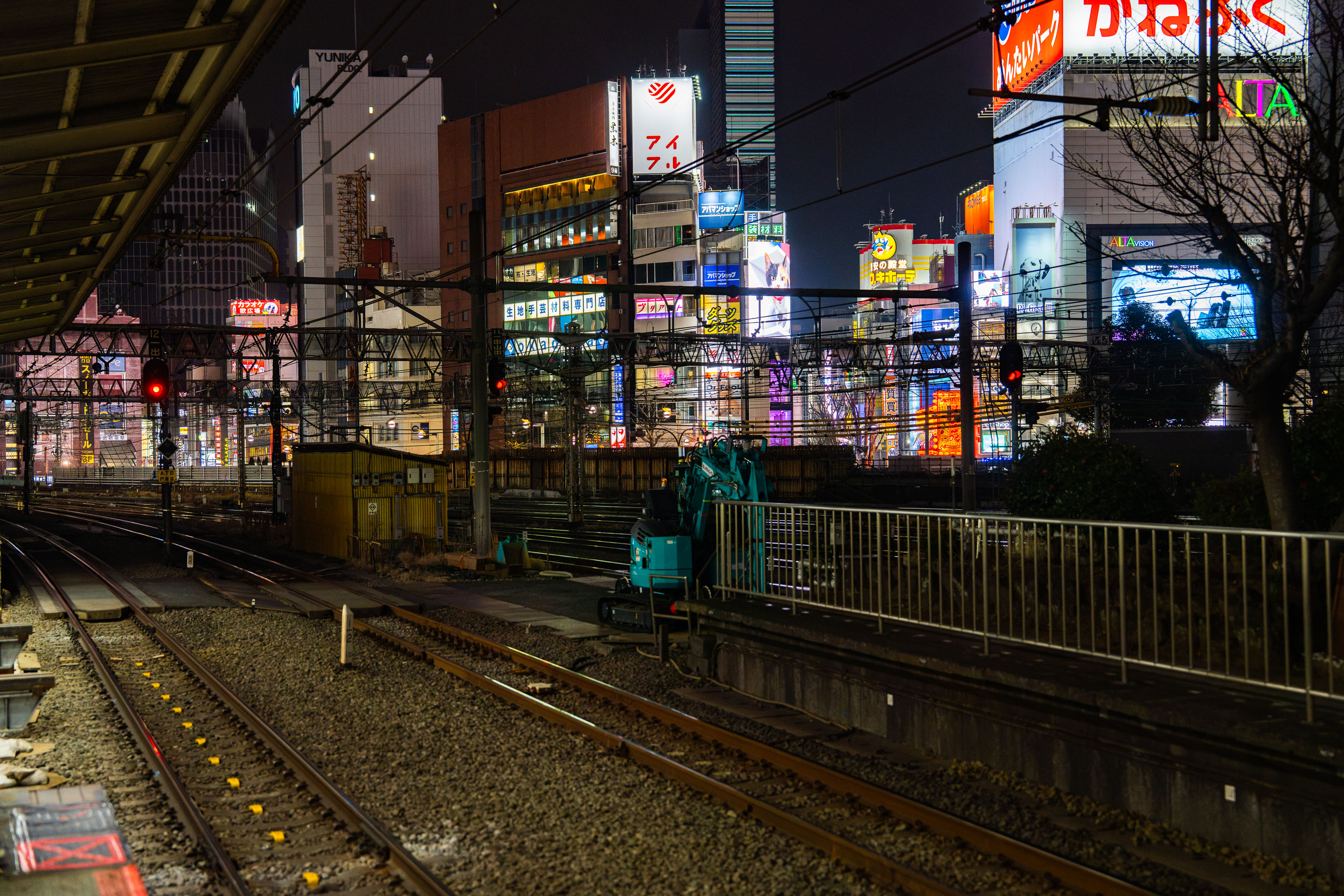
Rail tracks and maintenance equipment below Kabukicho district in Shinjuku, Tokyo, illuminated by neon signs at night.
Shinjuku's rail corridor runs just below Kabukicho, Tokyo's largest entertainment and nightlife district, packed with bars, theaters, and neon-clad storefronts advertising everything from pachinko parlors to karaoke lounges. The tracks belong to lines converging on Shinjuku Station, which handles more daily passengers than any other station in the world, according to Guinness World Records. Maintenance equipment and signal gantries along the right-of-way are routine fixtures of Japan's rail system, which prioritizes nightly track inspection and repair during the narrow hours when trains stop running.

Night Maintenance Along the Tracks Below Kabukicho’s Neon Skyline
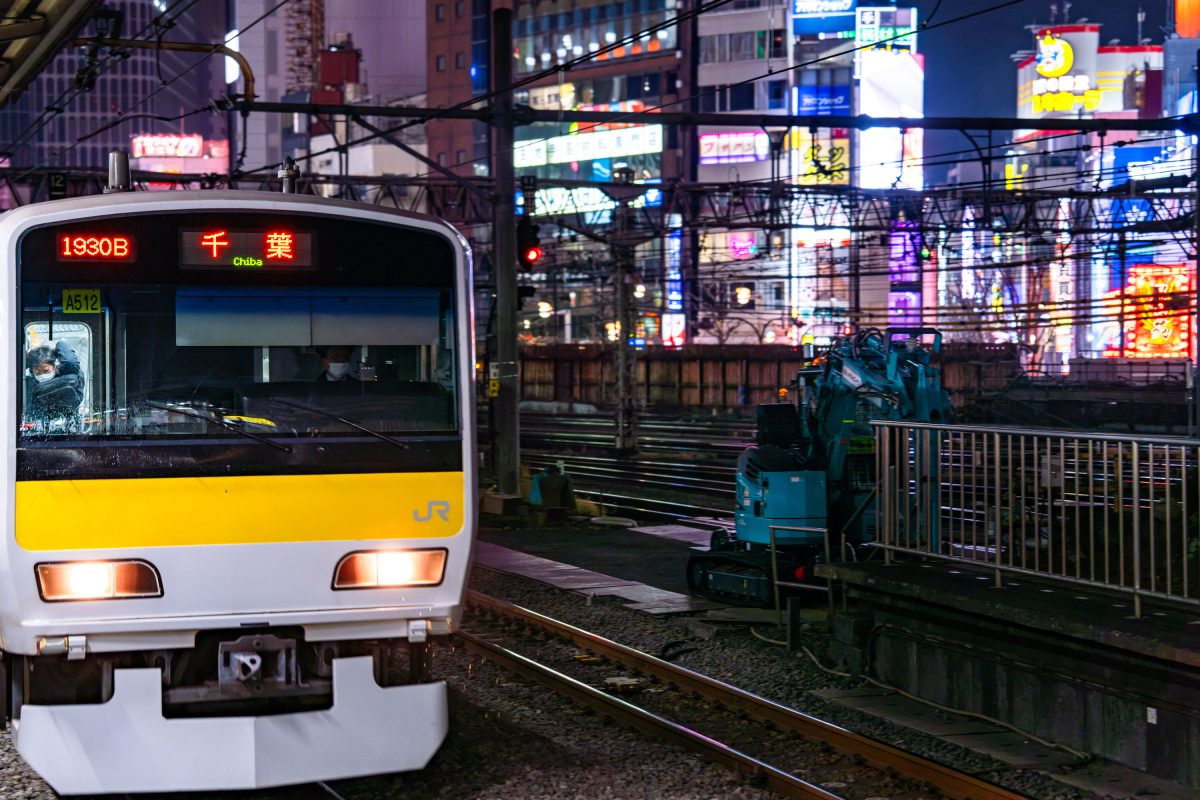
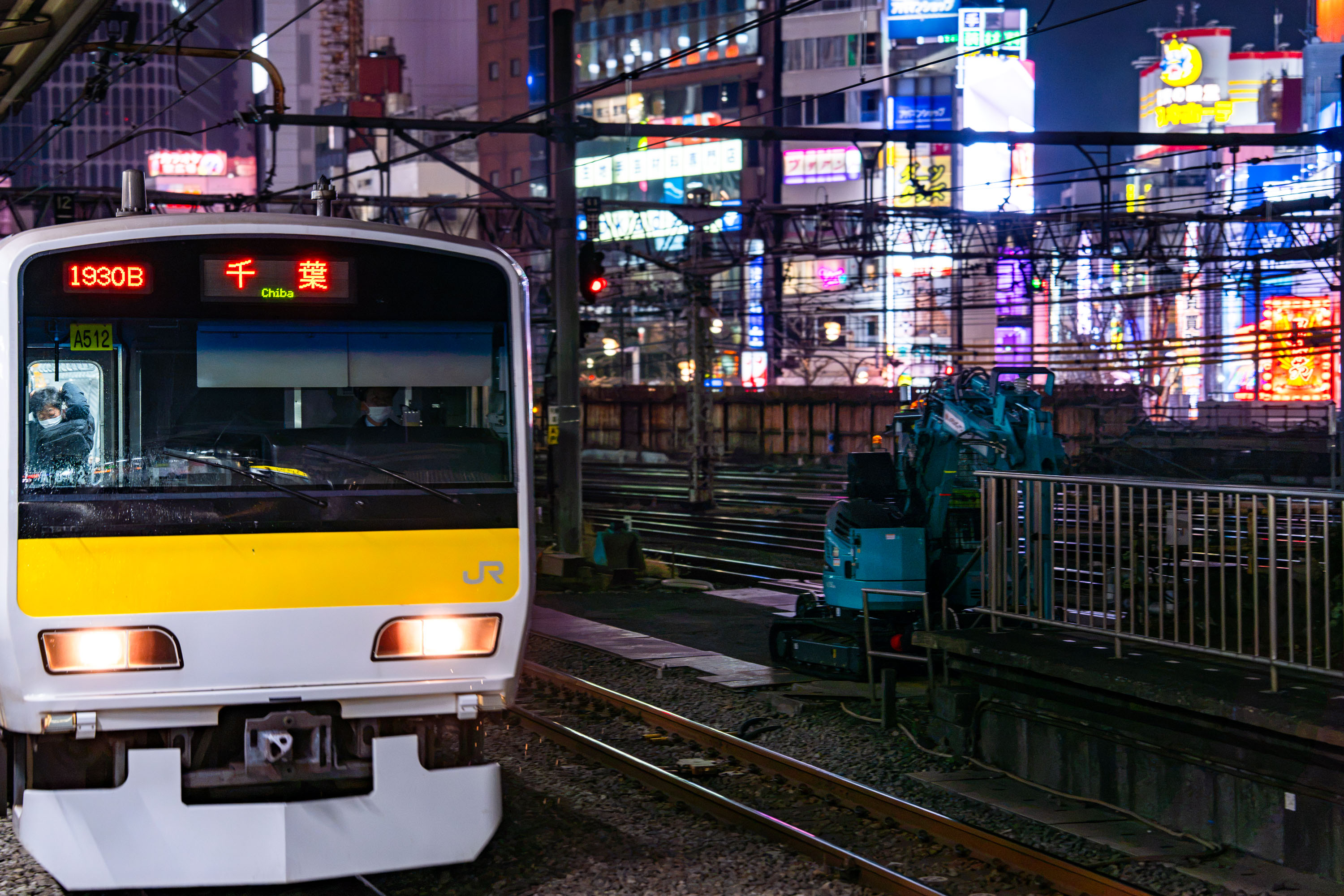
JR East E231 Series train bound for Chiba at Shinjuku Station in Tokyo during evening hours.
The E231 series train pictured here runs on JR East's Sobu Line, which links central Tokyo to Chiba Prefecture. JR East introduced the E231 fleet in 2000 as a successor to the older 103 and 201 series trains, building it with a stainless-steel body and a wide-door layout meant to speed passenger boarding during rush hour. Destination and train-number displays like the "1930B" and "Chiba" readouts on this unit's front panel use LED technology that JR East rolled out fleet-wide in the early 2000s to replace analog signage. The Sobu Line's rapid and local services share track with the Chuo Line through central Tokyo, feeding into major hubs such as Shinjuku and Akihabara before continuing east toward Chiba.

Sobu Line Train “1930B” Departs for Chiba Amid Shinjuku Neon
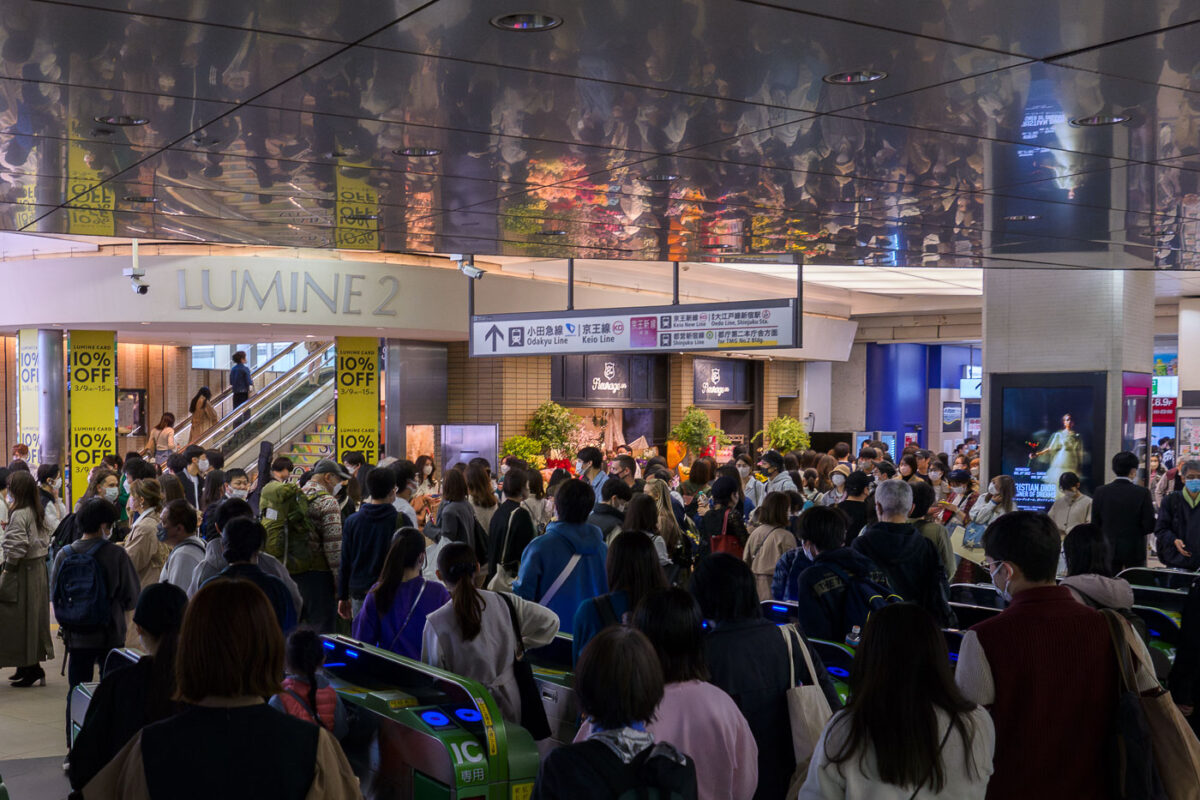
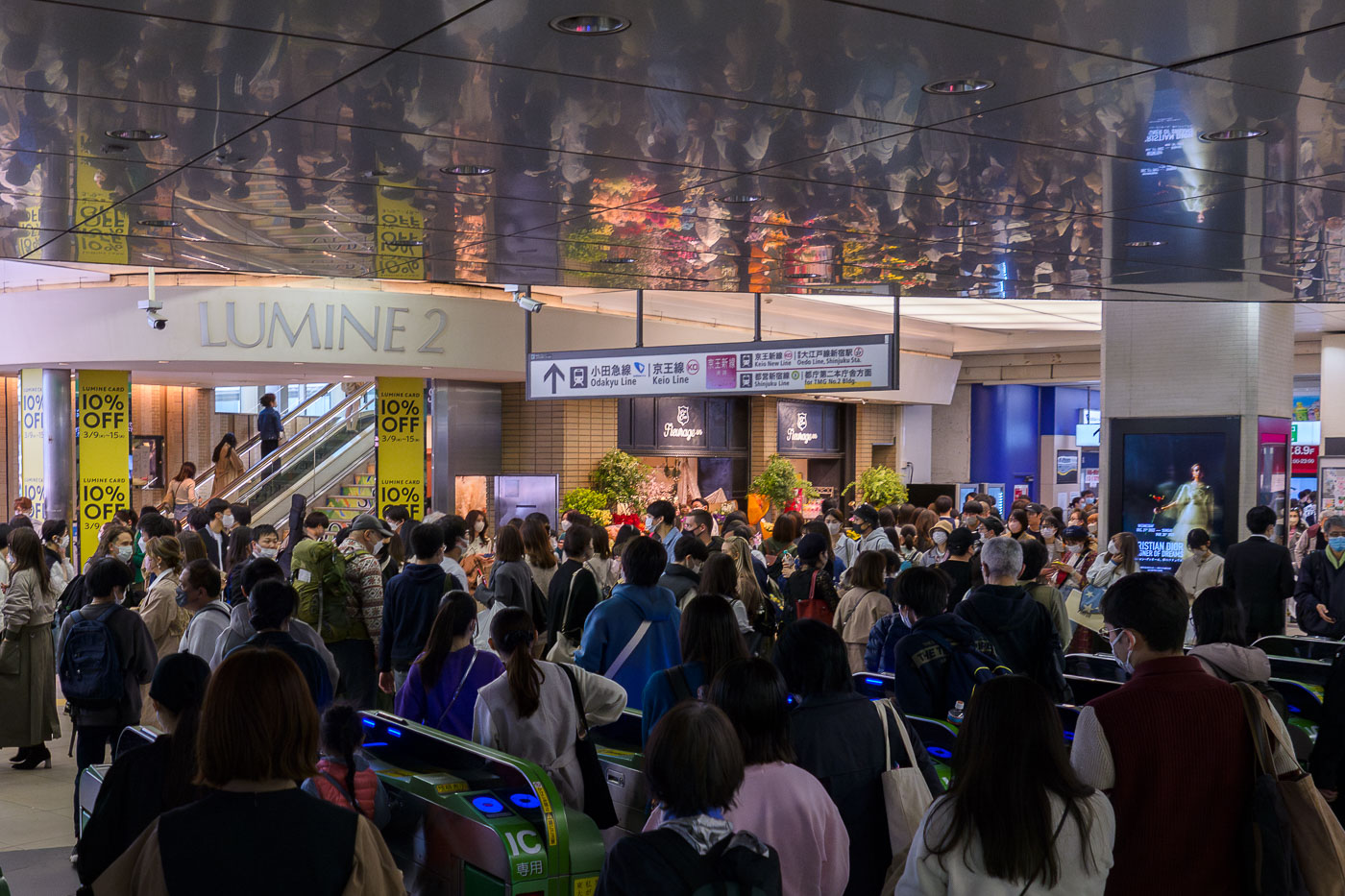
Crowds of commuters gather at the Lumine 2 concourse entrance near Odakyu and Keio Line transfers at Shinjuku Station in Tokyo.
Shinjuku Station in Tokyo serves as a major interchange connecting the Odakyu Line, Keio Line, Toei Oedo Line, and Toei Shinjuku Line, making it one of the busiest rail hubs in the world. The Lumine 2 building, visible at this concourse entrance, houses retail shops directly integrated into the station complex. This area functions as a key pedestrian junction where commuters transfer between private railway lines and Tokyo's subway network. The was taken on March 11, 2023, during a period when mask-wearing remained common practice in Japan.

Ticket Gates Near the Lumine 2 Entrance at Shinjuku Station