Harvard University

21 photos · 2024–2025

21 photographs tagged Harvard University, 2024–2025.
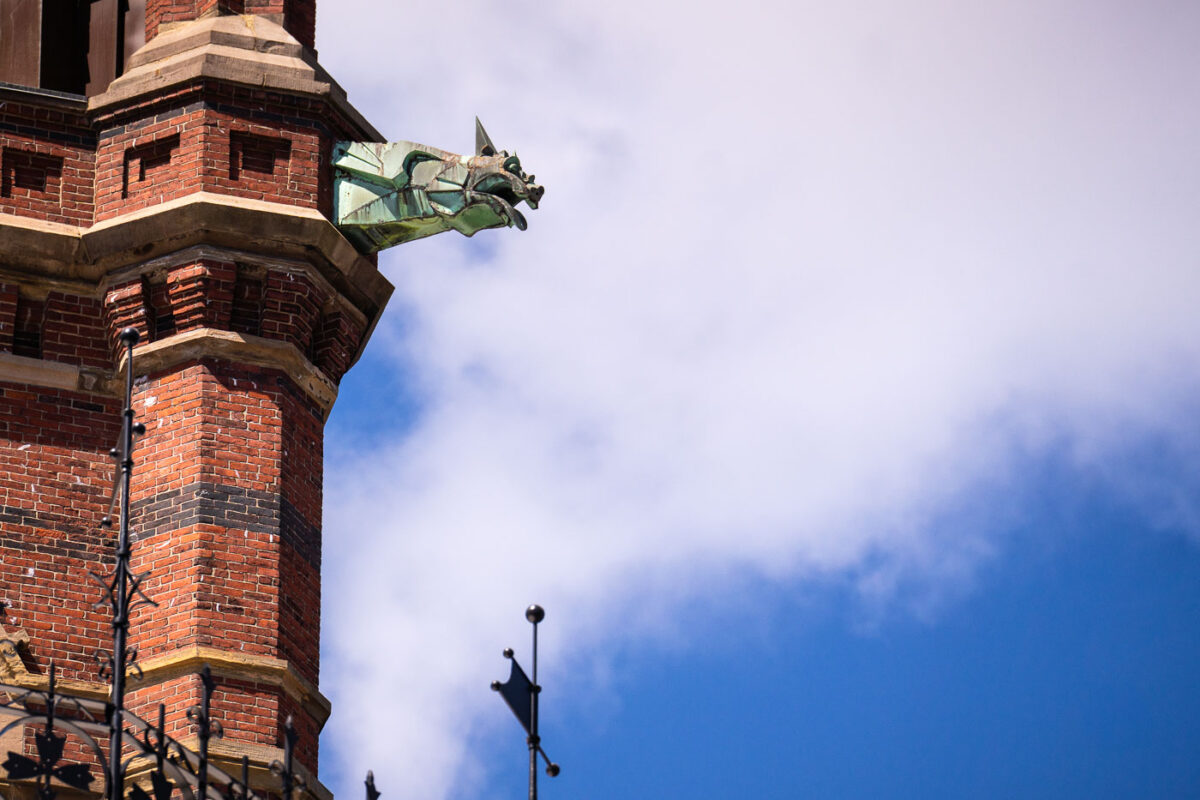
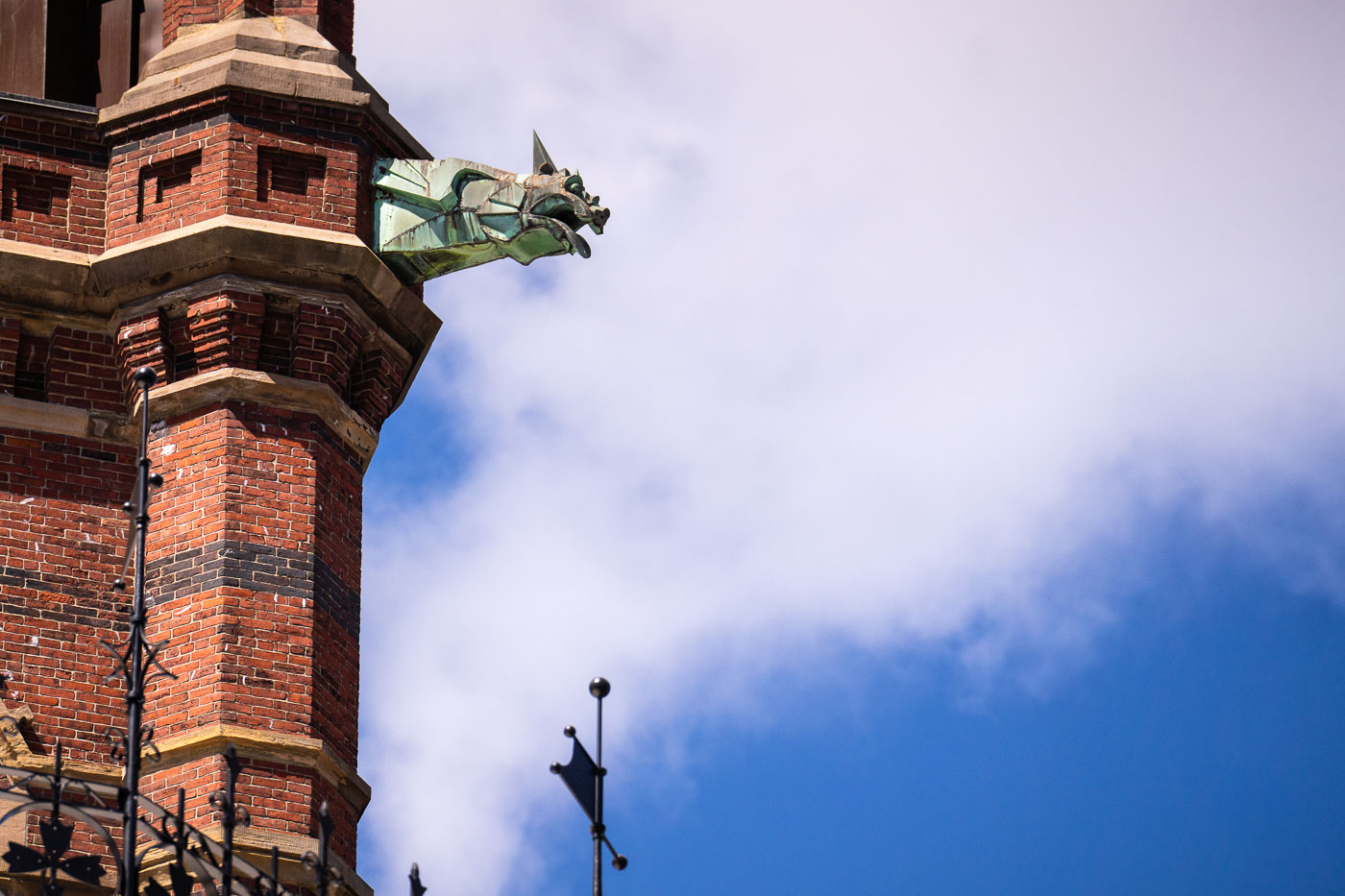
Copper gargoyle water spout on the Gothic Revival facade of Harvard Memorial Hall in Cambridge, Massachusetts.
Harvard Memorial Hall, dedicated in 1878, honors Harvard alumni who died fighting for the Union during the Civil War. Architects Henry Van Brunt and William Ware designed the High Victorian Gothic building, which also houses Sanders Theatre and the Annenberg Hall dining commons. A 1956 fire destroyed the original spire atop the tower, and the structure went without one until a donor-funded restoration completed it in 1999. Copper gargoyles at the tower's corners rainspouts, carrying water away from the brick and stone below.

A Copper Gargoyle on Memorial Hall’s Tower
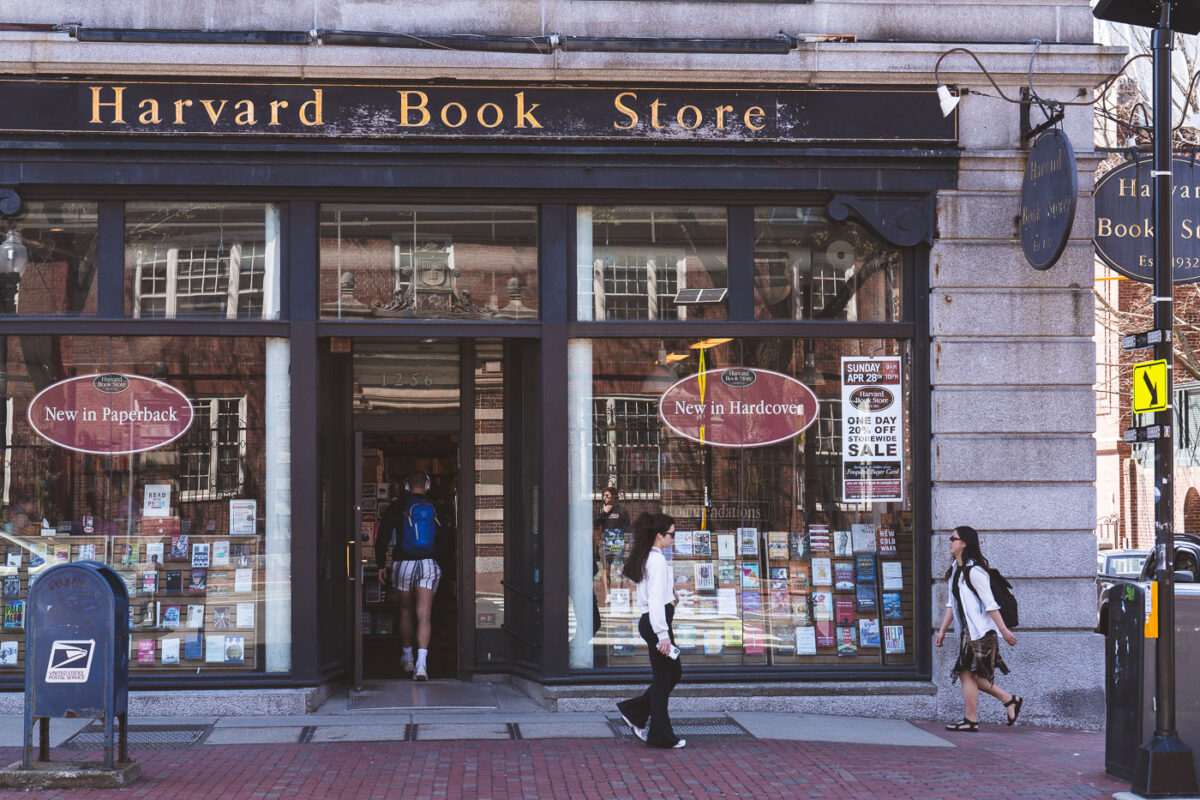
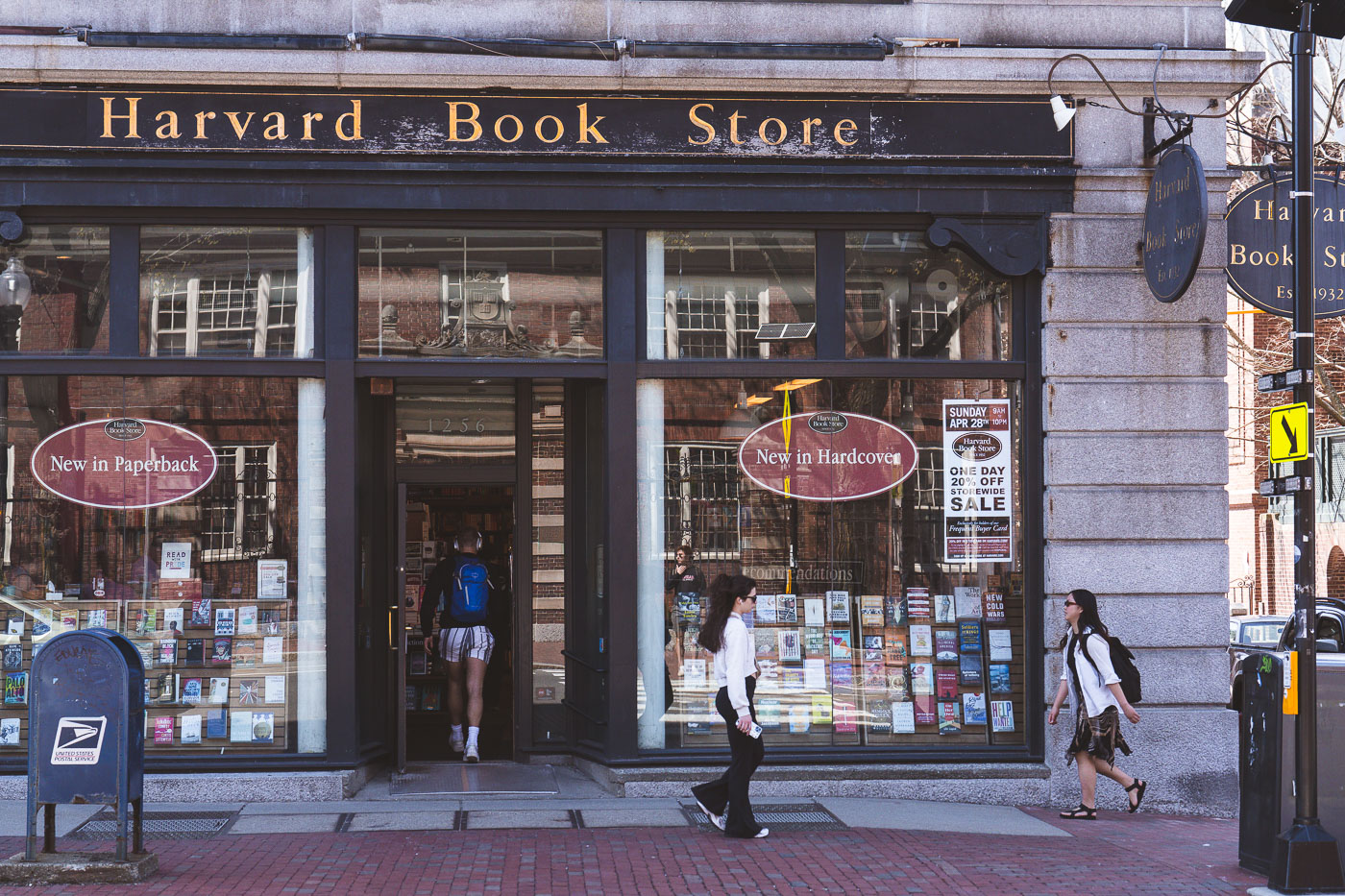
Harvard Book Store storefront in Harvard Square, Cambridge, Massachusetts, with pedestrians passing by.
Harvard Book Store opened in 1932 at 1256 Massachusetts Avenue, where it still operates today. The store has remained independently owned throughout its history, currently run by the Mainen family, who bought it from founder Mark Kramer's family in the 1960s. It stocks new, used, and remaindered titles and operates its own print-on-demand Espresso Book Machine, one of the few in the country available to the public. The shop regularly hosts author talks and readings, drawing on its long-standing ties to the academic community in Harvard Square.

Harvard Book Store on Massachusetts Avenue in Harvard Square
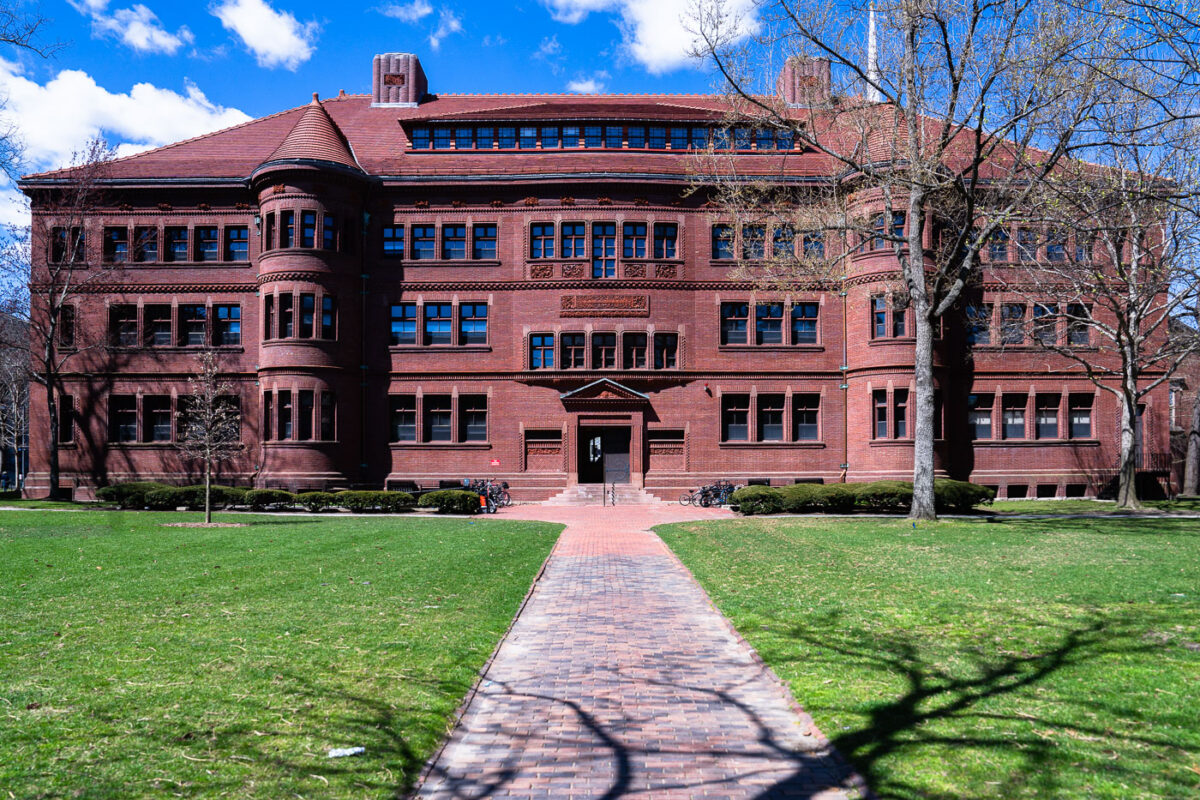
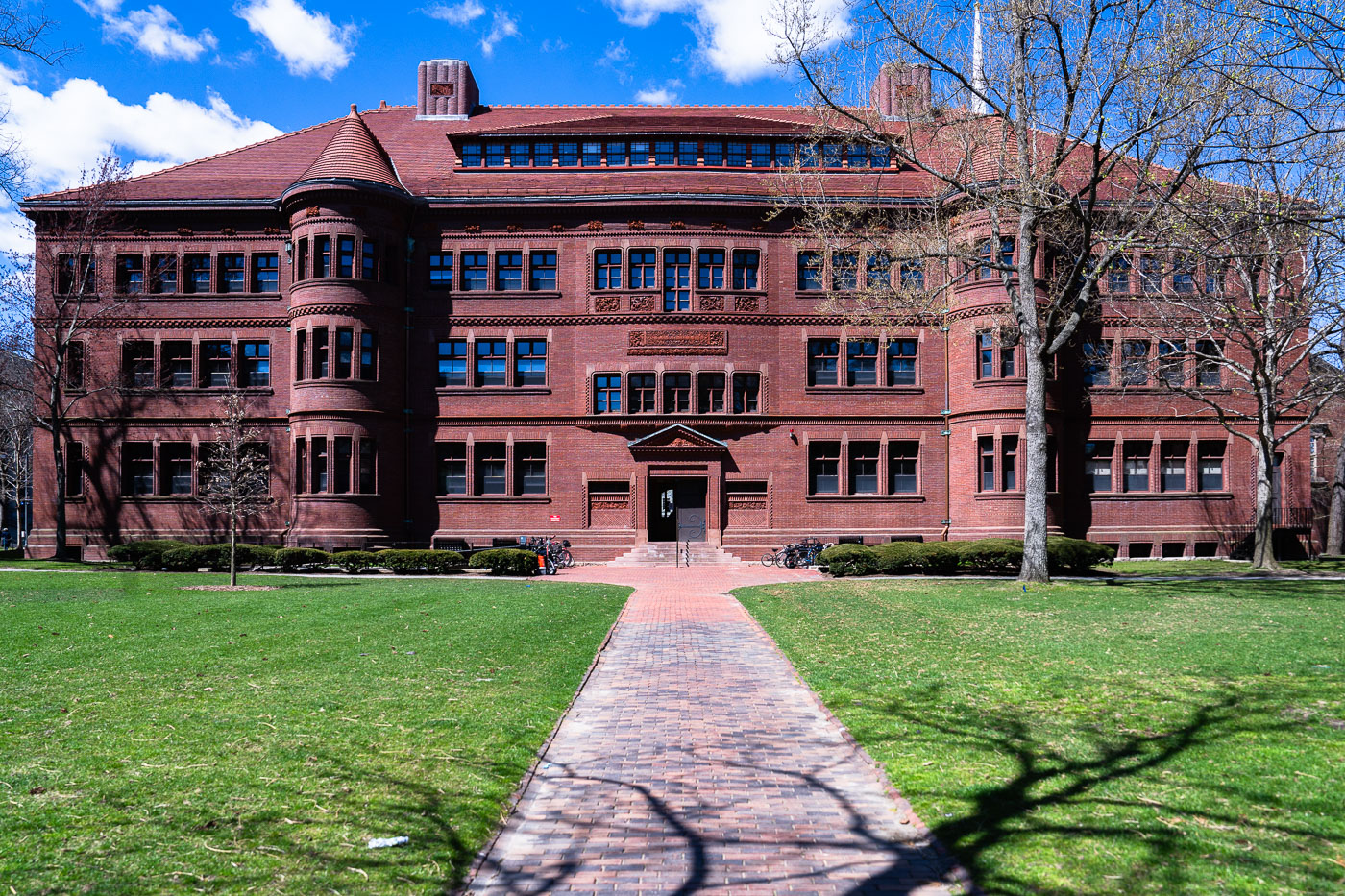
Sever Hall, a red brick Richardsonian Romanesque building at Harvard University in Cambridge, Massachusetts.
Sever Hall sits in Harvard Yard in Cambridge, Massachusetts, completed in 1880 to a design by architect Henry Hobson Richardson. It's built almost entirely of brick, including its ornamental detailing, a choice Richardson made partly to keep costs down while still achieving the sculptural texture associated with his Romanesque style. The building was a gift of Anne Sever in memory of her husband, Civil War general James Warren Sever. It has served as a classroom and lecture hall building for Harvard College since it opened, and the entrance archway is known for an unusual whispering-gallery acoustic effect.

Sever Hall in Harvard Yard

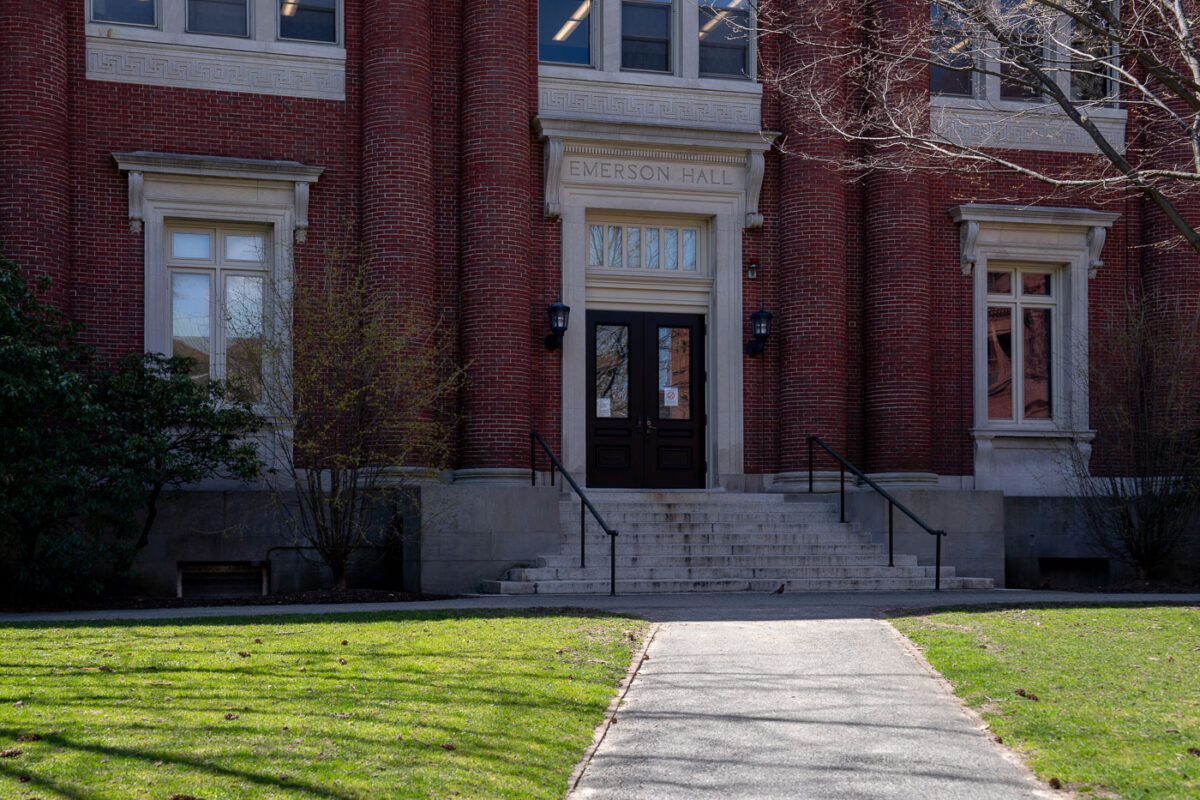
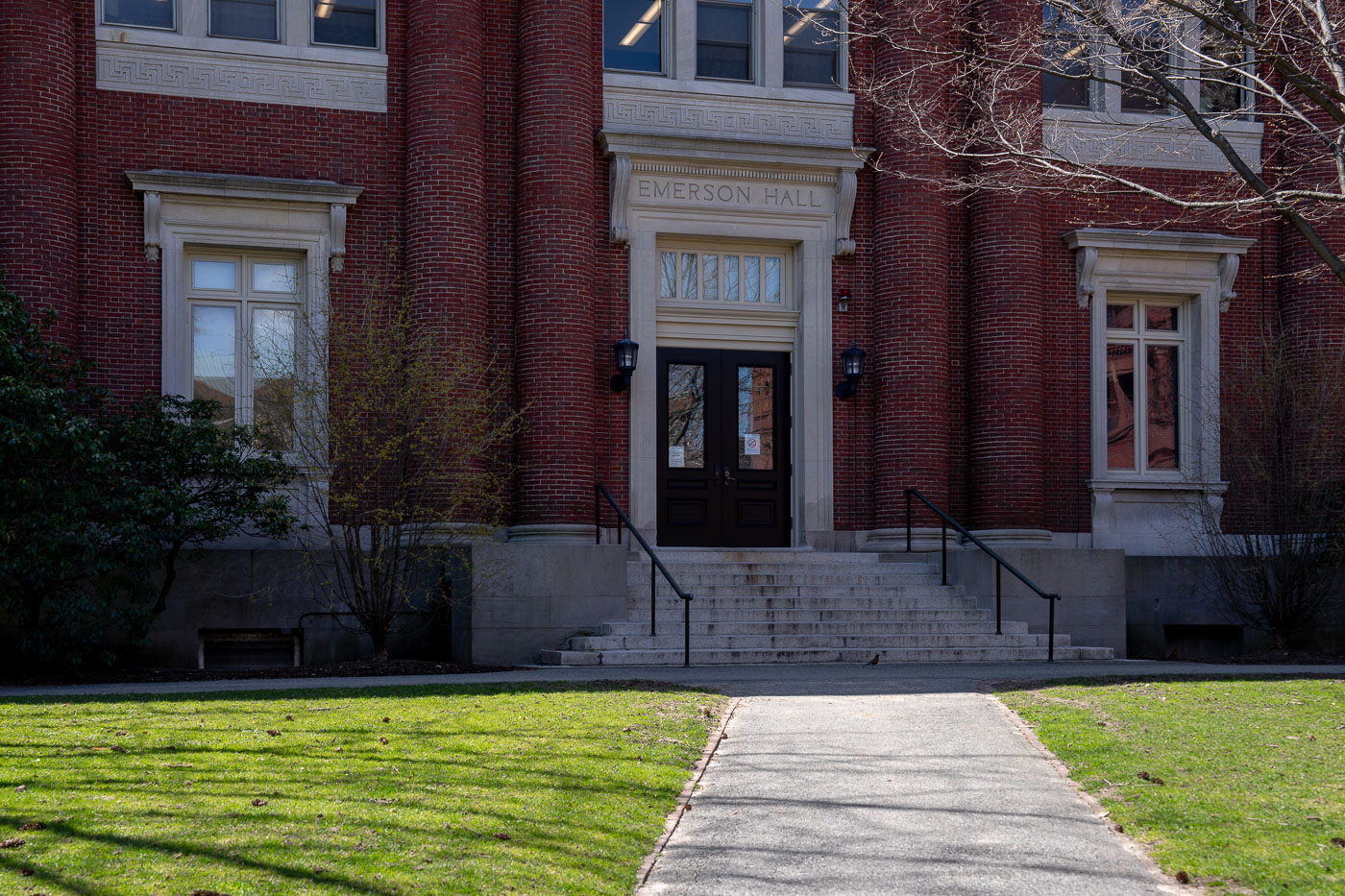
Emerson Hall entrance with red brick facade and stone steps at Harvard Yard, Cambridge.
Emerson Hall houses Harvard University's Department of Philosophy and Department of Psychology. Completed in 1900 and designed by Guy Lowell, the building is named for Ralph Waldo Emerson, the transcendentalist writer and Harvard alumnus. A Greek inscription above its entrance reads "Man is the measure of all things," a line drawn from the philosopher Protagoras. William James, one of the founders of American psychology, taught in the building during the early twentieth century.

Emerson Hall’s Front Steps in Harvard Yard
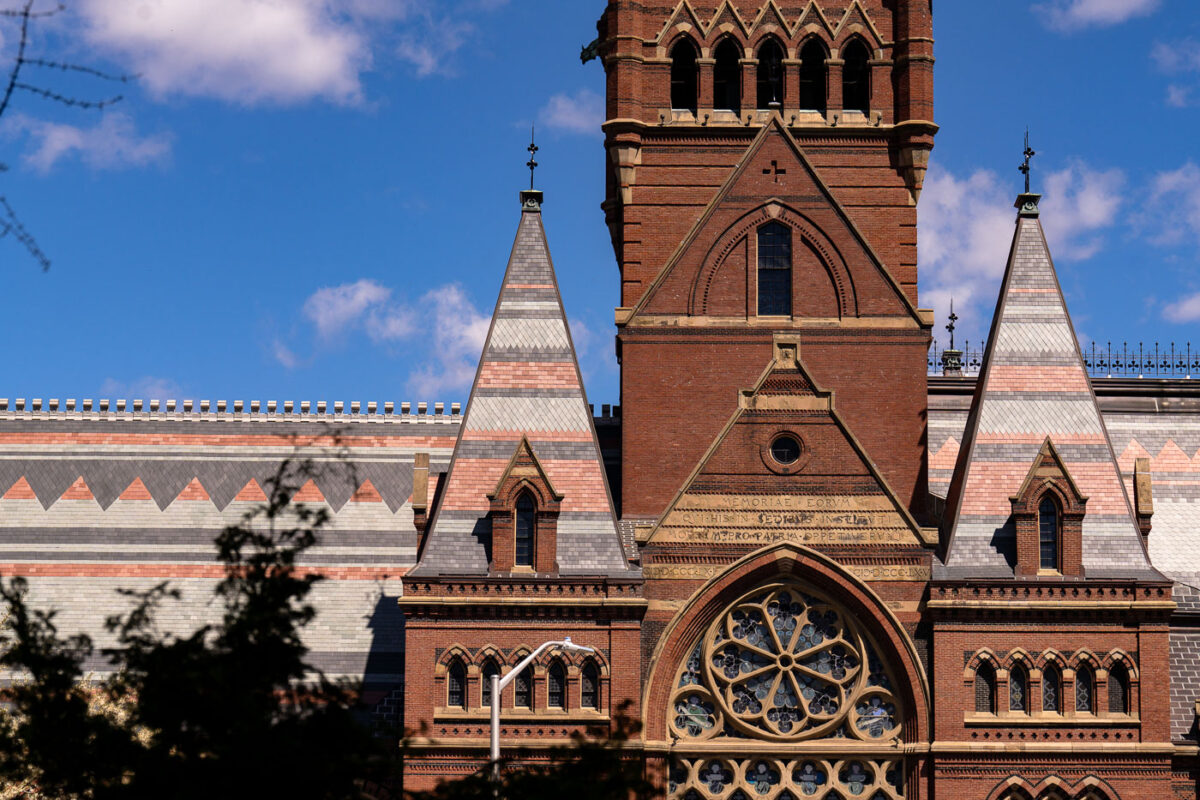
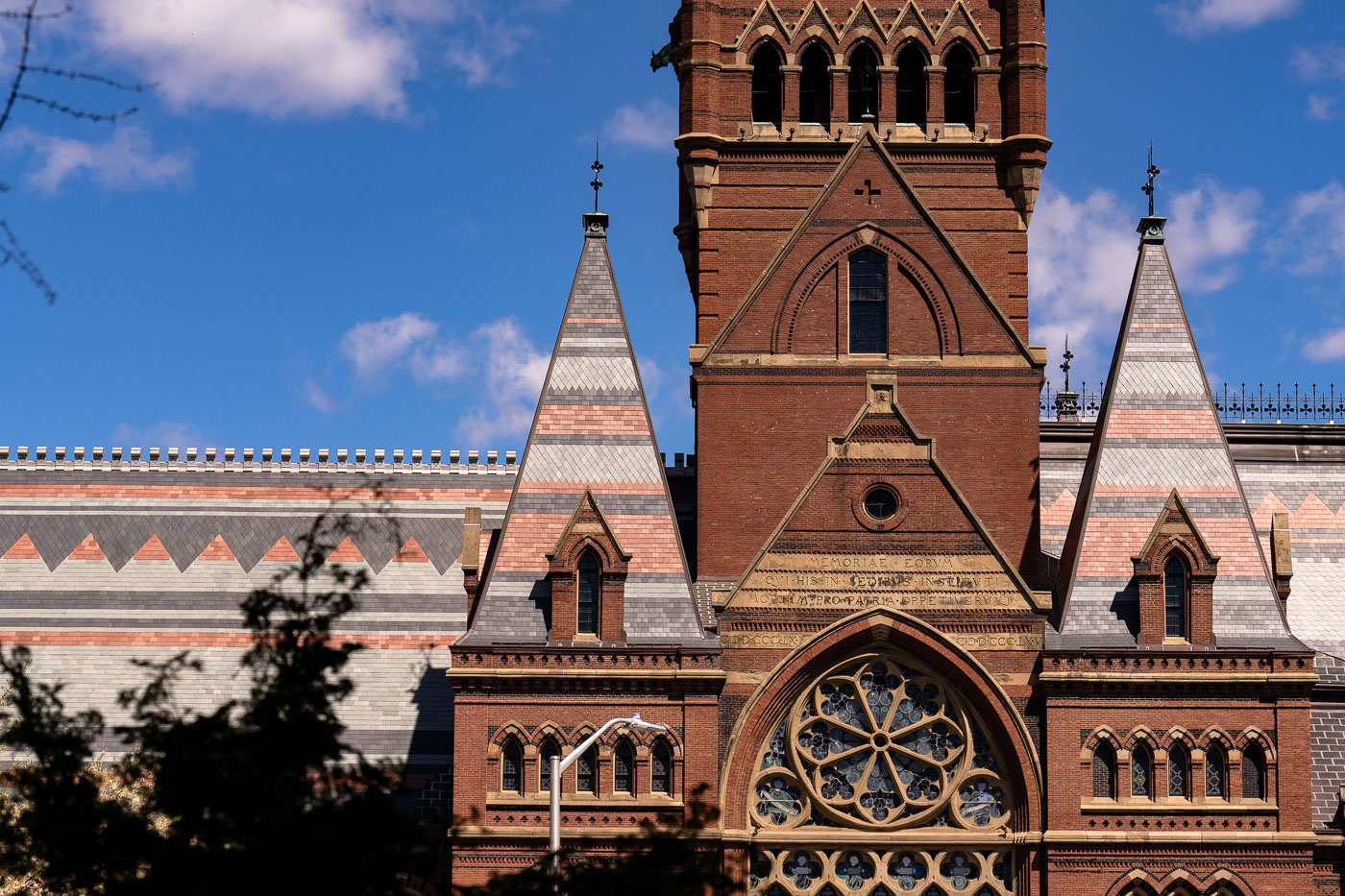
Memorial Hall at Harvard University in Cambridge, Massachusetts, with its Gothic facade and spires.
Memorial Hall at Harvard University in Cambridge, Massachusetts, is a High Victorian Gothic building completed in 1878. It was built to honor Harvard alumni who served in the Union forces during the Civil War and now houses Sanders Theatre and Annenberg Hall.

Memorial Hall’s Tower and Transept, Harvard Yard
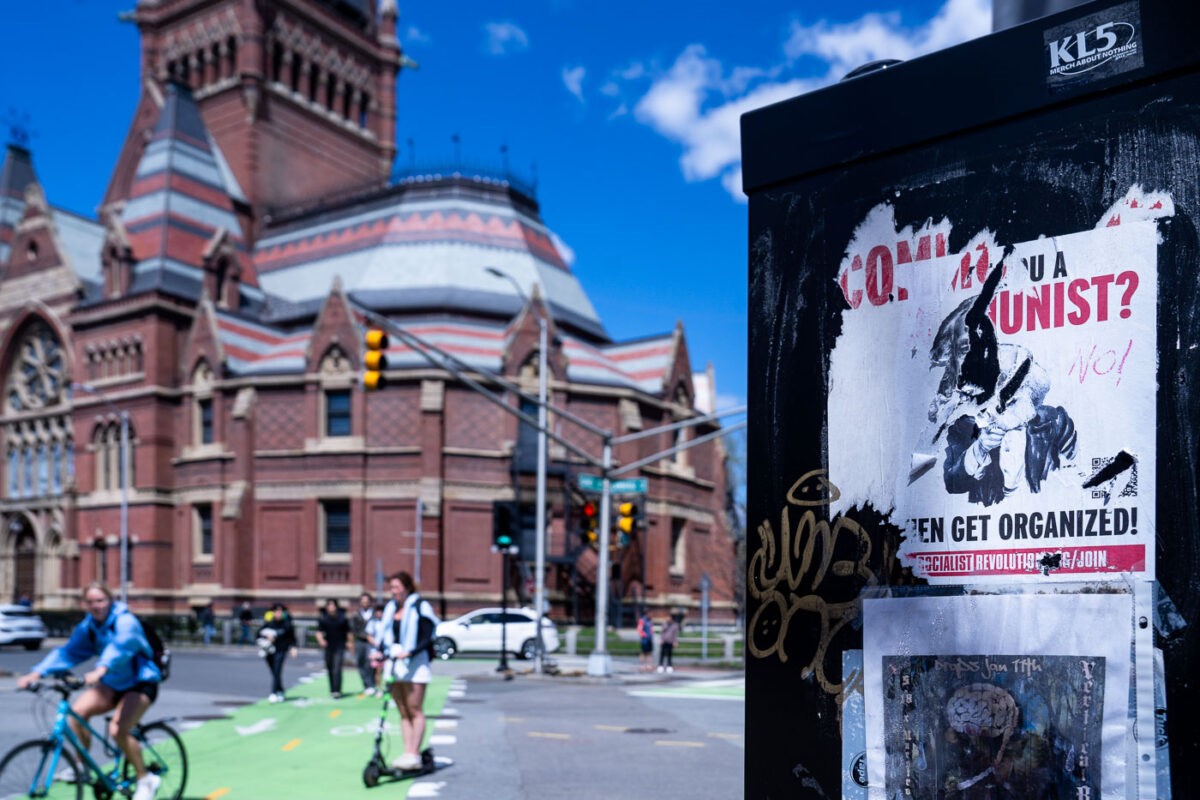
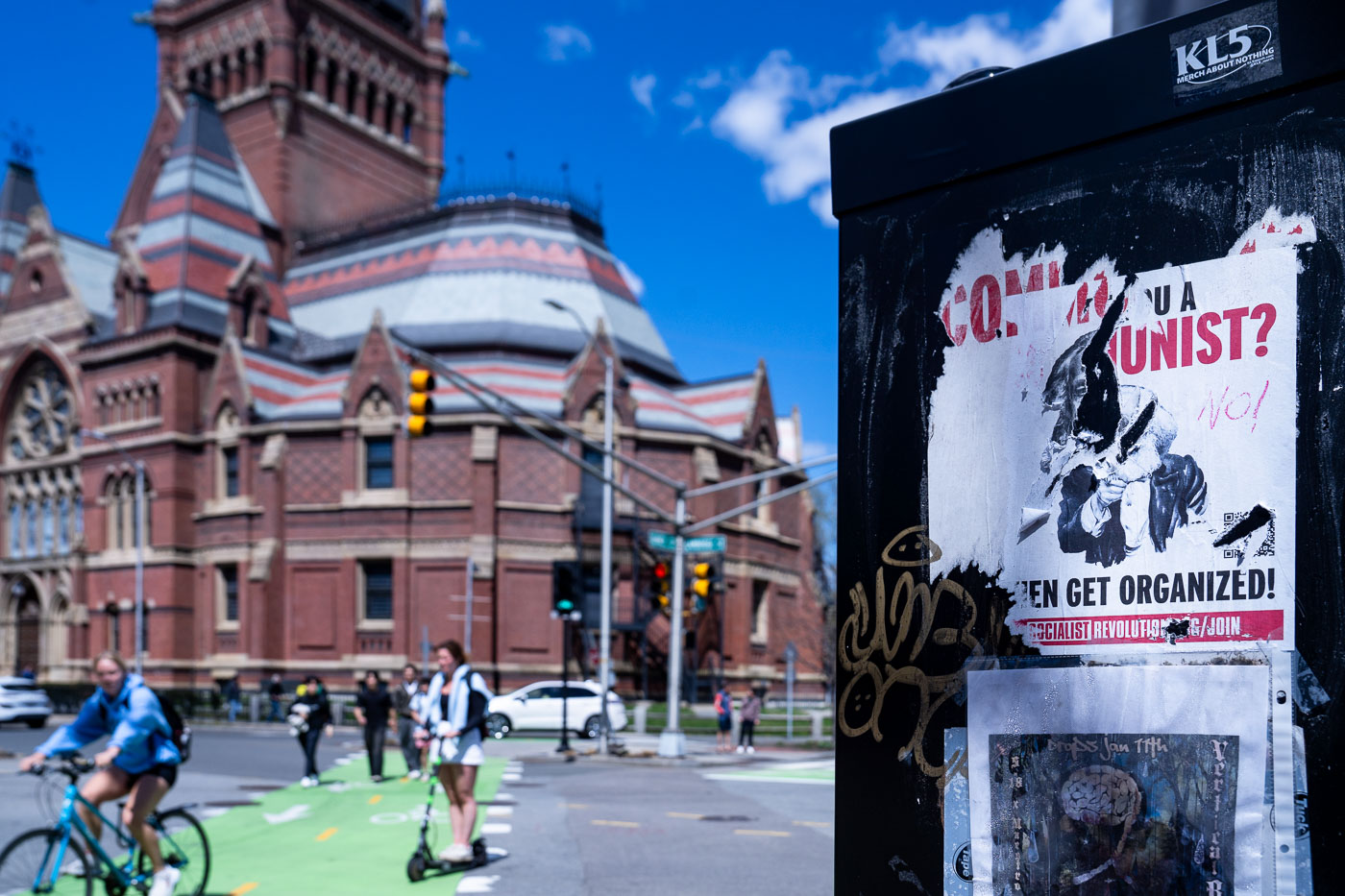
Communist organizing flyer on utility box near Harvard Yard in Cambridge, Massachusetts.
Memorial Hall's brick tower and polychrome roof rise near the corner of Cambridge and Quincy streets, across from Harvard Yard. The Ruskinian Gothic building was completed in 1878 to honor Harvard men who died fighting for the Union in the Civil War; it now houses Sanders Theatre and Annenberg Hall. A recruitment flyer reading "Are you a communist? Then get organized!" is posted on a nearby utility box, pointing toward the Socialist R group's local organizing efforts.

“Are You a Communist?” Flyer Near Harvard Yard
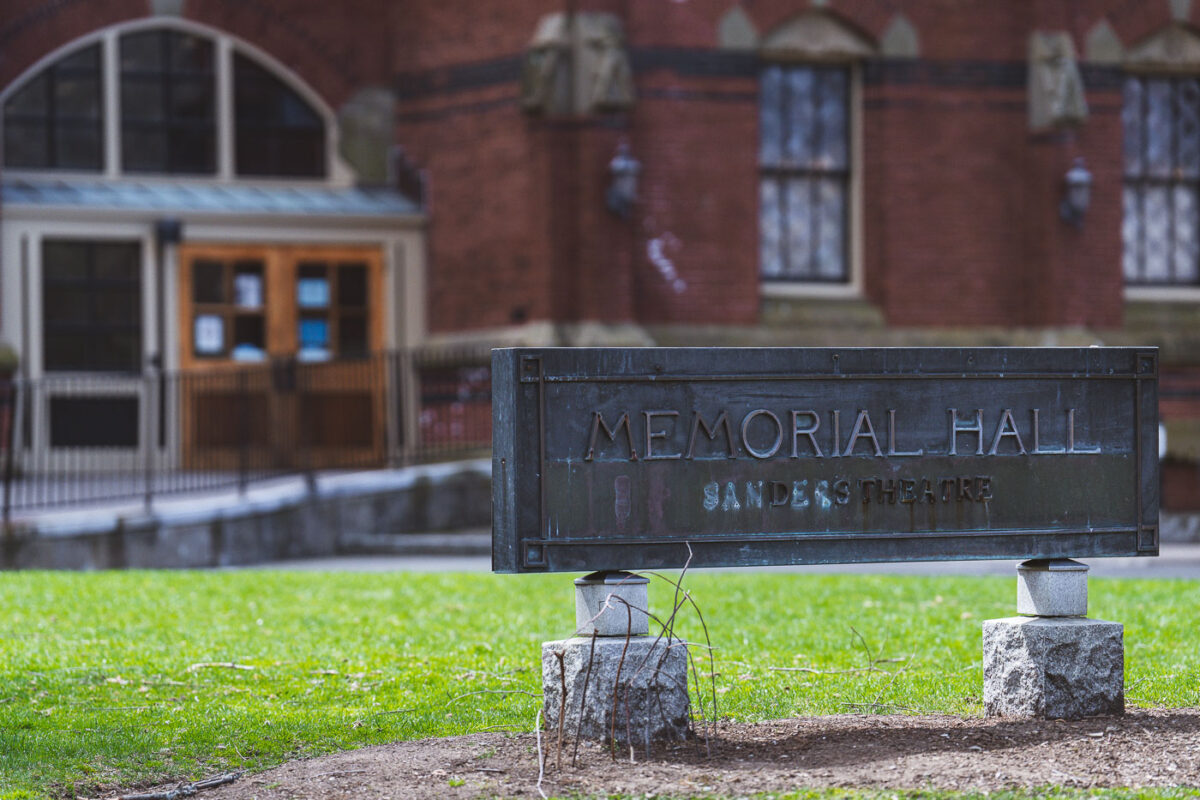
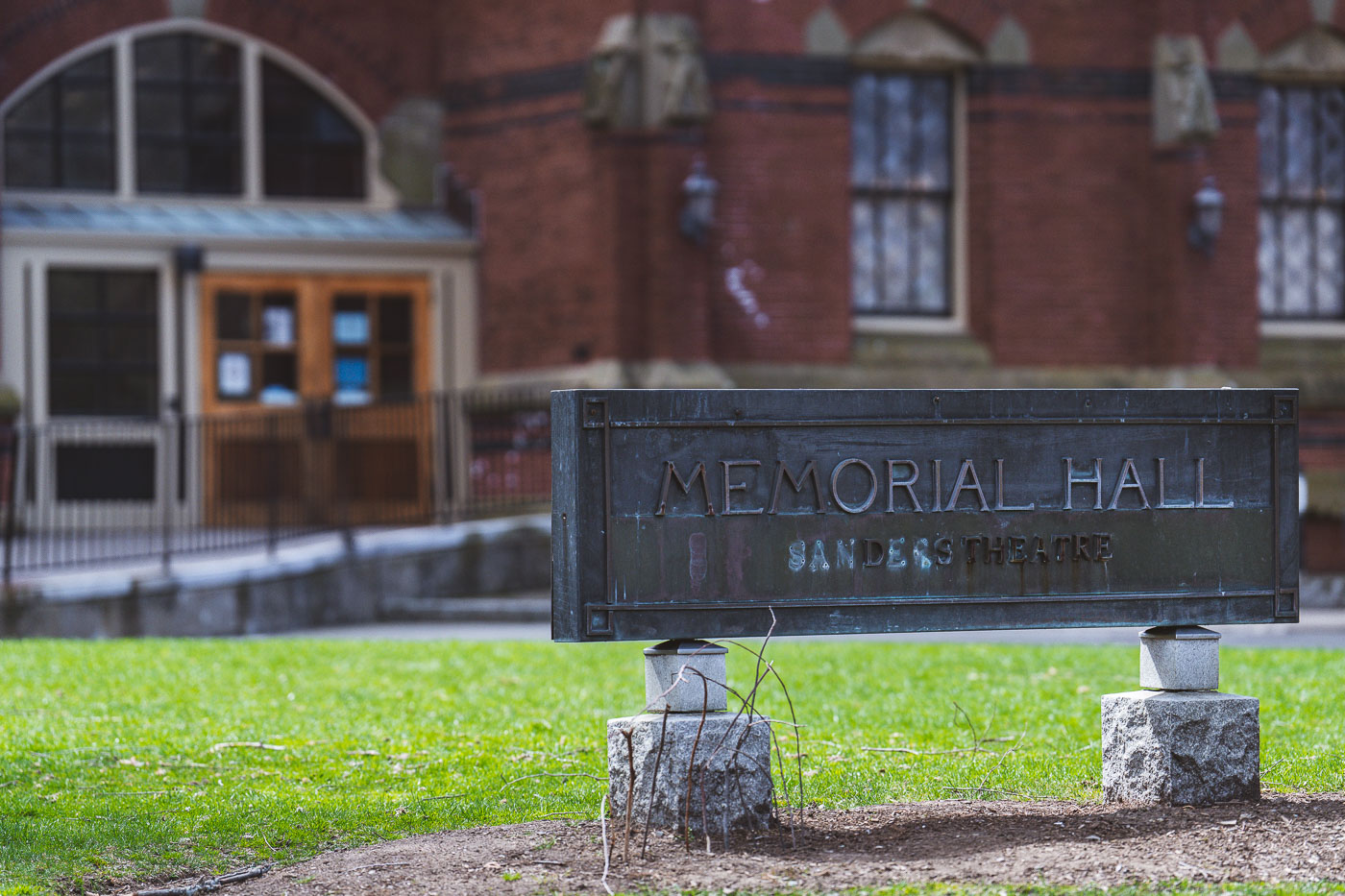
Memorial Hall sign at Harvard University in Cambridge, Massachusetts with red brick building in background.
Memorial Hall at Harvard University was built between 1870 and 1878 to honor the Harvard men who died fighting for the Union in the Civil War. The Ruskinian Gothic building was designed by the firm Ware and Van Brunt, with its interior transept serving as a memorial hall lined with marble tablets bearing the names of the fallen. Sanders Theatre, housed within the building's south wing, seats over 1,000 people and has hosted Harvard's commencement-related events, lectures, and performances since it opened. The theater takes its name from Charles Sanders, a Harvard treasurer whose bequest helped fund its construction.

Memorial Hall’s Sign Outside Sanders Theatre at Harvard
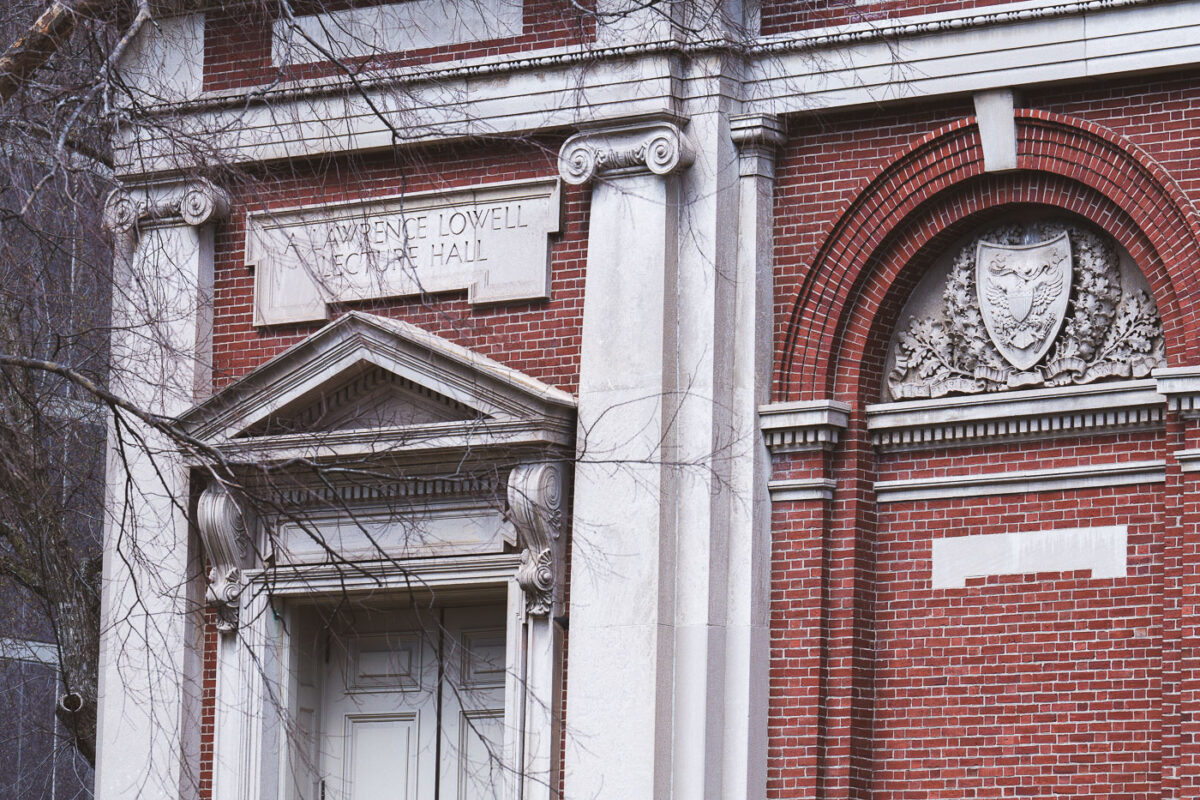
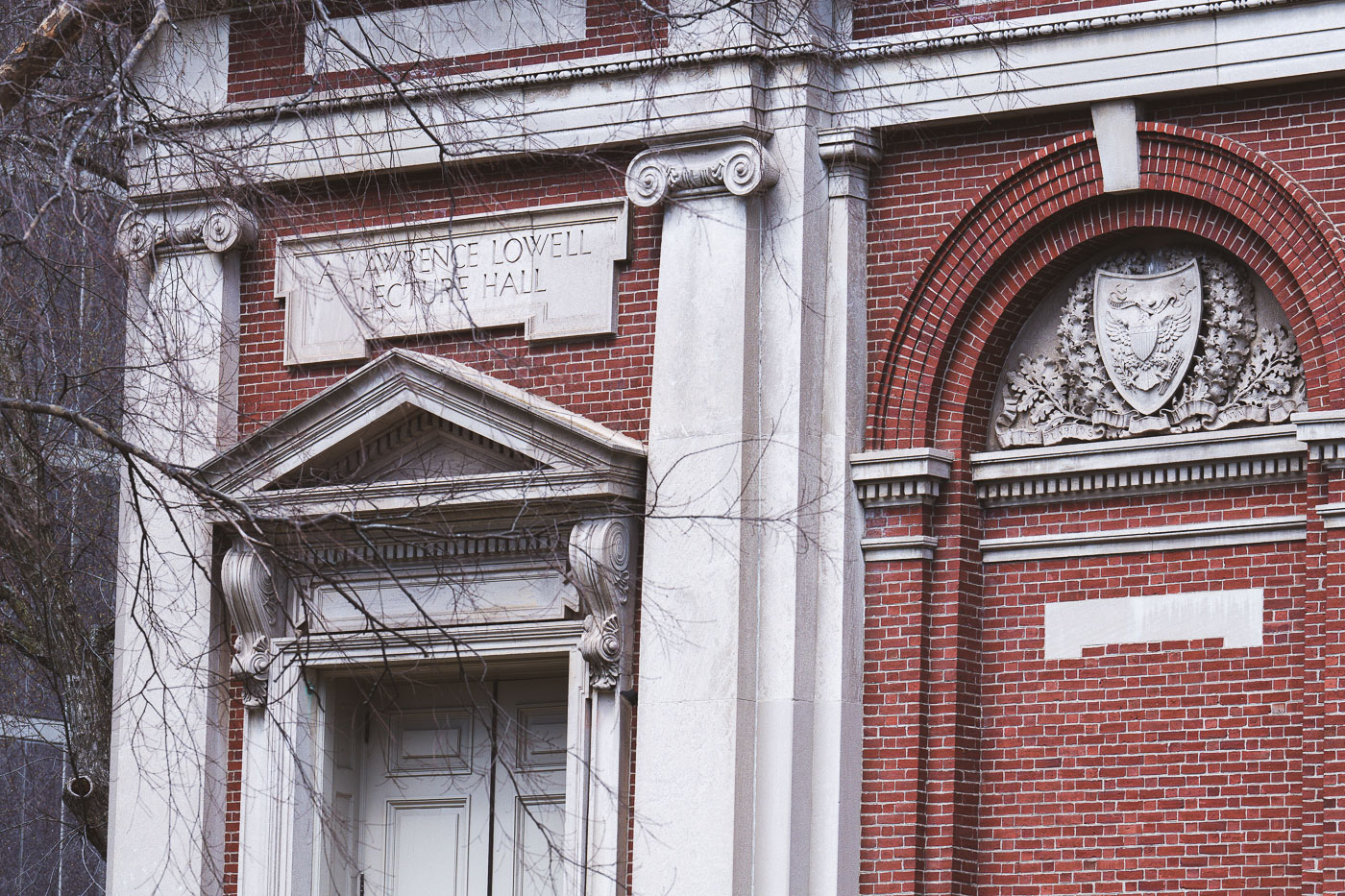
Lawrence Lowell Lecture Hall facade at Harvard University features red brick, ornamental stone columns, and decorative
Lawrence Lowell Lecture Hall stands on Harvard University's campus in Cambridge, Massachusetts. The building was completed in 1902 and later named for A. Lawrence Lowell, who served as Harvard's president from 1909 to 1933. It remains part of the university's early twentieth-century academic architecture, built during a period of significant campus expansion at Harvard.

Lawrence Lowell Lecture Hall at Harvard University
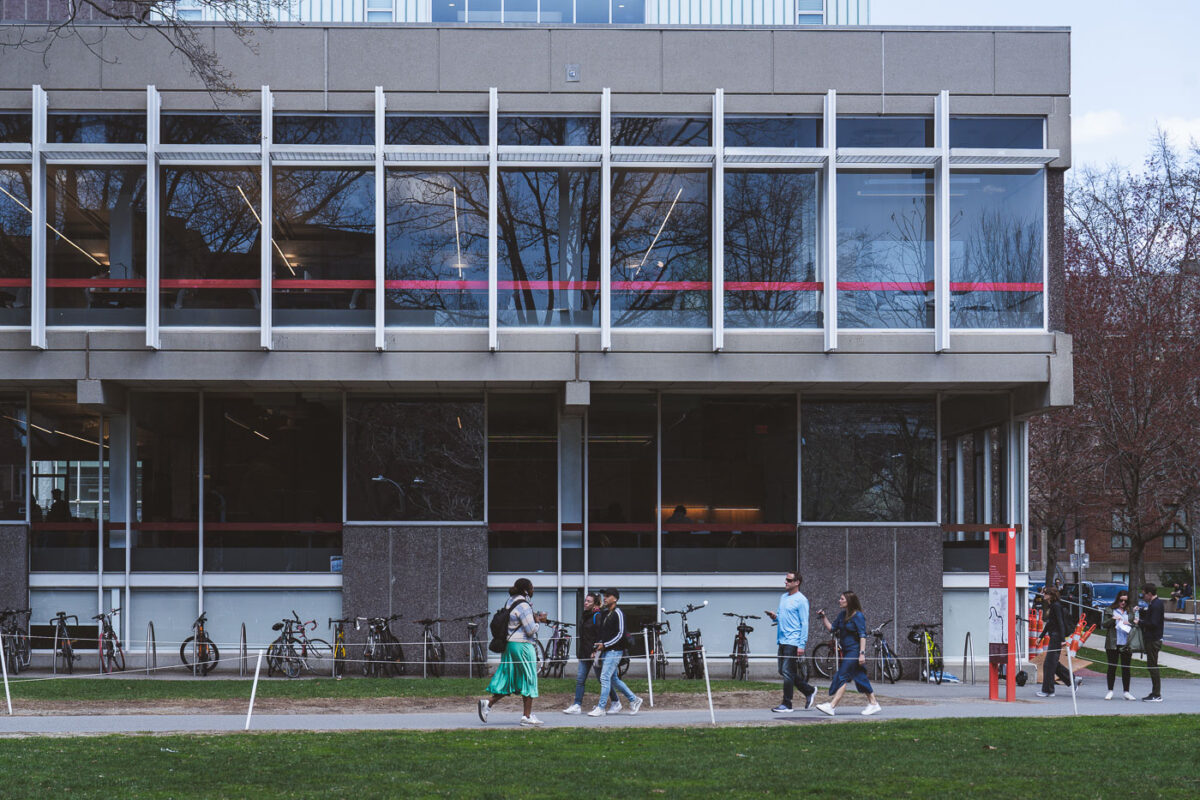
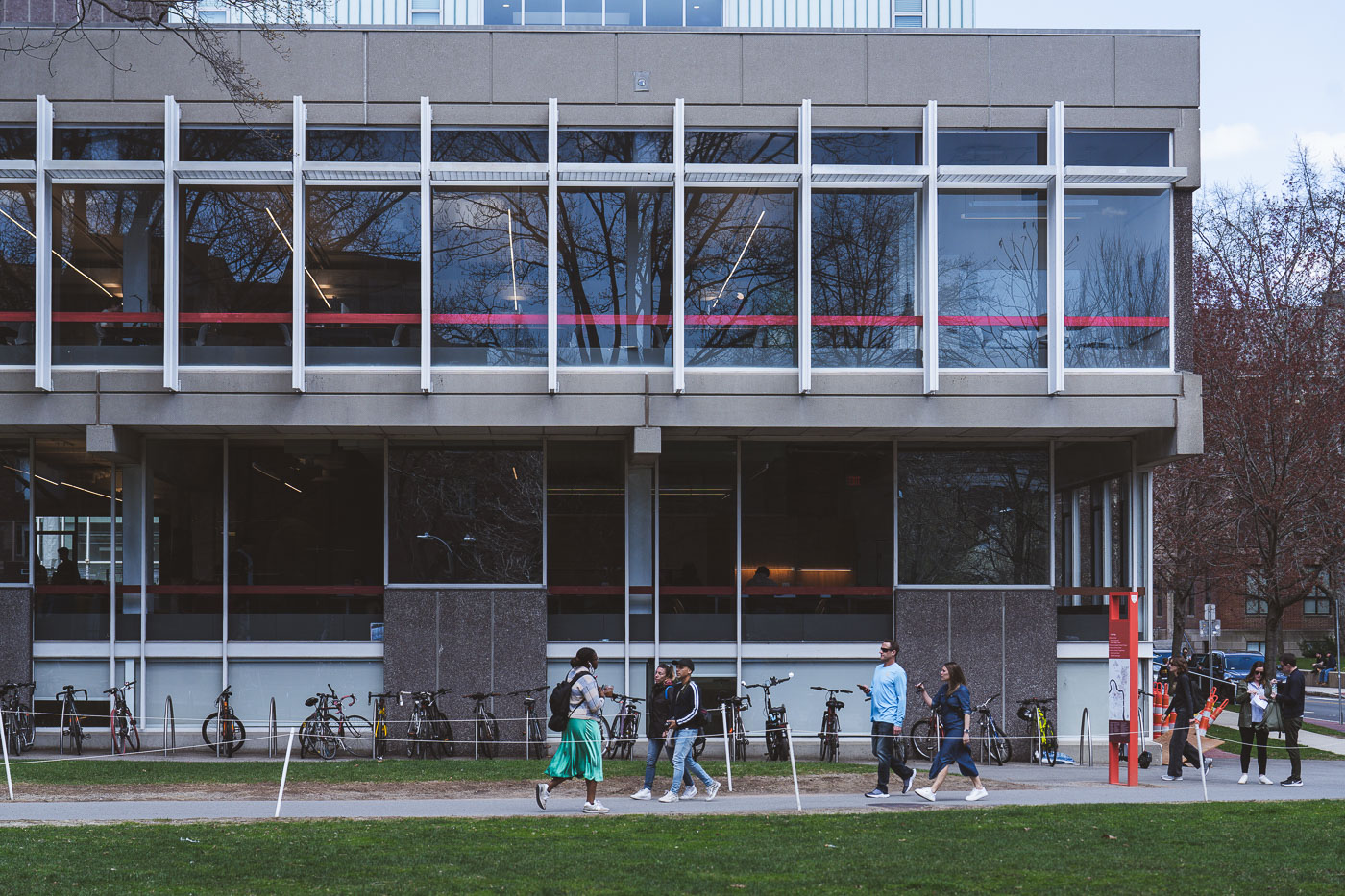
People and bicycles gather outside Harvard Science Center, a modernist building with white-framed windows and red horizontal
The Harvard Science Center sits at the north edge of Harvard Yard in Cambridge, Massachusetts. Designed by Josep Lluís Sert and completed in 1973, the building was funded partly by a gift from Edwin Land, founder of Polaroid. It houses Harvard's Cabot Science Library along with classrooms, lecture halls, and laboratories for the university's science departments. The design grew out of Sert's earlier work as dean of Harvard's Graduate School of Design, where he championed Brutalist concrete architecture on campus.

Students Along the Harvard Science Center Facade
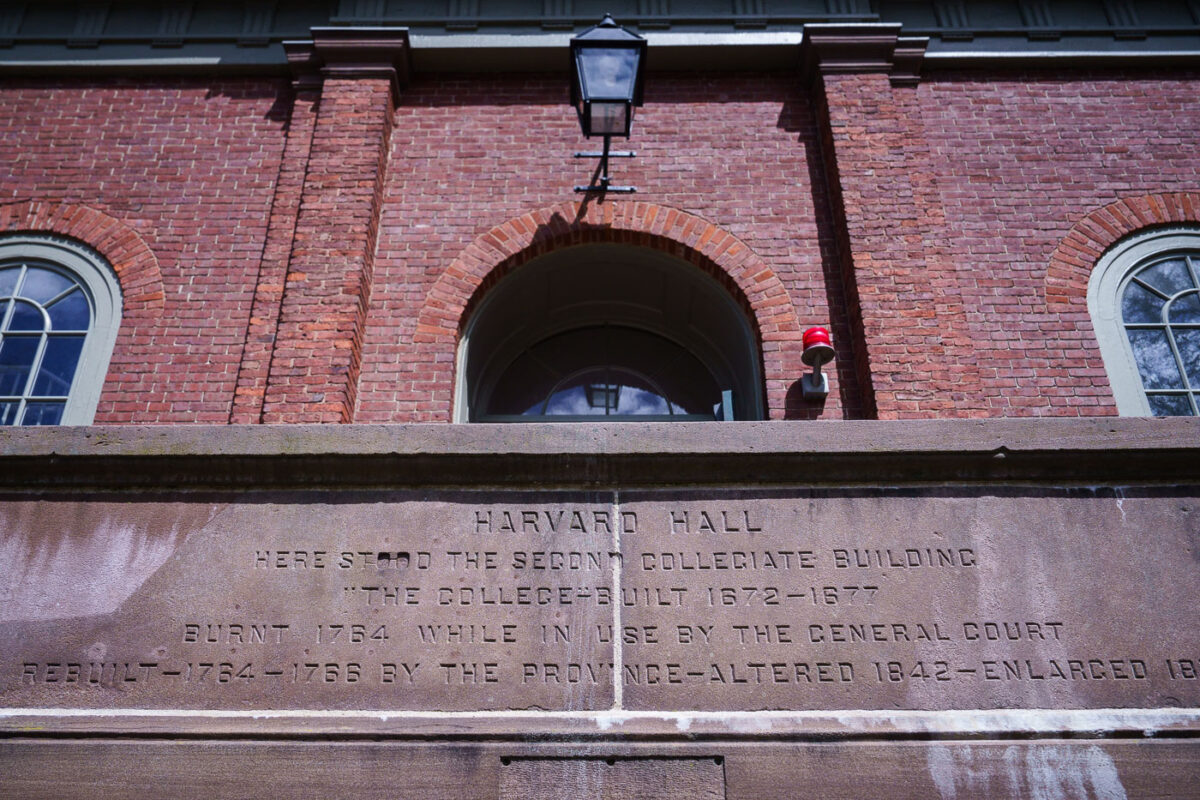
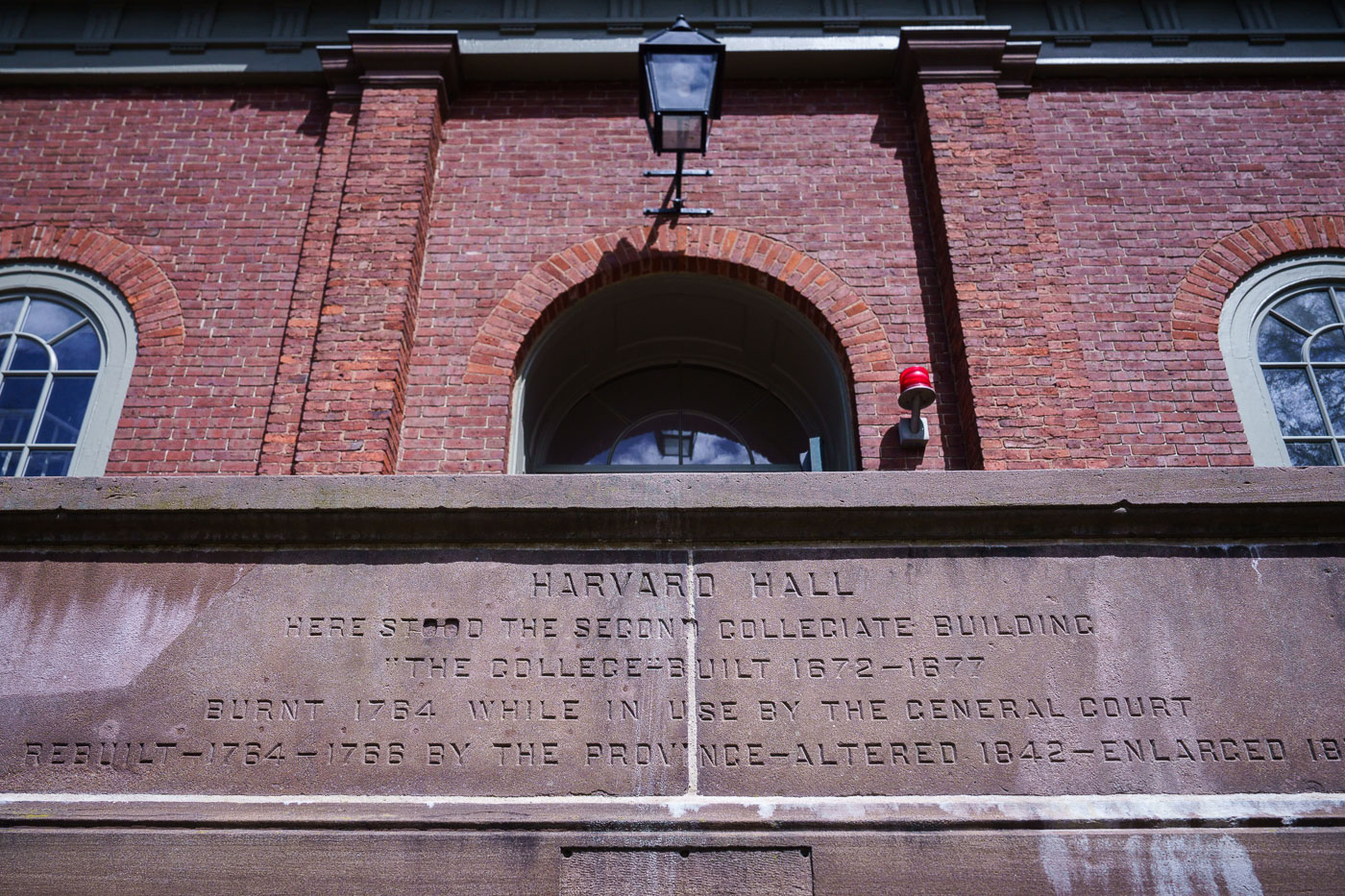
Harvard Hall plaque documenting the original 1672–1677 College building, its 1764 fire destruction, and subsequent
Harvard Hall marks the site of the college's second collegiate building, known as "The College," constructed between 1672 and 1677. That structure burned in 1764 while it was in use by the Massachusetts General Court. The province rebuilt Harvard Hall between 1764 and 1766, and the building was later altered in 1842 and enlarged again in the 19th century. A carved stone marker on the building records this history of construction, fire, and rebuilding.

Plaque on Harvard Hall Recounting Its 1764 Fire
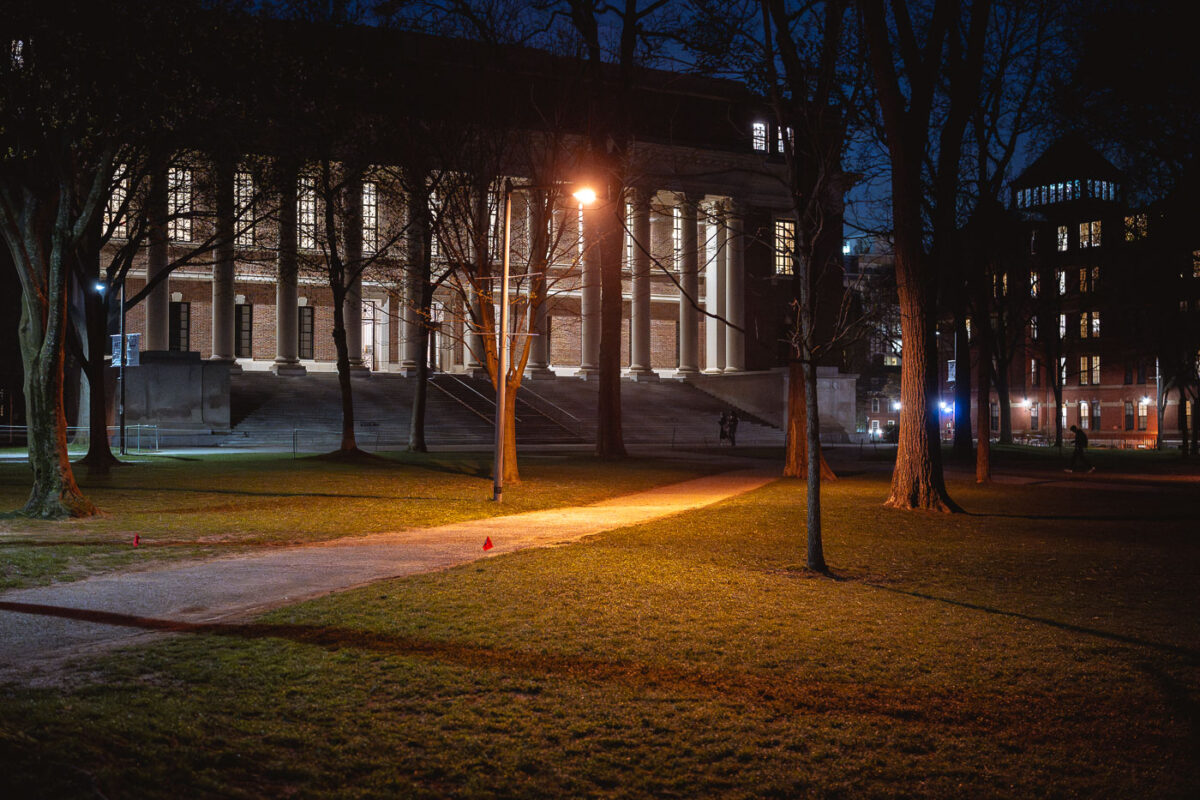
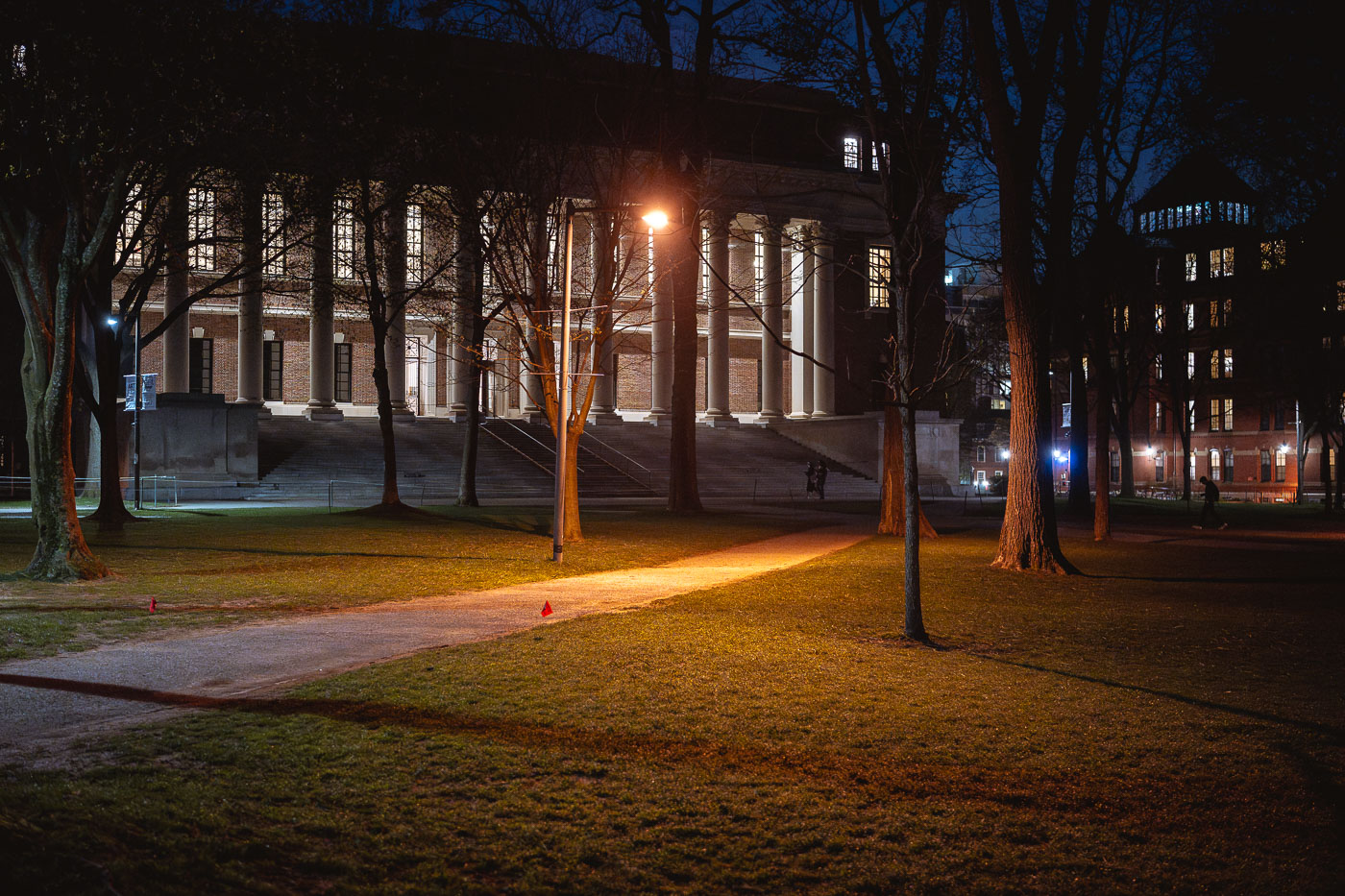
Widener Library illuminated at night in Harvard Yard, Cambridge, Massachusetts.
Widener Library anchors the southeastern edge of Harvard Yard at Harvard University. Formally the Harry Elkins Widener Memorial Library, it opened in 1915, funded by Eleanor Elkins Widener in memory of her son, a 1907 Harvard graduate who died aboard the Titanic. The building was designed by Horace Trumbauer and holds roughly three million volumes, making it one of the largest library buildings in the world by shelf capacity. It remains the largest library within the Harvard College Library system and serves as the main research library for undergraduates.

Widener Library Illuminated After Dark in Harvard Yard

Trump fascist poster on a Harvard University pole featuring the Kool-Aid Man.
A protest poster on a pole at Harvard University criticizes Donald Trump and MAGA politics. The design uses the Kool-Aid Man character and the phrase “You’re in a Cult” with a web address at the bottom.

Trump fascist poster at Harvard University
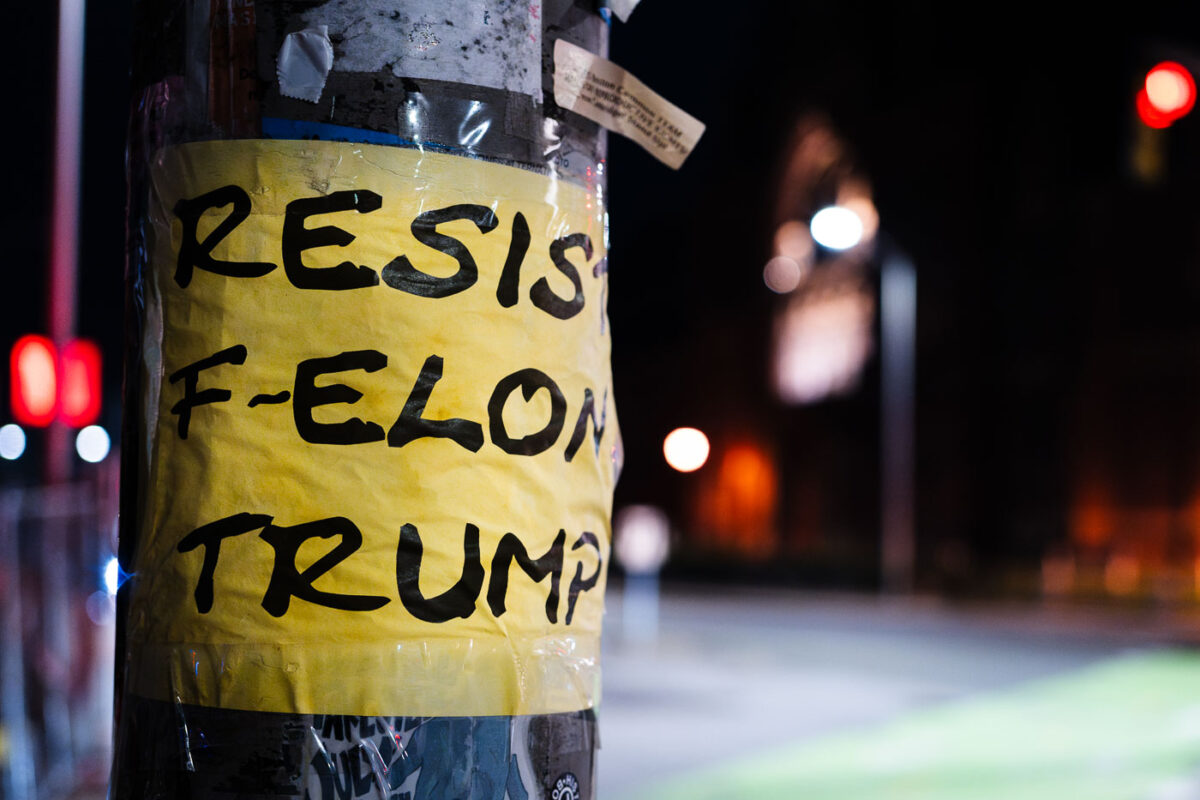
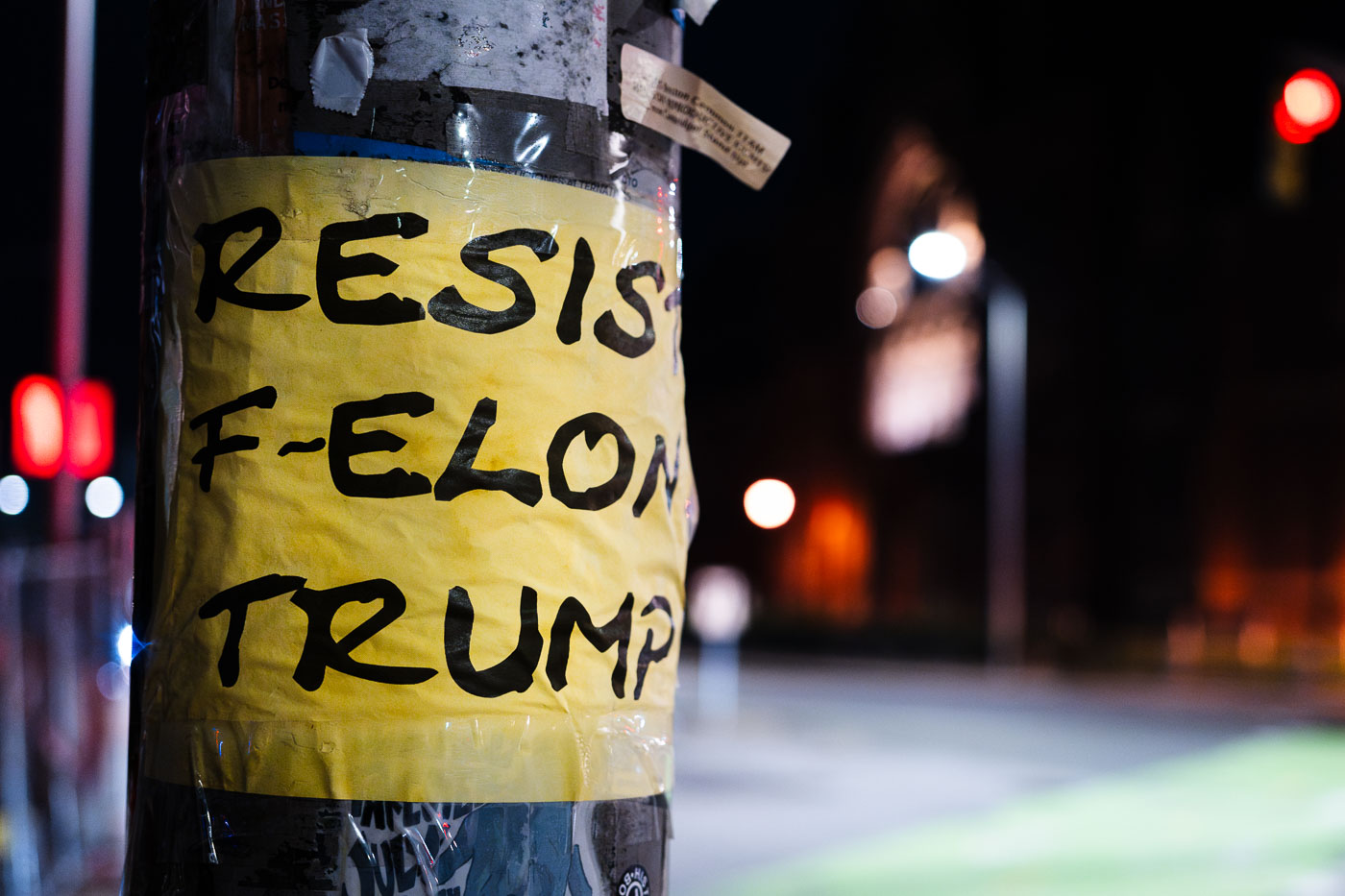
Harvard University pole poster reading “Resist F-Elon Trump” at night.
Harvard University in Cambridge, Massachusetts, has a pole-mounted poster calling to resist Elon Musk and Donald Trump. The handmade sign is taped to a utility pole near a street corner at night.

Resist F-Elon Trump poster at Harvard University
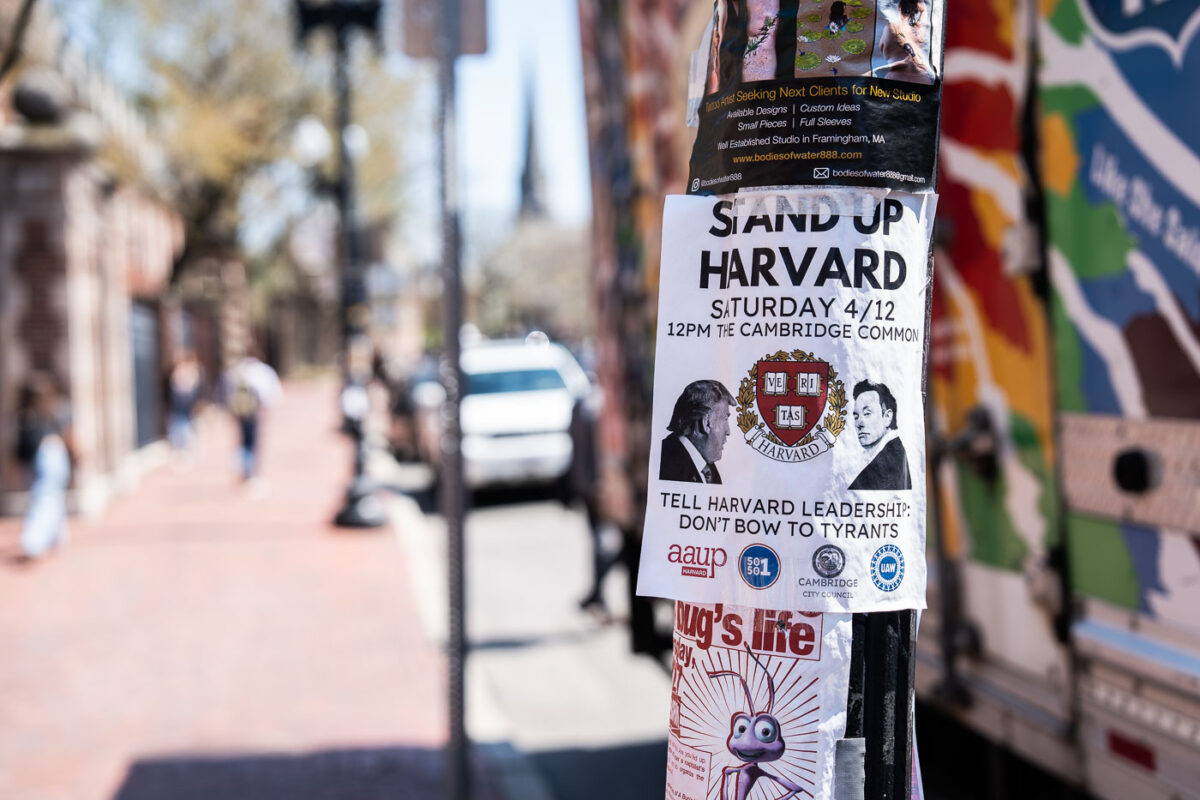
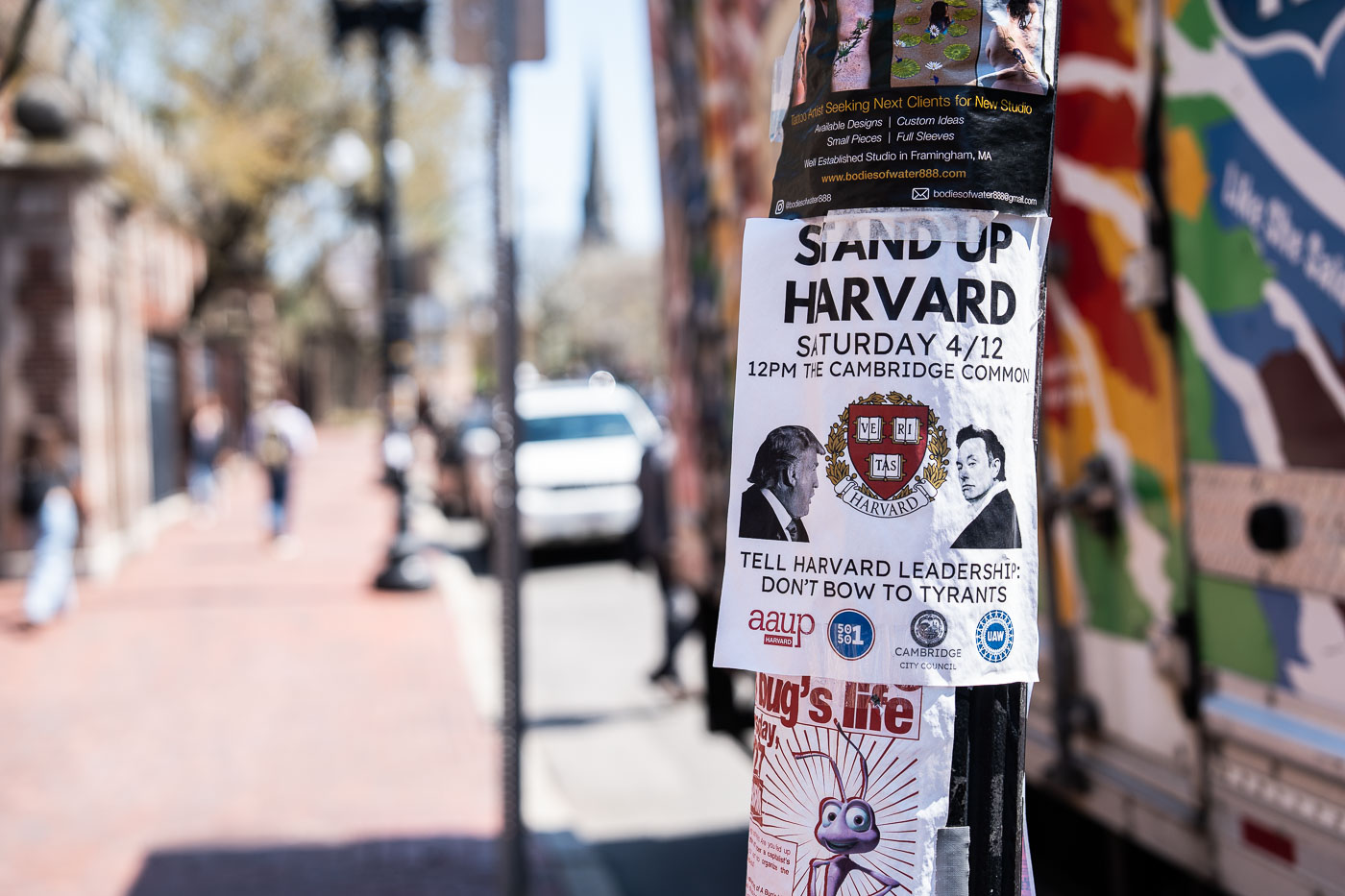
Protest flyer on a pole near Harvard Square calling for a rally against tyrants at Cambridge Common on April 12.
A flyer taped to a utility pole on Massachusetts Avenue announces a "Stand Up Harvard" rally set for Saturday, April 12, at noon on the Cambridge Common. The text urges Harvard University leadership to "not bow to tyrants" and carries the university's Veritas shield alongside caricatures of Donald Trump and Elon Musk. Logos for the American Association of University Professors, UNITE HERE Local 26, and the Cambridge City Council appear at the bottom, joint sponsorship of the event.

“Stand Up Harvard” Rally Flyer Near Harvard Square
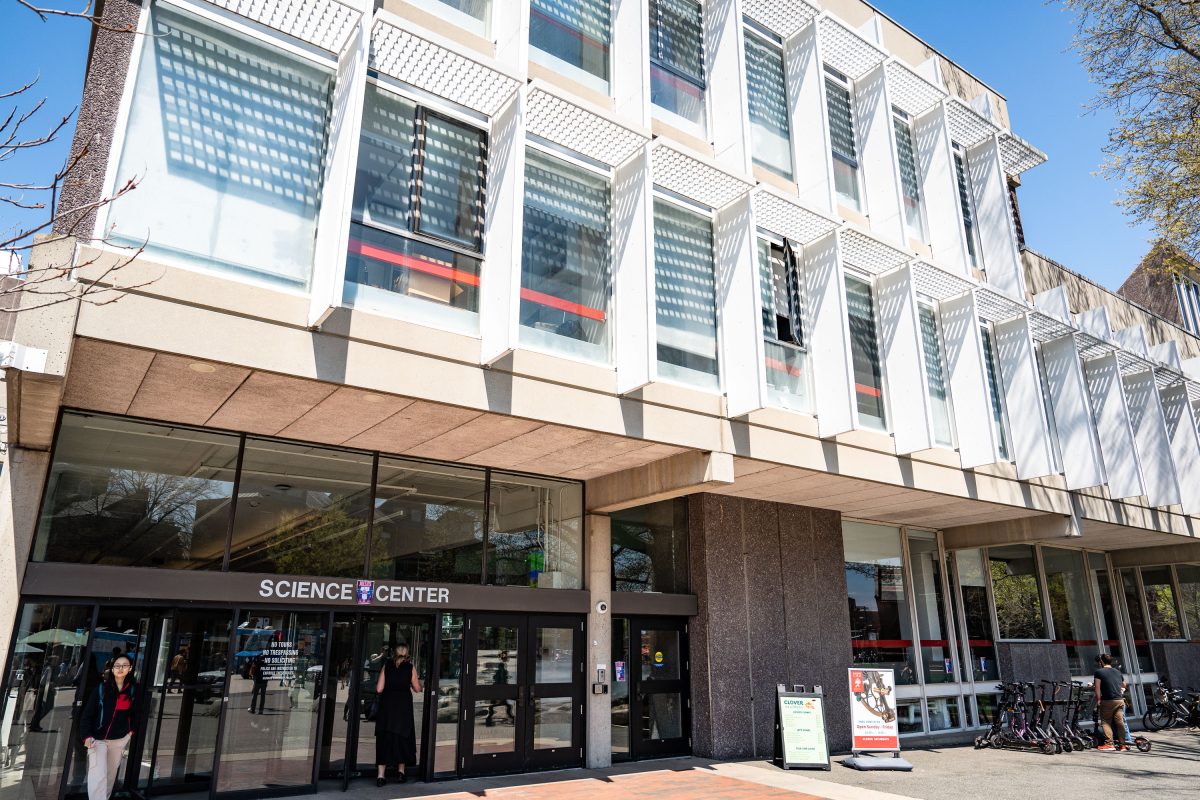
Harvard Science Center entrance in Cambridge, Massachusetts, featuring modernist architecture with white-framed windows.
The Harvard Science Center opened in 1973 at 1 Oxford Street in Cambridge, Massachusetts, designed by architect Josep Lluís Sert, former dean of the Harvard Graduate School of Design. Funding came partly from a gift by Edwin Land, founder of Polaroid, and the building's stepped massing is often described as referencing a camera. The center houses the Cabot Science Library, lecture halls, and departments including mathematics and the history of science, along with the Collection of Historical Scientific Instruments. It remains one of the largest buildings on Harvard's campus and serves as a hub for undergraduate science education.

Entrance to the Harvard Science Center on Oxford Street
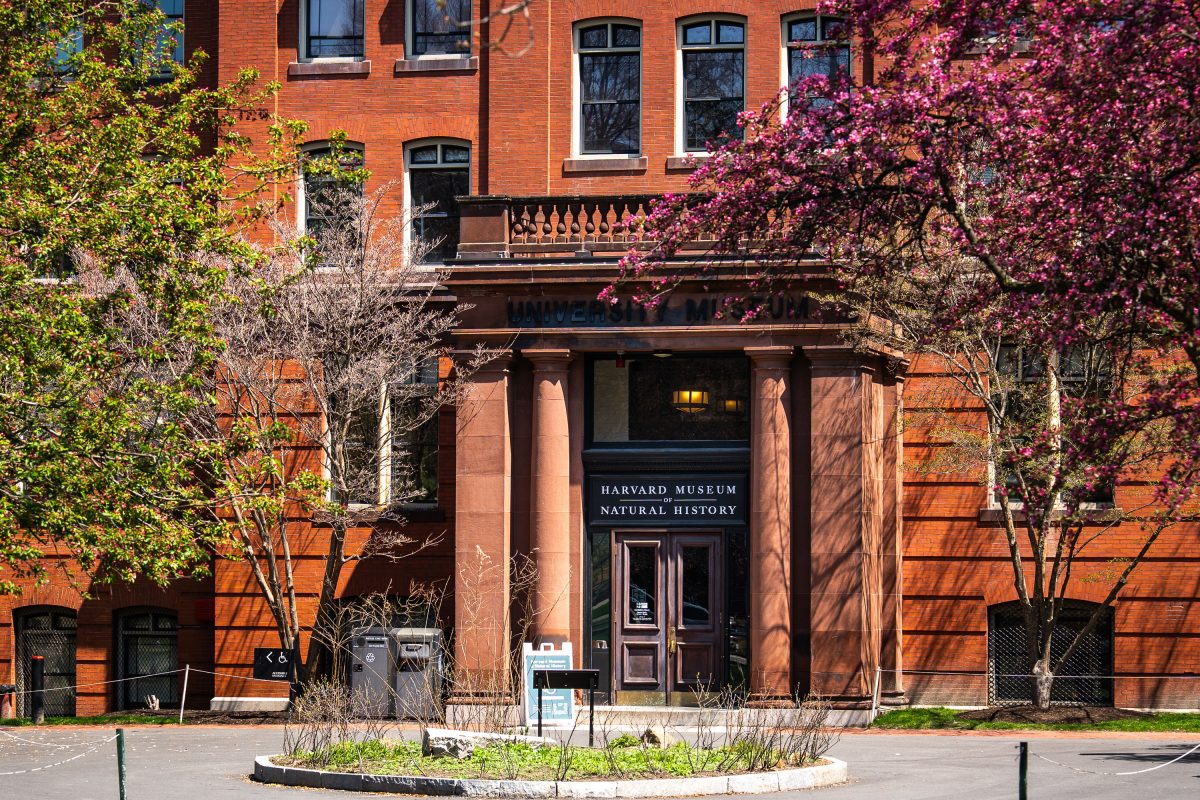
Harvard Museum of Natural History entrance with red brick facade and spring flowering vines in Cambridge.
The Harvard Museum of Natural History occupies the north wing of a brick building erected in 1859 for Harvard's Museum of Comparative Zoology on Oxford Street in Cambridge, Massachusetts. It opened to the public under its current name in 1998, bringing together collections from the university's zoology, botany, and mineralogy museums under one roof. The museum is best known for the Blaschka Glass Flowers, more than 4,000 glass models of plants crafted between 1887 and 1936 by the German father-and-son artisans Leopold and Rudolf Blaschka. Its collections also include the zoological specimens and mineral holdings inherited from Harvard's 19th-century natural history museums.

Harvard Museum of Natural History’s Entrance on Oxford Street
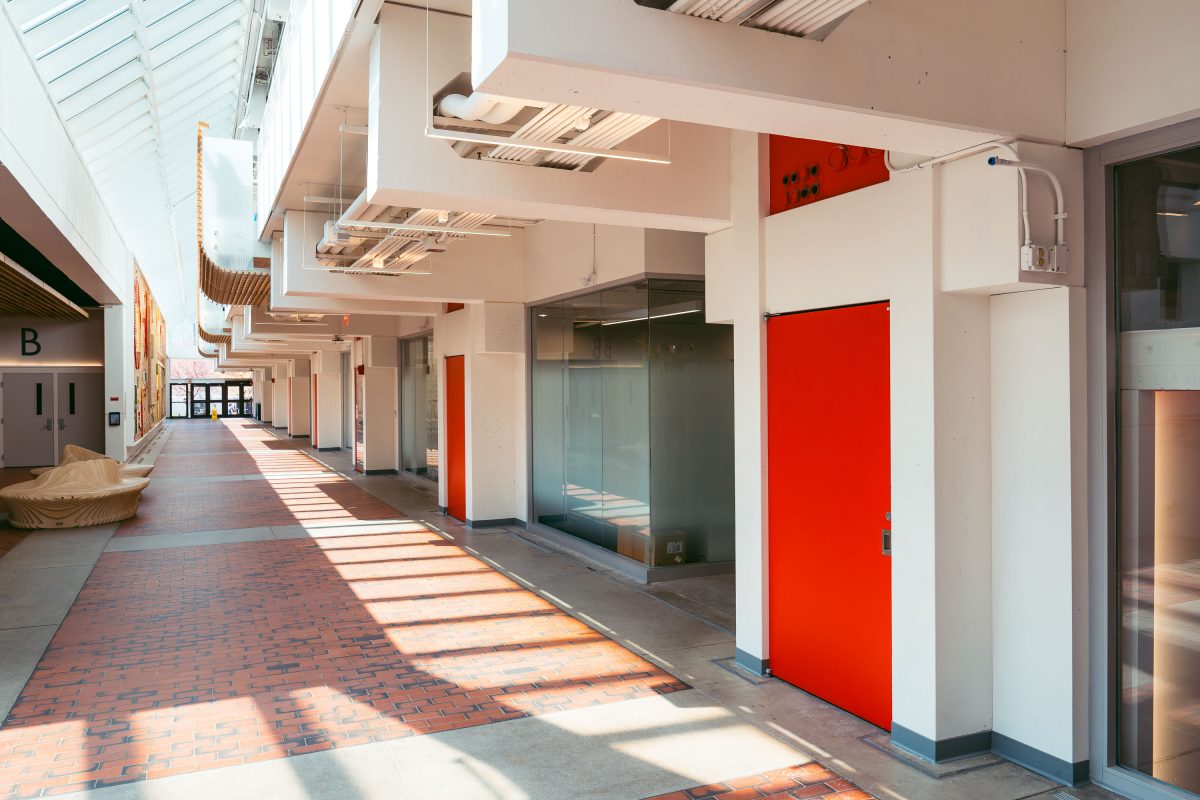
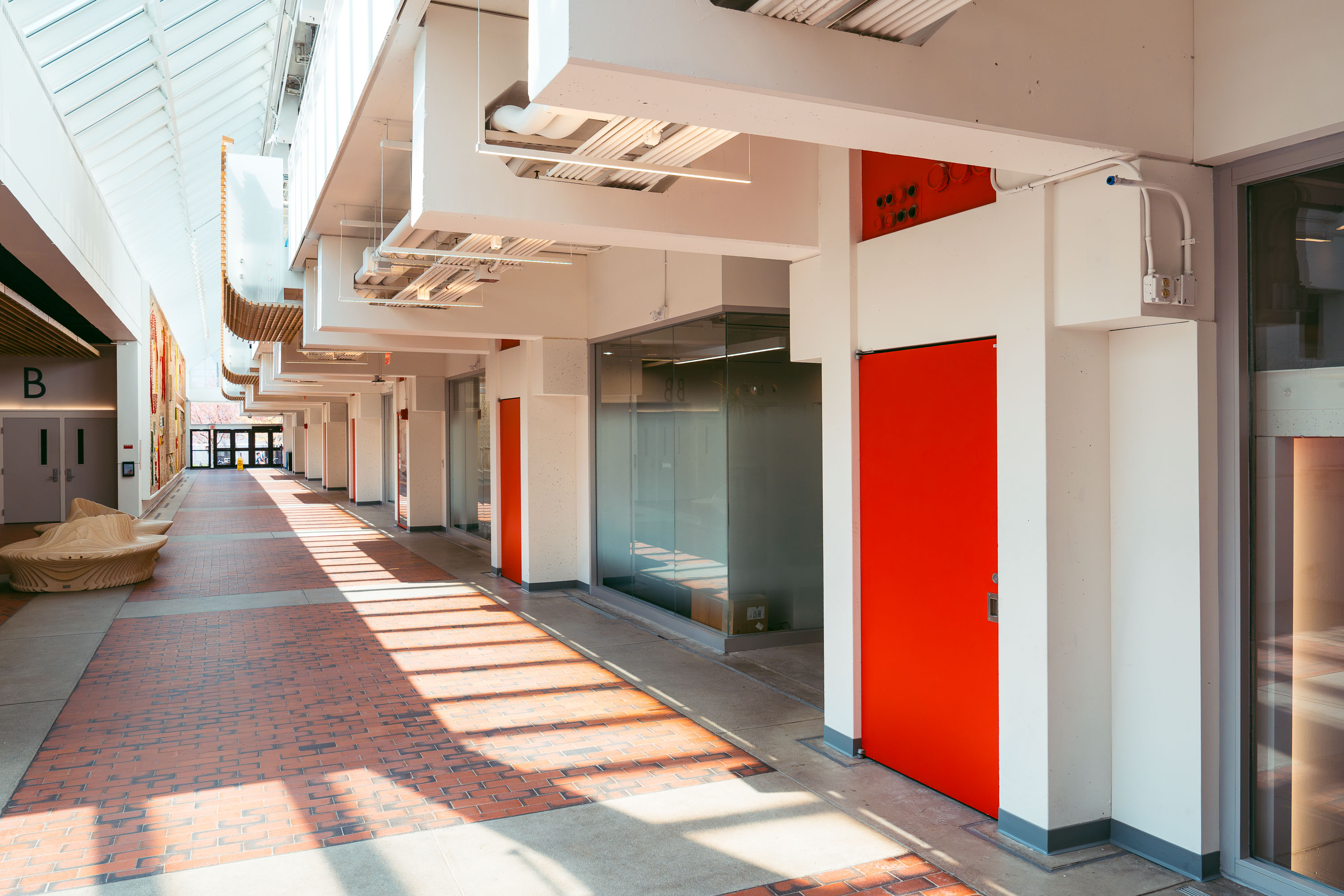
Interior hallway of Harvard Science Center in Cambridge with red doors and skylights.
The Harvard Science Center opened in 1972 on Oxford Street, designed by Catalan architect Josep Lluís Sert, who also served as dean of the Harvard Graduate School of Design. Funding came in part from Polaroid founder Edwin Land, and the building's tiered massing is often said to echo a camera resting on a tripod. It houses Harvard's Mathematics and Statistics departments along with the Collection of Historical Scientific Instruments and a public cafe. At roughly 300,000 square feet, it remains one of the largest classroom and laboratory buildings on Harvard's Cambridge campus.

A Corridor Inside the Harvard Science Center
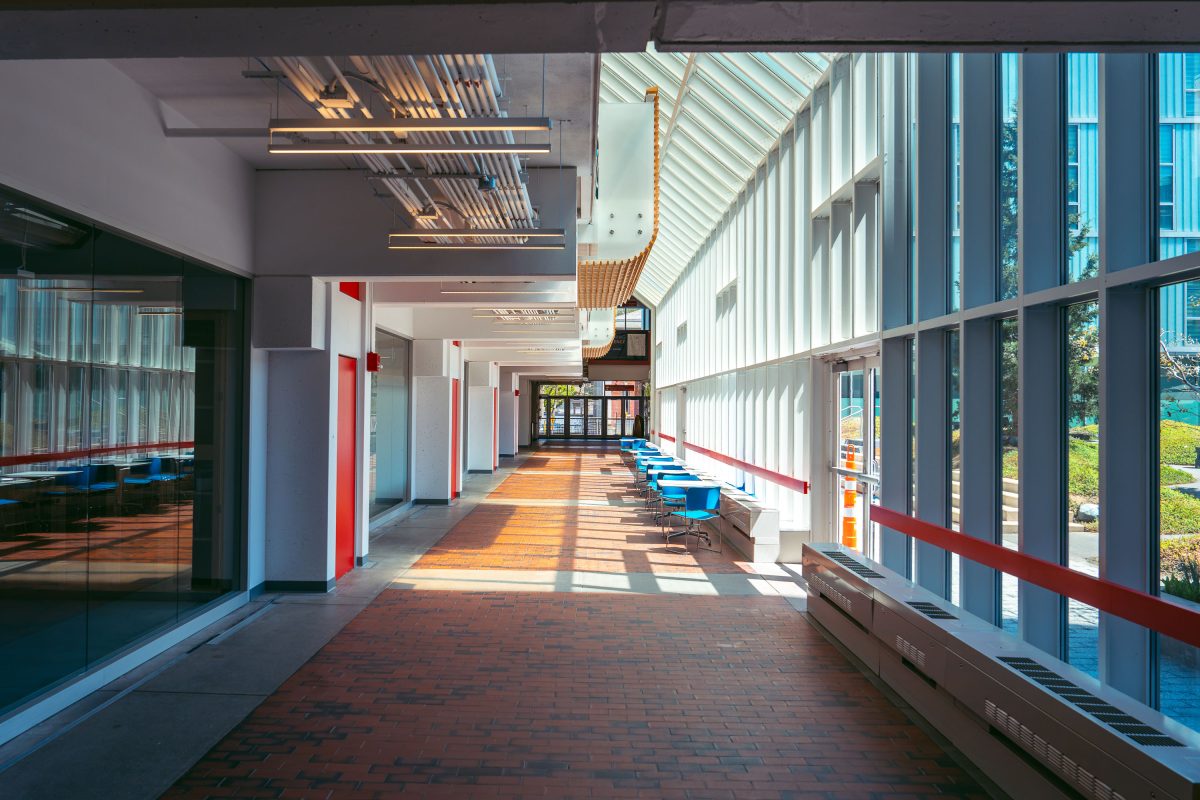
Harvard Science Center corridor in Cambridge with red doors, skylights, and modernist white-framed windows.
The Harvard Science Center, completed in 1973, was designed by architect José Luis Sert and funded largely through a gift from Polaroid founder Edwin Land. At more than 300,000 square feet, it ranks among the largest buildings on Harvard's Cambridge campus. The complex houses lecture halls, the Cabot Science Library, and the Putnam Gallery, which displays historical scientific instruments from Harvard's collections. Sert designed the building's tiered massing to evoke a stack of cameras, part of his broader effort to reshape Harvard's campus during the postwar era.

Ground-Floor Corridor at the Harvard Science Center

Harvard University protest poster on a pole in Cambridge, Massachusetts.
Harvard University, Cambridge, Massachusetts. A poster wheat-pasted to a utility pole features a man in tactical gear with the message, “Be strong, take action. Don’t let these bastards win.” The poster references opposition to Immigration and Customs Enforcement.

Harvard University ICE Protest Poster
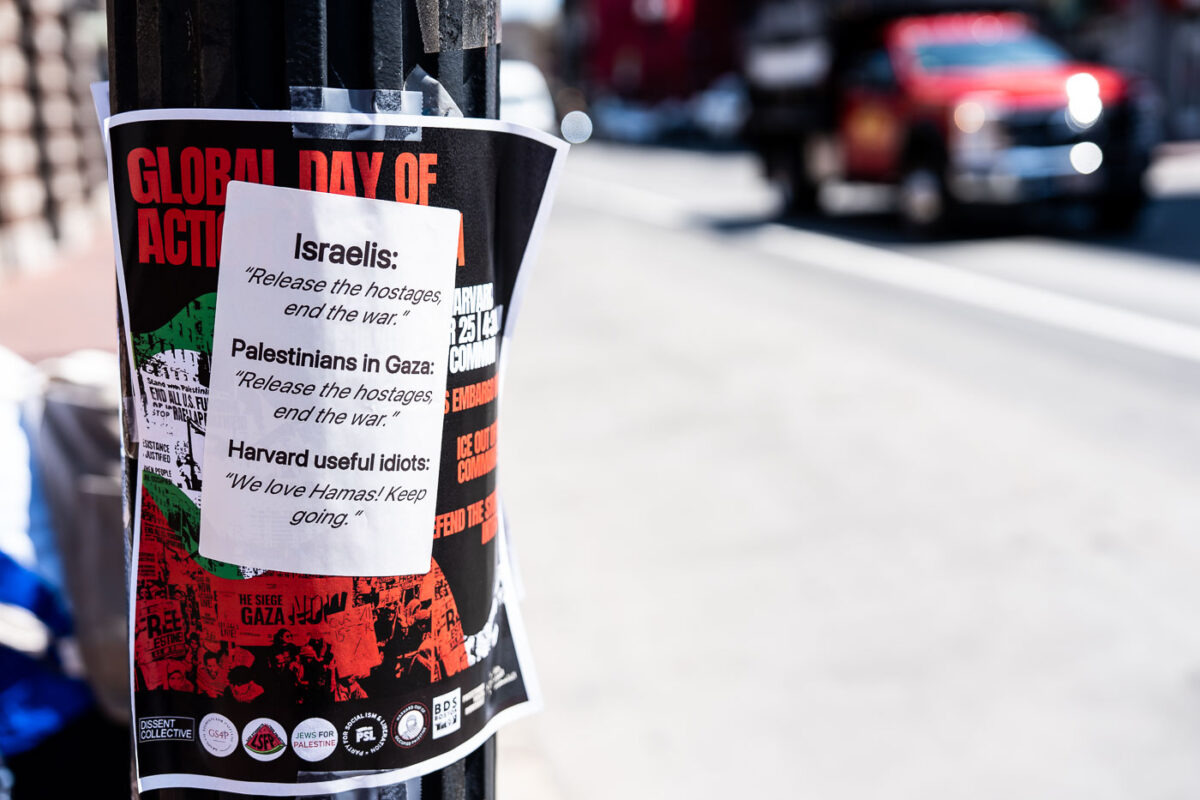
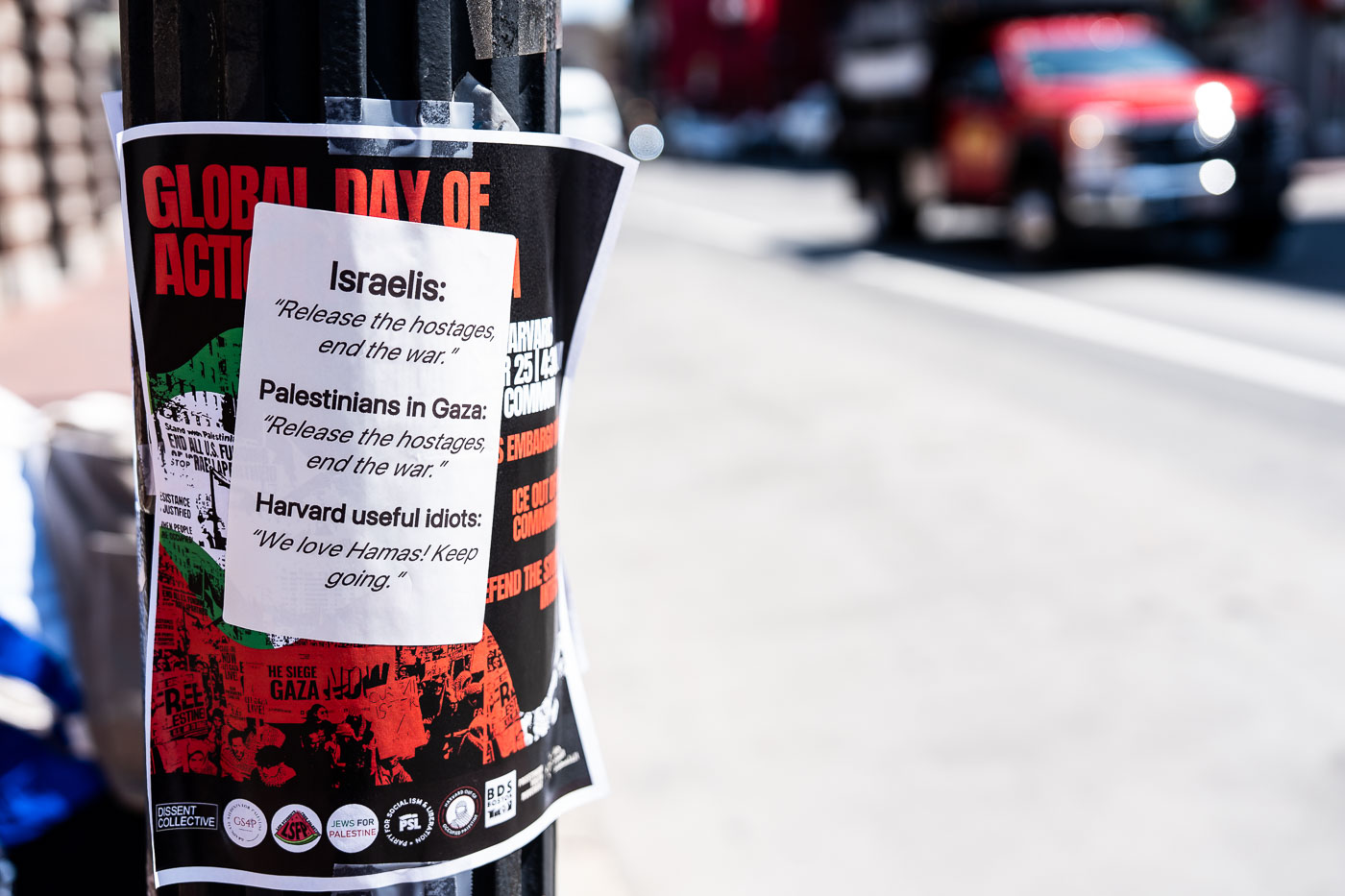
Harvard Square protest flyers on a street pole in Cambridge, Massachusetts.
Harvard Square, Cambridge, Massachusetts. Flyers on a street pole advertise a “Global Day of Action” related to Gaza and include a pasted response sheet. The layered notices address the Israel-Hamas war and the conflict’s visibility around Harvard University.

Harvard Square protest flyers on a street pole
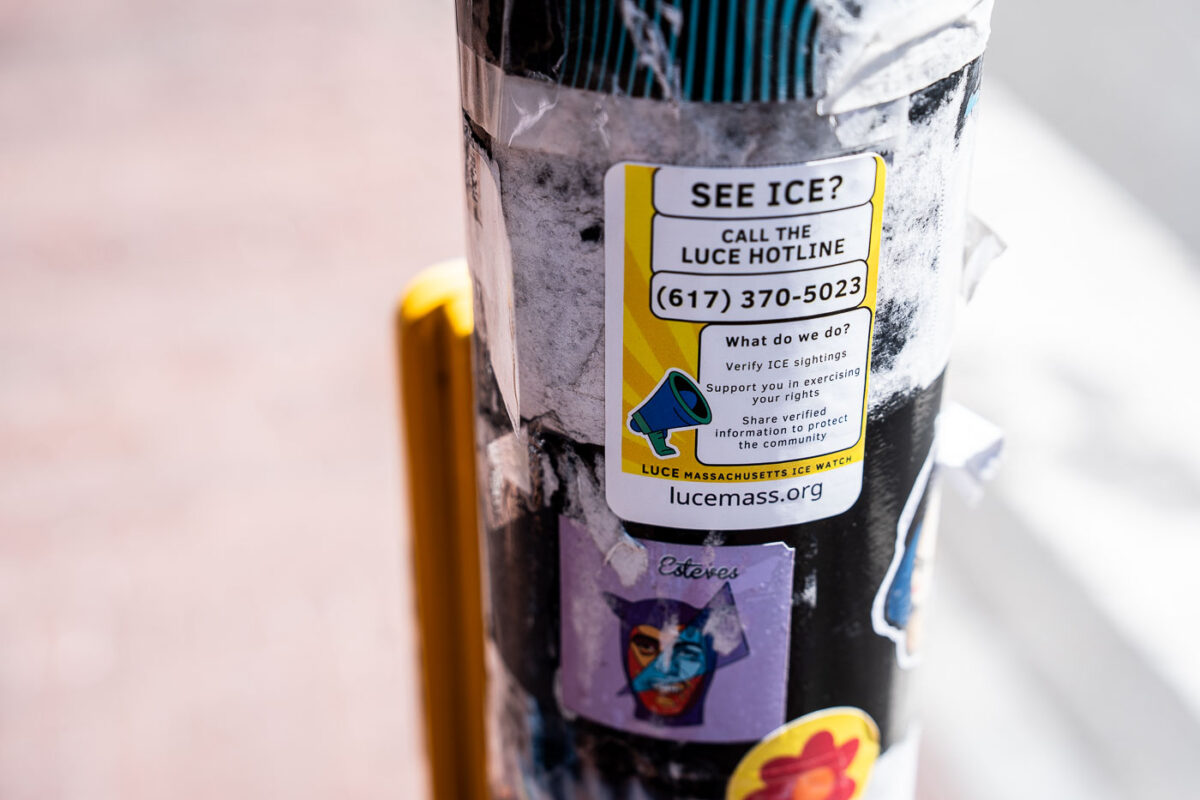
LUCE Massachusetts ICE Watch sticker on a pole at Harvard with hotline number 617-370-5023.
LUCE Massachusetts ICE Watch sticker on a utility pole at Harvard. The sticker directs people to call the LUCE hotline at 617-370-5023 to report and verify ICE sightings.

LUCE Massachusetts ICE Watch Sticker, Harvard

Built in Minneapolis

Minneapolis Photographer

Browse by location, move through long-running series, or start with recent work.