Artemis

40 photos · 2018

40 photographs tagged Artemis, 2018.

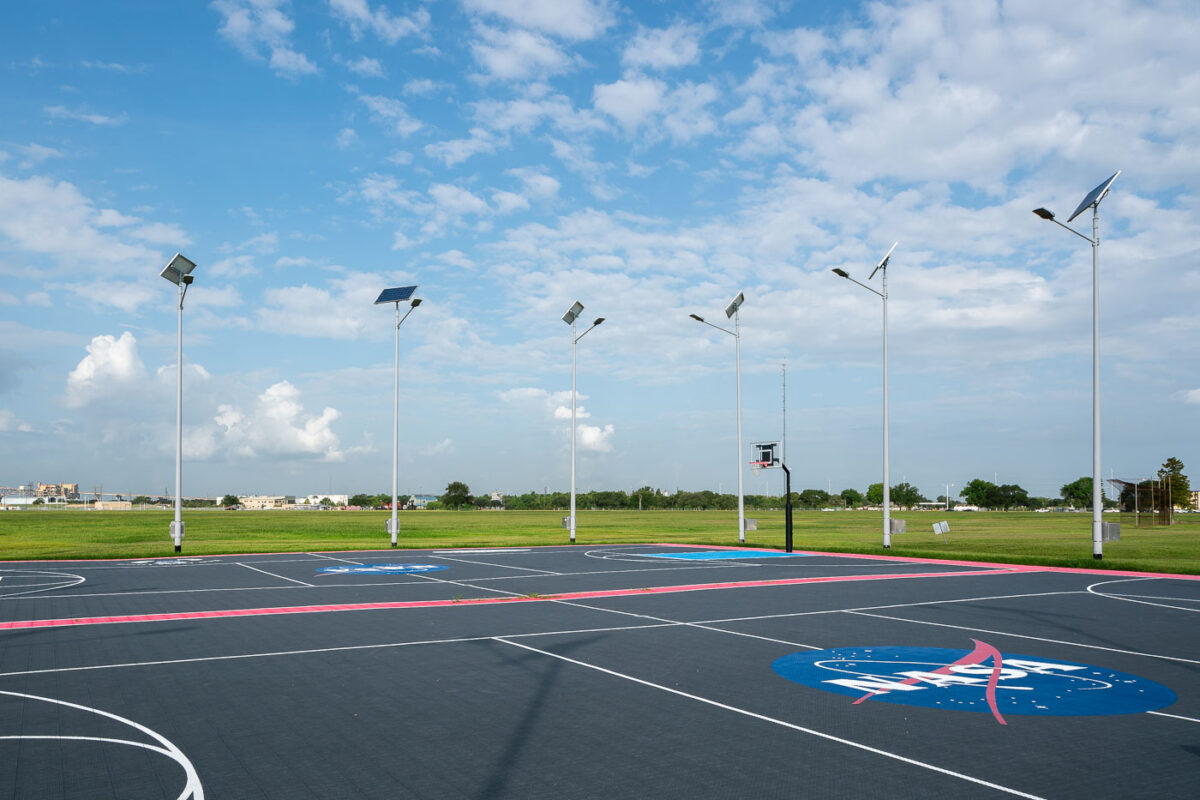
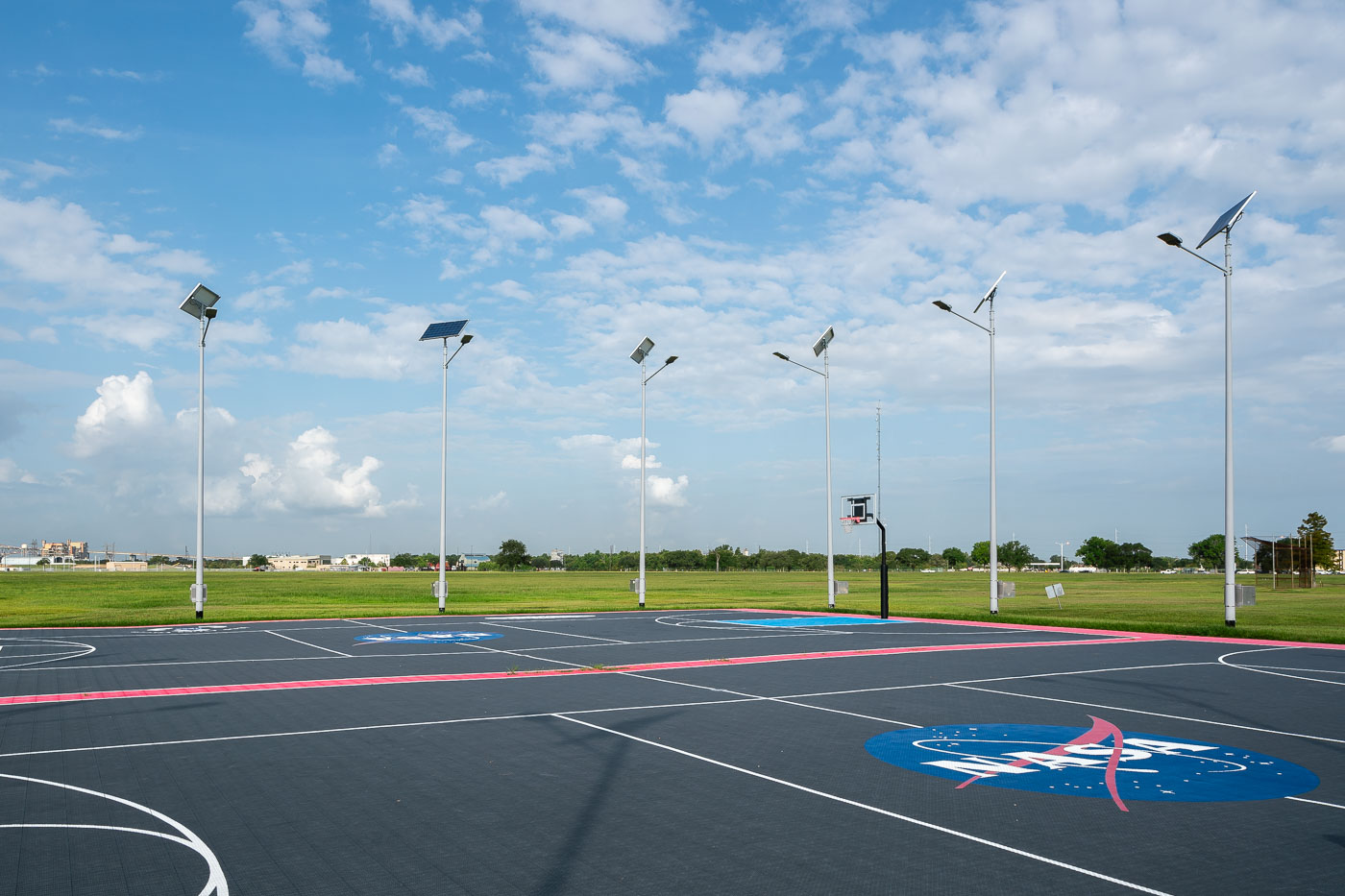
Basketball court outside Michoud Assembly Facility
A basketball court featuring the NASA insignia at center court and solar-powered lighting is located at the NASA Michoud Assembly Facility in New Orleans, Louisiana. This expansive campus holds a significant history in aerospace manufacturing, having produced components for the Saturn V rockets and Space Shuttle external tanks. Today, Michoud remains a vital center for engineering and production, fabricating large-scale aerospace hardware, including rocket stages for programs like the Space Launch System (SLS) and Artemis missions.

NASA Basketball Court, Solar Lights – Michoud Assembly Facility
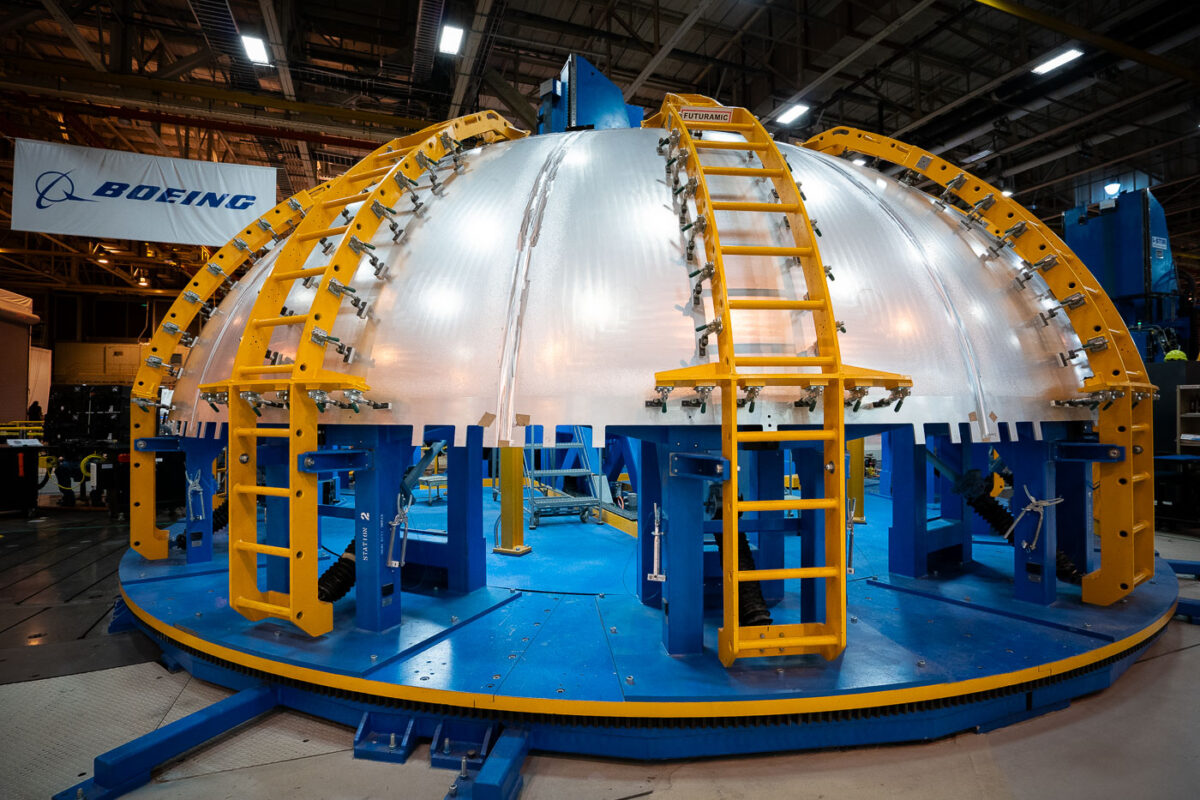
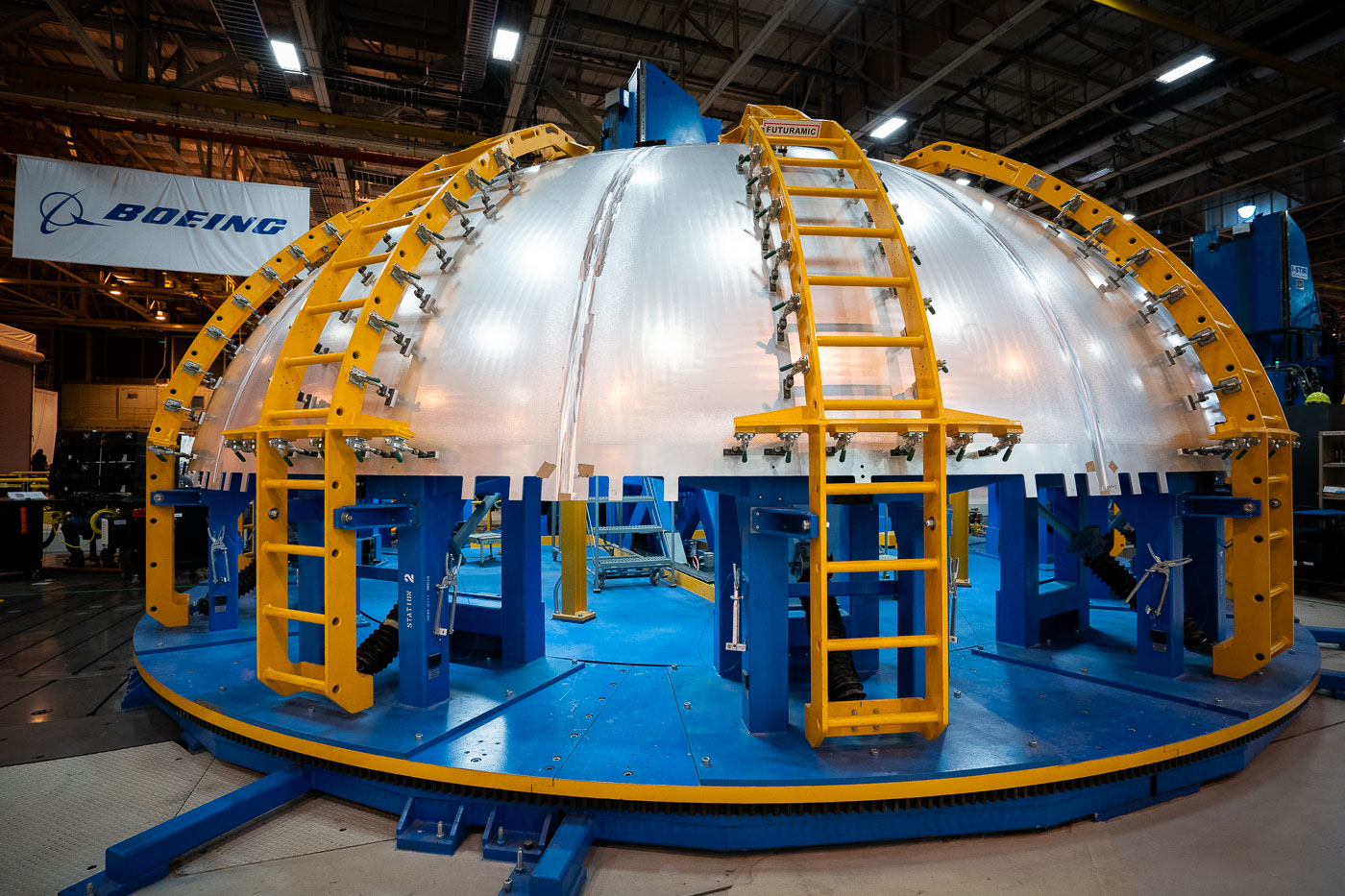
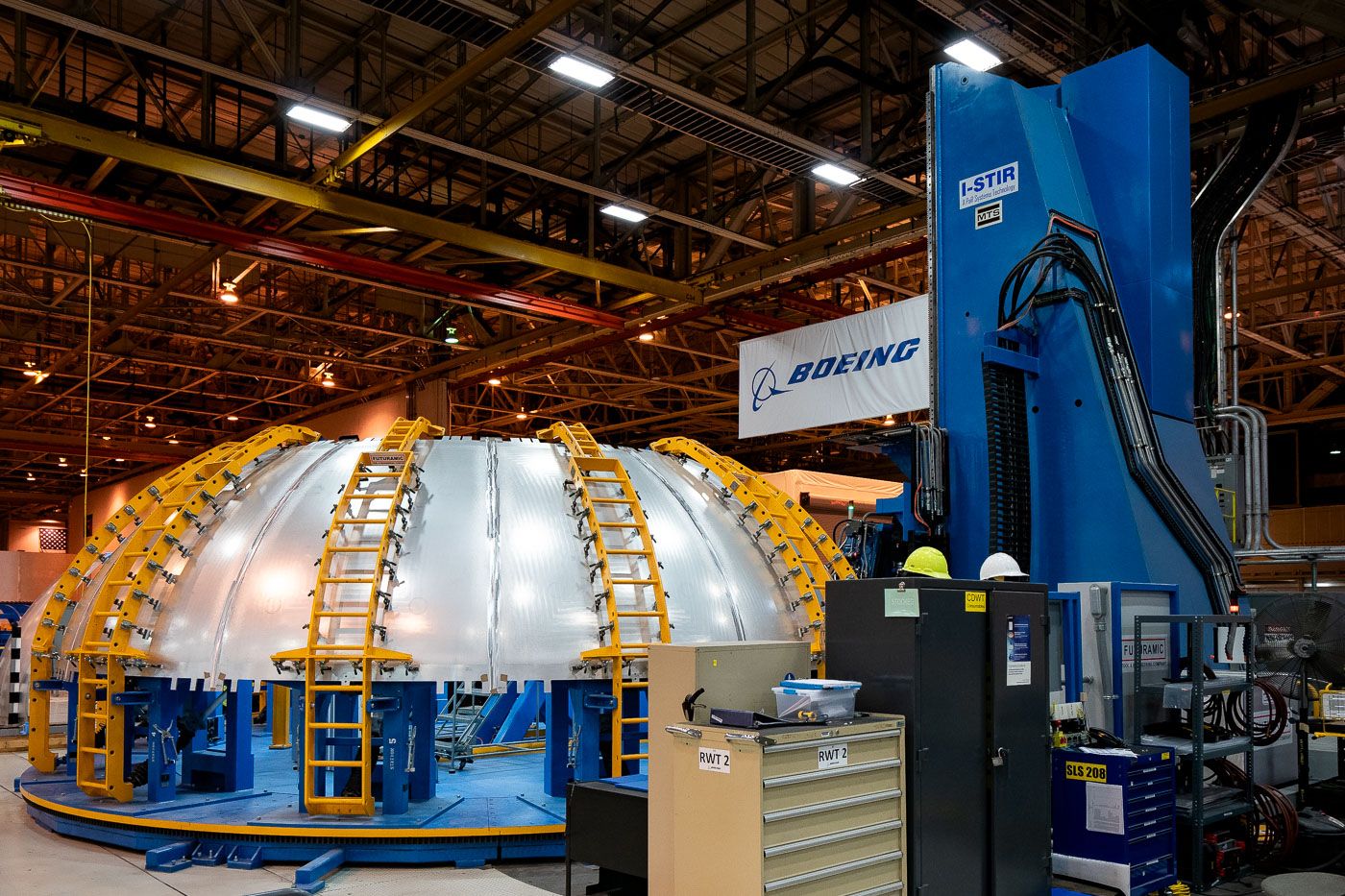
Friction Stir Dome Assembly at NASA Michoud
At NASA’s Michoud Assembly Facility in New Orleans, Louisiana, a large aluminum dome section for the Space Launch System (SLS) undergoes friction-stir welding. This advanced technique, performed by a PAR Systems I-Stir Friction Welder, joins thick aerospace materials by using frictional heat and mechanical pressure to create strong, defect-free joints without melting the metal. Boeing engineers utilize this precision process for critical rocket and space vehicle components, supporting the Artemis program's deep space exploration missions. The Michoud facility has a long history of large-scale fabrication for space programs, including the Saturn V and Space Shuttle, continuing its legacy as a vital center for American spaceflight infrastructure.

Boeing SLS Dome Friction-Stir Welding at NASA Michoud
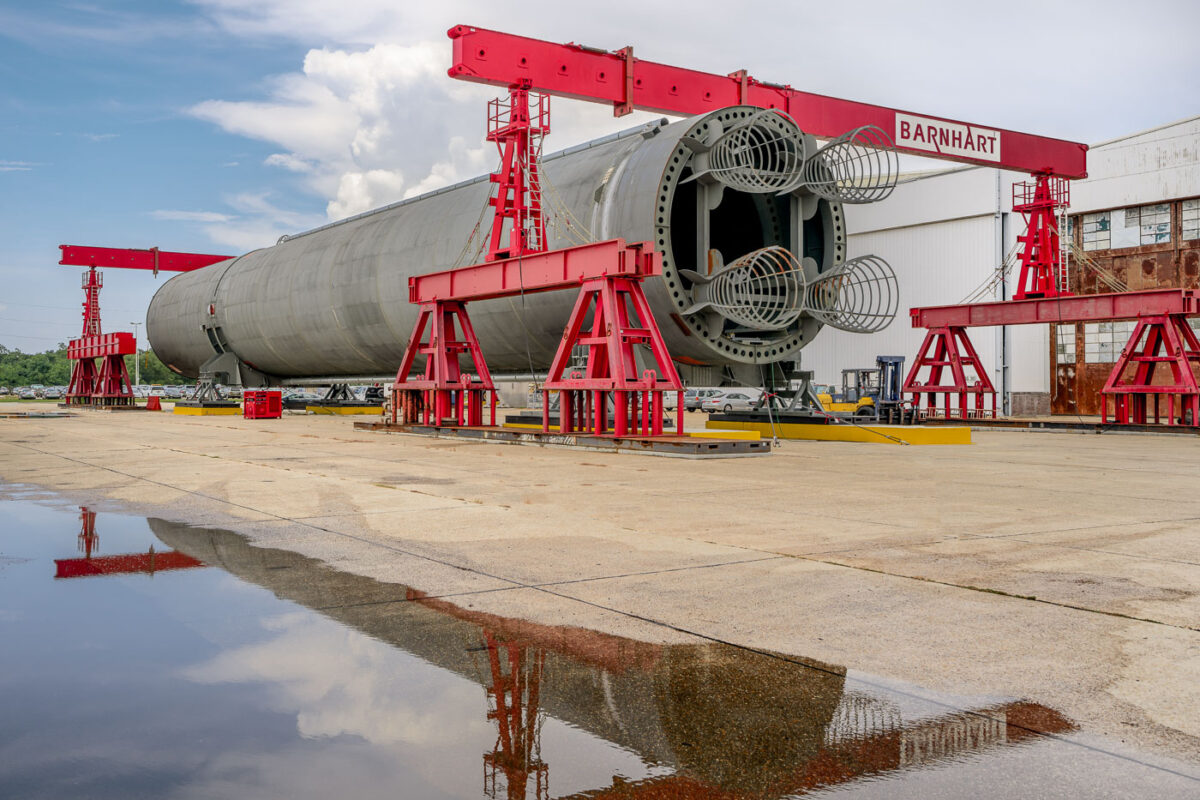
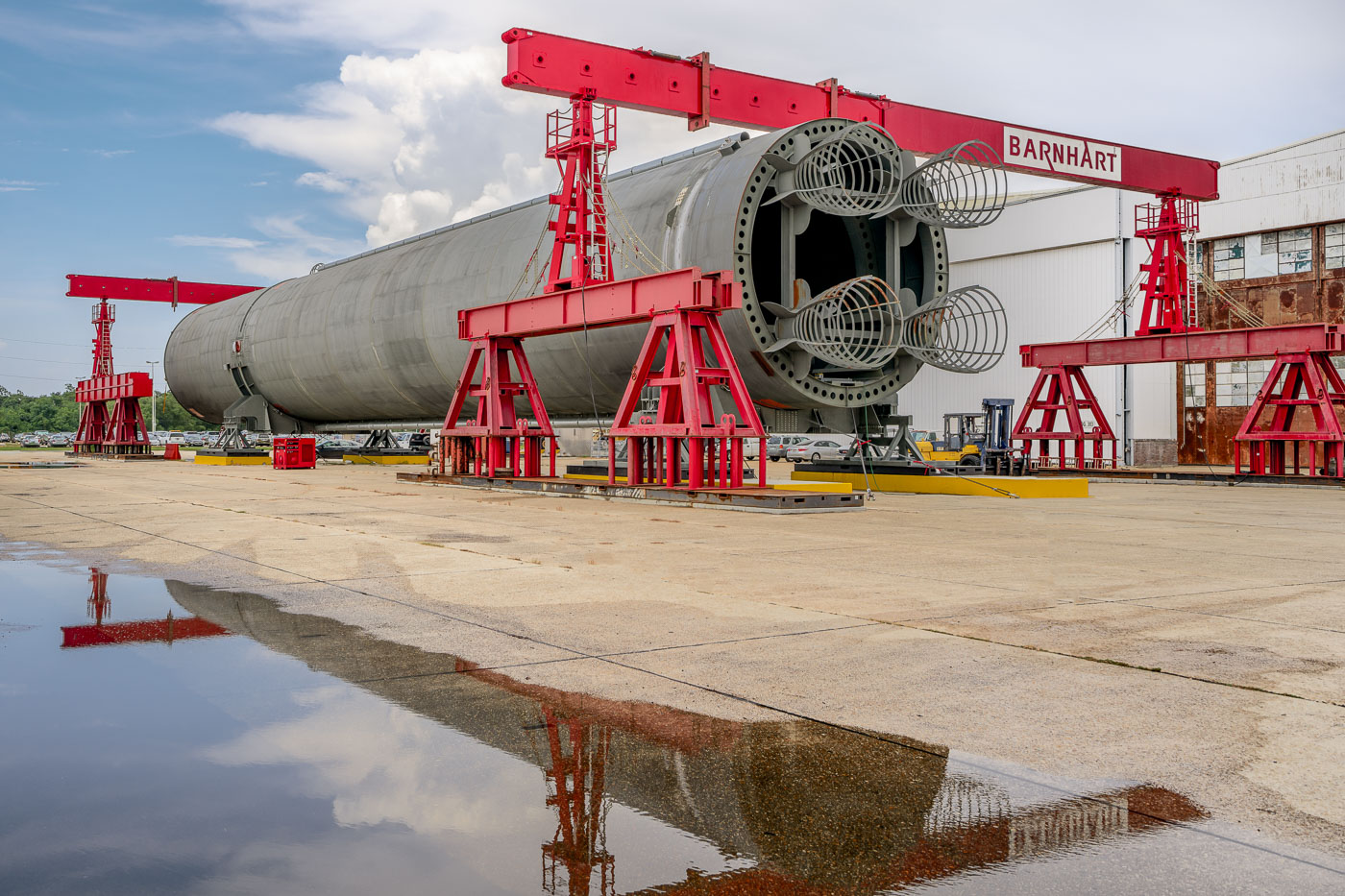
SLS Rocket Model at Michoud Facility
A full-scale model of the Space Launch System (SLS) rocket's core stage is positioned outside the NASA Michoud Assembly Facility in Louisiana. This model was specifically constructed to conduct critical tests for transporting the massive rocket components via the NASA barge. Such tests are vital to ensure the safe and efficient movement of flight hardware from the manufacturing site to launch facilities. The Michoud Assembly Facility plays a key role in the production of the SLS rocket, which is central to NASA's Artemis program for human lunar exploration.

NASA SLS Rocket Model for Barge Transport Test, Michoud
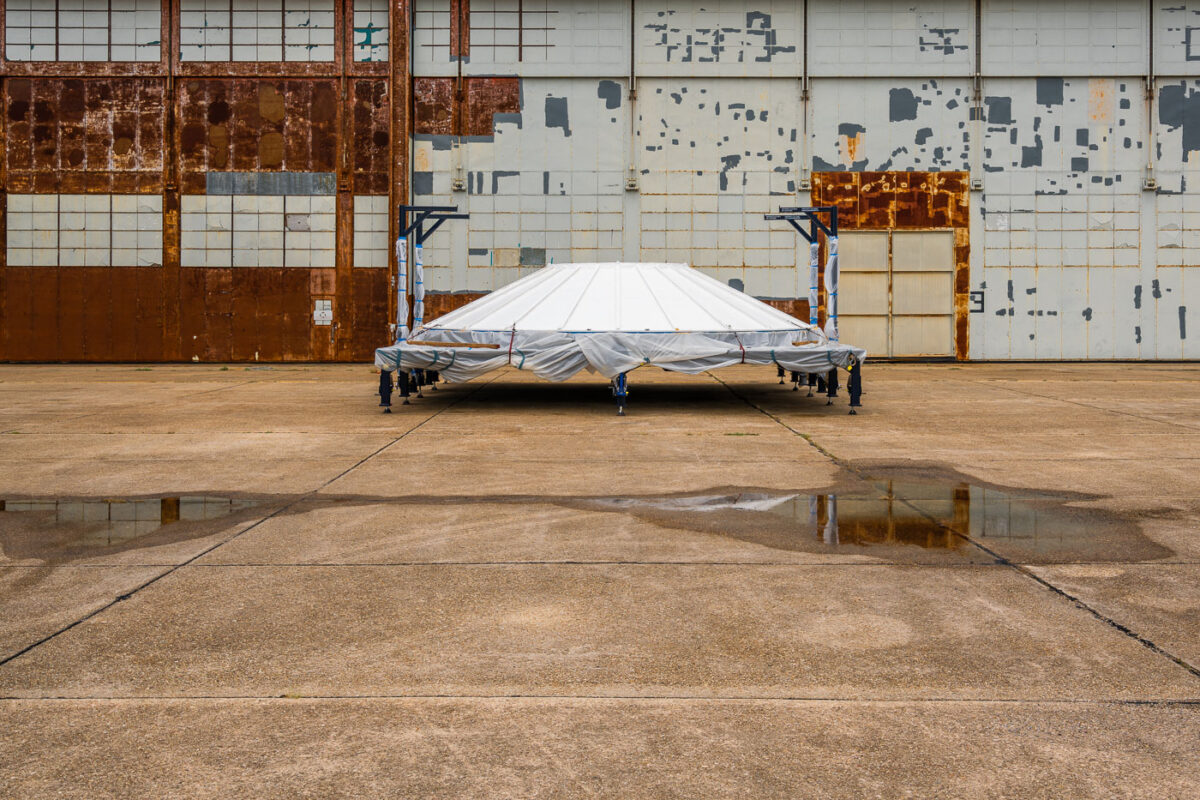
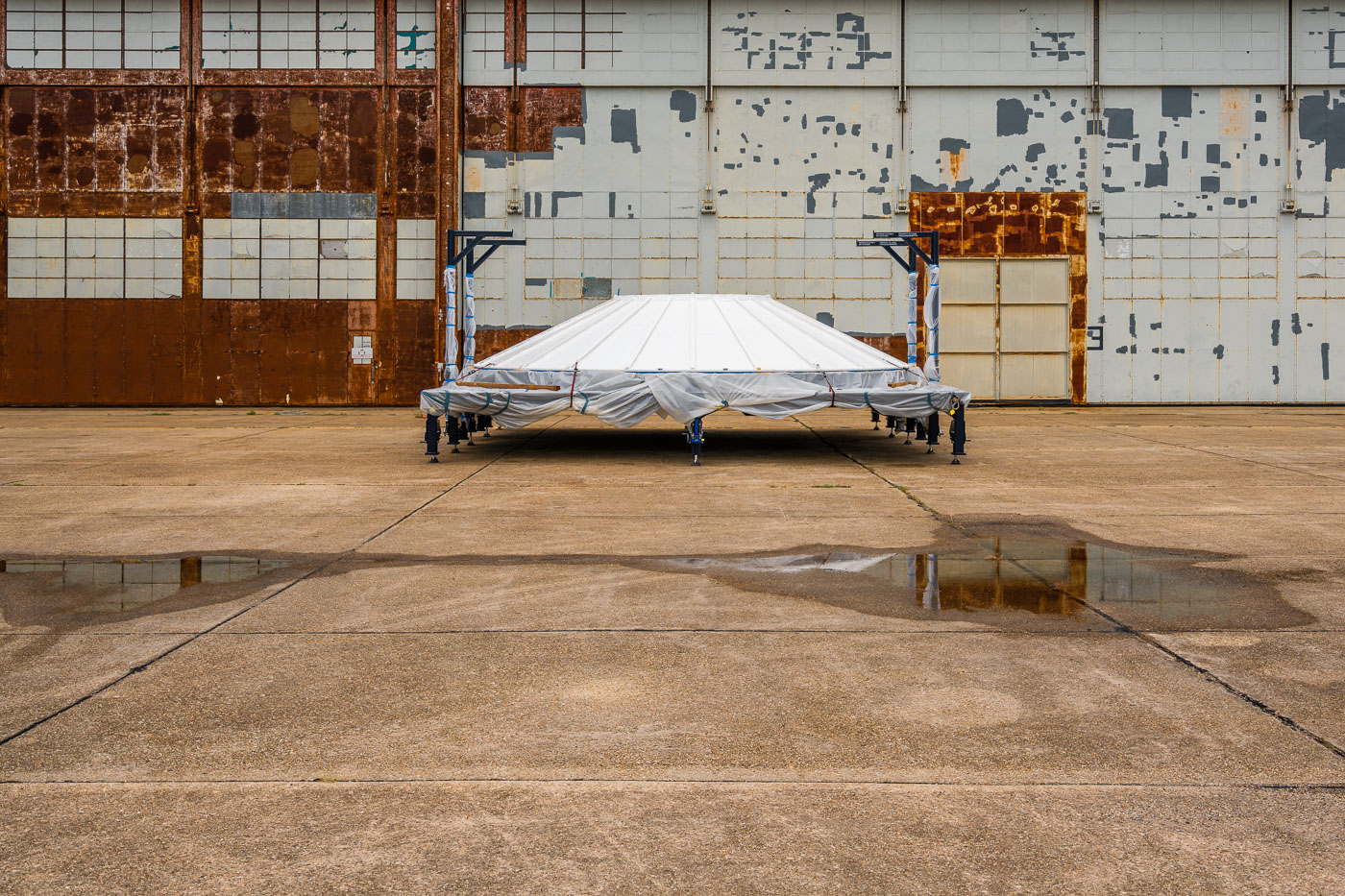
Boeing Dome Section Outside Michoud Assembly Facility
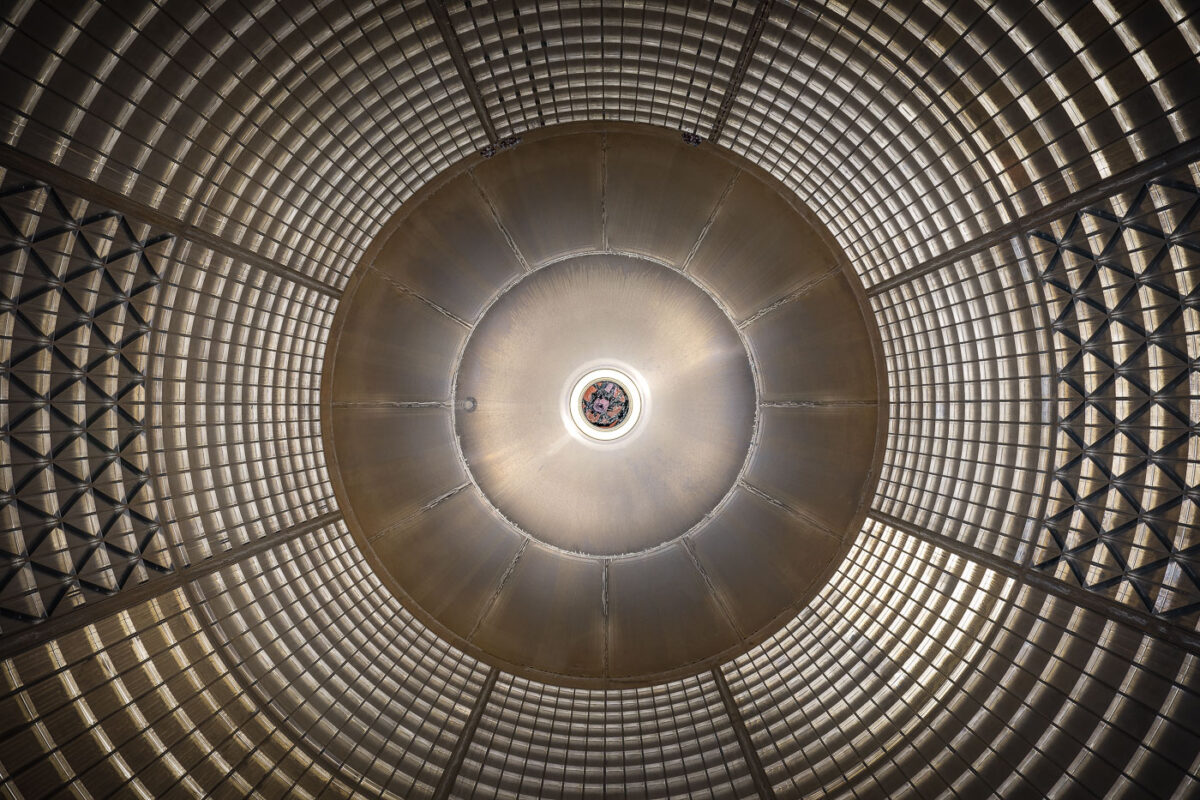
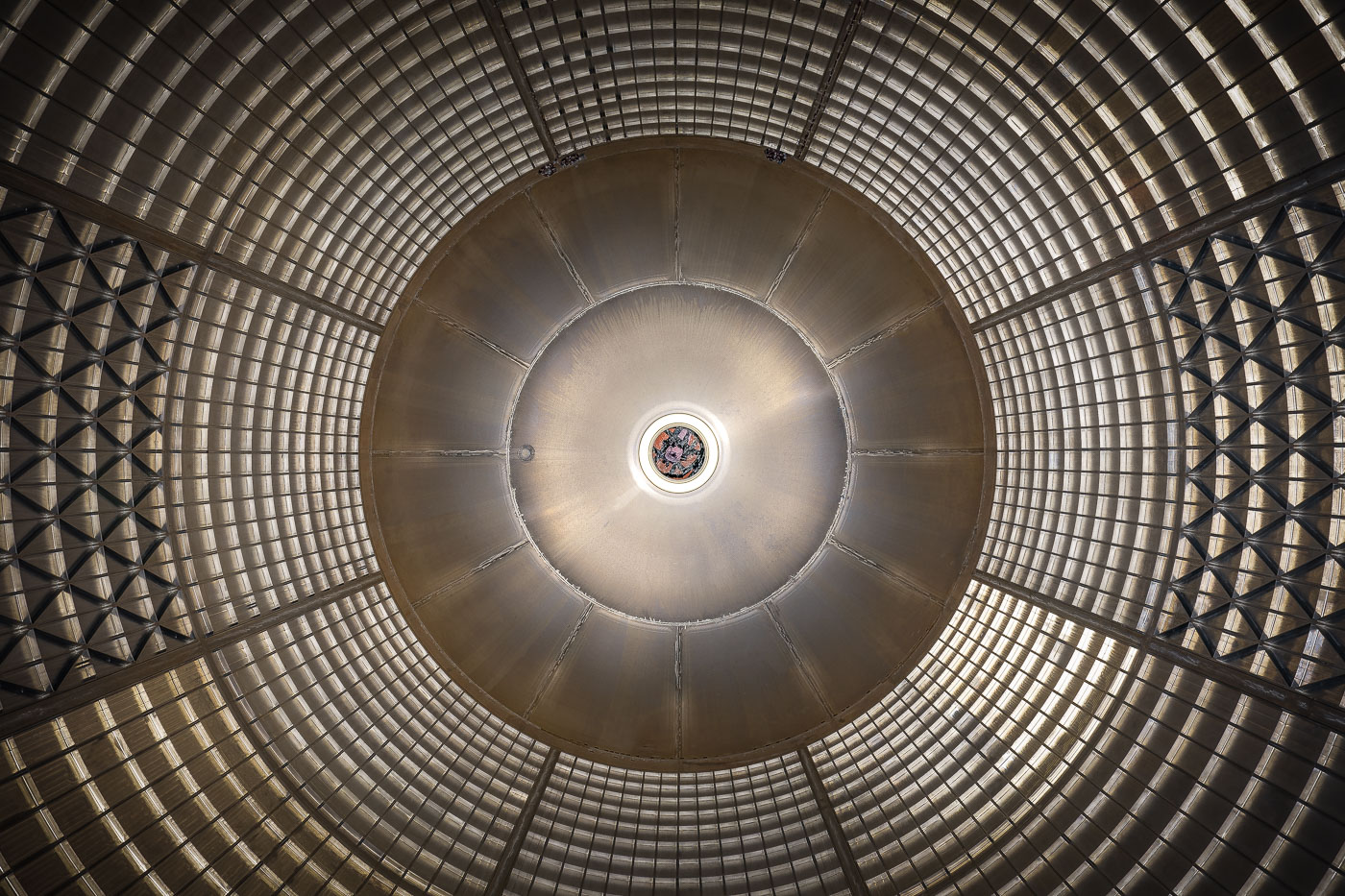
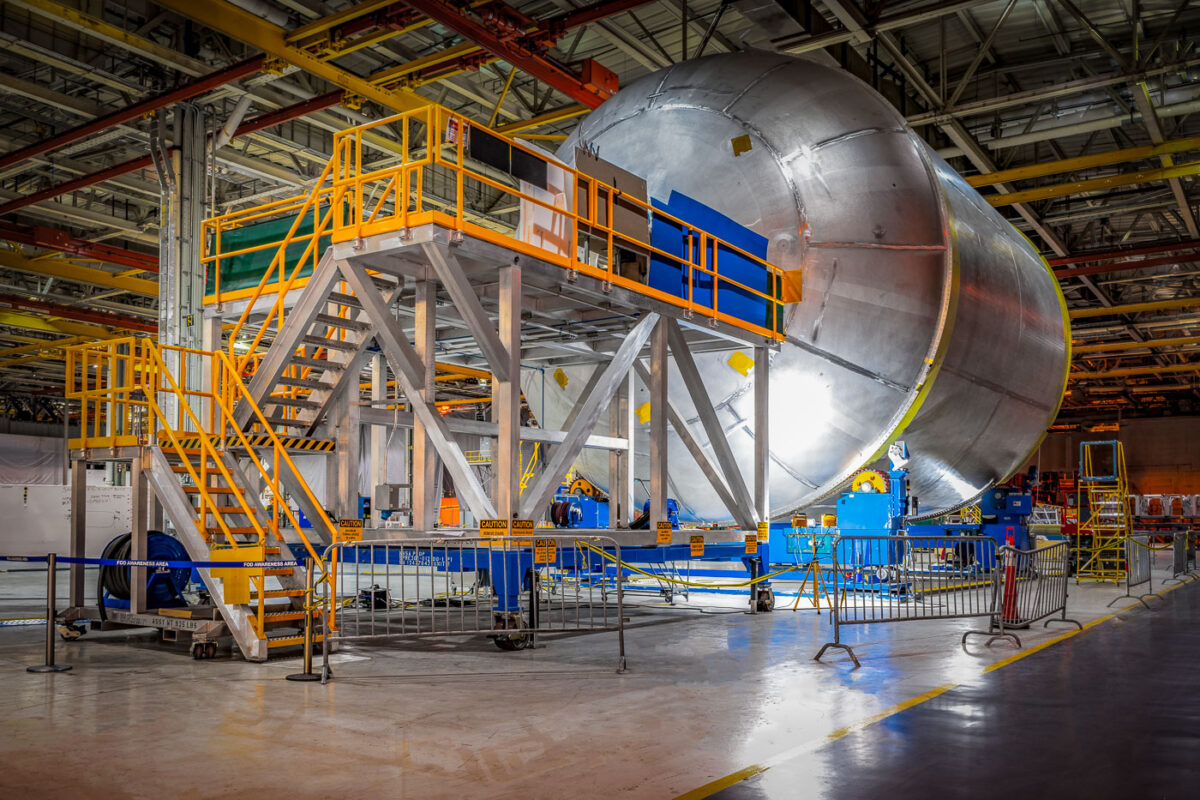
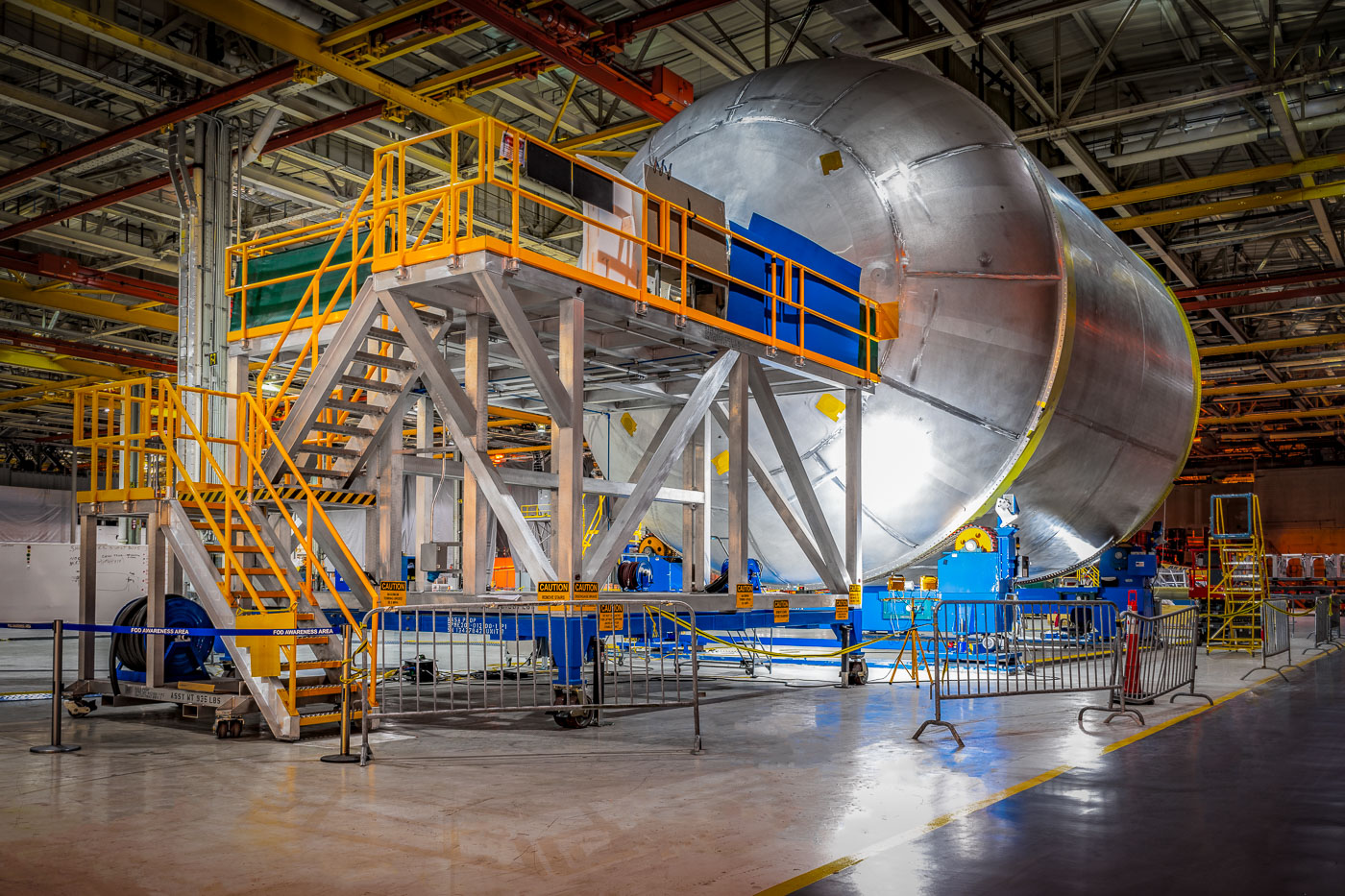
A completed dome section for the Space Launch System (SLS) core stage is staged outside the Boeing production area at NASA’s Michoud Assembly Facility in New Orleans, Louisiana. This massive component, designed to cap propellant tanks, is crucial for the SLS rocket, which supports NASA's Artemis program aimed at returning humans to the Moon. The Michoud Assembly Facility has a long history of aerospace manufacturing, producing components for programs from Apollo to the Space Shuttle, and now continues its legacy with the SLS. Resting on a mobile transport frame, the advanced aerospace structure stands against the weathered facade of an assembly hangar, highlighting the facility's enduring role in space exploration.

Boeing SLS Core Stage Dome Section, NASA Michoud
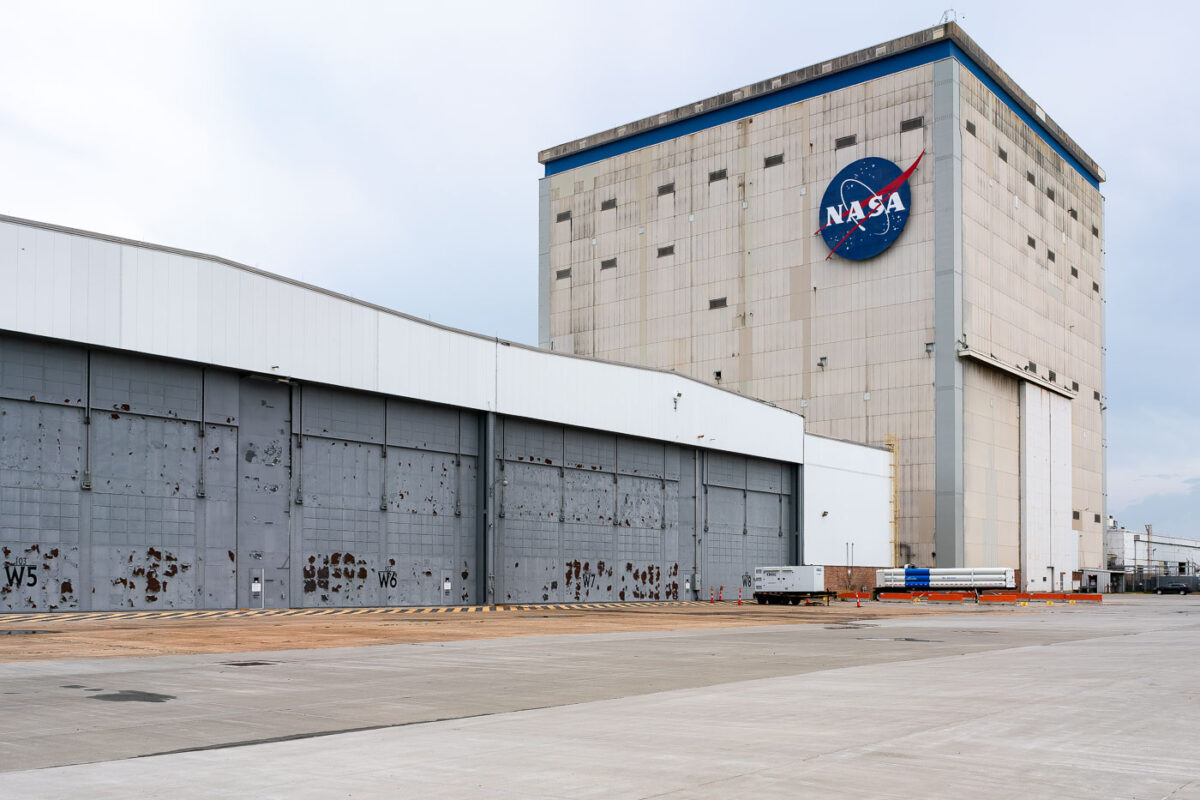
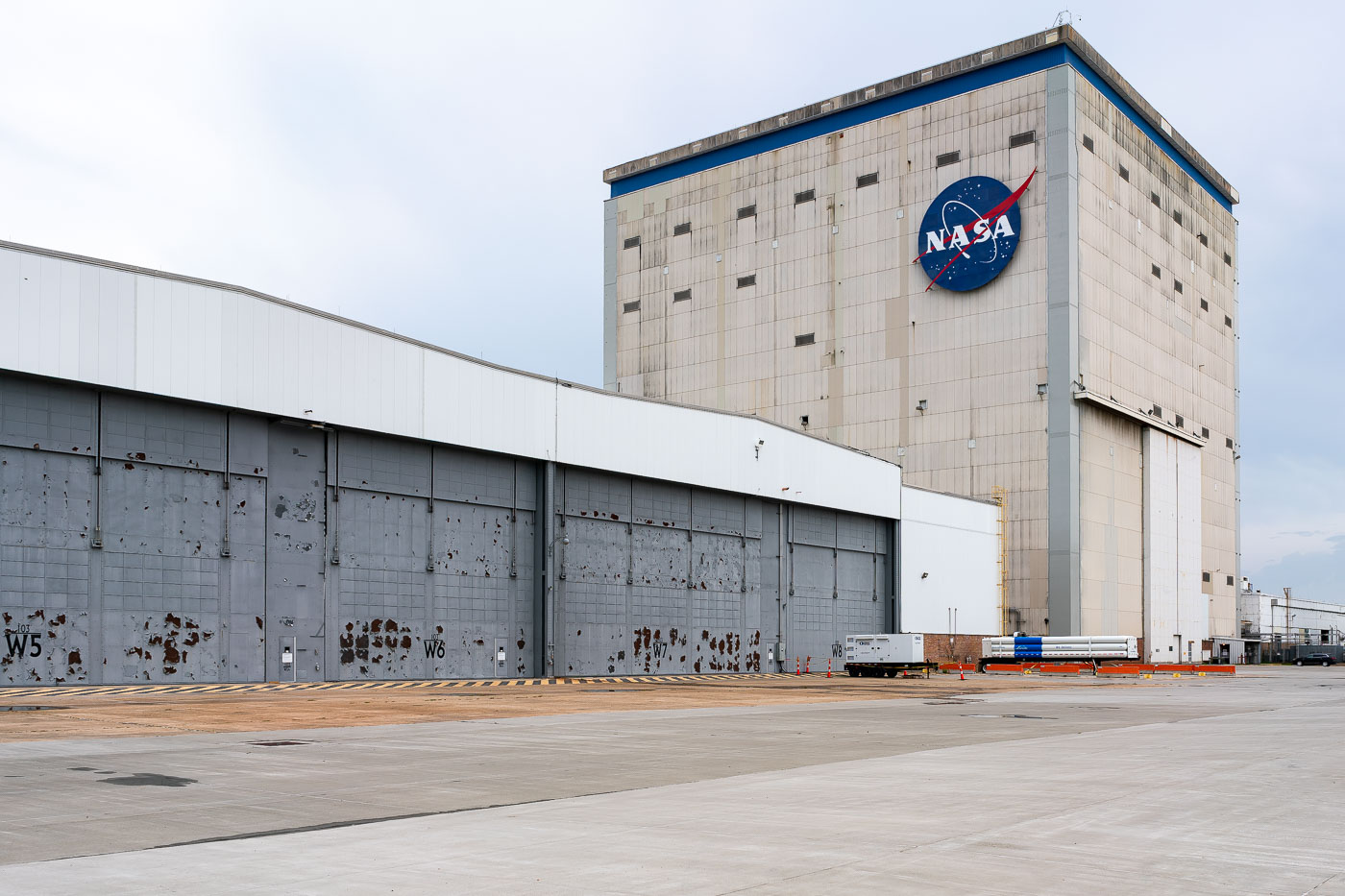
NASA Michoud Vehicle Assembly Building Exterior
The Vehicle Assembly Building (VAB) at NASA’s Michoud Assembly Facility in New Orleans, Louisiana, is a central hub for the U.S. space program. Originally constructed during World War II for manufacturing Liberty ships, the facility later produced components for the Saturn V rocket and Space Shuttle external tanks. Currently, Boeing and NASA engineers utilize this massive structure to fabricate and assemble the core stages of the Space Launch System (SLS) for Artemis missions, supporting future human exploration of the Moon and deep space.

NASA Michoud VAB, New Orleans, SLS Core Stages
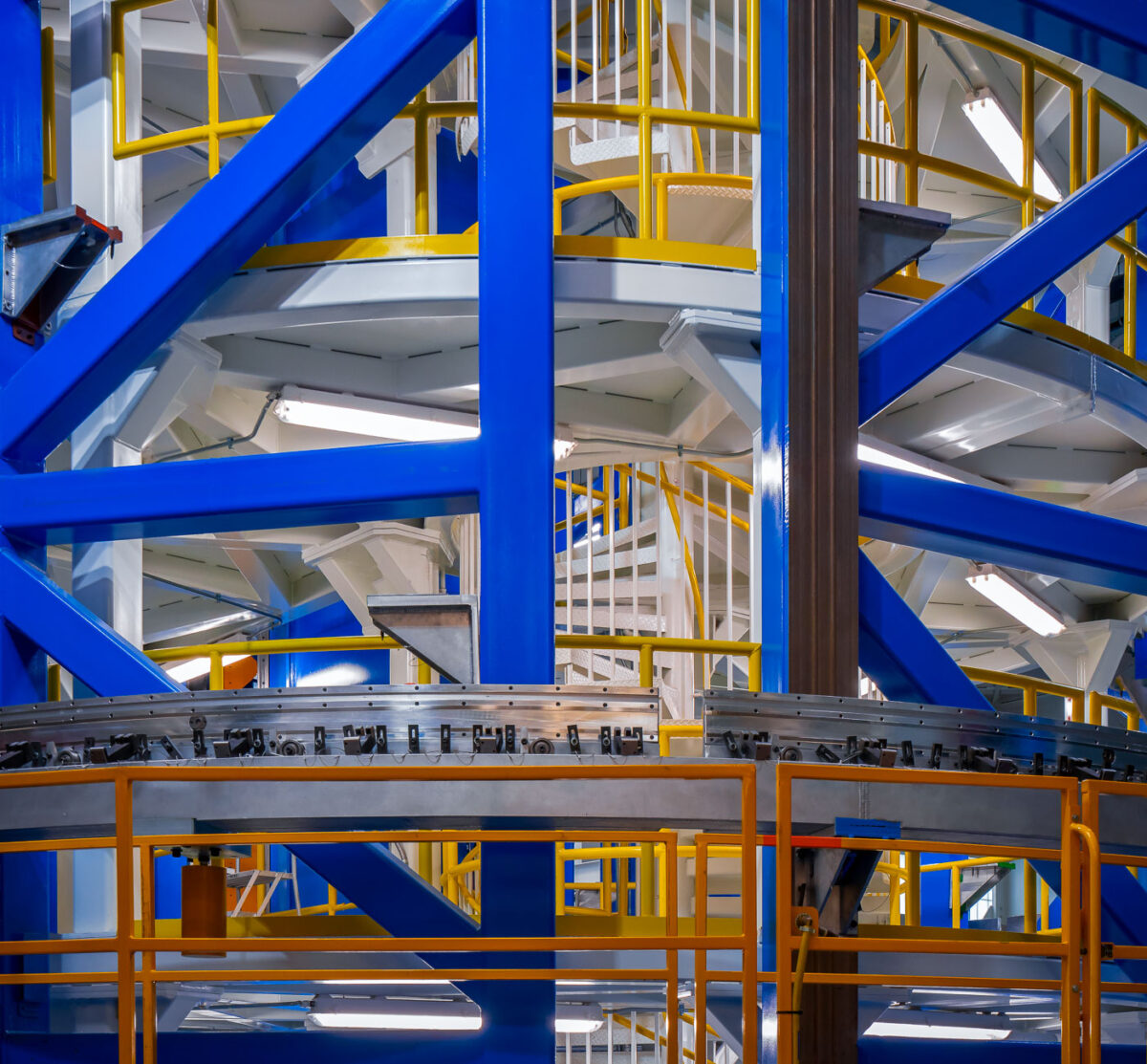
Inside the NASA Michoud Assembly Facility
The Vertical Weld Center (VWC) at NASA’s Michoud Assembly Facility, which is producing components for the Space Launch System (SLS) and Artemis rockets. Shown here is the tool used to do the barrel fabrication. From NASA: The Barrel Fabrication process consists of the sequential trimming and welding of Barrel Panels on the Vertical Weld Center (VWC) to form a 8.4-meter barrel. Post-weld non-destructive evaluation is also performed while the Barrel is positioned on the VWC. Barrels will be fabricated for the LH2 Tank, LO2 Tank, Forward Skirt, and Engine Section and transported to Building 110 for weld operations on the Vertical Assembly Center. NASA says there are 40 different Barrel Panel configurations with various thicknesses and heights and the 32 barrels to be fabricated each weight between 6,600 to 9,500 pounds. Established in 1961, Michoud has been a critical manufacturing hub for American space programs, notably producing the Saturn V first stages for the Apollo missions and external tanks for the Space Shuttle program. Today, the facility is central to NASA's Artemis program, fabricating the core stage of the SLS rocket, which is designed to return humans to the Moon and eventually journey to Mars. This vast complex houses specialized tooling and assembly jigs, underscoring the precision engineering required for deep-space exploration.

NASA Vertical Weld Center, SLS & Artemis Production
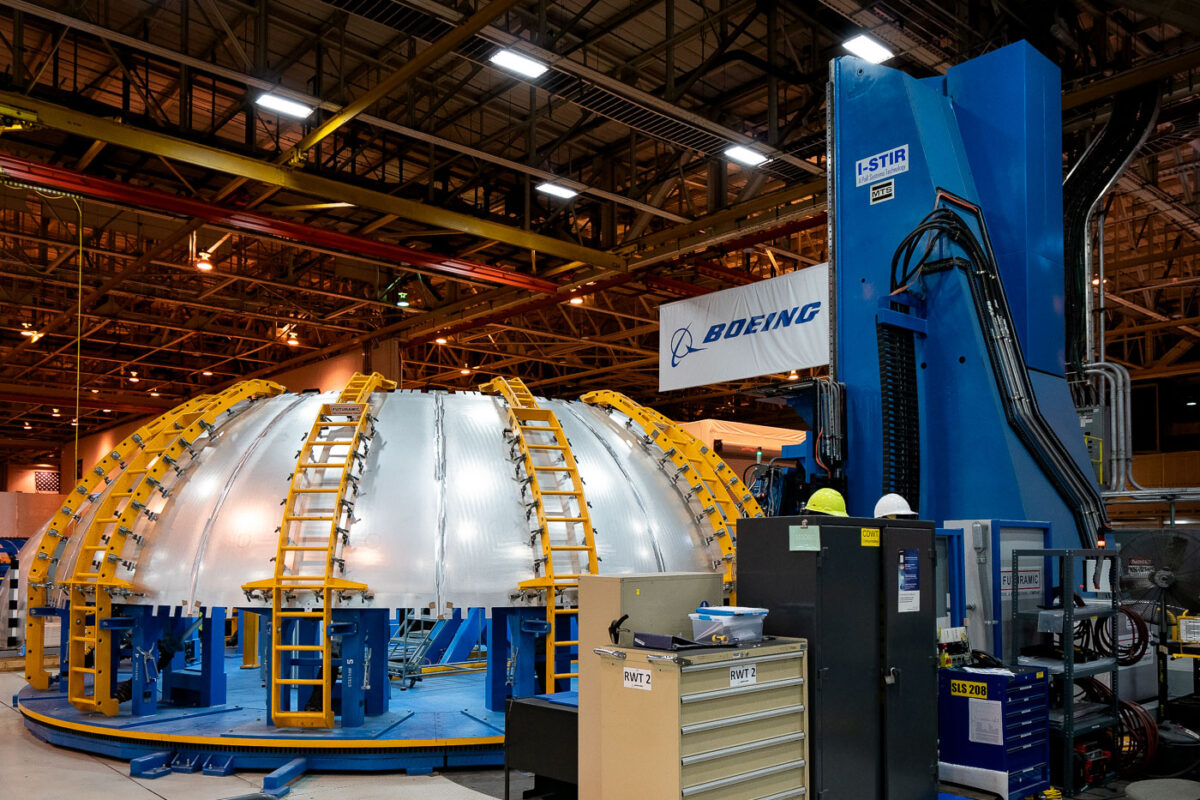
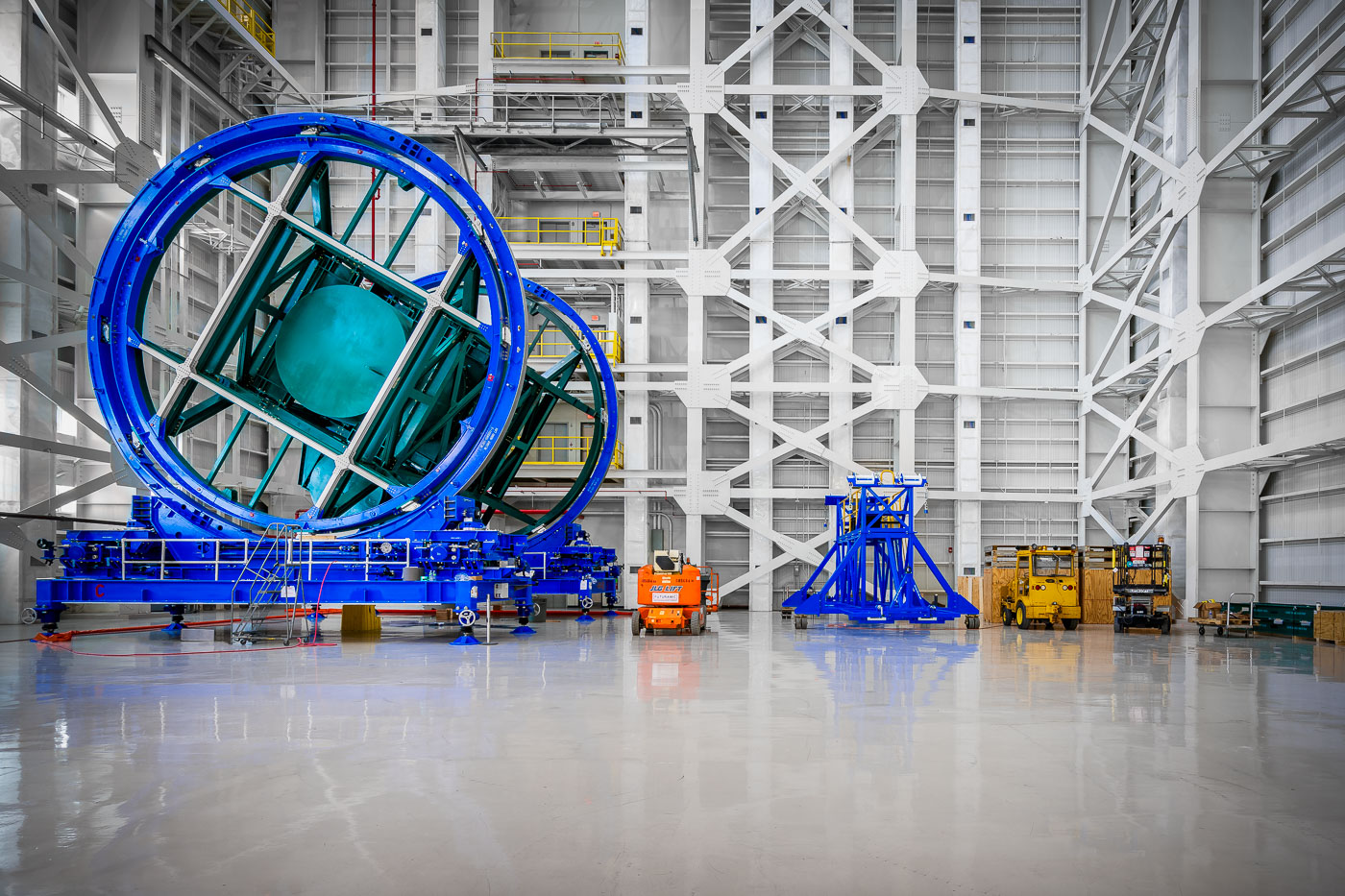
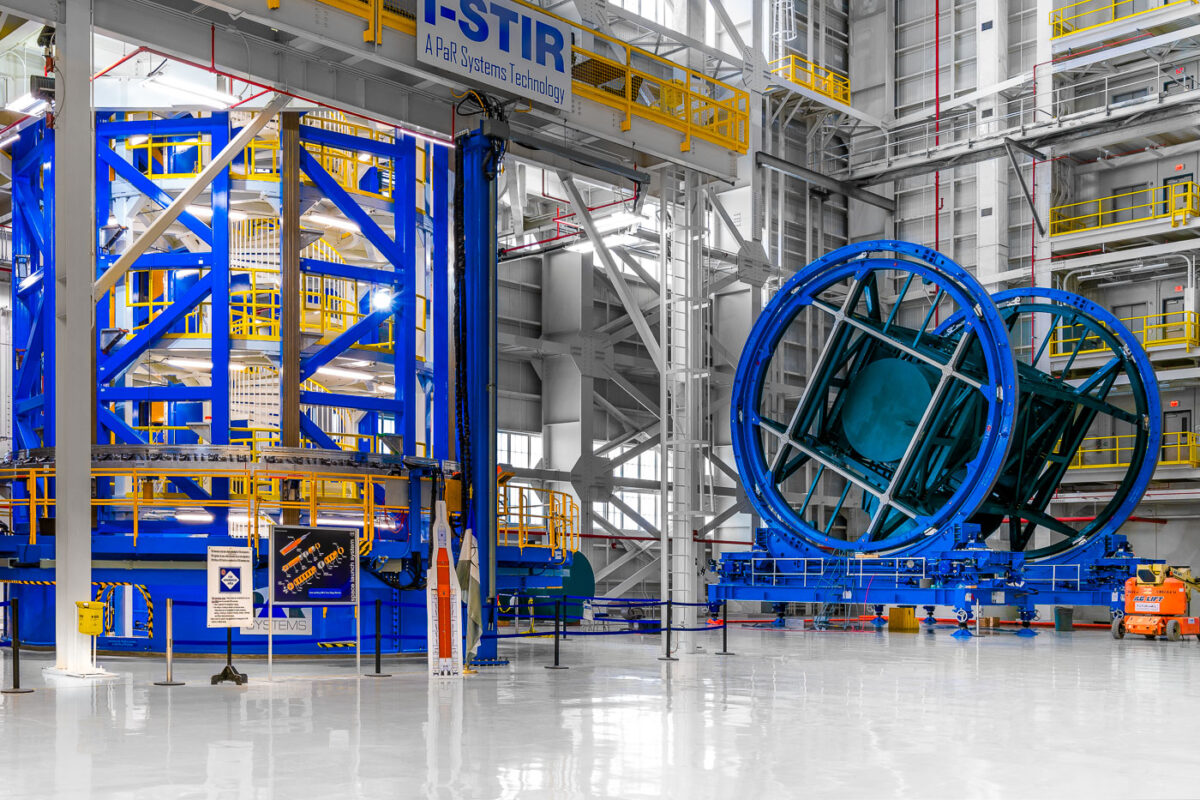
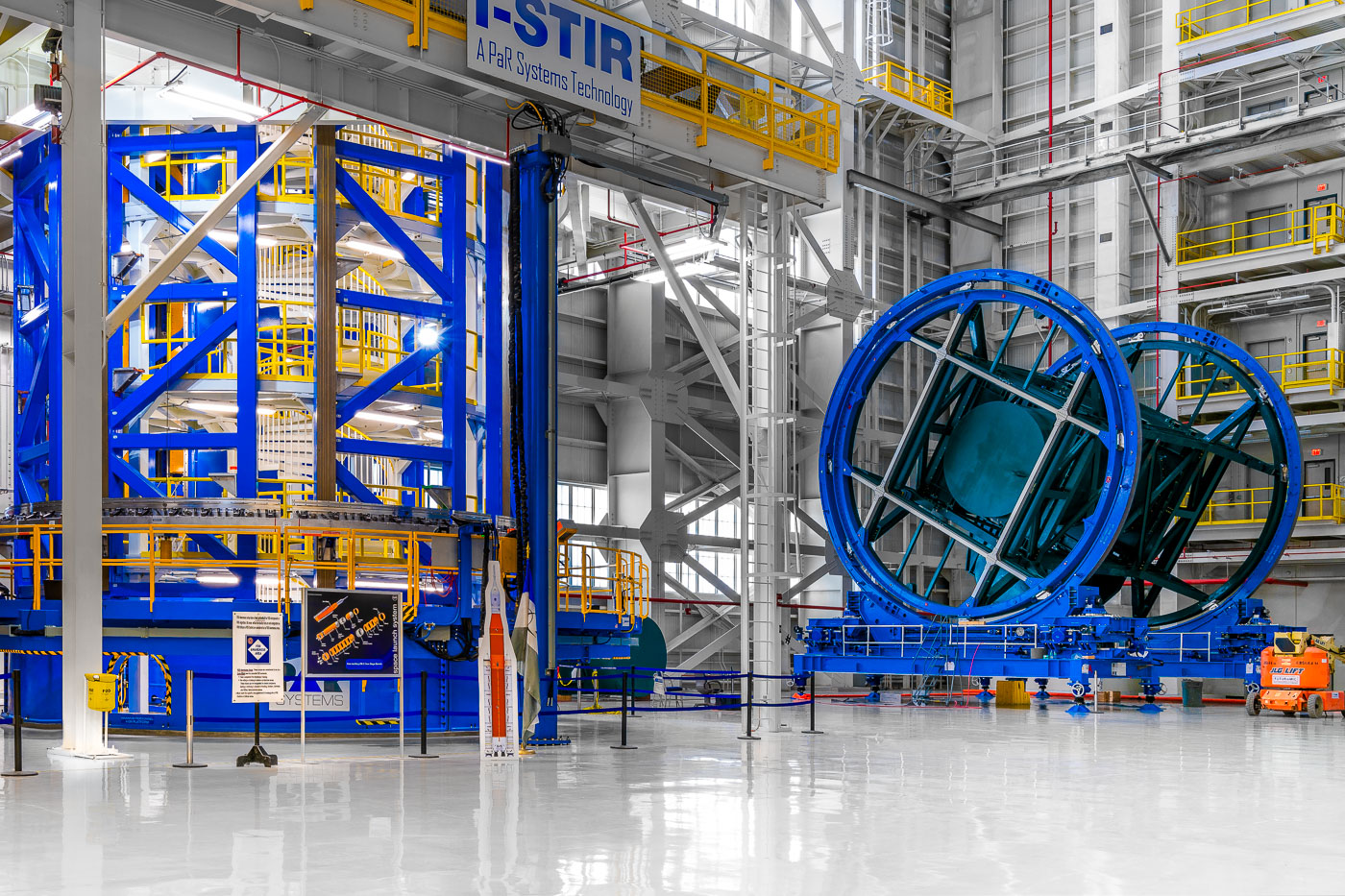
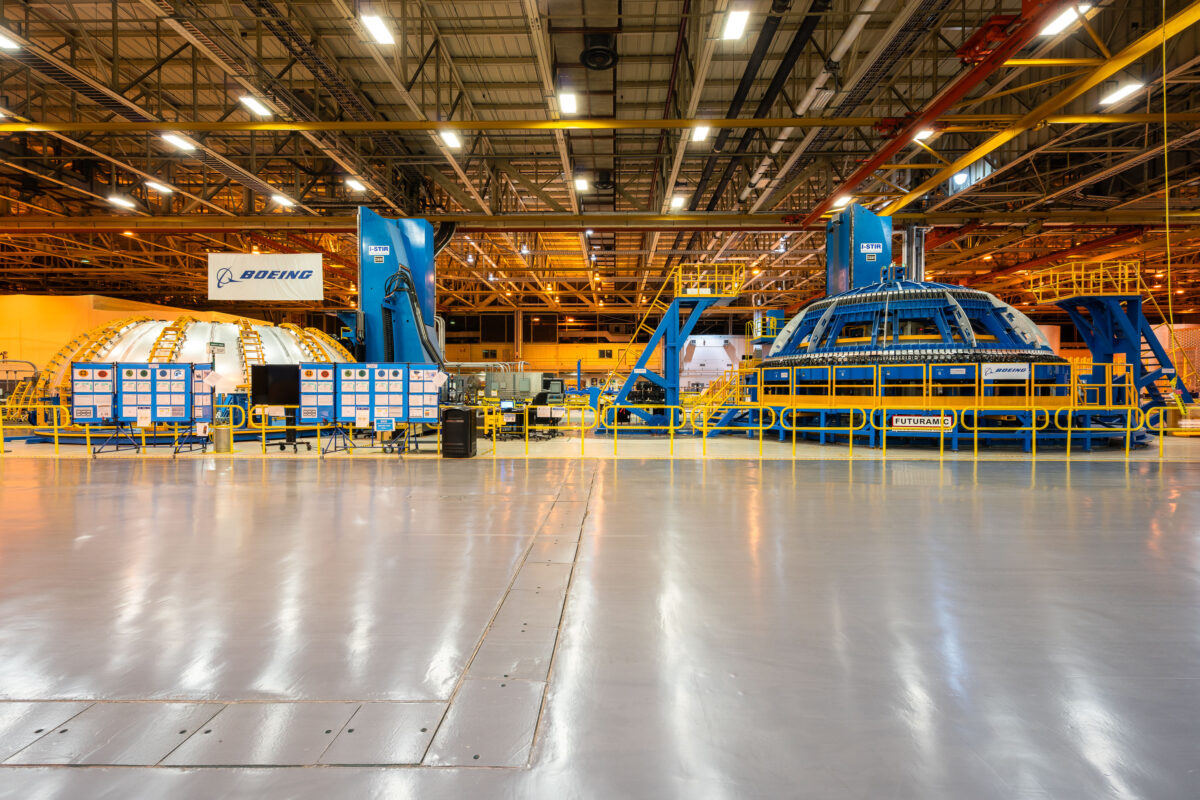
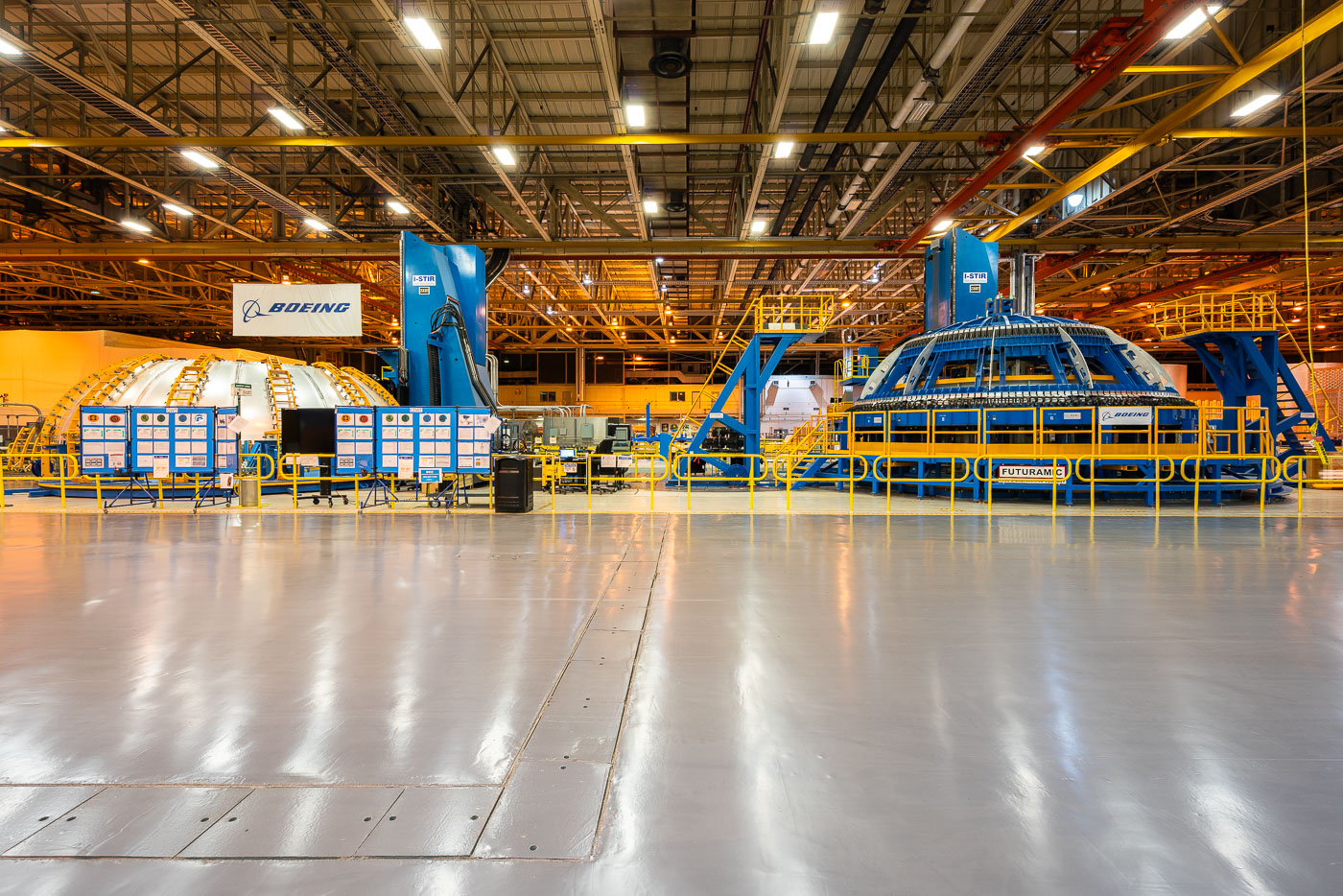
Boeing Dome Section on ISTIR Welder NASA Michoud
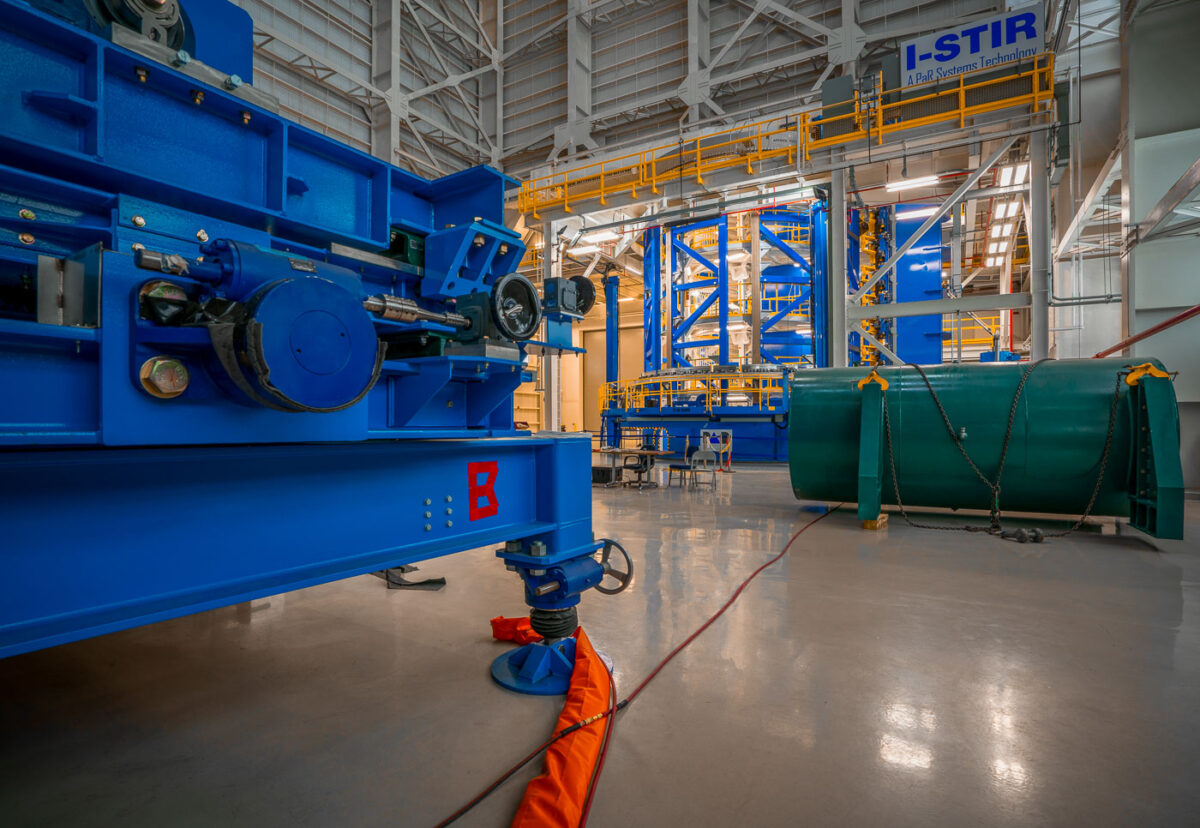
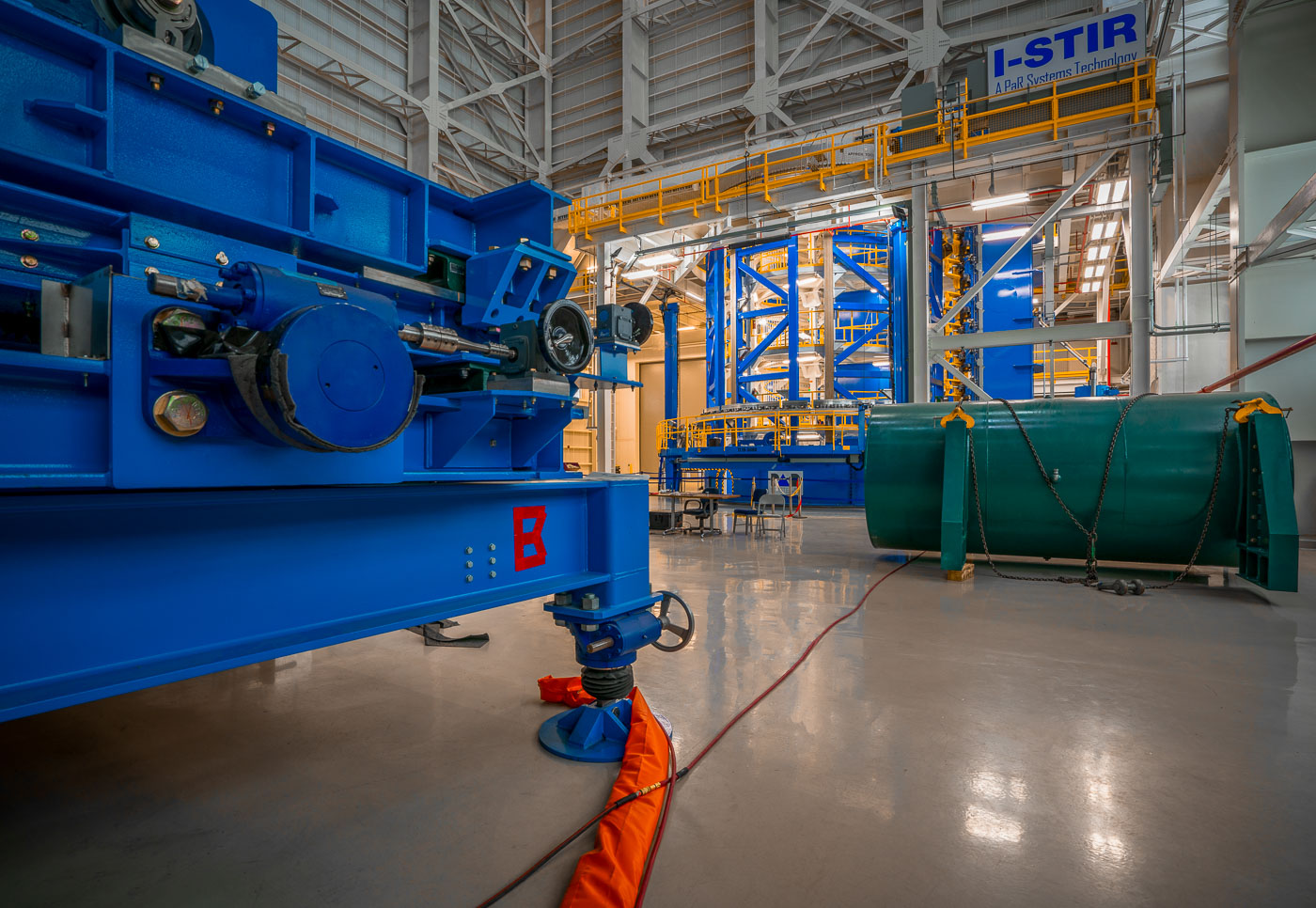
At NASA’s Michoud Assembly Facility in New Orleans, Louisiana, Boeing engineers operate a PAR Systems I-STIR Friction-Stir Welder. This specialized equipment is used to join massive aluminum dome sections, which are critical components for next-generation aerospace vehicles such as the Space Launch System (SLS) for the Artemis program. The friction-stir welding process forges metal under intense pressure and heat without melting it, producing welds with exceptional structural integrity for rocket fuel tanks and spacecraft pressure vessels. Michoud has a significant history in spaceflight hardware production, having previously manufactured components for the Saturn V rockets and Space Shuttle external tanks. The facility continues its role as a key national center for large-scale precision manufacturing and assembly of spaceflight hardware, supporting ongoing deep space exploration.

Futuramic Gore Weld Tool

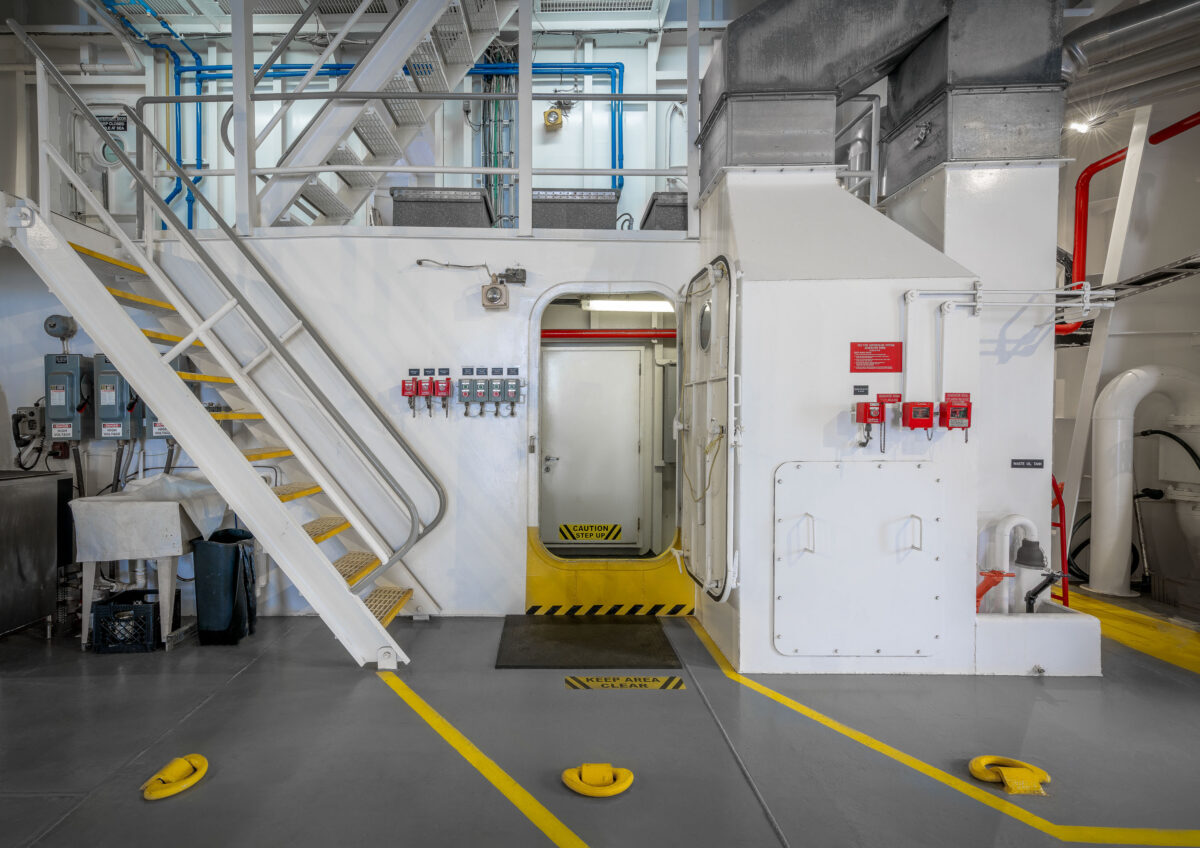
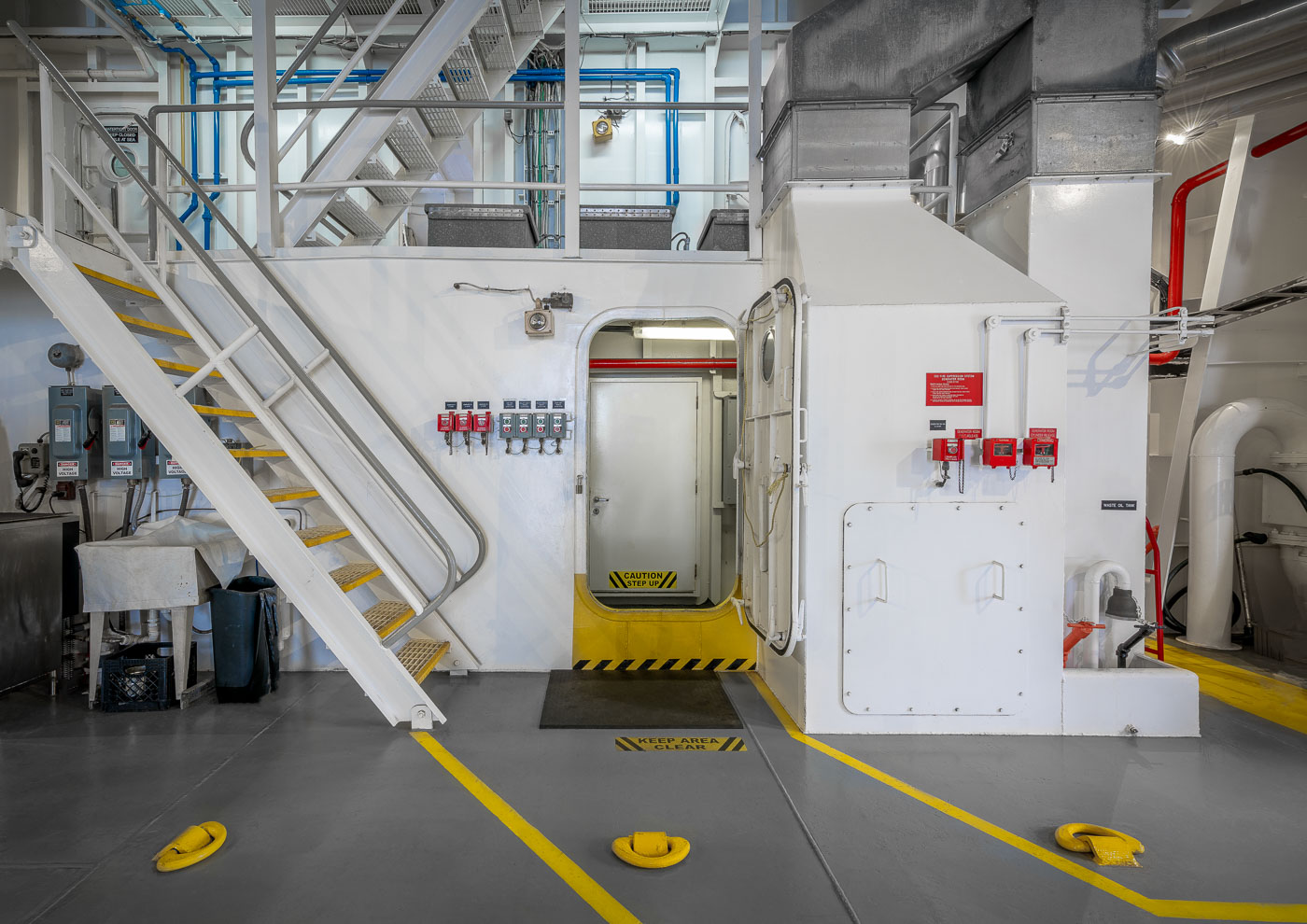
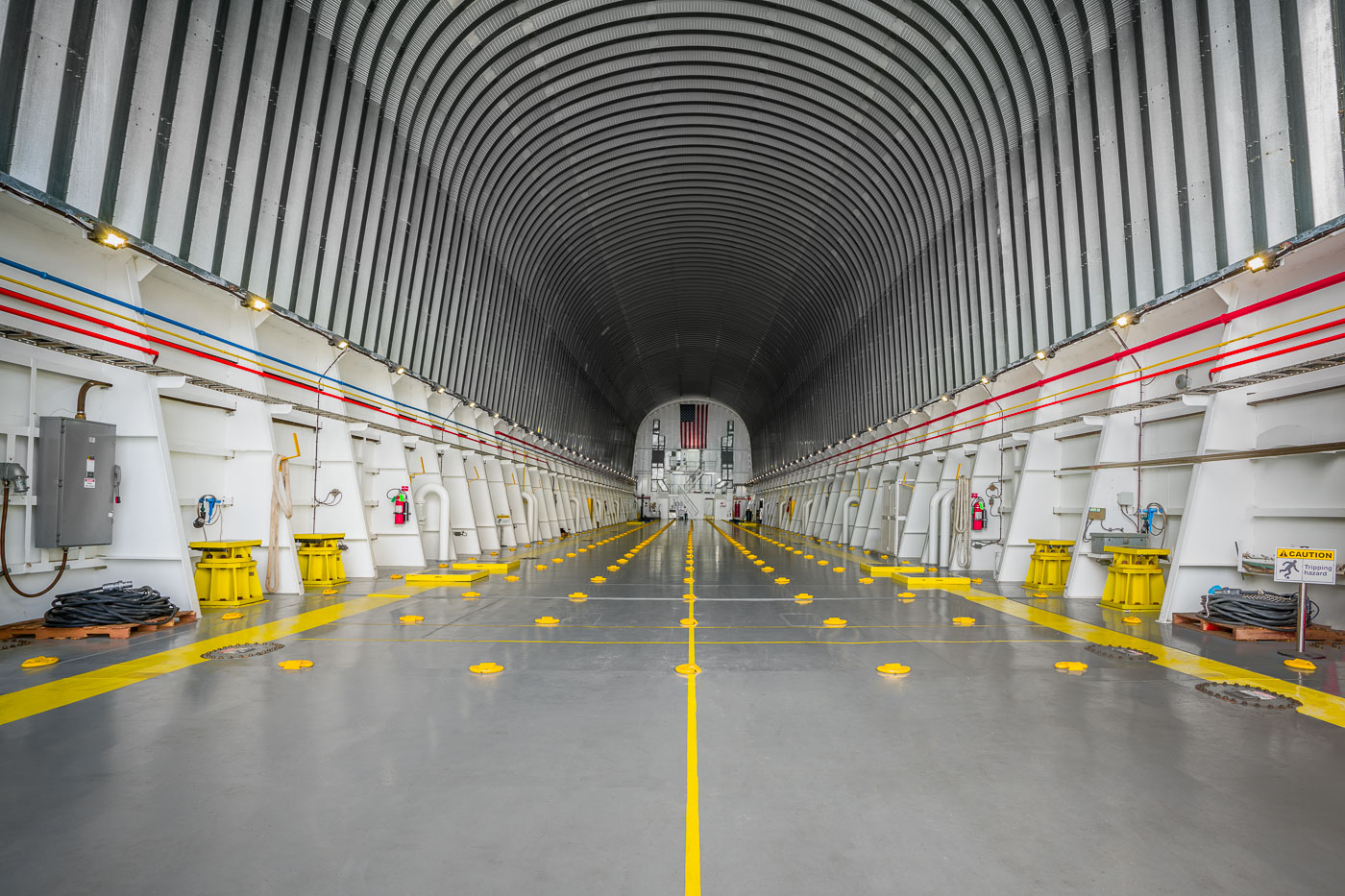
Inside the NASA Pegasus Barge in Lousiana
The interior of NASA's Pegasus barge, located at the Michoud Assembly Facility in New Orleans, Louisiana, reveals its industrial design. This specialized vessel is engineered to transport the massive core stage and Exploration Upper Stage of the Space Launch System (SLS). It moves these critical components from the Michoud Assembly Facility to other NASA centers, such as Kennedy Space Center in Florida, for testing and launch preparations. The barge's operation is fundamental to the Artemis program, supporting NASA's ongoing efforts to return humans to the Moon and advance deep space exploration.

NASA Pegasus Barge Interior, Michoud Assembly Facility
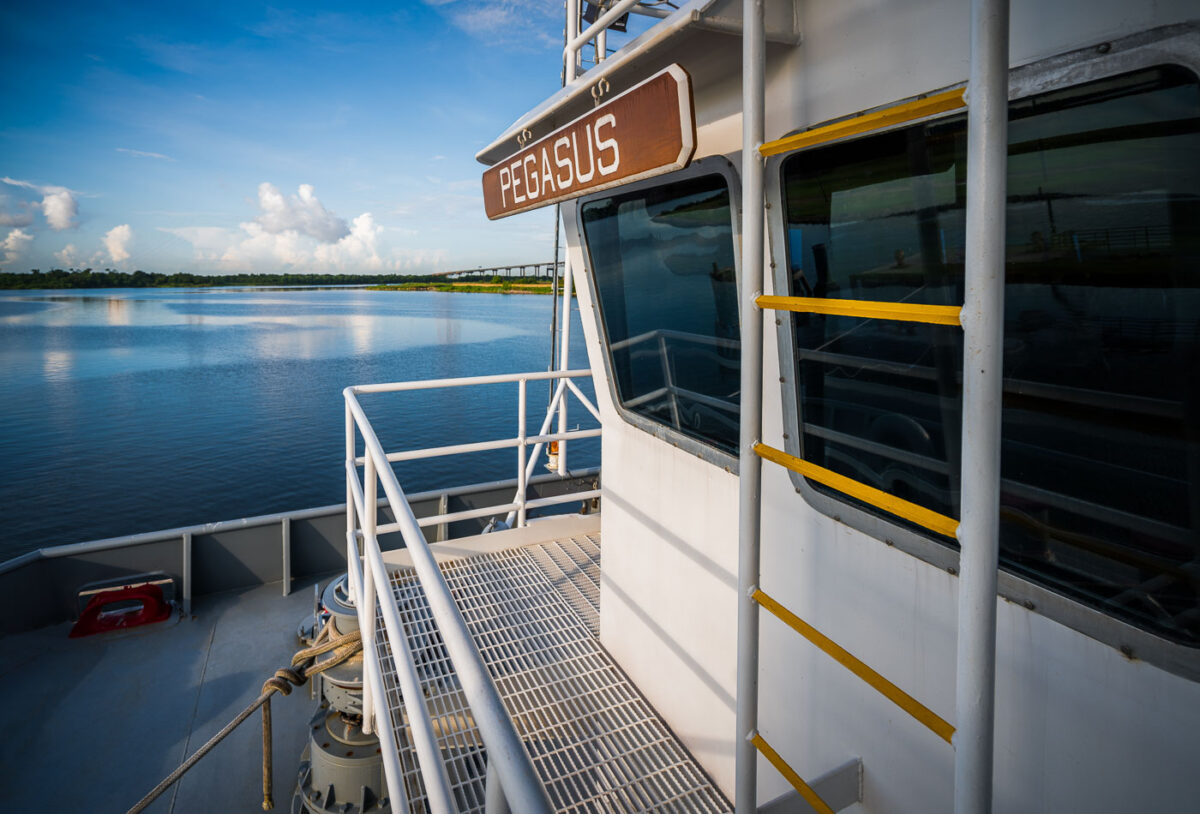
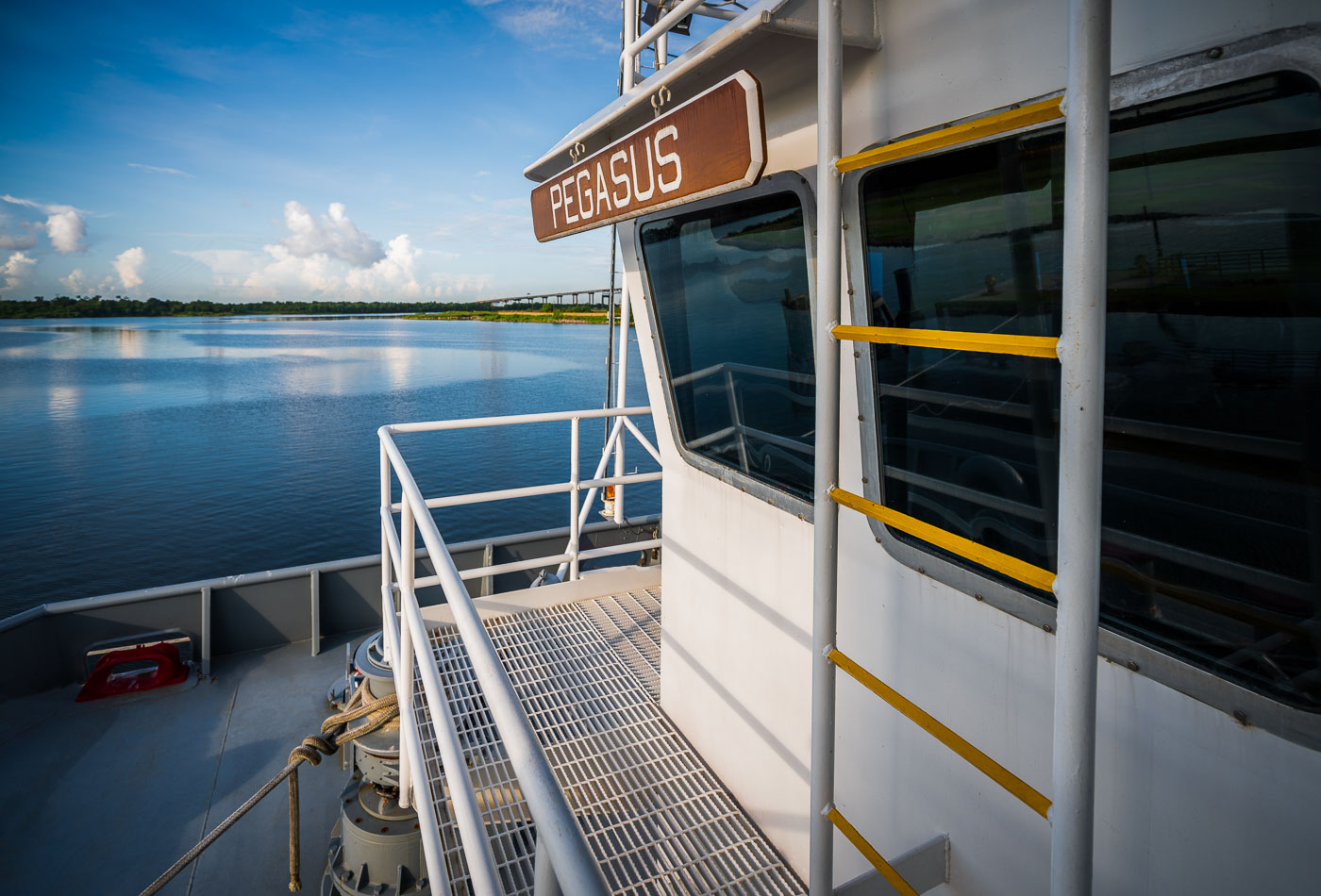
NASA Barge Pegasus on the Intracoastal Waterway
The NASA barge Pegasus is moored on the Intracoastal Waterway near New Orleans, Louisiana. Constructed in 1999, the vessel initially transported Space Shuttle external tanks from NASA Michoud Assembly Facility to Kennedy Space Center. It was later extended and modernized to accommodate the massive core stages of NASA’s Space Launch System (SLS). Operated by the U.S. Maritime Administration and NASA’s logistics teams, Pegasus serves as a vital link for Artemis missions, connecting Gulf Coast manufacturing with Florida launch operations.

NASA Barge Pegasus Moored on Intracoastal Waterway, LA
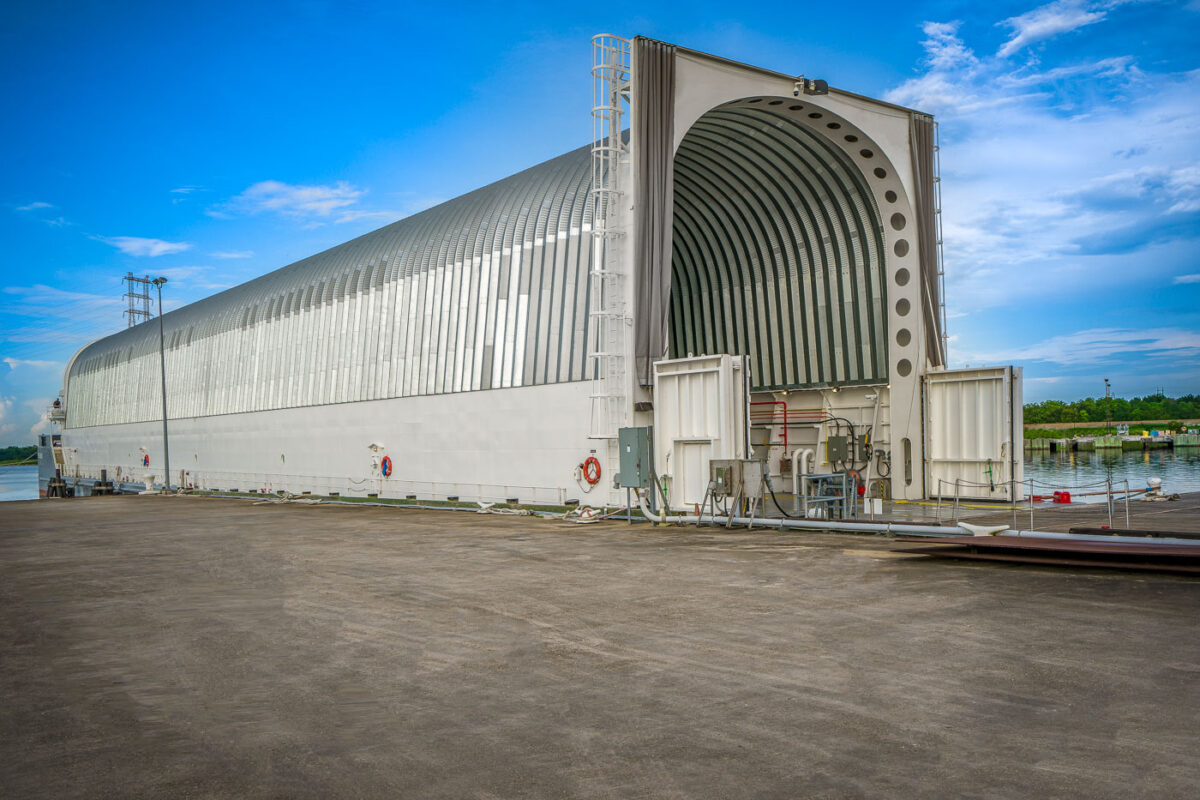
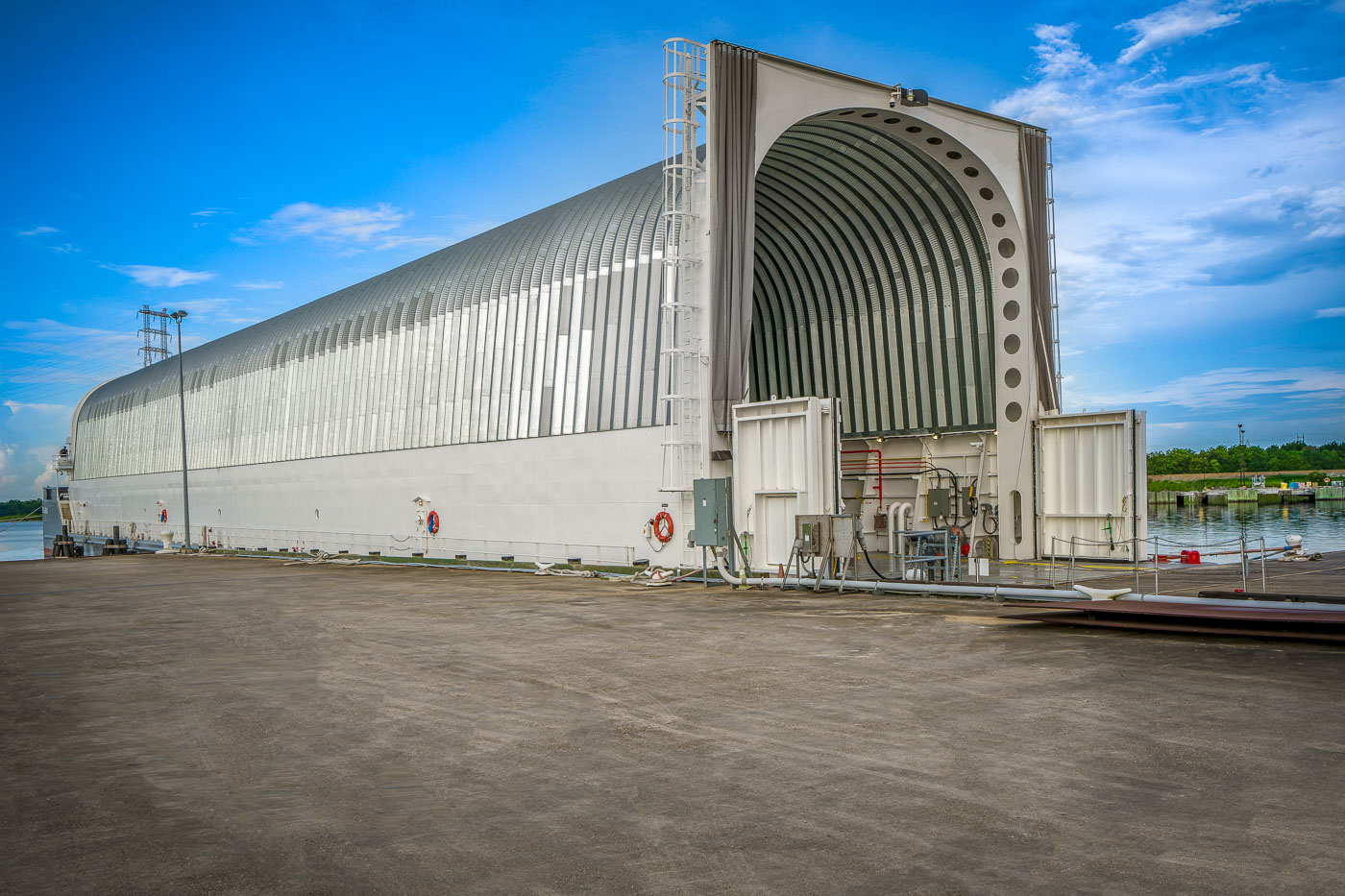
Exterior photo of NASAs Pegasus Barge at Michoud
The NASA transport barge Pegasus is moored at the Michoud Assembly Facility in New Orleans, Louisiana, a critical site for space vehicle manufacturing. This specialized vessel is engineered to transport the massive 212-foot-long core stages of the Space Launch System (SLS), featuring a climate-controlled cargo hold and a retractable bow door. Originally used for Space Shuttle external tanks, the Pegasus was extensively refitted and lengthened in 2014 to support NASA’s Artemis program. It now serves as a vital logistical link, moving rocket components from the Gulf Coast manufacturing site to the Kennedy Space Center in Florida.

NASA Barge Pegasus at Michoud Assembly Facility, Louisiana
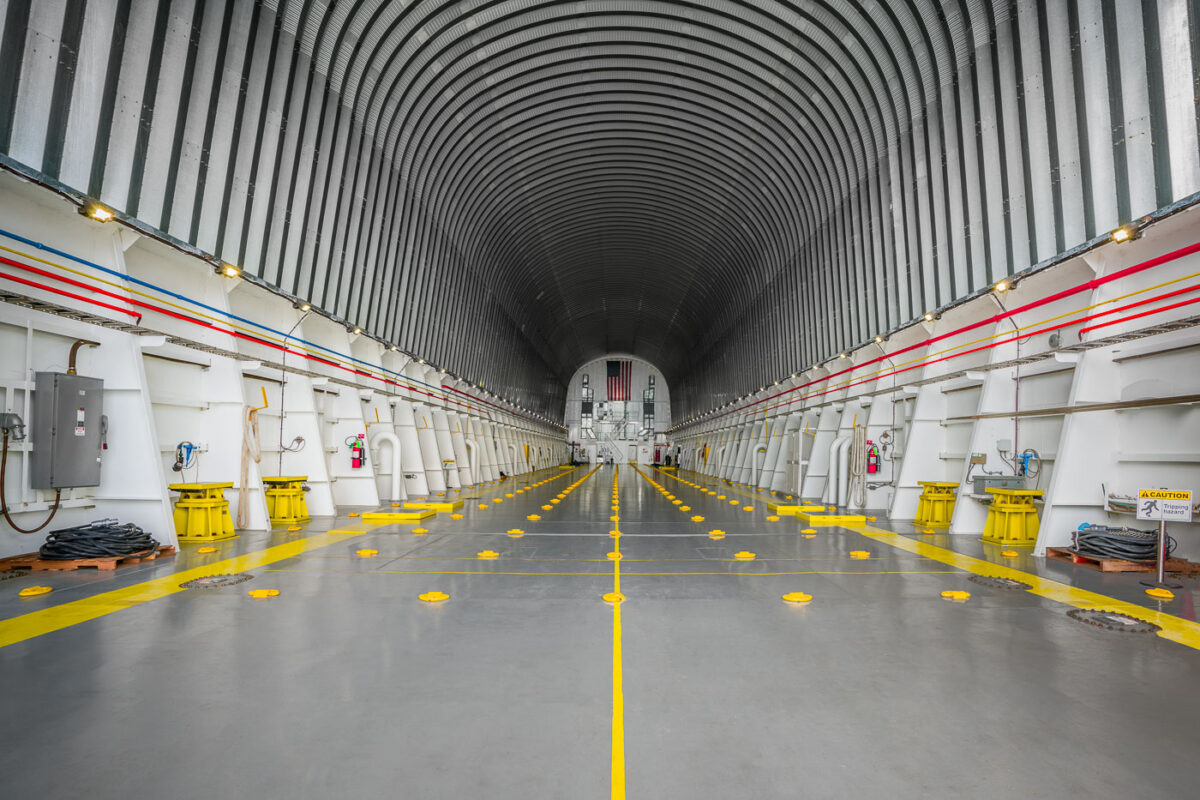
Inside look at NASA’s Pegasus Barge at Michoud Assembly
The cavernous cargo bay of NASA’s Pegasus barge is designed to transport Space Launch System (SLS) rocket stages from the Michoud Assembly Facility in New Orleans, Louisiana, to Kennedy Space Center in Florida. Its reinforced hull and climate-controlled enclosure protect sensitive rocket components from Gulf Coast humidity and salt exposure during the 900-mile transit. Originally constructed in 1999 for Space Shuttle external tanks, the Pegasus was lengthened and upgraded in 2014 to accommodate the larger core stages for the Artemis program. This specialized vessel remains a critical part of NASA’s logistics infrastructure, facilitating the movement of vital spaceflight hardware.

NASA Pegasus Barge Empty Cargo Bay for SLS
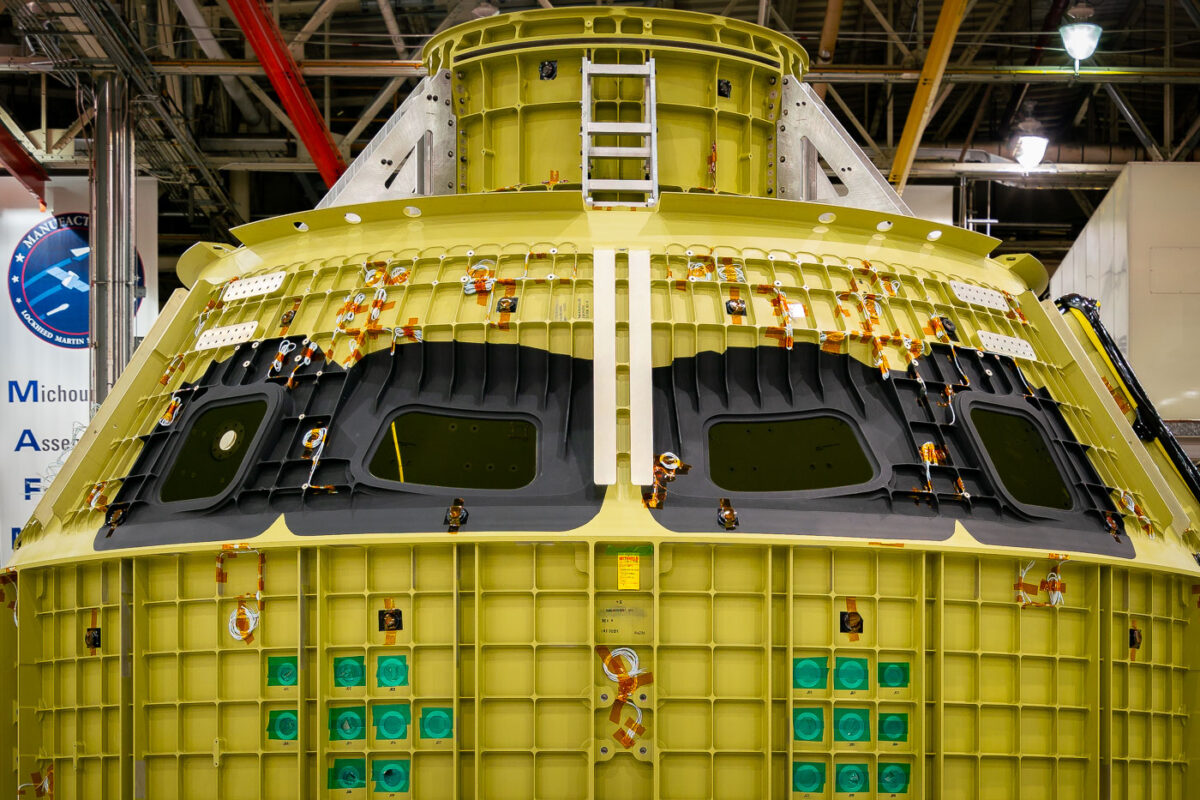
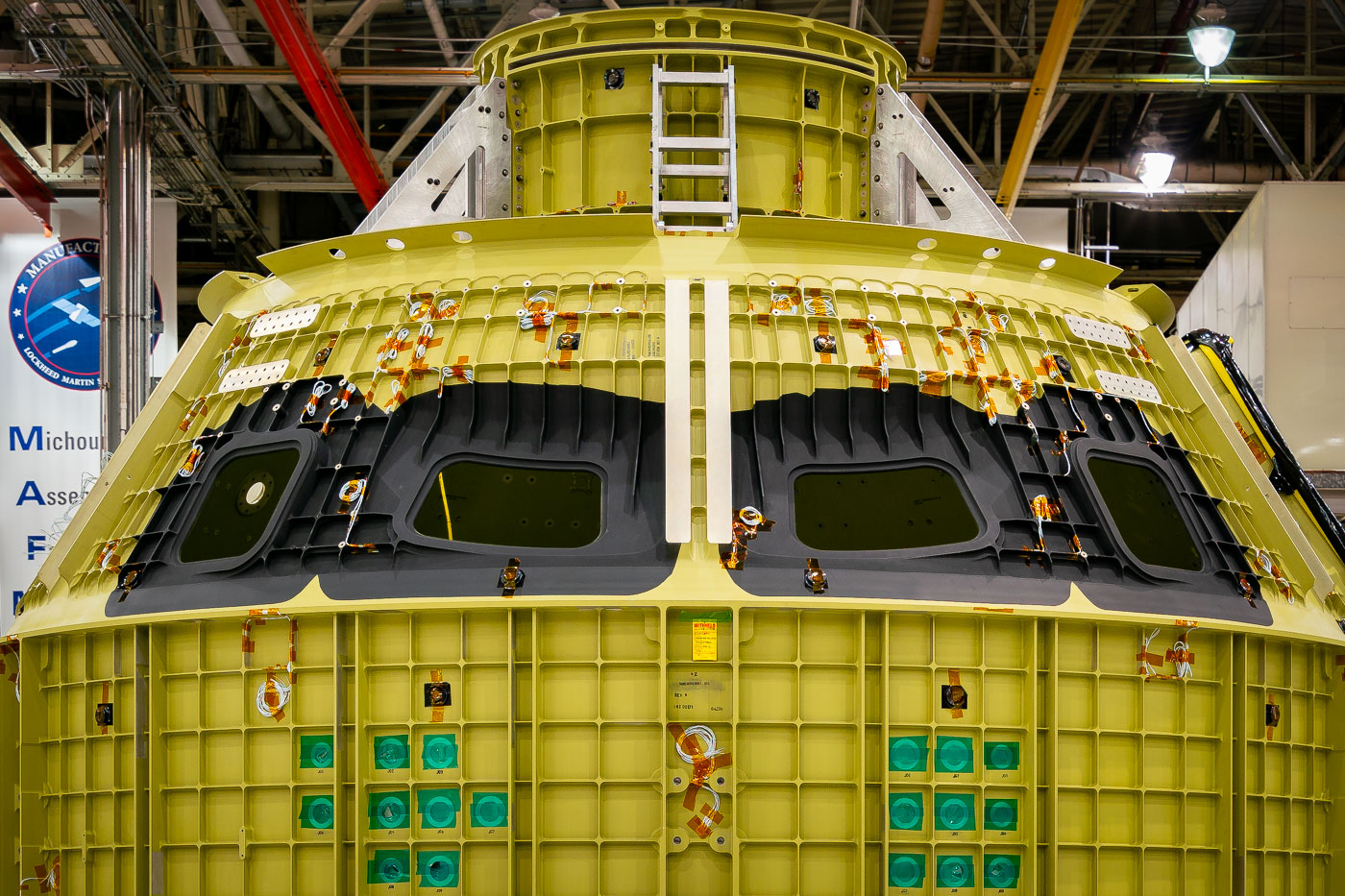
Artemis II crew module being built at NASA Michoud
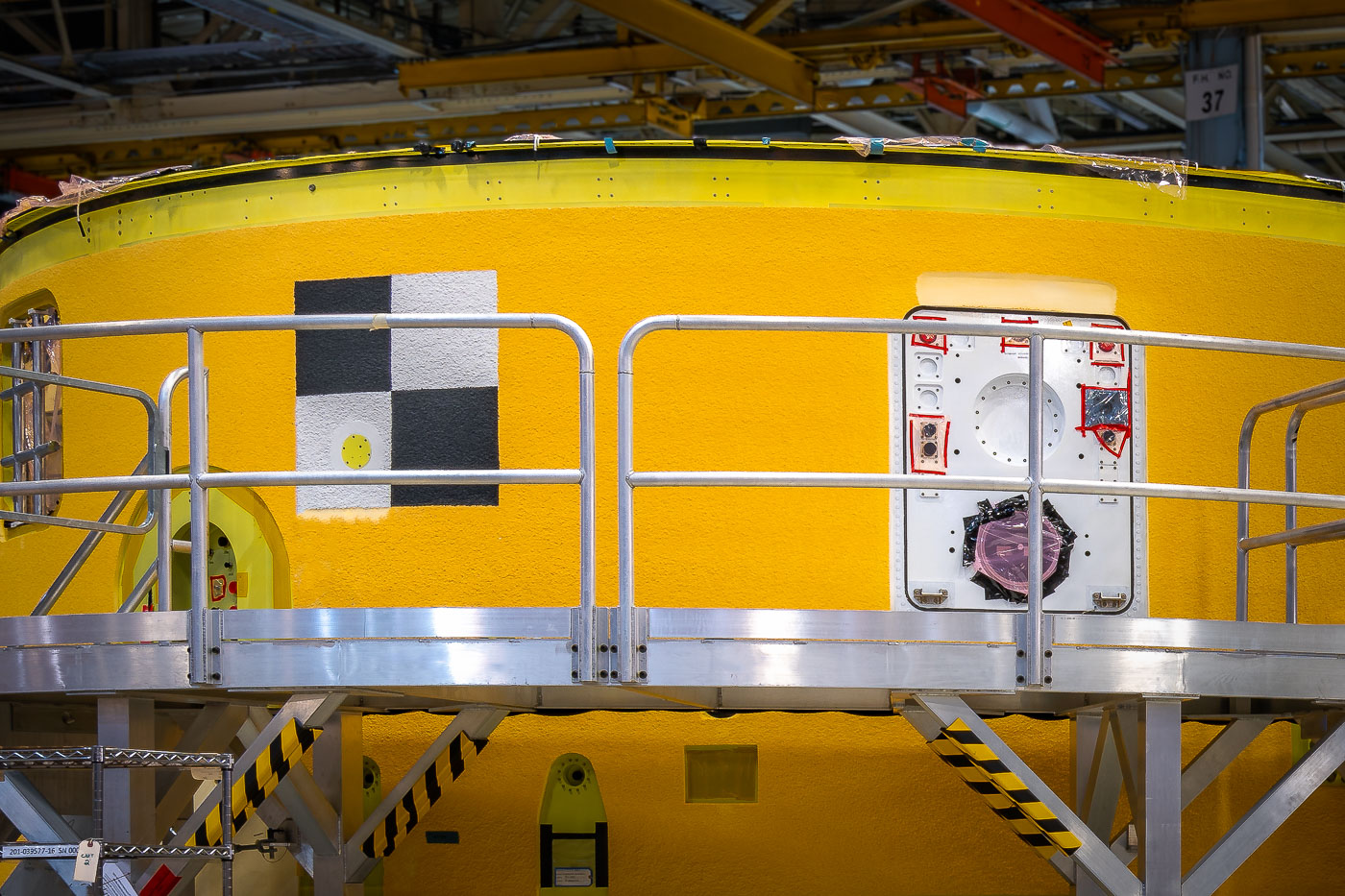
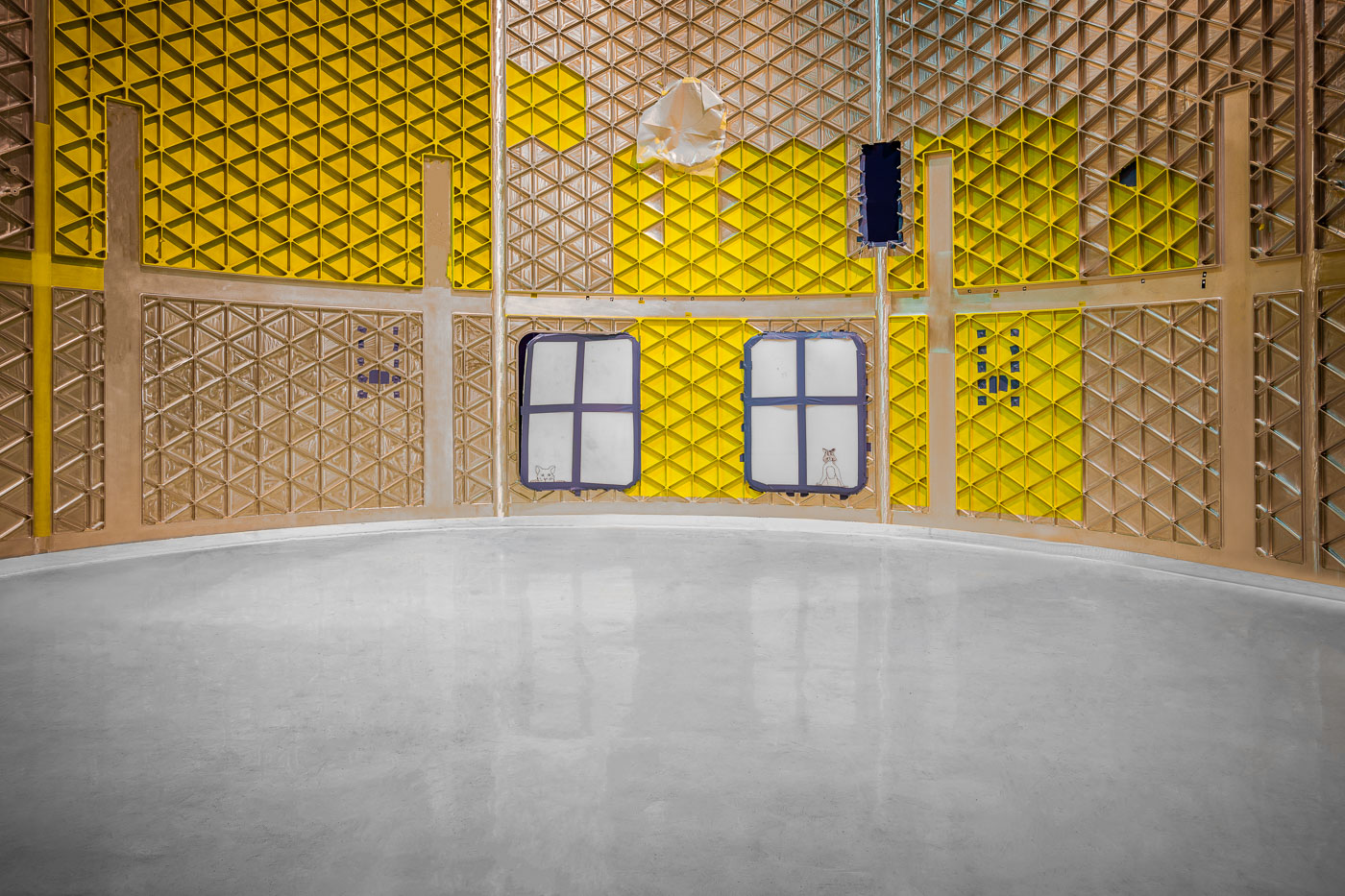
The Orion crew module is shown during its assembly at NASA’s Michoud Assembly Facility in New Orleans, Louisiana. This critical pressure vessel, constructed by Lockheed Martin, serves as the core structure for the spacecraft that will transport astronauts on future Artemis missions to the Moon and deep space. Its robust aluminum-lithium frame is precision-welded to withstand the extreme forces of launch and space travel, while the distinct black sections mark the locations for crew window openings. Following assembly and rigorous testing at Michoud, each unit is shipped to the Kennedy Space Center for integration with the European Service Module and the powerful Space Launch System rocket.

Orion Crew Module Mid-Assembly at NASA Michoud
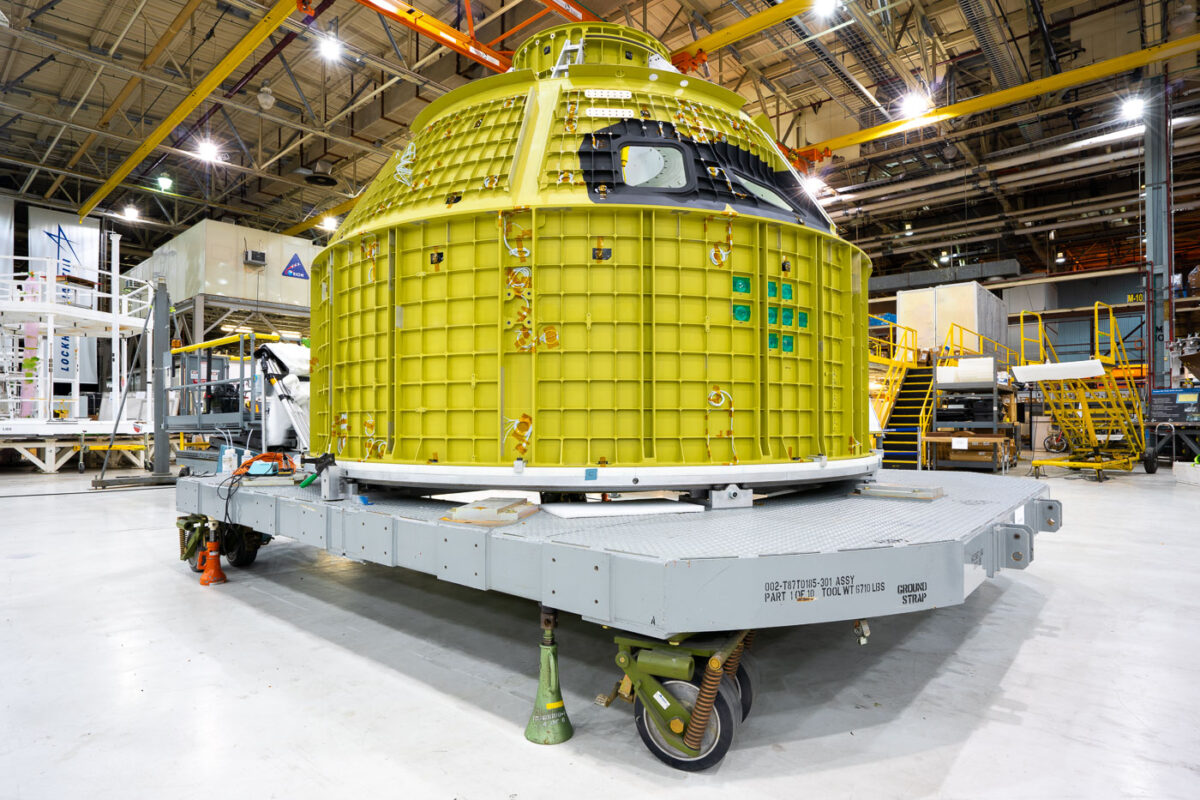
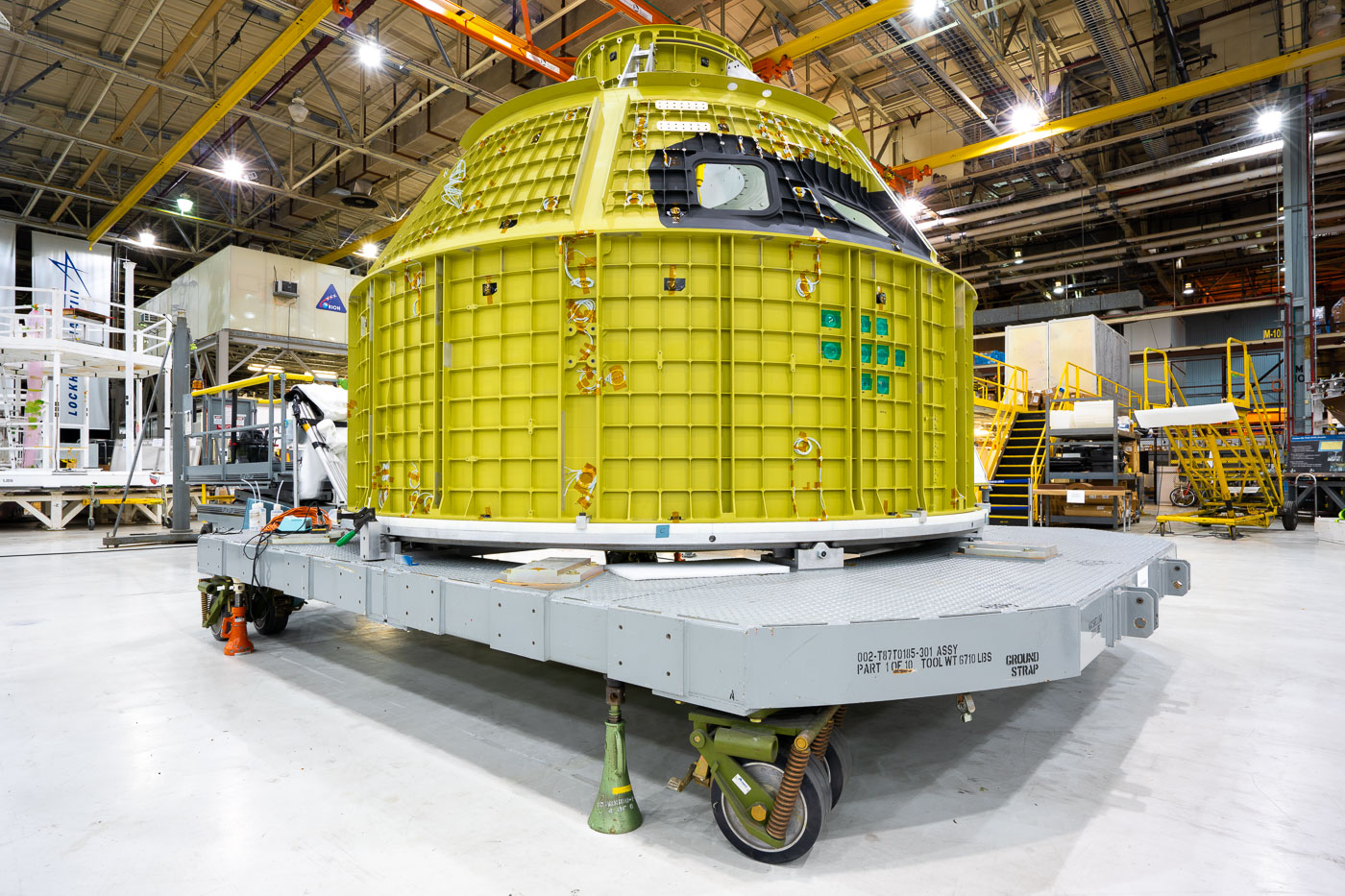
Artemis II Orion Spacecraft at NASA Assembly Facility
The Orion spacecraft's crew module, painted in primer yellow, rests on a transport platform at NASA's Michoud Assembly Facility in New Orleans, Louisiana. This Lockheed Martin-built pressure vessel serves as the primary structure designed to house astronauts during the Artemis missions to the Moon. Its robust aluminum-lithium frame is engineered to withstand the intense forces of launch and the harsh conditions of deep space. Michoud, a site with a significant history in aerospace manufacturing, conducts precision assembly and testing of each module before its shipment to Kennedy Space Center for outfitting and integration with the Space Launch System rocket.

Orion Crew Module in Primer at NASA Michoud Assembly Facility
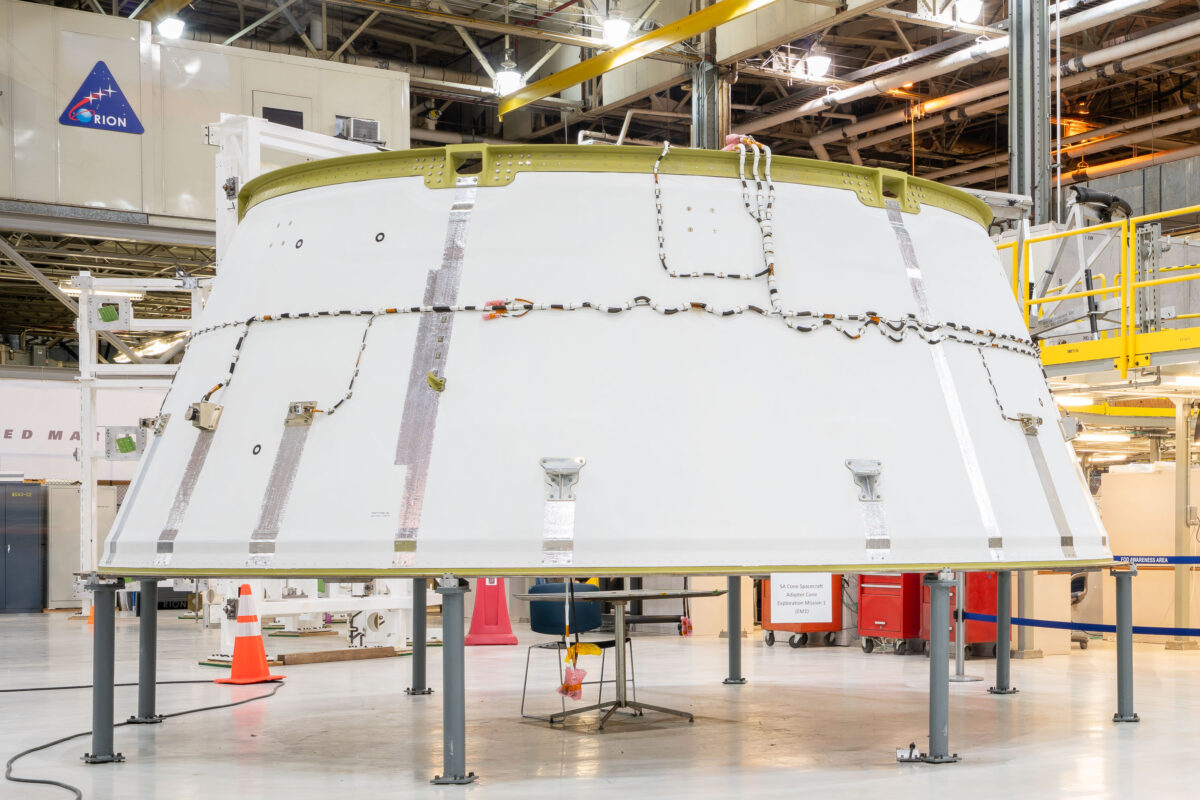
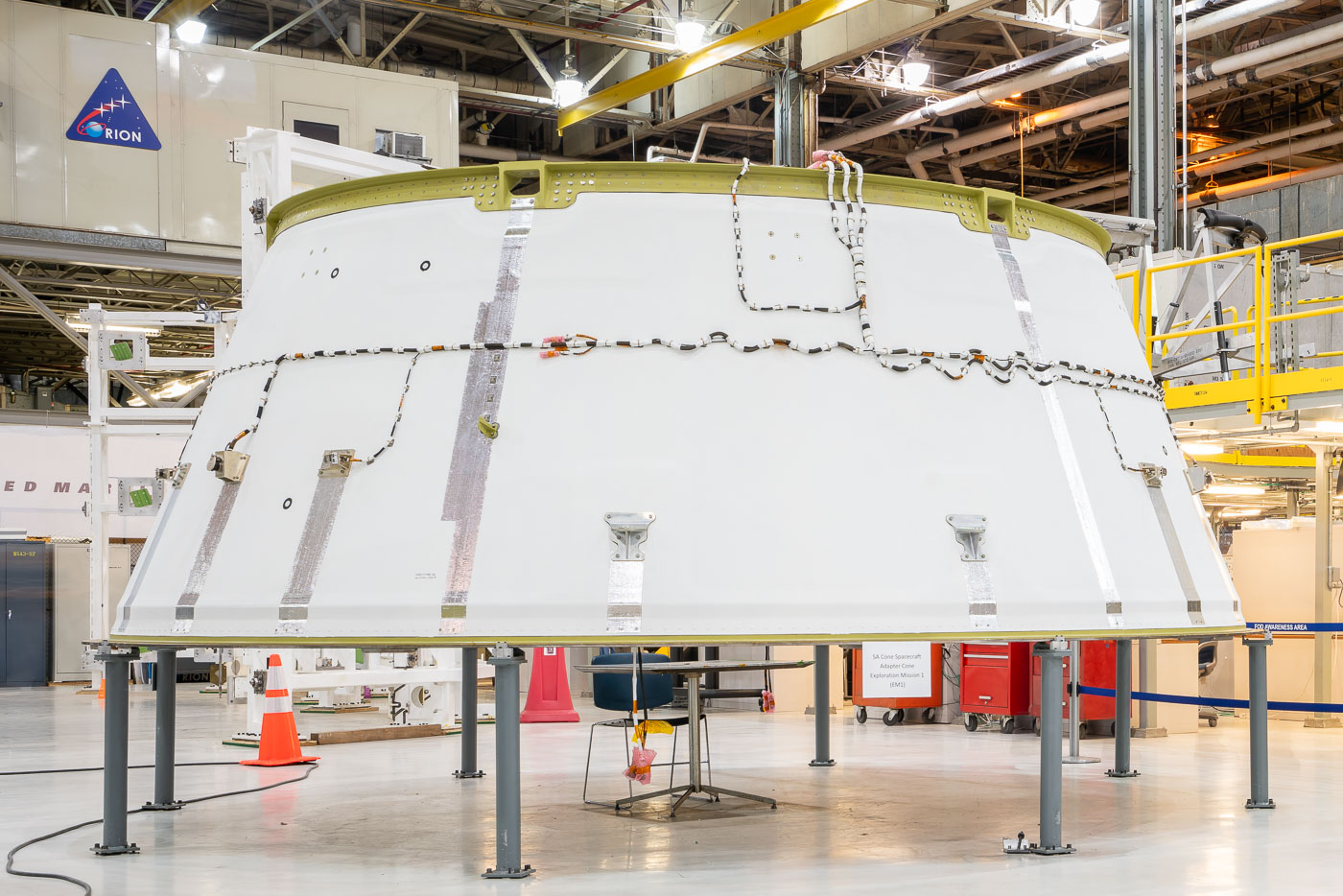
Artemis 1 Adaptor Cone at Michoud Assembly Facility
The Spacecraft Adapter Cone for NASA’s Orion Exploration Mission-1 (EM-1) undergoes assembly at the NASA Michoud Assembly Facility in Louisiana. This conical structure is engineered to connect the Orion crew and service modules to the Space Launch System (SLS) rocket, housing essential components like separation hardware and wiring harnesses. Constructed from reinforced aluminum, it features thermal protection areas, structural attachment brackets, and integrated circuitry for communication and control. EM-1, later designated Artemis I, served as a crucial uncrewed test flight to assess Orion’s deep-space capabilities, paving the way for future crewed lunar missions.

Orion EM-1 Spacecraft Adapter Cone Assembly, Michoud Facility
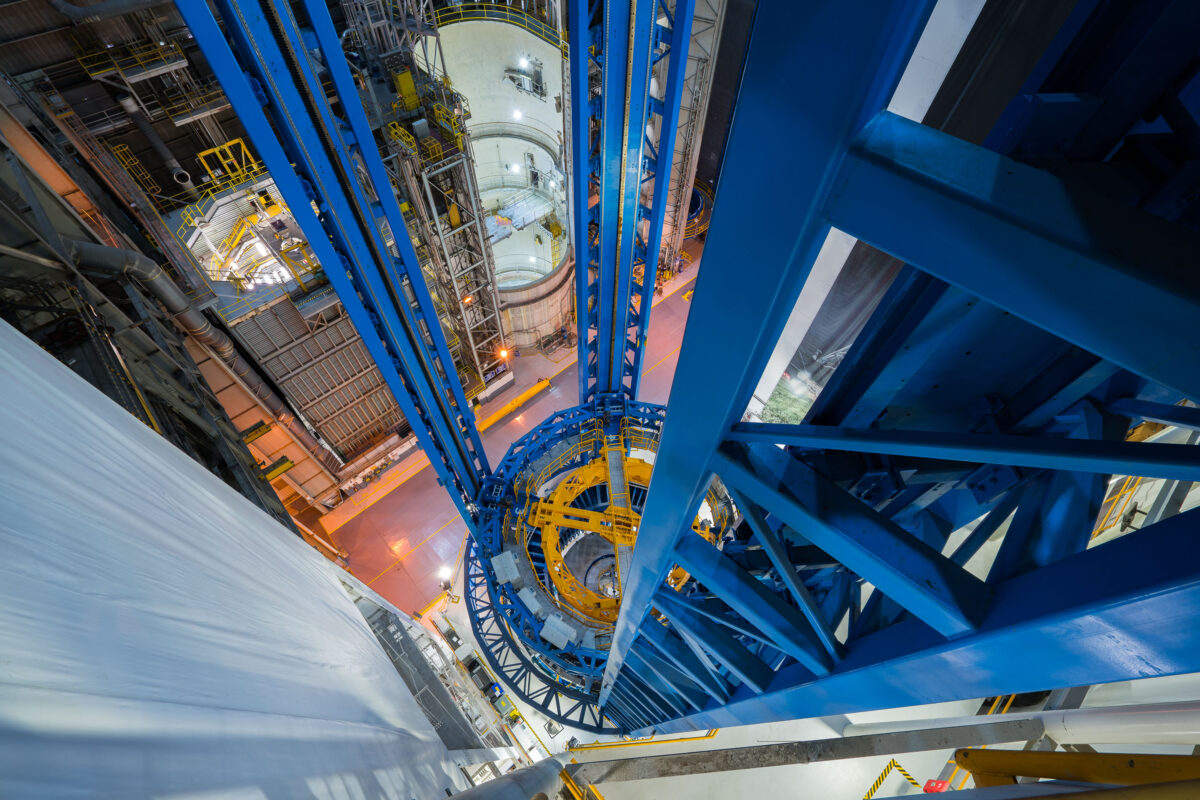
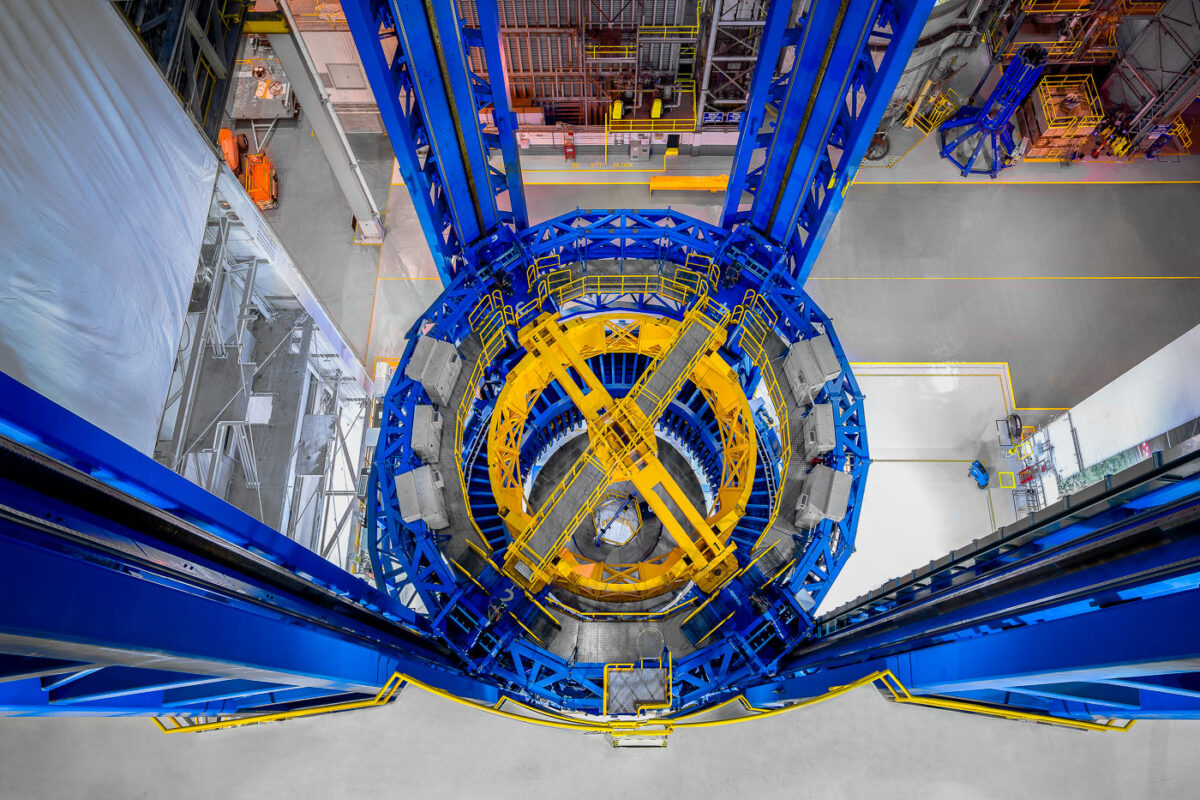
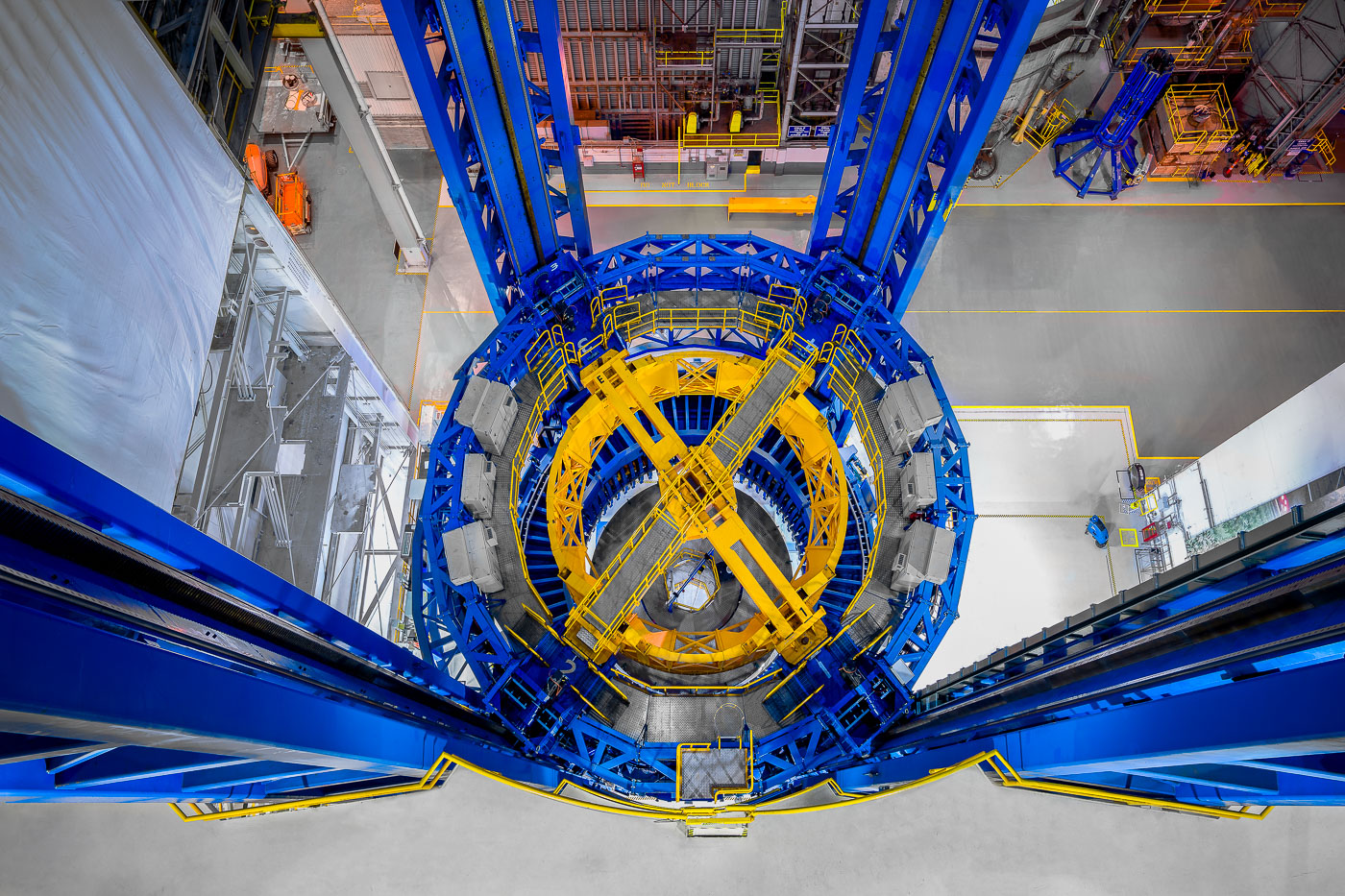
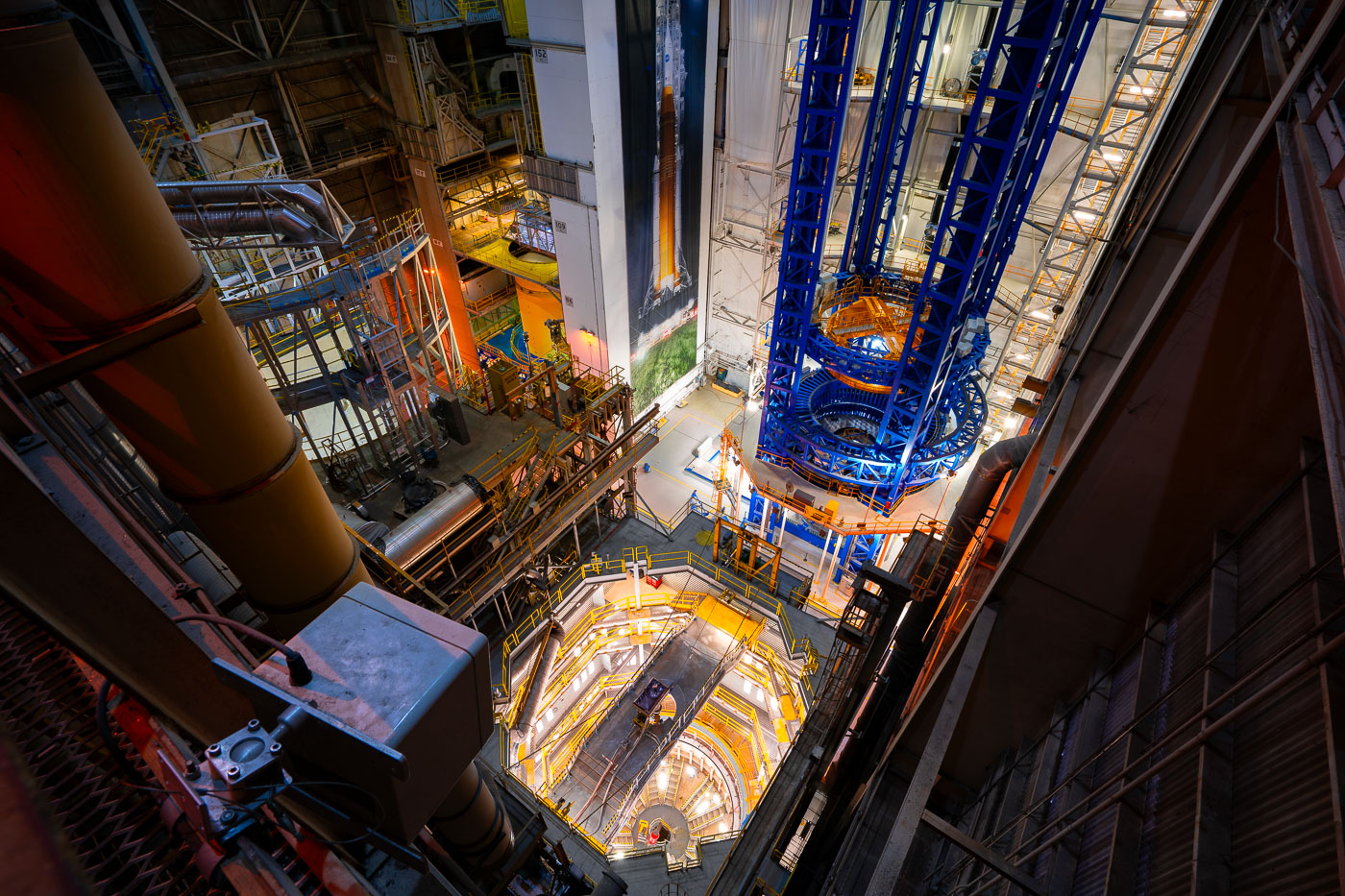
Top down view of the Vertical Assembly Facility
The Vertical Assembly Center at NASA’s Michoud Assembly Facility in New Orleans, Louisiana, is a critical piece of infrastructure for space exploration. This 170-foot-tall blue structure is engineered to precisely align and weld large sections of the Space Launch System (SLS) core stage. The SLS core stage serves as the primary rocket for NASA's Artemis missions, which aim to return humans to the Moon and prepare for future deep space travel. The facility plays a central role in the production of these powerful launch vehicles, supporting the nation's ongoing space endeavors.

NASA Michoud: SLS Core Stage Vertical Assembly Center
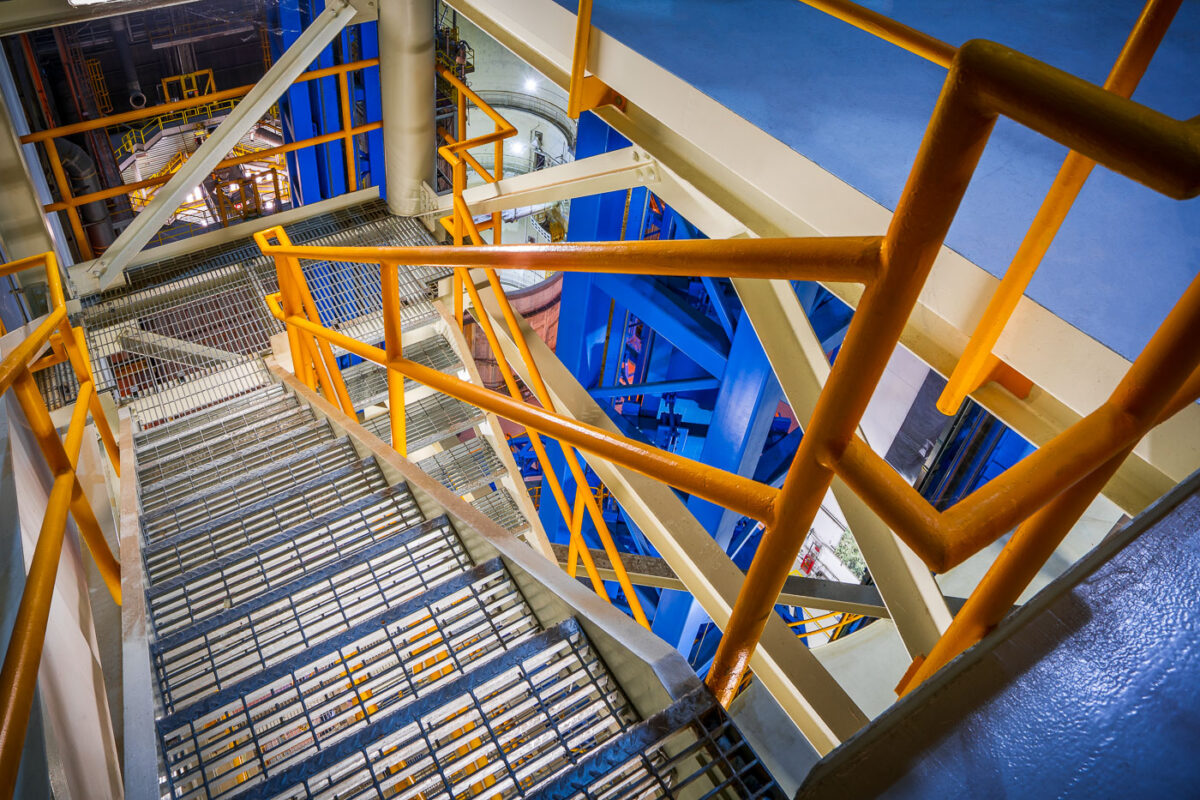
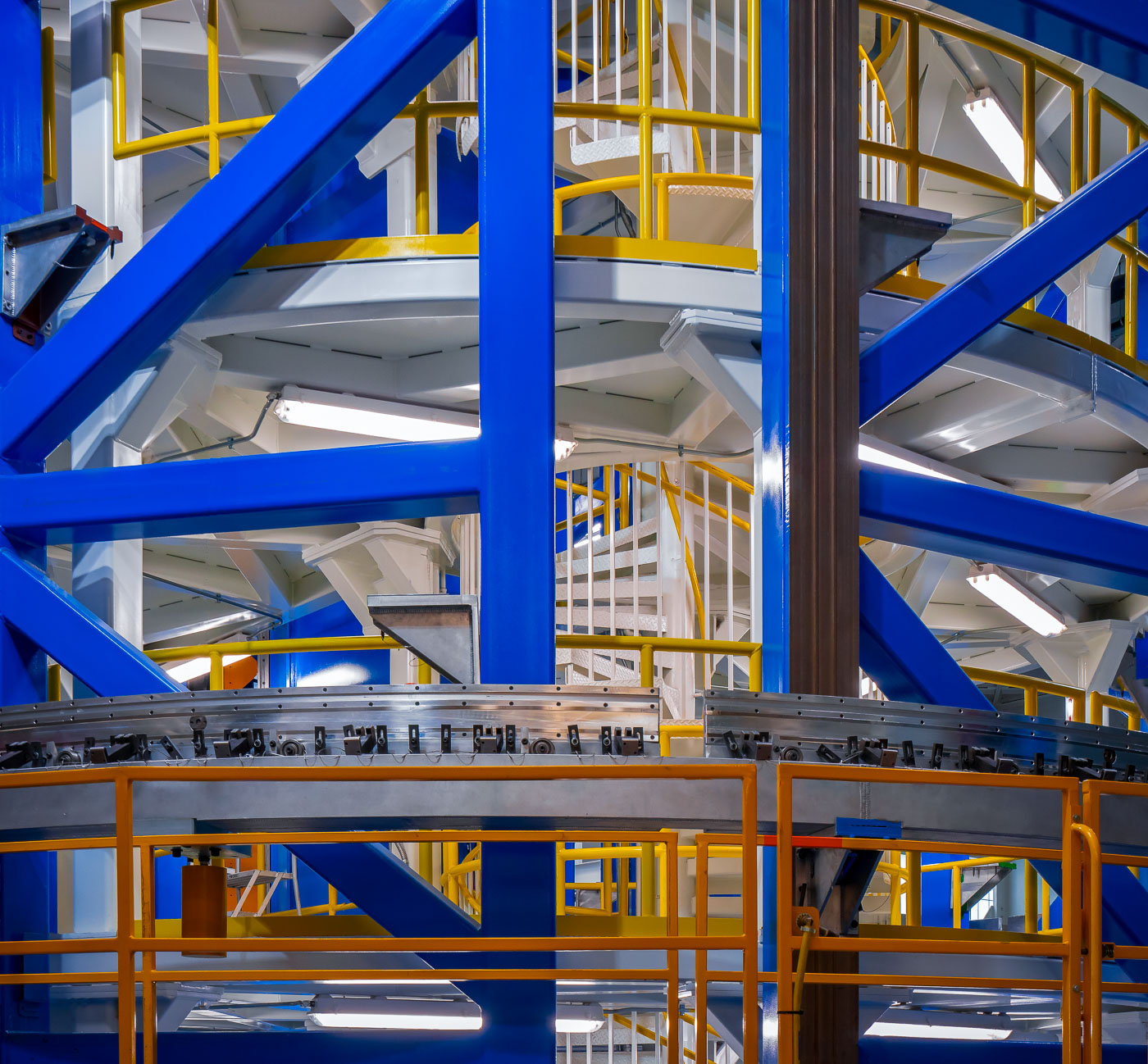
Stairwell Inside NASA’s Vertical Assembly Center
A stairwell provides access within NASA’s Vertical Assembly Center at the Michoud Assembly Facility in New Orleans, Louisiana. This industrial structure, characterized by its orange and blue framework, serves the 170-foot-tall welding system critical for assembling core stages of the Space Launch System (SLS). The facility is a cornerstone for precision manufacturing, directly supporting the Artemis program's development of heavy-lift rockets for deep space exploration.

Industrial Stairwell, NASA Michoud Vertical Assembly Center

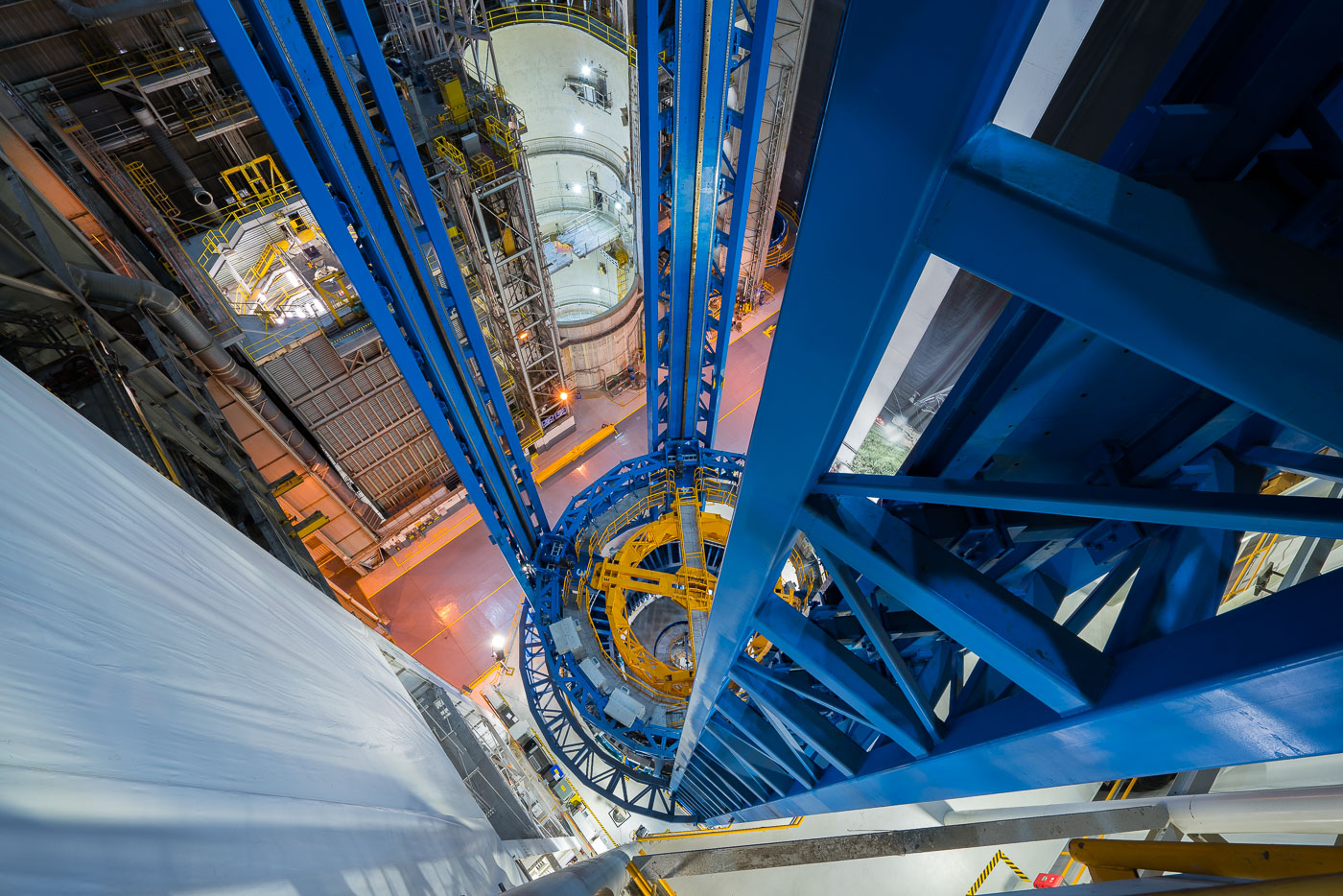
View Down the Vertical Assembly Center at NASA Michoud
The Vertical Assembly Center at NASA’s Michoud Assembly Facility in New Orleans, Louisiana, is a critical component in the production of space launch vehicles. This towering blue and yellow structure precisely aligns and friction-stir welds massive aluminum sections, forming the core stages of the Space Launch System (SLS). The SLS core stage is a foundational element of NASA’s Artemis program, designed to return humans to the Moon and support future deep-space exploration. Michoud Assembly Facility has a rich history in aerospace manufacturing, having produced components for the Apollo and Space Shuttle programs before its current role in the Artemis missions.

NASA Michoud: SLS Core Stage Vertical Assembly Center
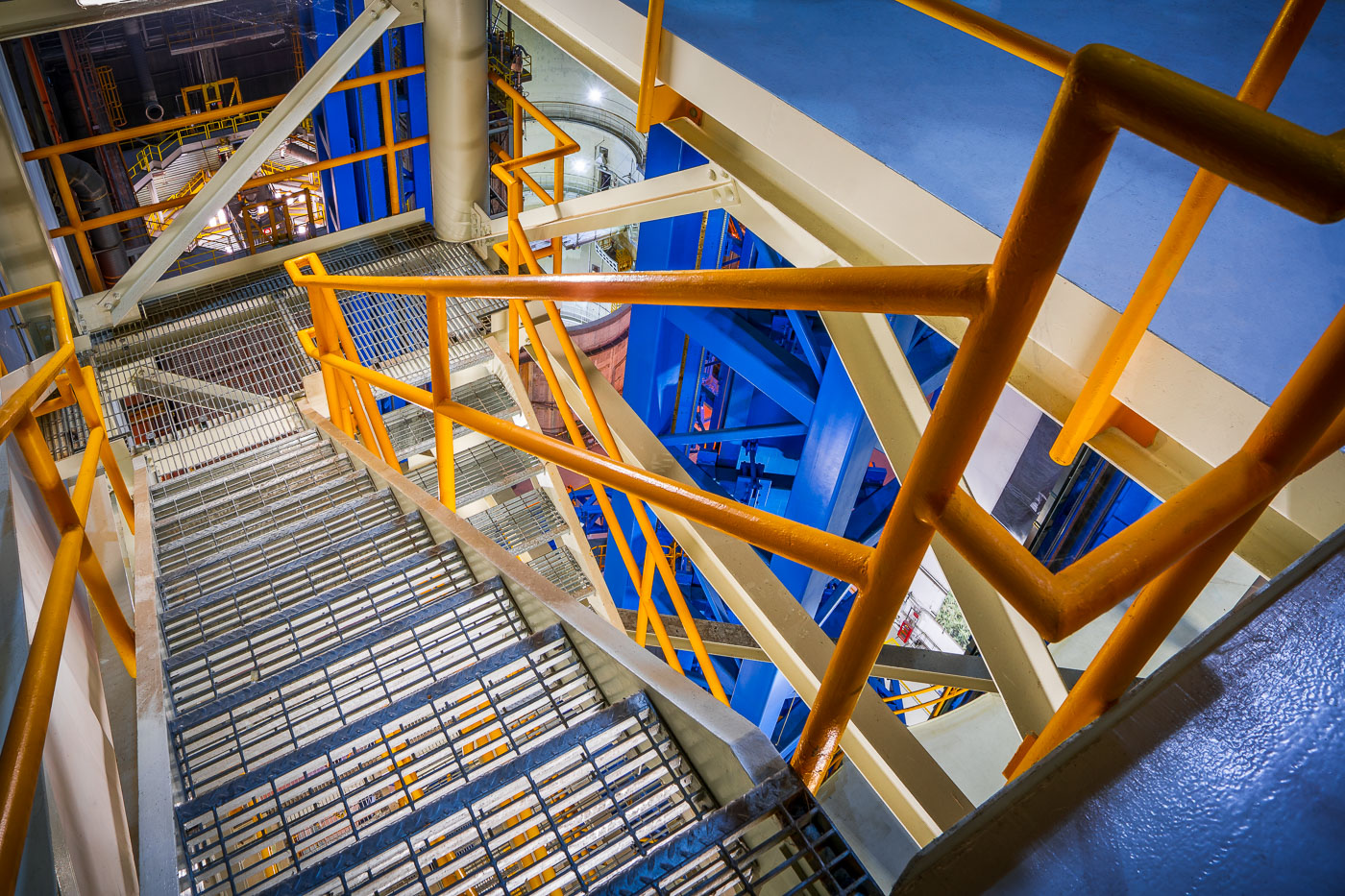
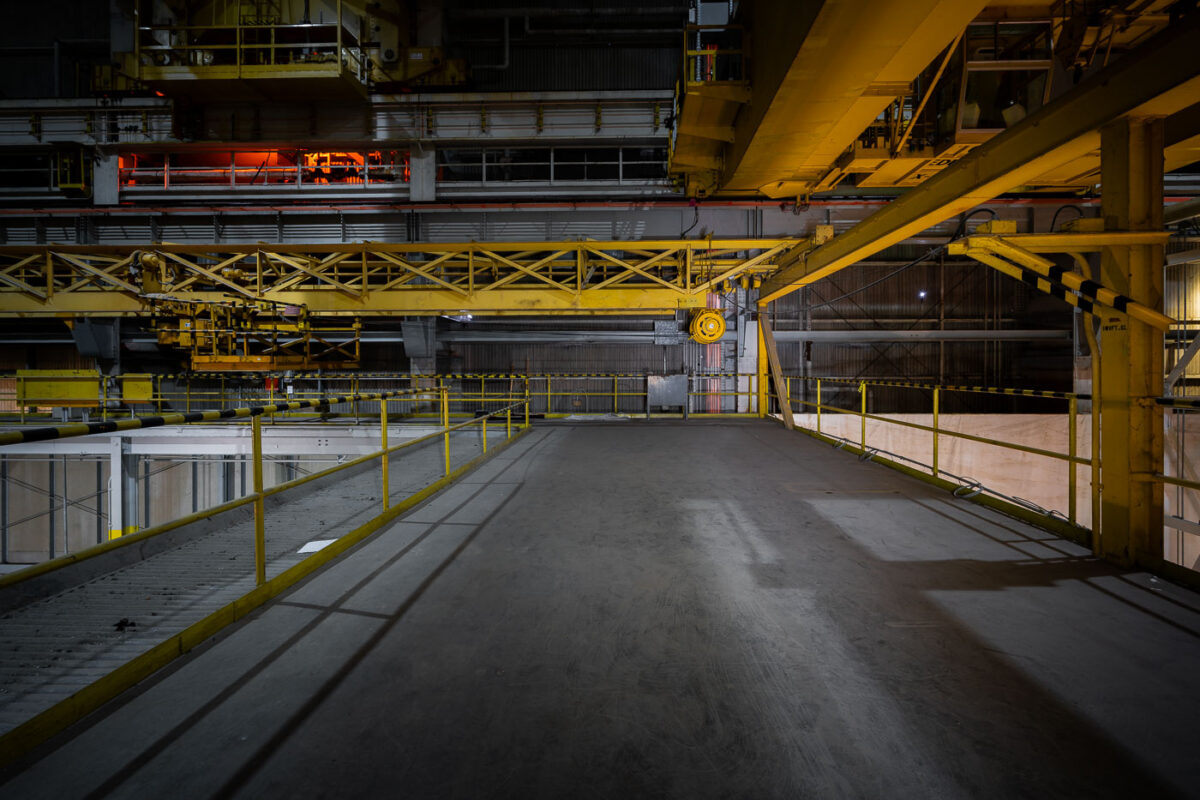
Overhead Gantry Cranes at NASA Michoud
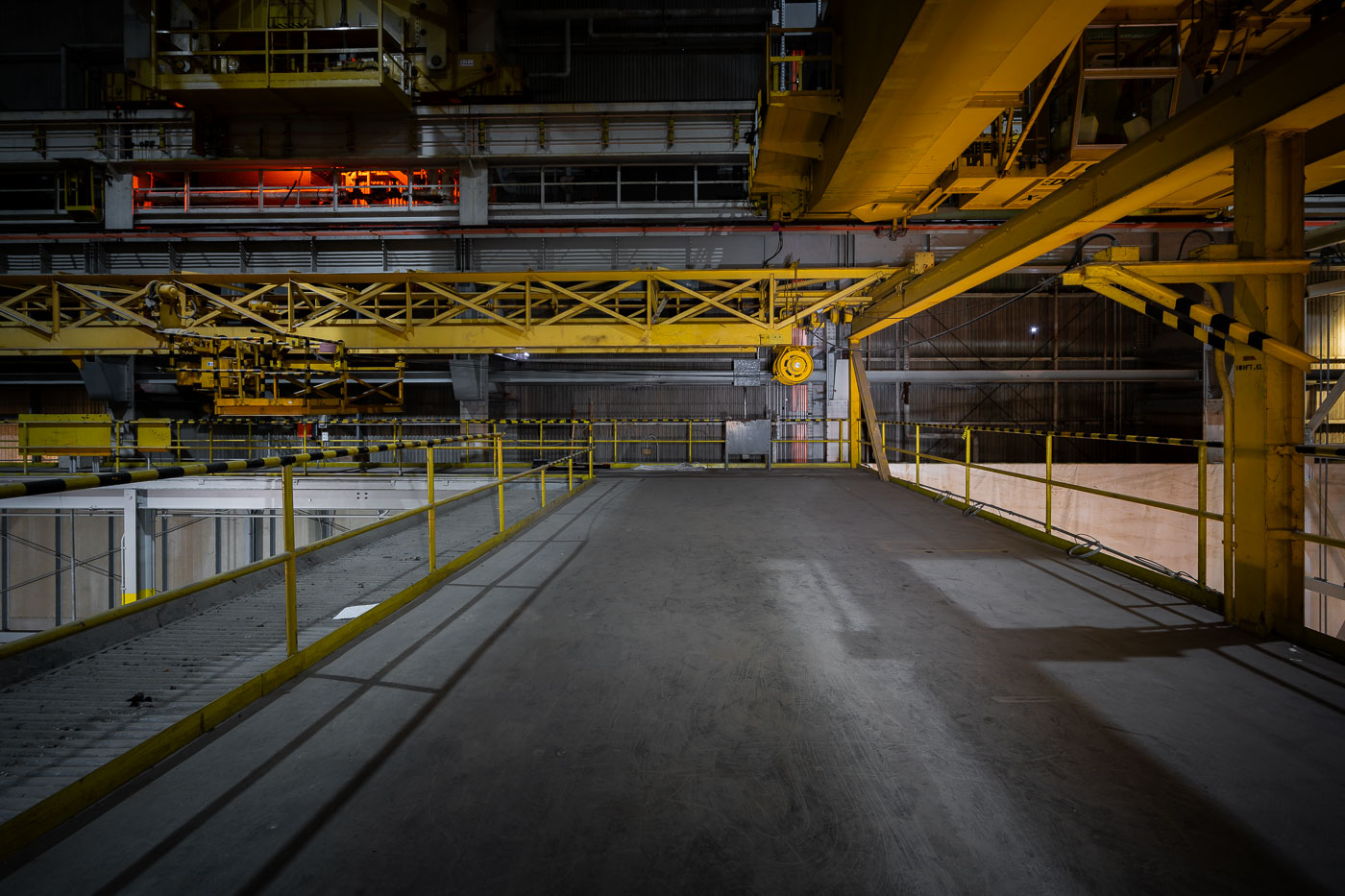
An elevated platform provides a perspective of the overhead gantry crane system within NASA’s Michoud Assembly Facility in New Orleans, Louisiana. These massive yellow steel cranes are essential for lifting and maneuvering large rocket sections, including the core stages of the Space Launch System (SLS), within the vast production hall. Michoud has served as a primary manufacturing site for American space programs since the Apollo and Space Shuttle eras, demonstrating its long-standing role in spacecraft production. Today, the facility continues to be critical for the Artemis program, where these industrial cranes facilitate the assembly of components vital for future lunar and deep-space missions.

NASA Michoud: Yellow Rocket Assembly Cranes
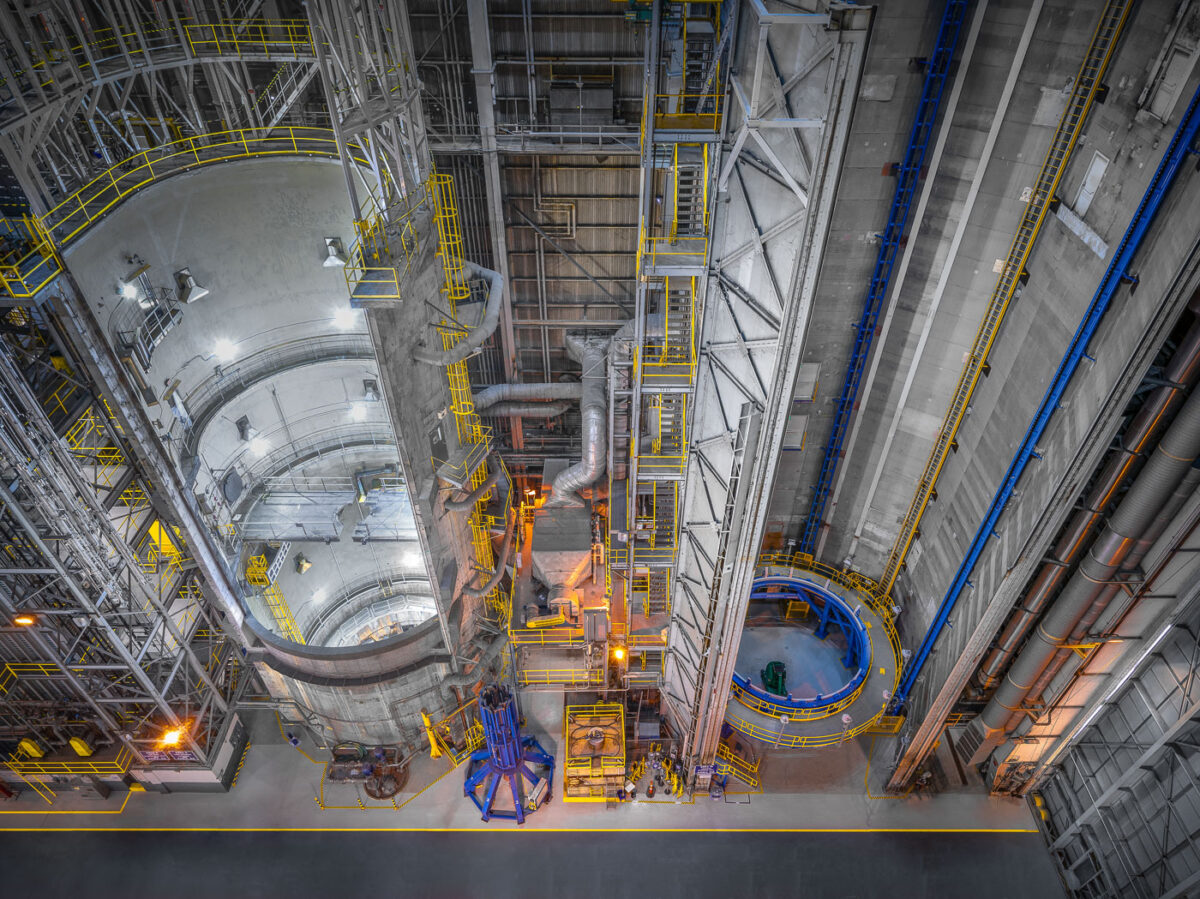
Cleaning and welding cells inside NASA vertical assembly
Inside NASA's Michoud Assembly Facility in New Orleans, Louisiana, the Vertical Assembly Bay is where the core stages of the Space Launch System (SLS) rocket are constructed. This immense industrial space houses the Vertical Weld Center, utilizing advanced friction-stir welding techniques to precisely join cylindrical segments of the world's most powerful launch vehicle. Established during World War II, the Michoud facility has a long history of producing large-scale aerospace structures, including components for the Saturn V rocket and Space Shuttle external tanks. Today, it plays a critical role in the Artemis program, manufacturing the hardware essential for returning humans to the Moon and preparing for future missions to Mars.

NASA Michoud: SLS Rocket Vertical Assembly Bay
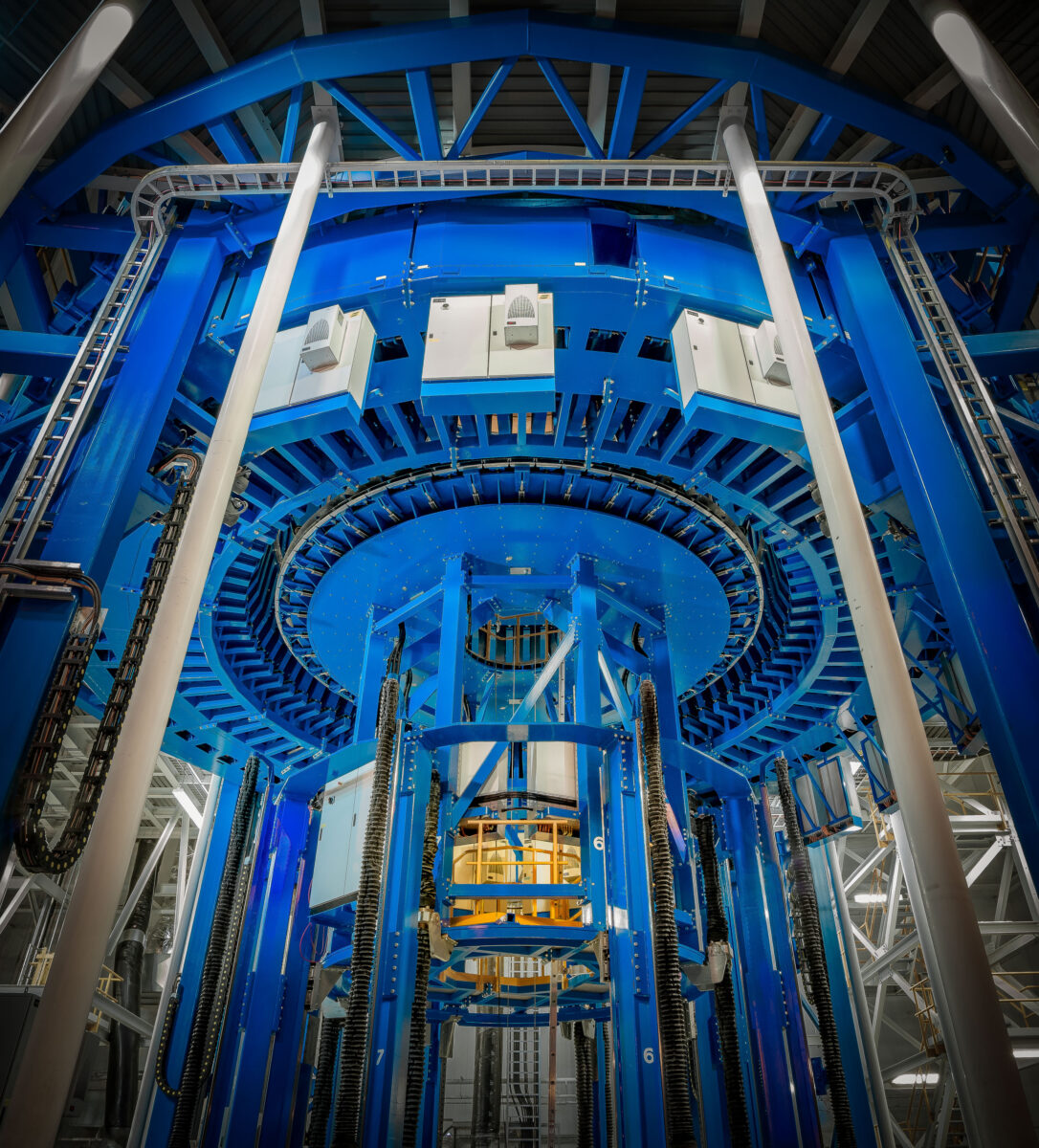
Largest welding tool in the world at NASA
The Vertical Weld Center (VWC) at NASA’s Michoud Assembly Facility in New Orleans is a critical piece of infrastructure for American space exploration. This massive blue structure, completed in 2014, is specifically designed to fabricate the core stage of the Space Launch System (SLS) rocket. It employs advanced friction-stir welding and precision robotics to join large aluminum panels into cylindrical sections, forming the rocket’s fuel tanks. As one of the tallest weld centers globally, the VWC plays a central role in preparing hardware for the Artemis missions, which aim to return humans to the Moon and eventually journey to Mars.

NASA Michoud Vertical Weld Center, SLS Rocket, New Orleans
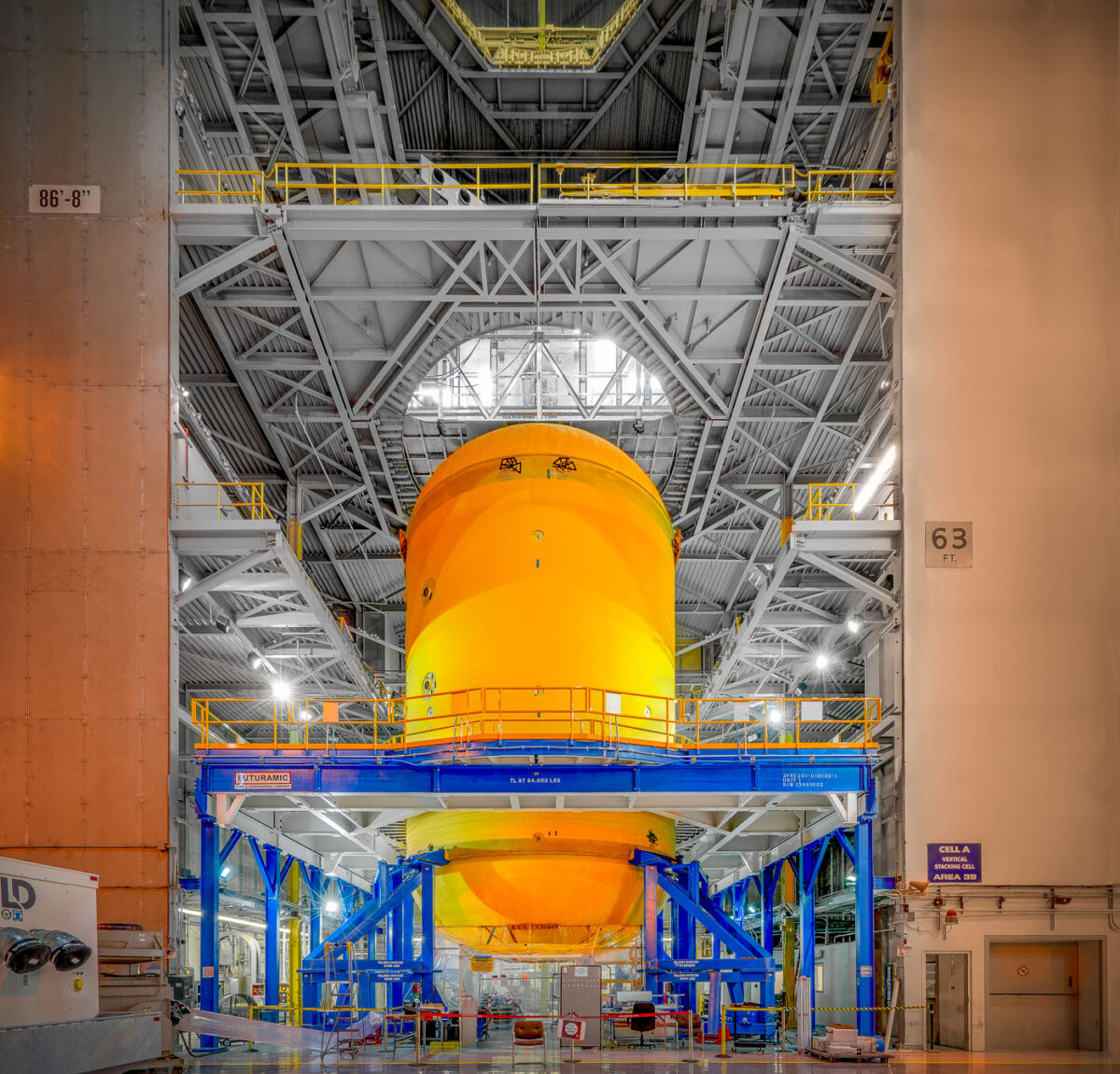
Liquid oxygen tank being worked on at NASA Michoud
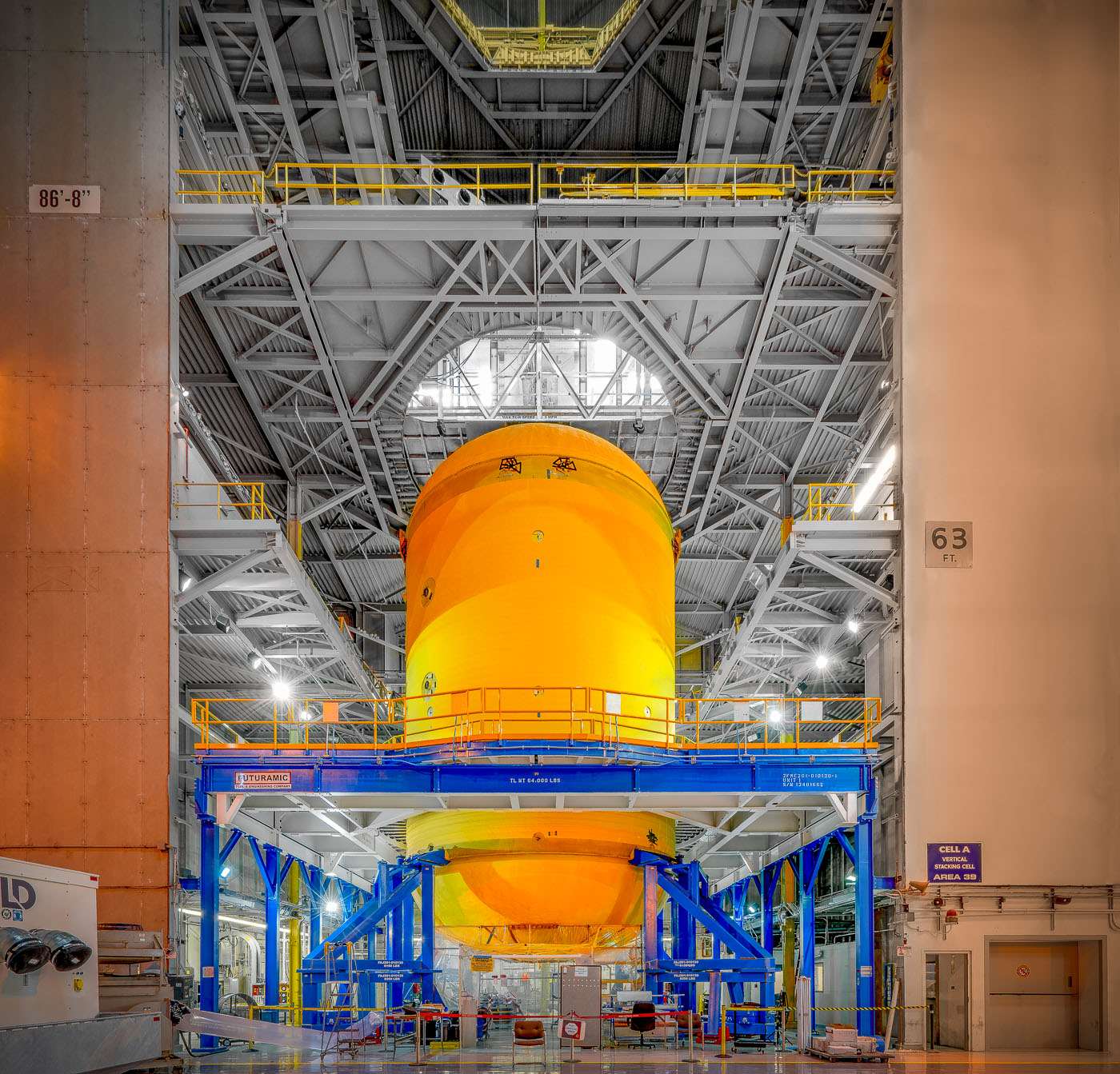
The Liquid Oxygen tank for NASA's Space Launch System (SLS) Core Stage is processed within Cell A at the Michoud Assembly Facility in New Orleans, Louisiana. This critical component is engineered to contain 195,000 gallons of liquid oxygen, maintained at a temperature of -297 degrees Fahrenheit, serving as a primary propellant for the rocket. The Michoud Assembly Facility, a significant NASA manufacturing site since the 1960s, specializes in producing large-scale structures for space exploration. This work supports the Artemis program, which aims to return humans to the Moon and advance future missions to Mars.

NASA Michoud: SLS Liquid Oxygen Tank in Cell A
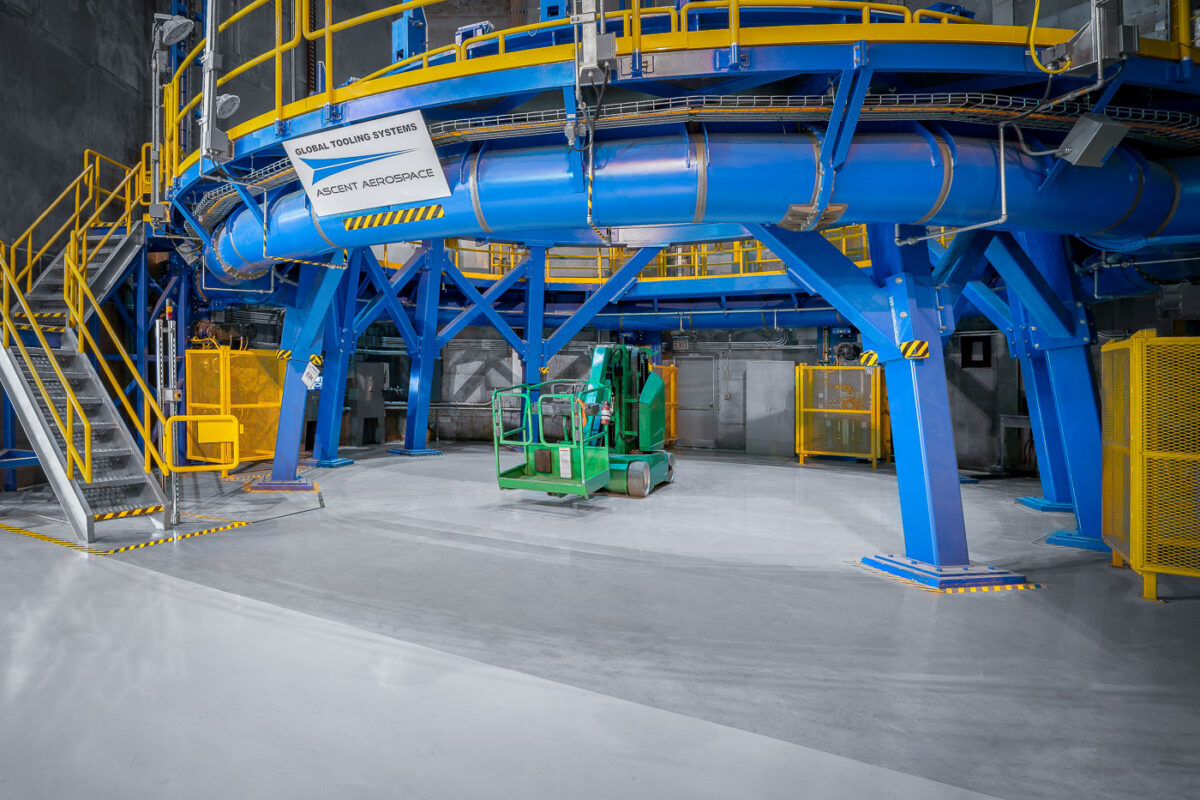
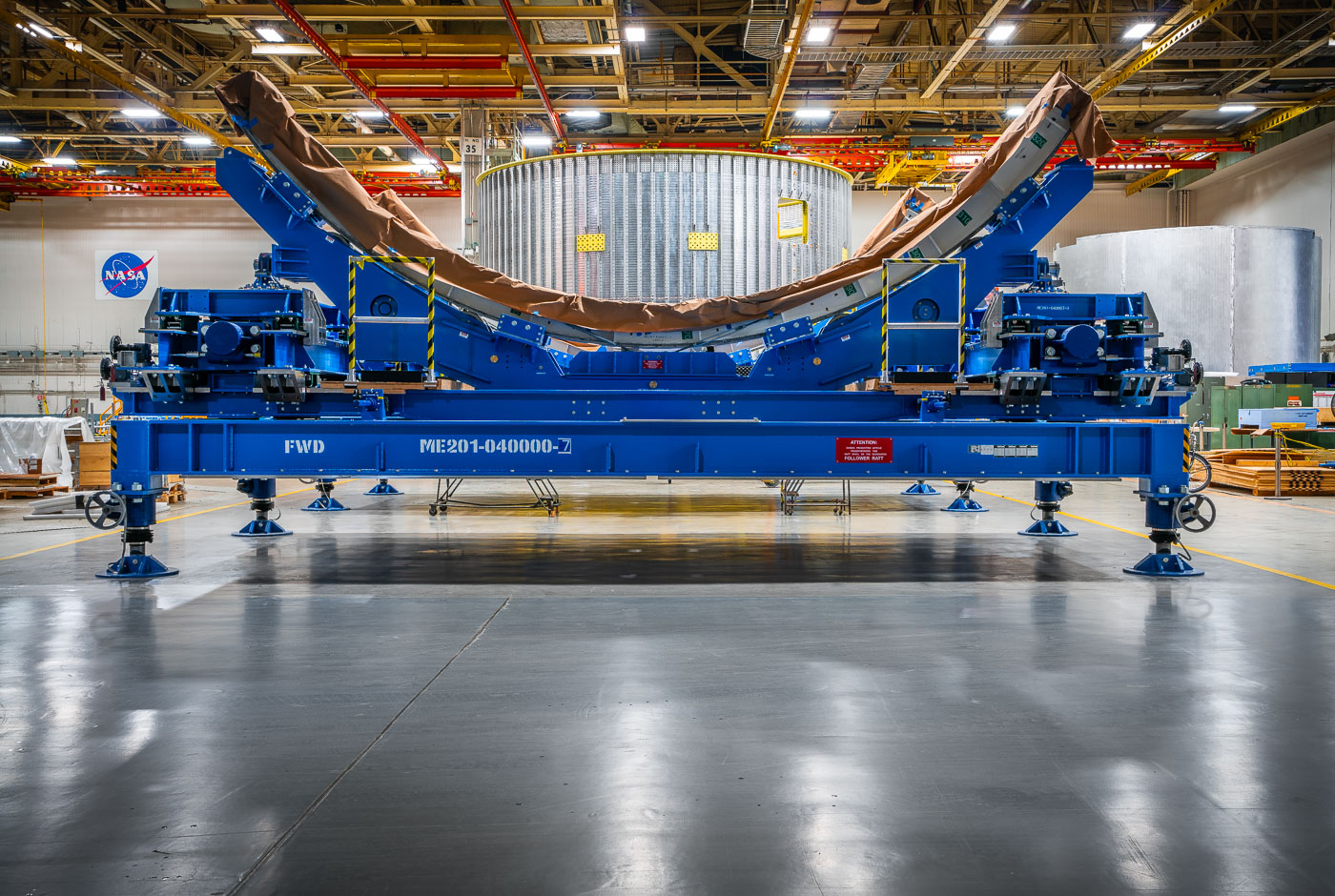
Tooling Platform at NASA Michoud Assembly Facility
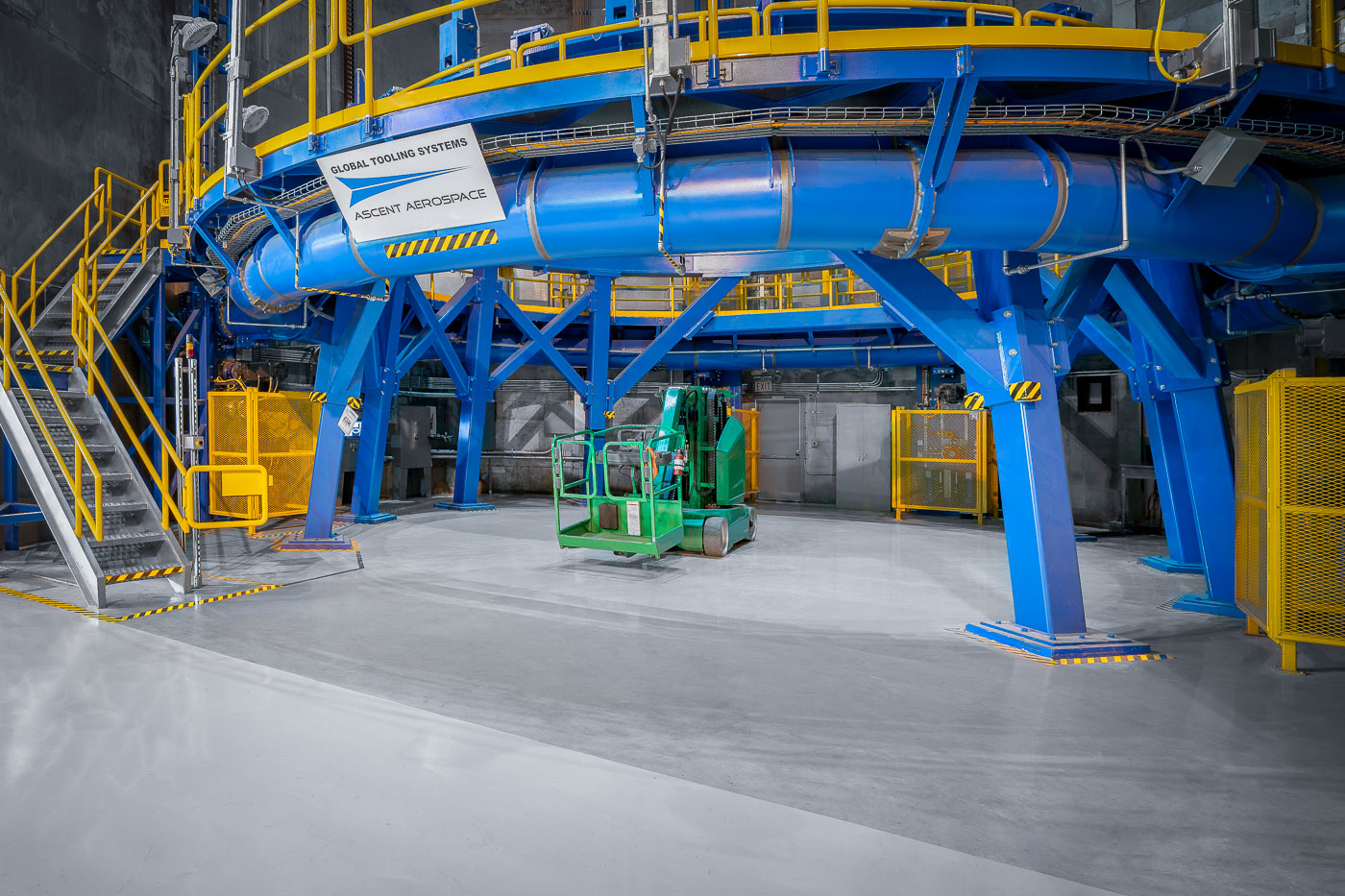
This specialized tooling platform, built by Ascent Aerospace’s Global Tooling Systems division, is located within NASA’s Michoud Assembly Facility in New Orleans, Louisiana. The heavy-duty steel structure is a critical piece of infrastructure designed for the precision assembly of components for the Space Launch System (SLS) rocket. It supports and aligns massive cylindrical sections of the rocket during welding and other manufacturing processes, ensuring the structural integrity required for spaceflight. This manufacturing ecosystem at Michoud is vital for the production of the SLS core stage and other elements, directly enabling NASA's Artemis missions to return humans to the Moon and eventually journey to Mars.

SLS Tooling Platform at NASA Michoud Assembly Facility
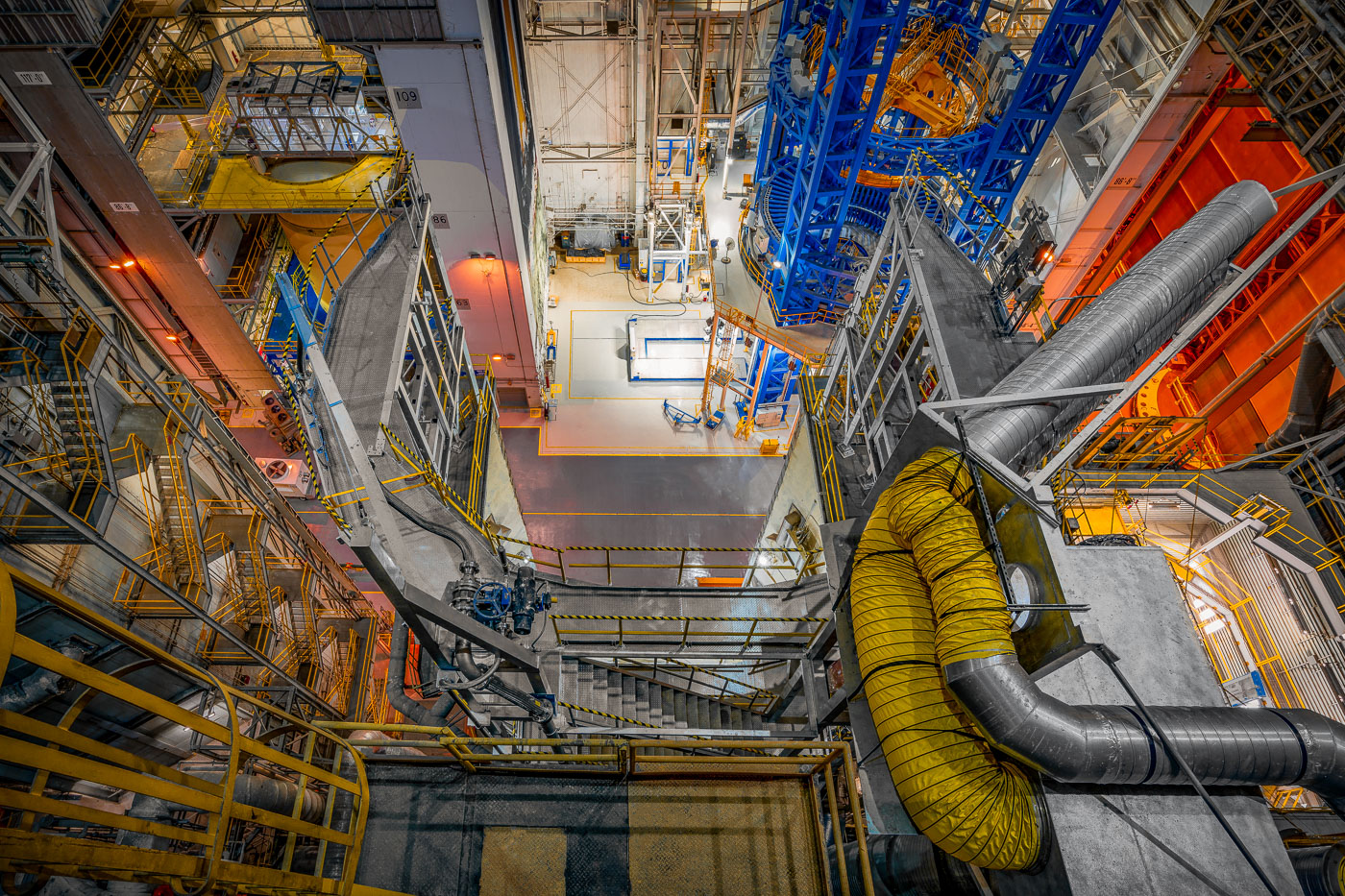
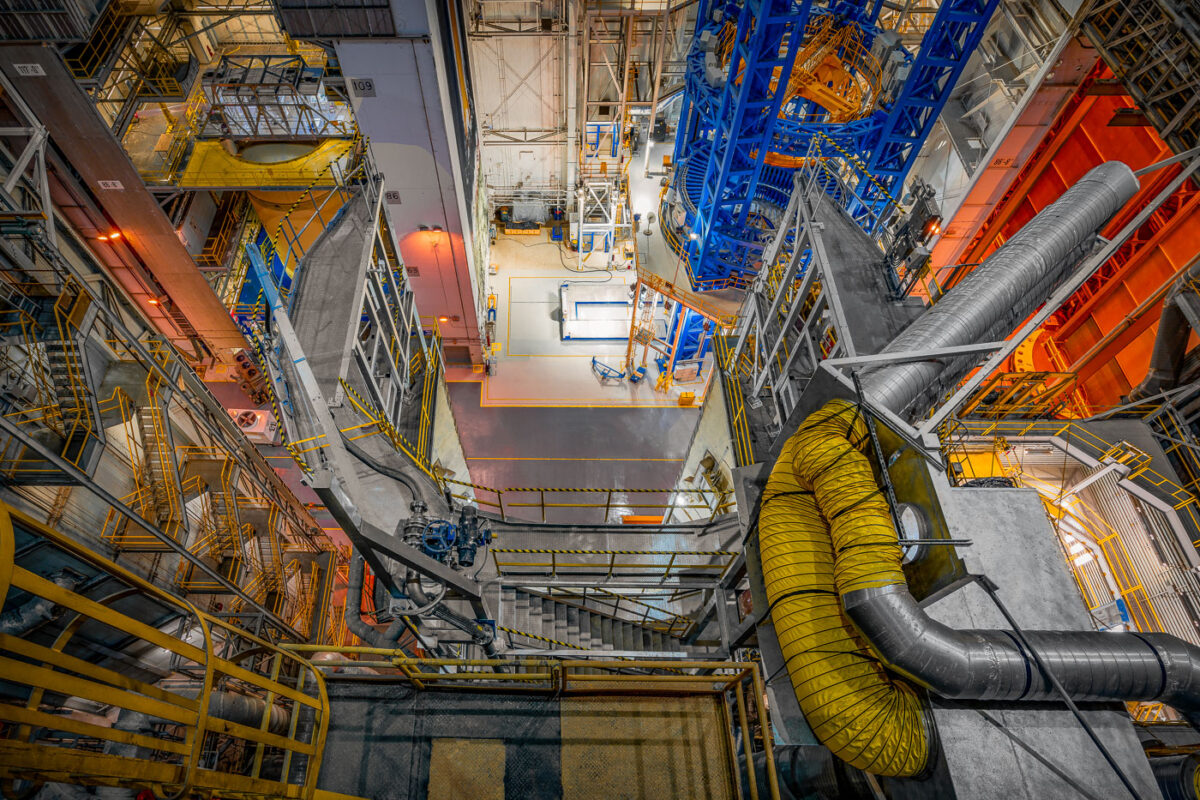
Look from the top of a NASA vertical assembly center
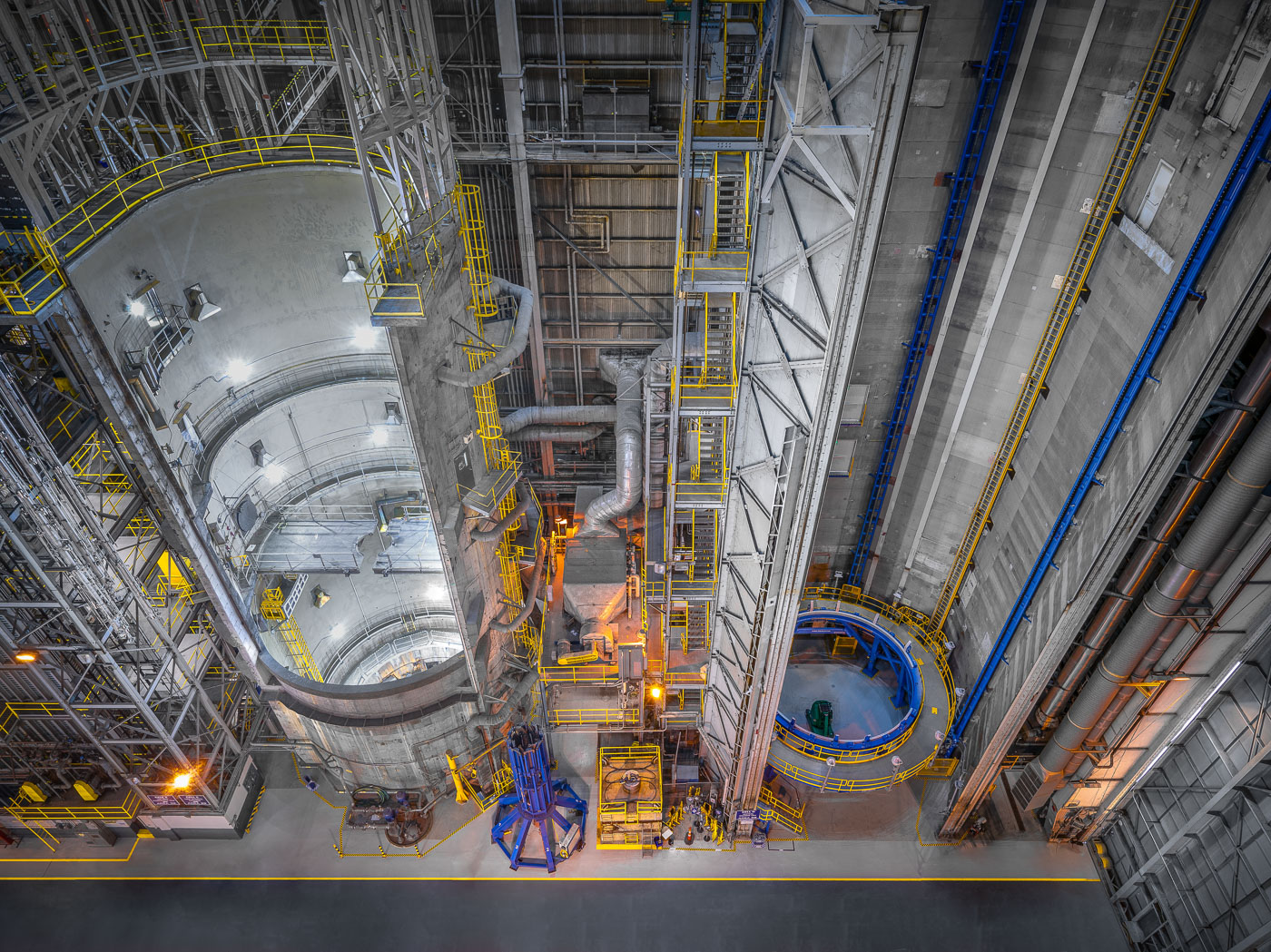
The towering interior of NASA’s Michoud Assembly Facility in New Orleans, Louisiana, is dedicated to the fabrication and assembly of major components for the Space Launch System (SLS) rocket. This massive Vertical Assembly Area, characterized by its multilevel platforms, access walkways, and heavy structural supports, is engineered for the precision alignment of rocket stages. The facility's specialized environment is crucial for preparing the core stages that power the Artemis missions, which aim to return humans to the Moon and advance deep space exploration. Michoud has a significant history in American space endeavors, contributing to programs from Apollo to the Space Shuttle, and continues its legacy with the next generation of human spaceflight.

NASA Michoud Vertical Assembly Area, SLS Rocket Stages
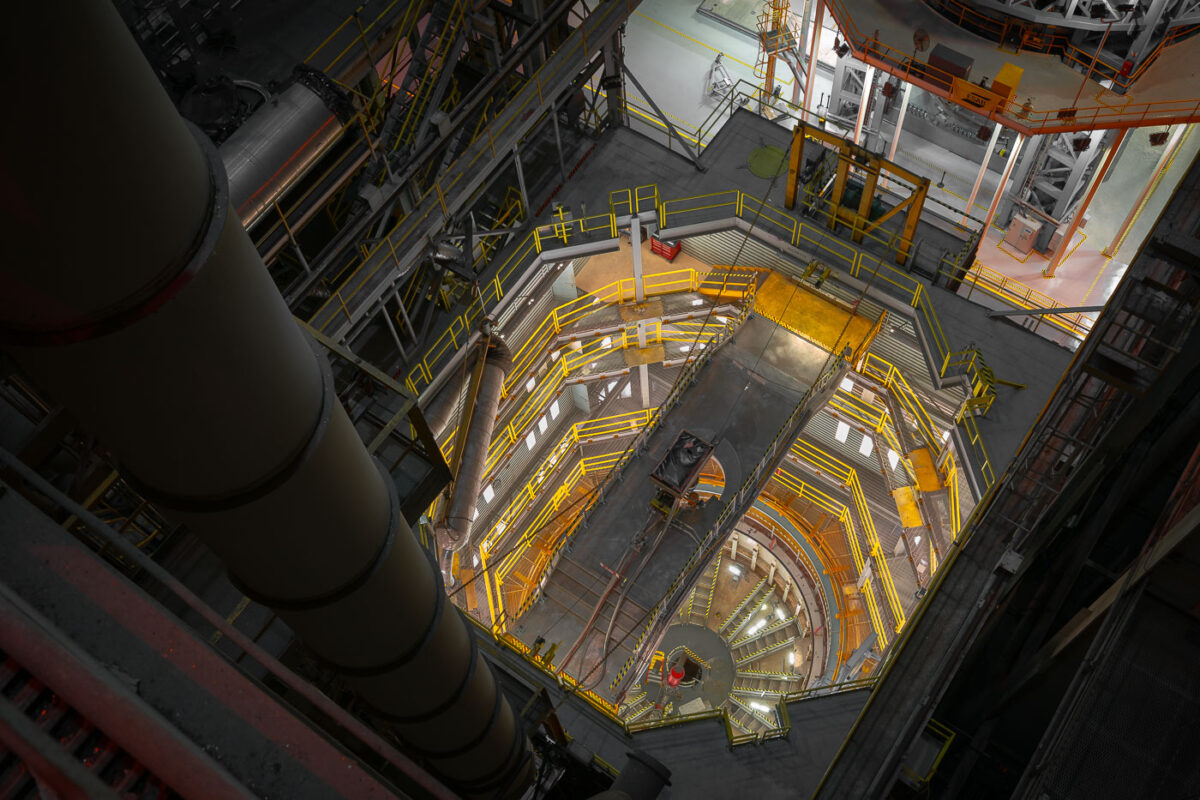
From the top of NASAs cleaning cell at Michoud
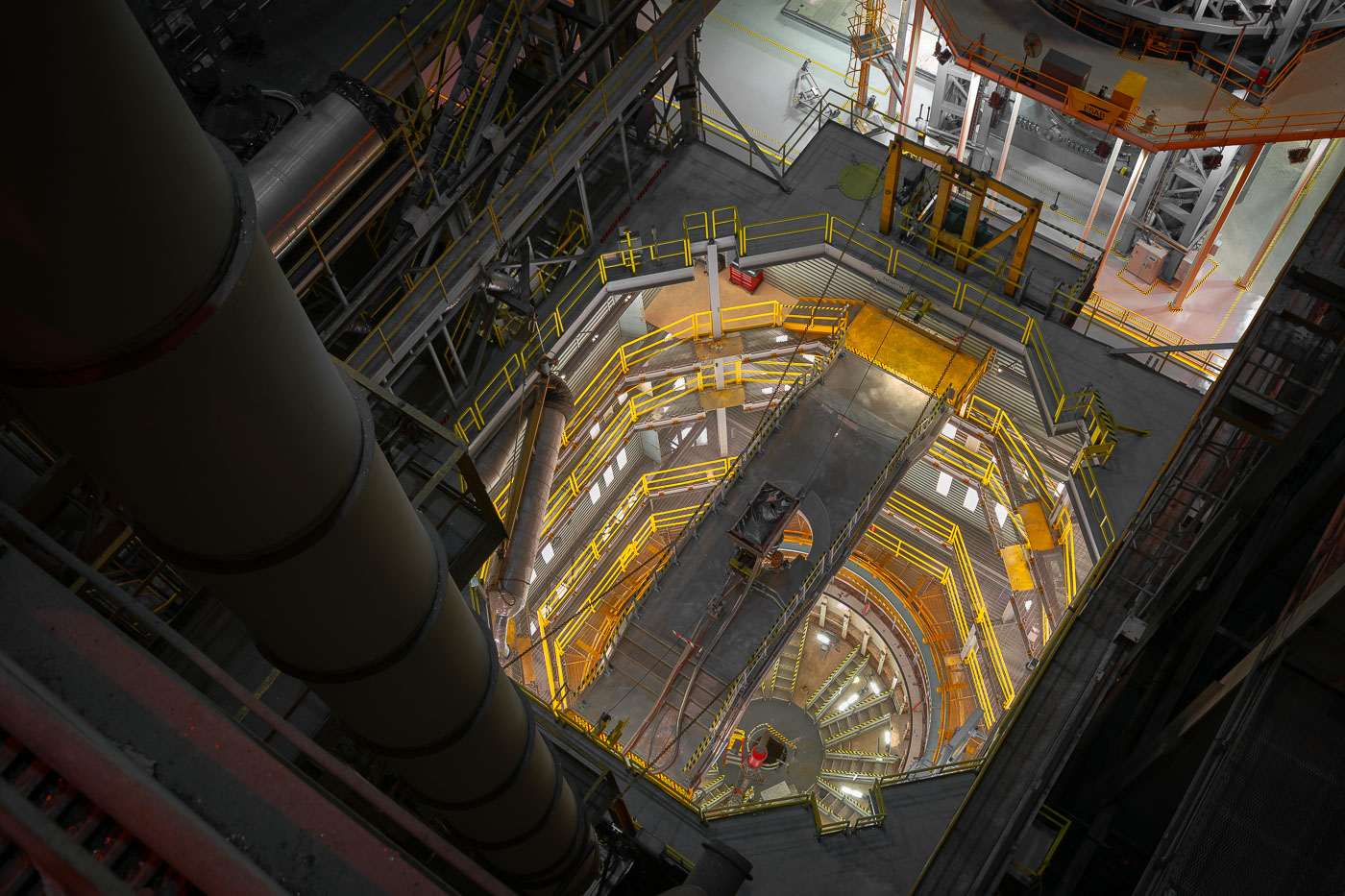
The Space Launch System (SLS) Fuel Tank Cleaning Cell is situated within the Vertical Assembly Center at NASA Michoud Assembly Facility in Louisiana. This specialized facility is engineered to meticulously clean the interior of the massive fuel tanks destined for the Space Launch System rocket. The SLS rocket, designed to be the world’s largest, is a cornerstone of NASA's Artemis program, which aims to return humans to the Moon. The rigorous cleaning process is essential to maintain the structural integrity and optimal performance of these critical components for future space missions.

NASA Michoud Assembly Facility SLS Fuel Tank Cleaning Cell
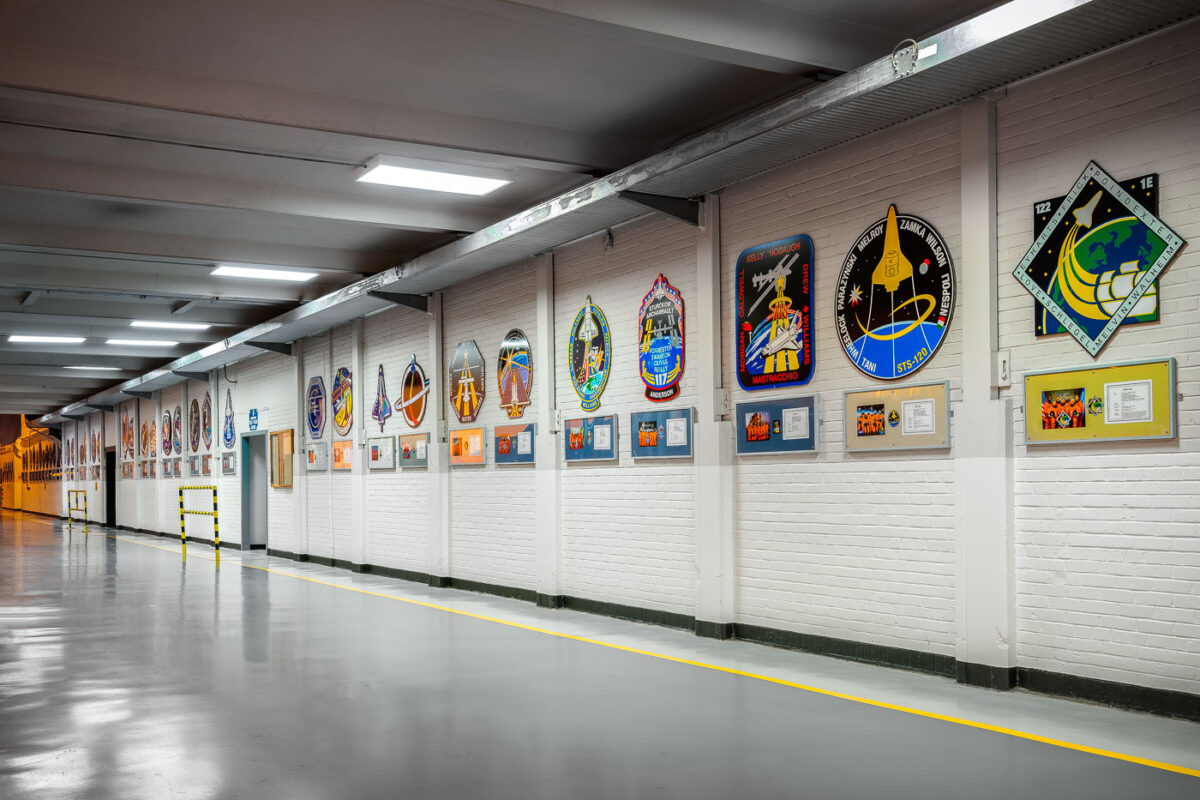
Missions in Hallway at the NASA Michoud Assembly Facility
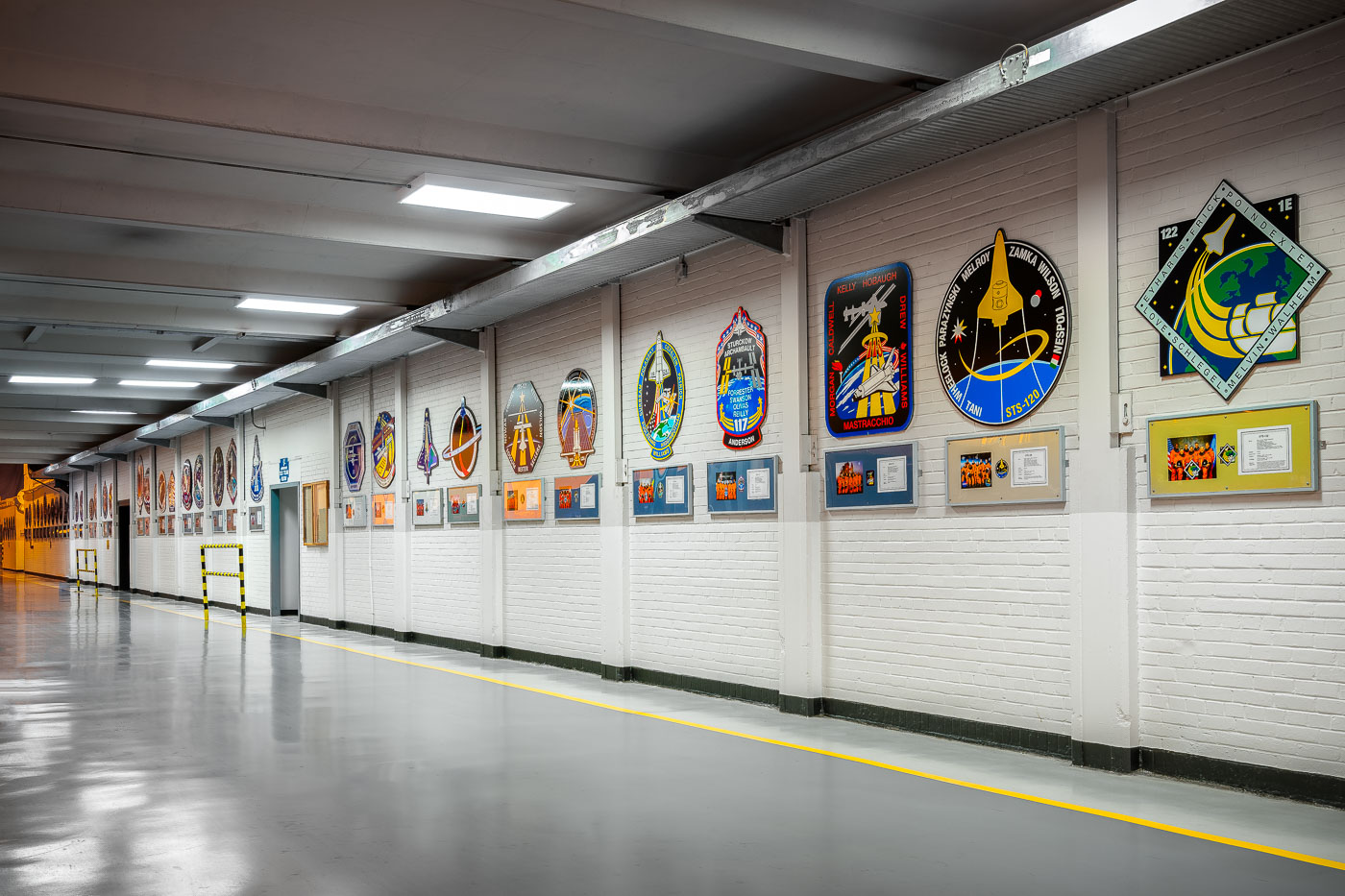
A corridor at NASA’s Michoud Assembly Facility in New Orleans, Louisiana, displays a collection of mission patches and crew insignias. These emblems chronicle significant milestones in American aerospace history, reflecting the facility's contributions to programs like Apollo and the Space Shuttle. Today, Michoud continues its legacy as a primary manufacturing site for the Space Launch System (SLS) core stage, critical for NASA's Artemis missions. The display serves as a historical testament to the facility's ongoing role in space exploration, set against its industrial backdrop.

Mission Patch Hallway, NASA Michoud Assembly Facility, New Orleans
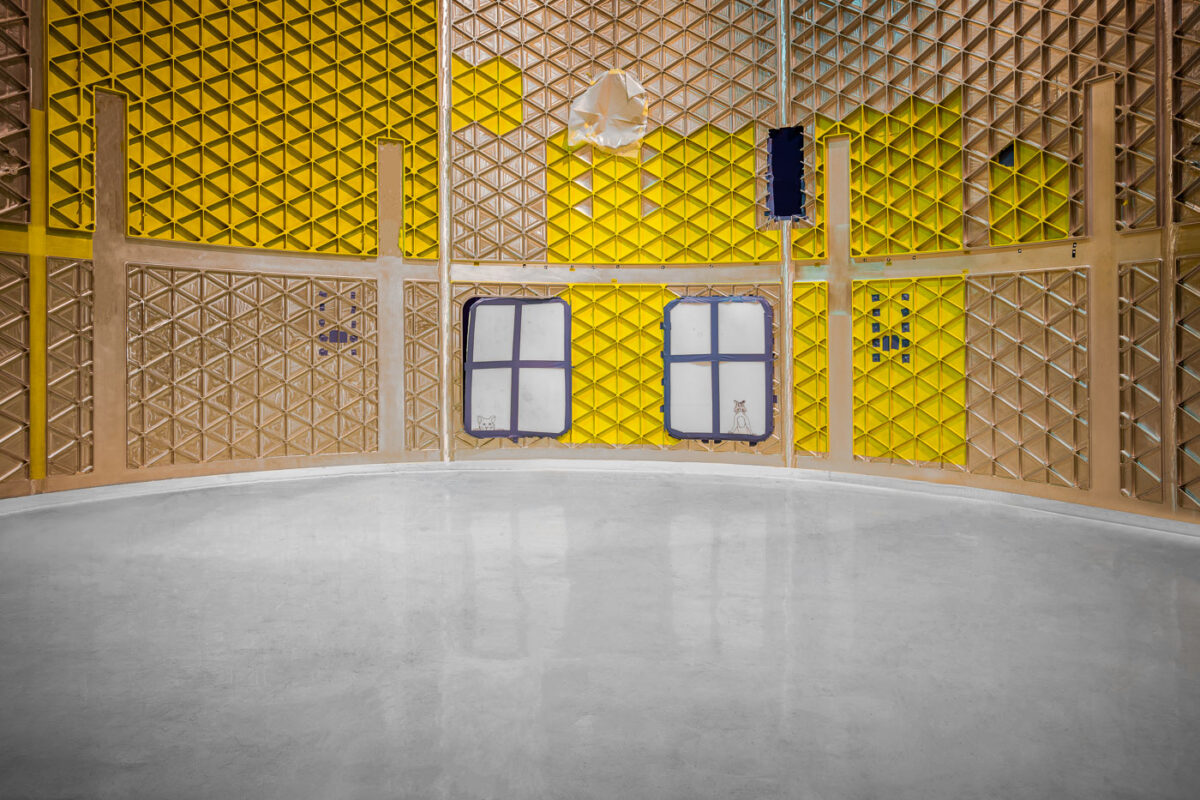
Inside SLS Barrel at NASA Michoud Assembly Facility
This photograph shows the interior of a Space Launch System (SLS) liquid hydrogen tank barrel at NASA's Michoud Assembly Facility in New Orleans, Louisiana. This component is a critical part of the SLS core stage, designed to hold super-cold liquid hydrogen, one of the propellants for the rocket's engines. Constructed from AI 2219, a specialized aerospace aluminum alloy, the barrel's robust design ensures structural integrity under extreme conditions. The SLS rocket is central to NASA's Artemis program, which aims to return humans to the Moon and prepare for future missions to Mars. The Michoud Assembly Facility plays a vital role in the manufacturing and assembly of large-scale space structures for American space exploration.

SLS Liquid Hydrogen Tank Barrel Interior, NASA Michoud

Barrel tools at NASA Michoud Assembly Facility
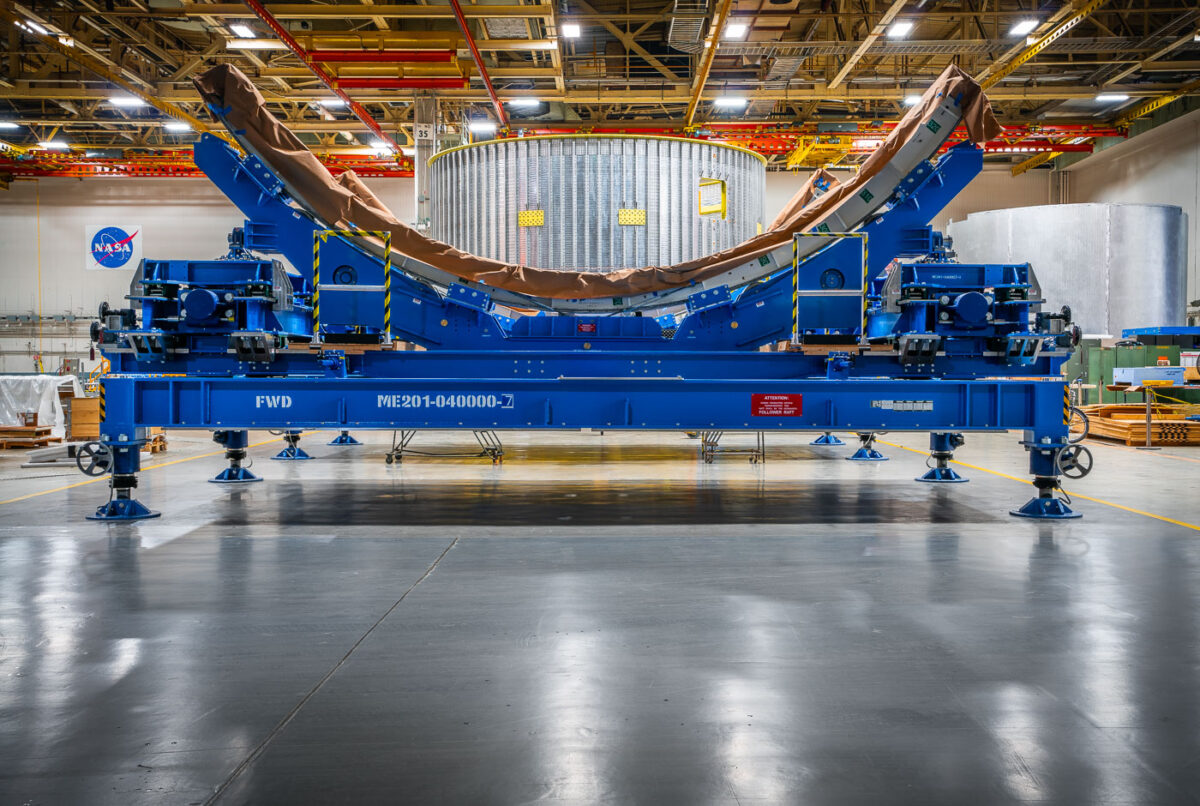
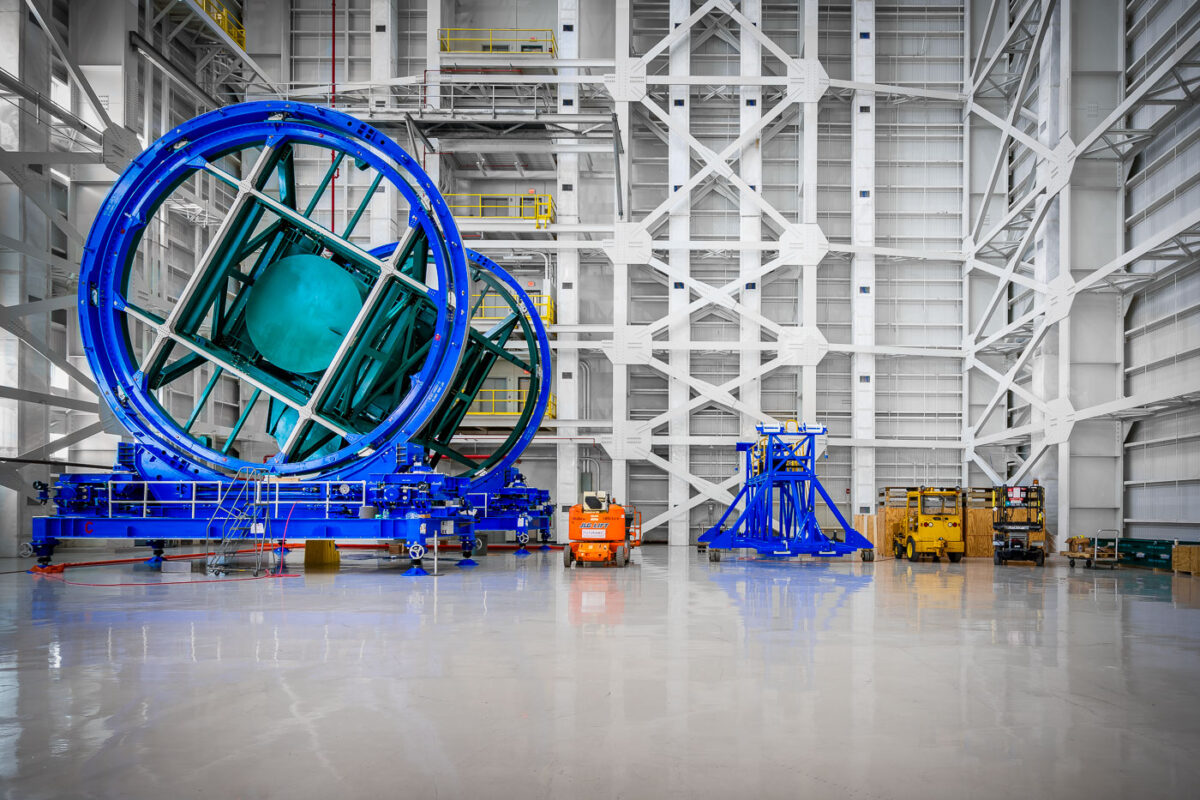
Precision barrel tooling for the Space Launch System (SLS) core stage is positioned on the production floor at NASA’s Michoud Assembly Facility in New Orleans, Louisiana. This specialized infrastructure is crucial for the assembly of the massive rocket, which supports the Artemis missions to the Moon. The fixtures precisely hold large aluminum panels during the friction stir welding process, ensuring the perfect alignment and uniform curvature required for the rocket’s cylindrical sections. NASA Michoud Assembly Facility has a long history of producing large-scale space structures, including components for the Saturn V and Space Shuttle programs. In the background, a completed barrel segment awaits further integration, highlighting the facility's ongoing contribution to space exploration.

SLS Core Stage Barrel Tooling at NASA Michoud Facility

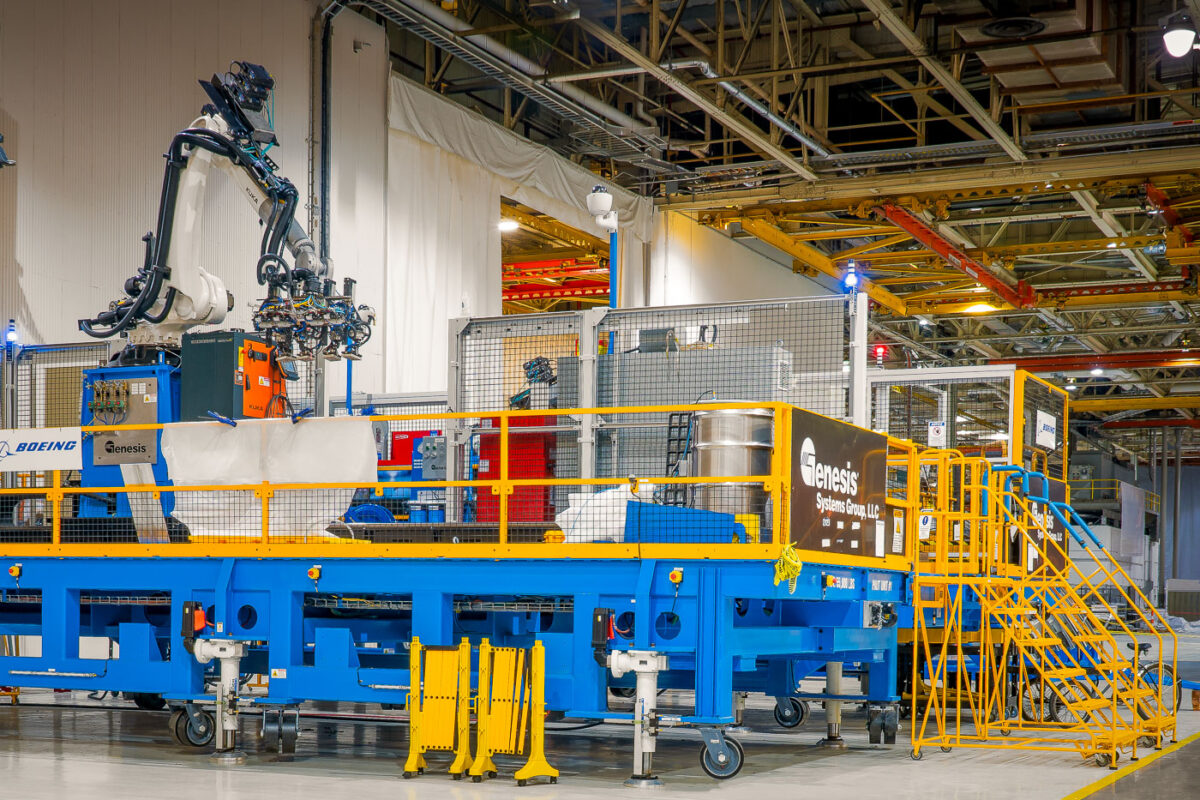
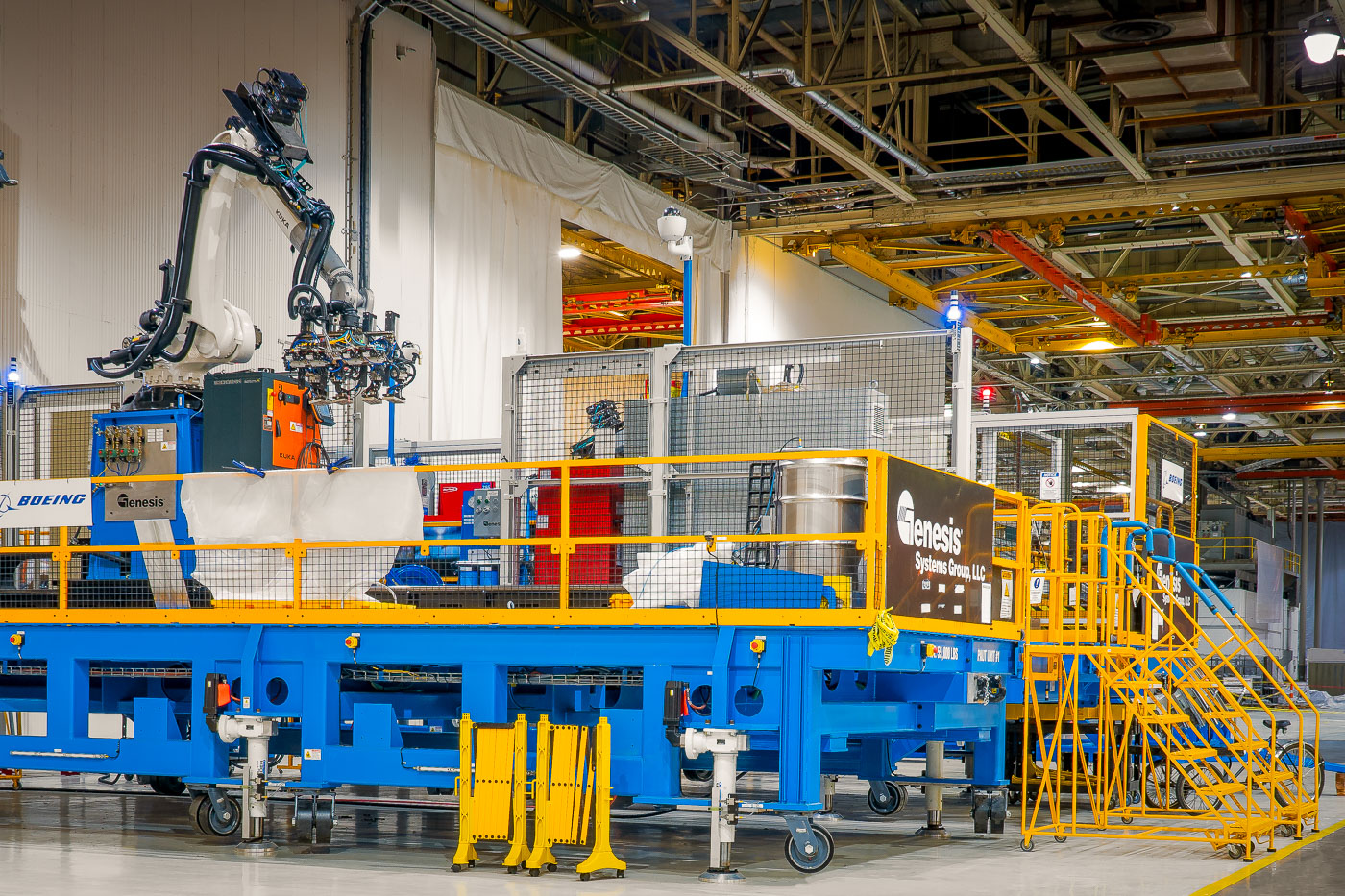
Manufacturing robots at NASA Michoud Assembly Facility
At NASA’s Michoud Assembly Facility in New Orleans, Louisiana, a robotic friction stir welding cell, developed by Genesis Systems Group and Boeing, constructs components for the Space Launch System (SLS) core stage. Michoud, a site with a long history of aerospace manufacturing since the 1960s, plays a crucial role in producing large-scale structures for space exploration. This advanced system precisely joins massive aluminum panels using friction stir welding, creating the rocket’s fuel tanks and structural sections. This specialized process ensures the structural integrity and reliability essential for the SLS, which powers NASA’s Artemis missions to the Moon and beyond.

Robotic Friction Stir Welding Cell for SLS at NASA Michoud

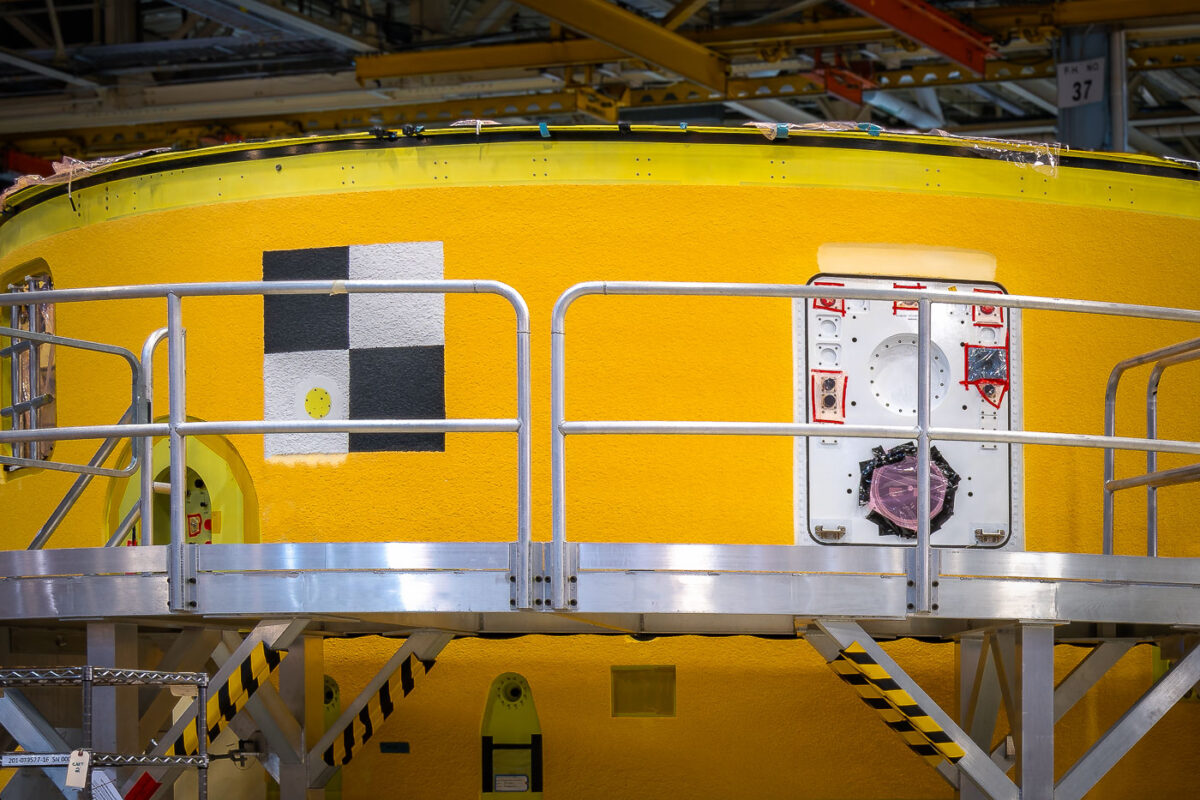
SLS Forward Skirt NASA Rocket
The forward skirt section of NASA’s Space Launch System is shown shortly after its final assembly at the Michoud Assembly Facility in New Orleans, Louisiana. This uppermost segment houses the rocket’s flight computers, avionics, and camera systems, serving as the control center that guides the SLS during launch and ascent. Built for the Artemis I (Exploration Mission-1) mission, this critical structure was manufactured at Michoud, a significant NASA facility with a long history of producing large-scale aerospace components. It would later be integrated into the core stage for its 2020 launch from Kennedy Space Center, marking a key step in the Artemis program's efforts to return humans to the Moon.

SLS Forward Skirt: Flight Control Assembly, New Orleans

Interior of the SLS fuel tank at NASA Michoud Facility
The interior of a Space Launch System (SLS) Core Stage fuel tank at NASA Michoud Assembly Facility in New Orleans, Louisiana. This massive tank is designed to hold cryogenic liquid hydrogen and liquid oxygen propellants, powering the rocket's four RS-25 engines. The Core Stage is the central component of the SLS, a super heavy-lift launch vehicle developed for NASA's Artemis program. Michoud Assembly Facility serves as a primary manufacturing and assembly site for these critical components, supporting the agency's efforts to return humans to the Moon and explore deeper into space.

NASA SLS Core Stage Fuel Tank Interior, Michoud

Inside the massive NASA Michoud Assembly Facility
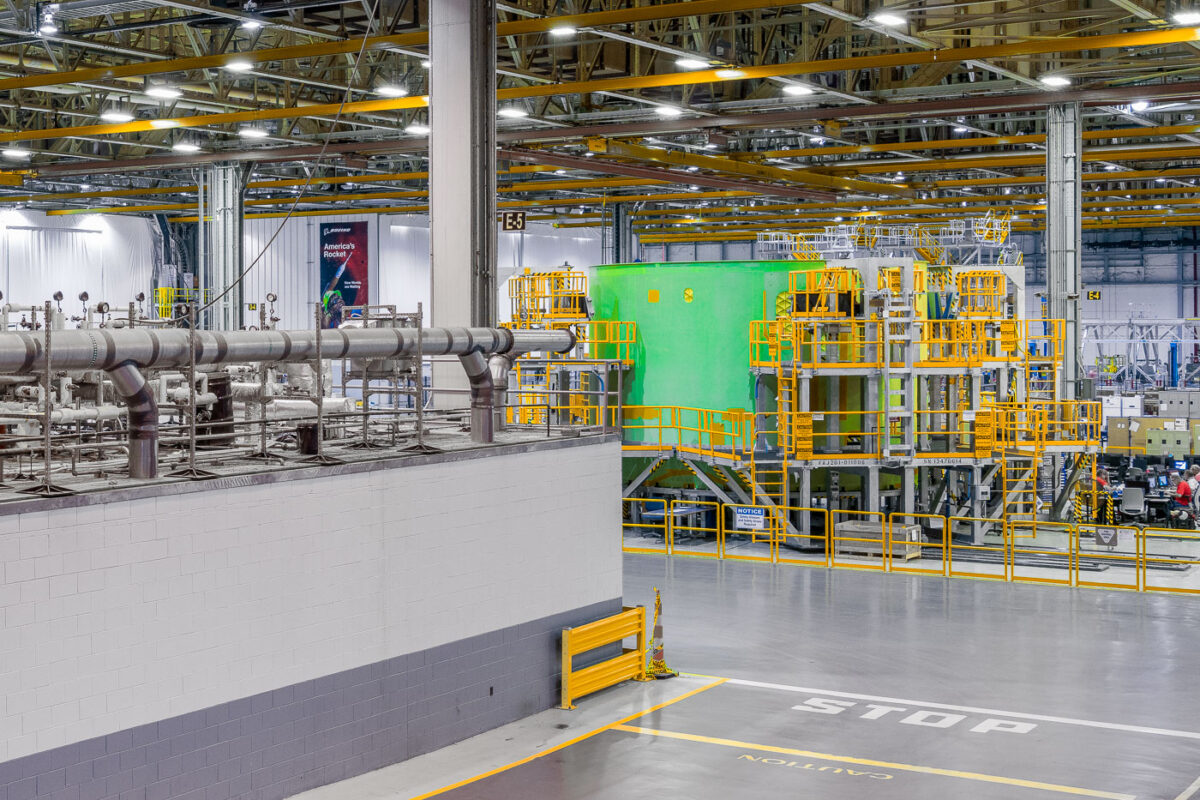
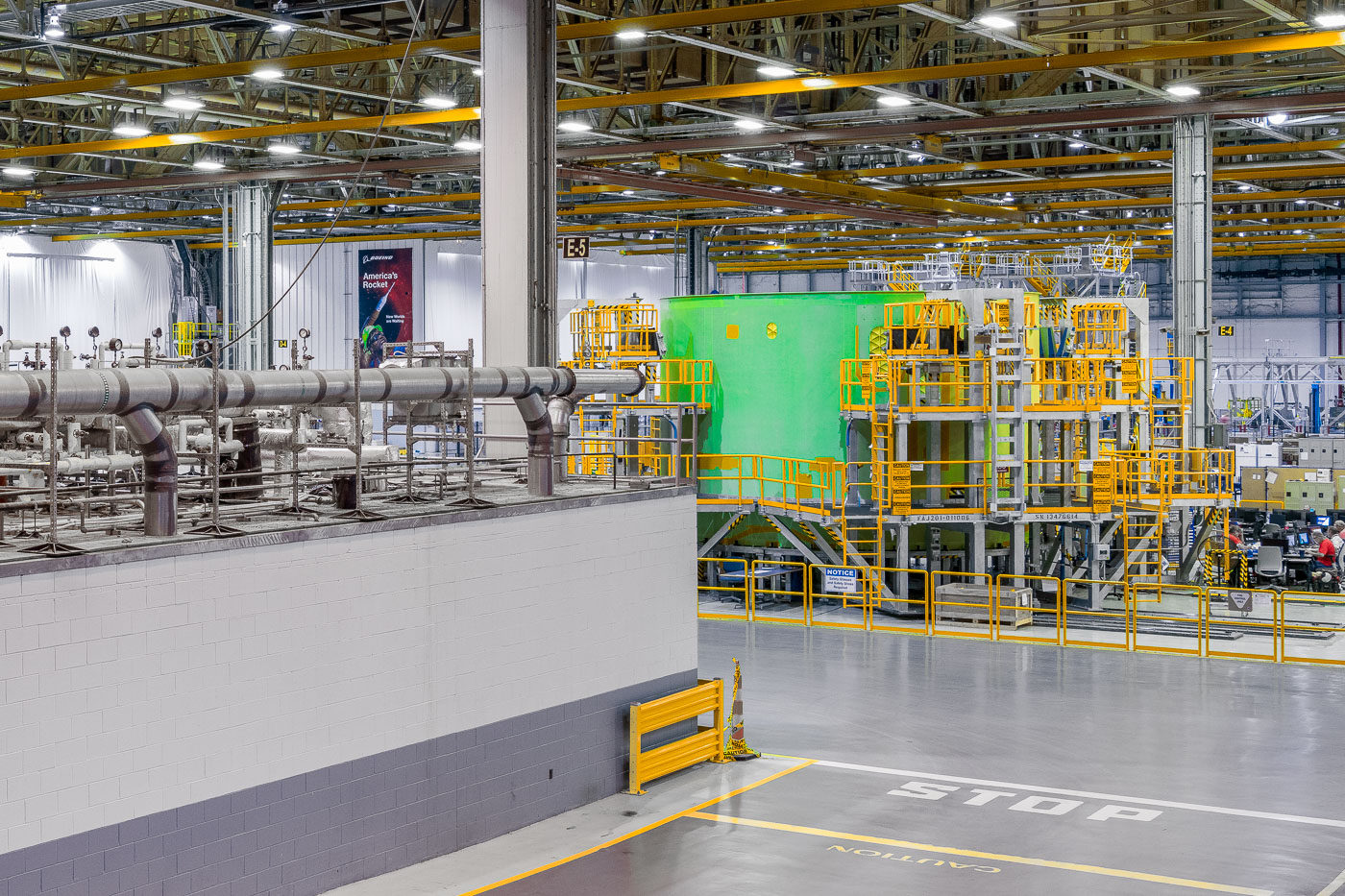
At the NASA Michoud Assembly Facility in New Orleans, Louisiana, a component of the Space Launch System (SLS) rocket core stage undergoes production. This vast industrial complex, historically significant for manufacturing components for the Saturn V and Space Shuttle programs, now serves as a primary site for assembling the core stages of "America's Rocket". The green-painted structure, surrounded by specialized yellow access platforms and intricate piping, represents a critical section of the massive tooling infrastructure required for precise rocket assembly and testing. These core stages, produced by Boeing, are integral to NASA's Artemis program, which aims to return humans to the Moon and establish a sustained lunar presence.

NASA Michoud Assembly Facility: SLS Core Stage Production

Vertical weld center at NASA Michoud Rocket Facility
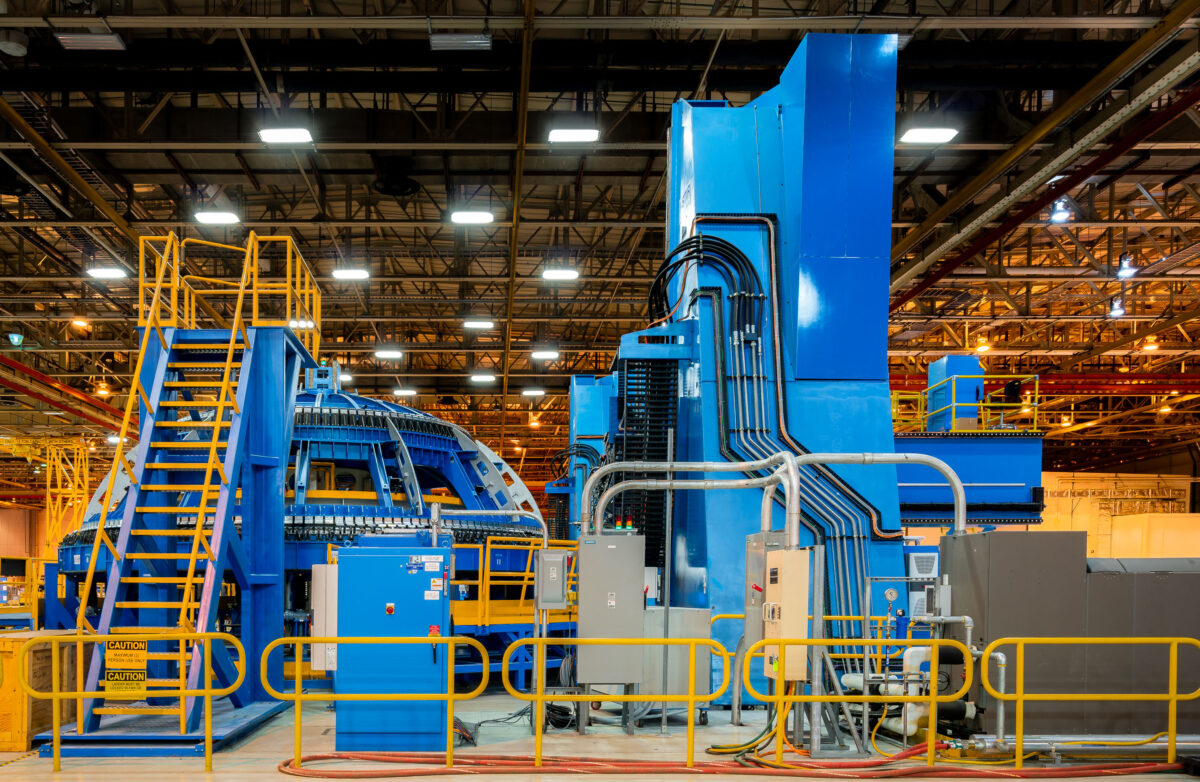
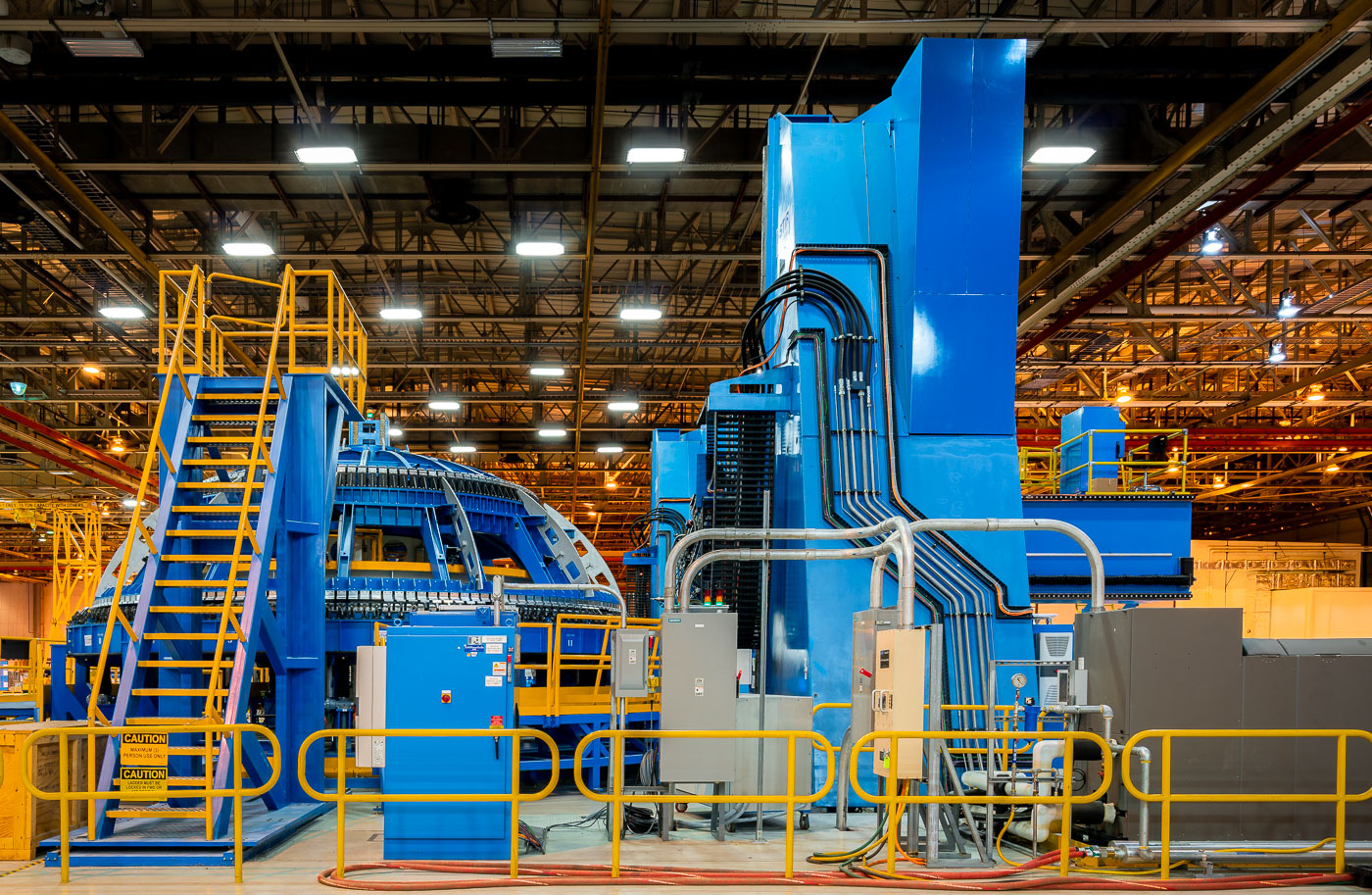
The Vertical Weld Center (VWC) operates within NASA’s Michoud Assembly Facility in New Orleans, Louisiana. This precision friction-stir welding system is engineered to join massive aluminum alloy panels, forming the rocket fuel tanks and core stages for the Space Launch System (SLS). The facility, a key site for aerospace manufacturing since the 1940s, plays a crucial role in the production of components for America's space exploration programs. The VWC's advanced tooling, visible in bright blue and yellow structures, ensures millimeter-level accuracy during assembly, a requirement for the Artemis program's deep space missions.

NASA Michoud: Vertical Weld Center for SLS Fuel Tanks

Inside the vertical weld center at NASA Michoud
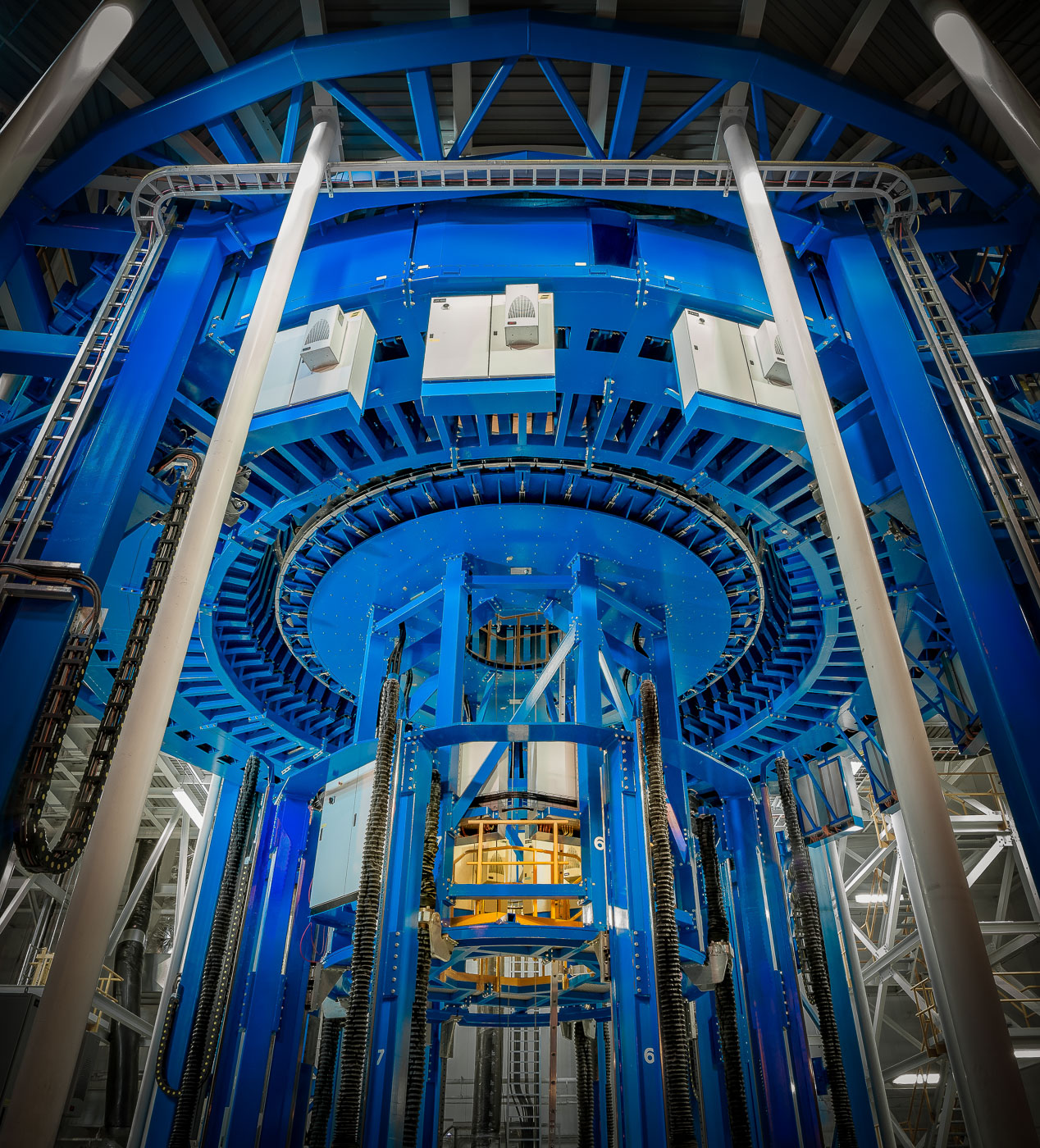
The Vertical Weld Center at NASA Michoud Assembly Facility in Louisiana houses the friction-stir-weld tool, a critical piece of infrastructure for the Space Launch System (SLS) program. This specialized tool is designed to weld barrel panels for both wet and dry structures of the SLS core stage. It precisely joins these panels to form complete barrels for the rocket's two pressurized tanks, the intertank, the forward skirt, and the aft engine section. The SLS core stage is a fundamental component of NASA's Artemis missions, which aim to return humans to the Moon and prepare for future missions to Mars. The facility plays a vital role in the production of America's next-generation heavy-lift rocket.

NASA Michoud: SLS Core Stage Friction-Stir-Weld Tool

NASA tooling 3
The Vertical Weld Center (VWC) at NASA’s Michoud Assembly Facility, which is producing components for the Space Launch System (SLS) and Artemis rockets. Shown here is the tool used to do the barrel fabrication. From NASA: The Barrel Fabrication process consists of the sequential trimming and welding of Barrel Panels on the Vertical Weld Center (VWC) to form a 8.4-meter barrel. Post-weld non-destructive evaluation is also performed while the Barrel is positioned on the VWC. Barrels will be fabricated for the LH2 Tank, LO2 Tank, Forward Skirt, and Engine Section and transported to Building 110 for weld operations on the Vertical Assembly Center. NASA says there are 40 different Barrel Panel configurations with various thicknesses and heights and the 32 barrels to be fabricated each weight between 6,600 to 9,500 pounds.

Vertical Weld Center, NASA Michoud

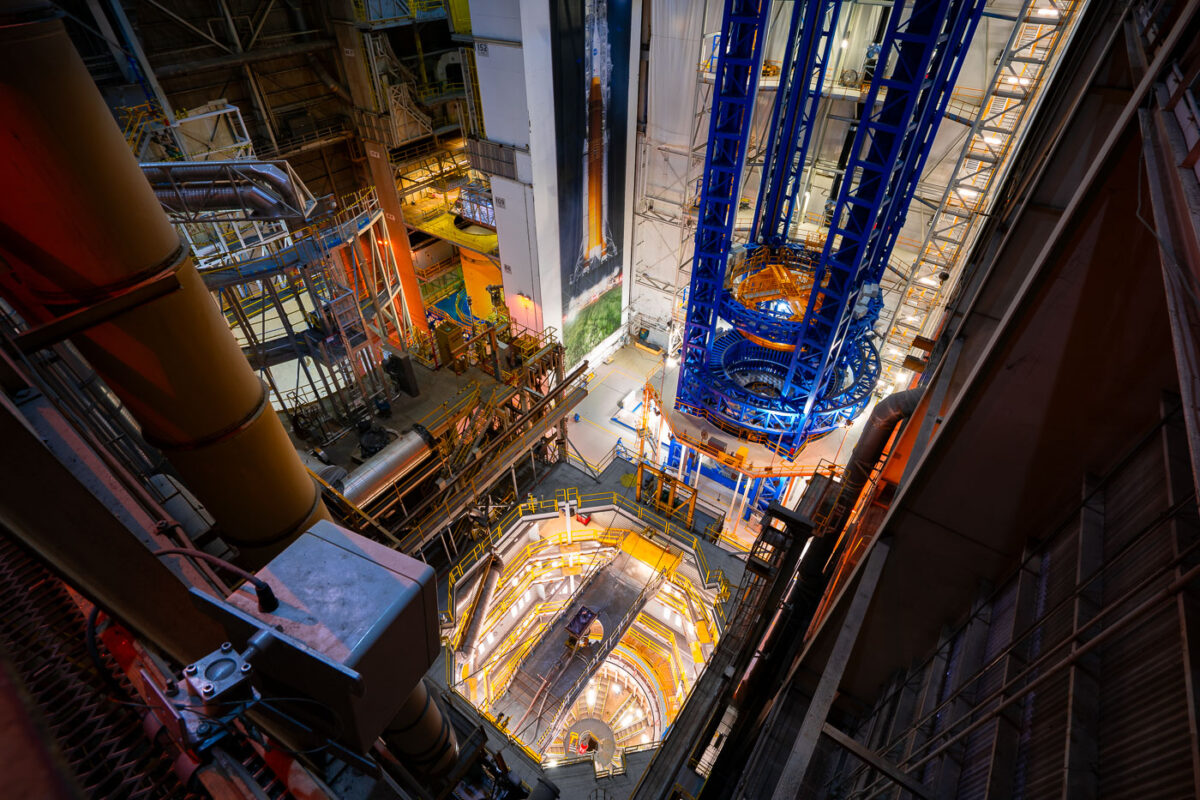
NASA Vertical Assembly Center at Michoud
The Vertical Assembly Center rises inside the Michoud Assembly Facility, where major sections of NASA’s Space Launch System core stage are stacked and integrated. This multi-story structure supports the alignment and joining of large rocket elements, including propellant tanks and structural segments, into a single flight article. Built at Michoud and later transported for testing and launch, each core stage reflects the continuation of large-scale rocket manufacturing at a facility that has supported U.S. human spaceflight since the Saturn V program.

The Vertical Assembly Center rises inside the Michoud Assembly Facility,

The Boeing Gore Weld Tool at Michoud Assembly Facility in New Orleans is used for friction-stir welding of aluminum dome sections for aerospace vehicles like NASA's SLS rocket.
Boeing Gore Weld Tool at Michoud Assembly Facility, New Orleans. The facility manufactures components for next-generation aerospace vehicles, including the Space Launch System (SLS) for NASA's Artemis program. The Gore Weld Tool, built by Futureamic, joins massive aluminum dome sections using friction-stir welding for rocket fuel tanks and spacecraft pressure vessels. Michoud Assembly Facility has a long history in spaceflight hardware production, having previously manufactured components for the Saturn V rockets and Space Shuttle external tanks. It continues to be a key national center for large-scale precision manufacturing and assembly of spaceflight hardware, supporting deep space exploration efforts. Keywords: Boeing, Michoud Assembly Facility, New Orleans, Gore Weld Tool, Space Launch System, Artemis program, friction-stir welding, aerospace manufacturing

Boeing Gore Weld Tool at Michoud Assembly Facility, New Orleans
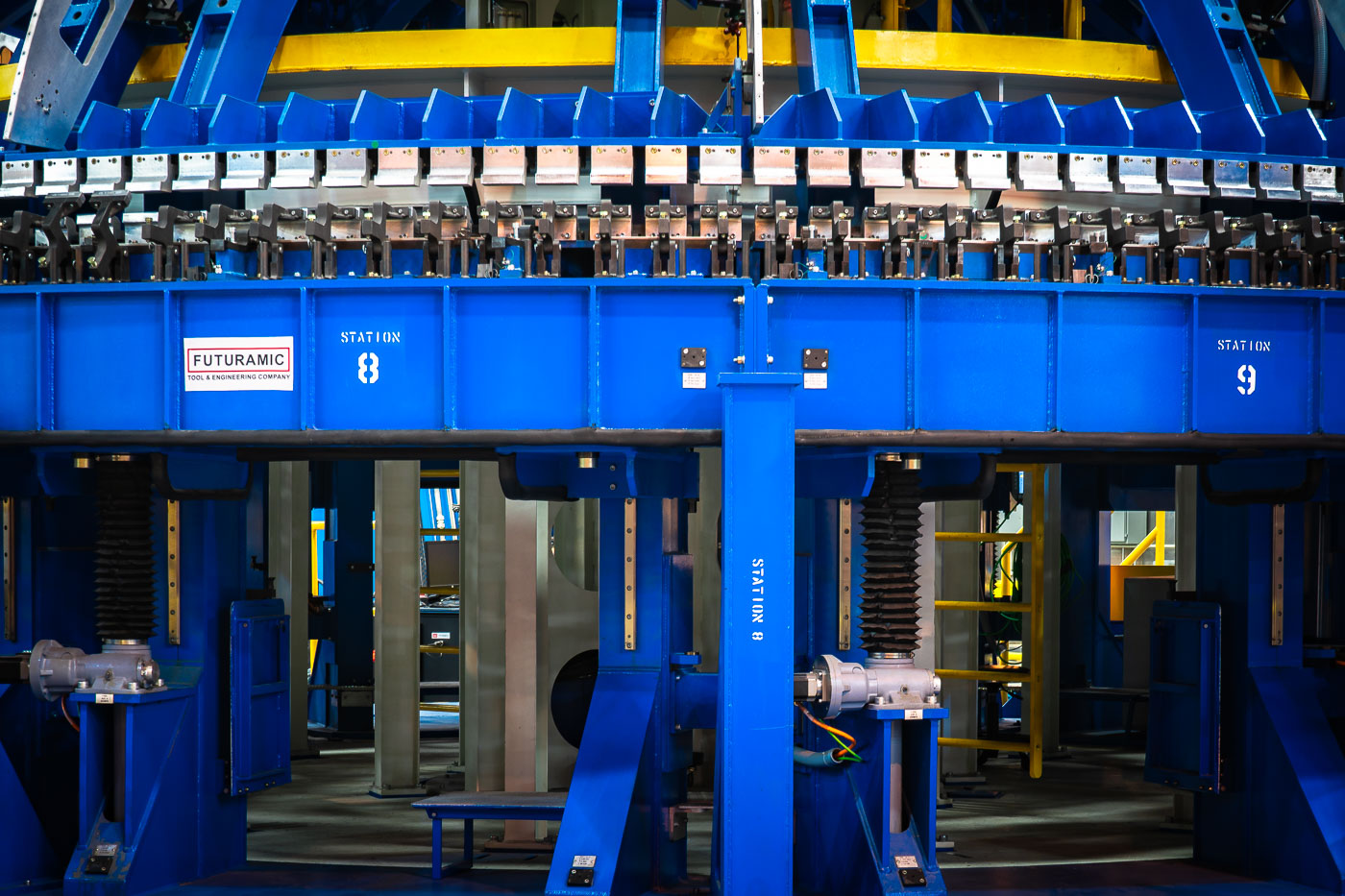
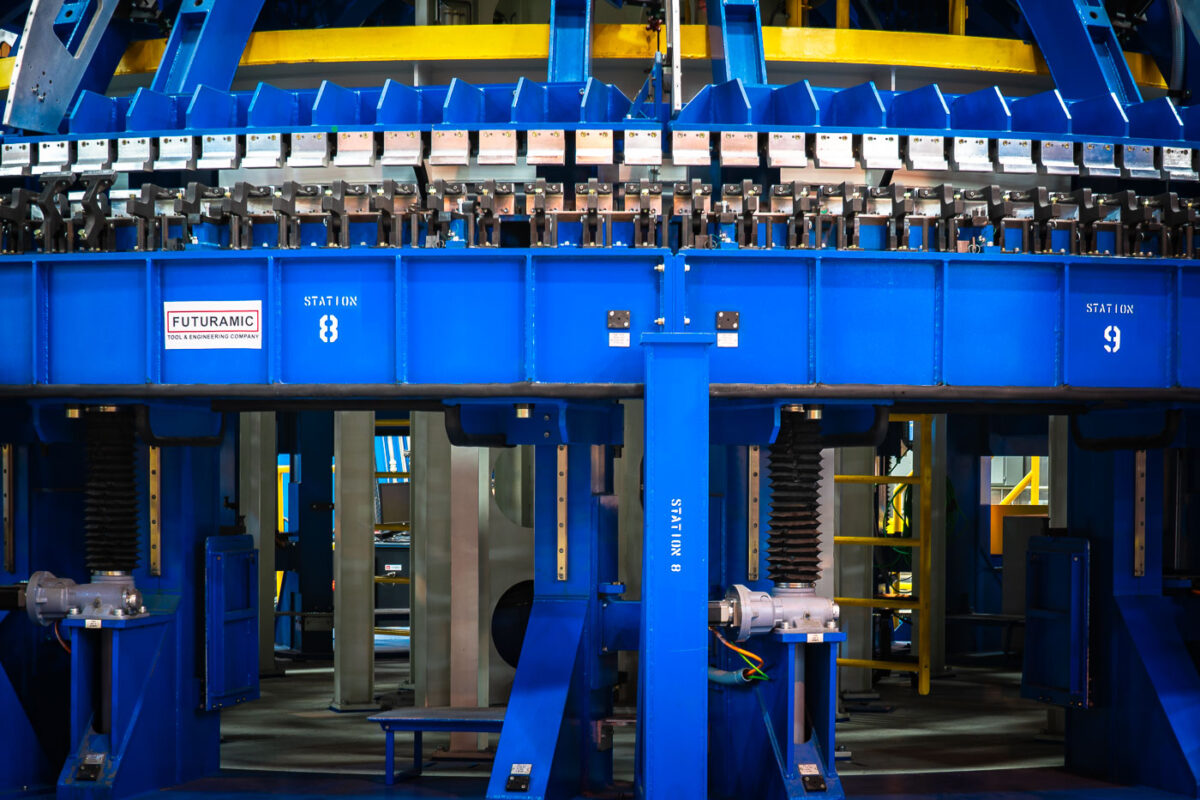
Boeing Gore Weld Tool Station 8 at NASA's Michoud Assembly Facility in New Orleans, Louisiana, used for manufacturing the SLS core stage for the Artemis program.
The image shows the Boeing Gore Weld Tool Station 8 at NASA's Michoud Assembly Facility in New Orleans, Louisiana. This heavy-duty industrial equipment is designed for precision welding of large-scale components. A label on the equipment reads "FUTURAMIC TOOL & ENGINEERING COMPANY." This station is part of the manufacturing process for the Space Launch System (SLS) core stage, a critical component for NASA's Artemis program. The SLS is the most powerful rocket ever built and is intended to carry astronauts to the Moon and eventually to Mars. The Michoud Assembly Facility has a long history of building large structures for space exploration, including the Saturn V rocket and the Space Shuttle external fuel tanks.

NASA Michoud: SLS Core Stage Weld Tool Station 8

The Boeing Gore Weld Tool Station 8, labeled "FUTURAMIC TOOL & ENGINEERING COMPANY," is a large industrial machine at NASA's Michoud Assembly Facility in New Orleans, Louisiana, used for welding components for the Space Launch System.
The Boeing Gore Weld Tool Station 8, labeled "FUTURAMIC TOOL & ENGINEERING COMPANY," is a large industrial machine located at NASA's Michoud Assembly Facility in New Orleans, Louisiana. This station is designed for precision welding of large-scale components for space exploration. This equipment is integral to the manufacturing of the Space Launch System (SLS) core stage, a key element of NASA's Artemis program aimed at returning humans to the Moon and venturing to Mars. The Michoud facility has a legacy of constructing major space hardware, including the Saturn V rocket and Space Shuttle external tanks, underscoring its critical role in America's space endeavors. Keywords: Artemis, NASA, Michoud Assembly Facility, SLS, Space Launch System, New Orleans, Aerospace Manufacturing

Boeing Gore Weld Tool Station 8, Michoud Assembly Facility, New Orleans
NASA Space Launch System Liquid Oxygen Tank
A liquid oxygen tank for NASA’s Space Launch System core stage is positioned for processing inside the Michoud Assembly Facility. Formed from welded aluminum-lithium sections, the tank stores supercooled liquid oxygen that feeds the RS-25 engines during launch. Together with the larger liquid hydrogen tank, it supplies the propellants required to generate thrust for missions in NASA’s Artemis program.

NASA Space Launch System Liquid Oxygen Tank
NASA Michoud Assembly Facility at Night
The NASA logo is illuminated on the exterior of the Michoud Assembly Facility in New Orleans, Louisiana. Established during World War II, this vast industrial complex was later repurposed to support the Apollo and Space Shuttle programs. Today, the facility continues its central role in U.S. space manufacturing. Michoud currently supports the construction of major components for NASA’s Artemis missions, including the Space Launch System rocket and the Orion spacecraft.

NASA Michoud Assembly Facility: Illuminated Logo, New Orleans

Built in Minneapolis

Minneapolis Photographer

Browse by location, move through long-running series, or start with recent work.