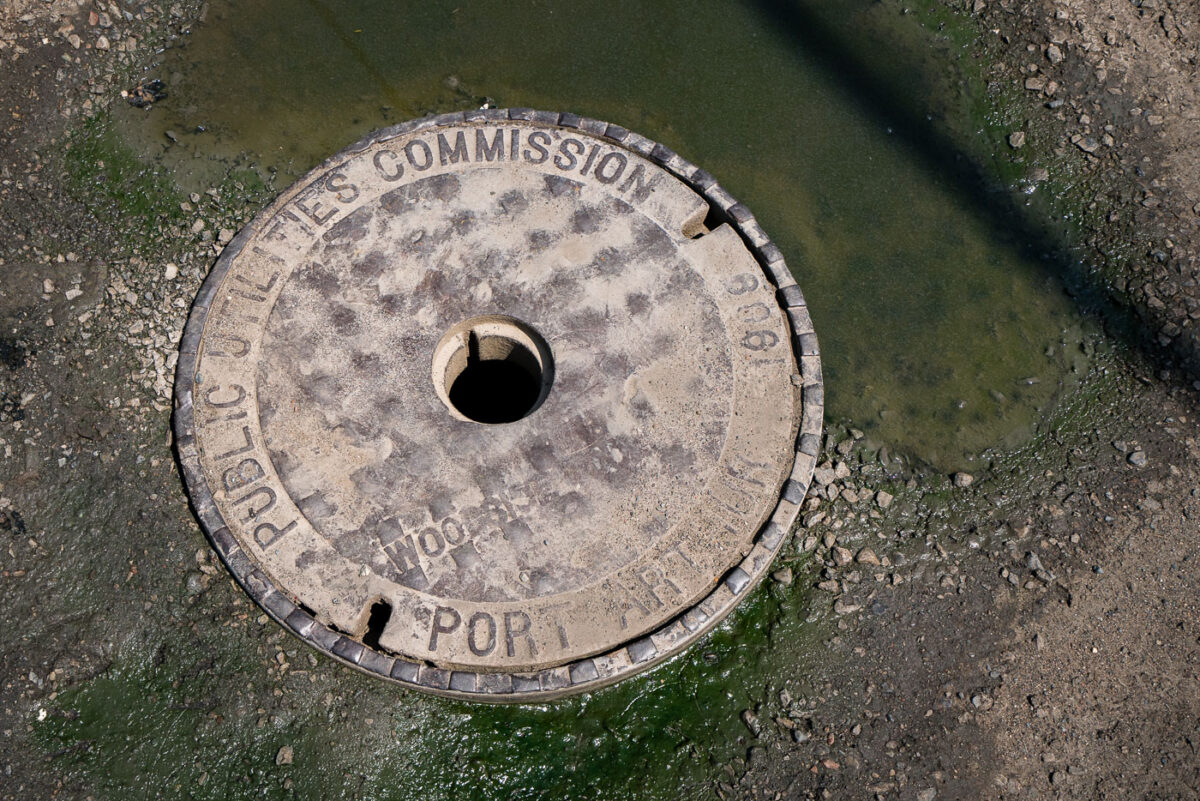
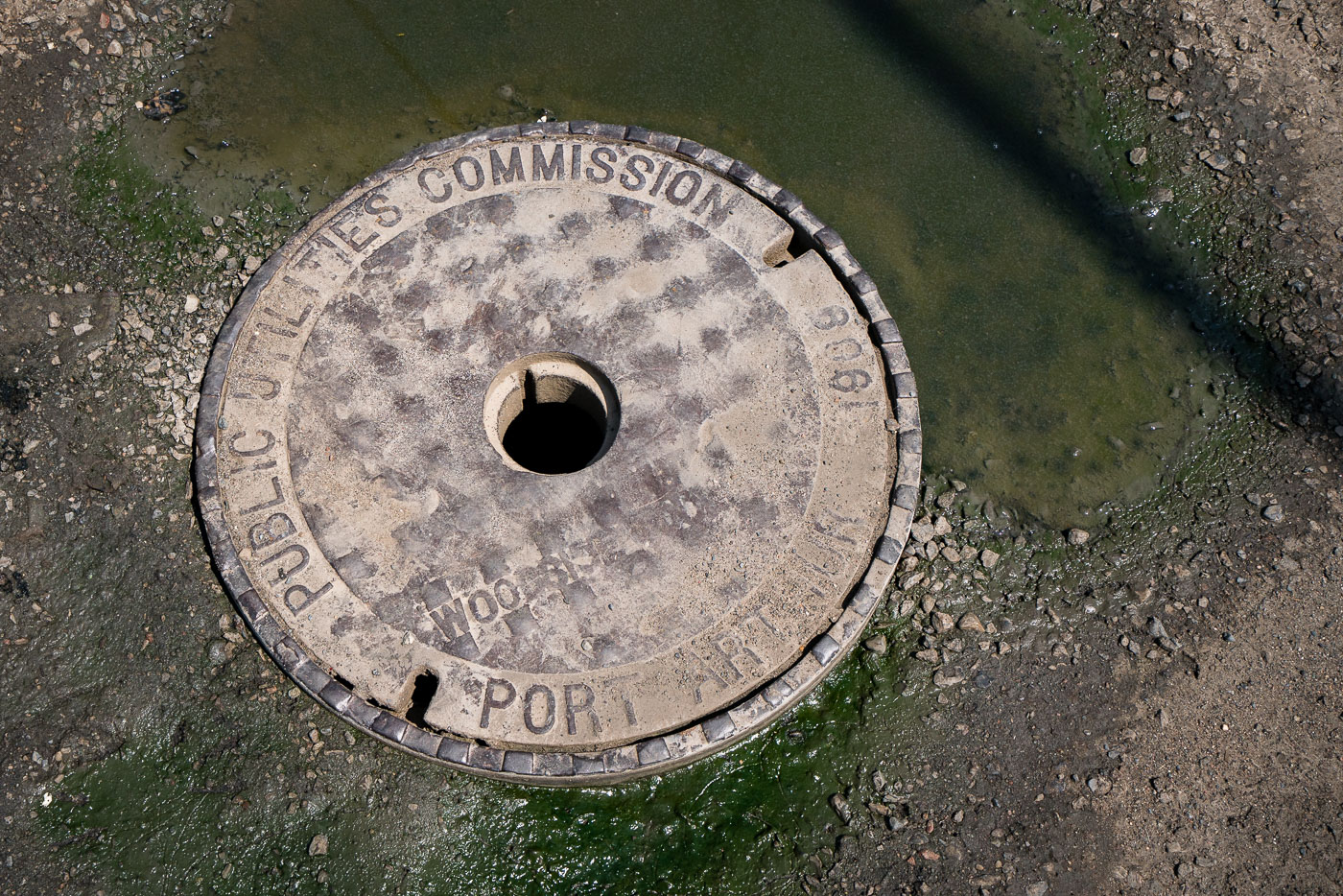
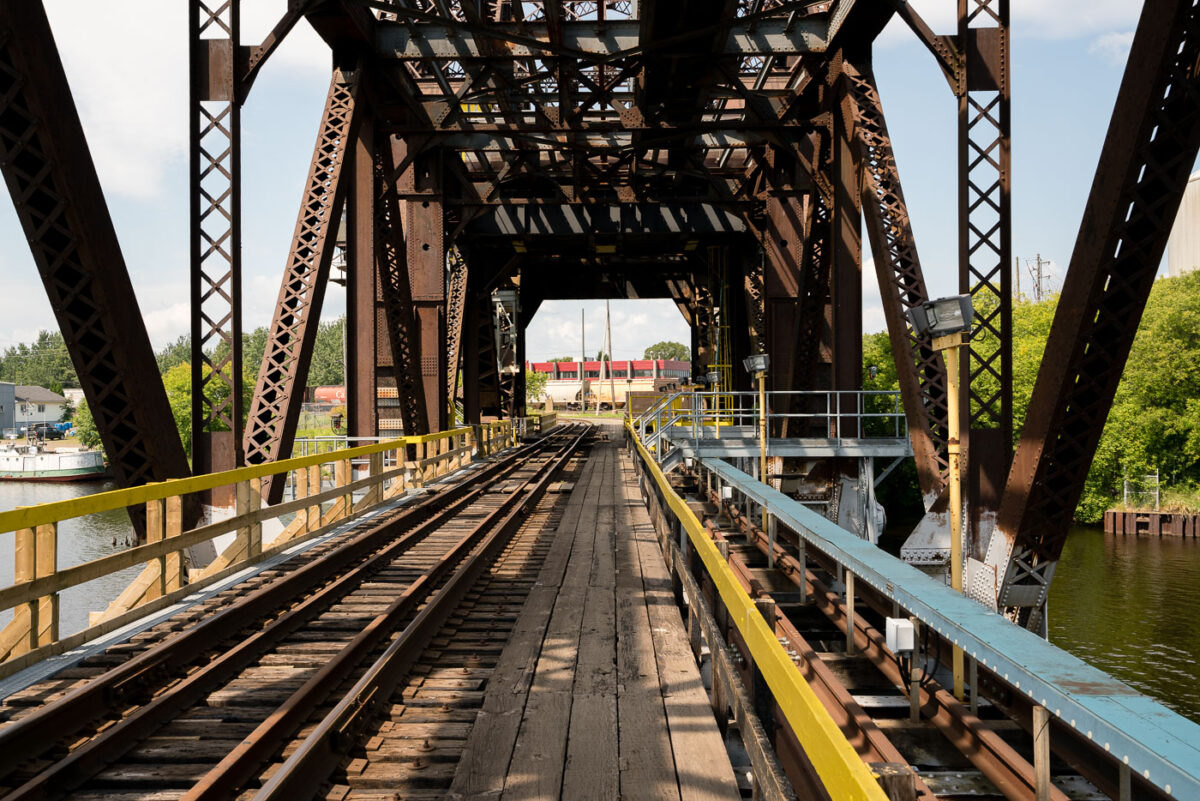
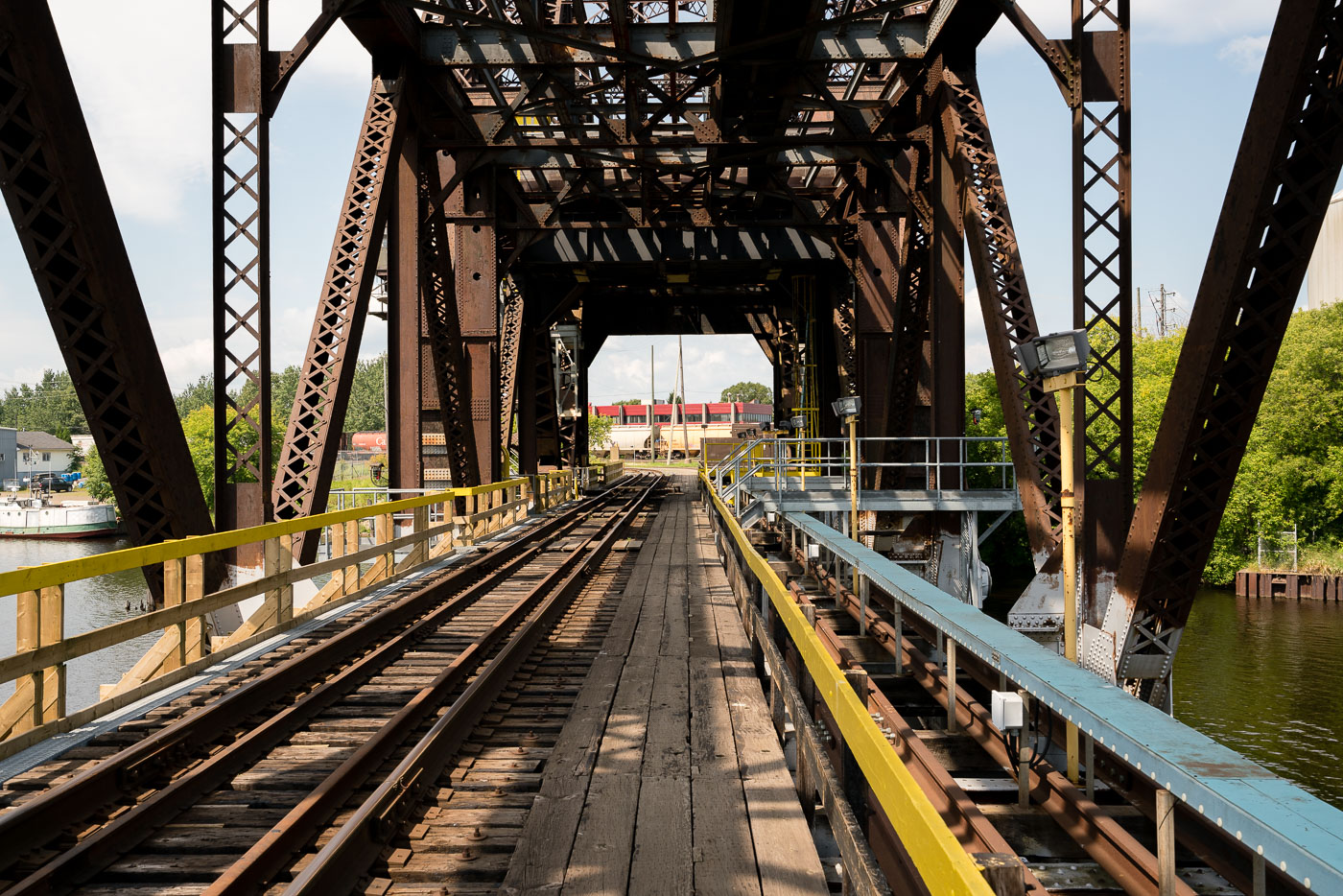
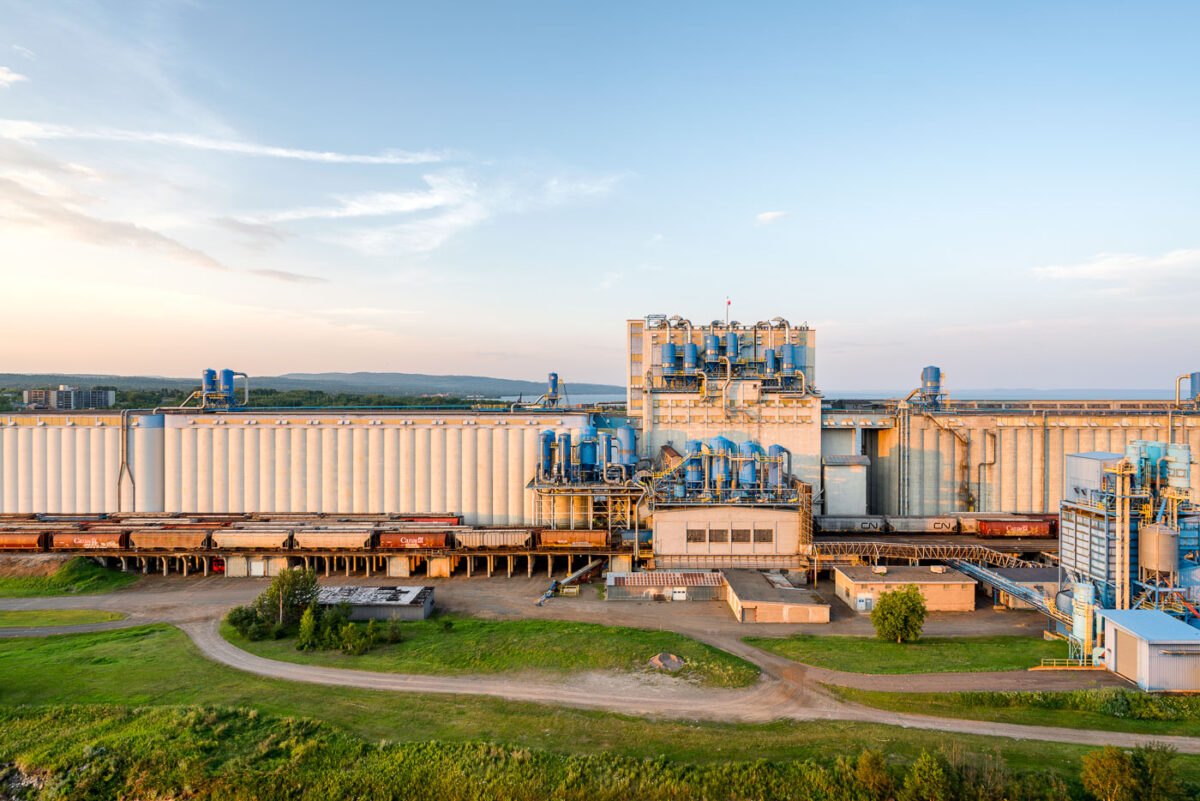
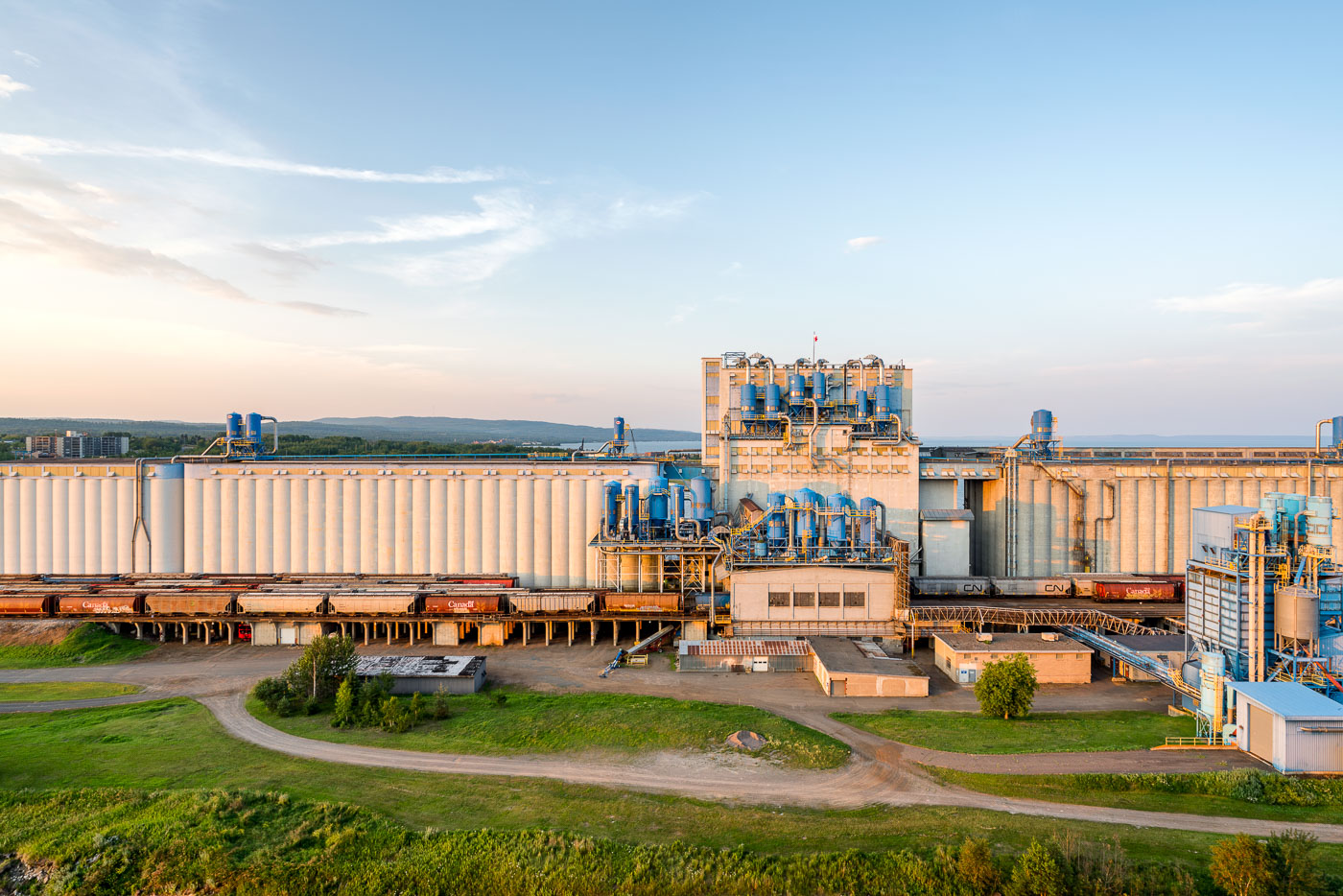
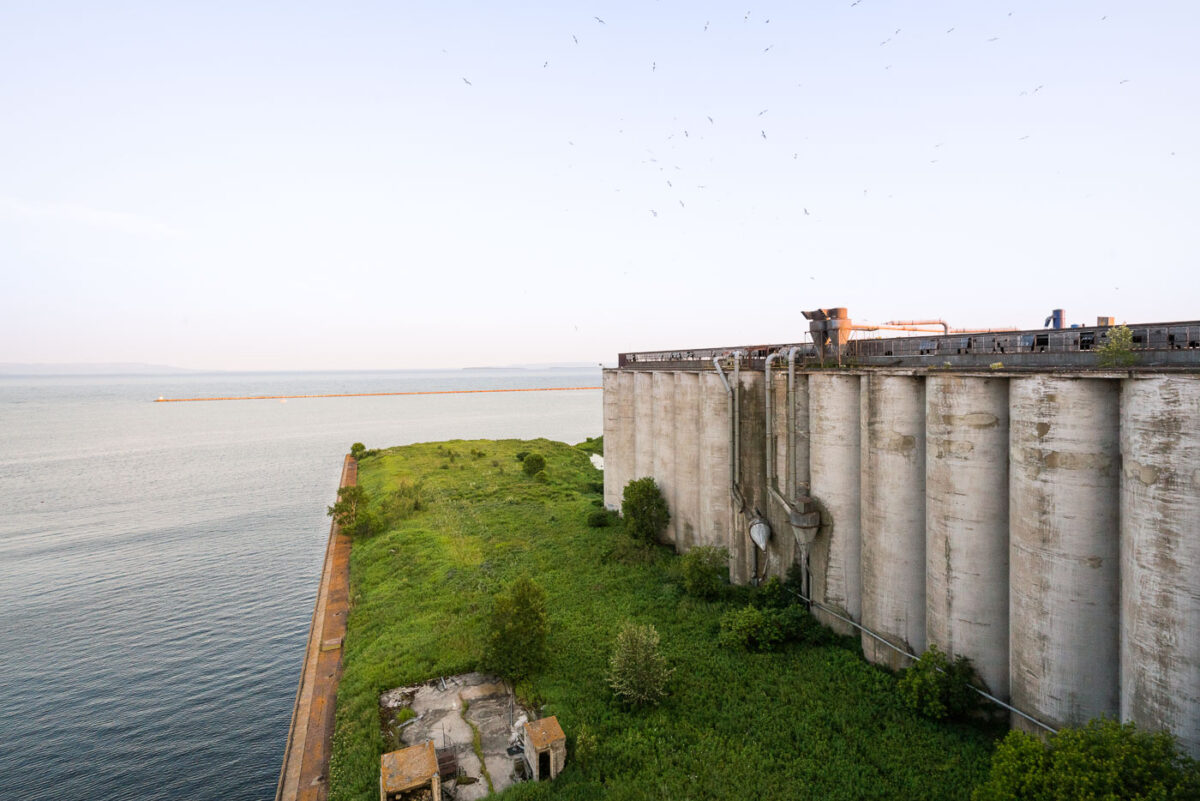
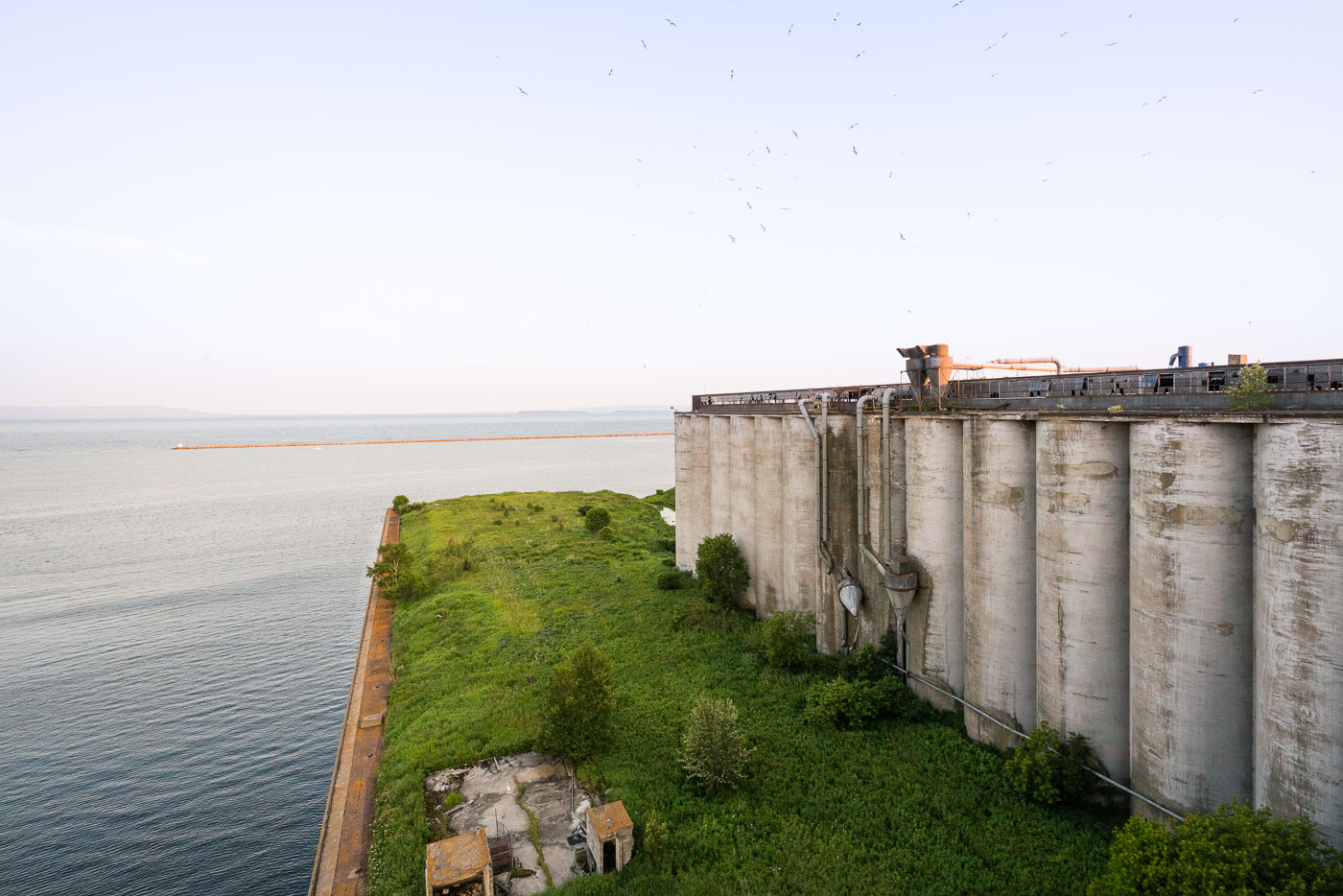
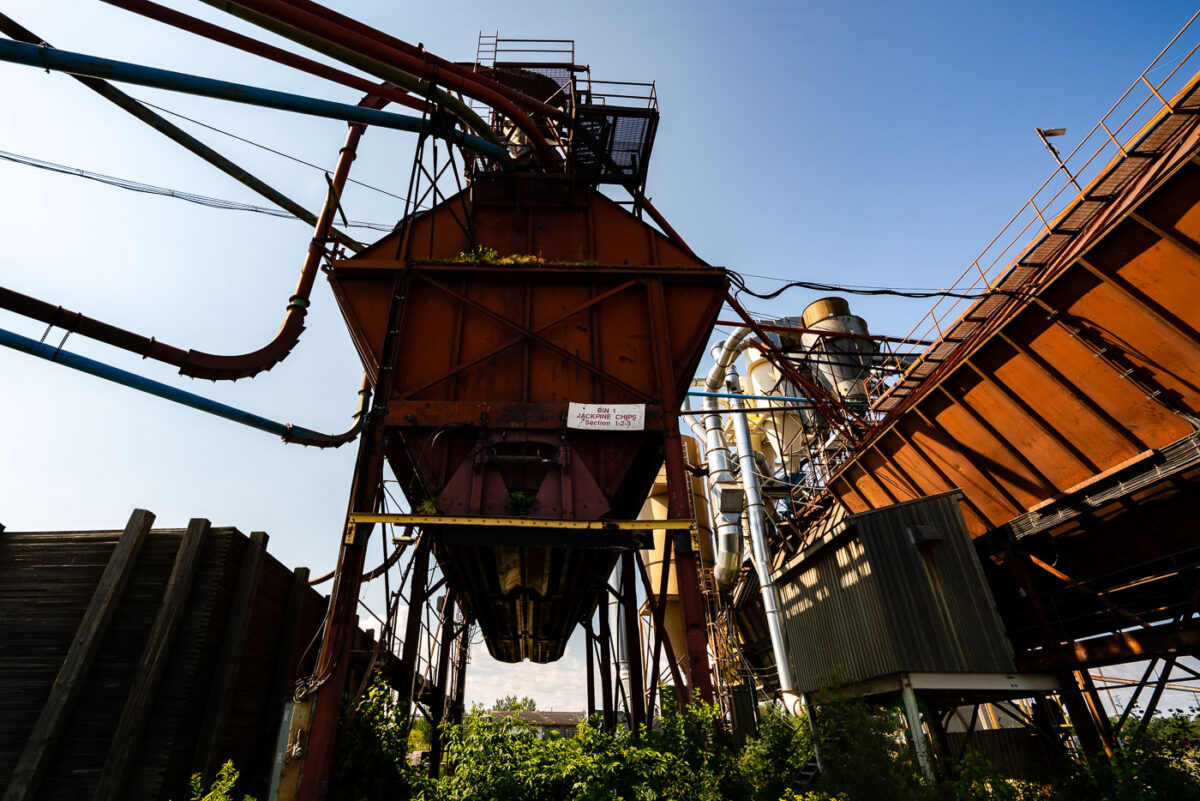
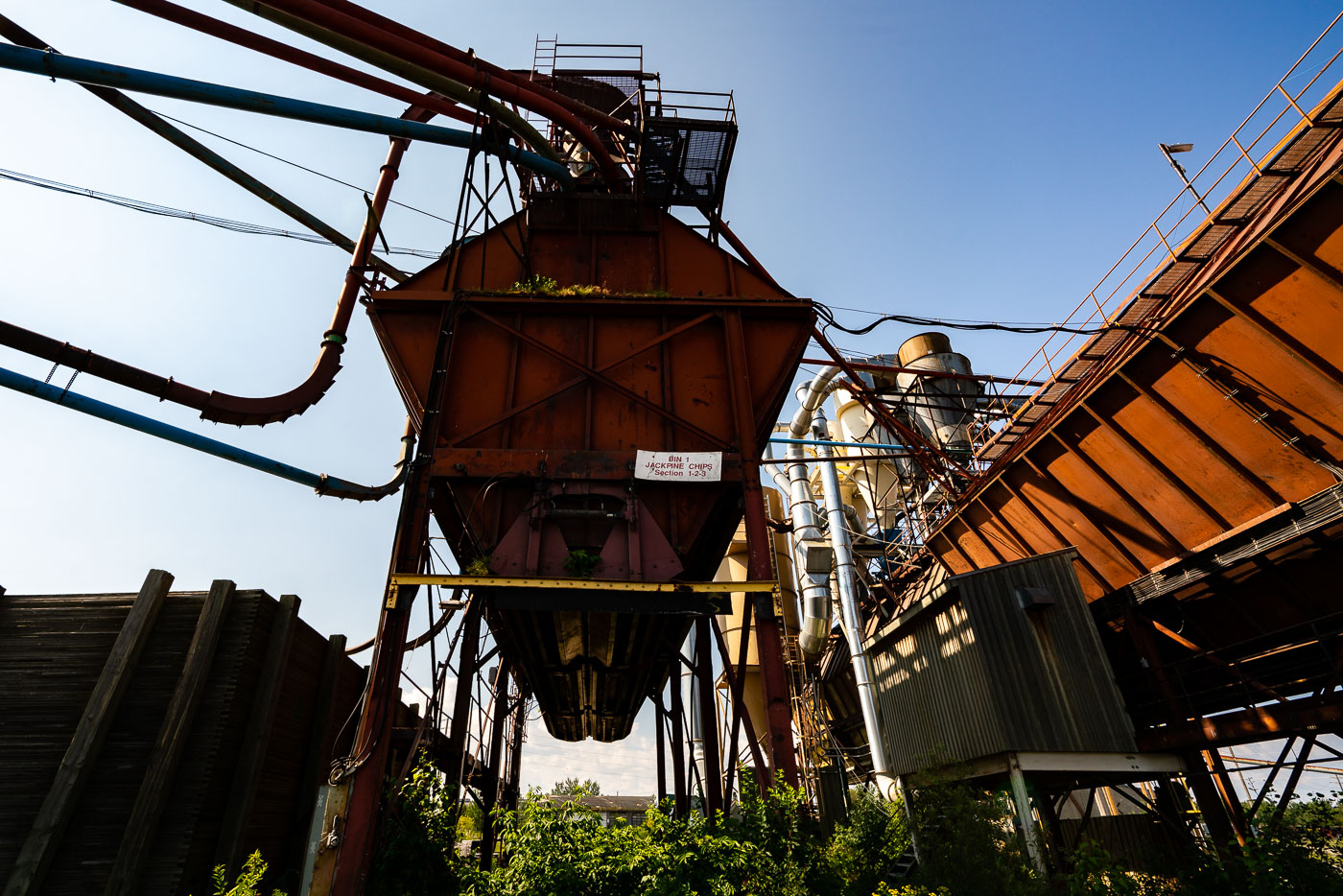
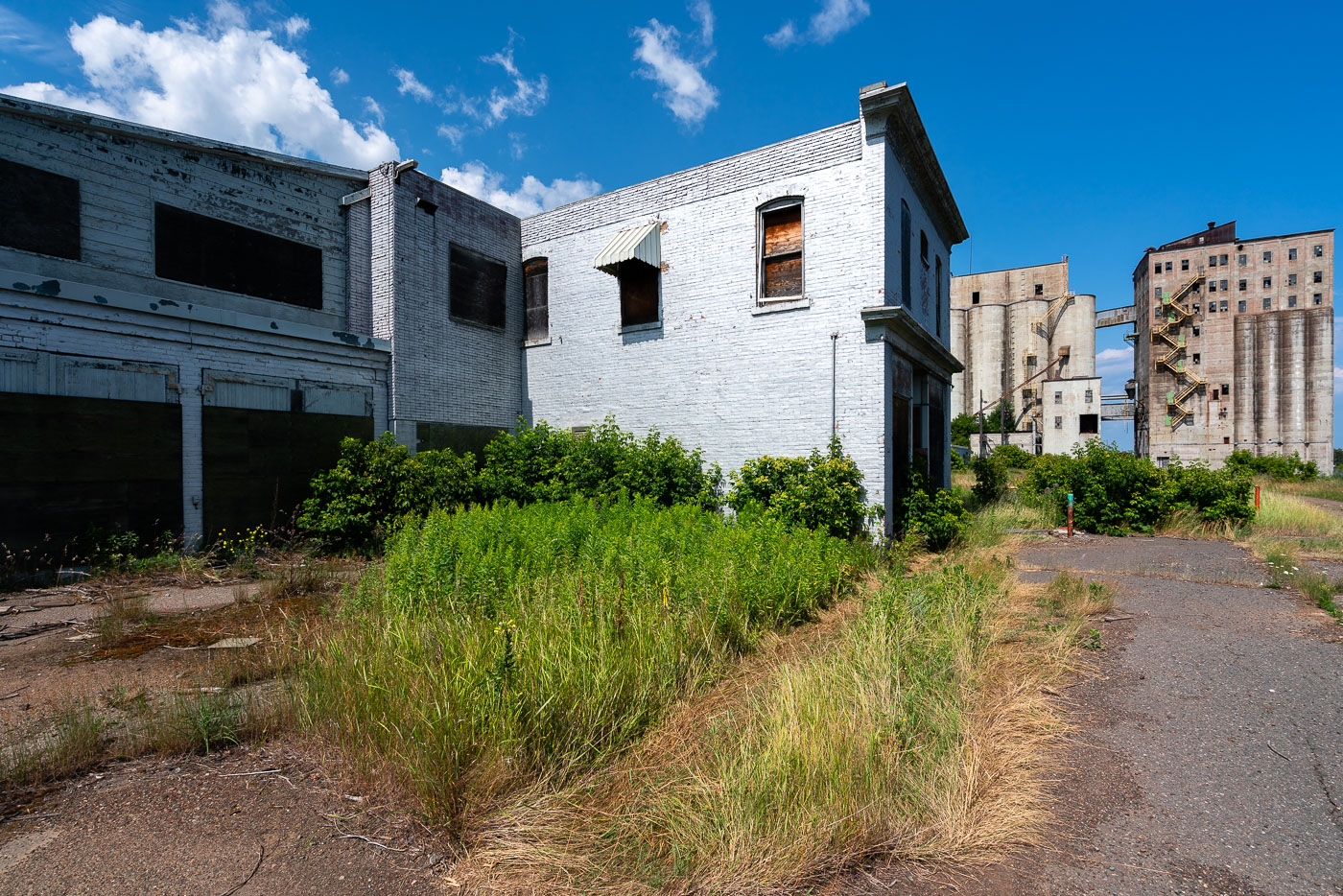
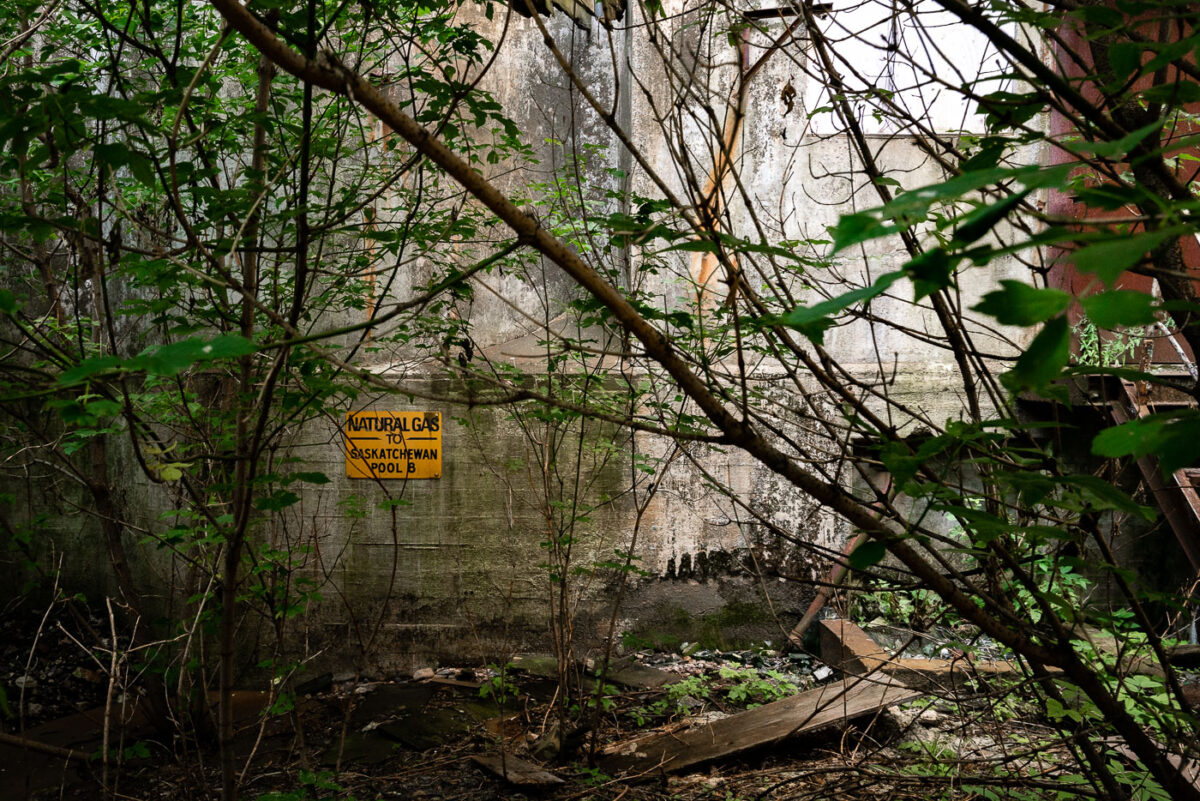
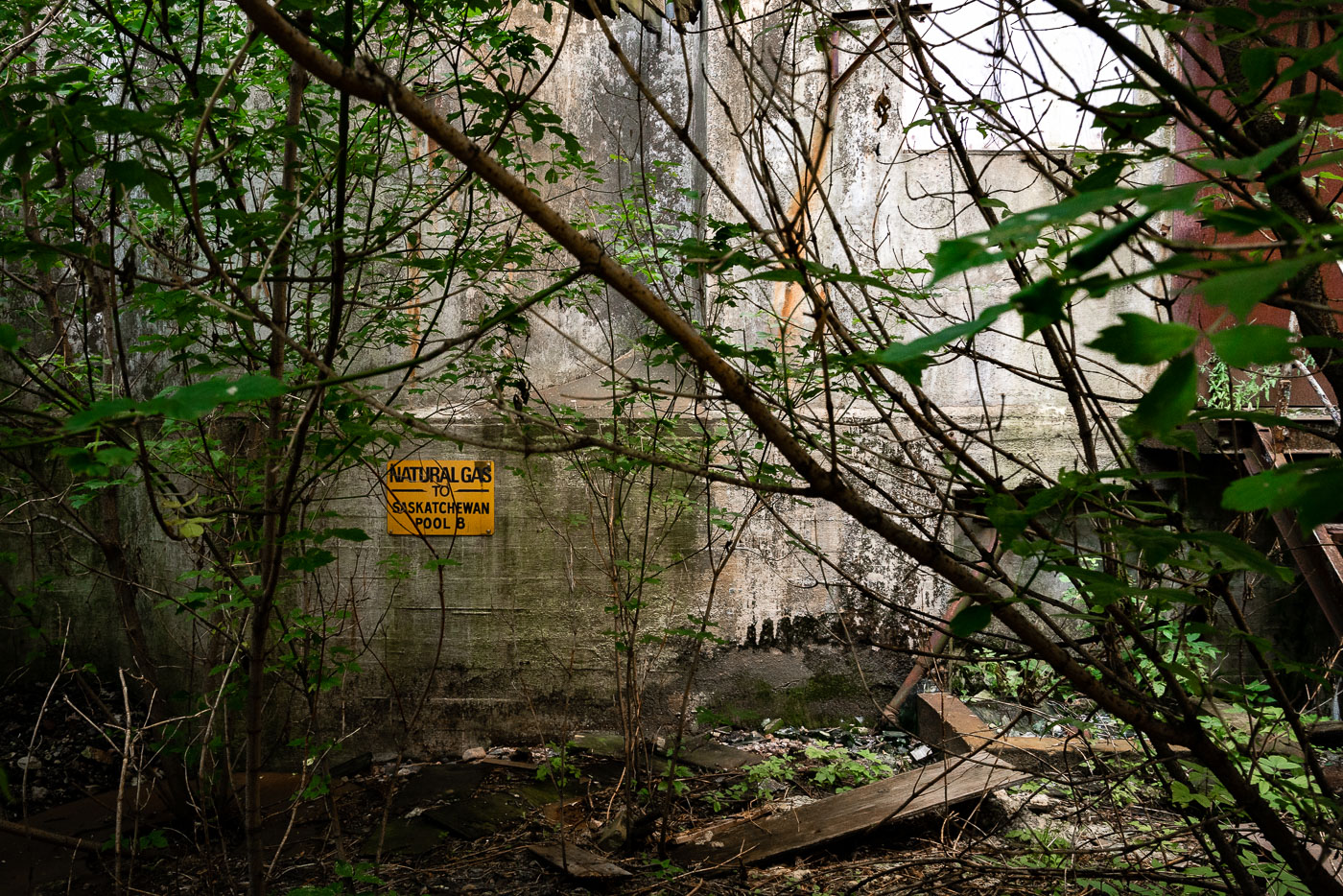
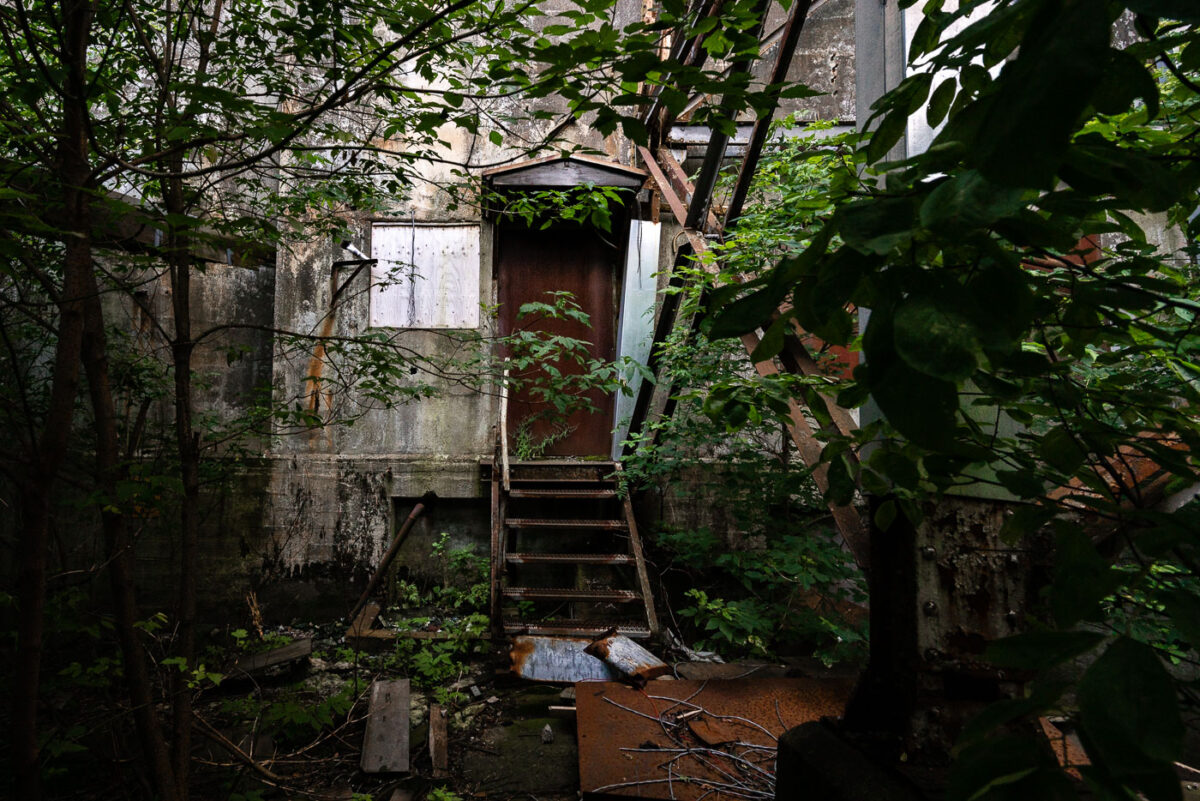
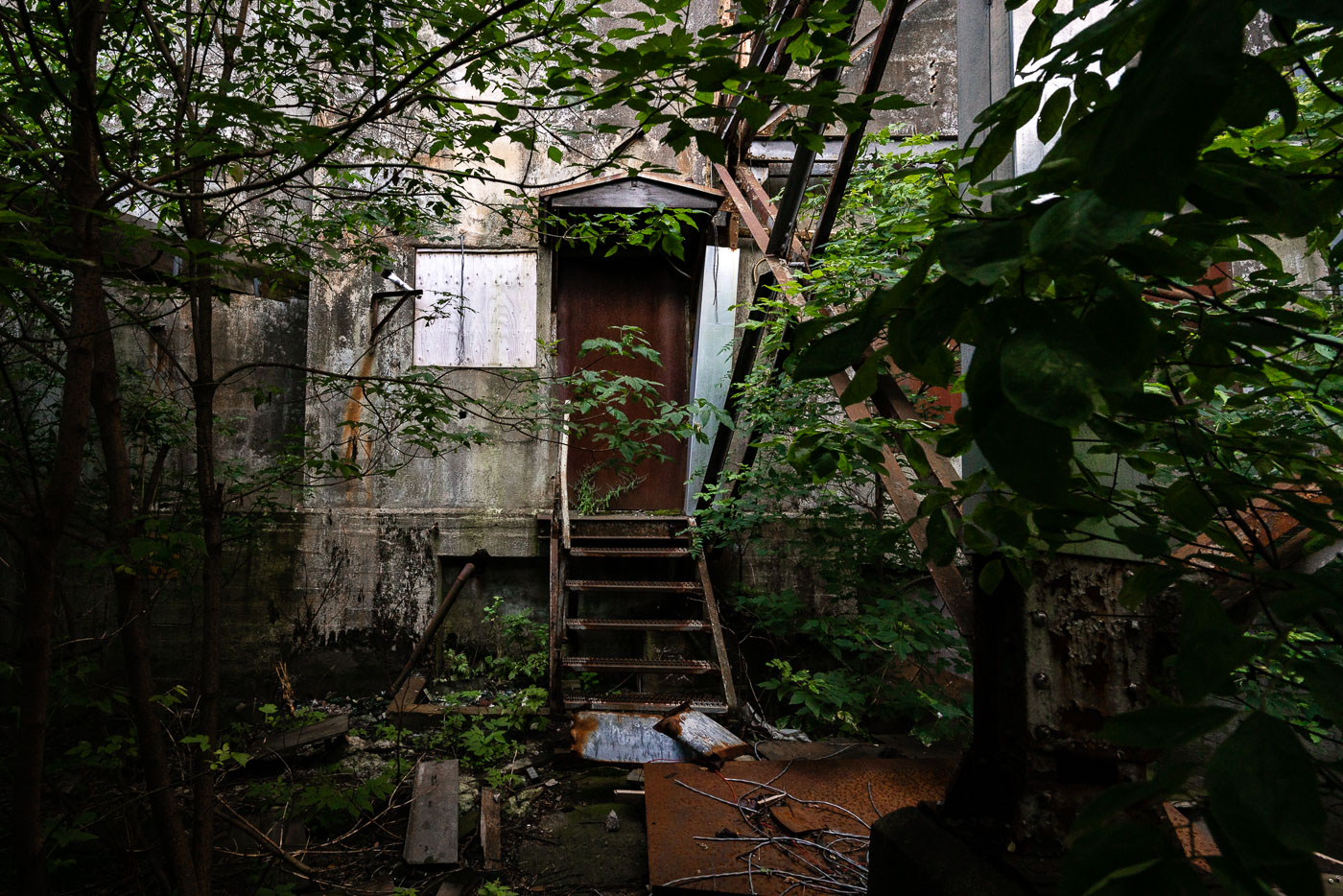
July 30, 2017 — This cast iron manhole cover, dated 1906, originates from the Port Arthur Public Utilities Commission. Before the amalgamation of Port Arthur and Fort William into Thunder Bay in 1970, Port Arthur independently managed its water, sewer, and electrical services. This cover is a testament to the early municipal engineering efforts in northwestern Ontario, reflecting the city's industrial growth as a significant Lake Superior port. It remains a functional part of Thunder Bay's integrated public works system.July 30, 2017 — The Canadian Pacific Railway Swing Bridge in Thunder Bay, Ontario, spans the Kaministiquia River, facilitating rail traffic near the city's historic grain terminals. Constructed in the early 20th century, this steel truss bridge was designed to pivot, allowing maritime vessels passage to and from Lake Superior. It stands as a testament to Thunder Bay's past as a critical hub for grain export, connecting western Canadian railways with Great Lakes shipping routes.July 29, 2017 — The Thunder Bay Grain Elevators, located in Ontario, Canada, are a critical component of the region's agricultural infrastructure. These facilities, seen here with CN rail cars, are designed for the storage and shipment of grain, playing a vital role in Canada's export economy. The massive cylindrical structures are characteristic of grain elevator architecture, built to efficiently handle large volumes of commodities. Their presence in Thunder Bay, a major port city on Lake Superior, highlights the historical importance of water and rail transportation for moving agricultural products from the Prairies to global markets.July 29, 2017 — This concrete grain elevator complex in Thunder Bay, Ontario, Canada, stands as a relic of the region's agricultural past. Grain elevators were essential for storing and shipping grain, playing a vital role in Canada's economy, particularly in the Prairies and along the Great Lakes. The structure's cylindrical concrete silos are characteristic of mid-20th-century industrial architecture designed for efficient bulk storage. While this facility is no longer operational, it represents a significant piece of industrial heritage, reflecting the importance of grain transportation and storage infrastructure in the development of Canadian agriculture and trade.July 29, 2017 — The skeletal remains of the Great West Lumber Sawmill's conveyor systems in Thunder Bay, Ontario, represent a significant chapter in the region's industrial past. This facility, once a cornerstone of Thunder Bay's forestry sector, processed vast quantities of lumber for distribution across North America. The complex network of chutes and conveyors, now weathered and overgrown, facilitated the movement of raw materials and finished products. Its disuse marks a transition in the local economy, leaving behind a stark reminder of the industry's former prominence and the changing industrial landscape of the city.July 29, 2017 — The abandoned Saskatchewan Pool B grain elevator complex in Thunder Bay, Ontario, represents a significant chapter in Canada's agricultural export history. Constructed in the early 20th century, these facilities were vital for processing and shipping grain from the Canadian Prairies to global markets via the Great Lakes. As newer technologies emerged, operations at this site declined by the 1980s, leading to its eventual closure. The weathered structures now stand as a silent monument to Thunder Bay's past as a major hub for grain transportation and its connection to the maritime trade.July 29, 2017 — The abandoned Saskatchewan Pool B grain elevator in Thunder Bay, Ontario, stands as a relic of Canada's agricultural past. Constructed in 1928, this facility was a key component of the Saskatchewan Wheat Pool's cooperative network, designed to efficiently store and transport millions of bushels of prairie grain via the Lake Superior port. After its operational life, which included service under the Canadian Wheat Board, the elevator was decommissioned. Today, its decaying concrete silos and rusting steel infrastructure are being reclaimed by nature along the industrial waterfront.July 29, 2017 — A rusted steel staircase leads to a doorway on the Saskatchewan Pool B grain elevator in Thunder Bay, Ontario. Constructed in 1928, this concrete structure was one of the largest cooperative elevators on Lake Superior, facilitating the export of prairie grain. Following the deregulation of Canada's grain handling system, the elevator ceased operations and was subsequently abandoned. Over time, the surrounding forest has reclaimed the site, with dense summer growth now obscuring the reinforced concrete and steel framework.
Built in Minneapolis
Photographs made over time, focused on place, public life, and ongoing reporting.
Browse by location, move through long-running series, or start with recent work.