Place Archive

New York City

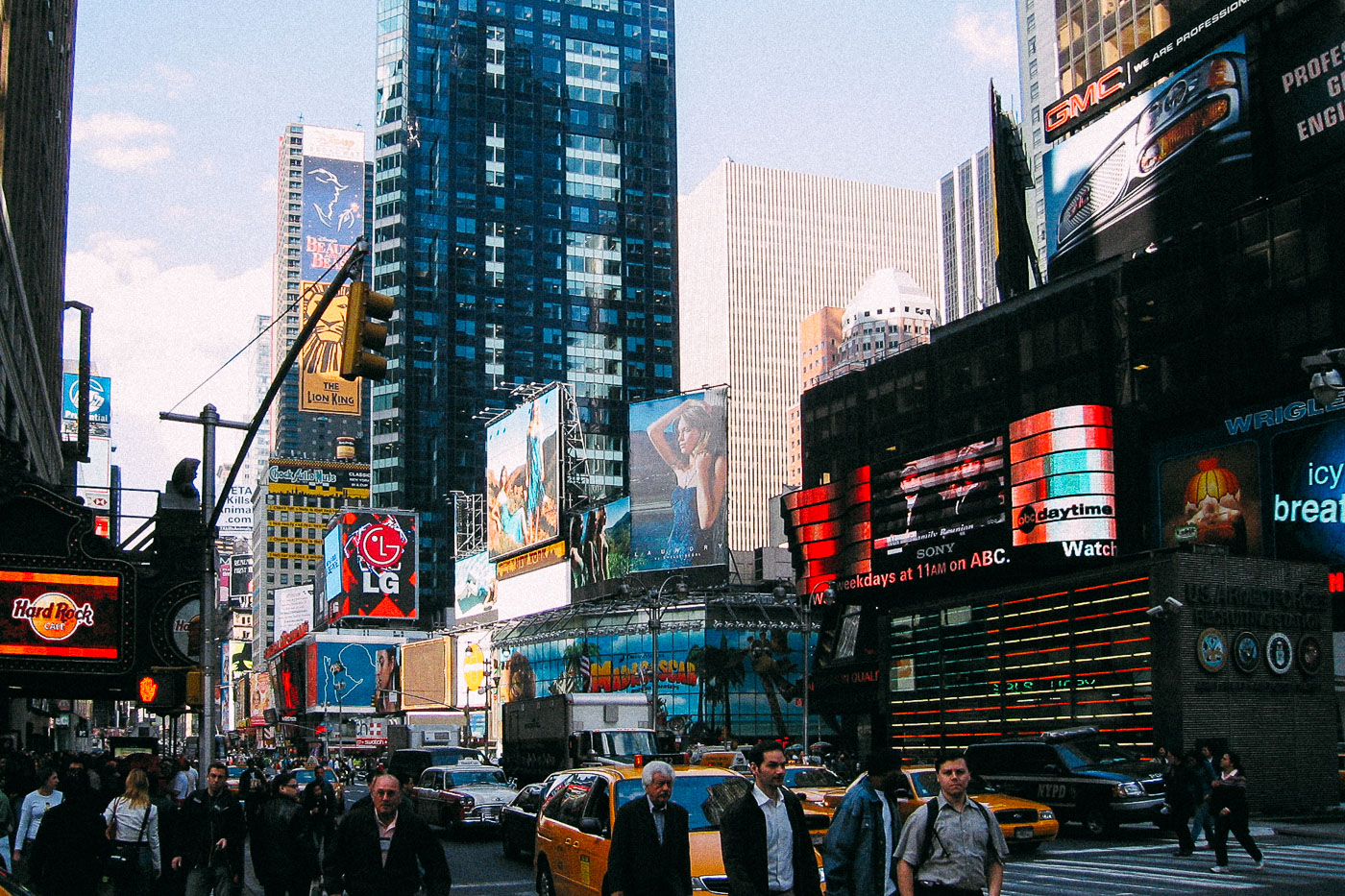
In 2005, Manhattan’s Times Square presented a dense mix of commercial signage, including digital billboards for artists like Stevie Wonder and System of a Down, alongside the iconic yellow taxis navigating crowded streets. The nearby New York Times Building on West 43rd Street, with its classical limestone facade, stood as a historic media landmark during its final years as the newspaper’s headquarters.

4 photo sets 88 photos

Photo Sets

Markers

New York City Photo Locations

78 geotagged photos

Photos
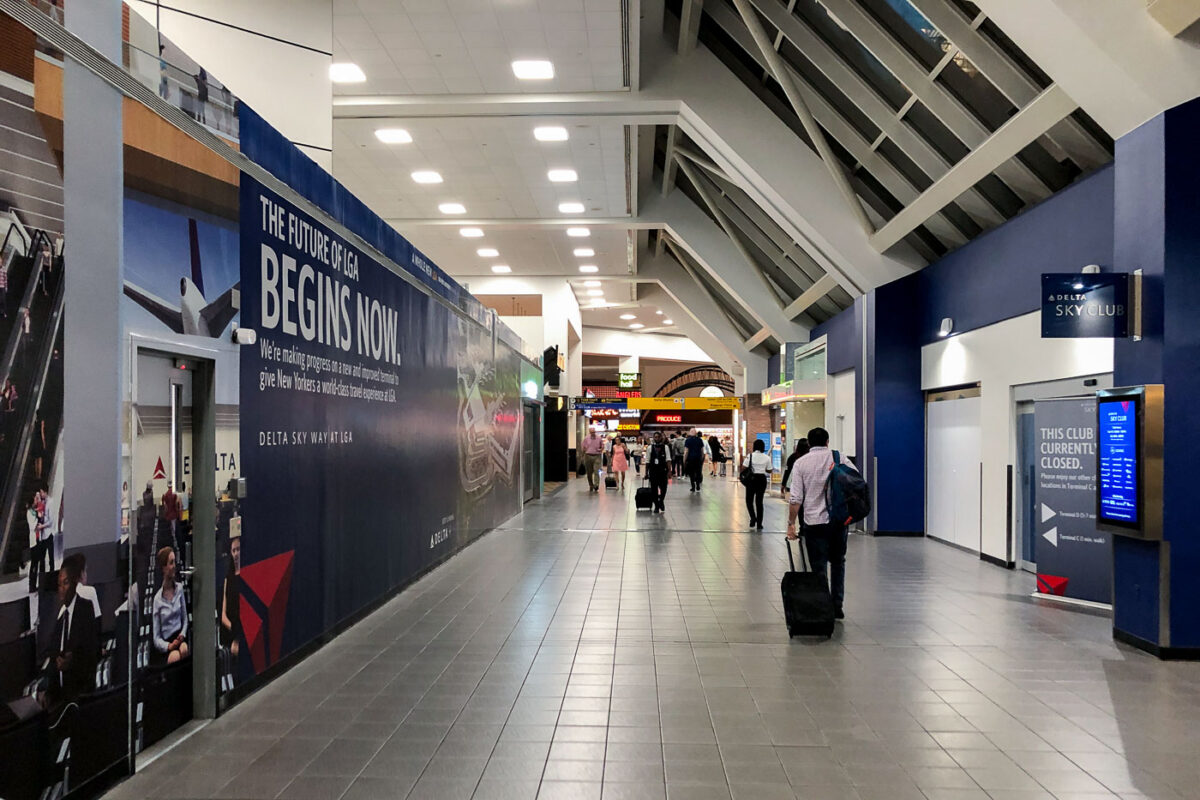
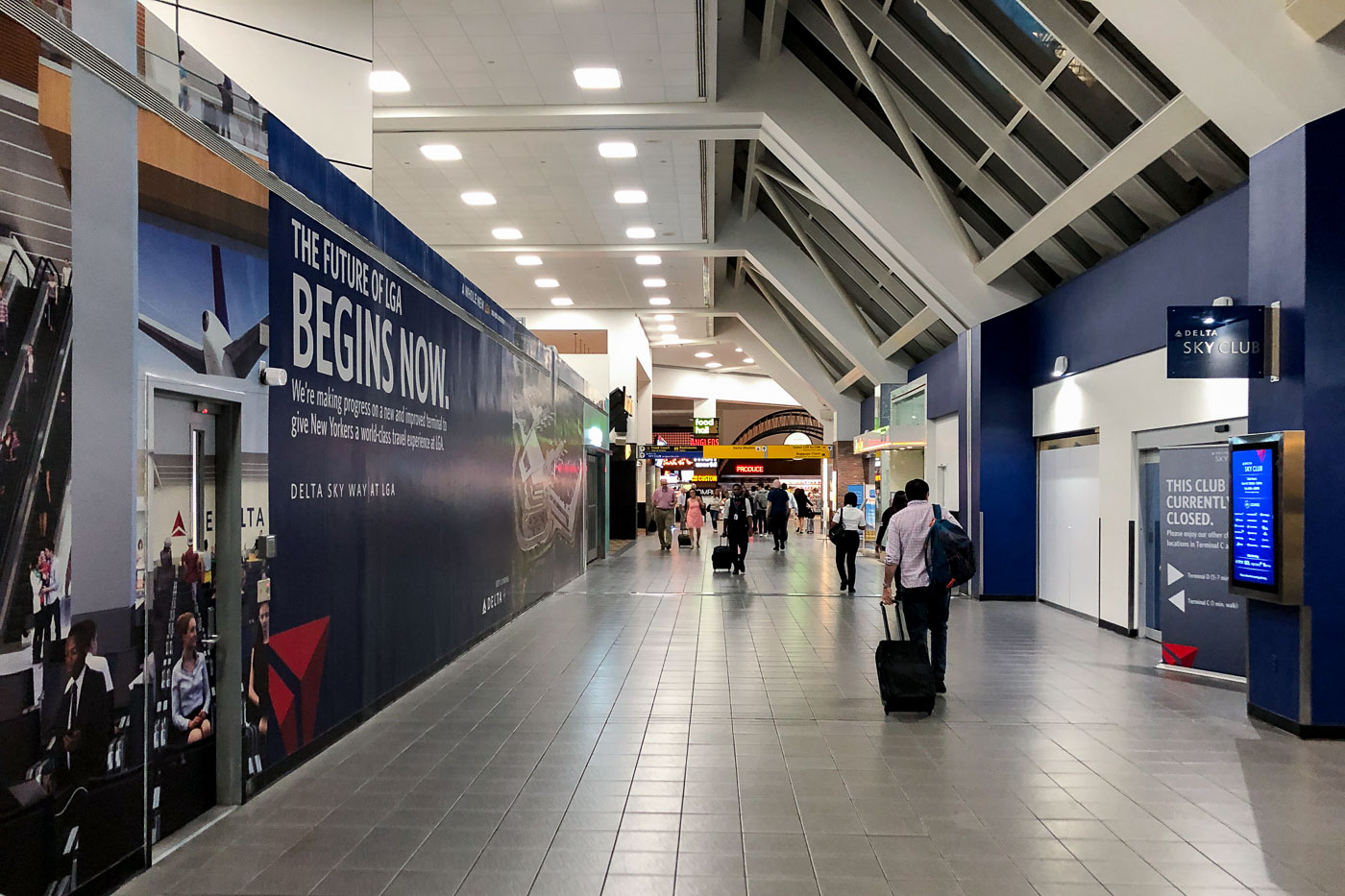
Travelers walk through LaGuardia Airport's temporary corridor past a closed Delta Sky Club during terminal reconstruction.
Delta Sky Way construction at LaGuardia Airport in Queens redirects passengers through a temporary corridor beside the Delta Sky Club. The barriers identify Delta's terminal redevelopment program, part of the airport's broader multibillion-dollar modernization. The project rebuilt and consolidated Delta's facilities at LGA with new gates, concourses, and passenger amenities.
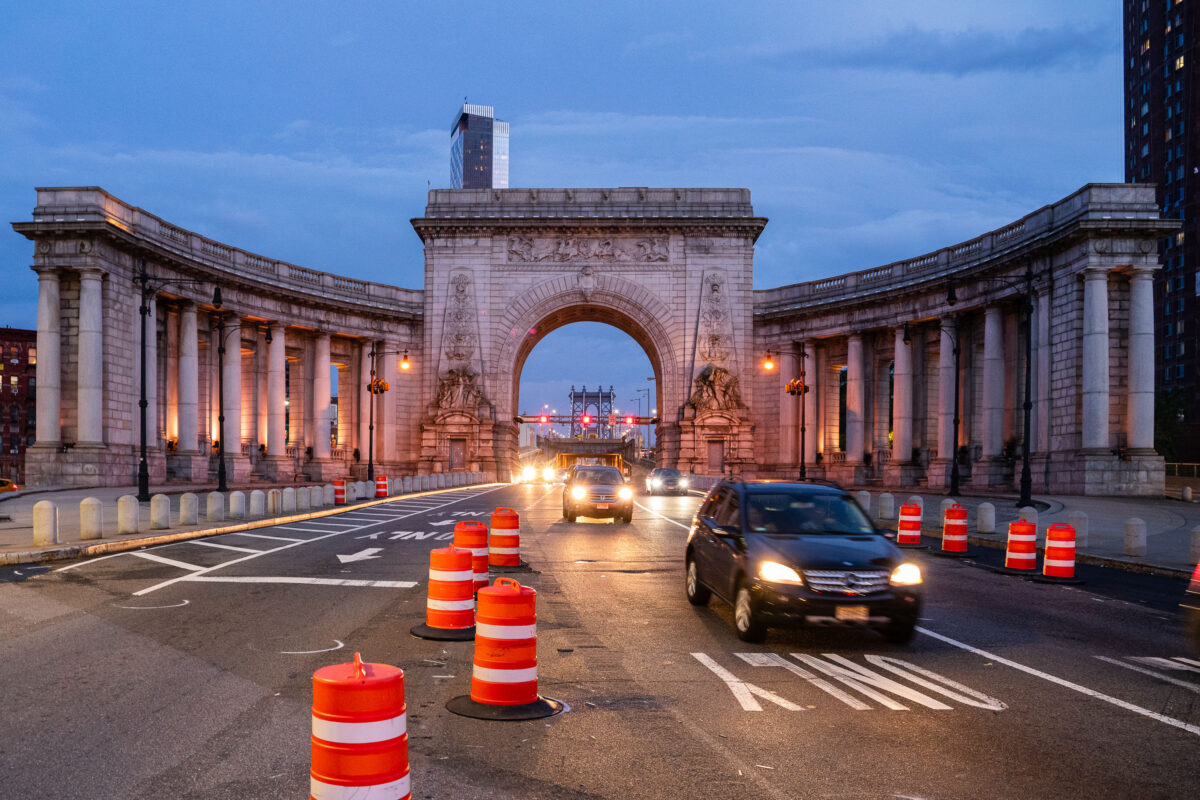
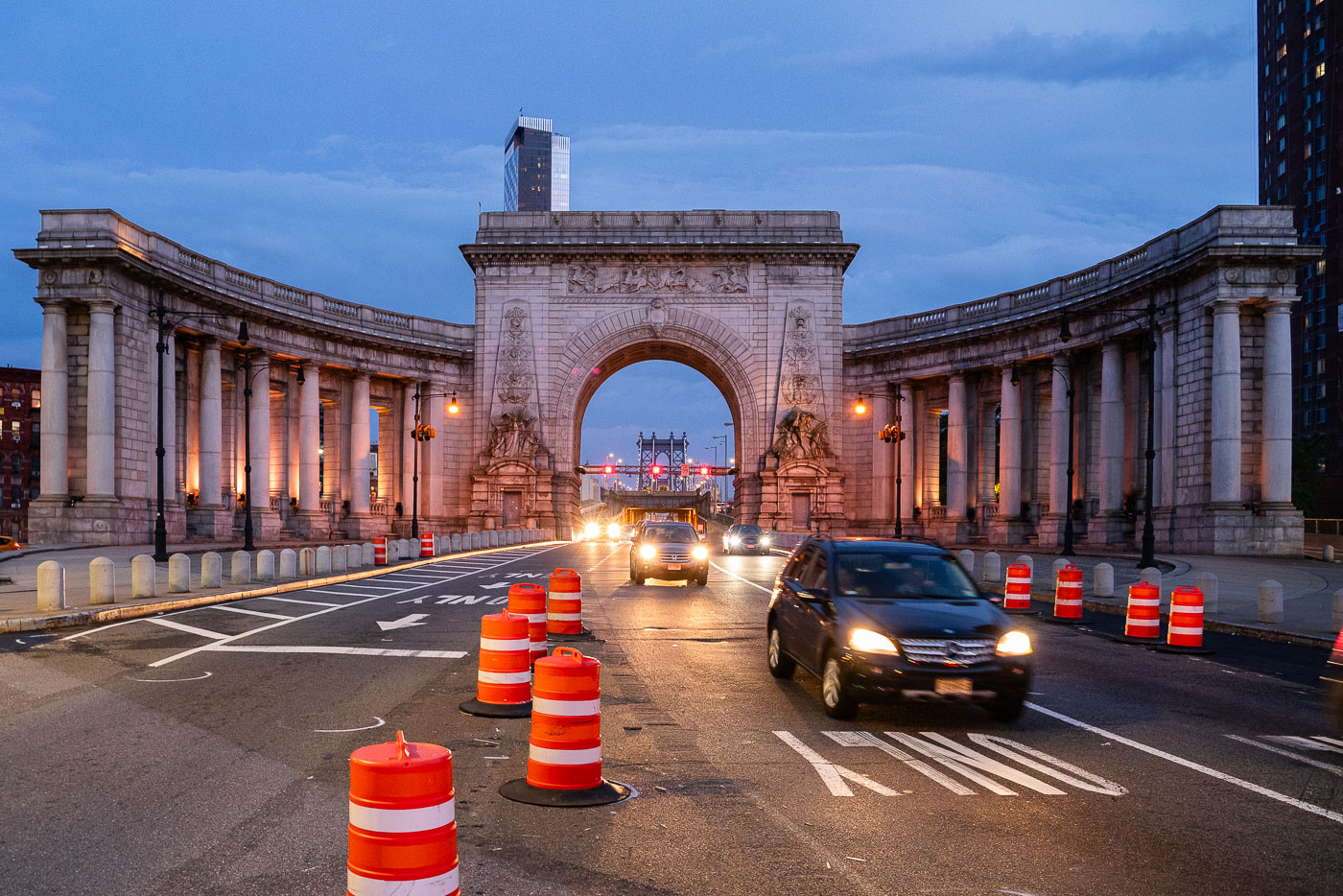
Cars drive through the Manhattan Bridge arch and colonnade at dusk with orange traffic barrels lining the roadway.
Cars pass through the Manhattan Bridge arch and colonnade at dusk in Lower Manhattan. Orange traffic barrels line the roadway as construction continues near the historic Beaux-Arts structure.
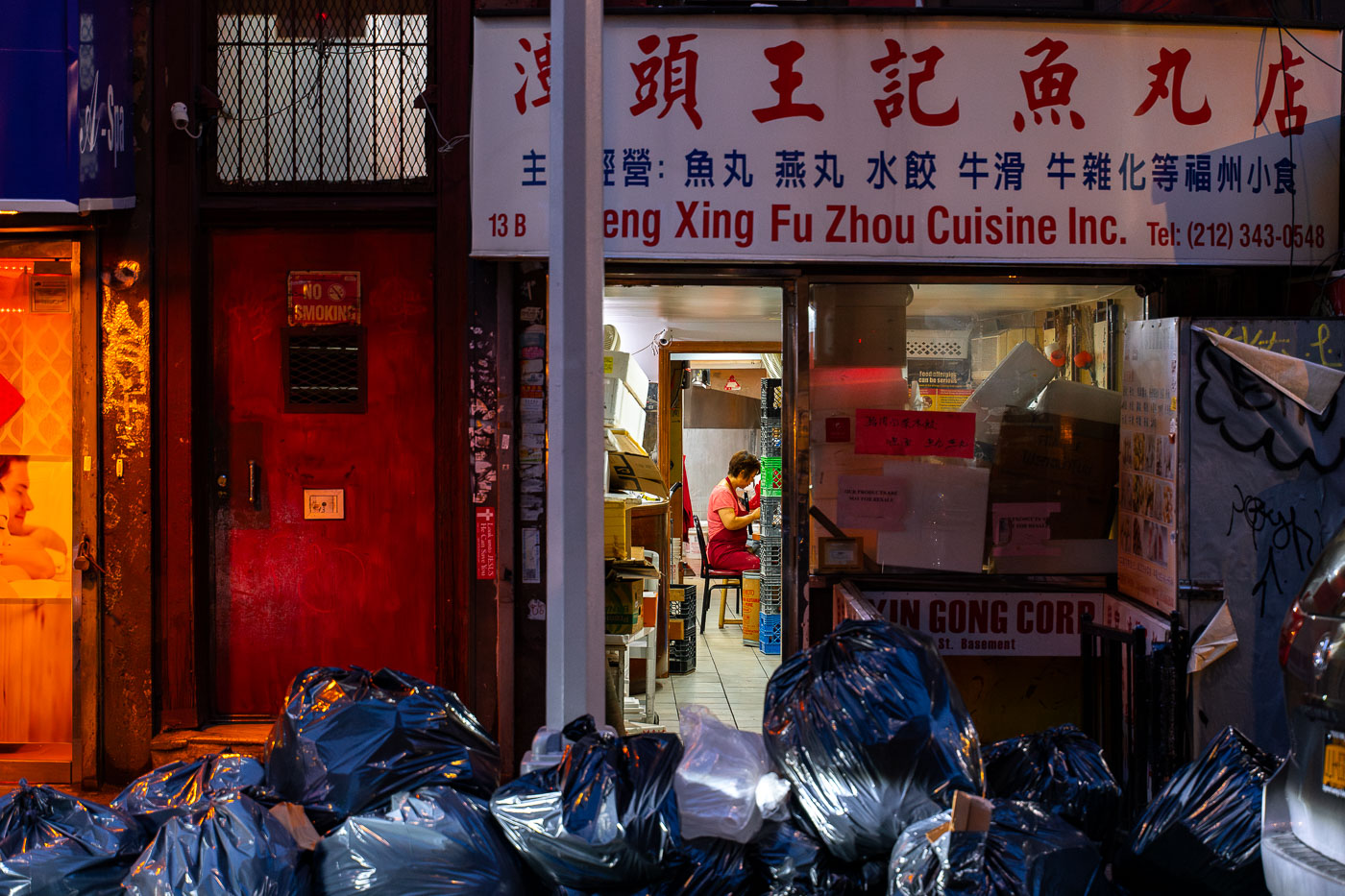
Worker prepares food inside Zheng Xing Fu Zhou Cuisine, a Fuzhou restaurant at 13B in Manhattan's Chinatown.
Zheng Xing Fu Zhou Cuisine Inc. in Manhattan's Chinatown is a small Fuzhou restaurant with a worker preparing food inside the narrow storefront at 13B. The business name appears in both Chinese and English on the exterior sign. Trash bags piled along the curb the restaurant's street-level location on a busy commercial block.
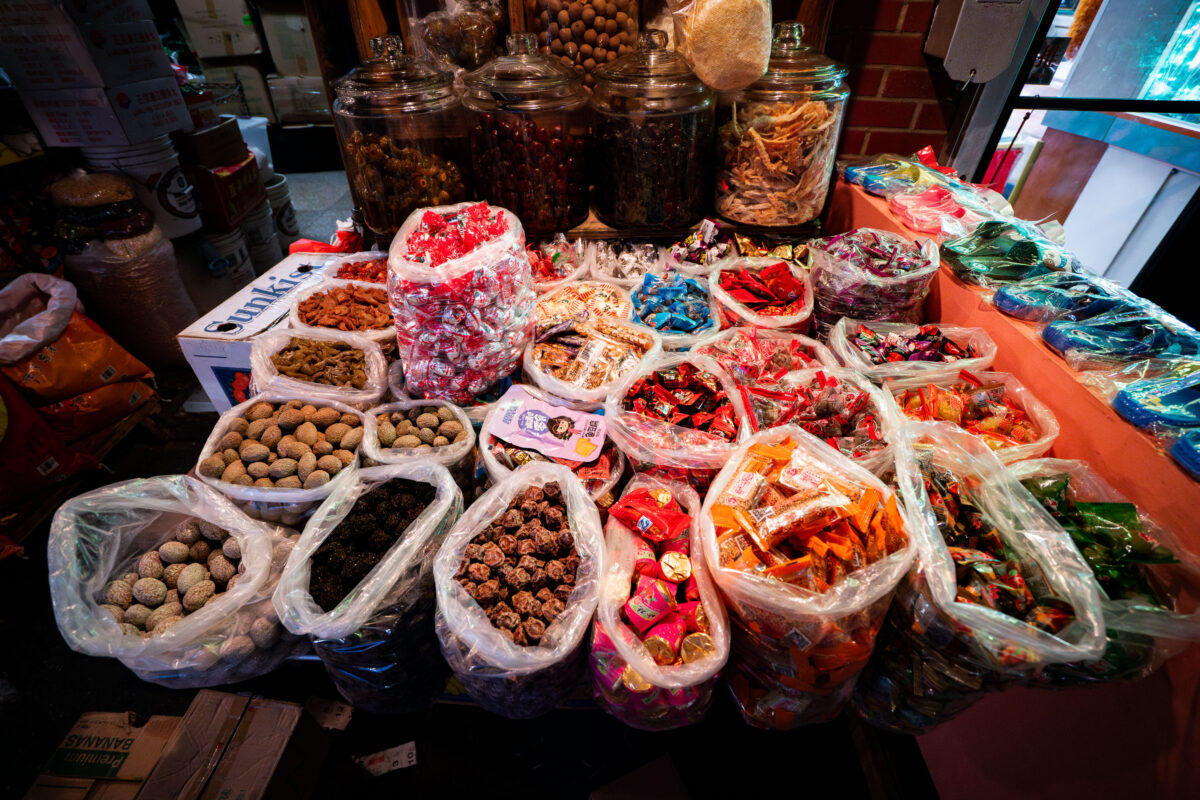
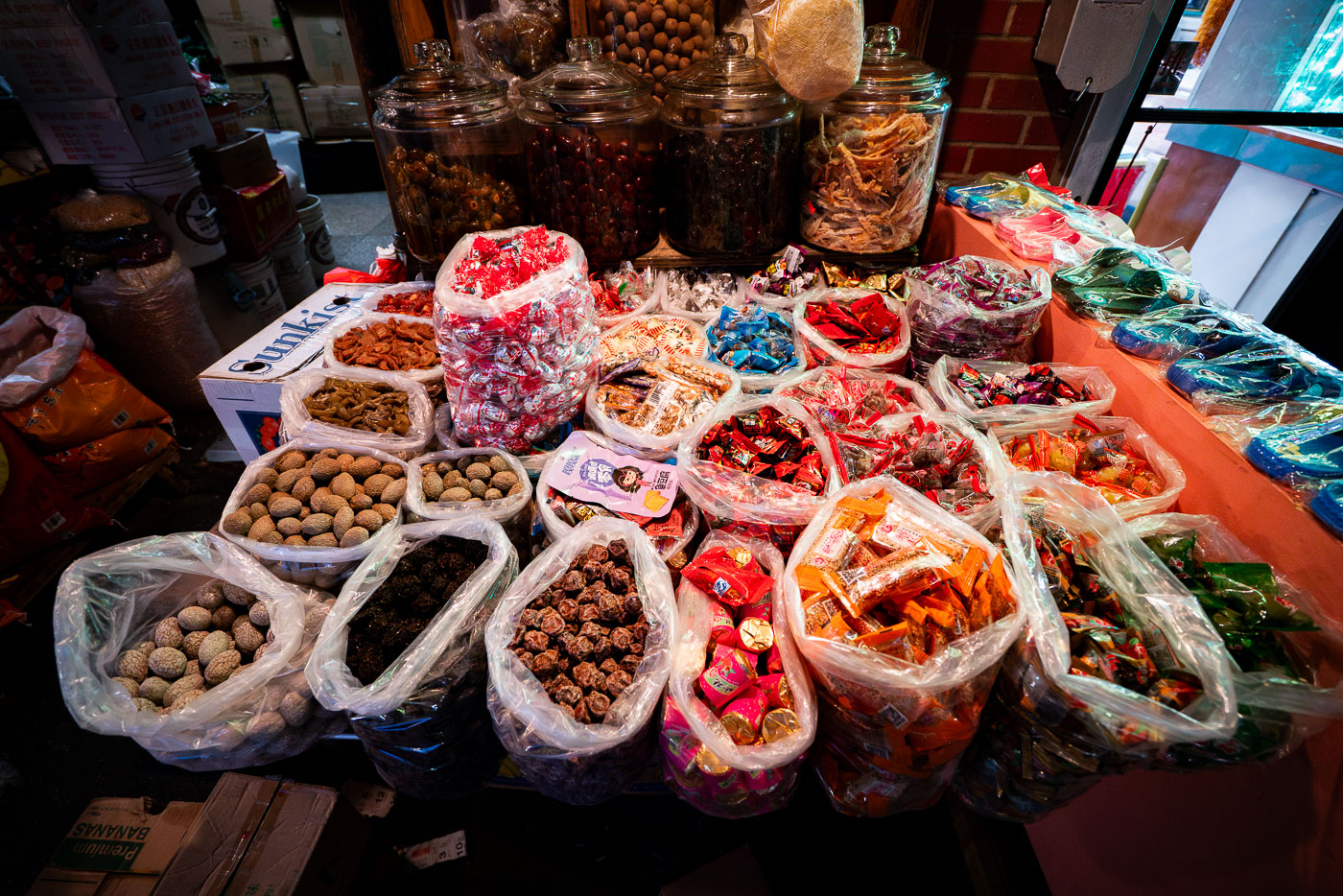
Chinatown market stall displaying dried fruits, candies, and snacks in plastic bags and glass jars.
A market stall in New York's Chinatown displays an abundant selection of dried fruits, candies, and snacks. The goods are presented in clear plastic bags and glass jars, with some items in colorful packaging, offering a vibrant visual of the diverse offerings available in the neighborhood.
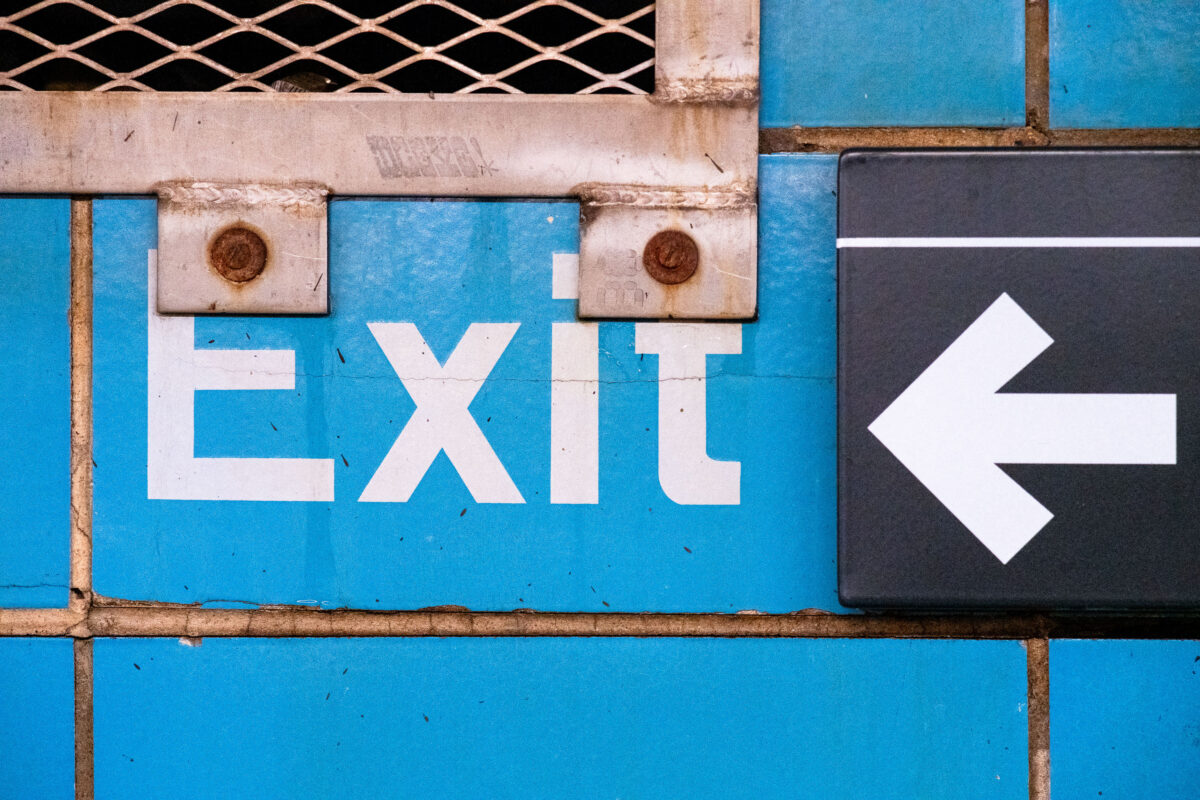
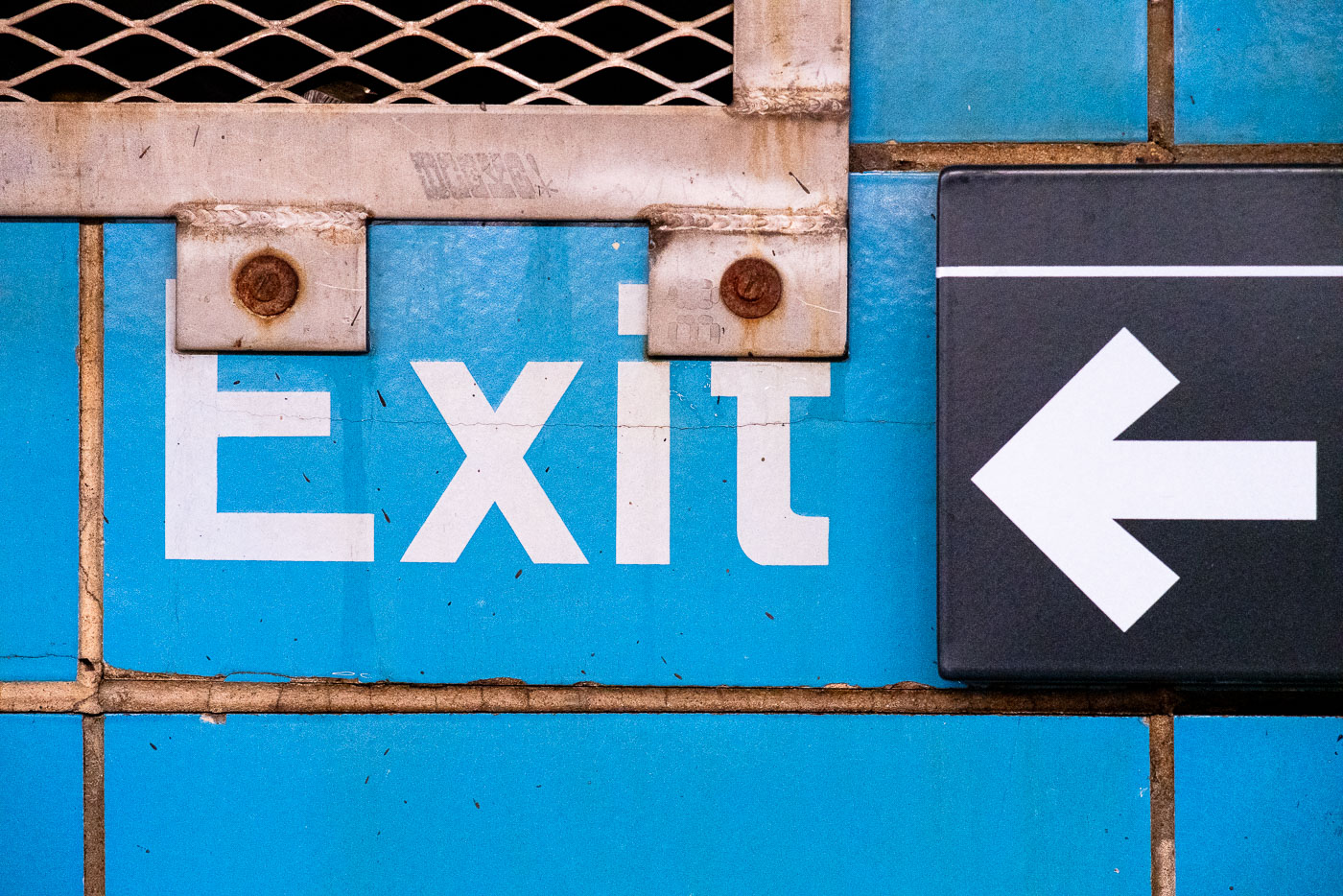
Exit sign with left-pointing arrow at Rector Street subway station in Manhattan.
Exit signage is visible at the Rector Street subway station in Manhattan, New York City. This station, part of the Metropolitan Transportation Authority (MTA) system, serves as a vital transit hub for commuters and visitors.
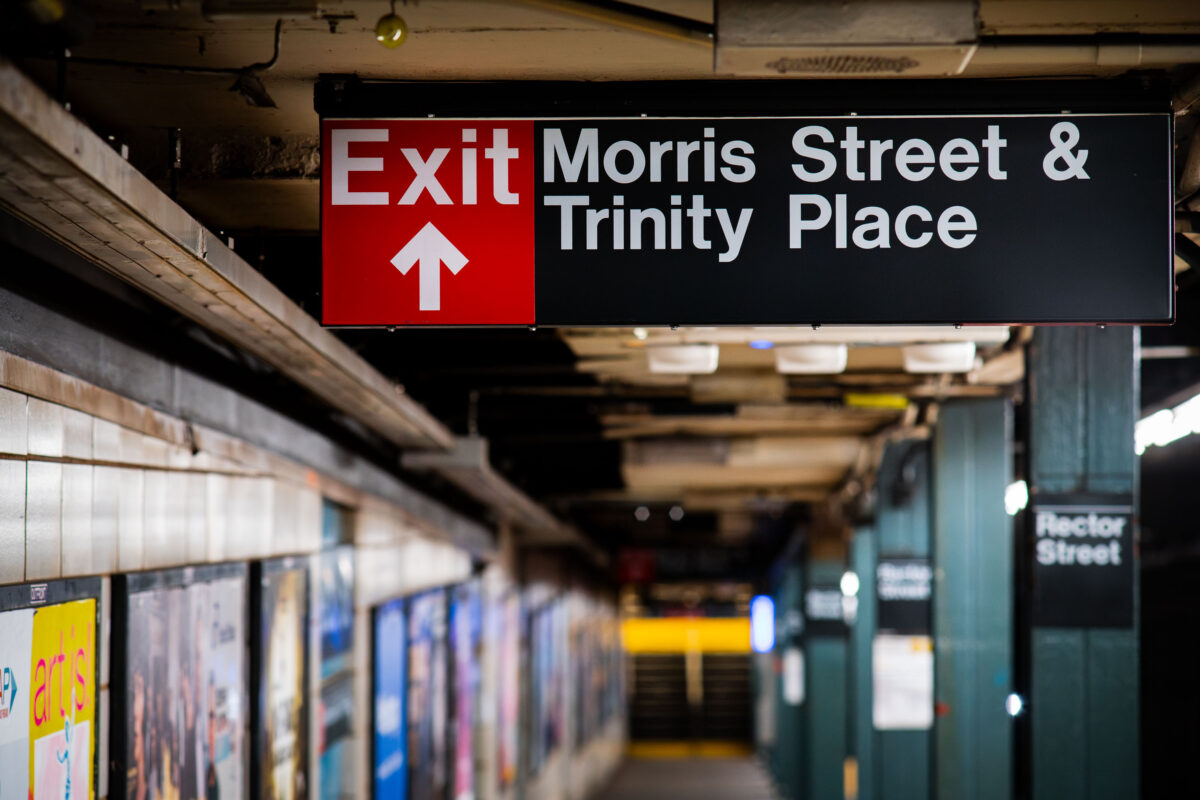
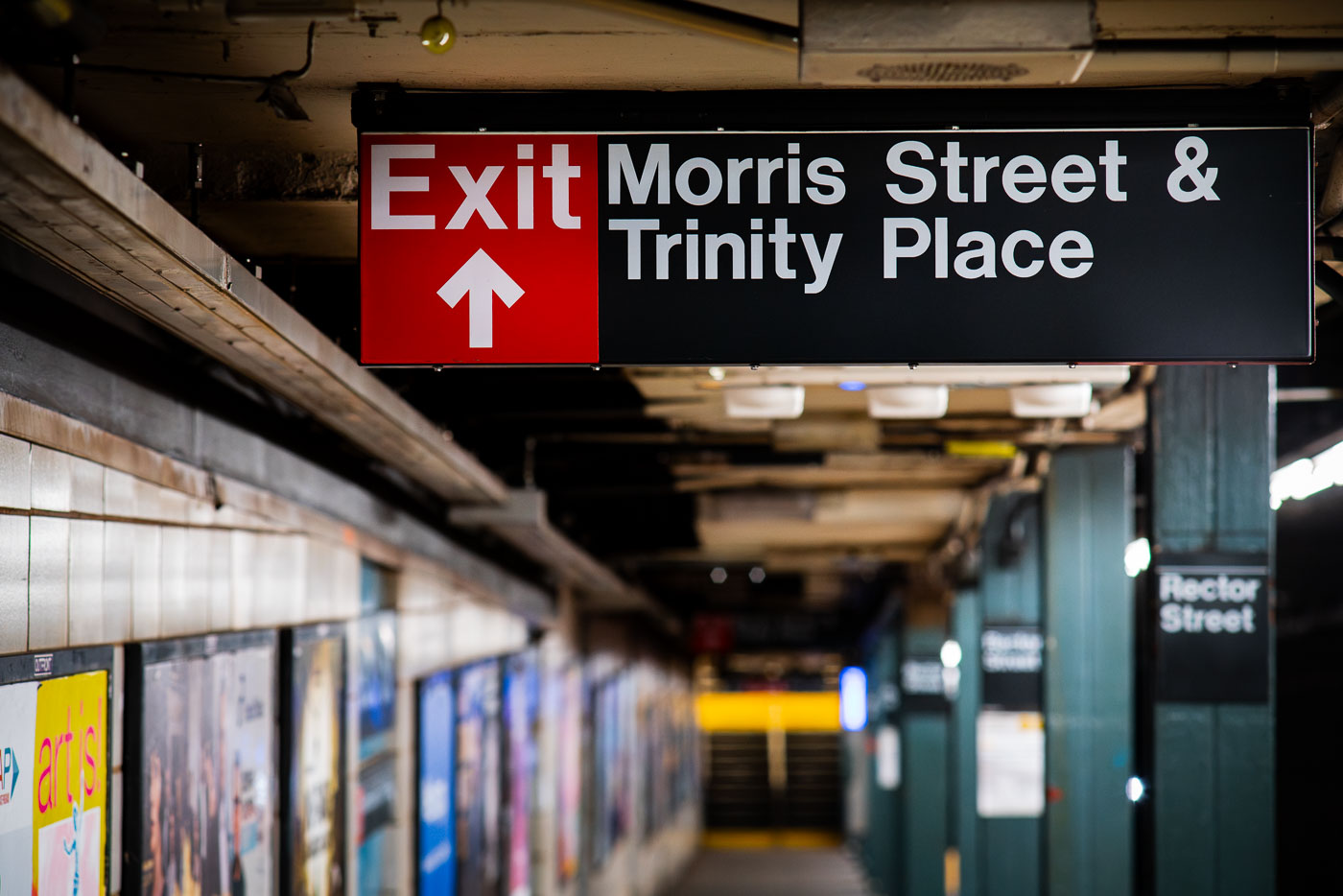
Exit sign at Rector Street subway station directing to Morris Street and Trinity Place in Manhattan.
Rector Street station serves the R train on the Broadway Line, running beneath Broadway in Lower Manhattan. It opened in 1904 as one of the original stations on the city's first subway line, built by the Interborough Rapid Transit Company. The station's exits connect riders to Trinity Place and Morris Street, placing it a short walk from Trinity Church and the New York Stock Exchange. Its platforms and mezzanines still carry much of the original tiling and signage typical of early IRT construction.
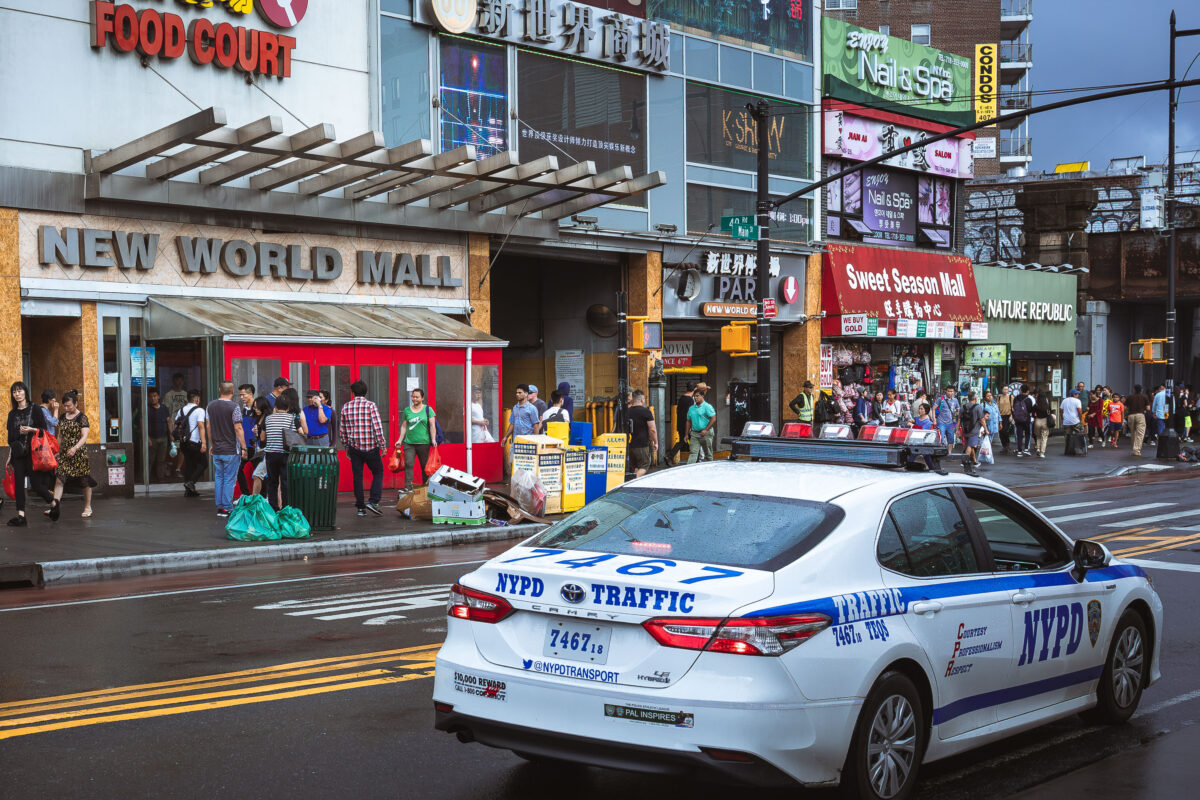
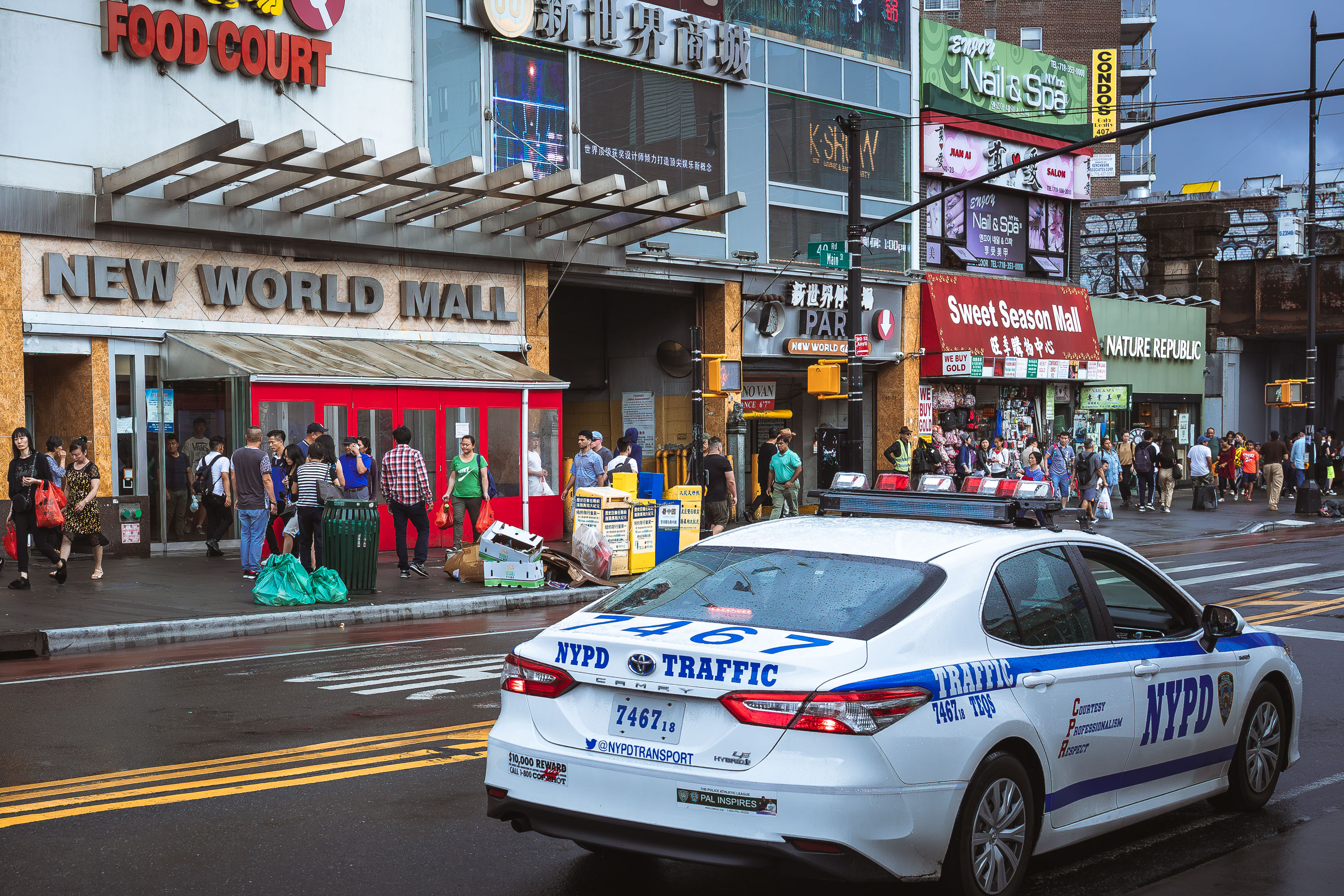
NYPD traffic patrol car parked outside New World Mall in Flushing, Queens, with pedestrians and storefronts visible.
New World Mall at 40th Road and Main Street in Flushing, Queens, is a multi-level retail and food court complex in the center of one of New York City’s largest Chinese commercial districts.
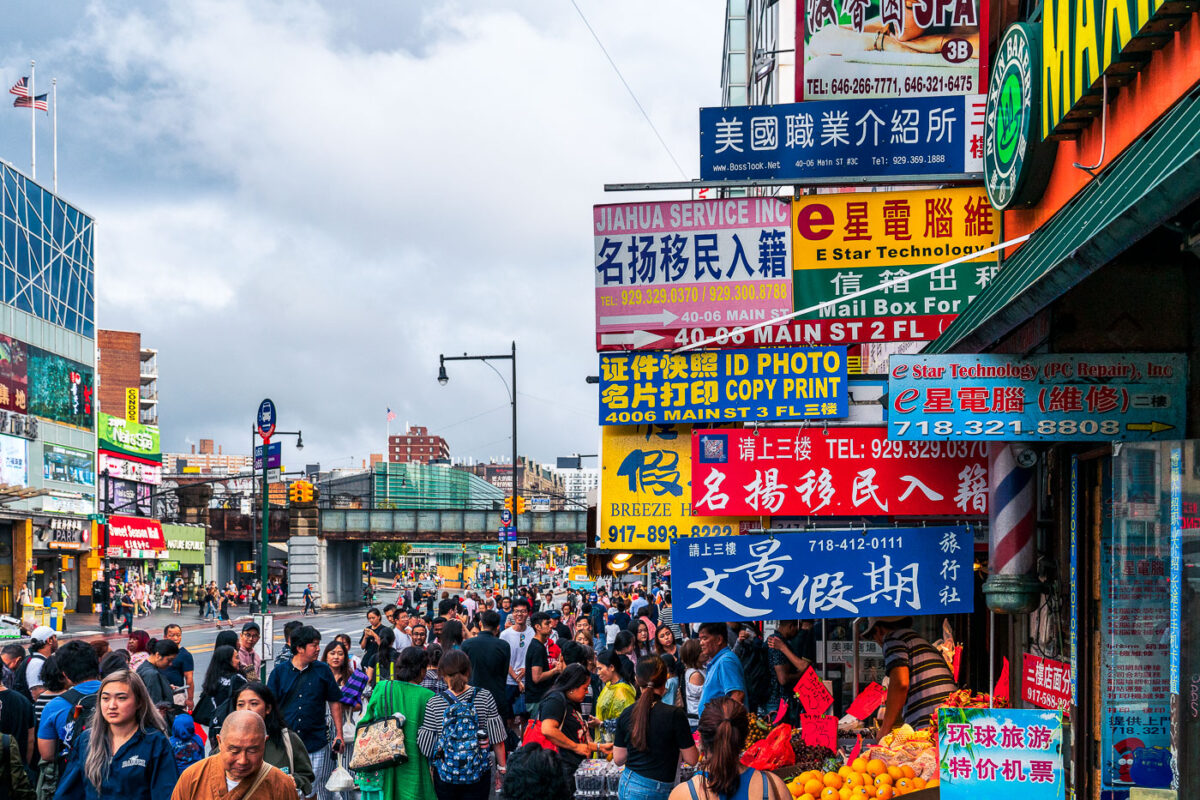
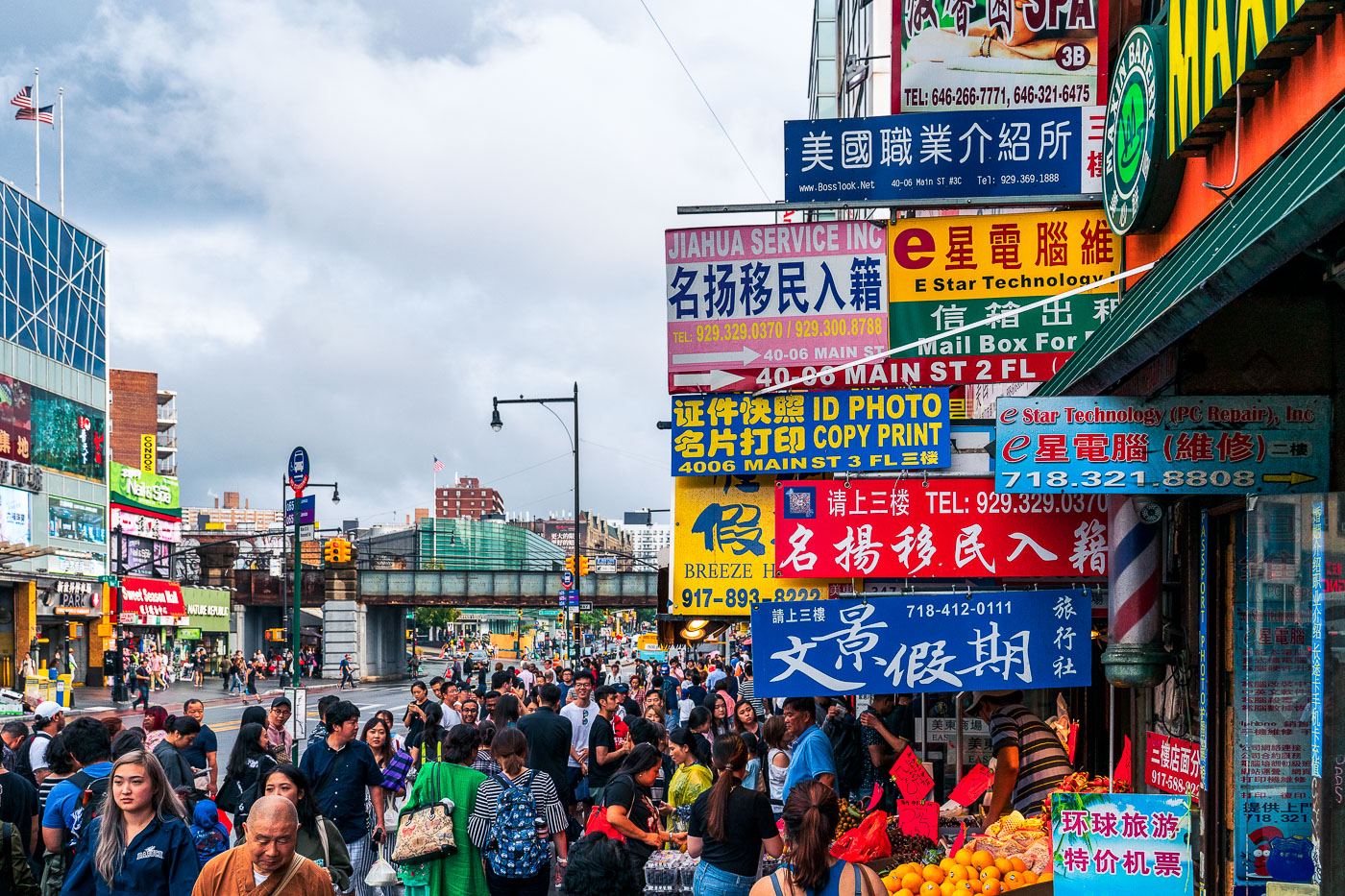
Crowded street in Flushing Chinatown, Queens, with bilingual signage and elevated subway structure overhead.
The bustling streetscape of Flushing Chinatown in Queens, New York City, is characterized by a dense concentration of businesses catering to the local Chinese-speaking community. Signs in both English and Chinese advertise a variety of services, including immigration assistance, technology repair, and travel agencies, reflecting the neighborhood's role as a vibrant commercial and cultural hub. The elevated railway structure overhead signifies the area's integration into the city's transit network, while the street-level activity highlights its function as a center for daily commerce and community life.
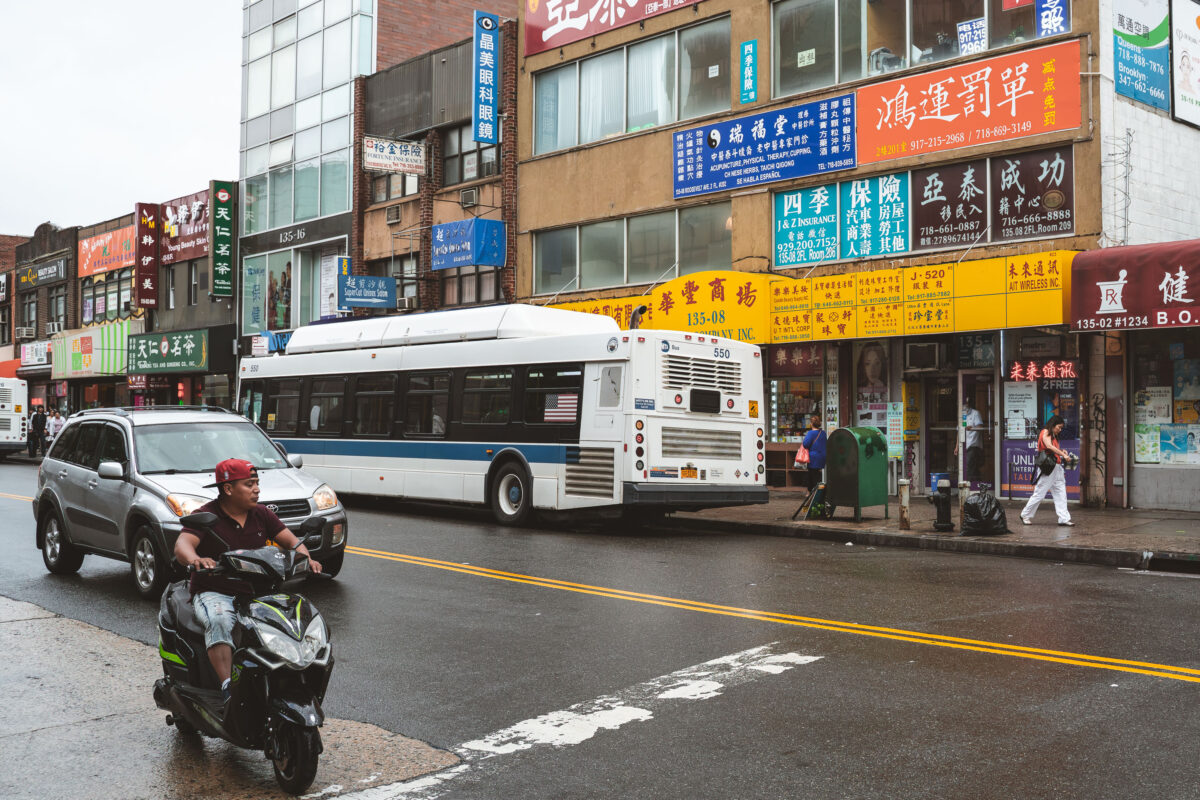
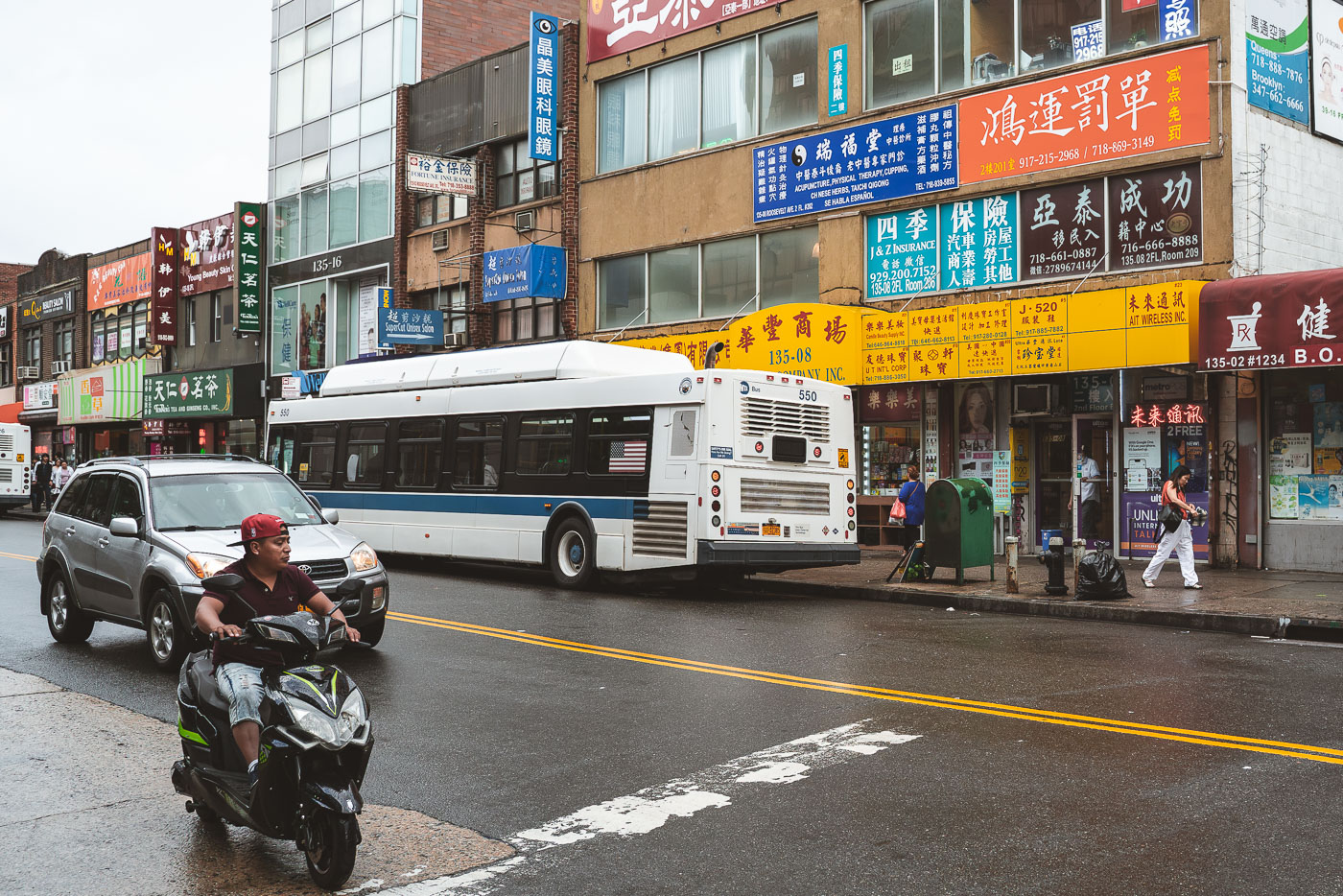
Scooter rider and MTA bus on Roosevelt Avenue in Flushing, Queens, with storefronts displaying Chinese and Korean signage.
Roosevelt Avenue in Flushing, Queens, is a major commercial thoroughfare serving a large Asian immigrant population. The street is lined with numerous businesses, many displaying signage in Chinese and Korean, reflecting the area's demographic makeup. An MTA bus, part of the public transportation system that serves millions of New Yorkers daily, is stopped along the avenue.
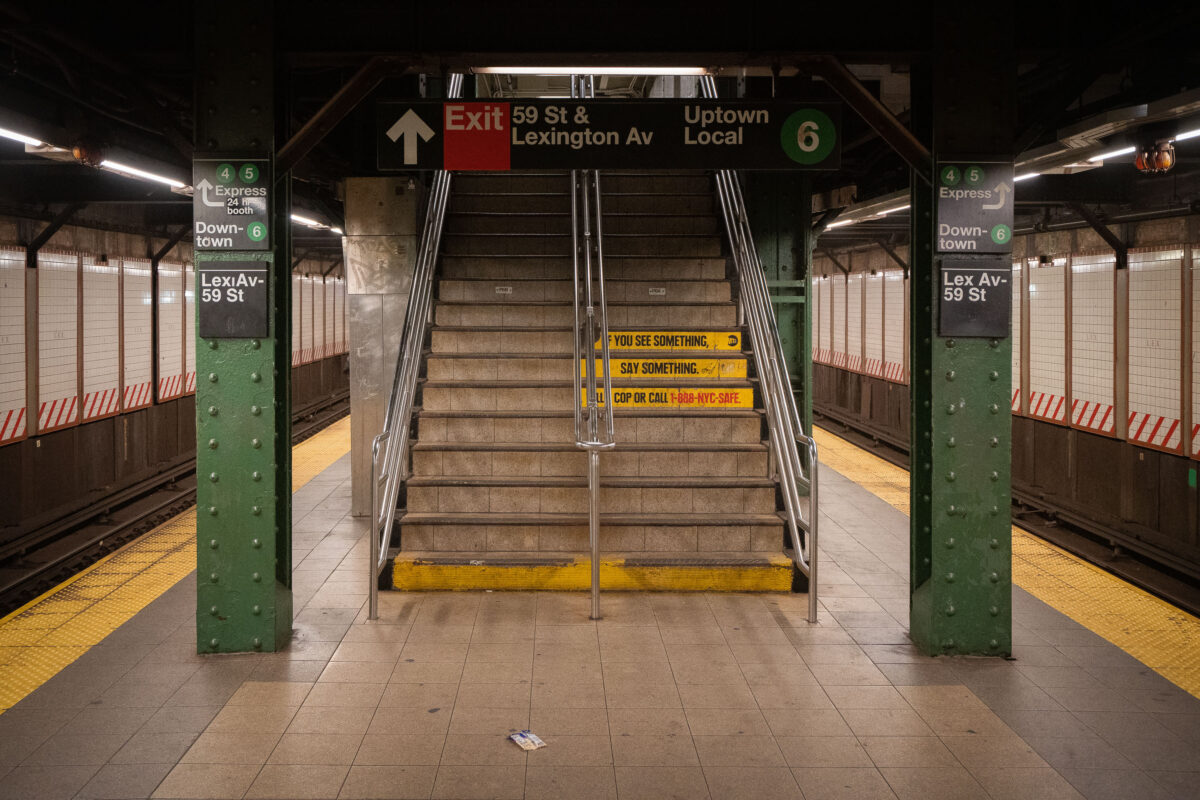
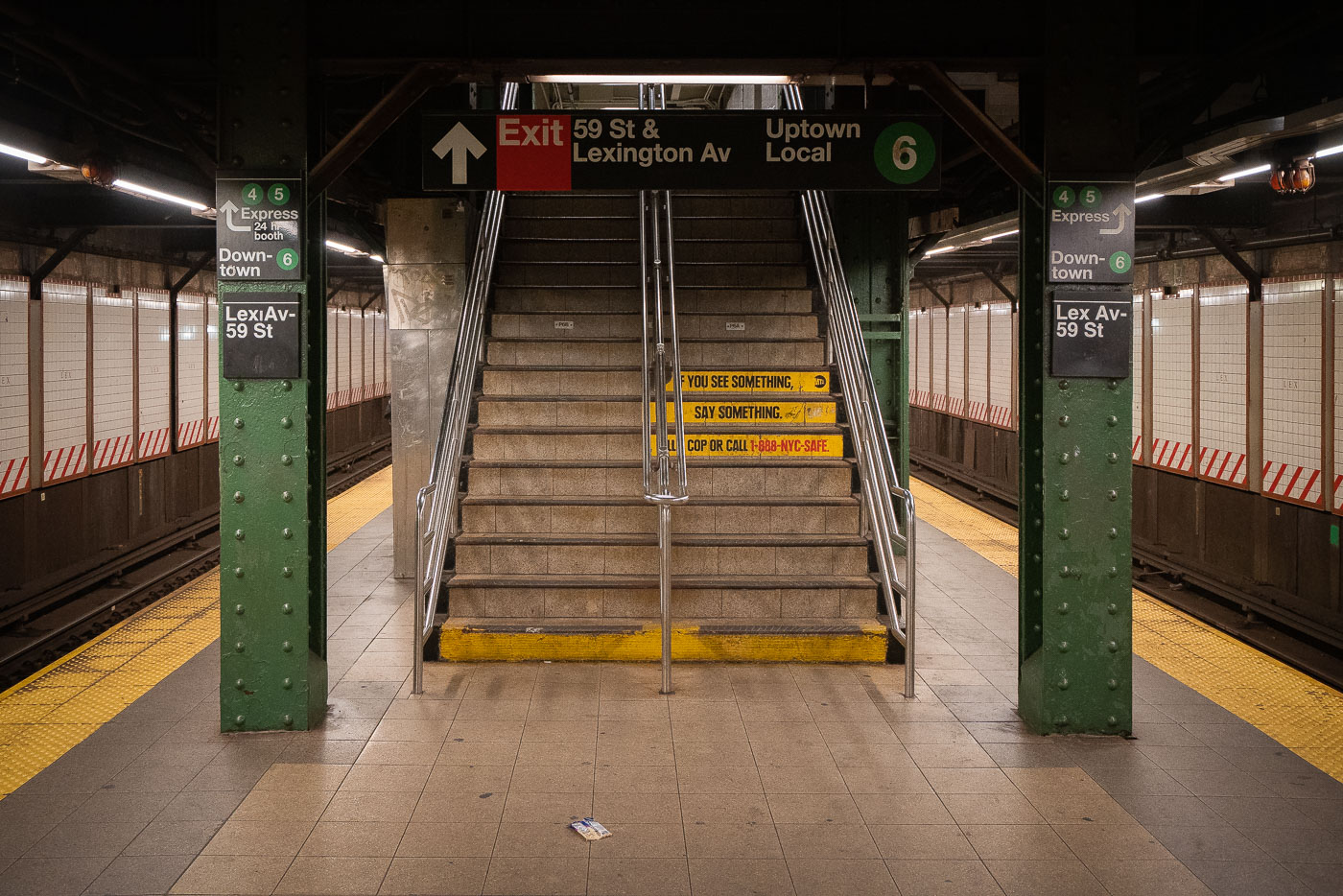
Stairway at Lexington Avenue-59th Street subway station with yellow safety signage and MTA directional signs.
Stairs lead up from the platform of the Lexington Avenue-59th Street subway station in New York City. Signage indicates "Exit 59 St & Lexington Av" and "Uptown Local 6," along with "4 5 Express" and "Downtown-6." The platform features yellow tactile paving and a sign reading "IF YOU SEE SOMETHING, SAY SOMETHING. COP OR CALL 1-888-NYC-SAFE."
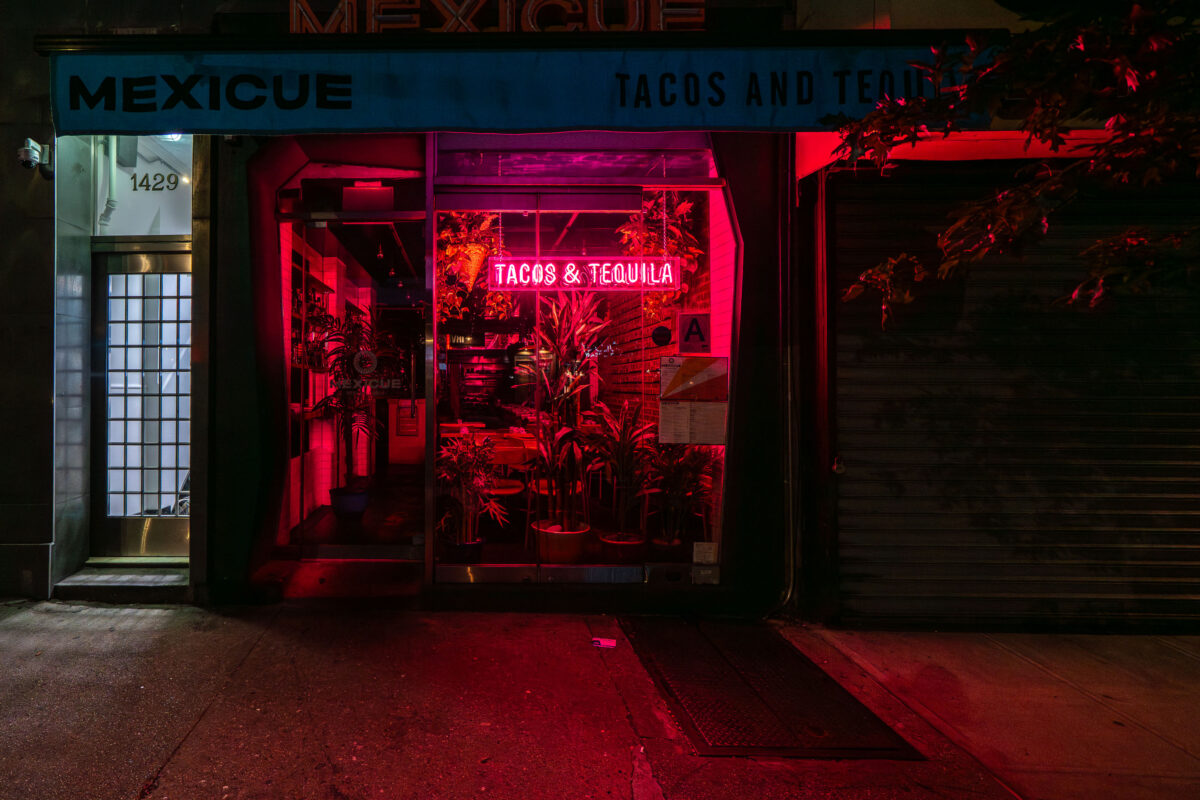
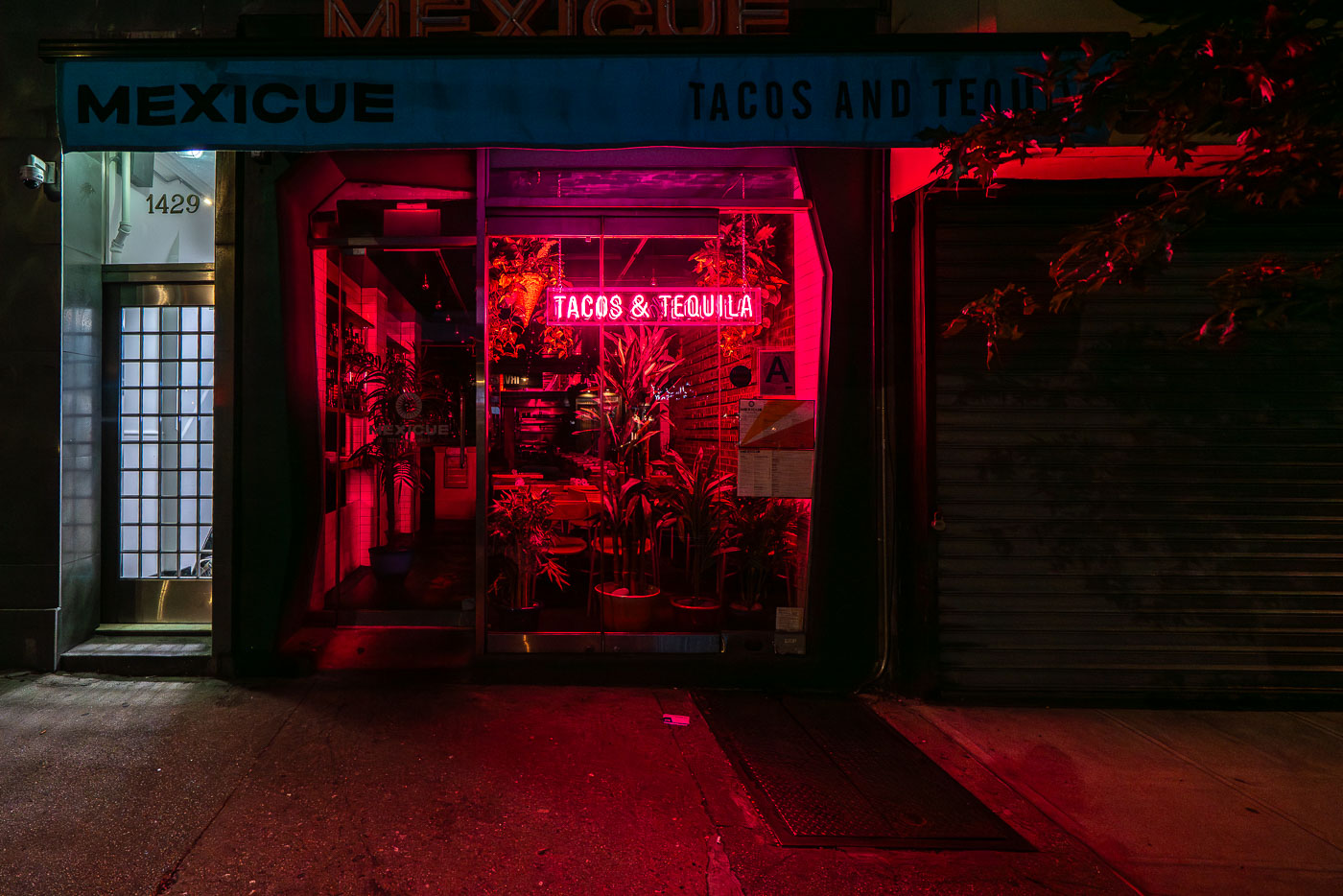
Mexicue restaurant storefront on Lexington Avenue displays a pink neon "Tacos & Tequila" sign at night.
Mexicue on Lexington Avenue in Manhattan is a street-level restaurant identified by the address 1429. The storefront carries a "Tacos & Tequila" neon sign, the restaurant's Mexican and barbecue-focused branding. The business occupies a narrow commercial frontage on the Upper East Side.
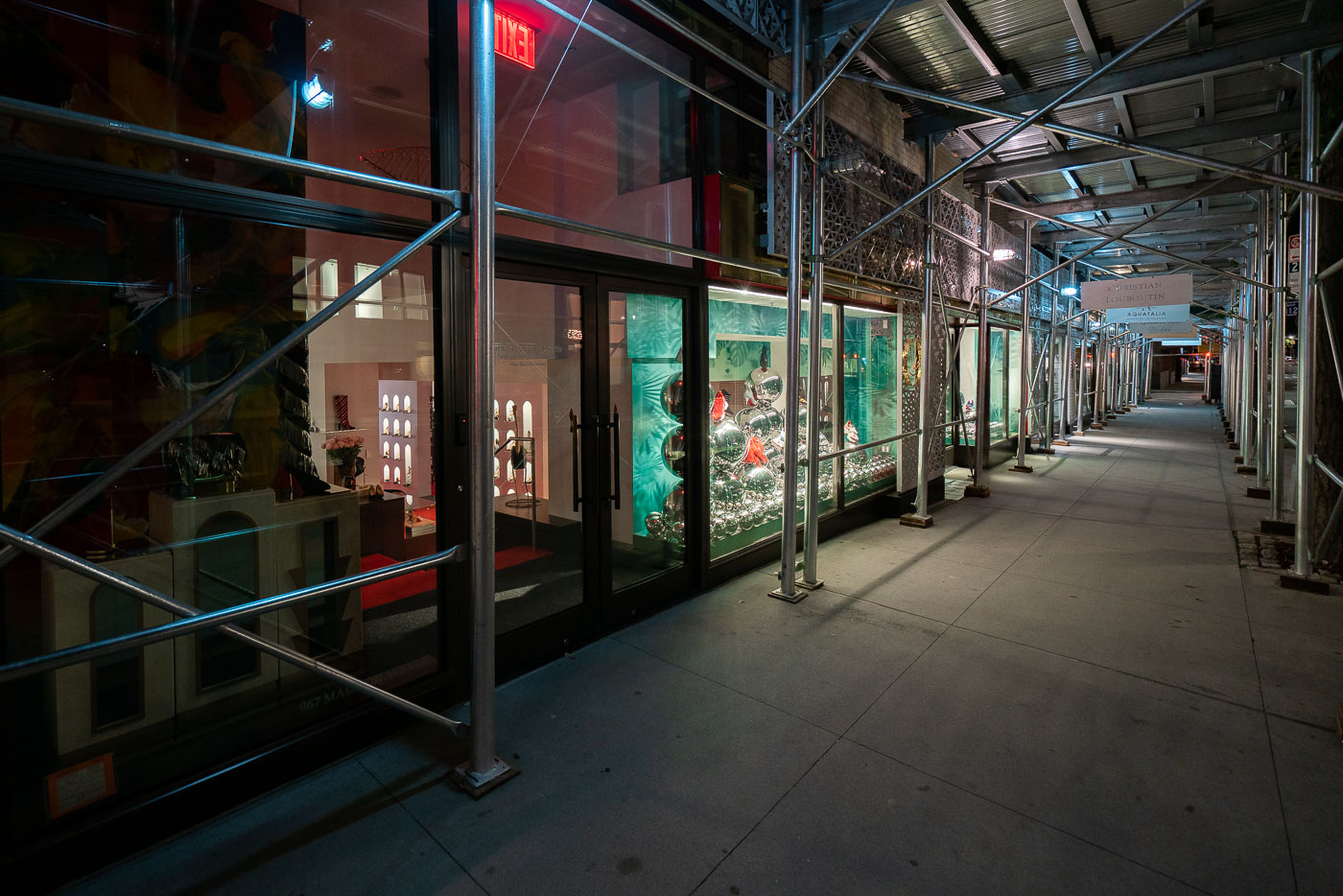
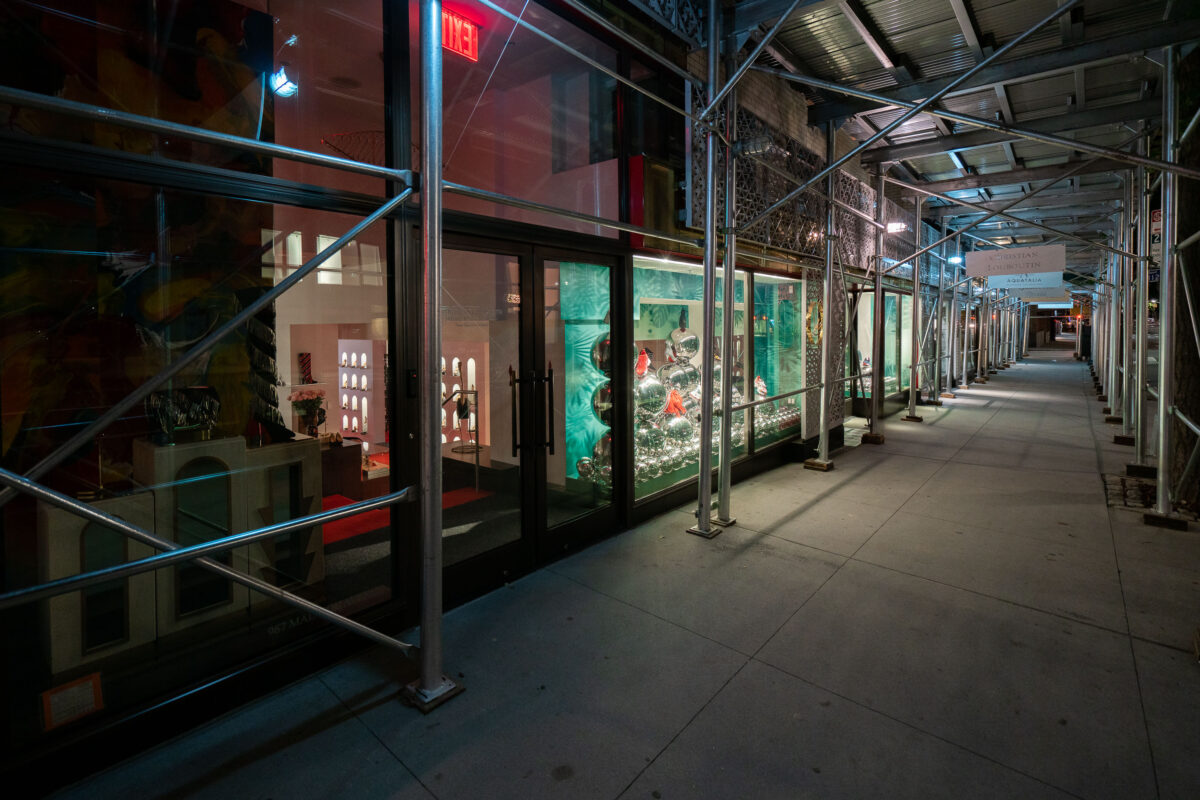
Christian Louboutin storefront on Madison Avenue surrounded by blue metal sidewalk scaffolding.
Christian Louboutin boutique on Madison Avenue in Manhattan is enclosed by sidewalk scaffolding. The luxury footwear and accessories retailer occupies a storefront on one of the Upper East Side's principal luxury shopping corridors. The temporary overhead sidewalk shed s exterior building work at the property.
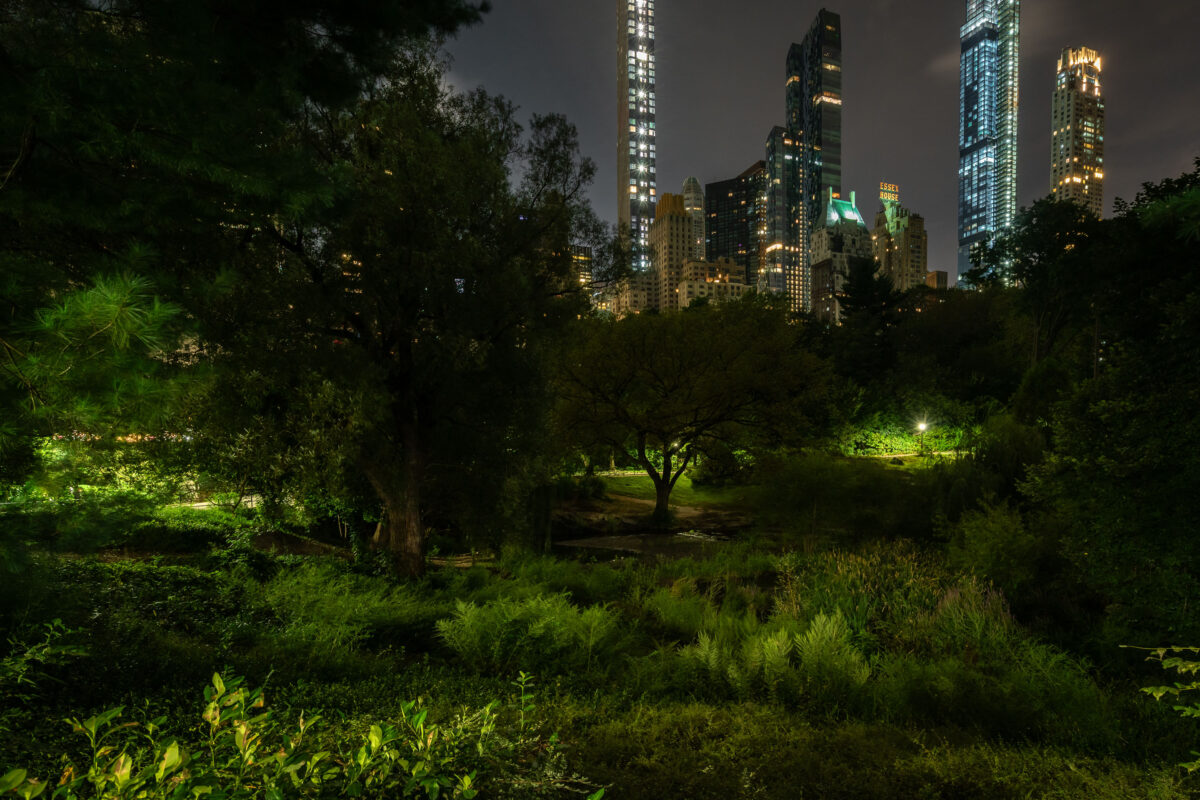
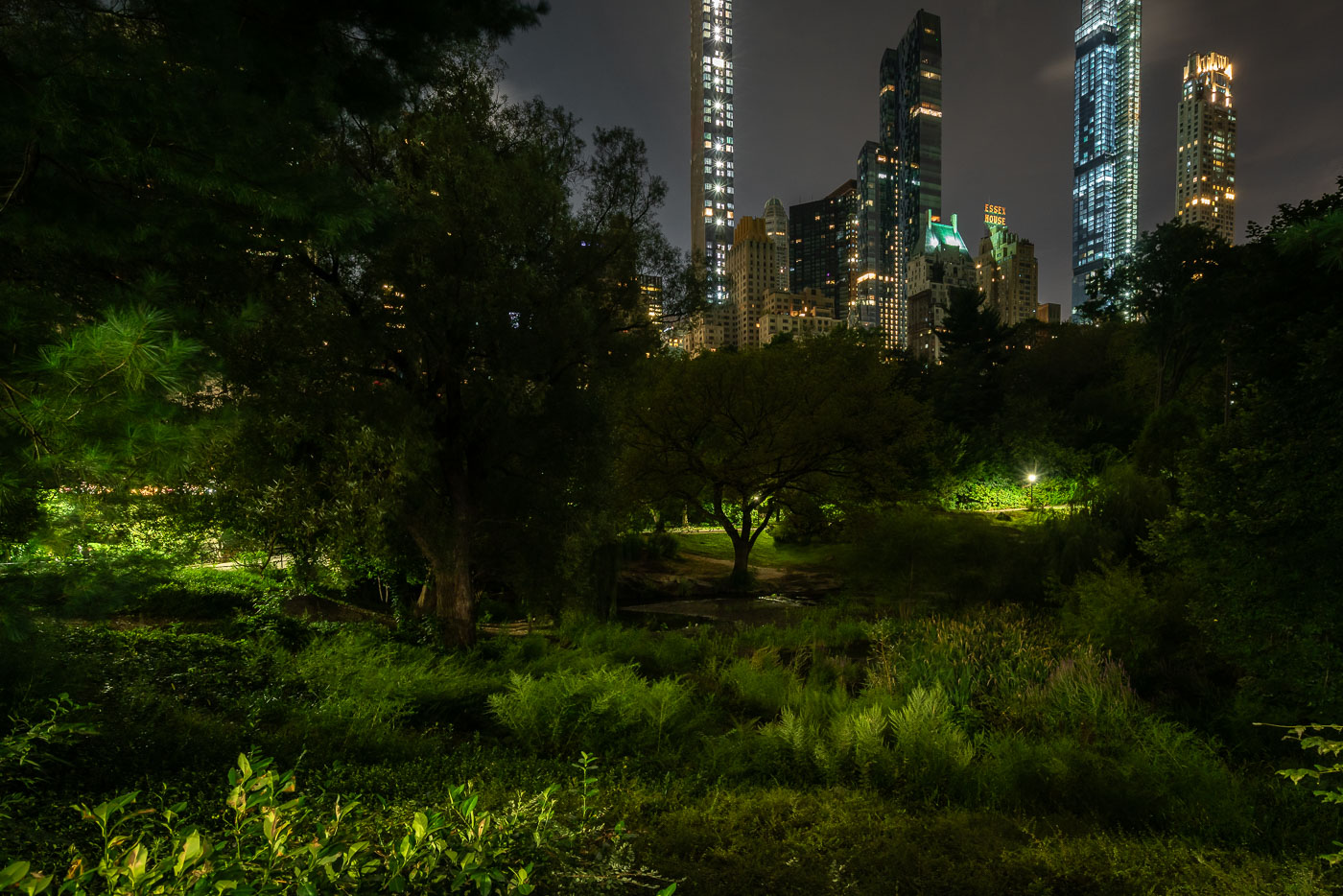
Central Park's trees frame illuminated Billionaires' Row towers and Essex House hotel at night in Manhattan.
Central Park South at night, featuring the Essex House hotel and the supertall residential towers of Billionaires' Row. The Essex House, an Art Deco landmark opened in 1931, stands adjacent to modern skyscrapers that have reshaped the Manhattan skyline. This view highlights the contrast between historic architecture and 21st-century supertall structures along Central Park South. The development of these supertall buildings, including 111 West 57th Street and Central Park Tower, represents a significant transformation of the area's built environment.
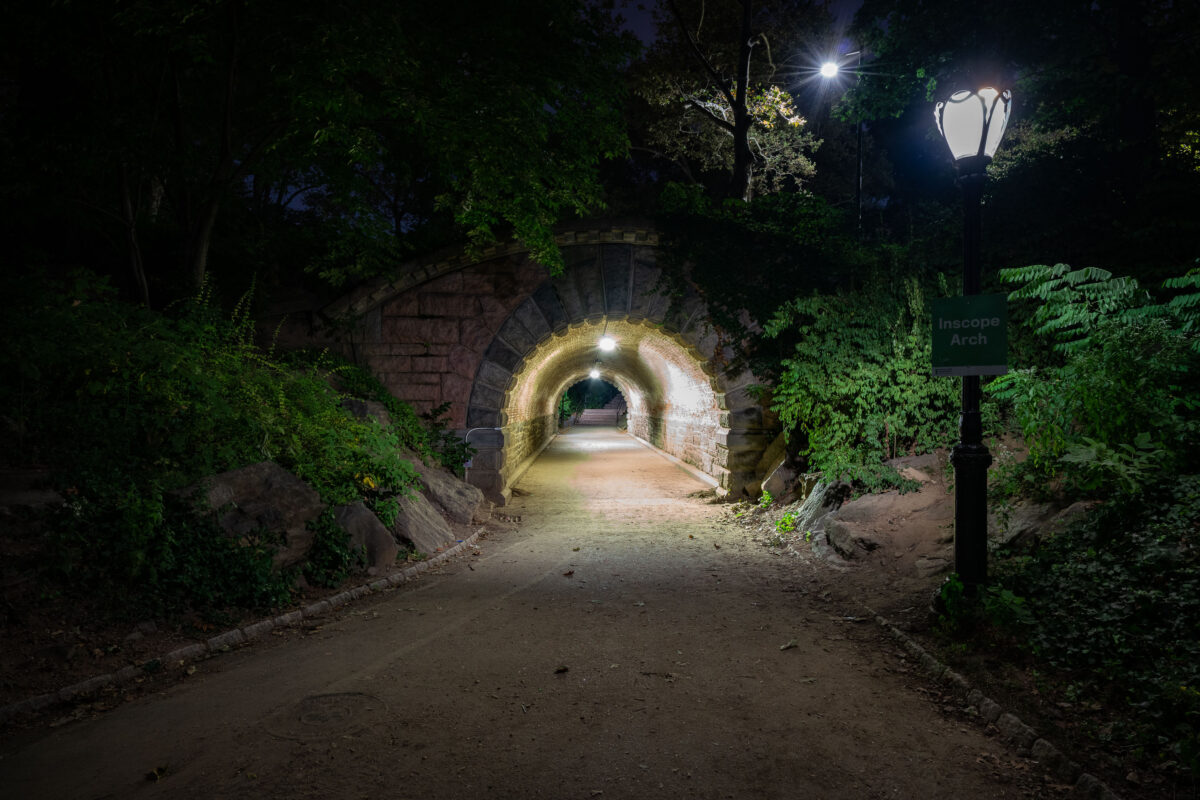
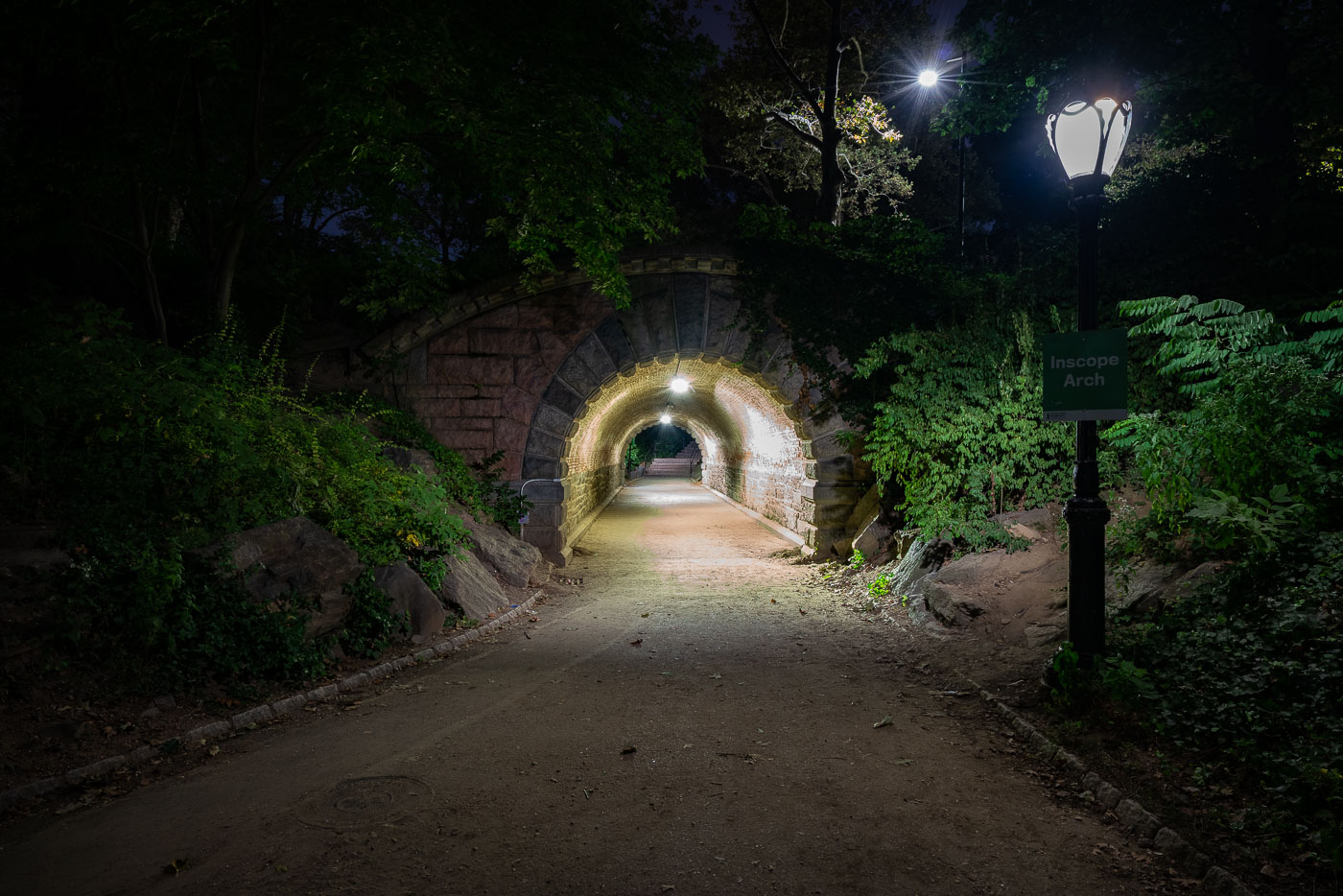
Inscope Arch, a stone passageway in Central Park, illuminated at night with surrounding vegetation.
The Inscope Arch, a stone passageway in Central Park, New York City, is illuminated at night. A green sign on a lamppost reads "Inscope Arch." Constructed as part of Central Park's original design by Frederick Law Olmsted and Calvert Vaux, this arch separates pedestrian paths from carriage roads. It facilitates circulation and connects different areas of the park, contributing to its naturalistic landscape design.
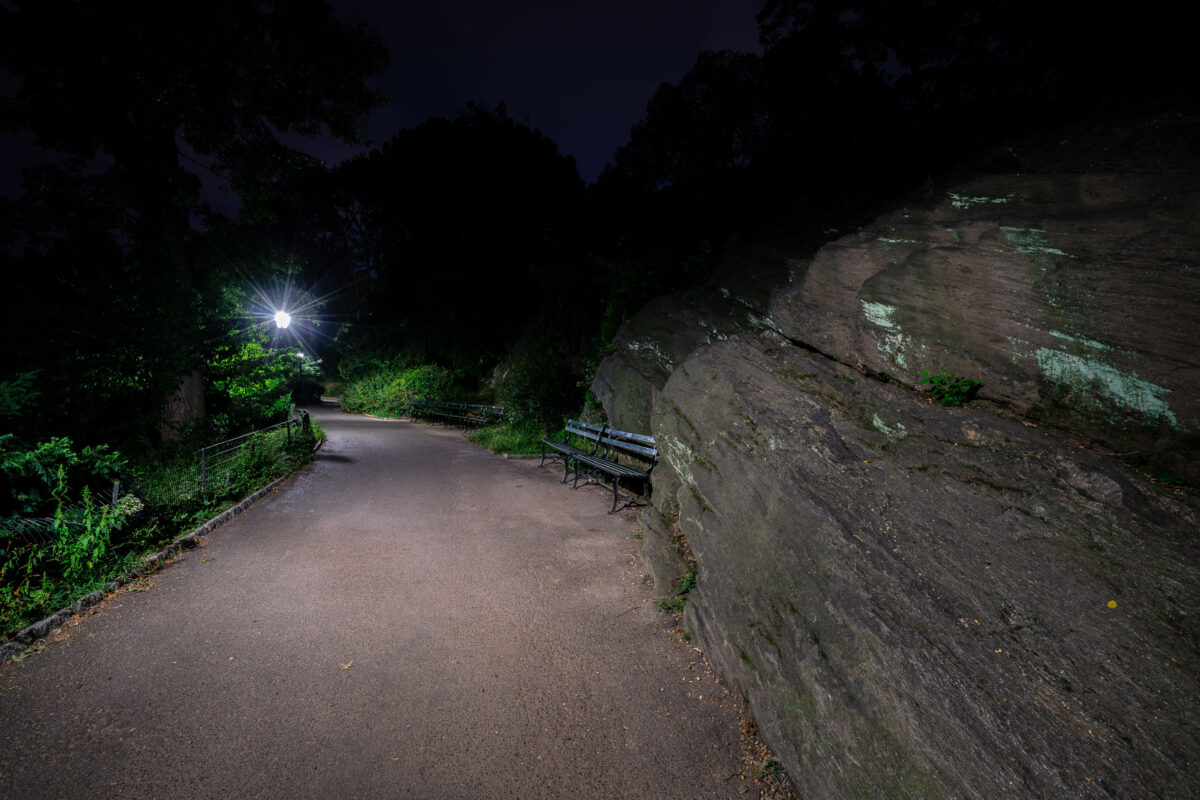
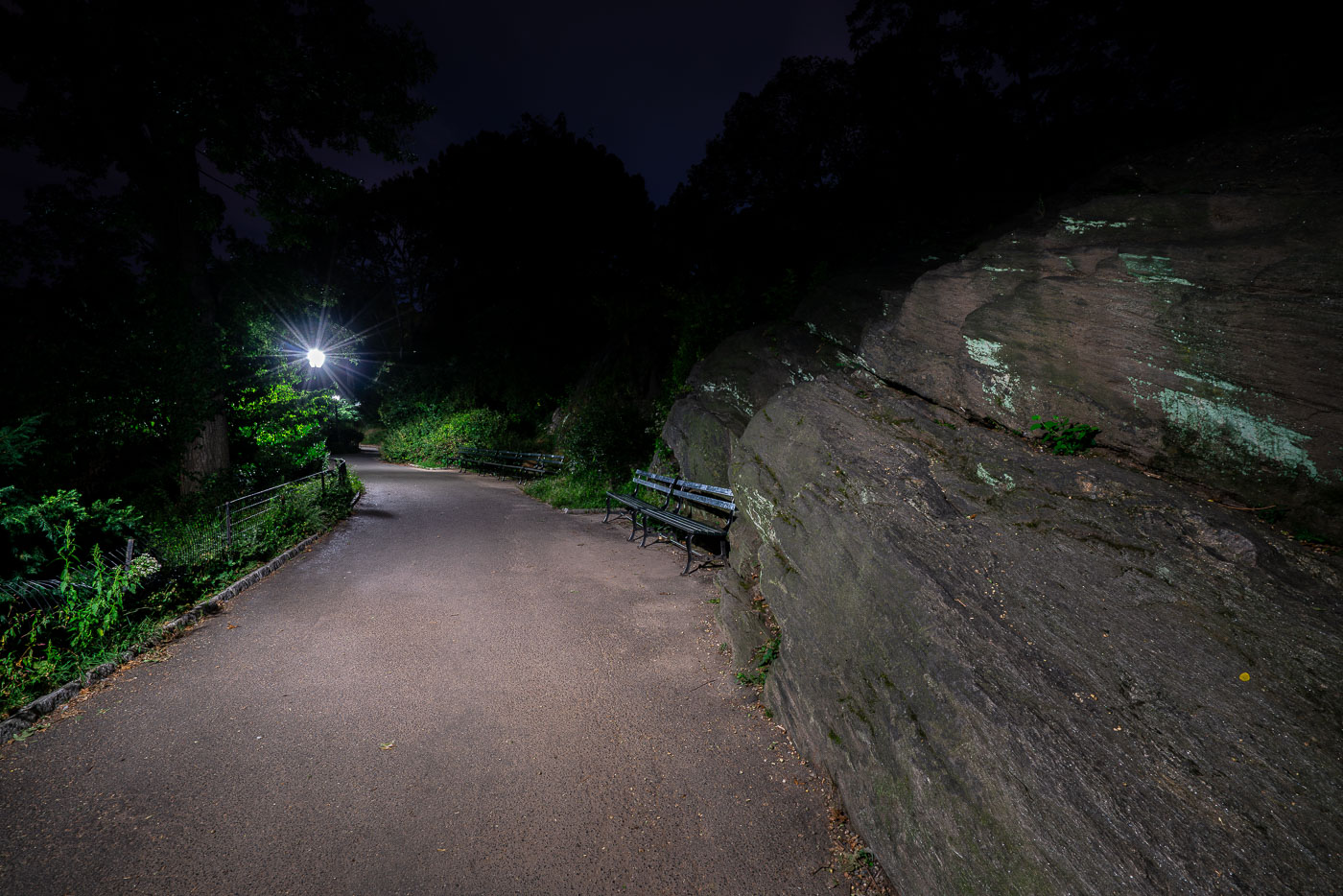
Park benches line a lamp-lit pathway in Central Park, Manhattan, at night.
Park benches are visible along a pathway in Central Park, Manhattan, illuminated by lamplight at night. Central Park, established in 1857, is a 843-acre public park in the center of Manhattan, New York City. The park's design by Frederick Law Olmsted and Calvert Vaux features naturalistic landscapes and winding paths, providing a green space for city residents and visitors. These benches are part of the park's infrastructure, intended for quiet contemplation and enjoyment of the natural surroundings within the urban environment.
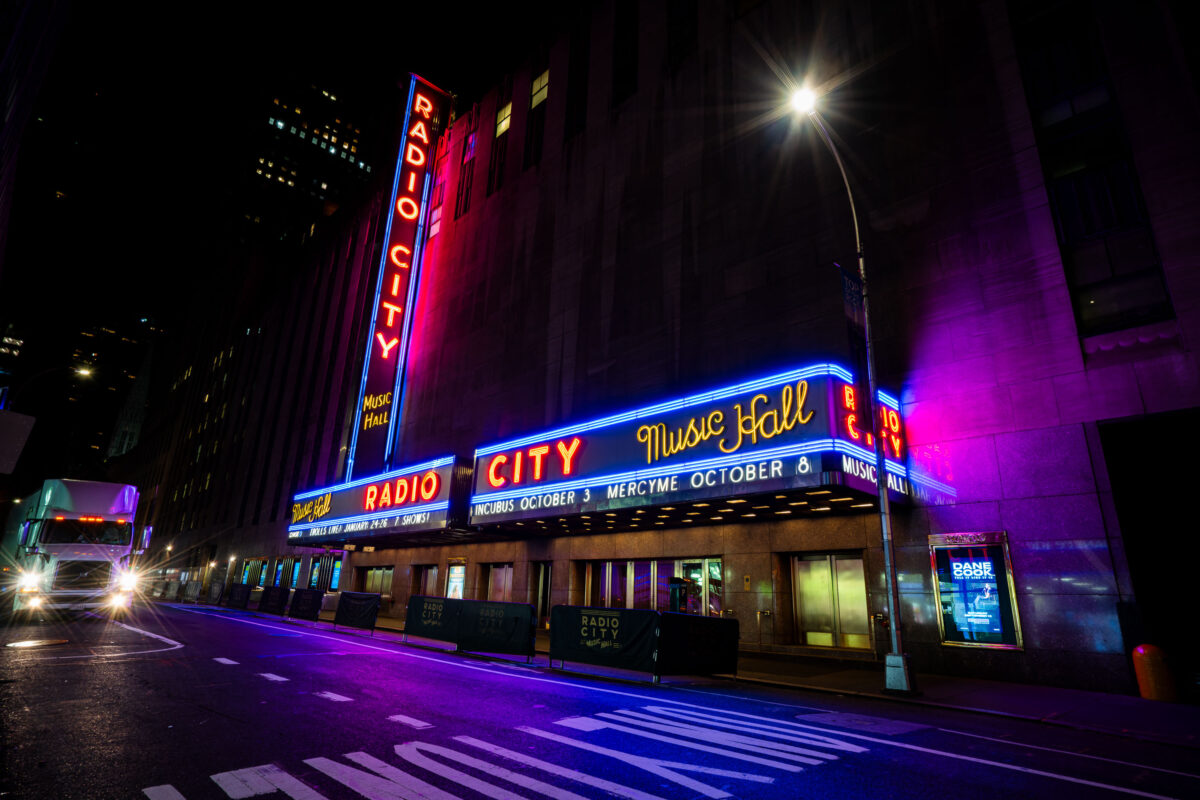
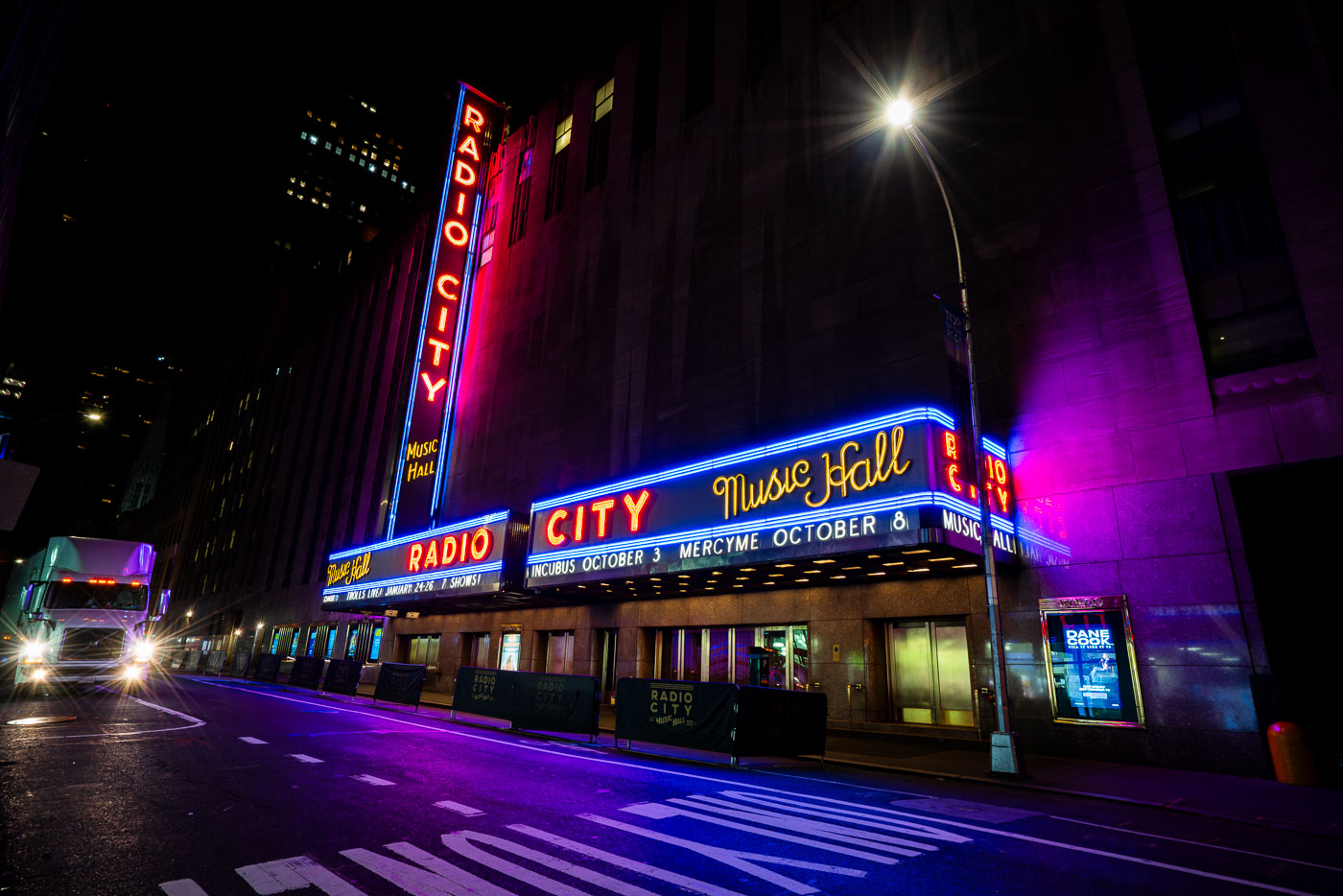
Radio City Music Hall marquee illuminated at night on 6th Avenue in Midtown Manhattan.
Radio City Music Hall on 6th Avenue in Midtown Manhattan is a theater and concert venue within Rockefeller Center. Opened in 1932, it was designed by Edward Durell Stone with interiors by Donald Deskey and became one of the city's best-known Art Deco performance spaces. The marquee advertises appearances by Incubus, MercyMe, and Dane Cook.
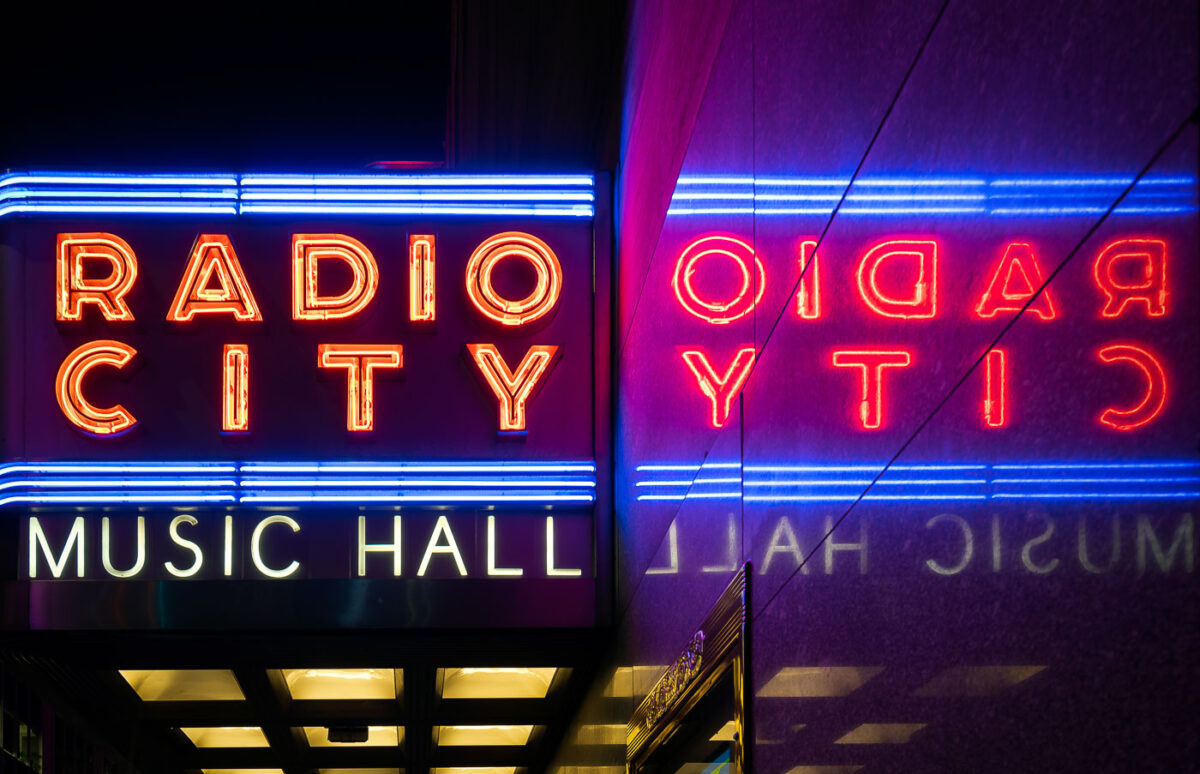
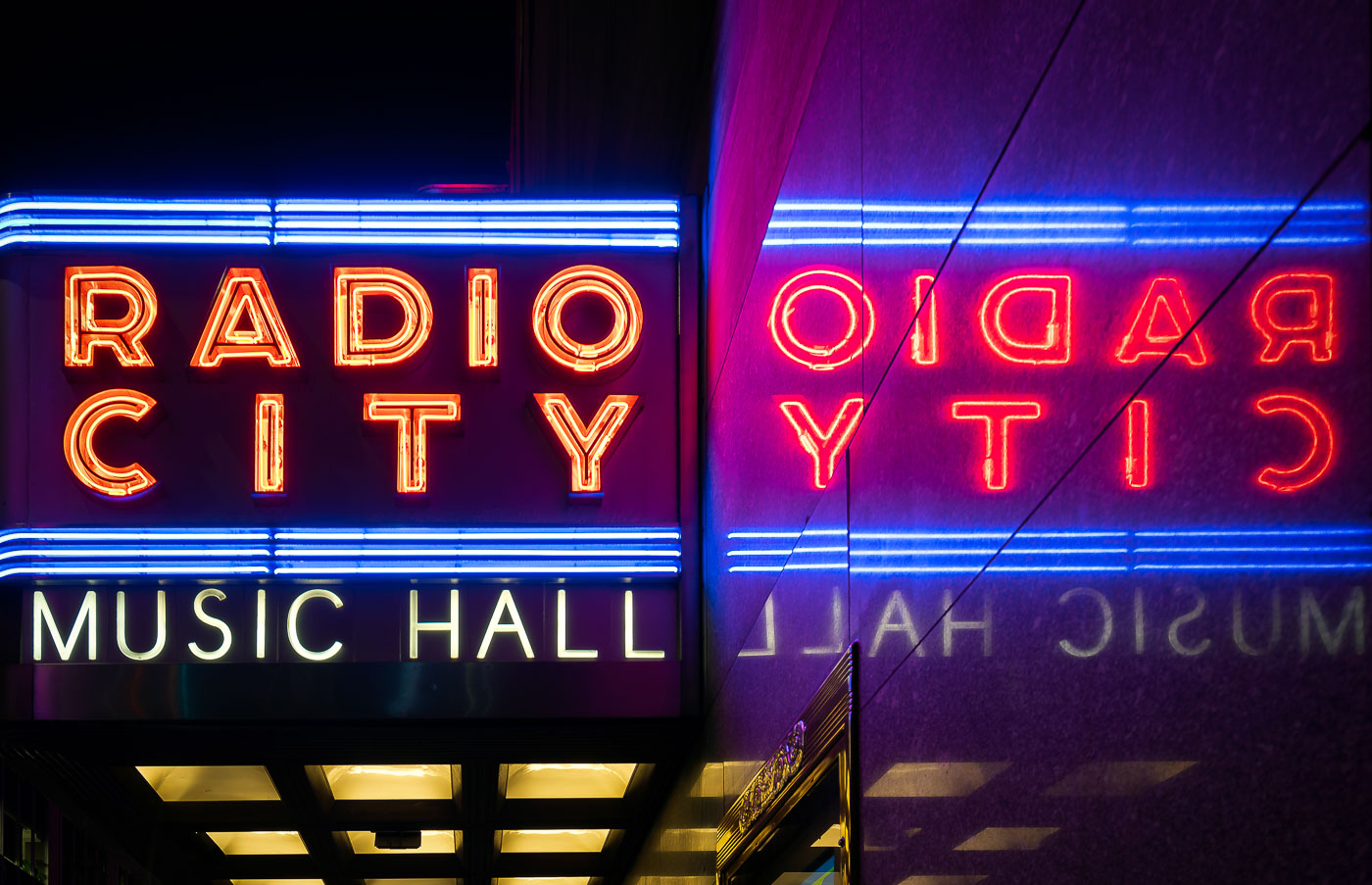
Radio City Music Hall neon sign glows orange and blue on Manhattan's facade at night.
The neon signage for Radio City Music Hall in New York City illuminates the building's facade at night. Opened in 1932, Radio City Music Hall was designed by architect Edward Durell Stone and interior designer Donald Deskey as a premier venue for vaudeville and musical productions. It quickly became a landmark of Art Deco architecture and a cultural hub in Manhattan. Today, the venue continues to host a variety of live performances, including concerts, stage shows, and the annual Christmas Spectacular starring the Rockettes.
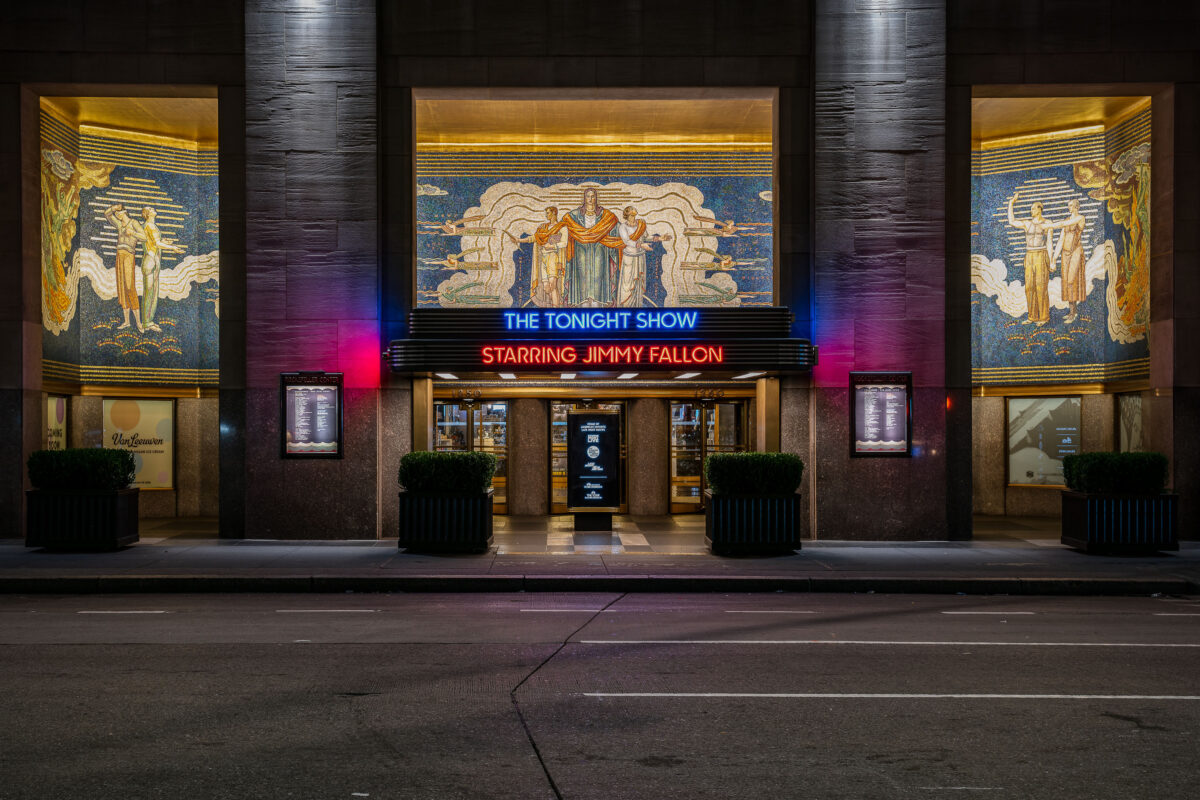
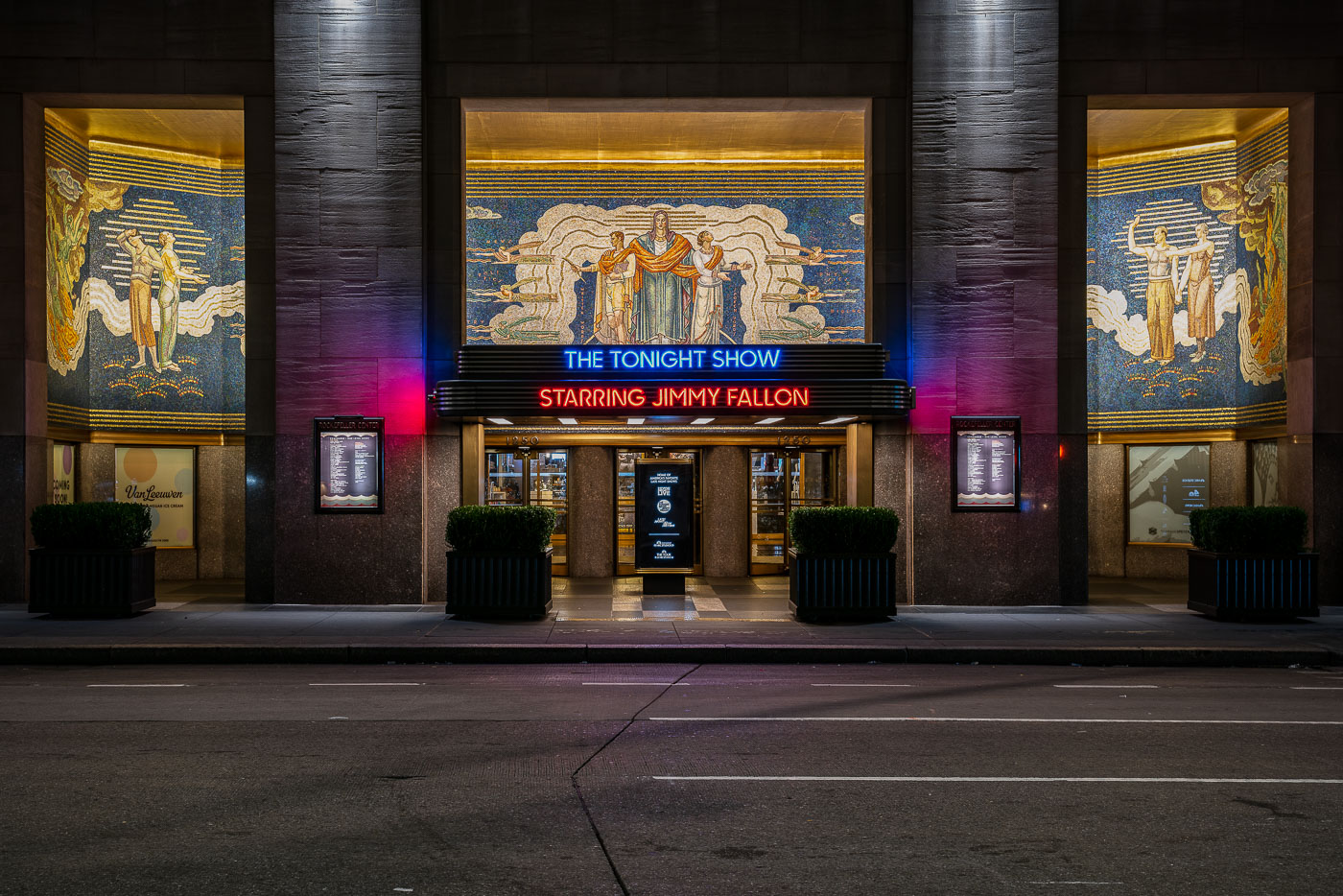
The Tonight Show marquee advertising Jimmy Fallon at NBC Studios, 30 Rockefeller Plaza in Manhattan.
The Tonight Show marquee marks the entrance to NBC studios at 30 Rockefeller Plaza in Midtown Manhattan. The program broadcasts from Studio 6B inside the building, part of Rockefeller Center and a longtime center of NBC television production. The Art Deco skyscraper, completed in 1933 as the RCA Building, remains a major NBCUniversal broadcast site.
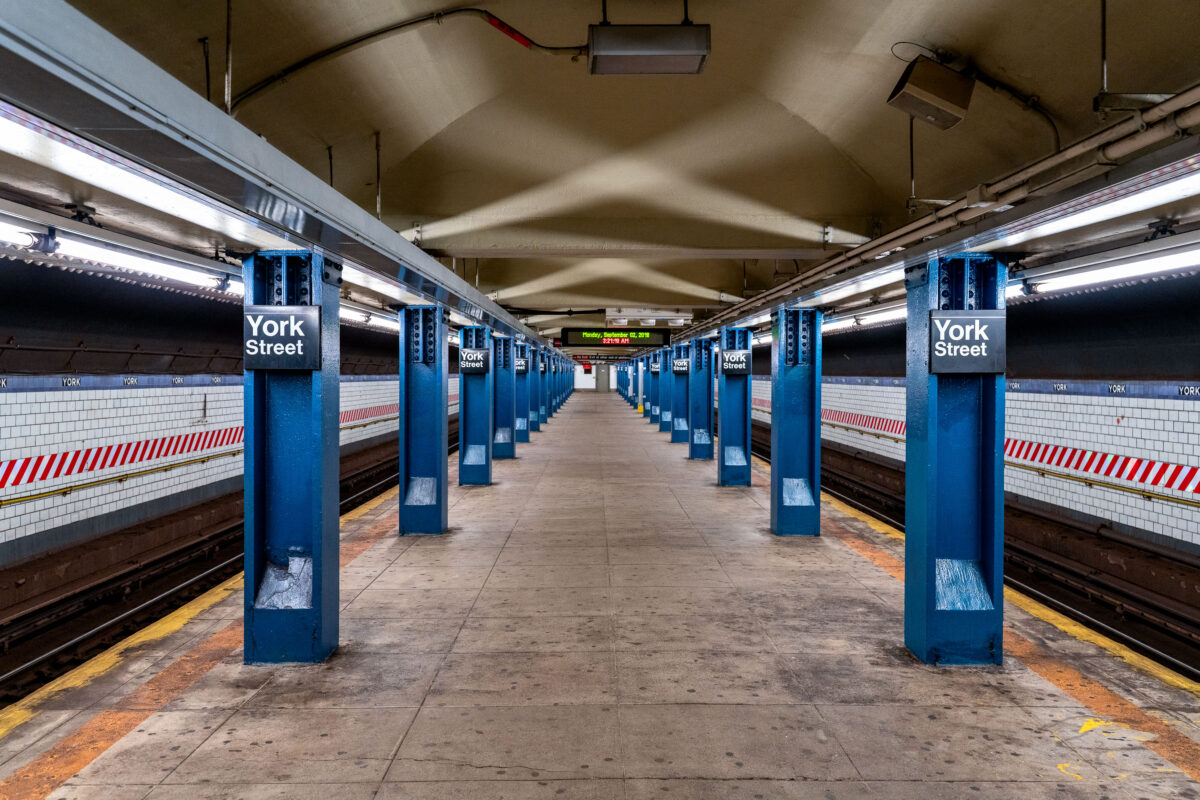
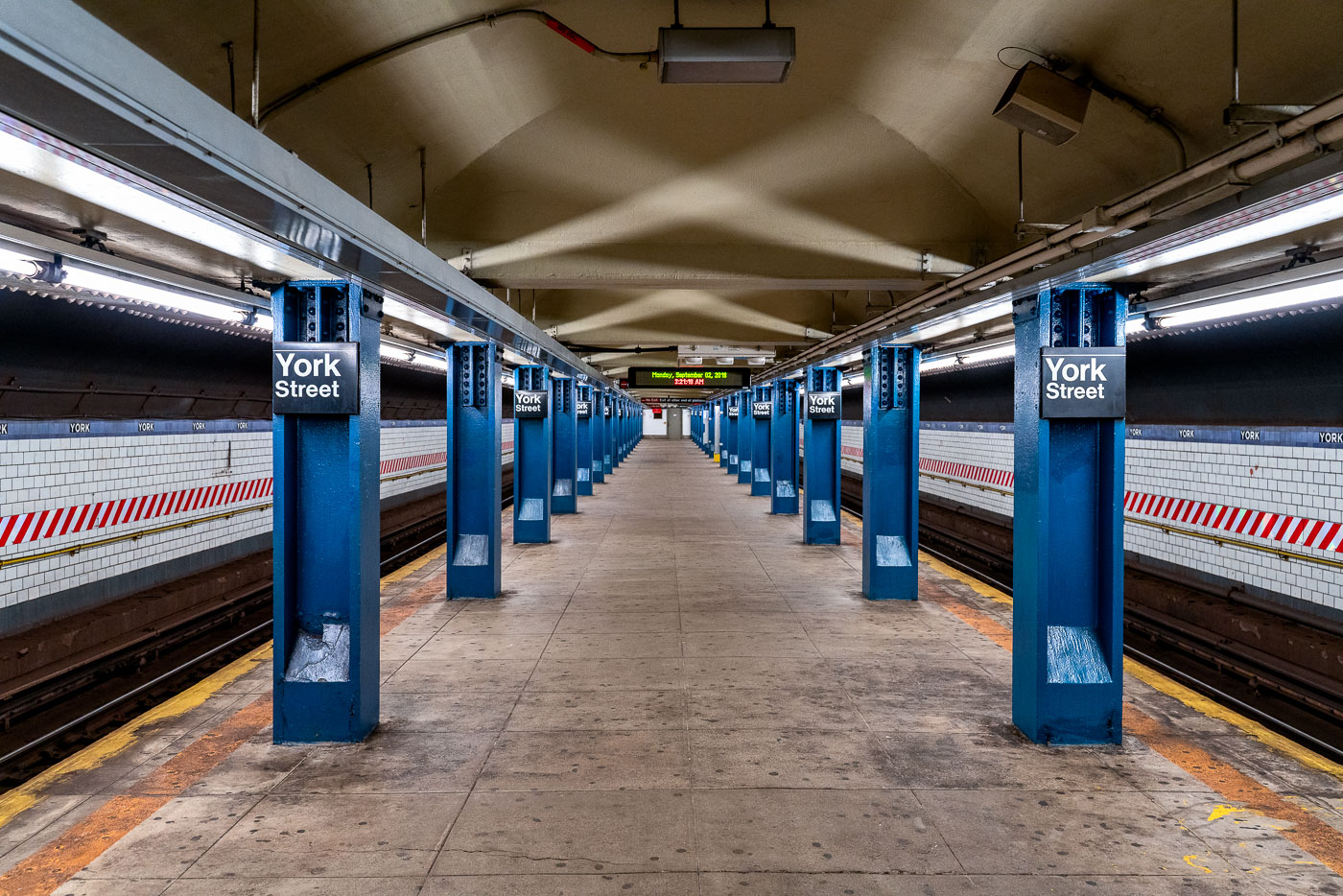
York Street subway station platform in Brooklyn with blue columns and fluorescent lighting.
The York Street subway station, located in the DUMBO neighborhood of Brooklyn, New York, serves the F and M trains. Opened in 1931, it is one of the deepest subway stations in the New York City Subway system.
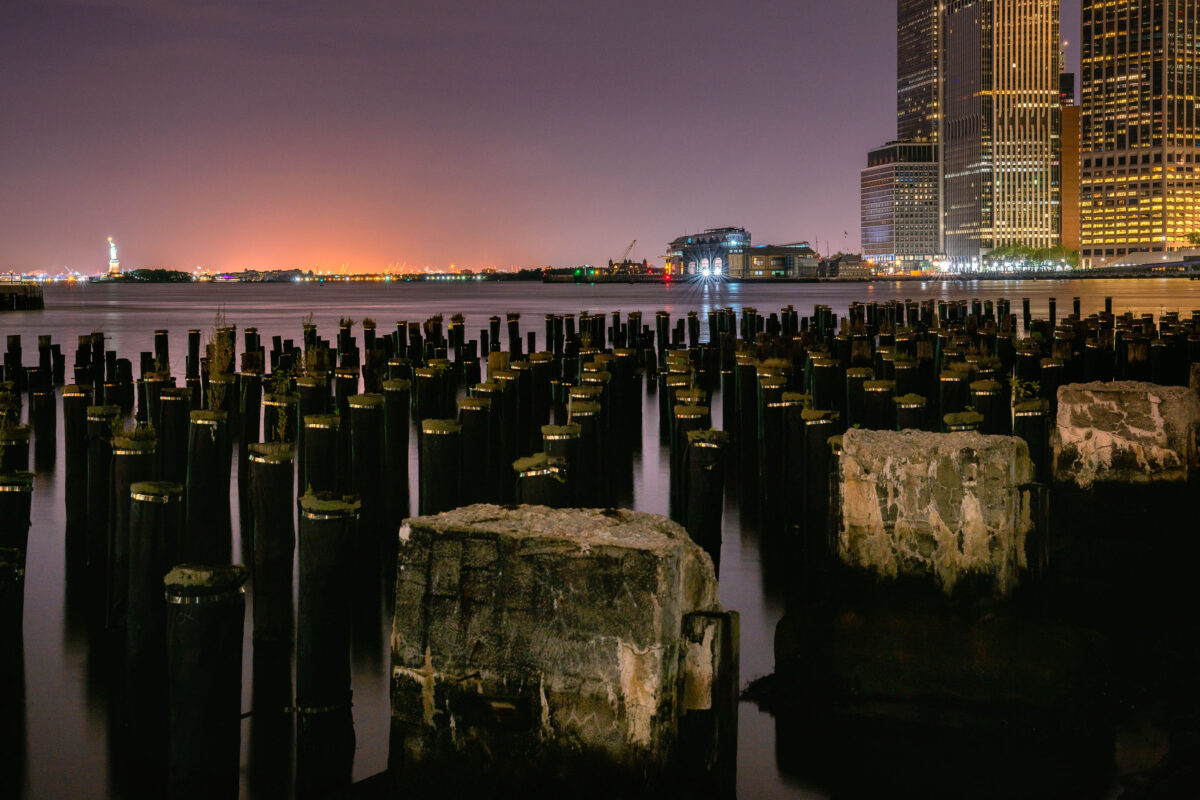
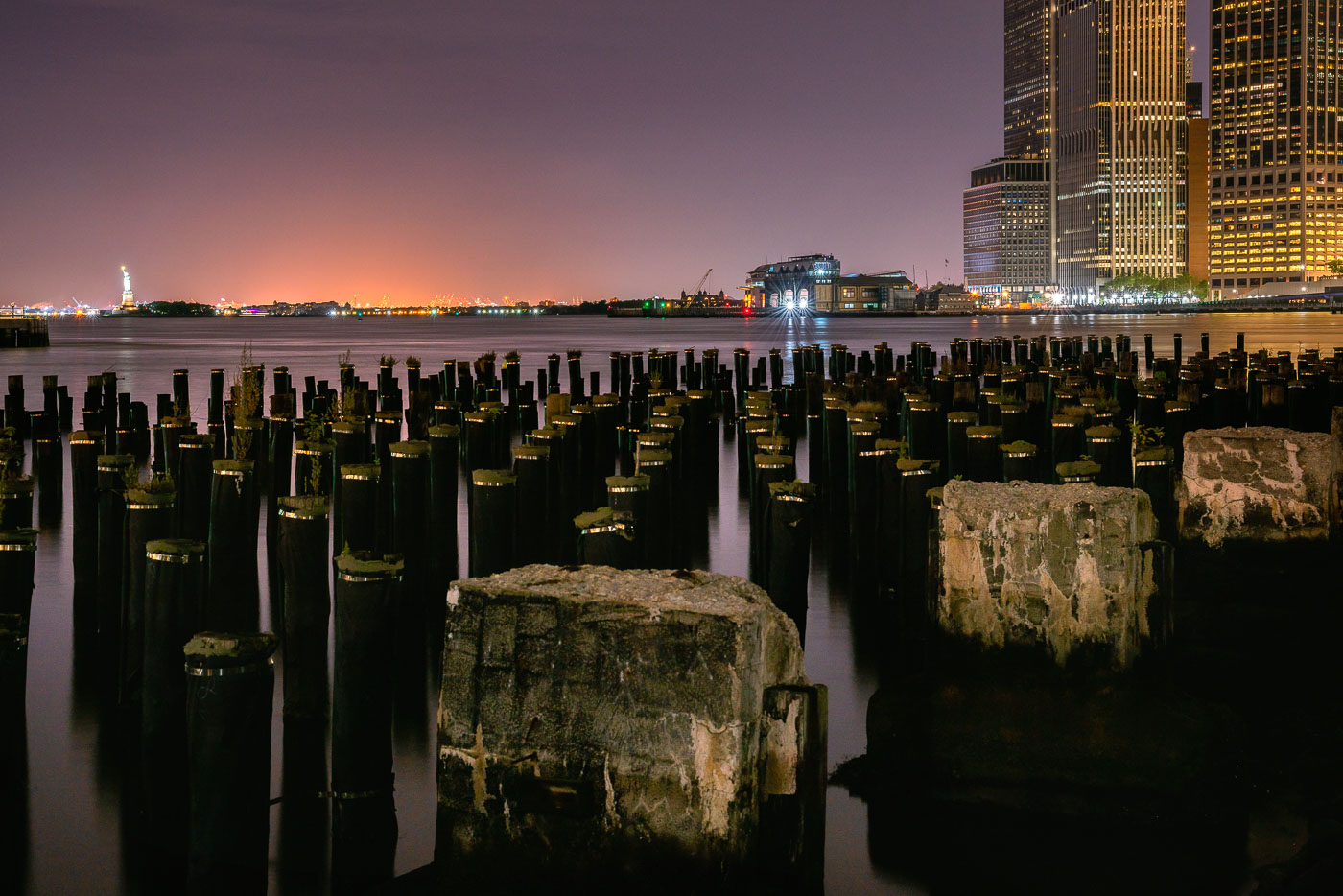
Weathered wooden pilings on the East River at dusk with Manhattan skyline and Statue of Liberty beyond.
The remnants of the East River piers stand in the foreground, a testament to New York City's maritime past. These pilings once supported bustling docks that facilitated trade and passenger travel along the East River. In the distance, the Statue of Liberty is visible, a symbol of the city's historical role as a gateway for immigrants. The modern Manhattan skyline rises behind, representing the city's continuous transformation and its enduring status as a global center.
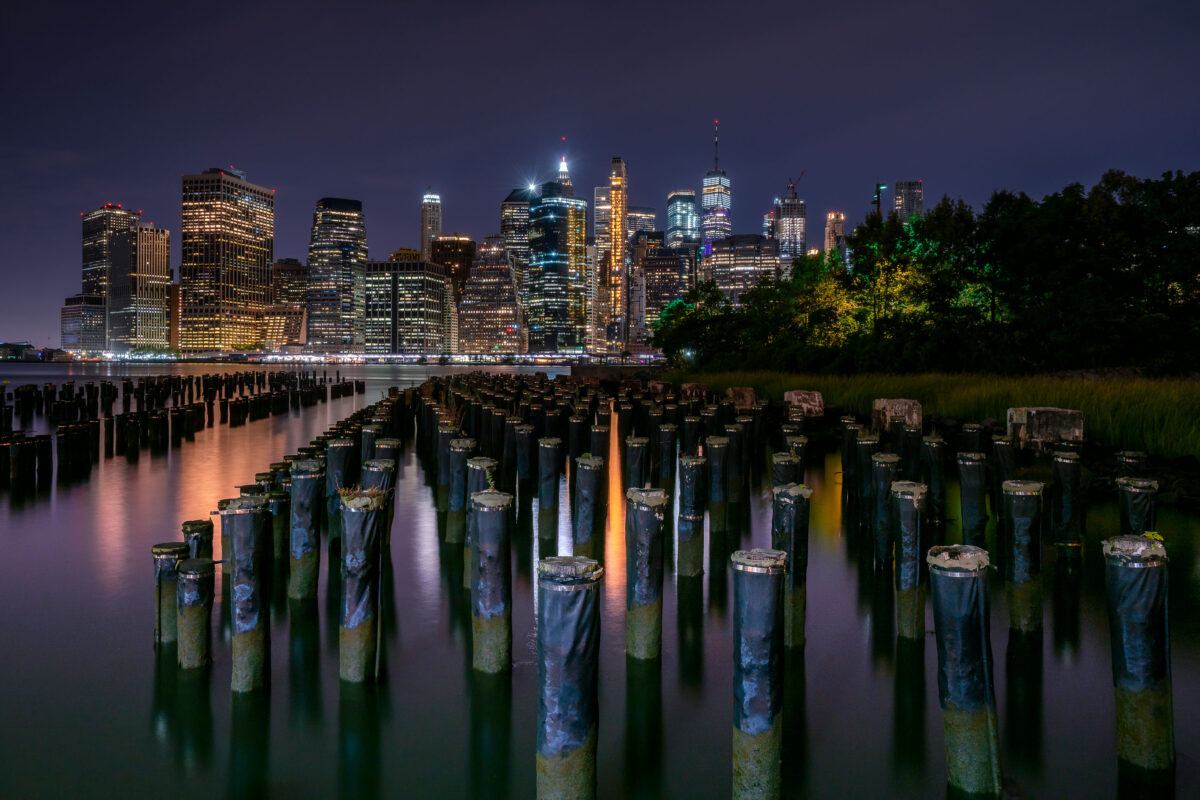
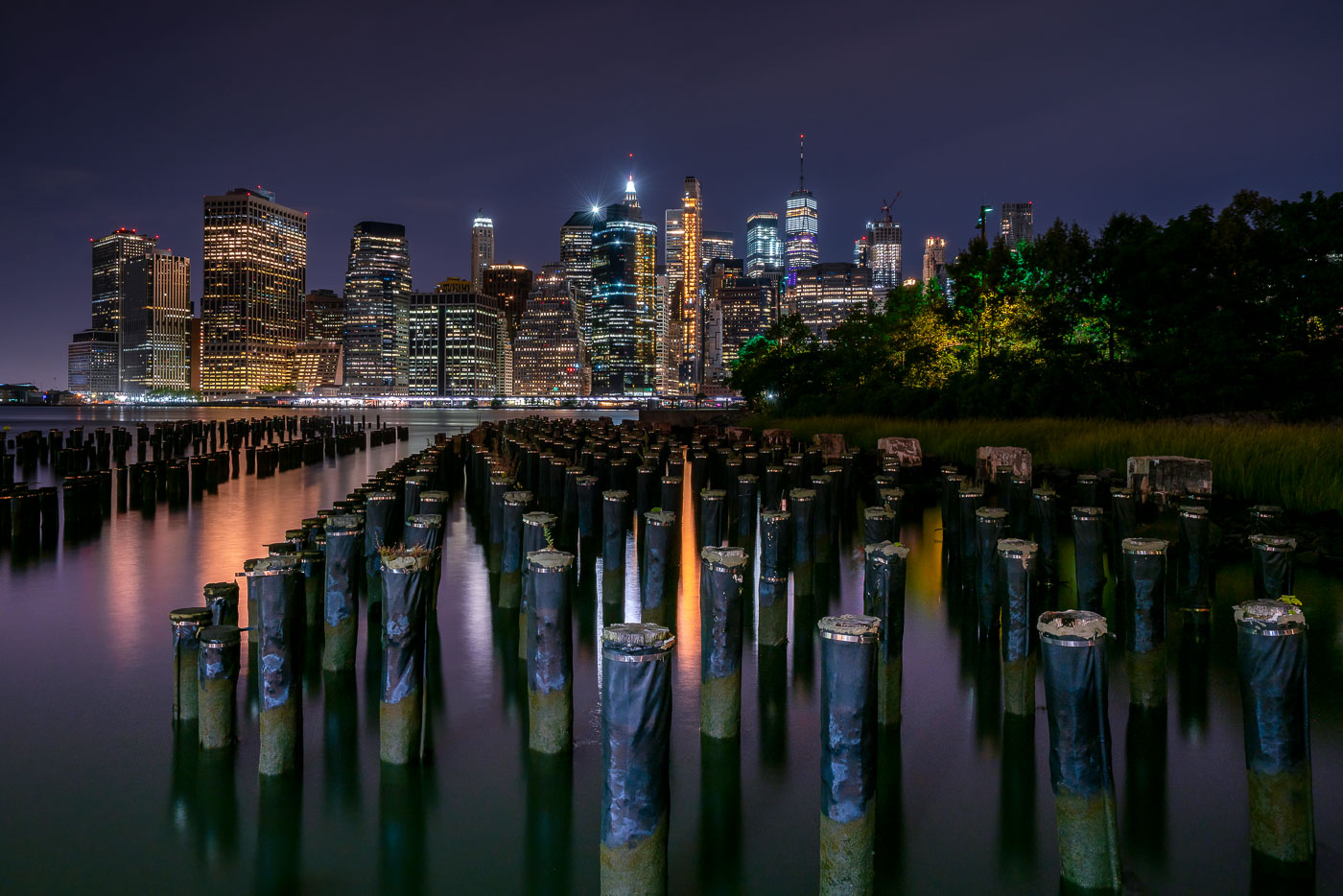
Weathered wooden pilings from abandoned East River piers frame Manhattan's illuminated skyline at dusk in Brooklyn Bridge Park.
Rows of old wooden pilings emerge from the East River, with the illuminated Manhattan skyline visible in the background. These pilings are remnants of former piers in Brooklyn Bridge Park, a waterfront area in Brooklyn, New York City. The park was developed on the site of former industrial port facilities, and the preservation of these pilings offers a visual connection to the area's maritime history.
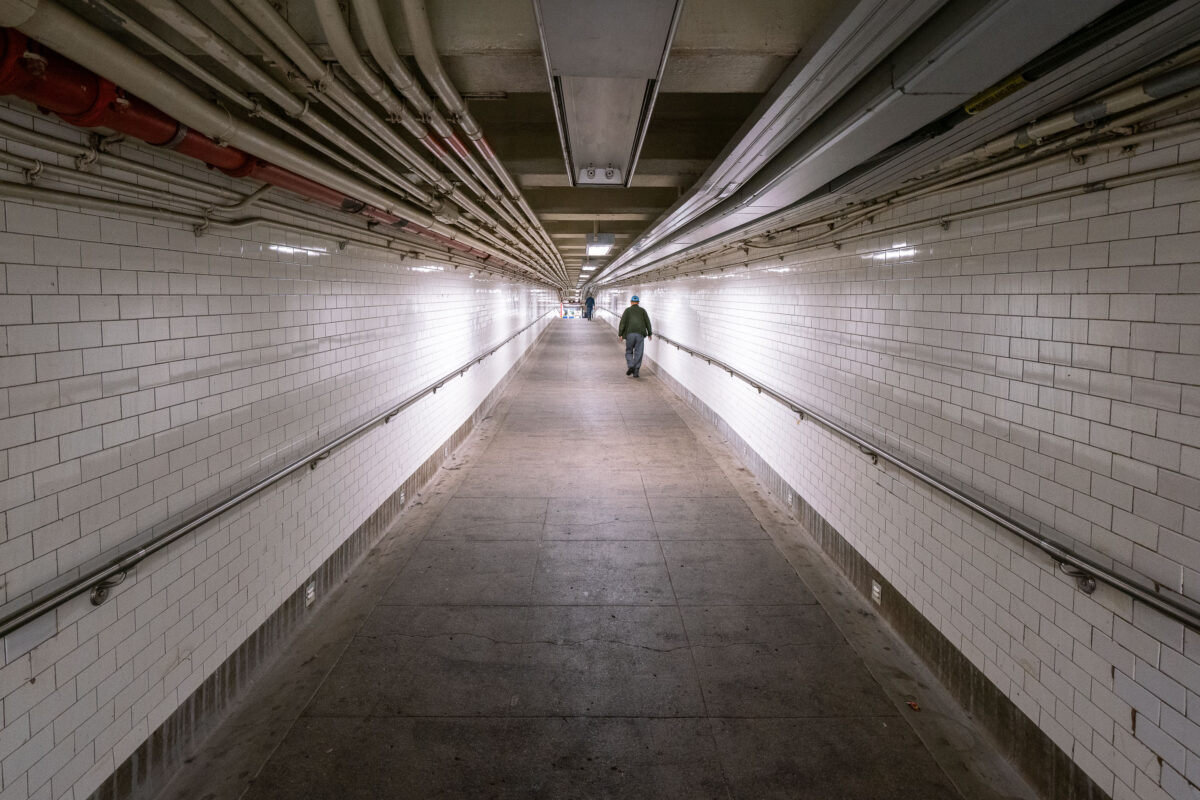
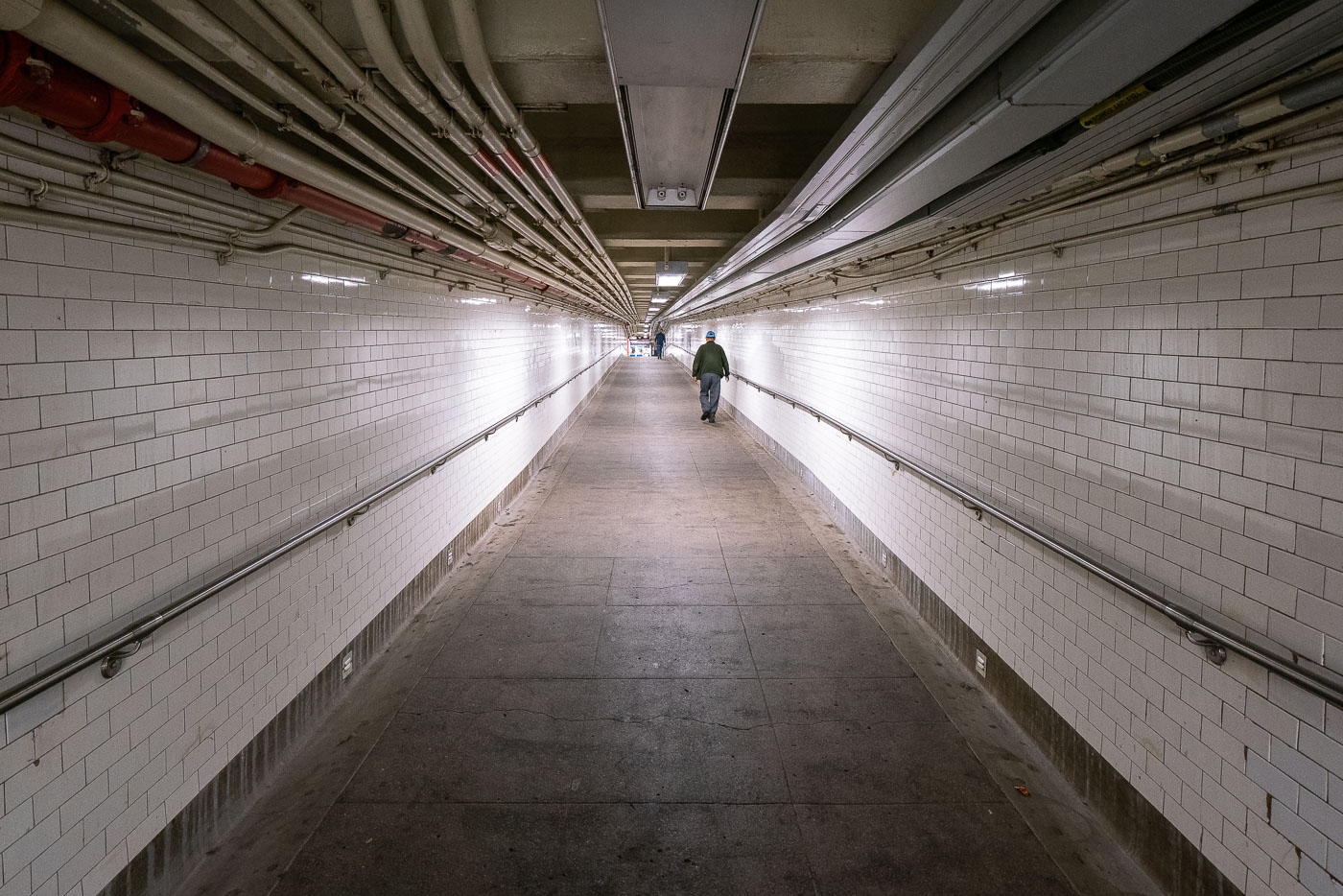
A solitary pedestrian walks through a white-tiled New York City subway tunnel with overhead pipes and conduits.
A lone figure walks through a long, tiled tunnel in the New York City Subway system, with numerous pipes and conduits visible overhead.
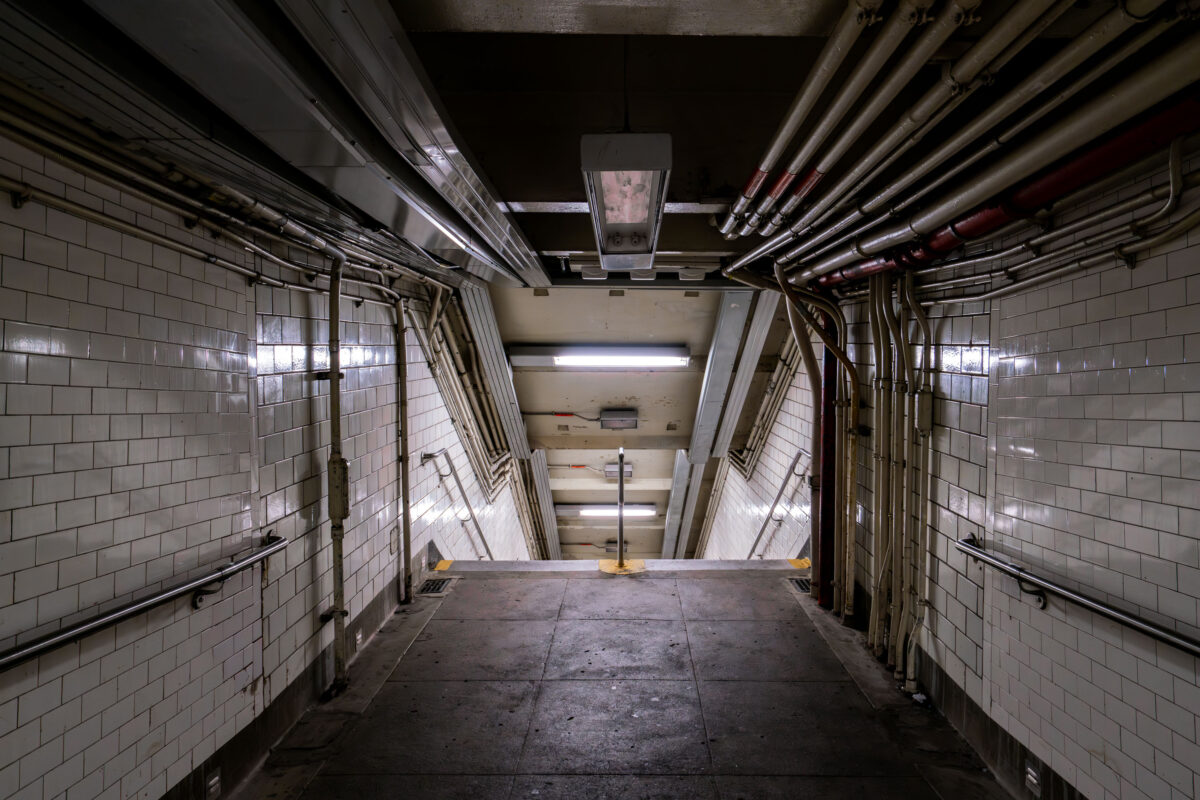
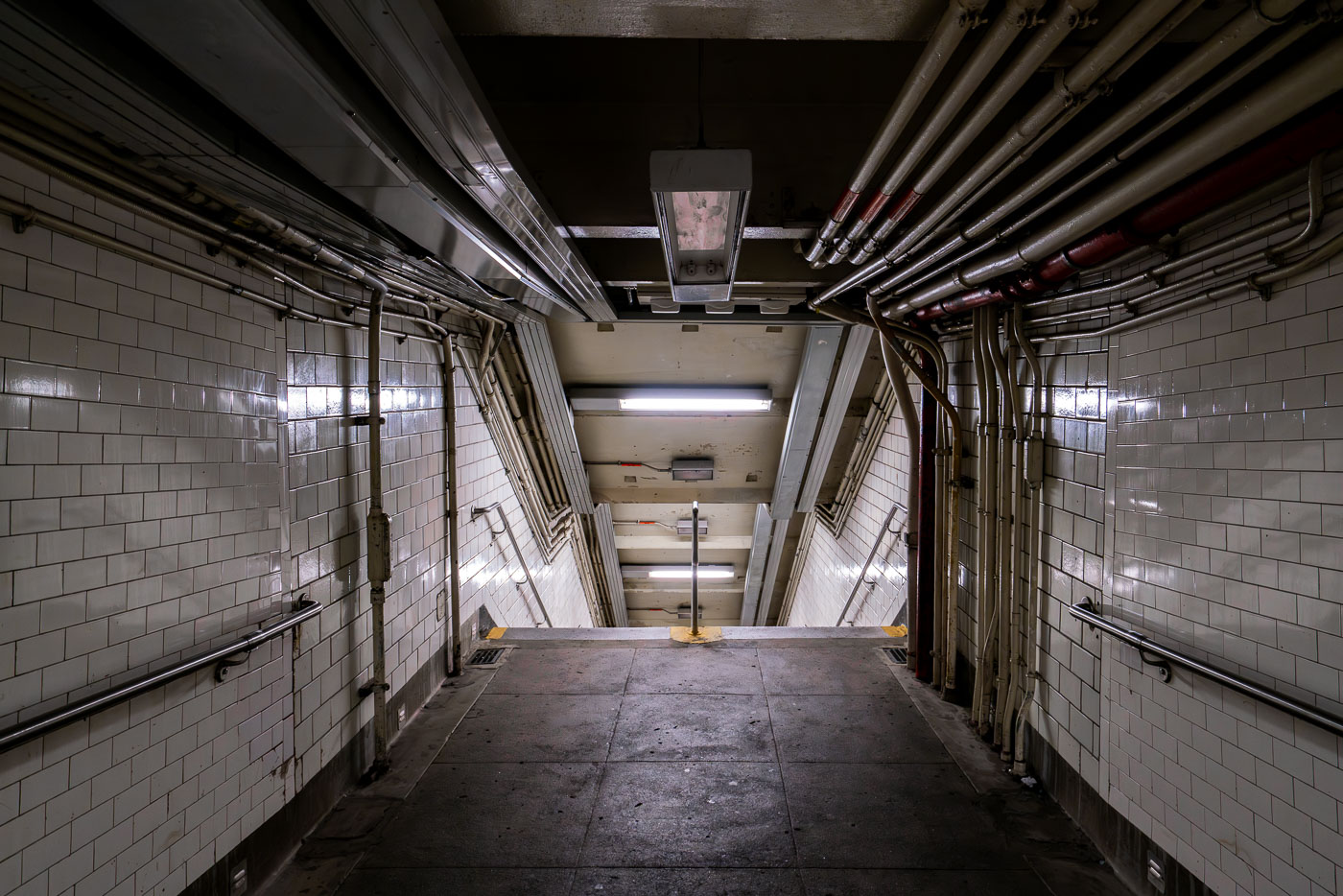
Descending stairway in a New York City subway station with white tile walls and exposed overhead piping.
A dimly lit stairway descends into a New York City subway station, revealing extensive exposed piping and tiled walls characteristic of aging transit infrastructure.
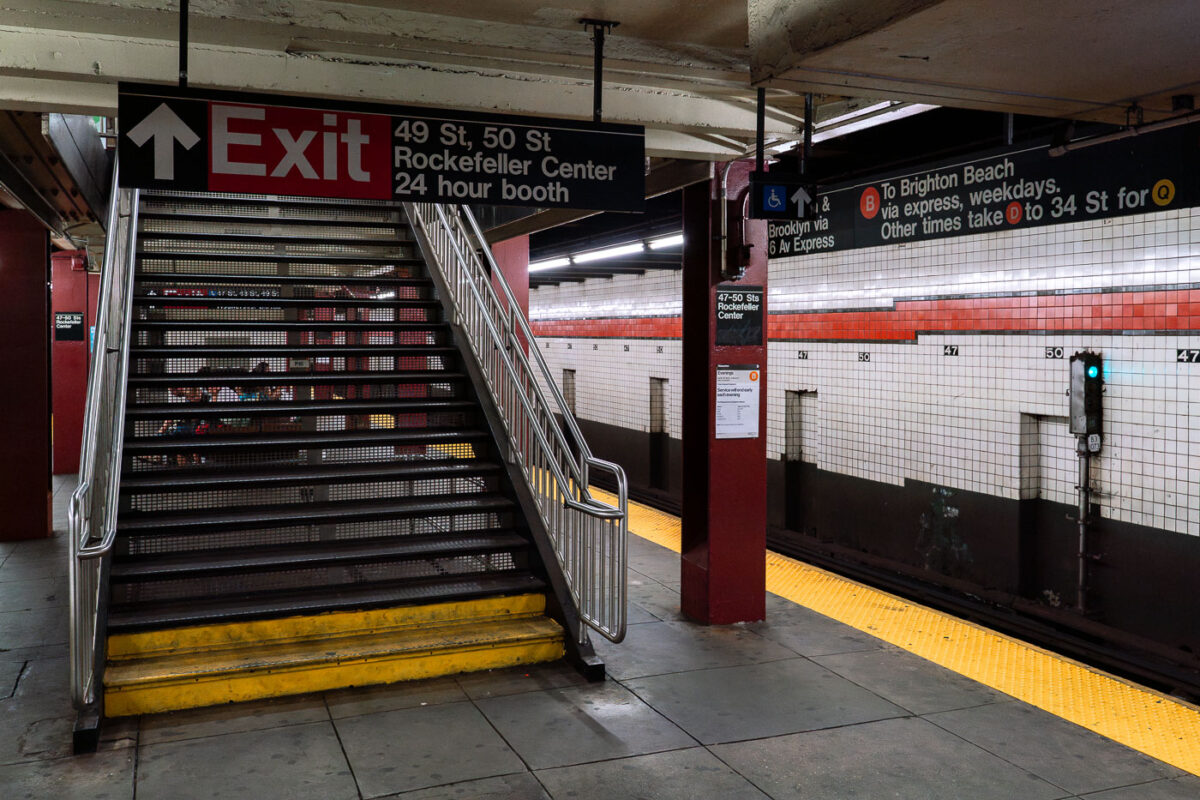
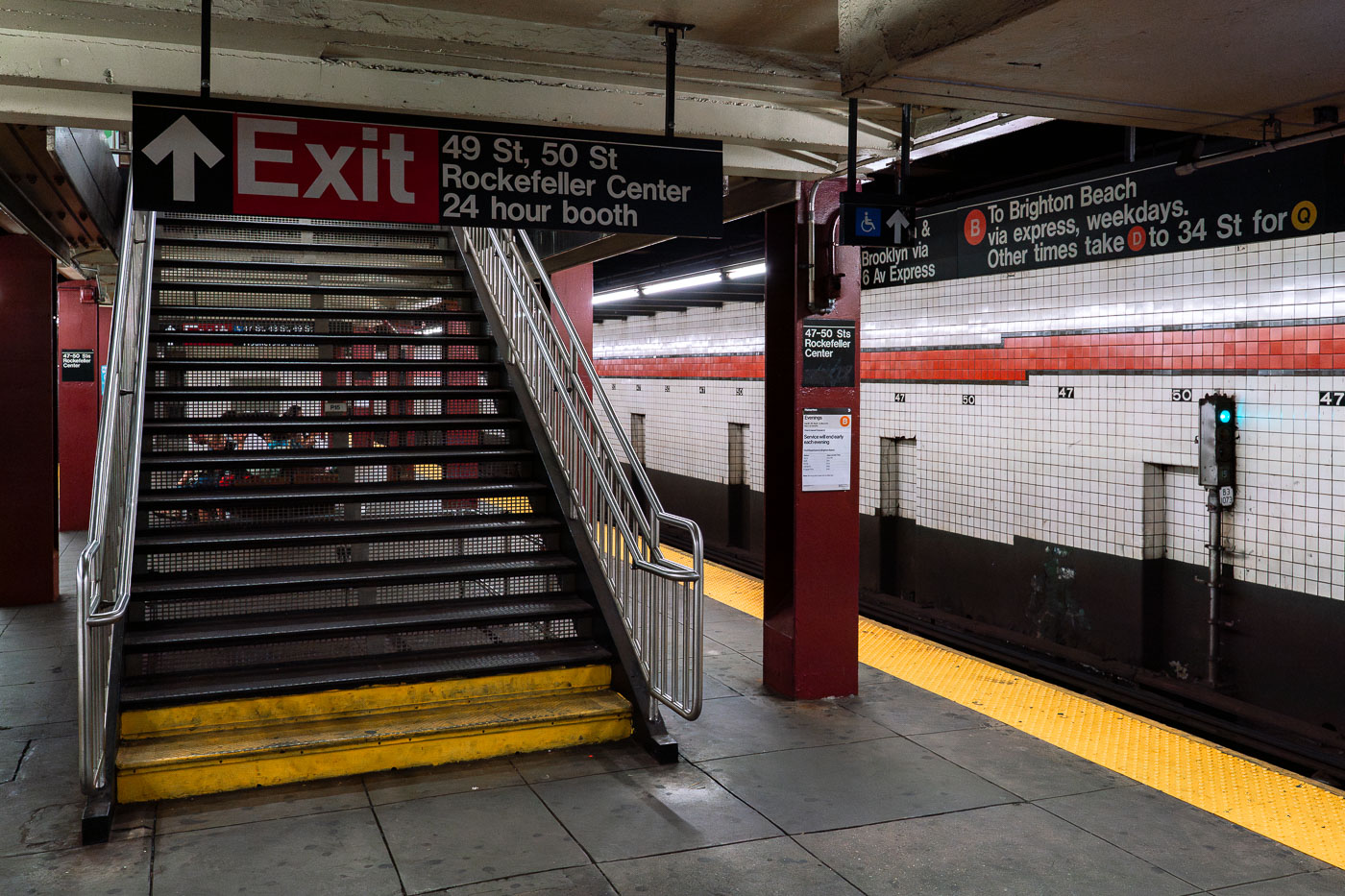
Exit staircase at 49-50 Streets Rockefeller Center subway station in Manhattan.
A staircase with metal railings and yellow-striped steps leads to an "Exit" sign for the 49-50 Streets Rockefeller Center subway station, which includes a 24-hour booth. The station serves the B, D, F, and M lines, with signage indicating routes to Brighton Beach and 34th Street.

Built in Minneapolis

Minneapolis Photographer

Browse by location, move through long-running series, or start with recent work.