Place Archive

La Jolla Sea Lions

California sea lions gather on the algae-covered rocky shores of La Jolla, a key haul-out site along the San Diego coastline. Nearby rocks also host brown pelicans and cormorants, underscoring the area’s role as a vital habitat for marine and seabird species within the Pacific Ocean ecosystem.

4 photos

Nearby Pages

Markers

La Jolla Sea Lions Photo Locations

4 geotagged photos

Photos
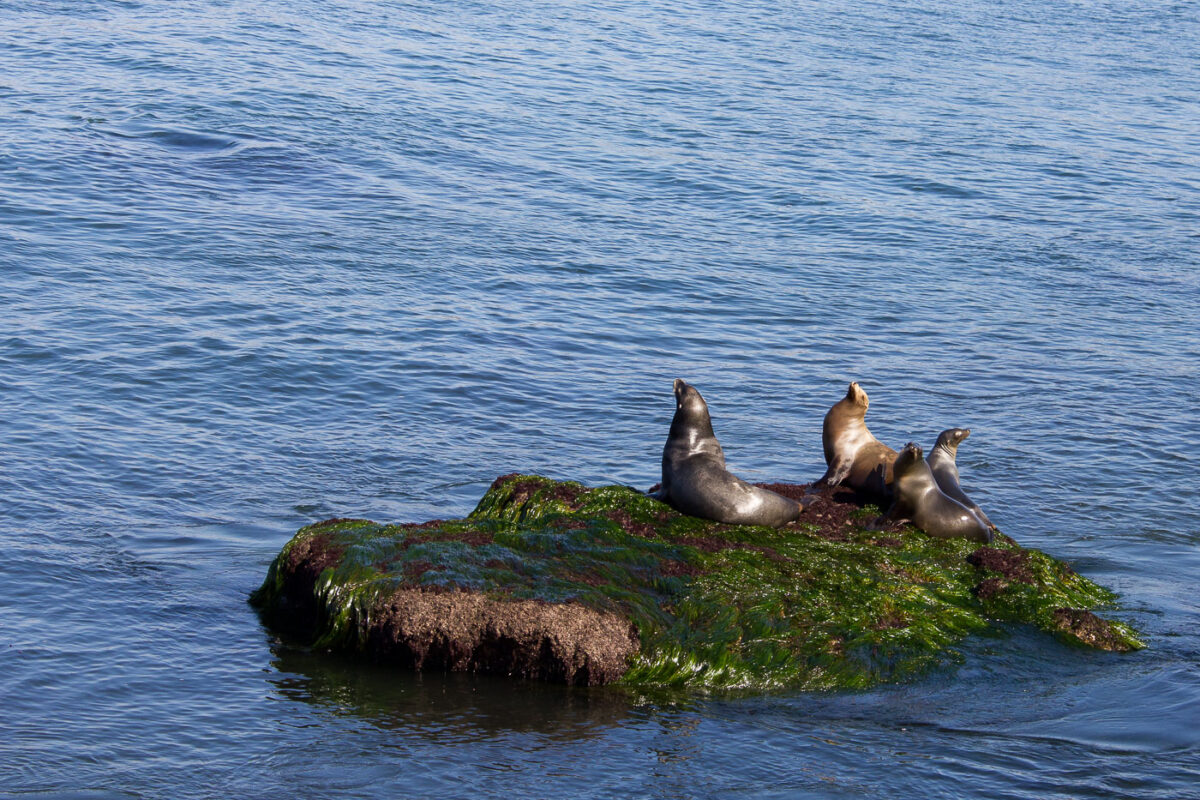
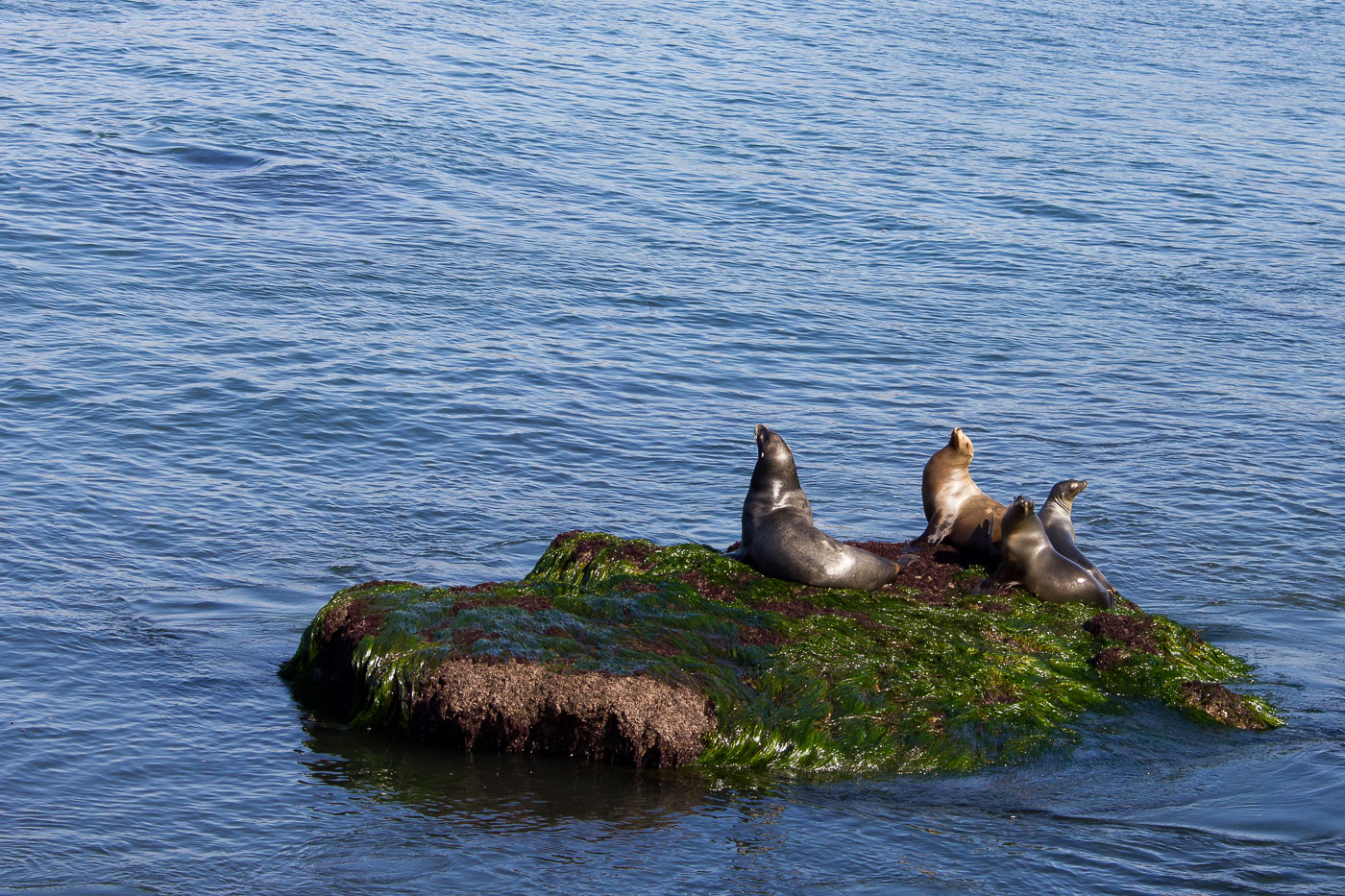
California sea lions rest on an algae-covered rock off La Jolla's coast.
California sea lions (Zalophus californianus) haul out on rocks like this one along the La Jolla coastline, a stretch of shoreline within the San Diego–La Jolla Underwater Park and Ecological Reserve. Adult males can weigh up to 800 pounds and are marked by a thick neck and a raised bony crest on the forehead, visible here among the smaller females and juveniles. Unlike harbor seals, California sea lions have visible ear flaps and can rotate their hind flippers underneath their bodies, letting them move on rocks with more mobility than true seals. The species is protected under the federal Marine Mammal Protection Act of 1972, which bars people from approaching or disturbing them on haul-out sites like this one.
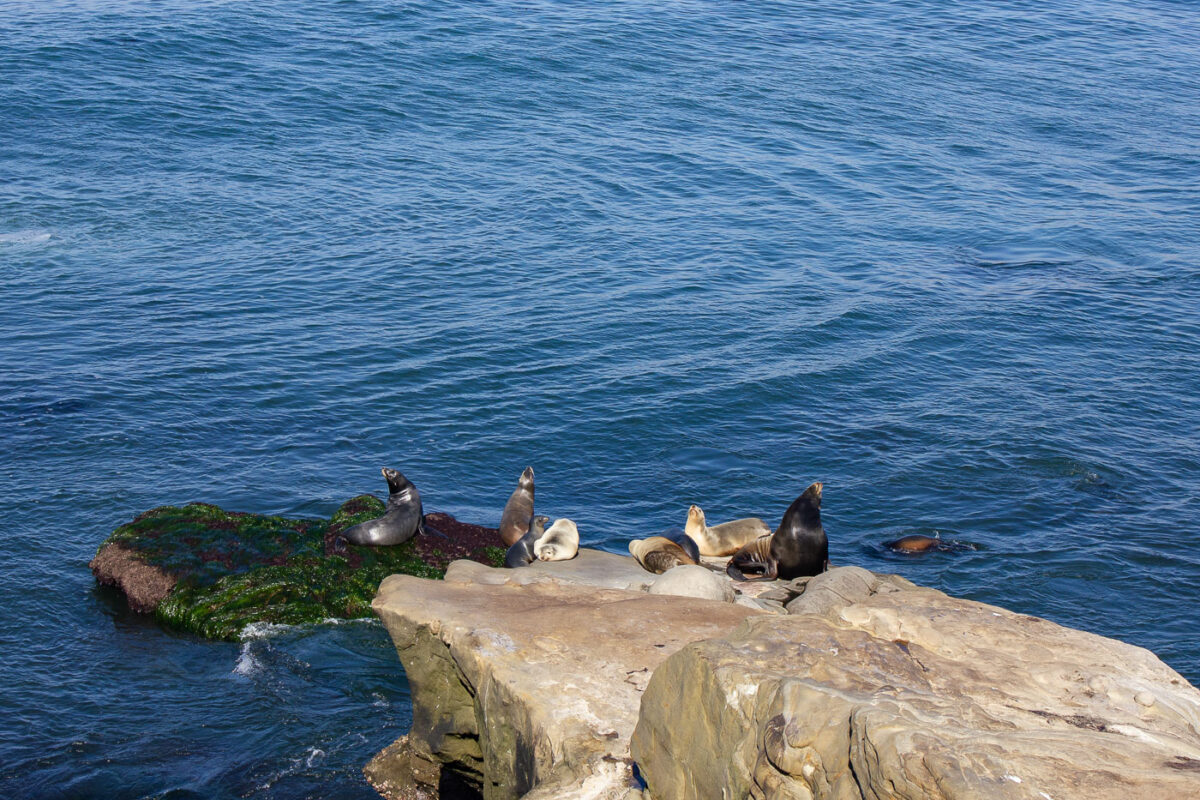
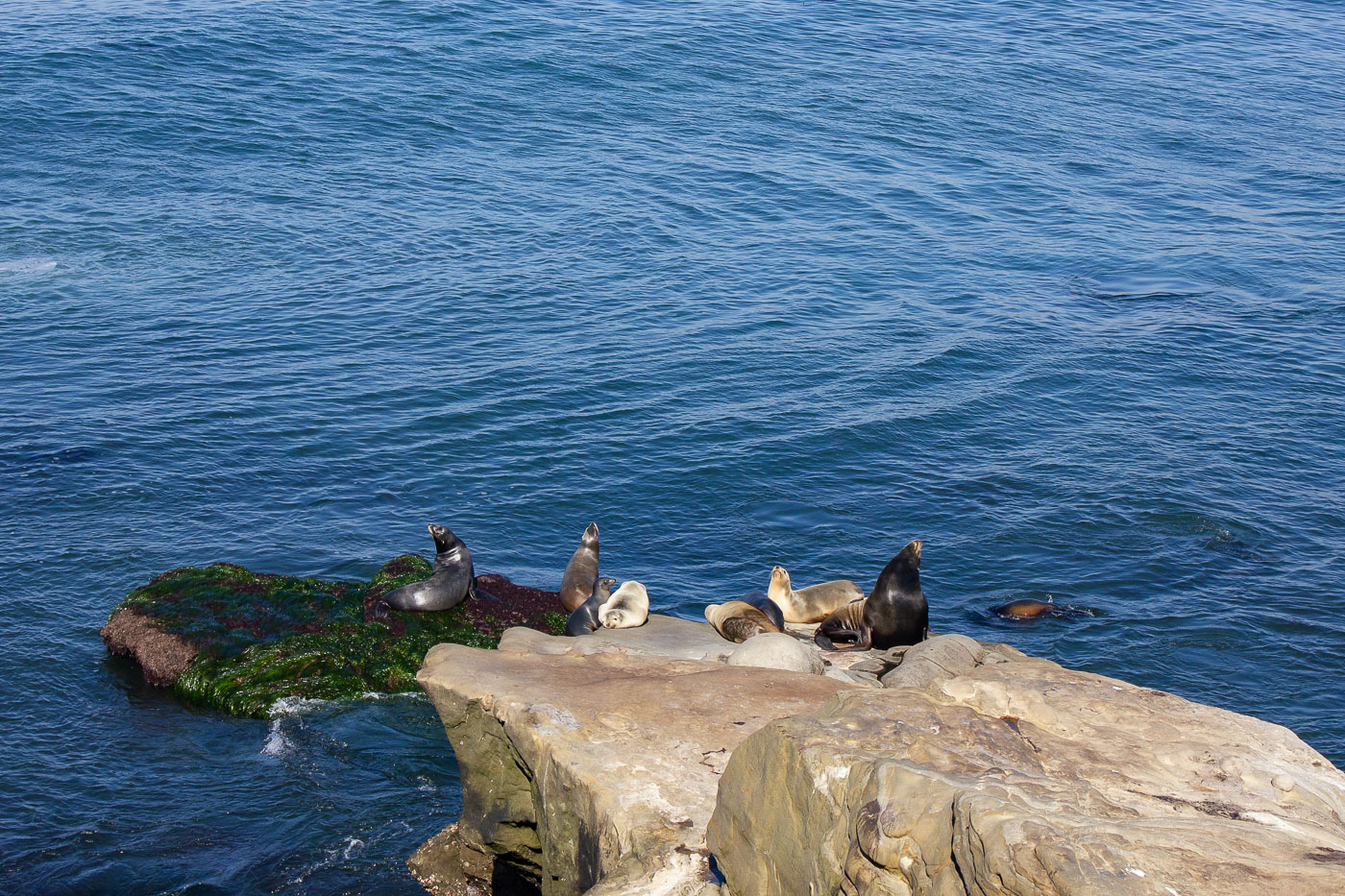
California sea lions rest on rocky outcrops along the La Jolla coastline.
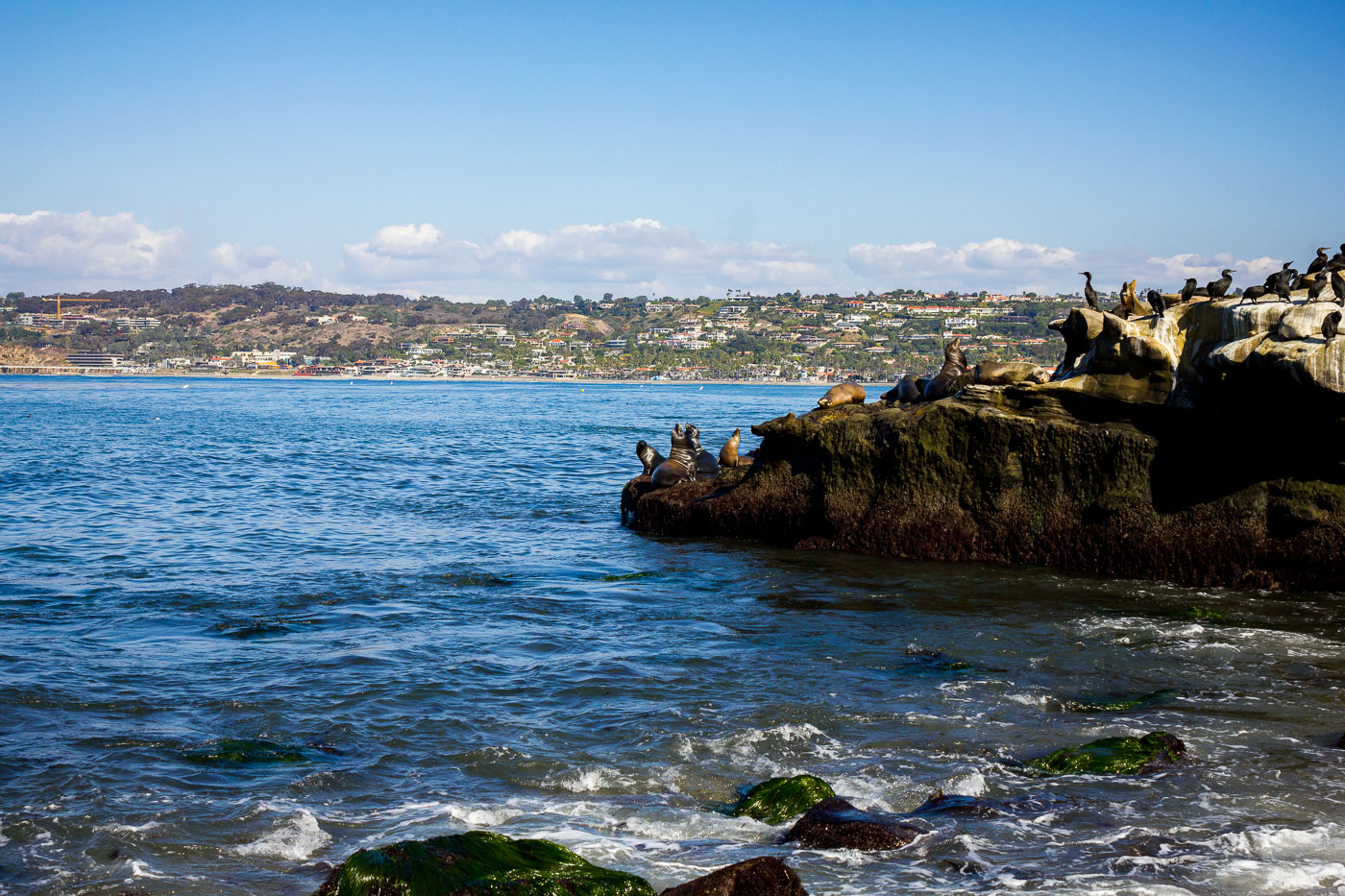
California sea lions (Zalophus californianus) haul out on rocky outcroppings near Point La Jolla, one of the few stretches of California coastline where wild pinnipeds rest just steps from a city sidewalk. The City of San Diego designated this section of shoreline a marine mammal protected area in 2014 after years of dispute over public access to the rocks. Adult males can weigh up to 800 pounds and dive more than 900 feet while hunting squid and fish. Their barking calls, often carrying over to nearby La Jolla Cove, help establish rank and territory within the hauled-out group.
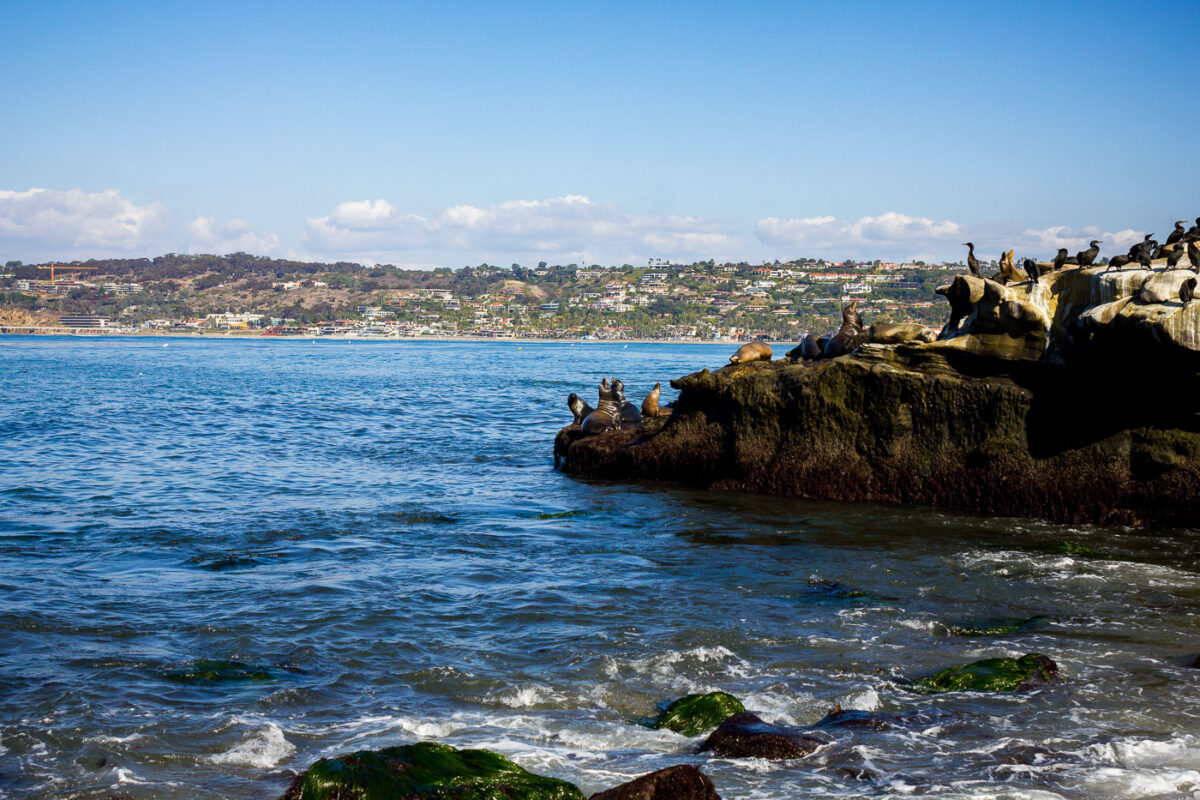
California sea lions and cormorants rest on rocky outcroppings along La Jolla's coastline.
Point La Jolla marks the southern edge of the San Diego-La Jolla Underwater Park Ecological Reserve, a protected stretch of coastline established in 1970. California sea lions began hauling out on these sandstone rocks in growing numbers over the past two decades, a shift that has made the area one of the most reliable places on the West Coast to observe the species without a boat. Federal law under the Marine Mammal Protection Act of 1972 bars people from touching or approaching the animals here. Double-crested cormorants and Brandt's cormorants share the same rocks, nesting on the ledges above the waterline. Across the water, the bluffs and neighborhoods of La Jolla rise above La Jolla Shores.
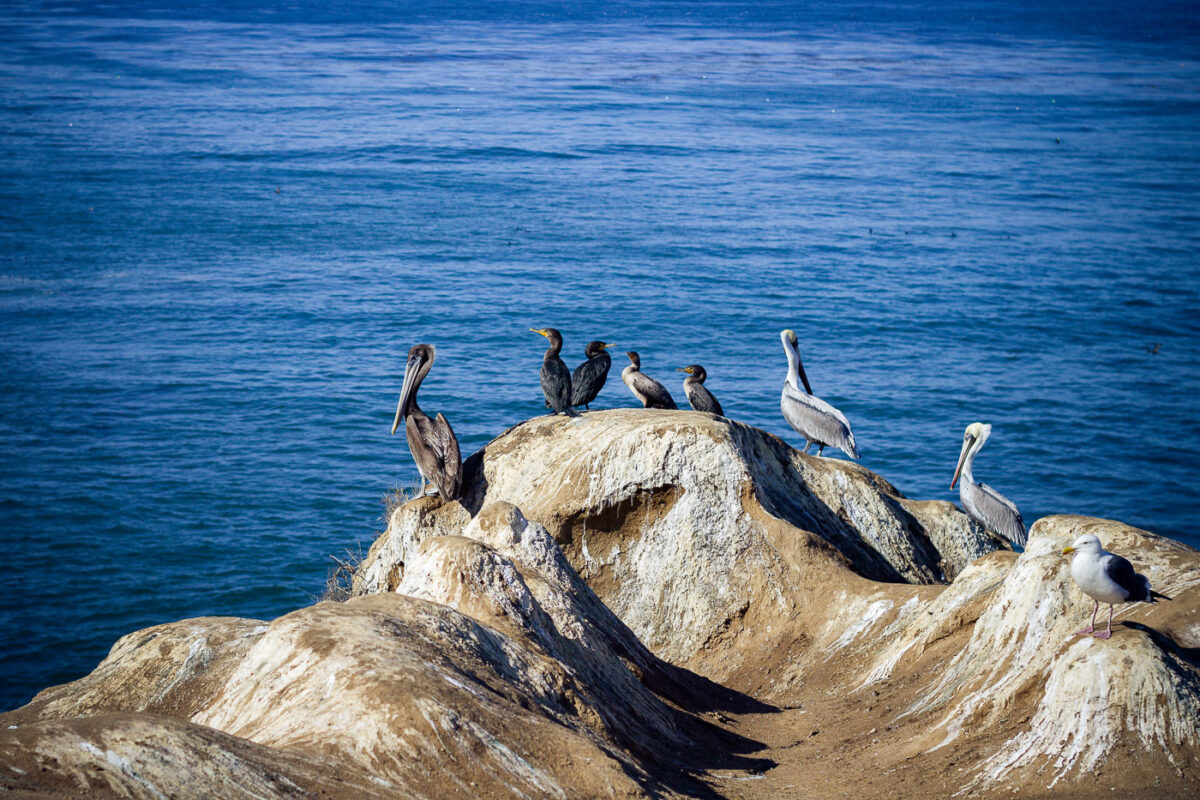
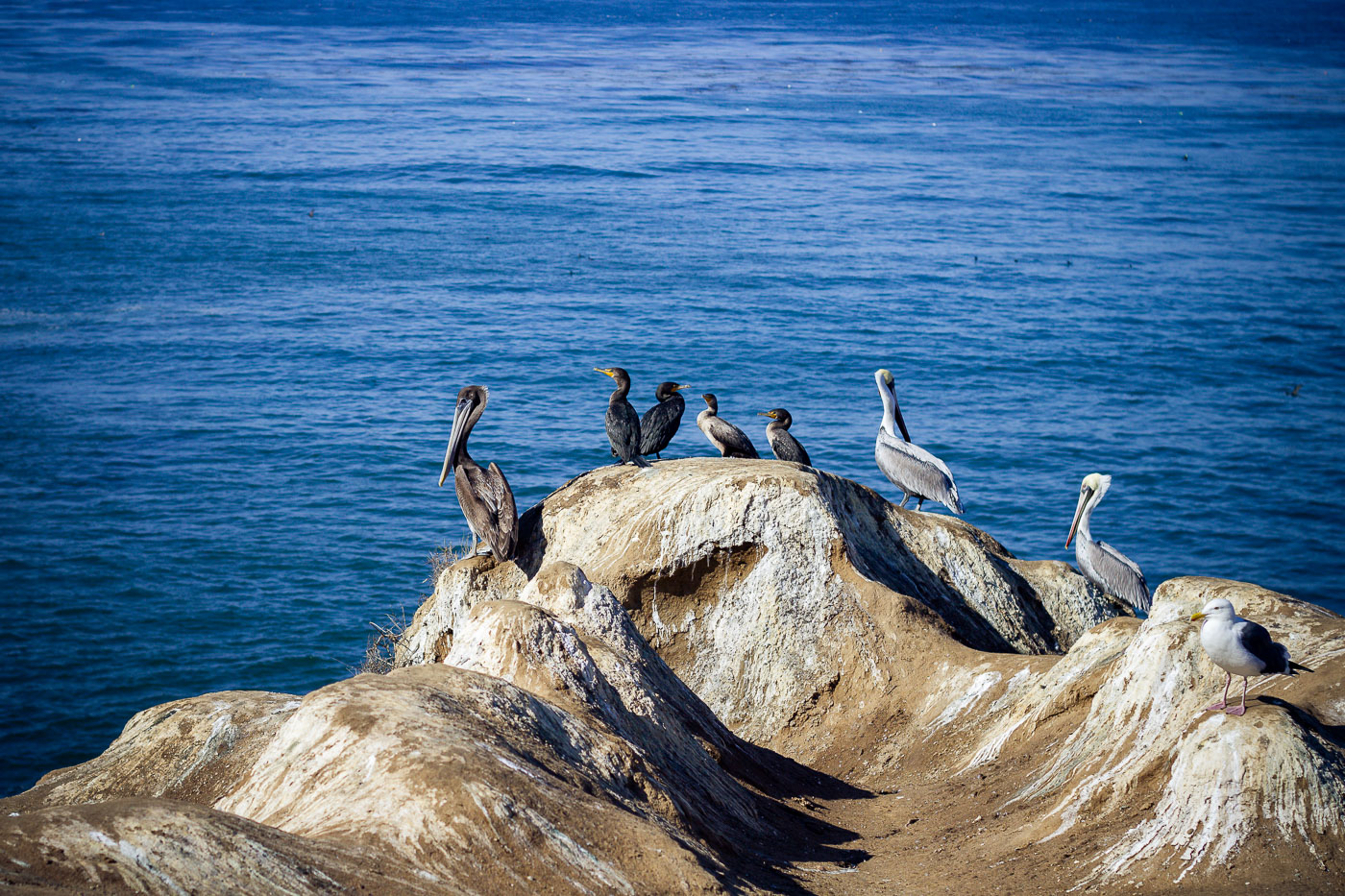
Brown pelicans and cormorants rest on rocky outcroppings off La Jolla, California.
Brown pelicans and double-crested cormorants share a sandstone outcropping along the La Jolla coast, with a western gull perched at the rock's edge. The cliffs here are part of the San Diego-La Jolla Underwater Park and Ecological Reserve, a protected stretch of shoreline established in 1970 that limits fishing and disturbance to marine life. Brown pelicans nearly disappeared from California's coast in the 1970s due to DDT contamination before recovering enough to be removed from the endangered species list in 2009. Double-crested cormorants often roost alongside pelicans on these same rocks, drying their wings after diving for fish in the kelp beds offshore.

Built in Minneapolis

Minneapolis Photographer

Browse by location, move through long-running series, or start with recent work.