Mexico Photography

Explore photos and posts tagged Mexico.

Souvenir Shop and Street Expression, Puerto Vallarta

Souvenir Shop and Street Expression, Puerto Vallarta

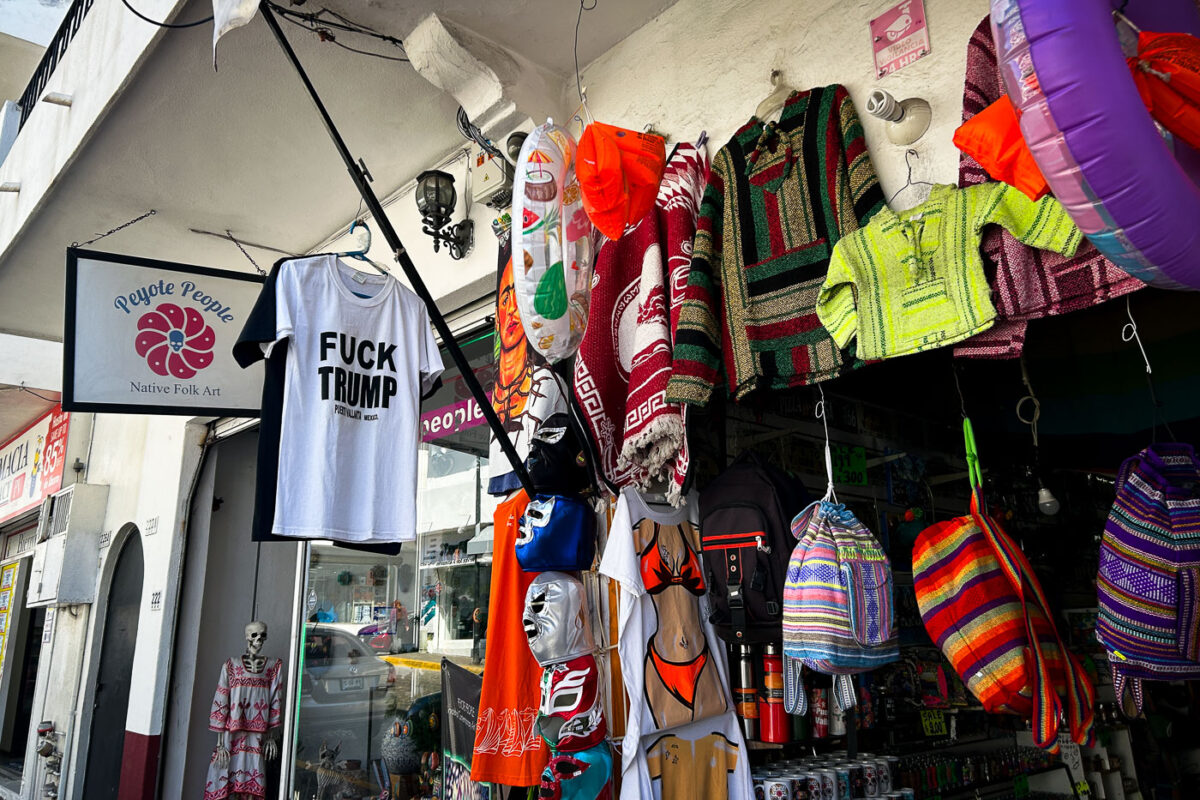
A colorful souvenir shop in Puerto Vallarta displays a mix of handmade textiles, luchador masks, and woven bags beside a bold political T-shirt. The storefront sign, “Peyote People — Native Folk Art,” hints at a focus on indigenous crafts, yet the juxtaposition of local artistry with sharp political commentary captures the layered nature of Mexican tourist zones. From bright ponchos and beach gear to expressive graphic tees, the shopfront reflects the blend of commerce, art, and opinion that defines many coastal market streets across Mexico.
Political Stickers on a Street Pole, Puerto Vallarta

Political Stickers on a Street Pole, Puerto Vallarta

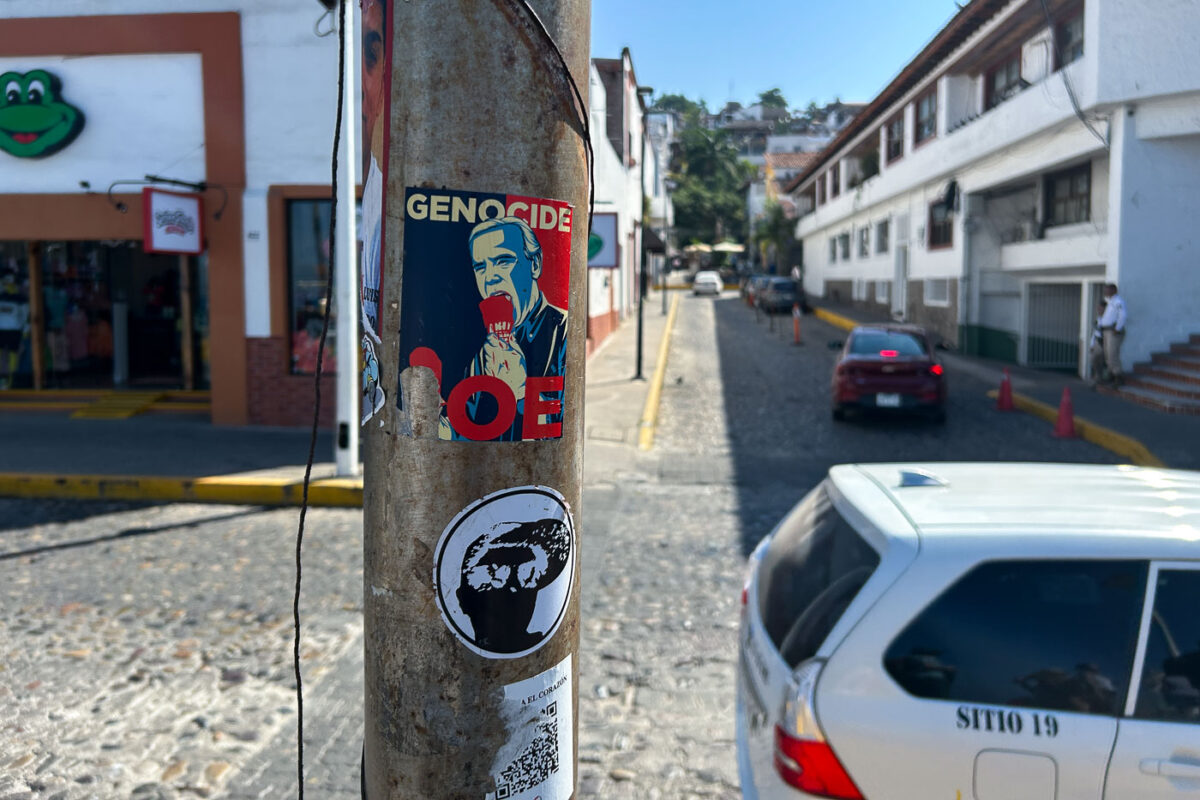
A pair of weathered stickers cling to a rusted street pole along a cobblestone street in Puerto Vallarta, Mexico. One features a political caricature with the word “GENOCIDE,” while the other, a minimalist face design, sits just below. Cars and pedestrians move through the narrow street lined with traditional whitewashed buildings, tiled roofs, and small local shops. The scene reflects how political expression and street art intermingle in everyday urban spaces, even in tourist-heavy coastal towns.

Coastal Walk at Nuevo Vallarta

Coastal Walk at Nuevo Vallarta

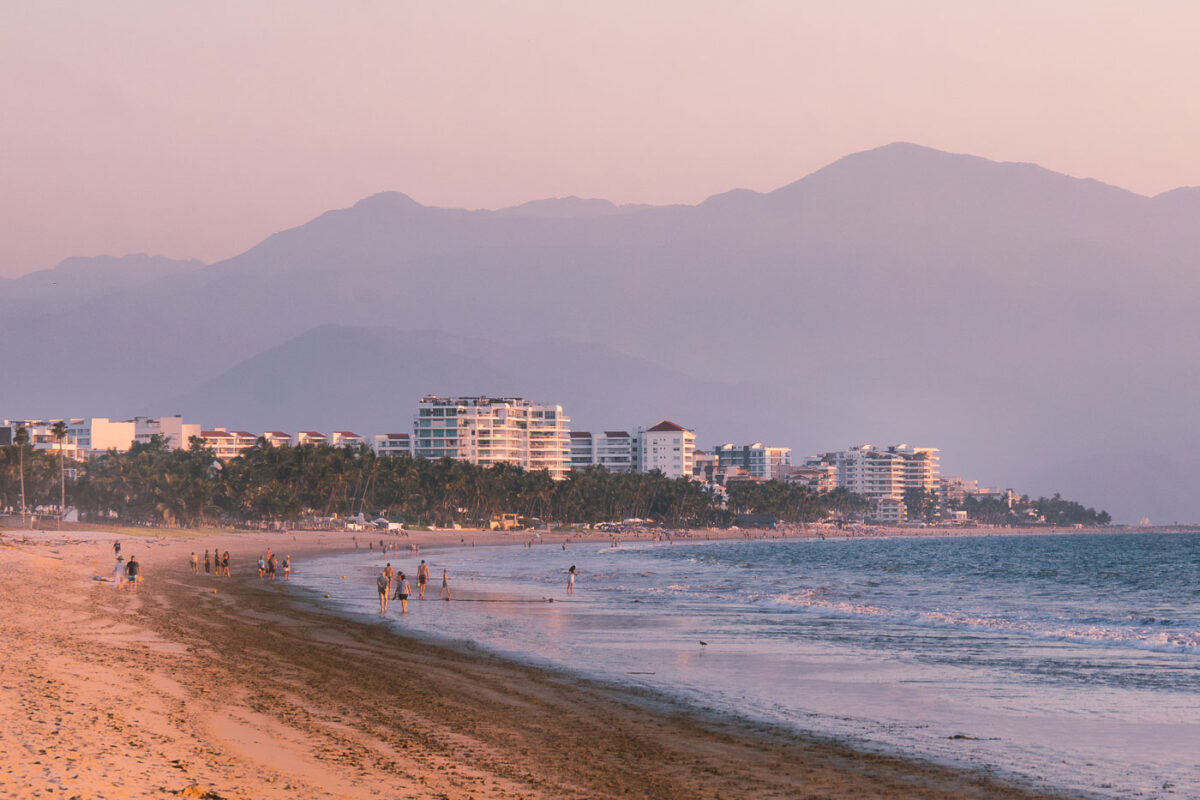
Along the long shoreline of Nuevo Vallarta, visitors stroll the water’s edge where the resort towers of Riviera Nayarit meet the Pacific. The line of hotels and condominiums stretches toward Puerto Vallarta in the distance, marking one of Mexico’s most developed coastal corridors. Behind the beachfront skyline rise the forested slopes of the Sierra Madre Occidental, framing the region’s distinctive geography—where mountains descend sharply into the sea and urban leisure merges with natural backdrop.

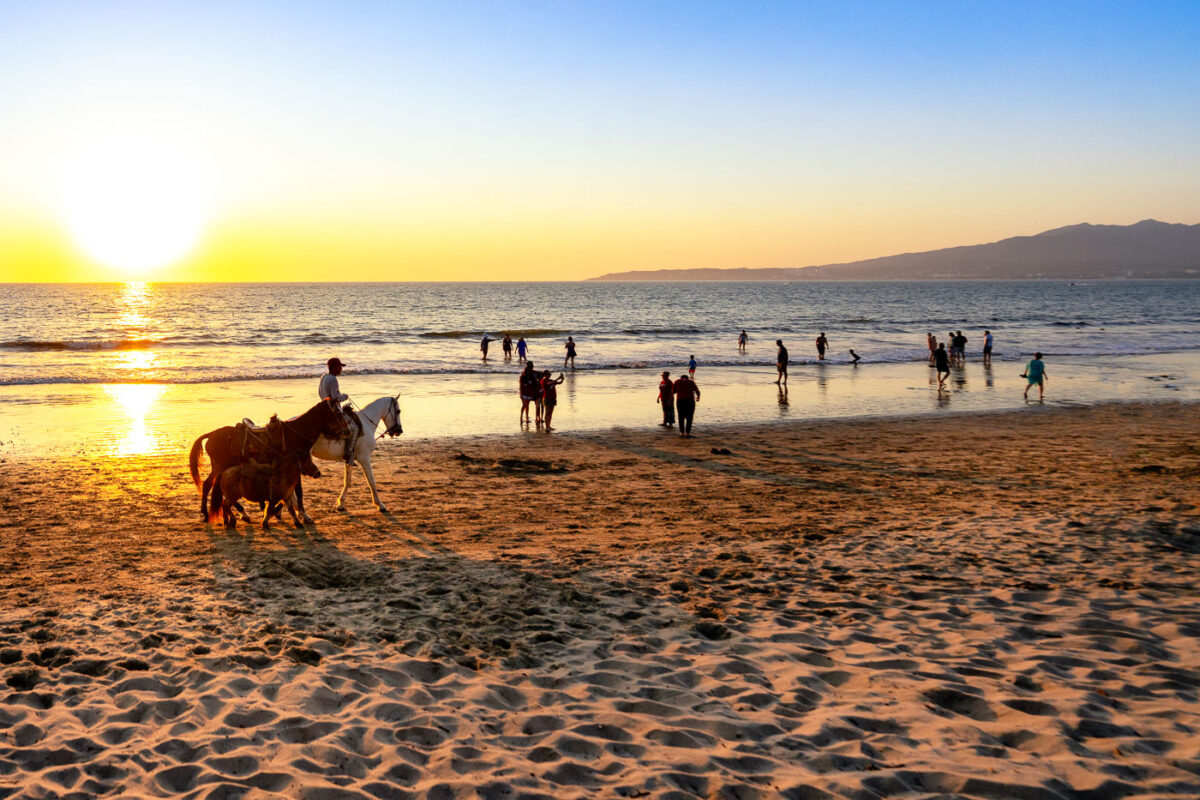
Evening at Puerto Vallarta Beach

Evening at Puerto Vallarta Beach

Along the shoreline of Puerto Vallarta, Jalisco, people gather where the city meets the Pacific Ocean. Families cool off in the surf as the day winds down, while a local horse handler offers rides along the sand — a long-standing tradition of the bayfront. The beach, backed by the green ridges of the Sierra Madre, remains one of the central gathering spaces for Vallarta residents and visitors alike, blending tourism, community, and everyday coastal life.

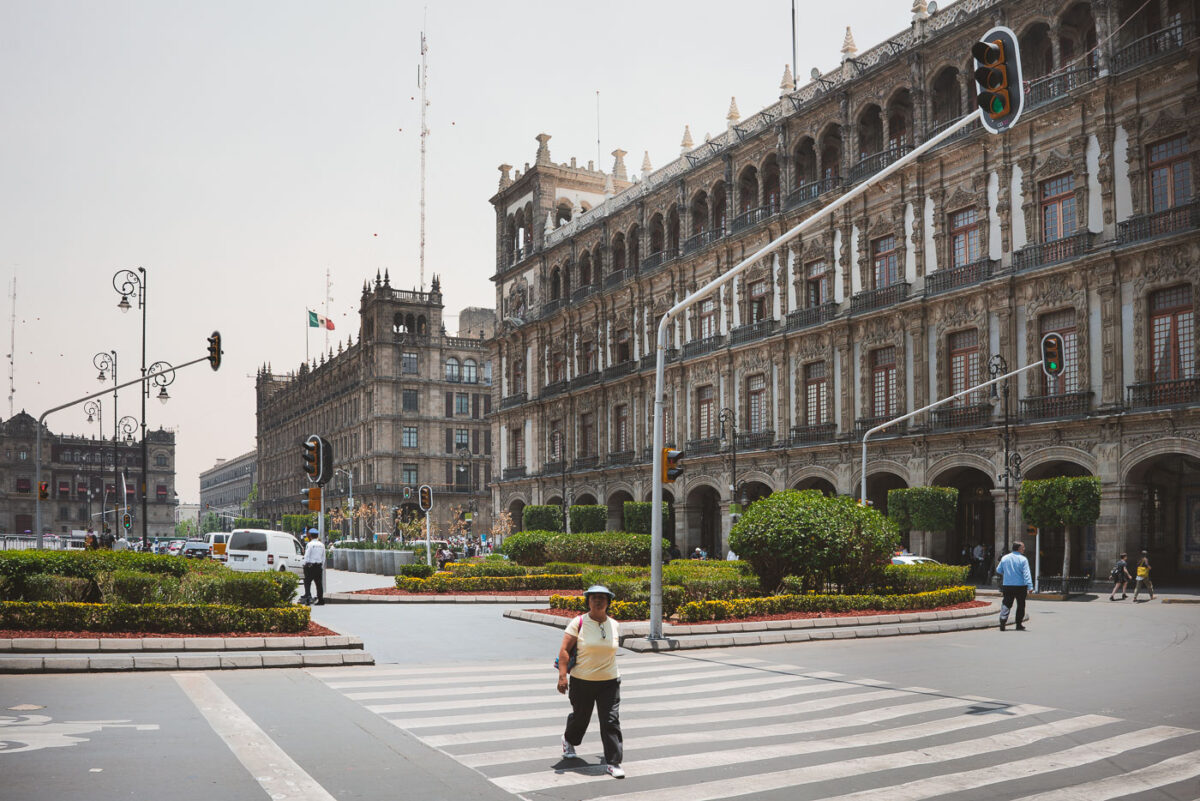
Old Portal de Mercaderes

Old Portal de Mercaderes

Pedestrians cross a street at Mexico City’s Zócalo, with the ornate colonial-era Government Palace and other historic administrative buildings lining the square. The Mexican flag is visible flying above the rooftops, while traffic lights and landscaped roundabouts frame the busy intersection.

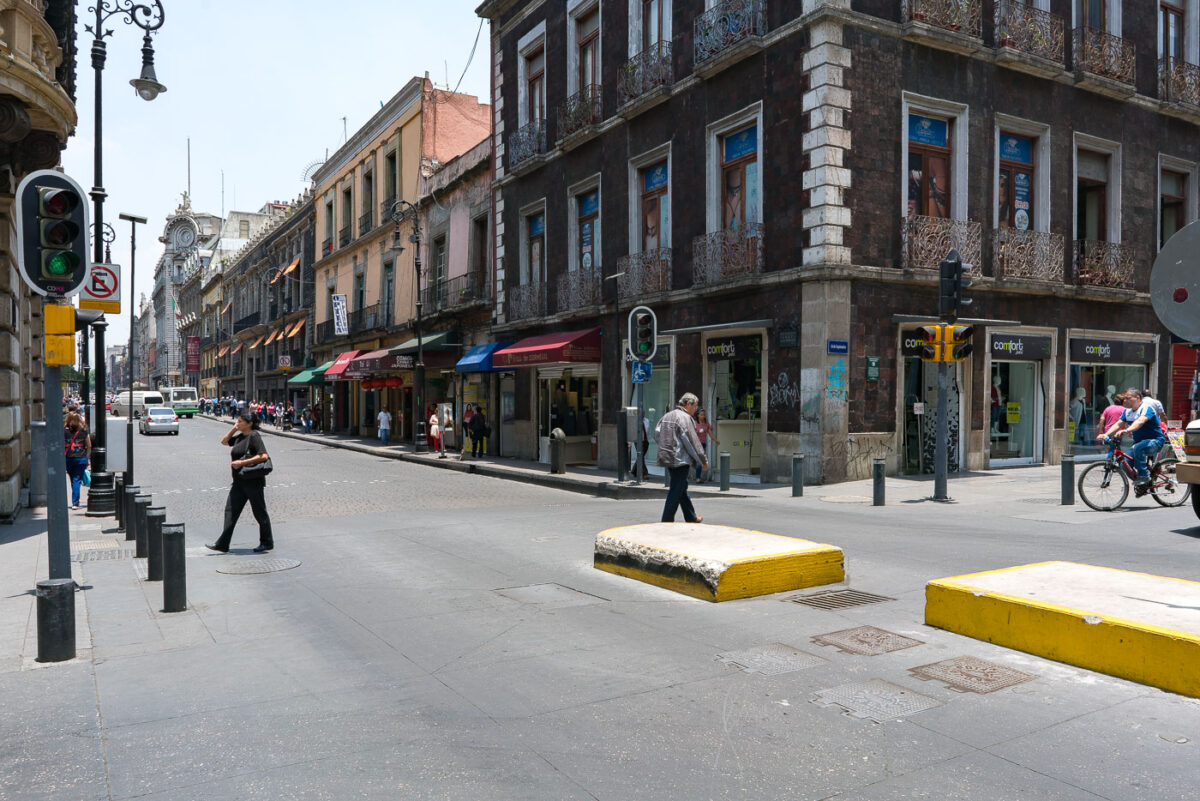
Mexico City Intersection

Mexico City Intersection

Intersection in Mexico City’s historic center with pedestrians crossing and cyclists moving along the street. Colonial-era buildings with balconies line the block, housing shops at street level. A bus and several storefronts with awnings are visible further down the road.

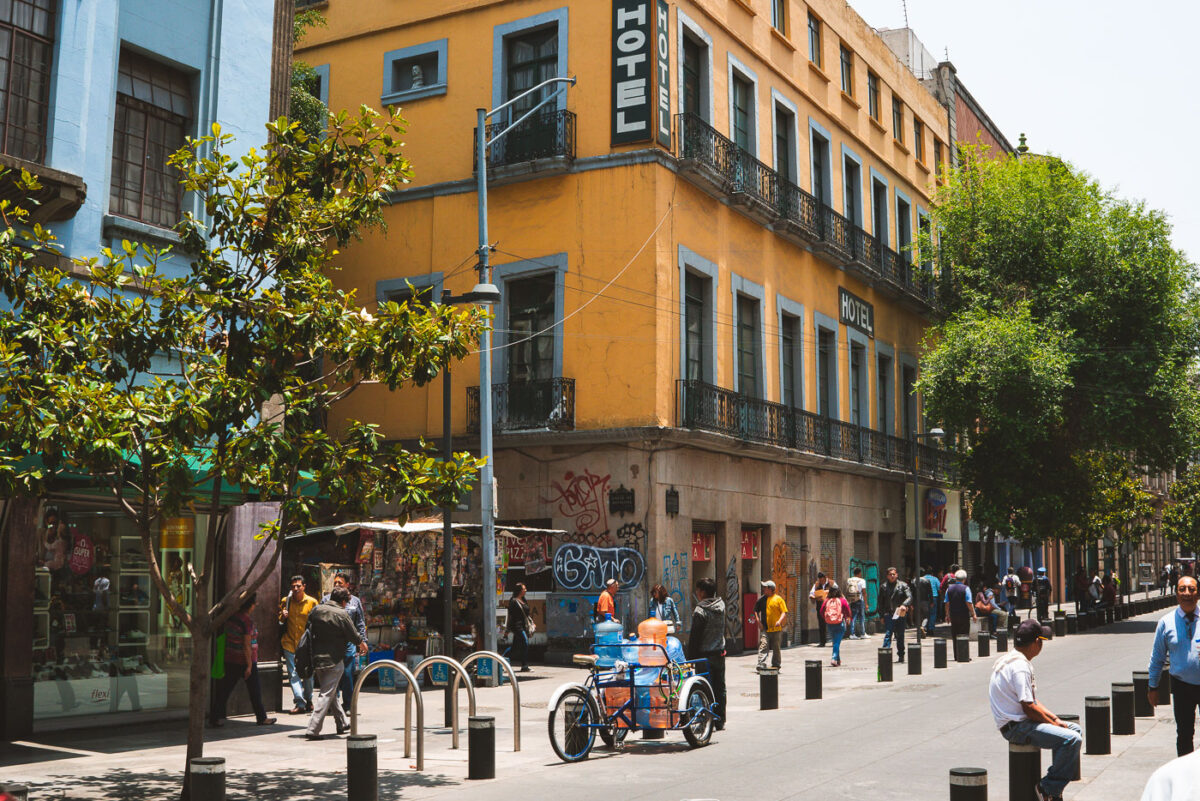
Pedestrians in Mexico City

Pedestrians in Mexico City

A street in Mexico City’s historic center with pedestrians walking past shops and vendors. A bright yellow hotel building with blue trim stands on the corner, while a tricycle cart carrying large water jugs moves through the scene. Trees line the walkway, and people gather along the shaded sidewalks.

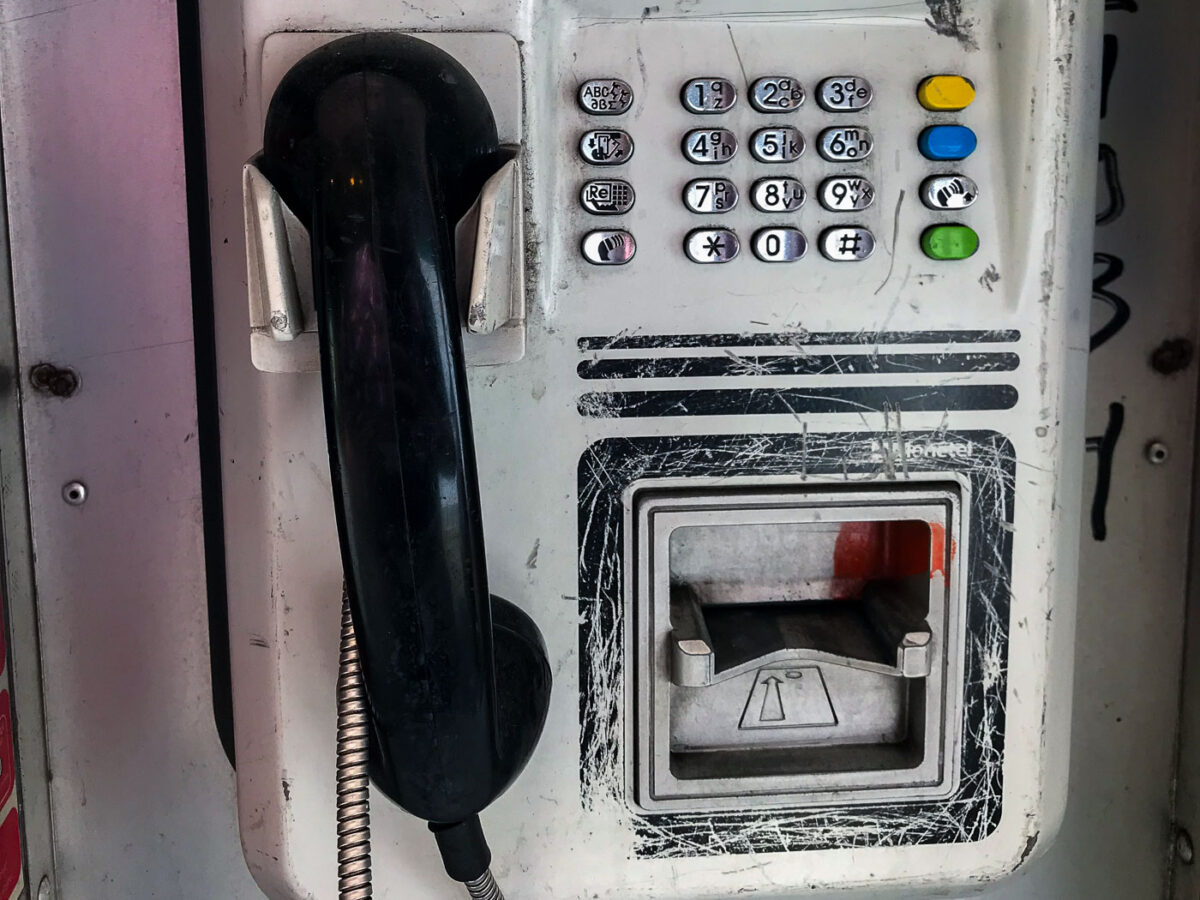
Telmex pay phone in Mexico City

Telmex pay phone in Mexico City

A Telmex pay phone found in Mexico City.

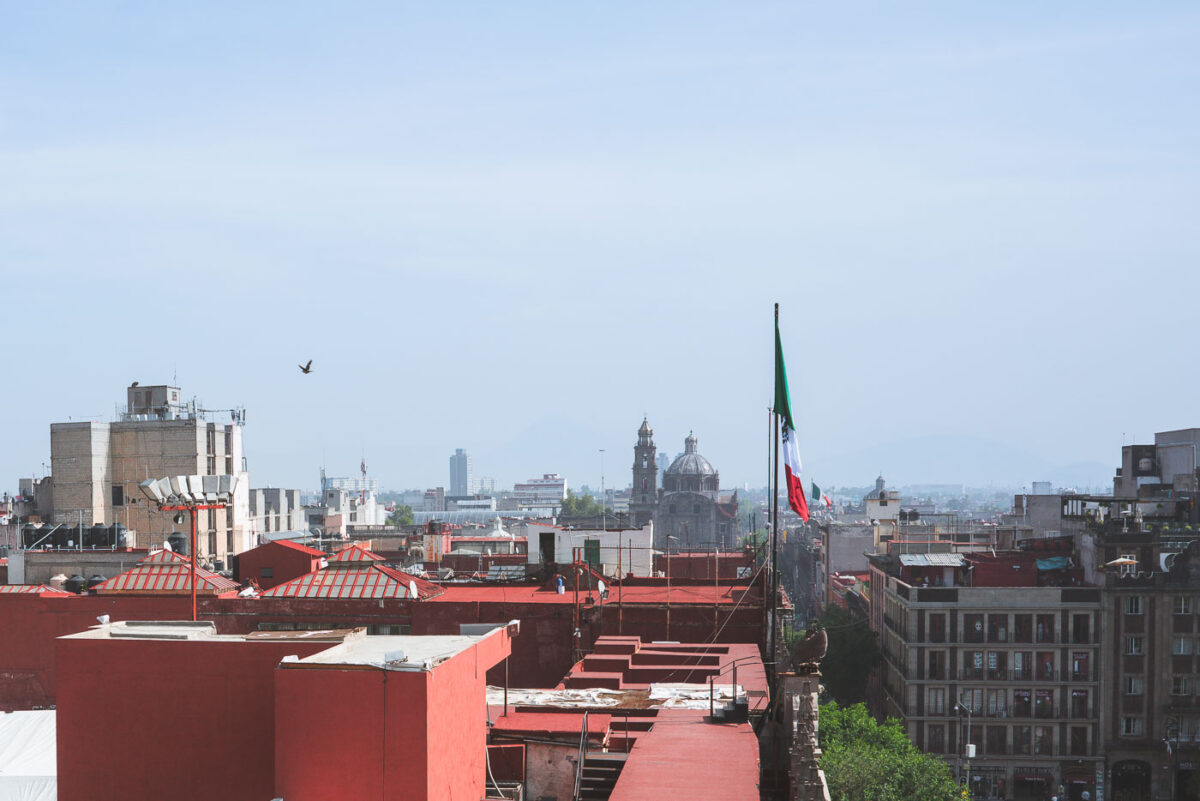
Rooftop in Mexico City near Zocalo

Rooftop in Mexico City near Zocalo

View over the rooftops of central Mexico City, where a large Mexican flag is raised above the buildings near the Zócalo. In the distance, church domes and towers rise over the historic district, with modern high-rises visible further out along the skyline.

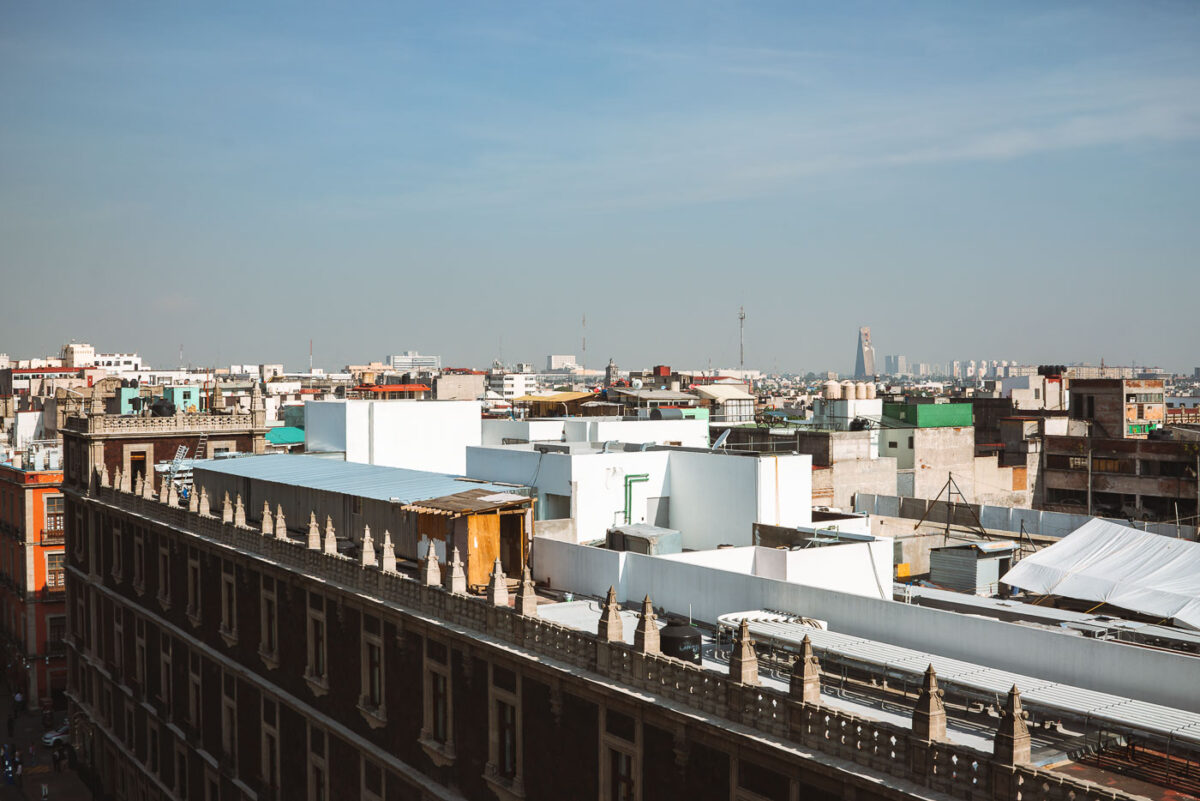
Mexico City Central District Rooftop

Mexico City Central District Rooftop

Rooftops of Mexico City’s historic center fill the foreground, with flat structures, water tanks, and makeshift additions visible across the skyline. Toward the horizon, modern high-rise buildings such as Torre Latinoamericana and Torre Reforma rise above the urban sprawl, contrasting with the older low-rise construction of the central district.

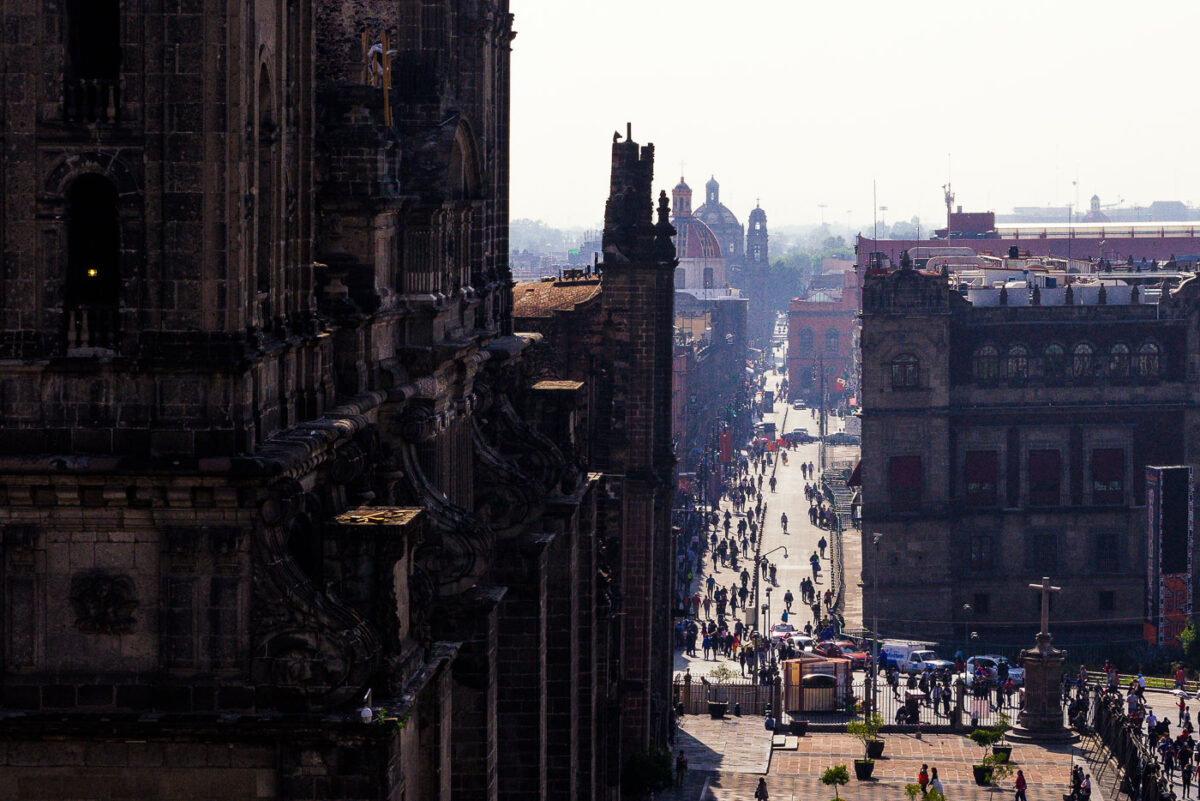
Mexico City Architecture

Mexico City Architecture

A busy street scene in Mexico City’s historic center, viewed from the steps of the Metropolitan Cathedral. Pedestrians fill the avenue leading eastward, lined with colonial-era buildings. In the background, the domes and towers of additional churches rise above the rooftops, marking the dense architectural landscape of the city’s downtown.

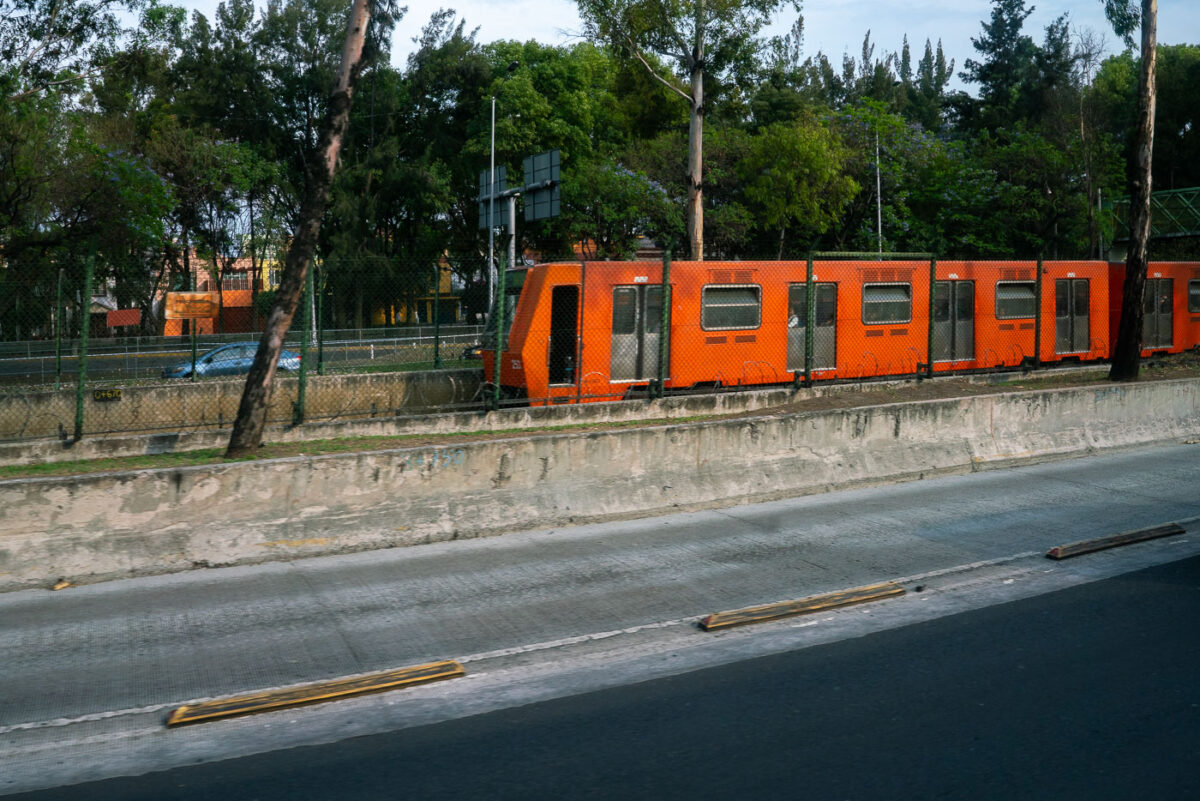
Mexico City Metro Line — Iconic Orange Train on the Viaducto

Mexico City Metro Line — Iconic Orange Train on the Viaducto

A bright orange Mexico City Metro train runs alongside the Viaducto highway, partially framed by trees and fencing that separate it from the busy traffic corridor. The train’s distinctive color has become a visual emblem of the city’s vast and aging transit network, originally launched in 1969. These rubber-tired trains serve millions of riders daily, threading through tunnels and elevated sections across the capital. Here, the contrast between greenery, concrete, and the orange carriages underscores the Metro’s integration into the urban landscape—an ever-moving artery of one of the world’s largest cities.

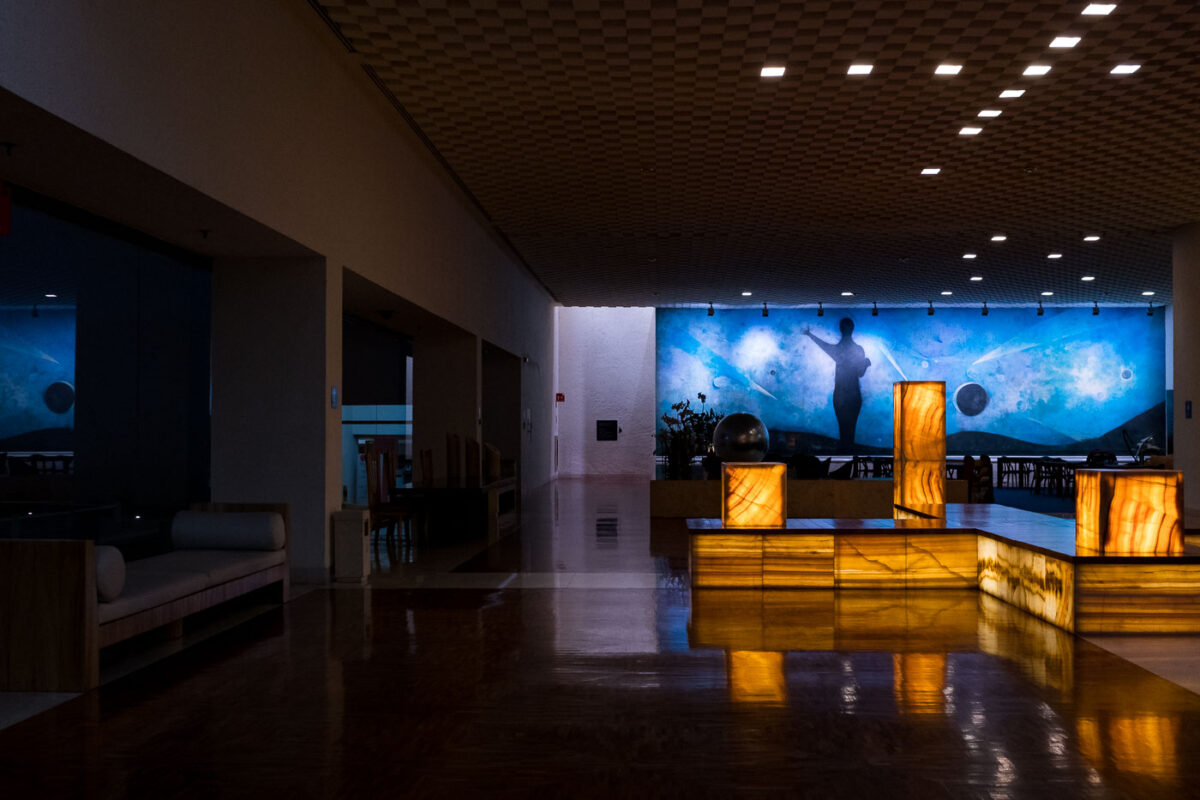
Mexico City Hotel Lobby — Modernist Ambience and Art Deco Ligh

Mexico City Hotel Lobby — Modernist Ambience and Art Deco Ligh

Inside a Mexico City hotel, warm amber lights from onyx columns reflect across a polished marble floor, creating a calm, cinematic glow. At the far end, a mural in rich blues depicts a silhouetted figure surrounded by celestial forms—part of the city’s long tradition of integrating public art into architectural spaces. The interior design blends modernist geometry with soft natural materials, emphasizing both luxury and restraint. Subtle symmetry, clean lines, and the interplay between shadow and illumination give the space a quiet sense of sophistication common in the capital’s mid-to-high-end hotels.

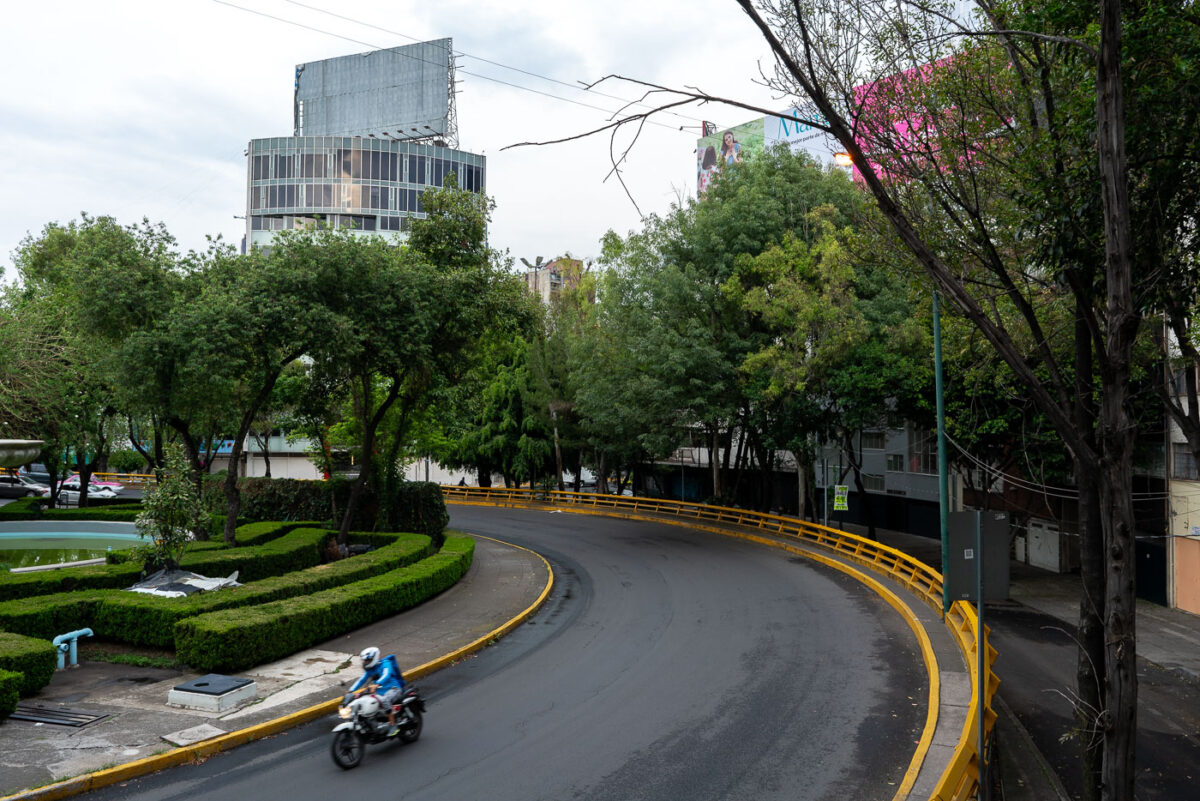
Fuente de los Buhos and Motorcycle

Fuente de los Buhos and Motorcycle

Someone driving a motorcycle around Fuente de los Buhos.

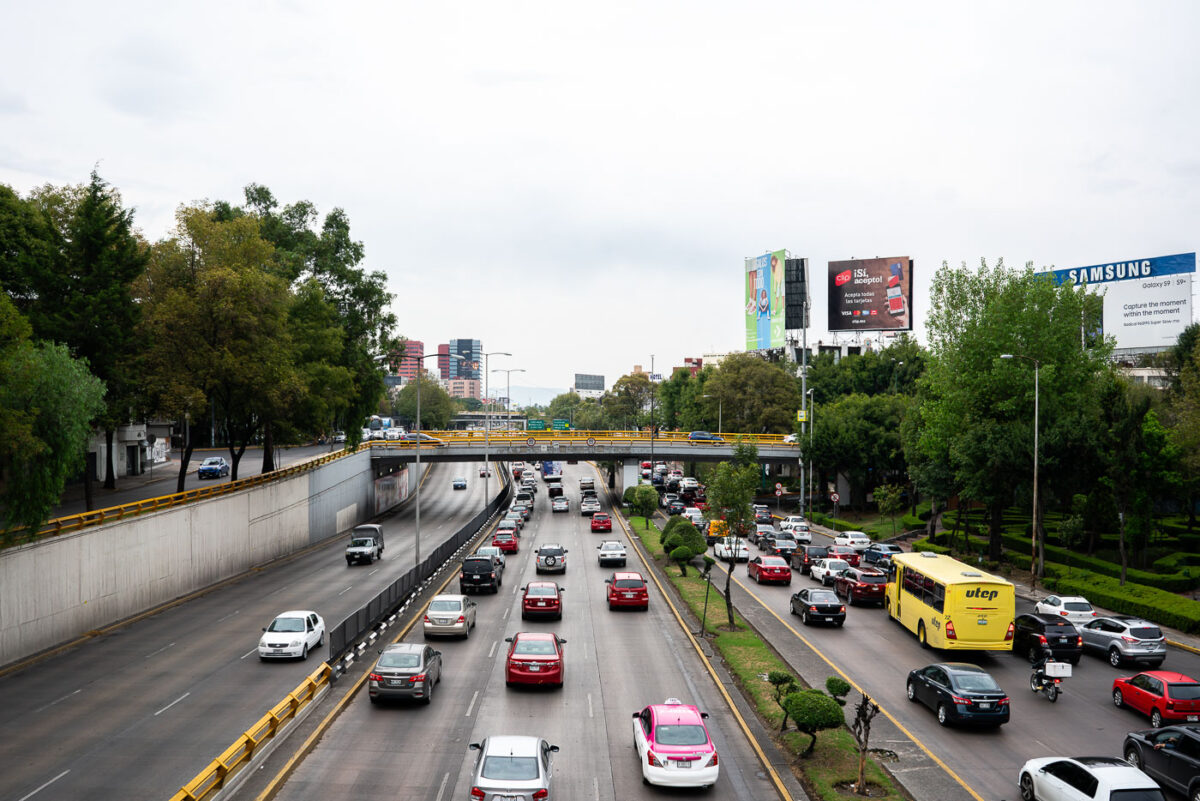
Traffic in Mexico City Mexico

Traffic in Mexico City Mexico

Cto. Interior Melchor Ocampo, Mexico City

Contrasts on Avenida Reforma — Mexico City’s Skyline in Tran

Contrasts on Avenida Reforma — Mexico City’s Skyline in Tran

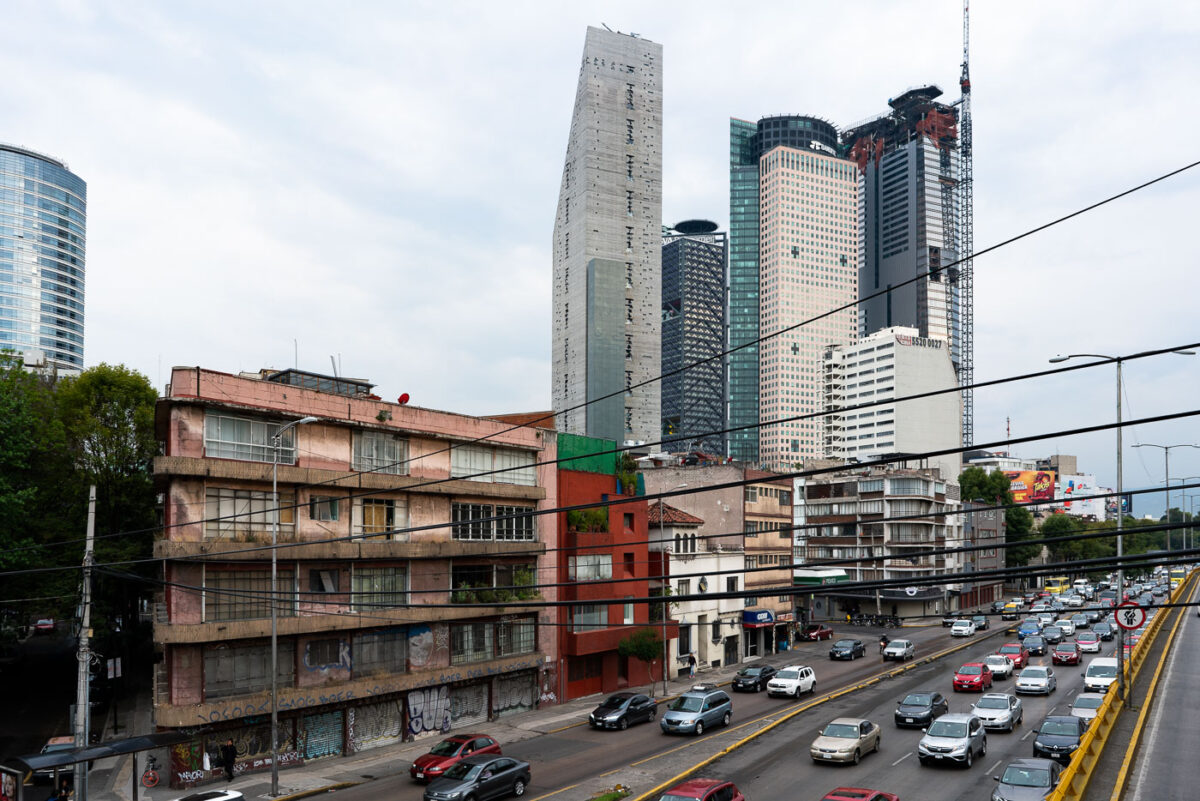
The dense vertical rhythm of Avenida Reforma captures Mexico City’s layered identity — a metropolis balancing past and future. In the foreground, aging residential blocks bear graffiti and sun-faded paint, symbols of mid-century urban life. Rising behind them are the glass and concrete spires of the city’s new financial core, including Torre Reforma, Torre BBVA, and Torre Mayor, among the tallest buildings in Latin America. The contrast is striking: the utilitarian decay of the 20th century meets the engineered ambition of the 21st. Beneath it all, traffic surges westward toward Chapultepec, reflecting the restless motion of a city forever under construction.

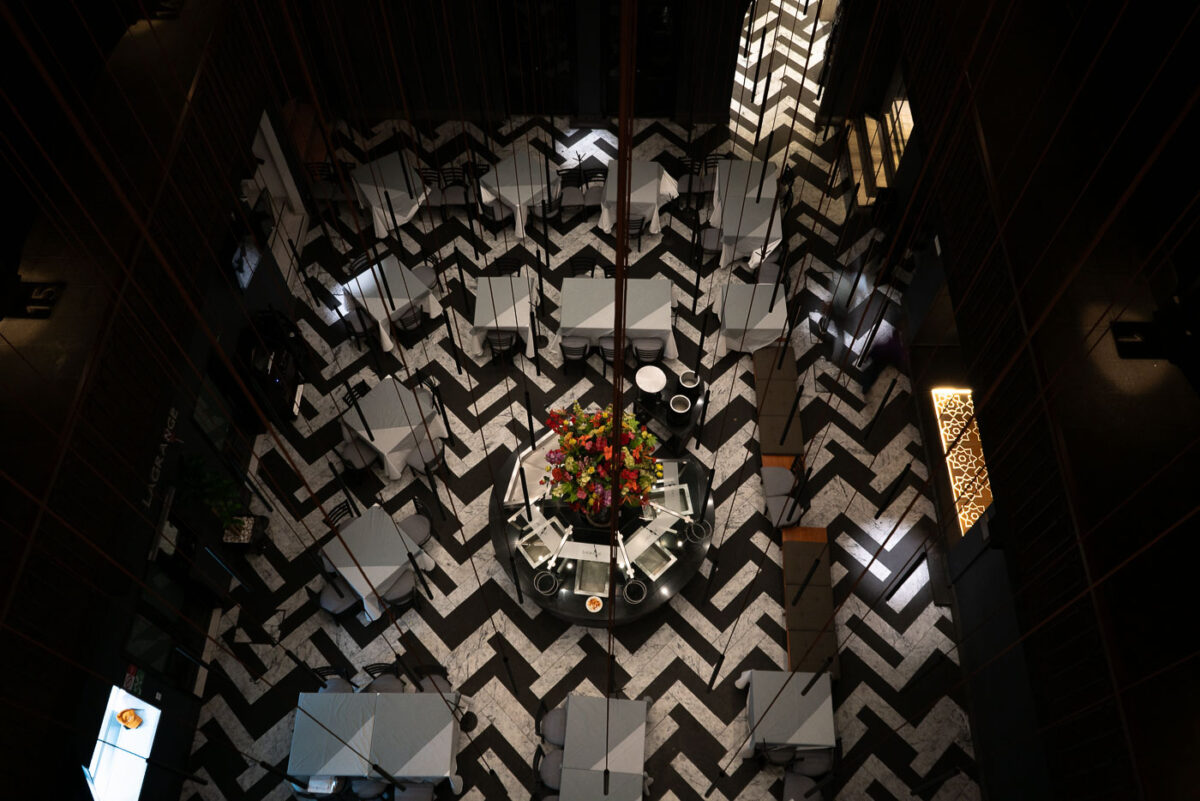
Hotel Punta MX in Mexico City

Hotel Punta MX in Mexico City

Hotel Restaurant in Mexico City.

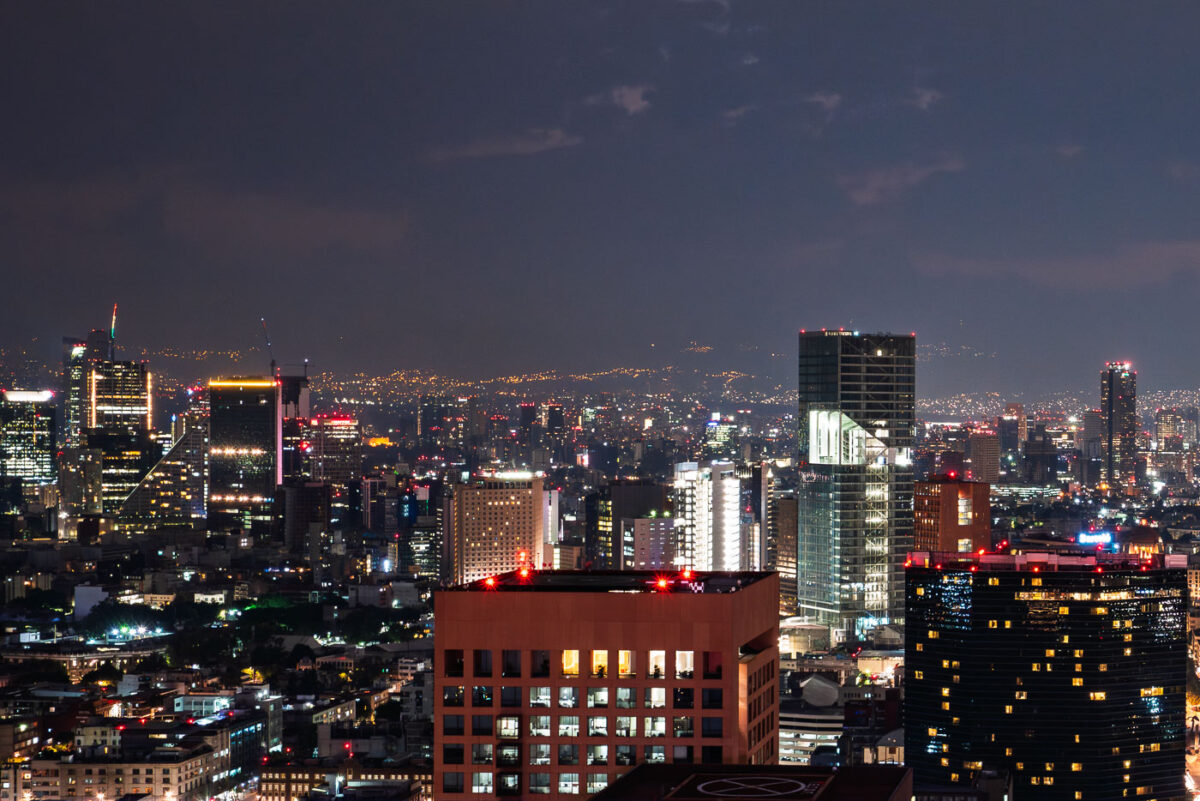
Mexico City Night Lights 2018

Mexico City Night Lights 2018

The night lights of Mexico City, Mexico.

Evening Along Calle Madero, Centro Histórico

Evening Along Calle Madero, Centro Histórico

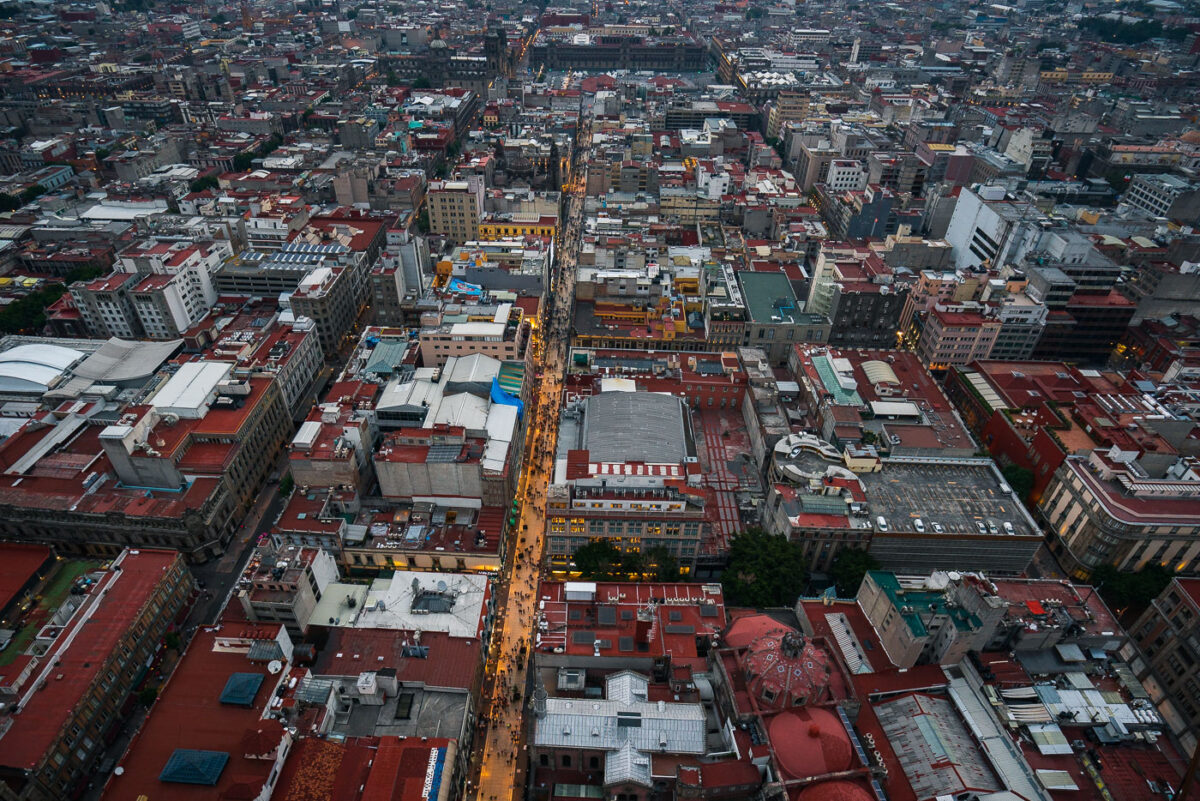
Calle Francisco I. Madero stretches eastward through Mexico City’s Centro Histórico, illuminated as evening falls. This pedestrian artery connects the Torre Latinoamericana to the Zócalo and has been a central commercial corridor since colonial times. Once known as San Francisco Street, its 2010 pedestrianization transformed it into one of the busiest walkways in Latin America, lined with historic facades, retail arcades, and landmarks like the Church of San Francisco and Casa de los Azulejos.

Alameda Central and the Hemiciclo a Juárez from Above

Alameda Central and the Hemiciclo a Juárez from Above

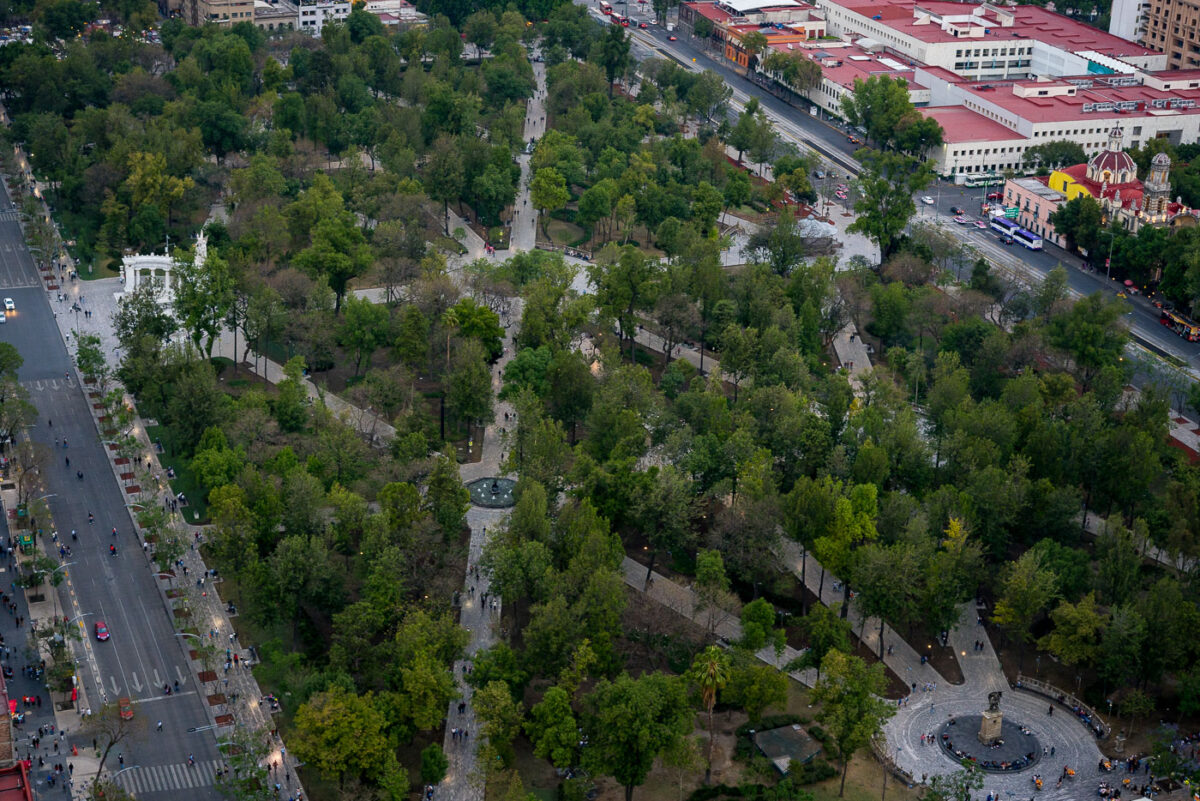
An aerial view of Alameda Central, Mexico City’s oldest public park, established in 1592 and redesigned in the 19th century in the European style. The white semicircular monument visible on the left is the Hemiciclo a Juárez, erected in 1910 to honor President Benito Juárez. The park’s grid of walkways, fountains, and neoclassical sculptures serves as a green centerpiece of the Centro Histórico, surrounded by civic and cultural landmarks like the Palacio de Bellas Artes.

Loading more photos…