Photo Set
Target Loss Prevention Methods
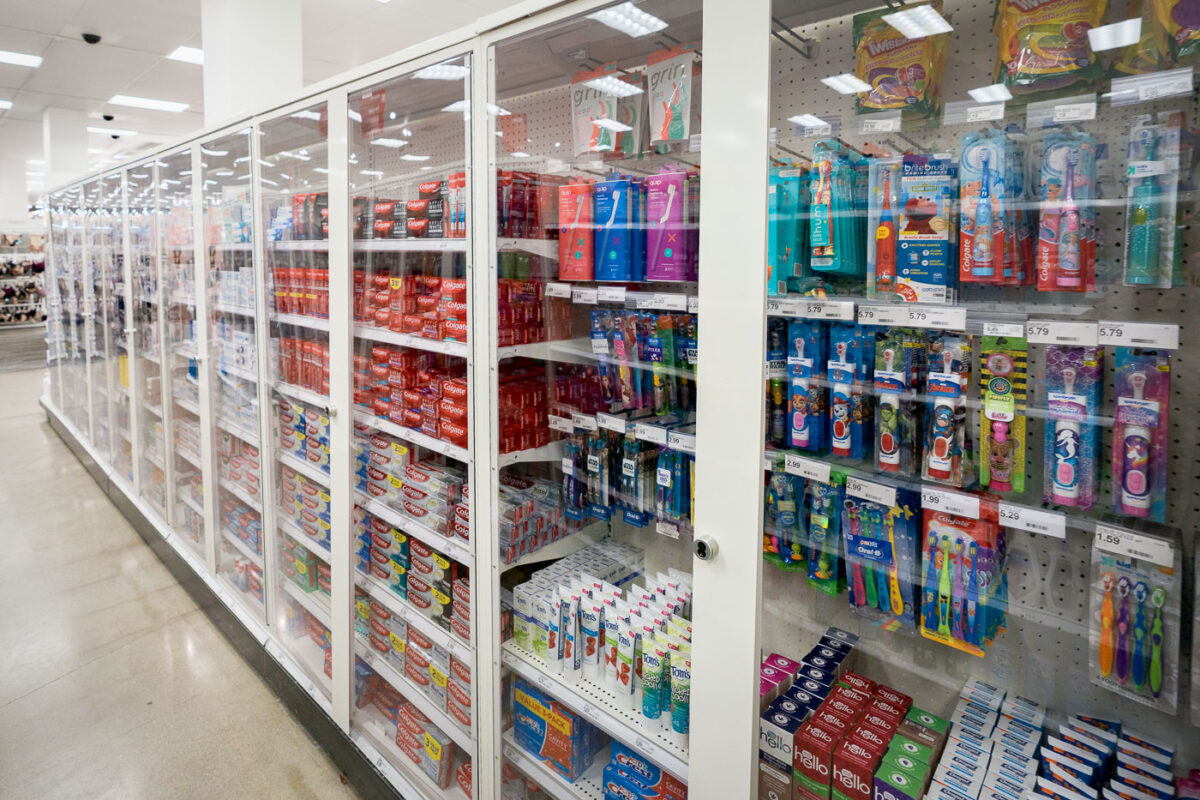
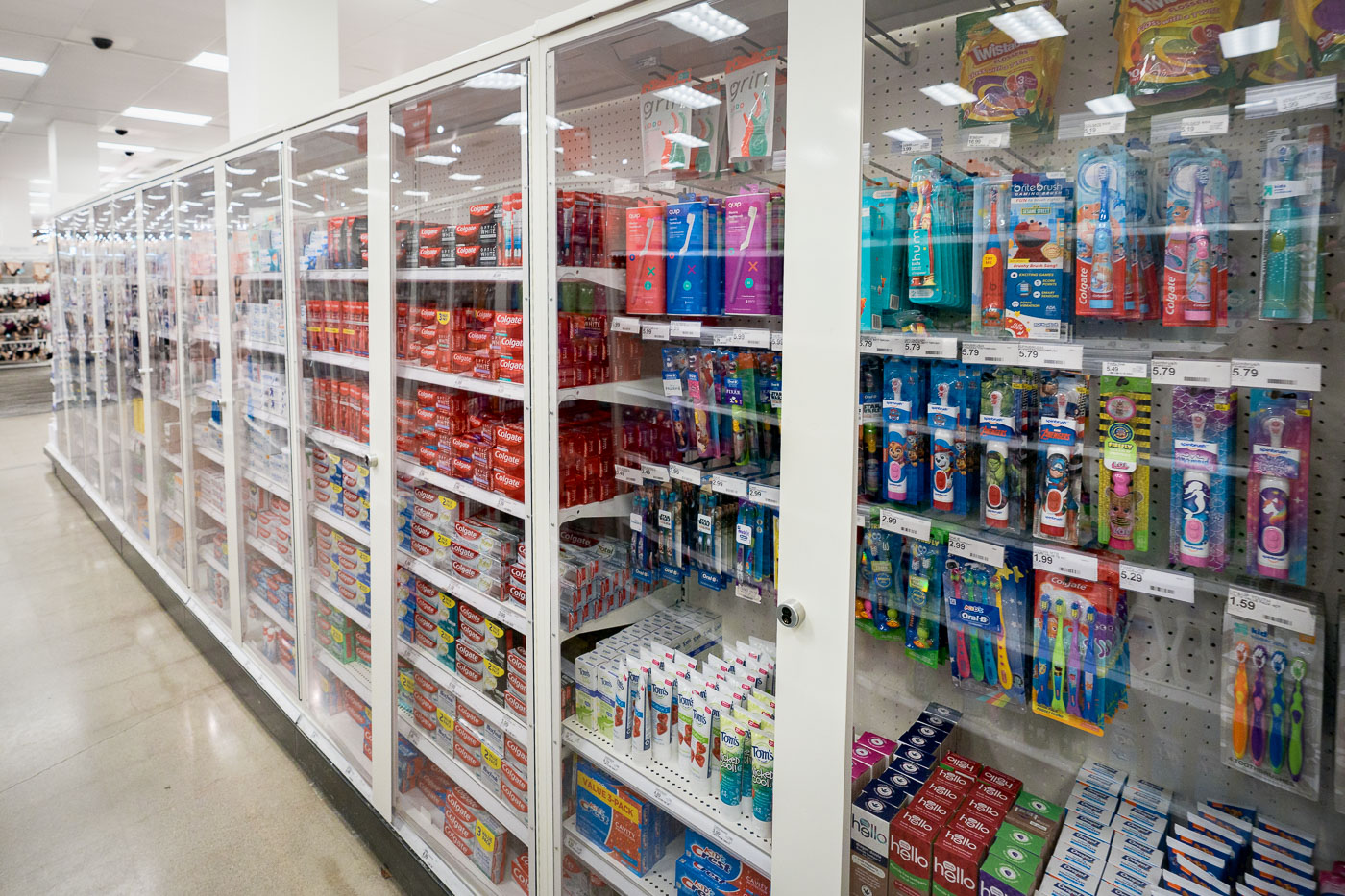
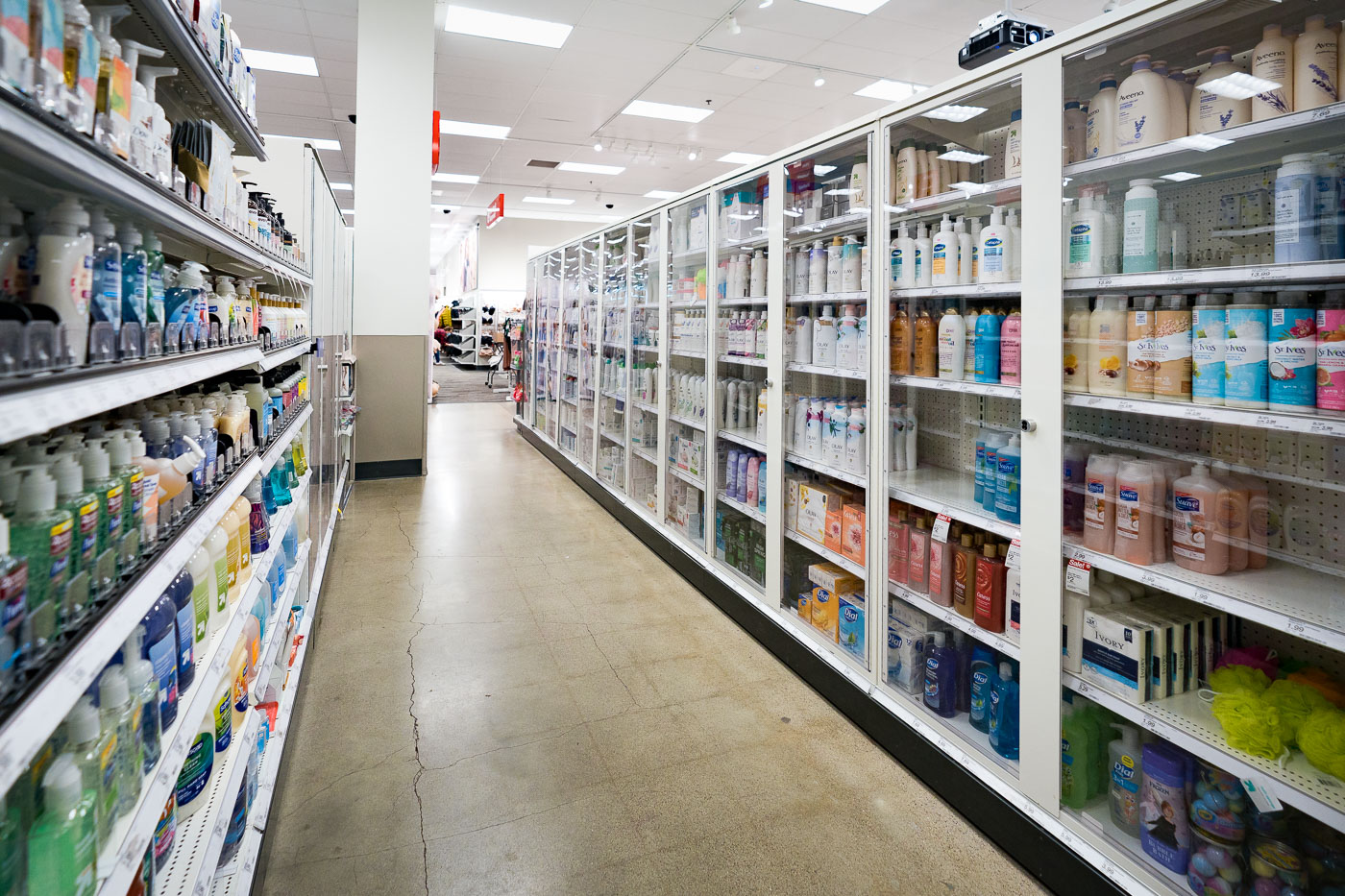
Locked merchandise cases at the Target flagship store on Nicollet Mall in Minneapolis, October 2022
TargetMinneapolis, MN
The flagship Target store on Nicollet Mall in downtown Minneapolis had by late 2022 placed everyday personal-care products — toothpaste, toothbrushes, deodorant — behind locked glass cases, requiring customers to summon staff before handling items that were once freely accessible on open shelves.
The shift was part of a measurable tightening of loss-prevention practice across large-format retail in American city centres. Retailers reported sustained increases in organised theft and opportunistic shoplifting in the years following the pandemic, and locking up low-cost, easily resold goods became a standard response rather than an exceptional one.
Target's Nicollet Mall location sits at the heart of a corridor the city has invested in repeatedly over decades, and the store had long operated as an anchor of downtown foot traffic. The locked cases changed the rhythm of a routine shopping trip: what had required no staff interaction now required finding someone with a key, waiting, and being watched while choosing a toothbrush.
The broader question the practice raised — whether securing merchandise deters theft or simply redirects it, and at what cost to the ordinary shopper — remained unresolved across the industry. Minneapolis, like other cities, was watching its downtown retailers adapt in real time, with no clear consensus on whether these measures were a short-term response to an unusual period or a permanent feature of urban retail going forward.
 View full post: Locked Toothpaste and Toothbrushes at Minneapolis Target
 View full post: Target Downtown Minneapolis: Locked Display of Personal Care Items