Place Archive

Panajachel

Panajachel, on the northern shore of Lake Atitlán, functions as a commercial and cultural center where local markets showcase traditional Mayan textiles and crafts. Its lakeside piers facilitate transportation across the lake, connecting the town with surrounding Mayan villages and volcanic landscapes.

10 photos

Photos from Panajachel
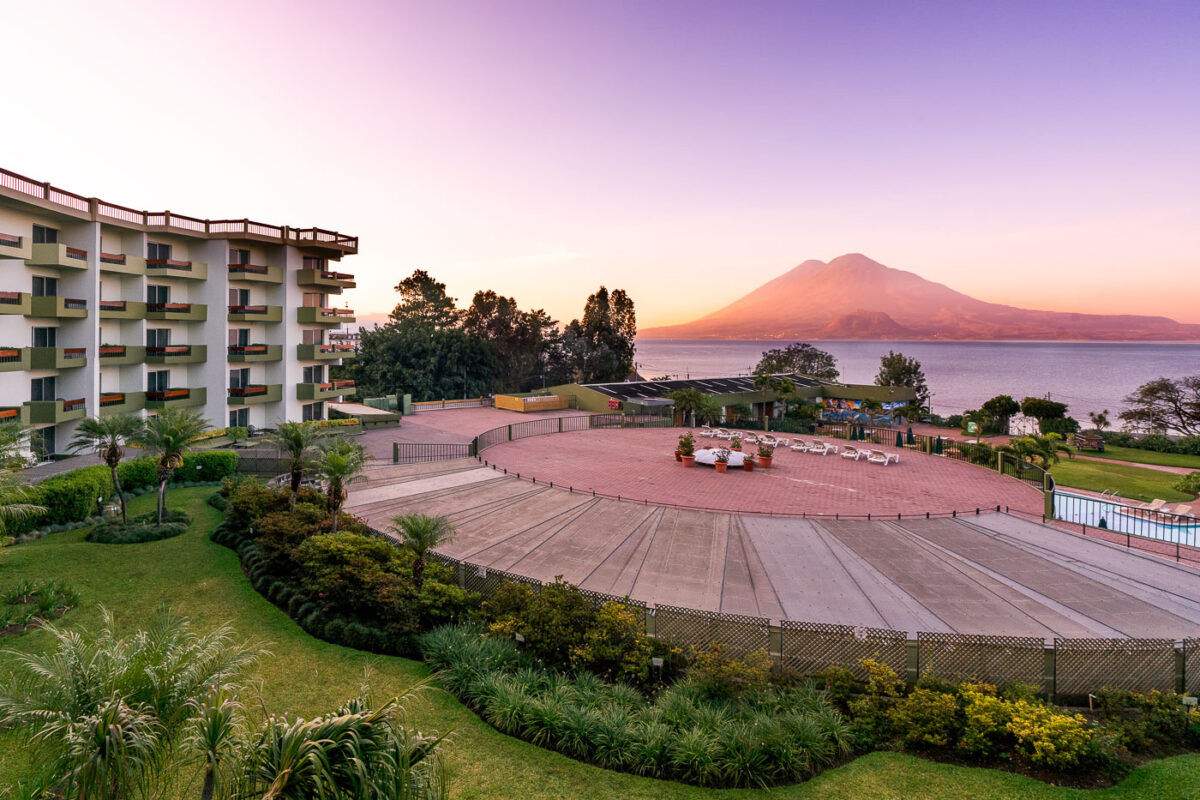
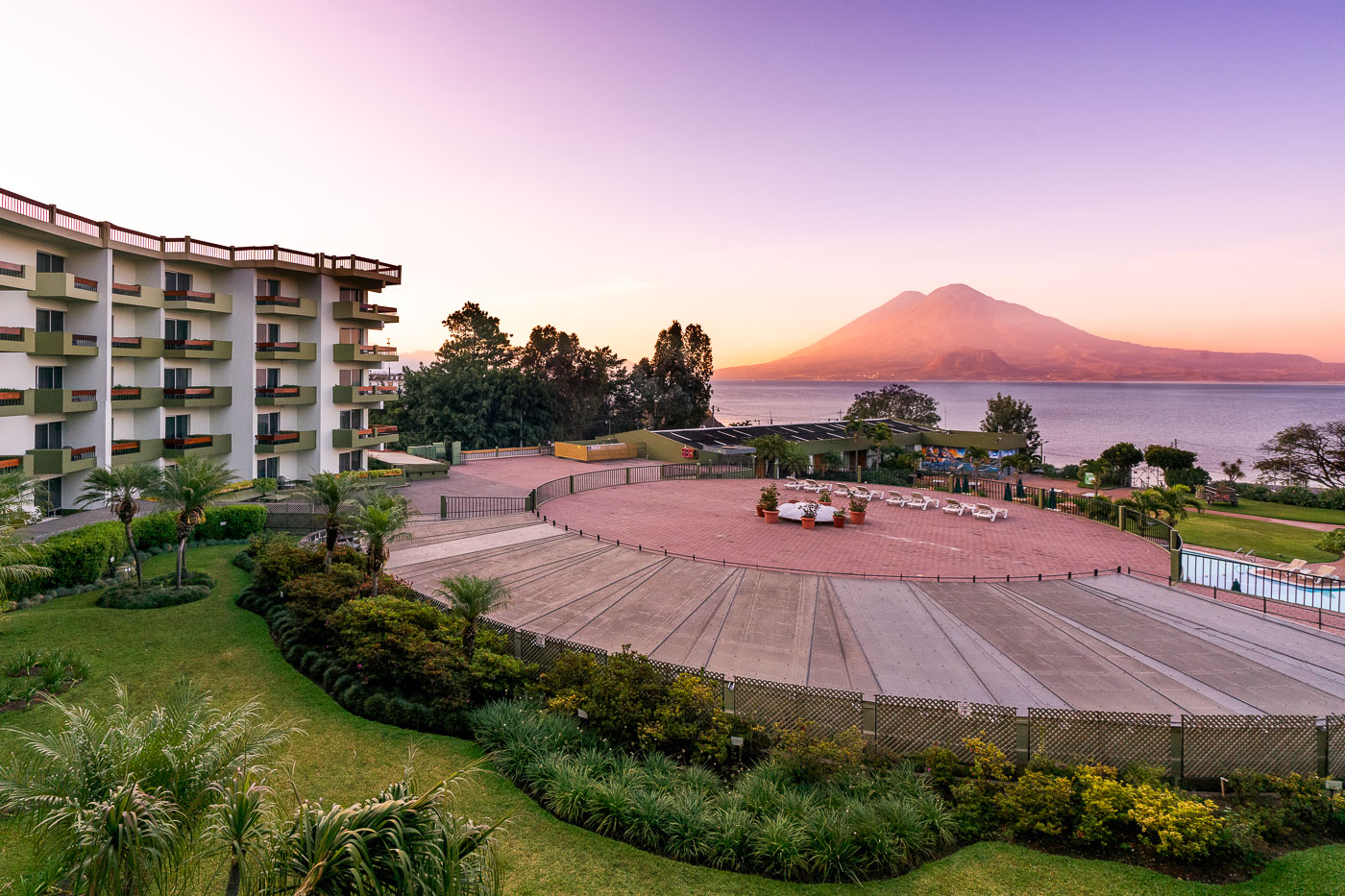
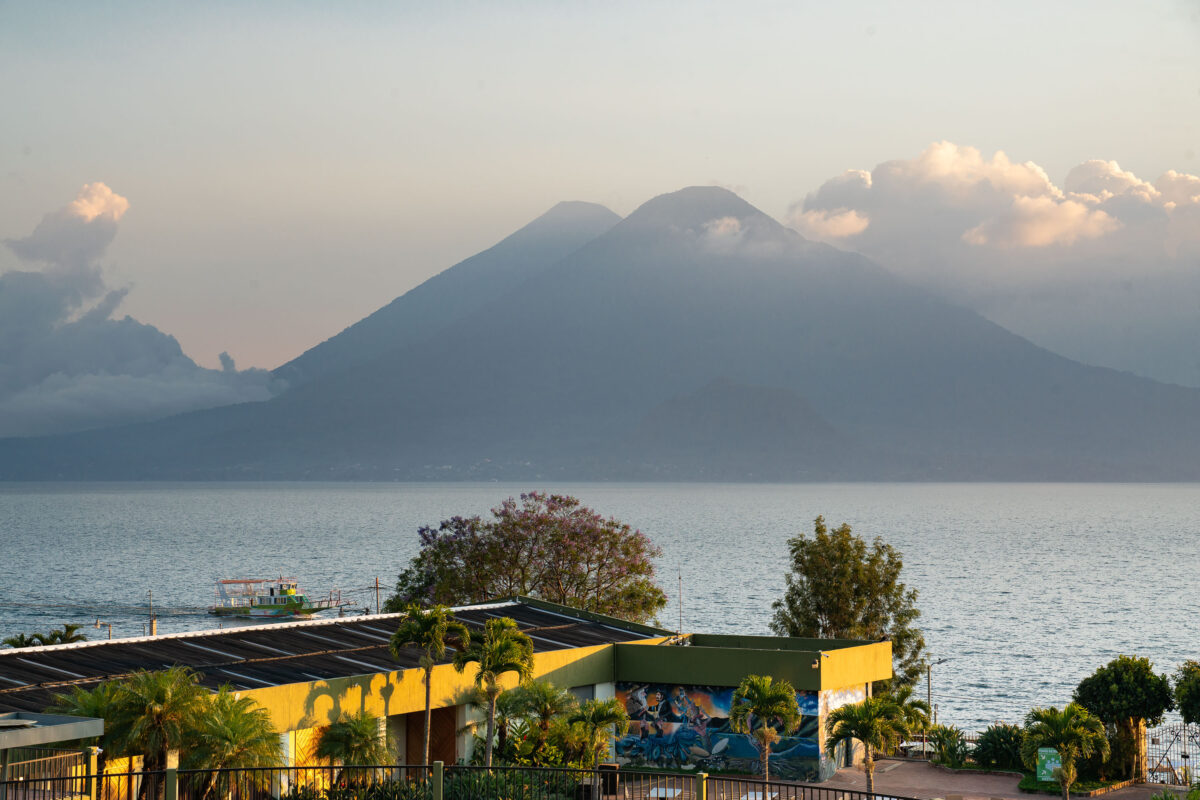
Porta Hotel del Lago waterfront resort overlooks Lake Atitlán with Volcán Atitlán rising across the water in Panajachel, Guatemala.
Porta Hotel del Lago sits on the Lake Atitlán shoreline in Panajachel, the main gateway town for travelers heading to the lake's Maya villages. Volcán Atitlán, a stratovolcano rising to 3,537 meters, anchors the lake's southern rim alongside Volcán Tolimán and Volcán San Pedro, all remnants of a caldera-forming eruption roughly 84,000 years ago. Lake Atitlán itself plunges more than 300 meters in places, making it one of the deepest lakes in Central America.
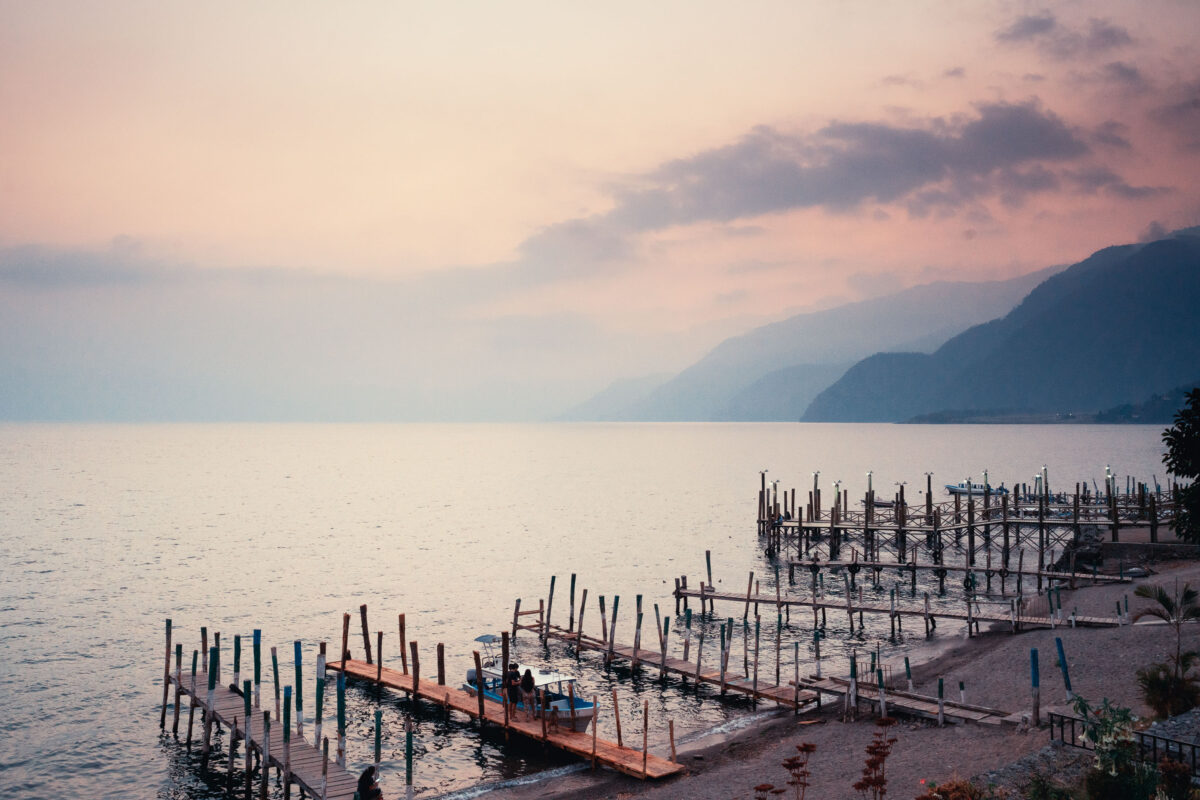
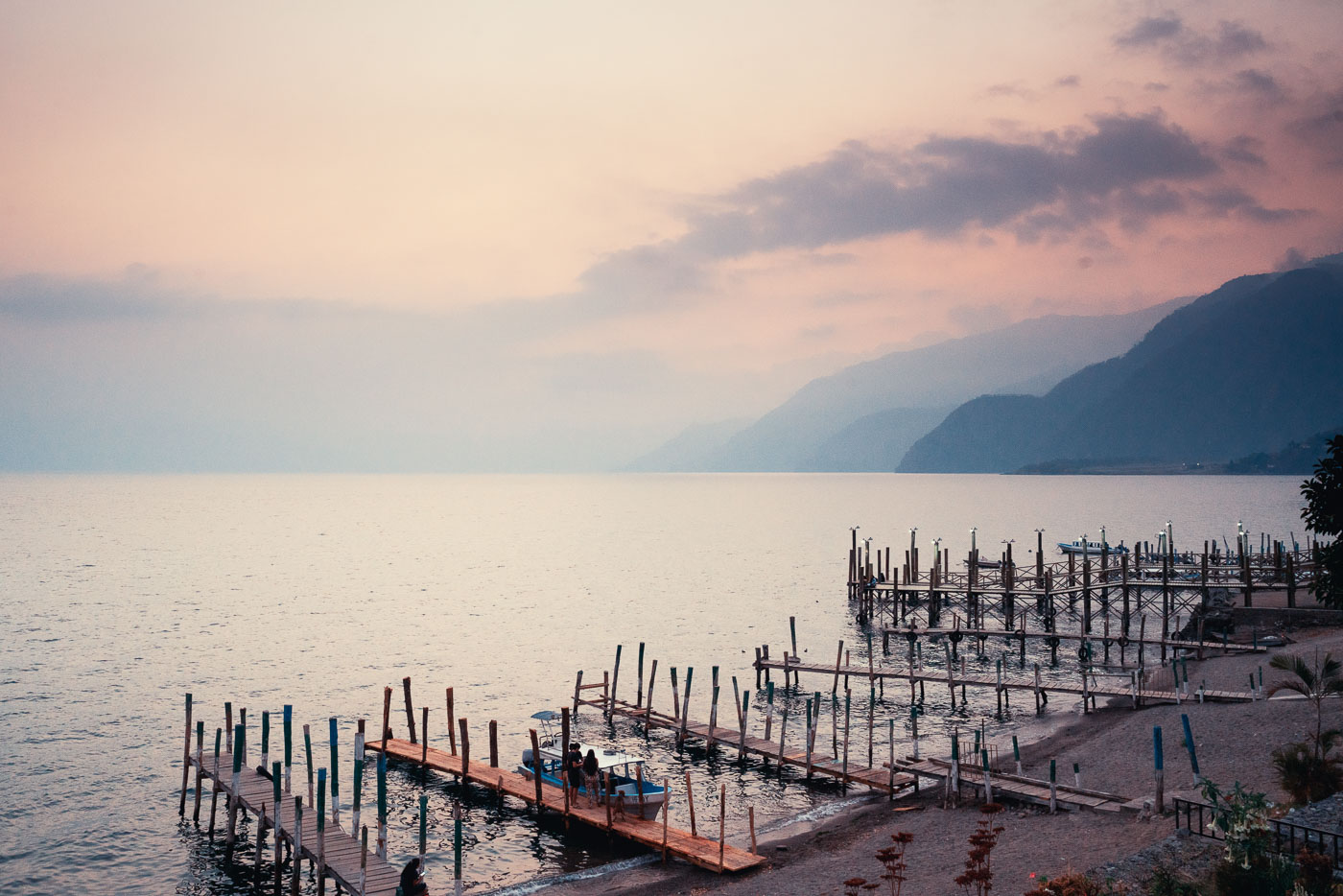
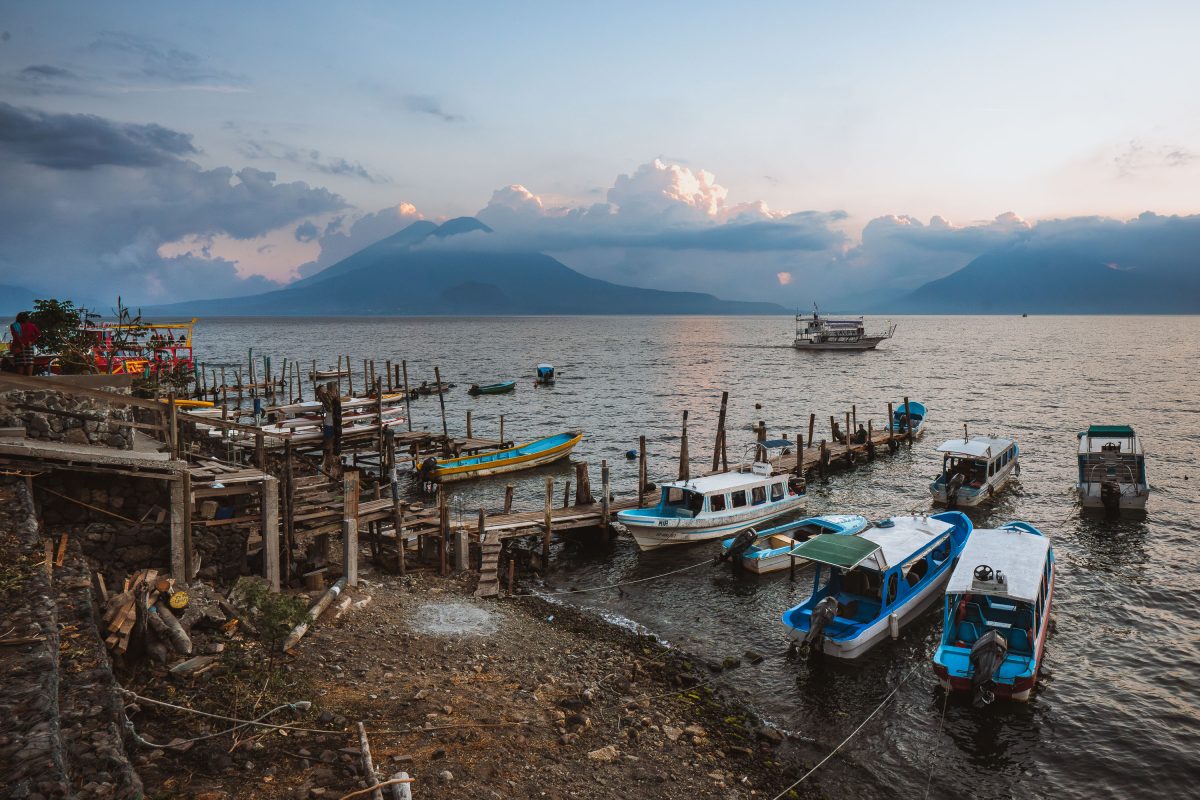
Wooden boat piers extend into Lake Atitlán at Panajachel, Guatemala, with volcanic mountains silhouetted across the water at dusk.
Lake Atitlán fills a volcanic caldera formed some 84,000 years ago and plunges to roughly 340 meters at its deepest point, making it one of the deepest lakes in Central America. Panajachel, on the lake's northern shore, serves as the main gateway town for visitors and locals alike, and its piers are where lanchas — the small motorboats that public transport — depart for villages such as Santiago Atitlán, San Pedro La Laguna, and Santa Cruz La Laguna. No roads fully encircle the lake, so these boats remain the primary link between many communities. The volcanoes San Pedro, Tolimán, and Atitlán rise along the lake's southern edge, visible across the water from these docks.
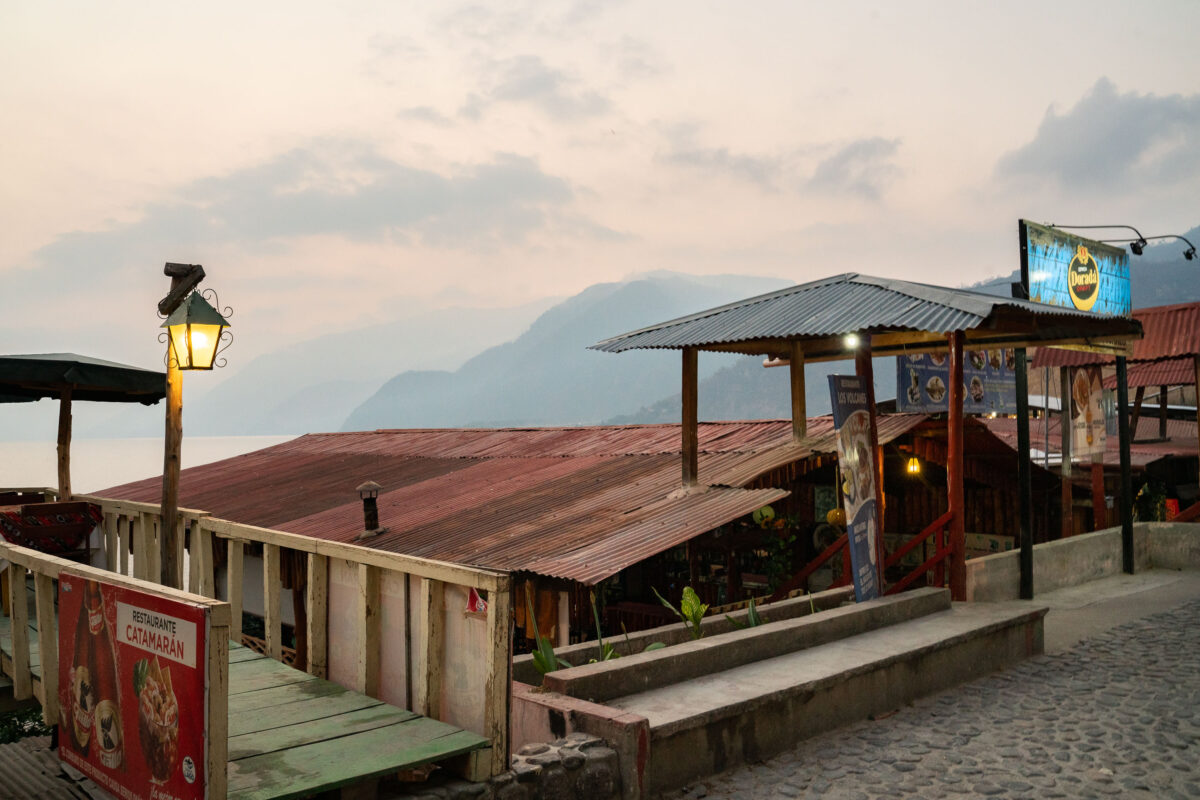
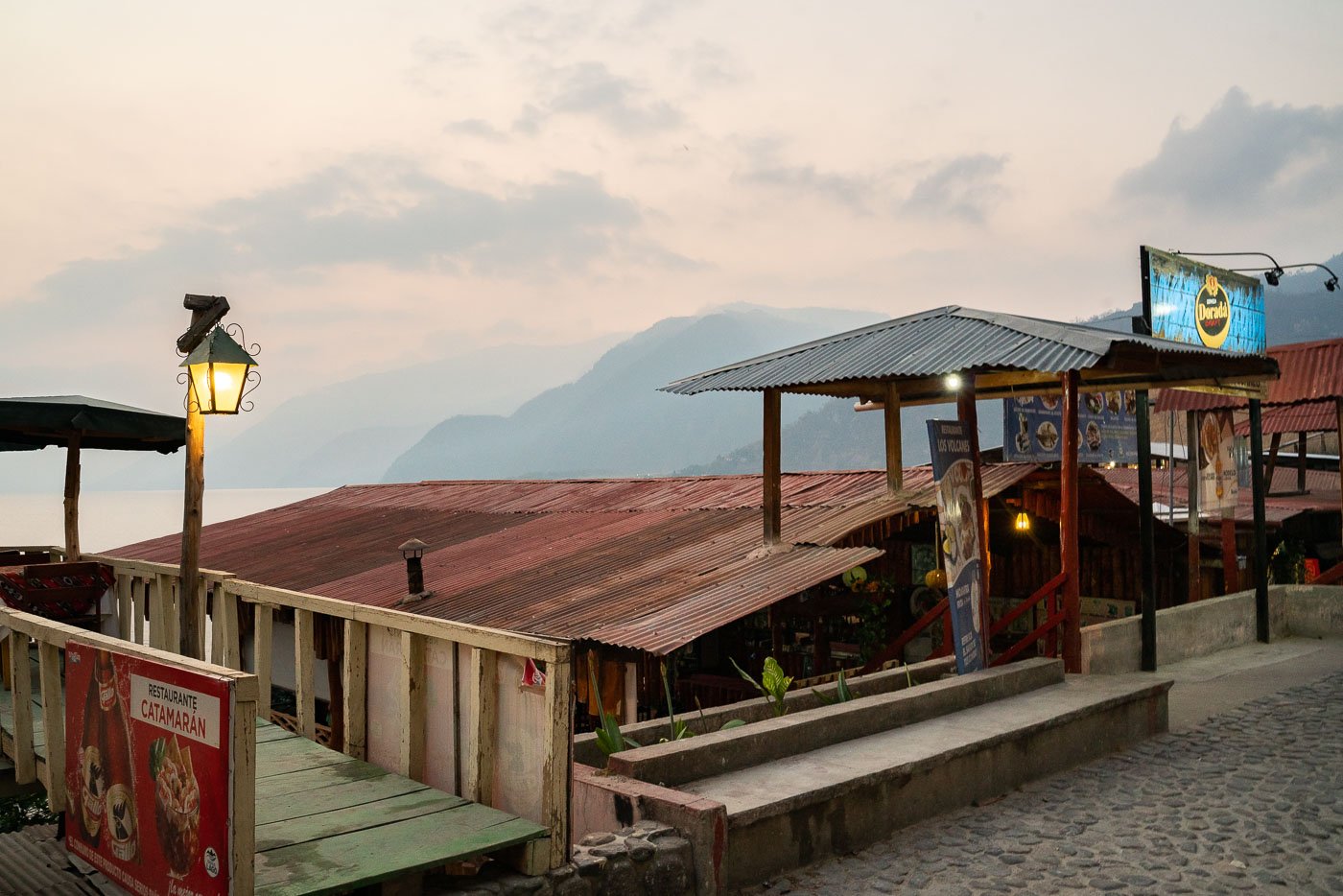
Restaurante Catamarán, a lakeside restaurant in Panajachel Guatemala, sits along Lake Atitlán's shore with volcanic mountains rising across the water.
Restaurante Catamarán sits on the Panajachel waterfront, where the town meets Lake Atitlán. The lake itself formed in a volcanic caldera roughly 84,000 years ago and is now ringed by three volcanoes — Atitlán, Tolimán, and San Pedro — visible across the water from the shoreline strip of restaurants and docks. Panajachel developed as the main lake access point for travelers and remains the primary departure hub for boats connecting the lake's villages.
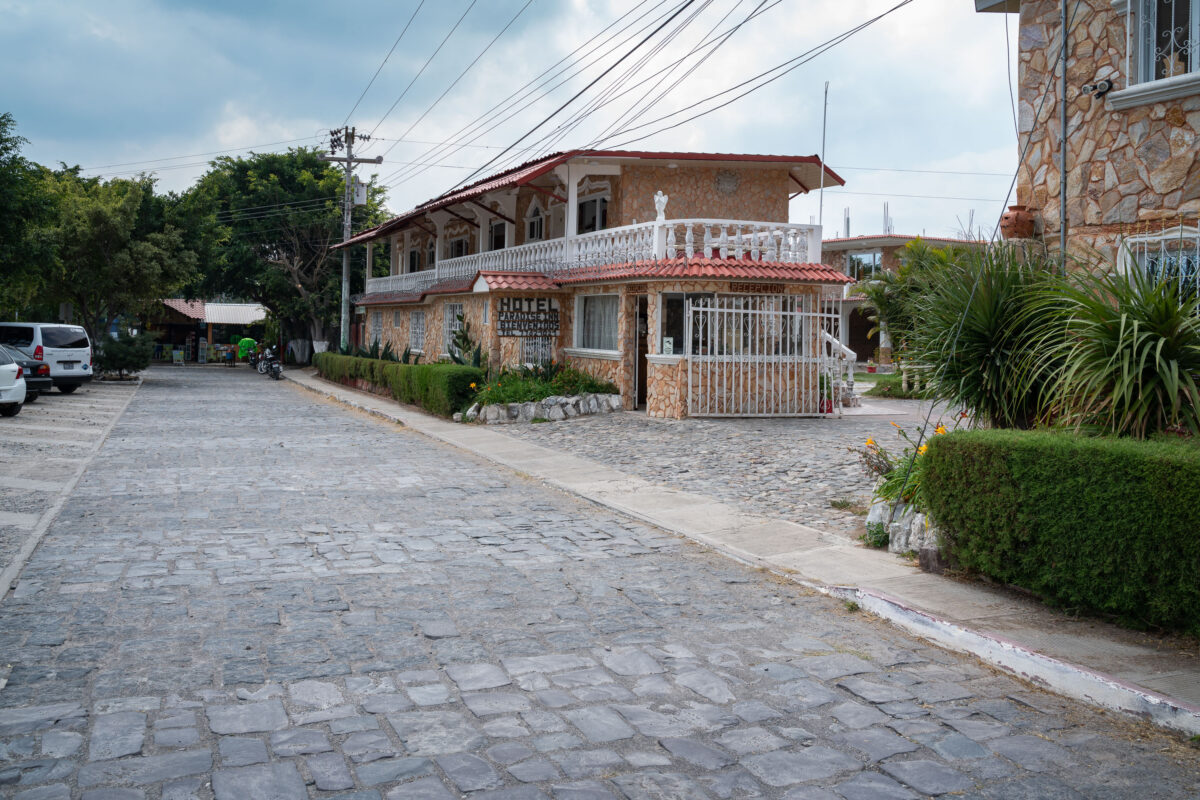
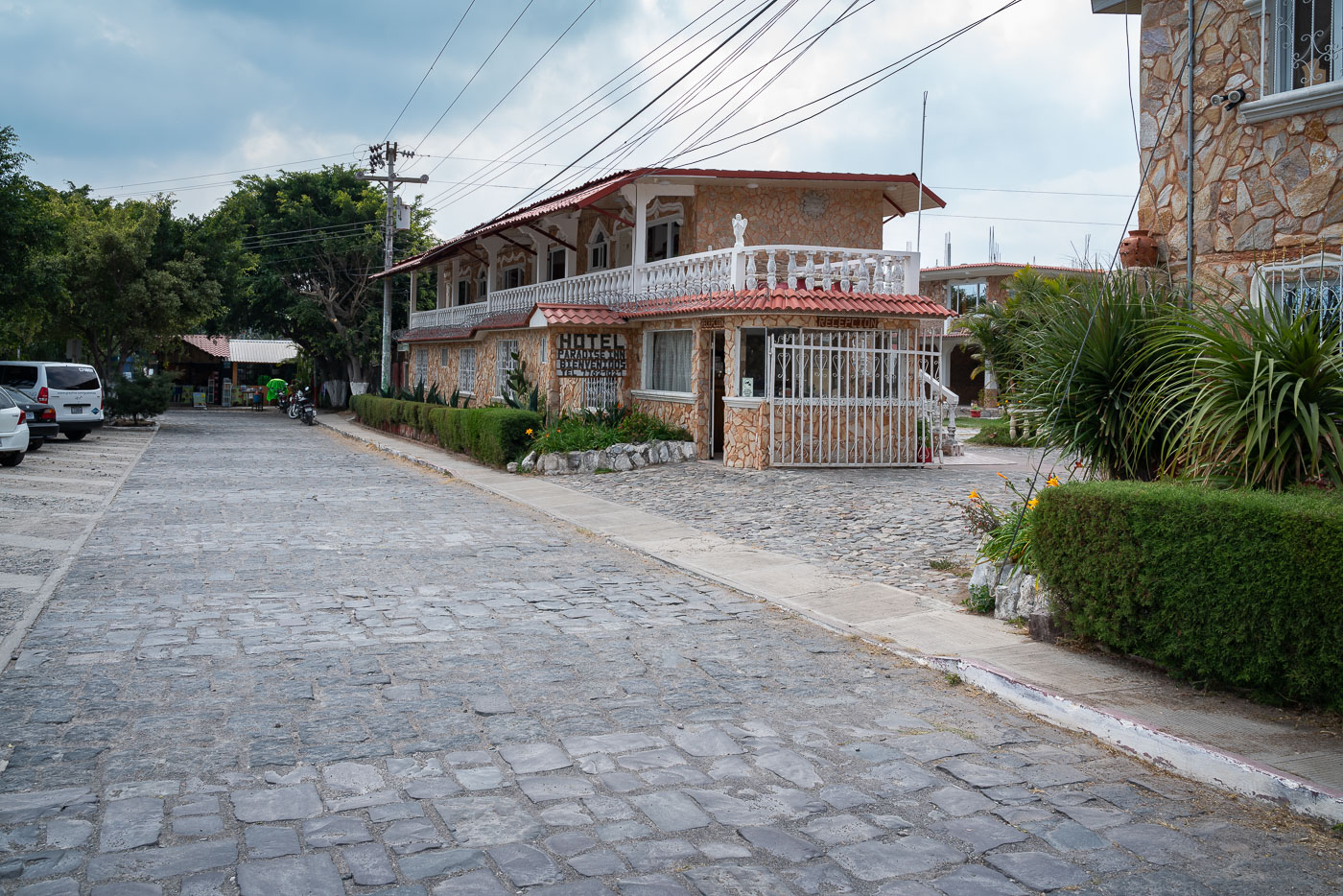
Hotel Paradise Inn, a two-story stone building with red tile roof, sits along a cobblestone street in Panajachel, Guatemala.
Panajachel sits on the northern shore of Lake Atitlán in Sololá Department, serving as the lake's main gateway for visitors arriving from Guatemala City and Antigua. Small hotels like this one line the town's cobblestone streets, many built with local stone and offering a handful of rooms geared toward travelers heading on to lakeside villages such as San Pedro La Laguna and Santa Cruz La Laguna. The town's grid of volcanic-stone roads dates largely from mid-20th-century growth tied to tourism around the lake.
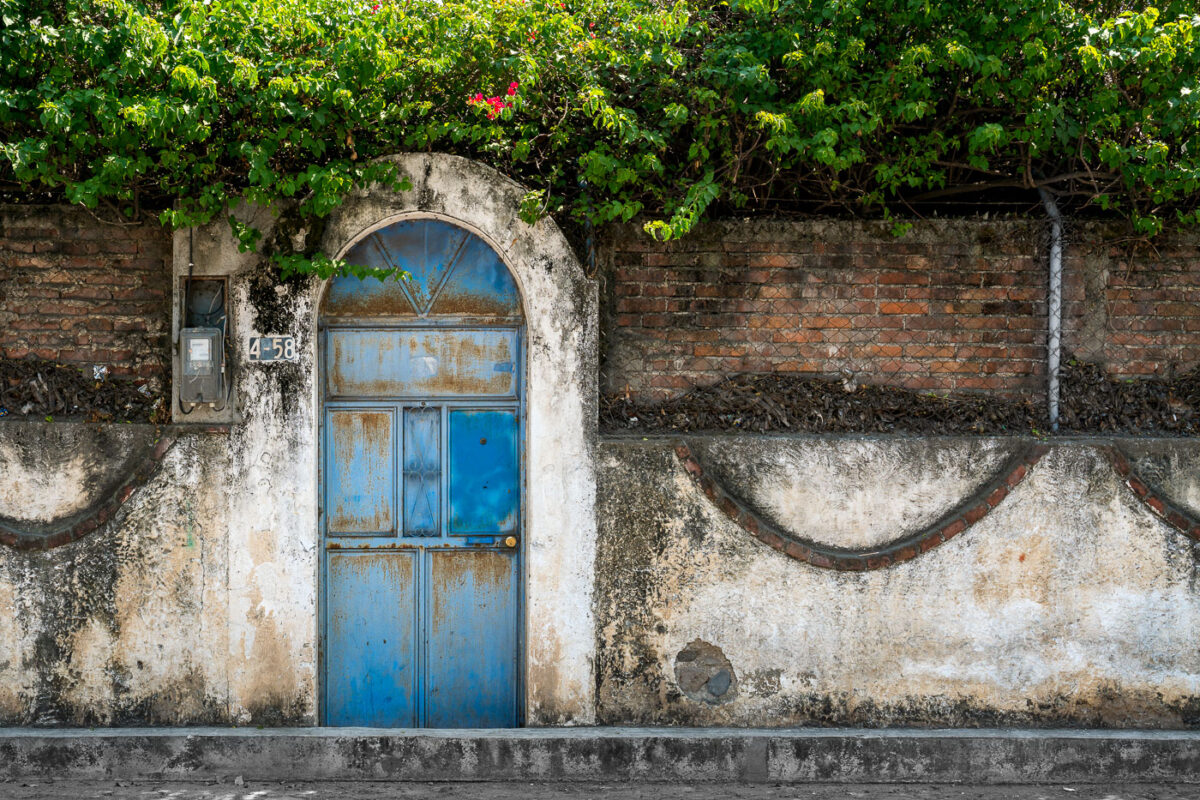
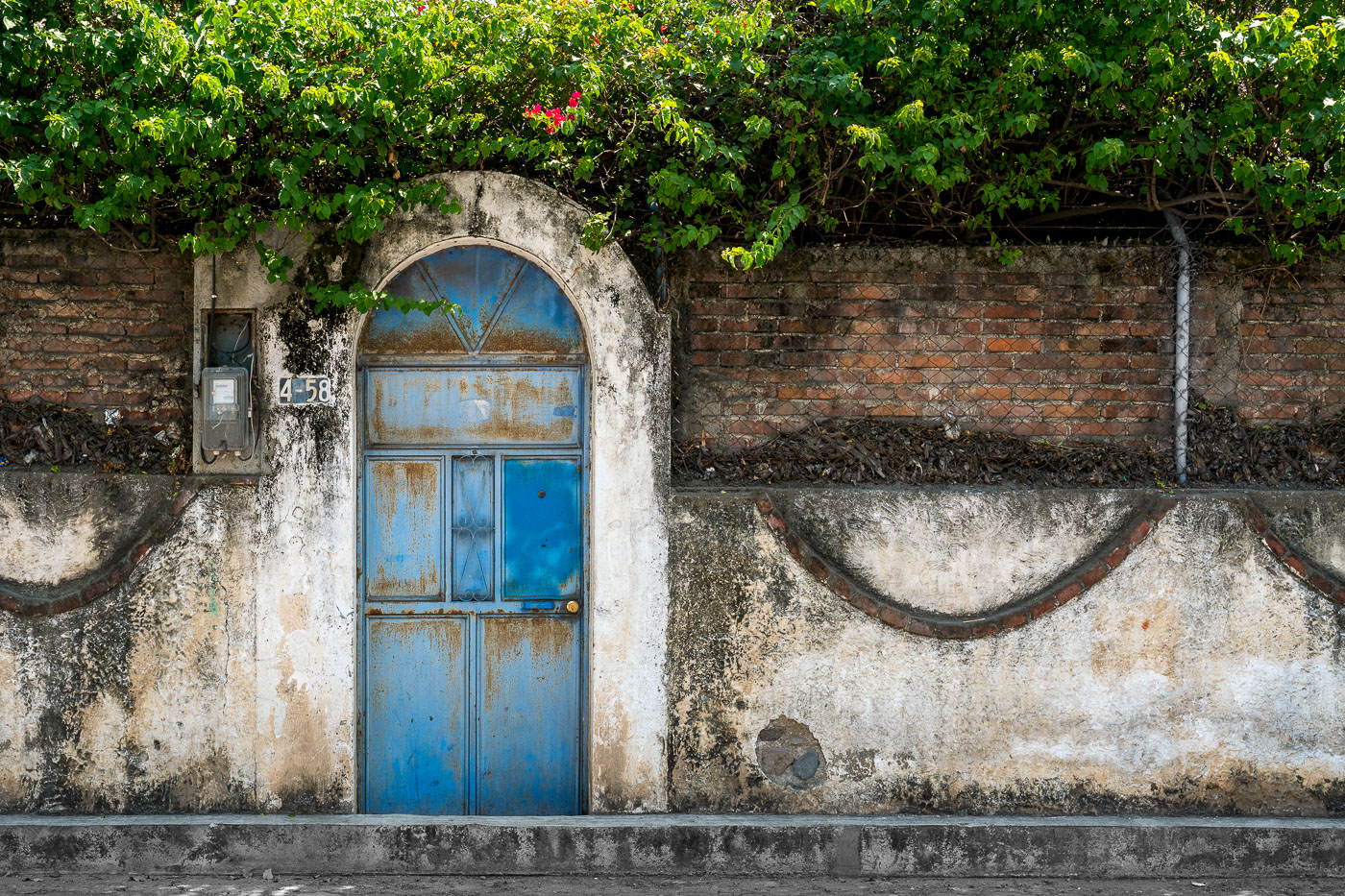
Blue metal door numbered 4-58 set in an arched stucco entry on a weathered residential wall in Panajachel, Guatemala.
The entry at Calle 4-58 sits along a residential street in Panajachel, a lakeside town on Lake Atitlán known for its mix of Maya and Ladino neighborhoods. Street addresses in smaller Guatemalan towns like Panajachel are typically assigned per property rather than by block, which explains the individual number marking this doorway.
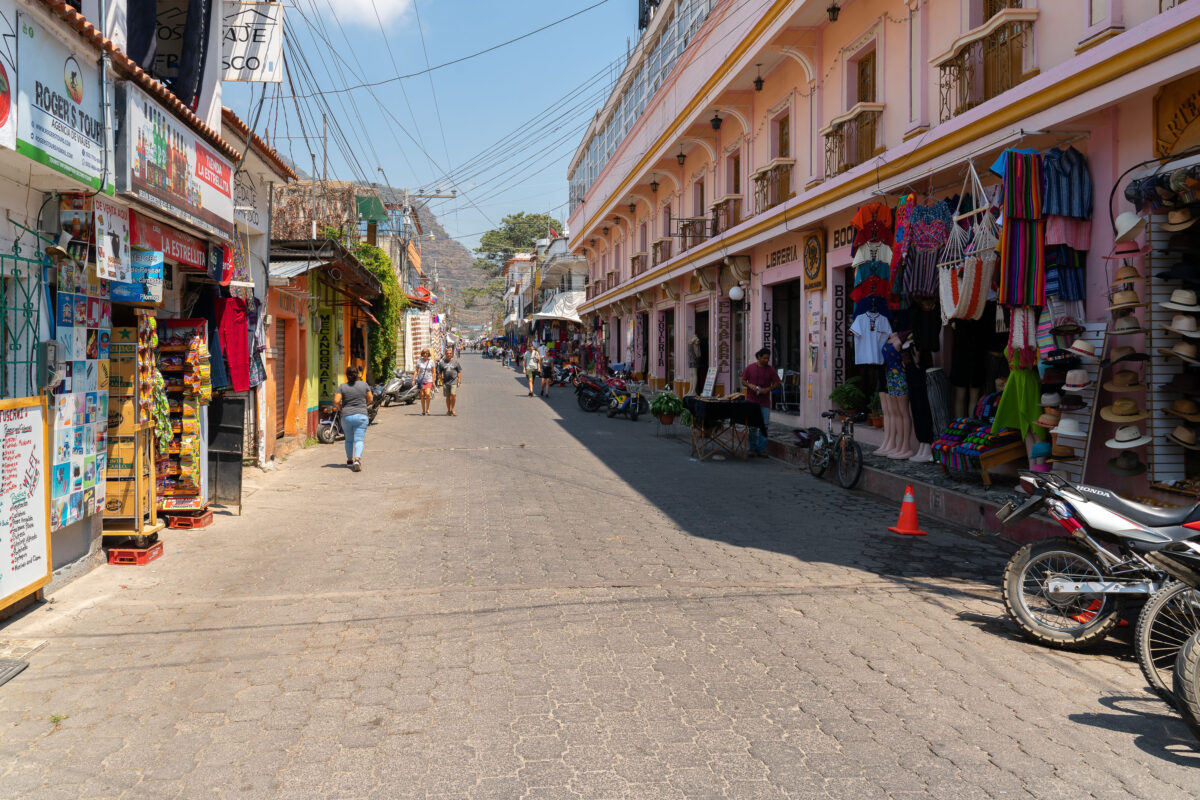
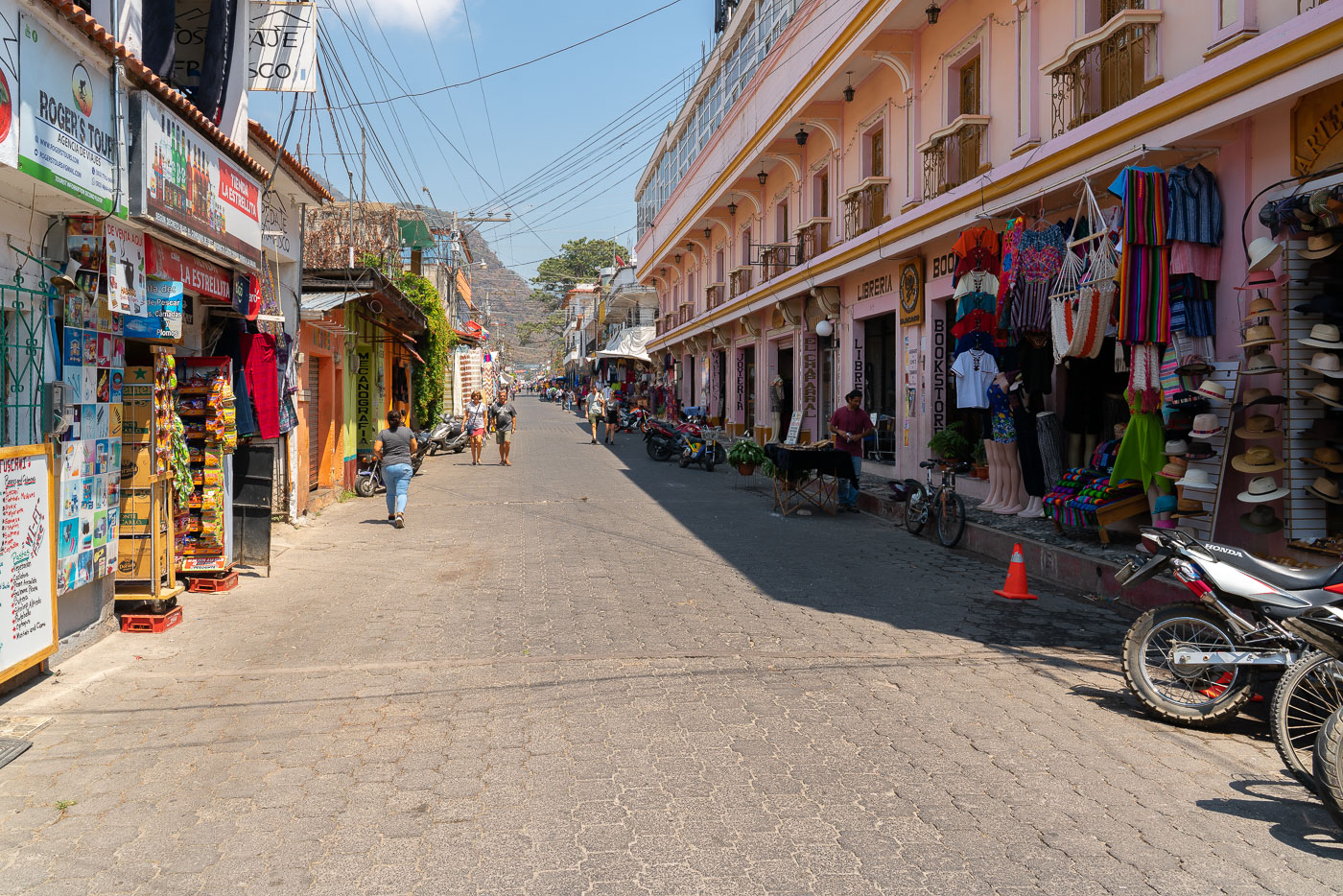
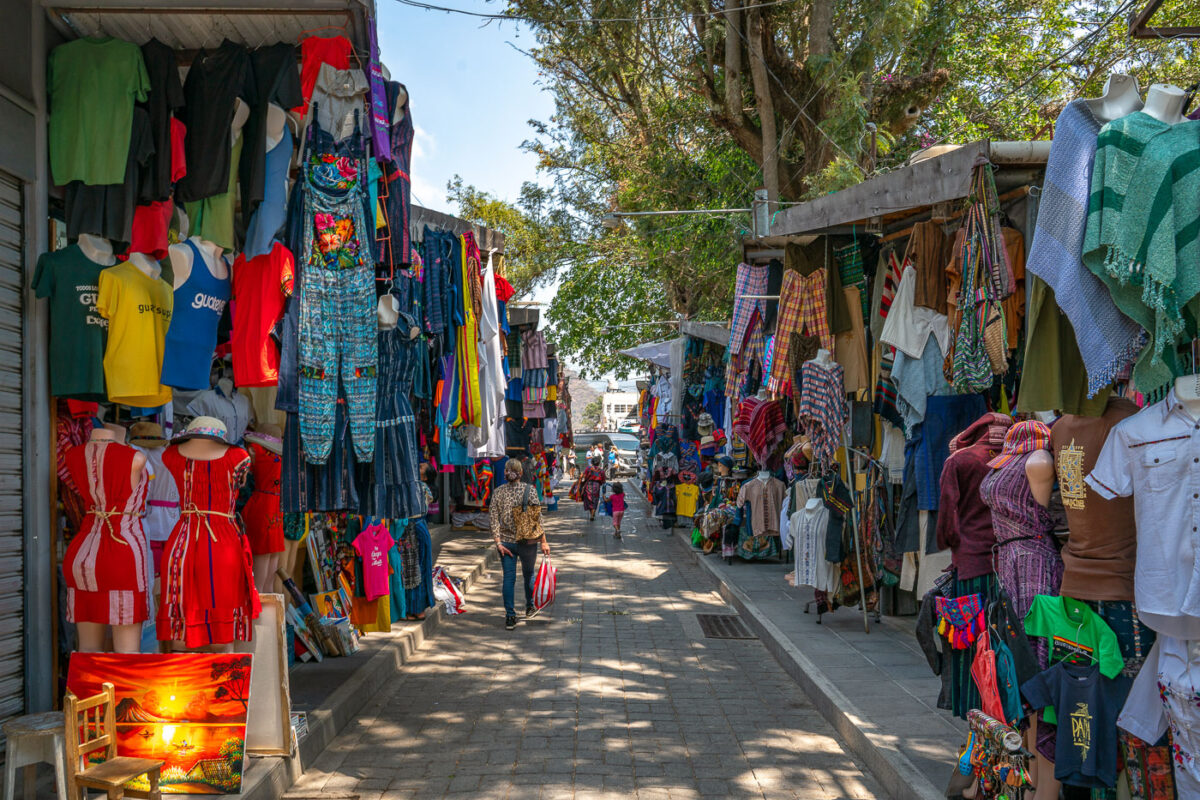
Commercial street in Panajachel, Guatemala lined with colorful shops and vendor stalls beneath mountains in daylight.
Calle Santander is Panajachel's main commercial corridor, running from the highway entrance down to the shore of Lake Atitlán. The street is lined with stalls and storefronts selling Guatemalan textiles, hammocks, and woven hats, alongside bookstores and small cafes catering to travelers. Its concentration of souvenir shops and tourist services has earned Panajachel the nickname "Gringotenango" among visitors to the lake region. The town serves as the main gateway for boat travel to the surrounding lakeside villages, including Santiago Atitlán, San Pedro La Laguna, and Santa Cruz La Laguna.
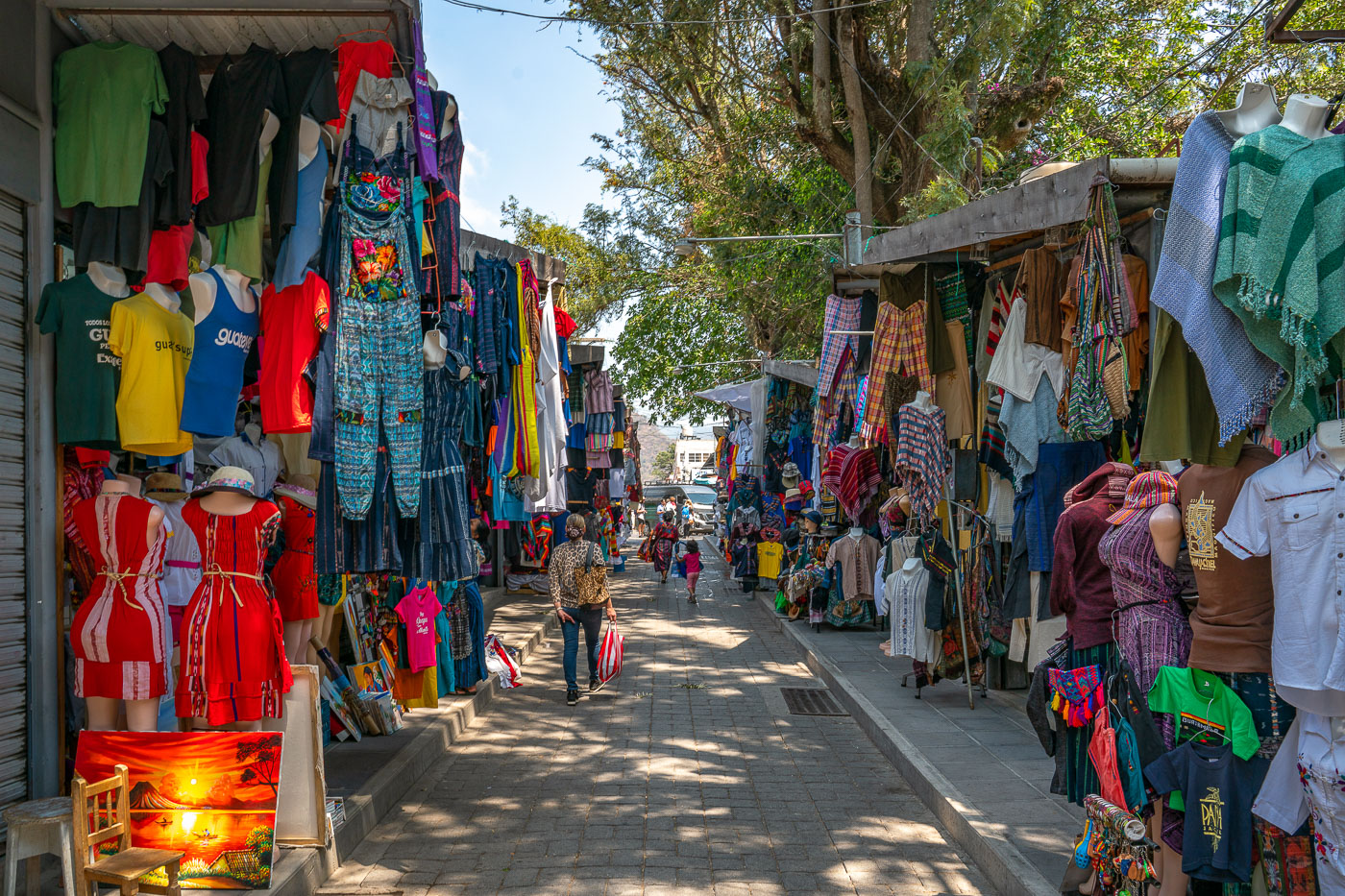
Market vendors display colorful clothing and textiles along a narrow street in Panajachel, Guatemala near Lake Atitlán.
Calle Santander is Panajachel's main commercial corridor, running from the highway entrance down toward the shore of Lake Atitlán. Vendor stalls line both sides of the street, selling huipiles, woven textiles, and clothing produced by Maya artisans from towns around the lake. Because of its concentration of tourist shops and restaurants, locals have long nicknamed the street "Gringotenango." Panajachel itself serves as the main gateway town for Lake Atitlán, connecting visitors to boat launches that reach villages such as Santiago Atitlán and San Pedro La Laguna.
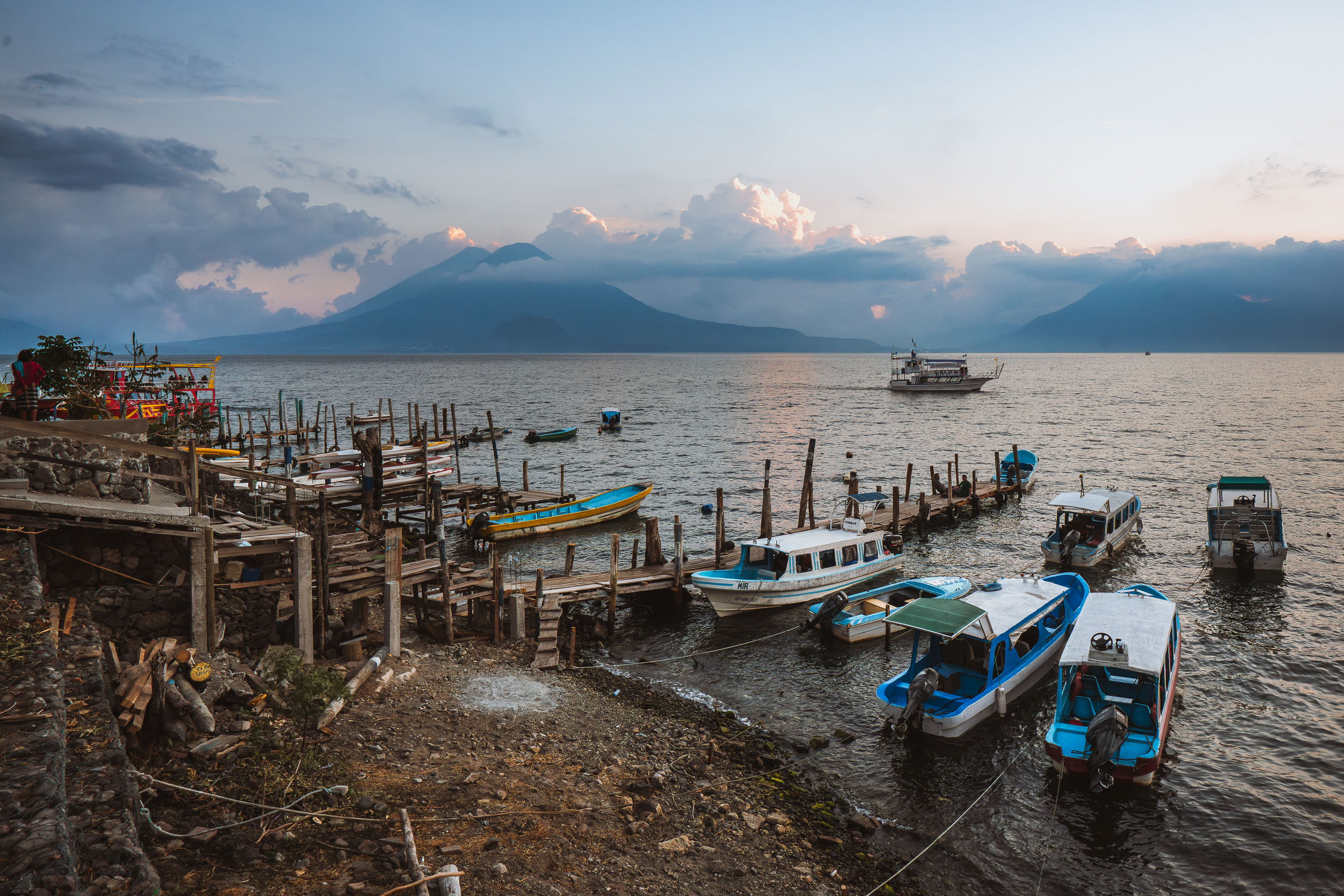
Fishing boats and ferries dock at a wooden pier on Lake Atitlán in Panajachel, Guatemala, with volcanic peaks rising across the water at dusk.
Lake Atitlán fills a volcanic caldera in Guatemala's western highlands, formed by a massive eruption roughly 84,000 years ago. At more than 320 meters deep in places, it ranks among the deepest lakes in Central America. Panajachel, on the lake's northern shore, serves as the main gateway for boat travel to surrounding Maya towns such as San Pedro la Laguna, San Juan la Laguna, and Santiago Atitlán, since no road circles the entire lake. The volcanoes San Pedro, Tolimán, and Atitlán rise along the southern shoreline, dominating views from the Panajachel docks. Public and private lanchas departing here remain the primary transport link for both residents and visitors moving between lakeside communities.
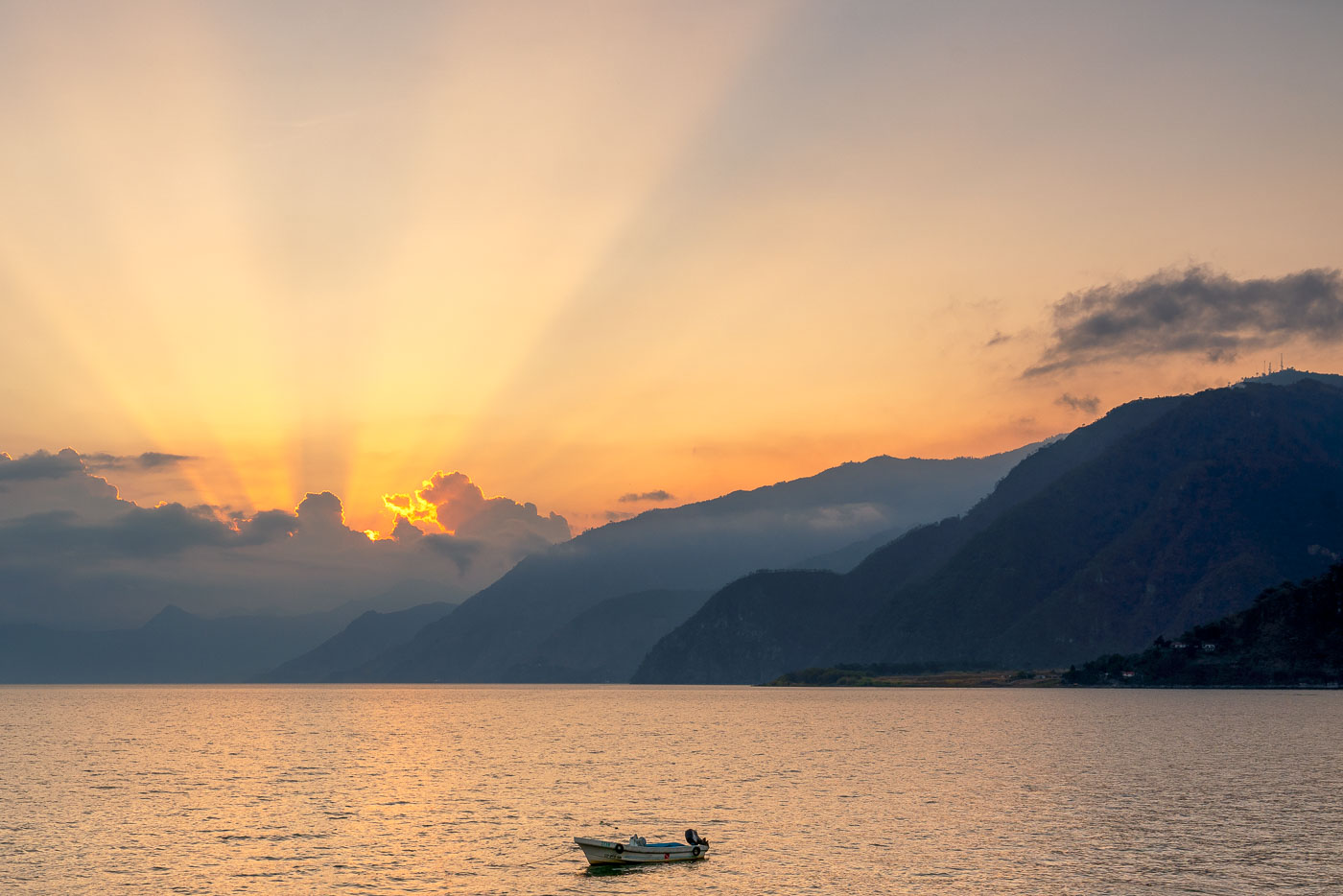
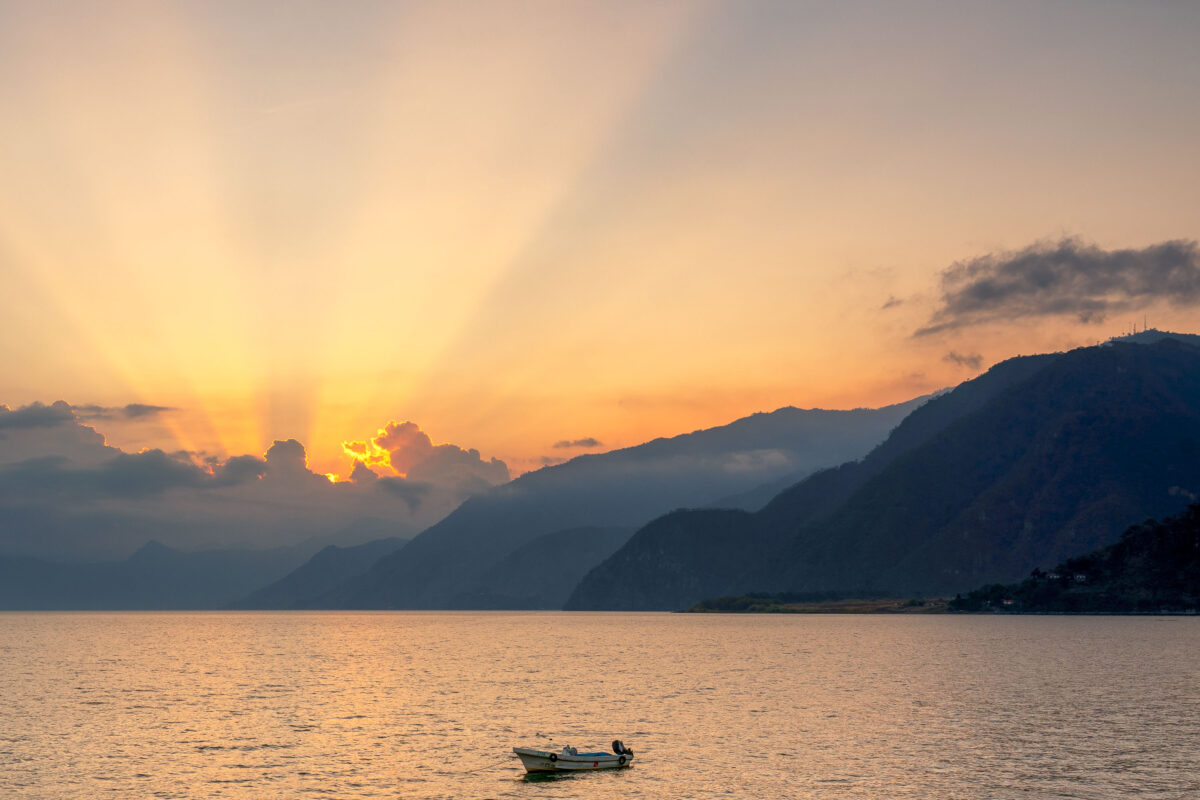
A small fishing boat sits on Lake Atitlán near Panajachel, Guatemala, as the sun sets behind forested volcanic mountains.
Lake Atitlán fills a volcanic caldera in Guatemala's western highlands, formed by an eruption roughly 84,000 years ago that ranks among the largest in Earth's history. At about 1,949 feet deep, it's one of the deepest lakes in Central America, ringed by the volcanoes Atitlán, Tolimán, and San Pedro. Panajachel, on the lake's northern shore, serves as the main gateway for boats connecting to smaller towns like Santiago Atitlán and San Pedro La Laguna, since no road circles the entire lake. Aldous Huxley famously called it "the most beautiful lake in the world" after visiting in the 1930s.
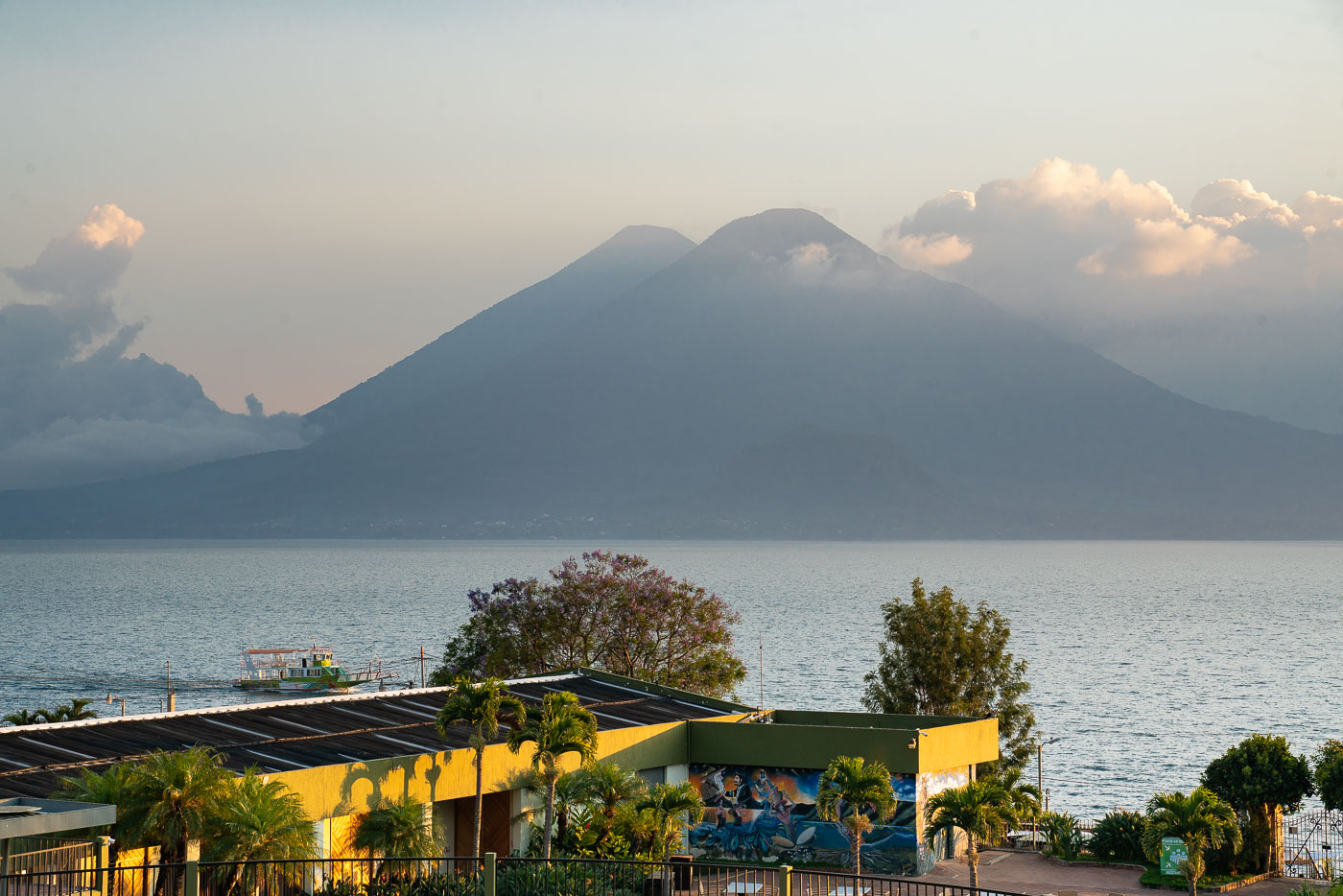
Volcán Atitlán rises above Lake Atitlán beyond the yellow-roofed Porta Hotel del Lago in Panajachel, Guatemala.
Volcán Atitlán and Volcán Tolimán rise along the southern shore of Lake Atitlán, within the boundaries of Atitlán National Park. Volcán Atitlán reaches roughly 3,535 meters, while Tolimán stands about 3,158 meters; both are considered potentially active, though eruptions are rare. The lake itself fills a caldera formed by a massive volcanic collapse tens of thousands of years ago and now reaches depths of more than 300 meters. Panajachel, on the lake's northern shore, functions as the main gateway for boat travel to lakeside towns such as Santiago Atitlán and San Pedro la Laguna.

Built in Minneapolis

Minneapolis Photographer

Browse by location, move through long-running series, or start with recent work.