Place Archive

London

Westminster Underground Station’s Jubilee Line platforms exemplify London’s late-20th-century transit expansion with deep-level engineering and modernist design elements. The station integrates architectural clarity and industrial function, featuring platform screen doors and acoustic aluminum cladding approximately 30 meters below ground.

63 photos

Photos from London
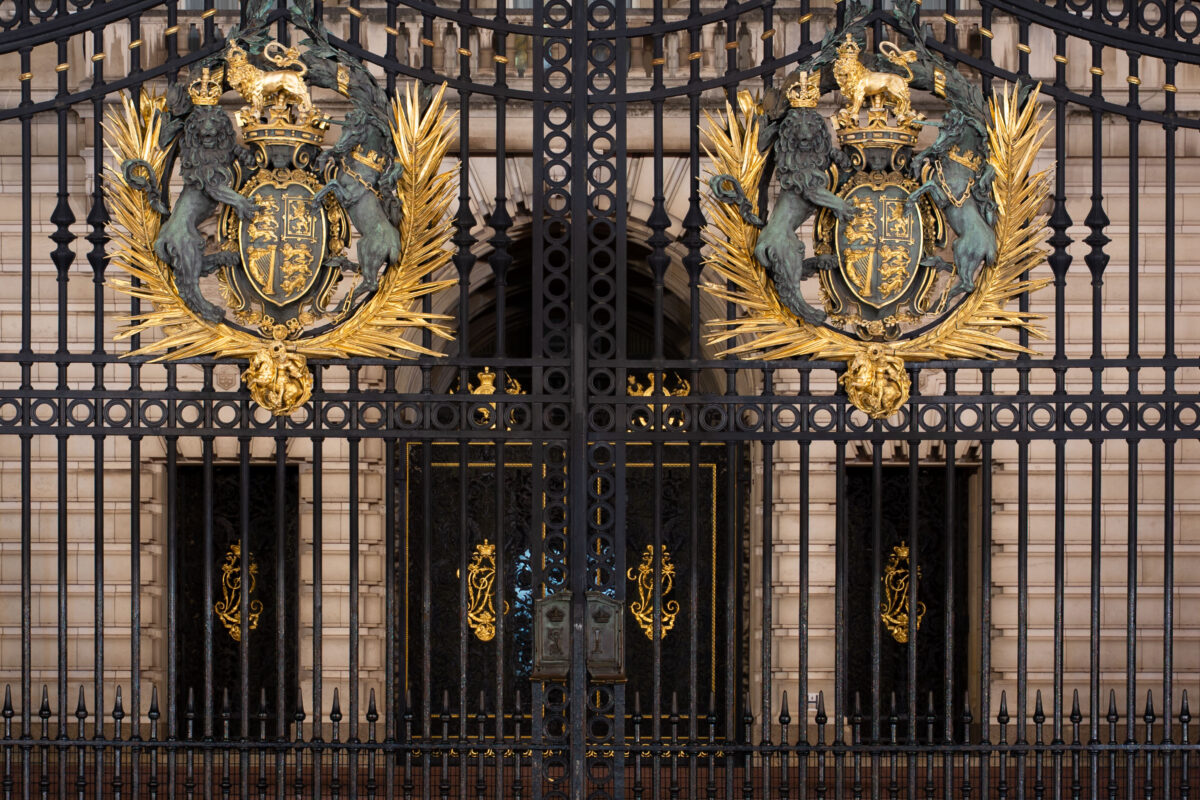
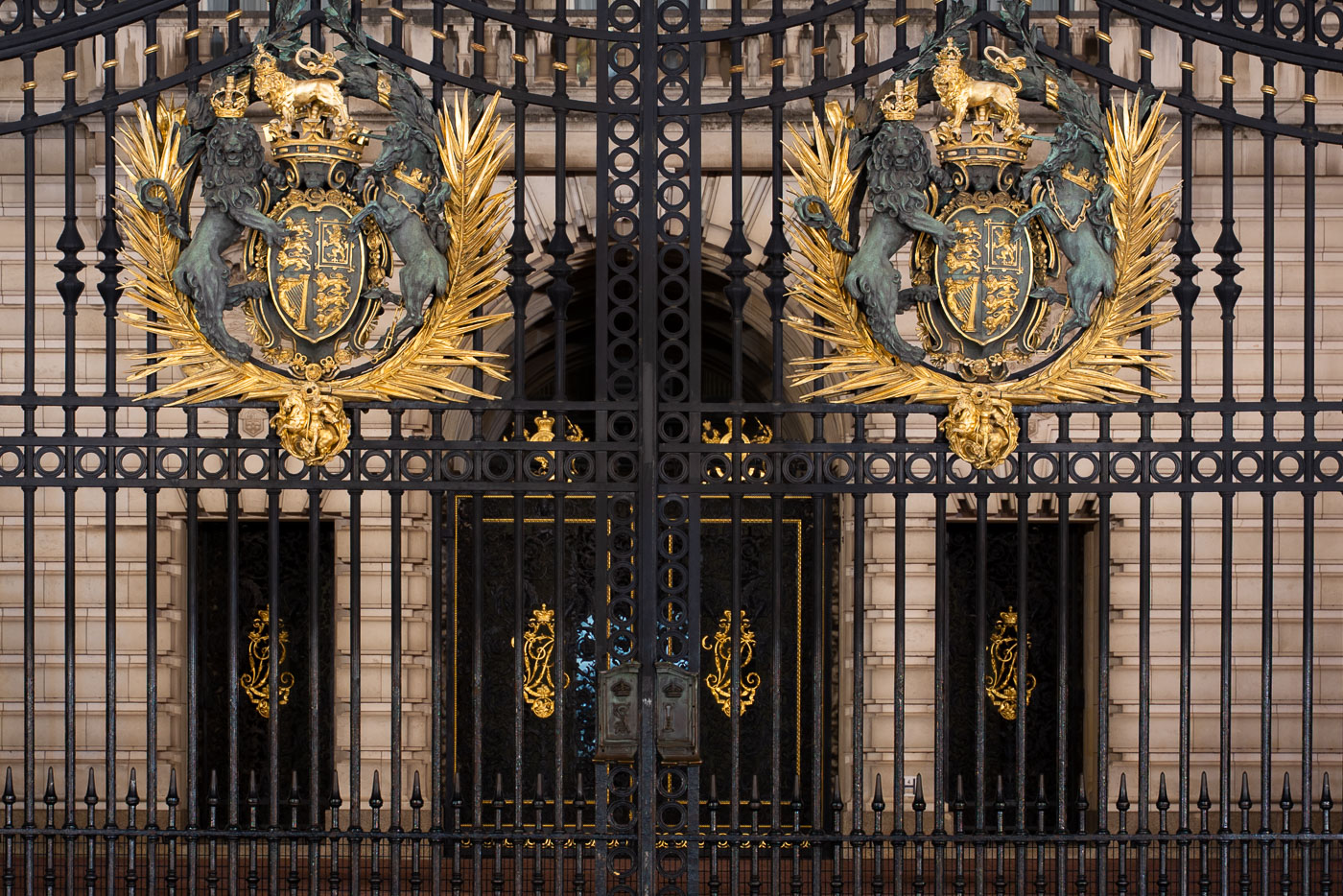
Buckingham Palace gates with the Royal Coat of Arms in London
Buckingham Palace main gates in London feature the Royal Coat of Arms in gilded bronze and wrought iron. The gates form the ceremonial entrance to the monarch’s official residence and date from the early 20th century.
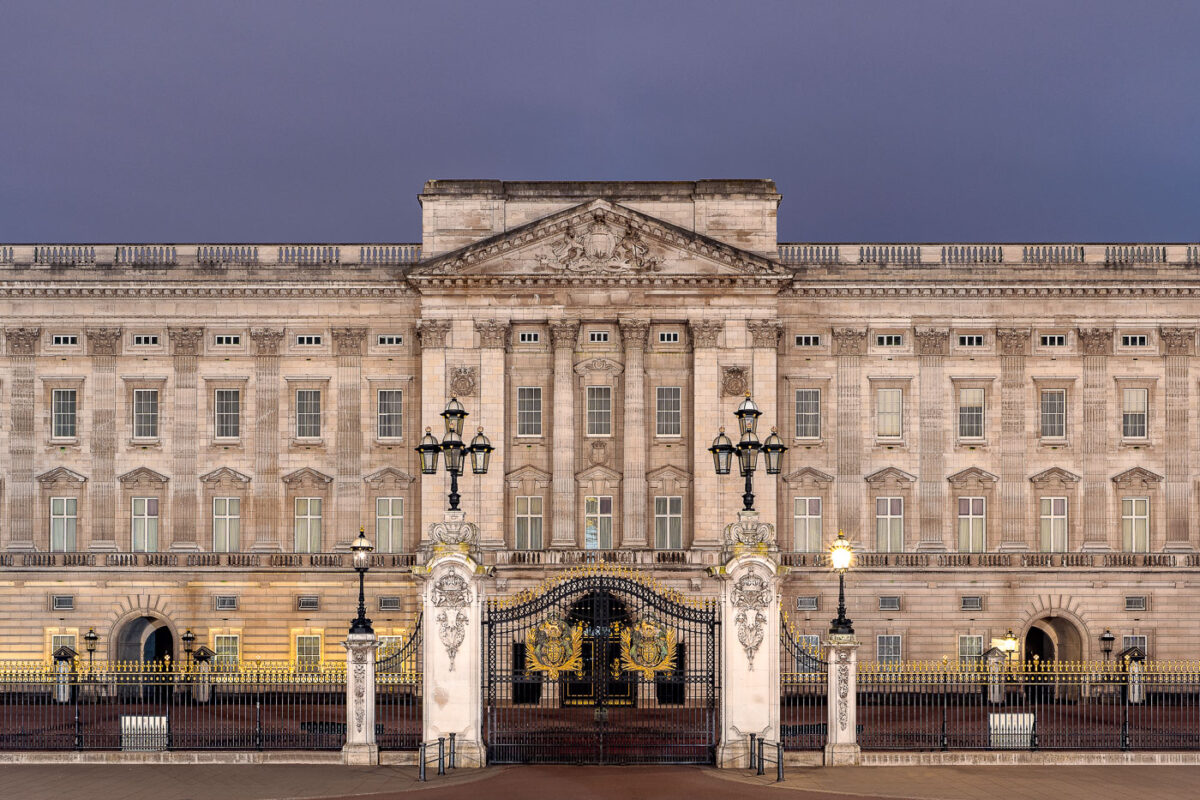
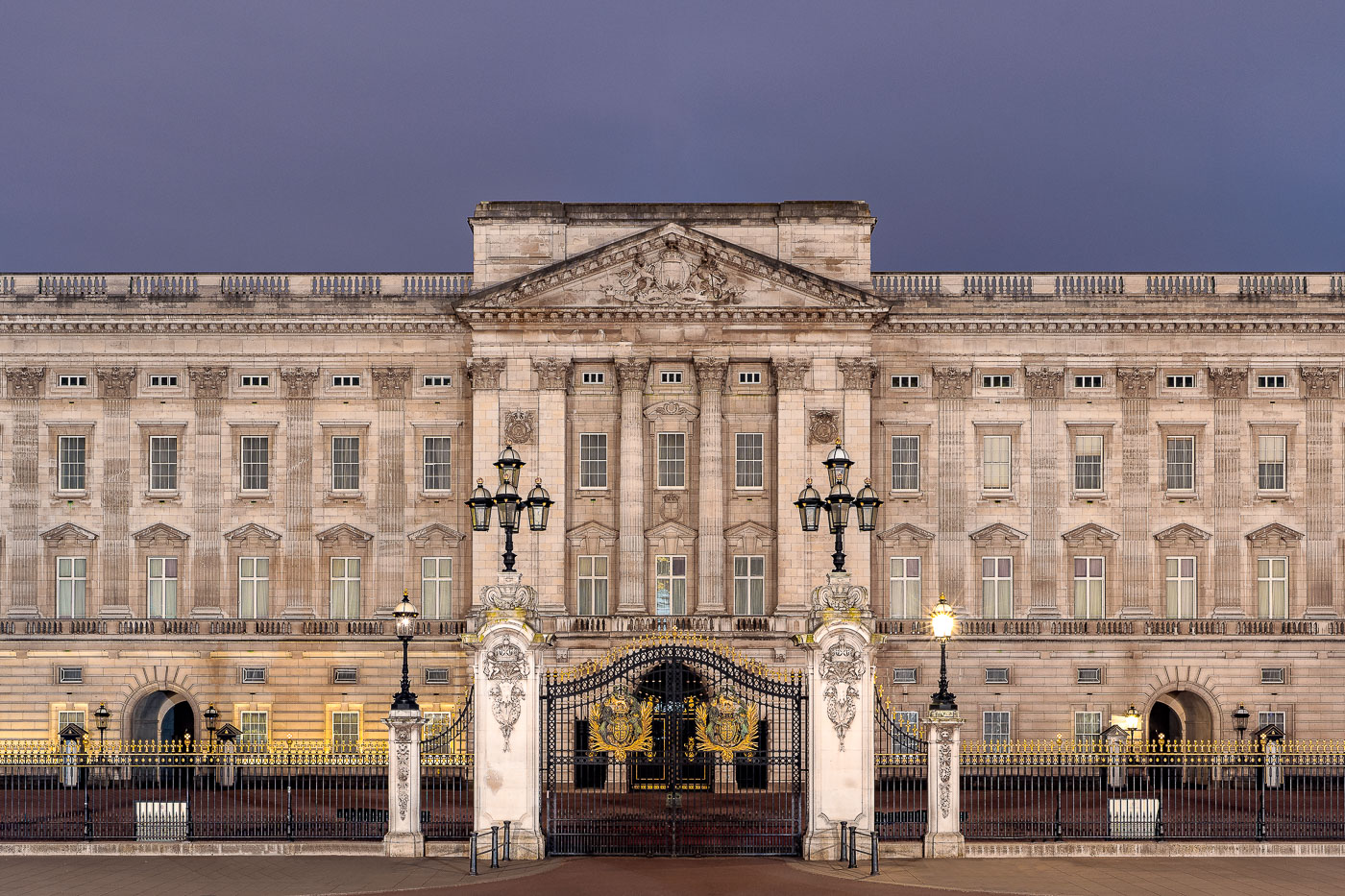
Buckingham Palace east facade in London with ornate gates and royal crests.
Buckingham Palace in London is shown from the east facade, completed in 1913 to designs by Sir Aston Webb. The building serves as the monarch’s official London residence and administrative headquarters. Ornate wrought-iron gates with gilded royal crests stand before the central entrance.
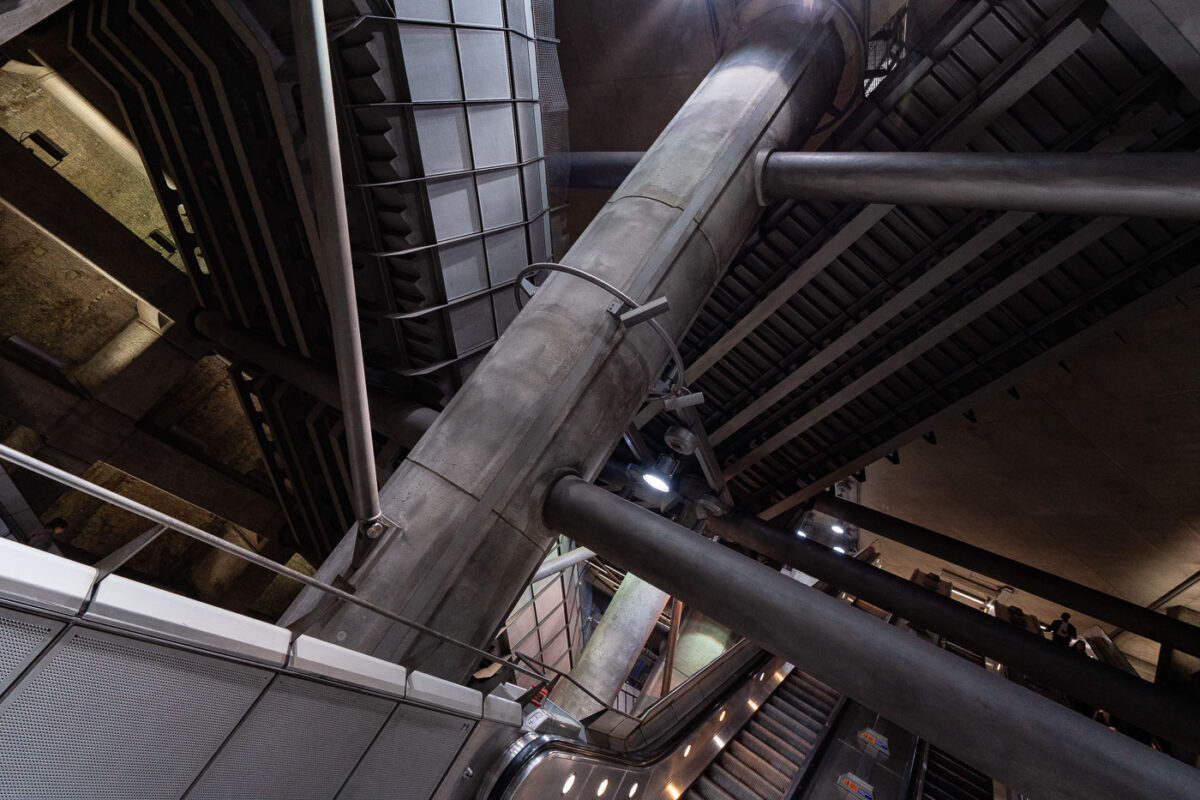
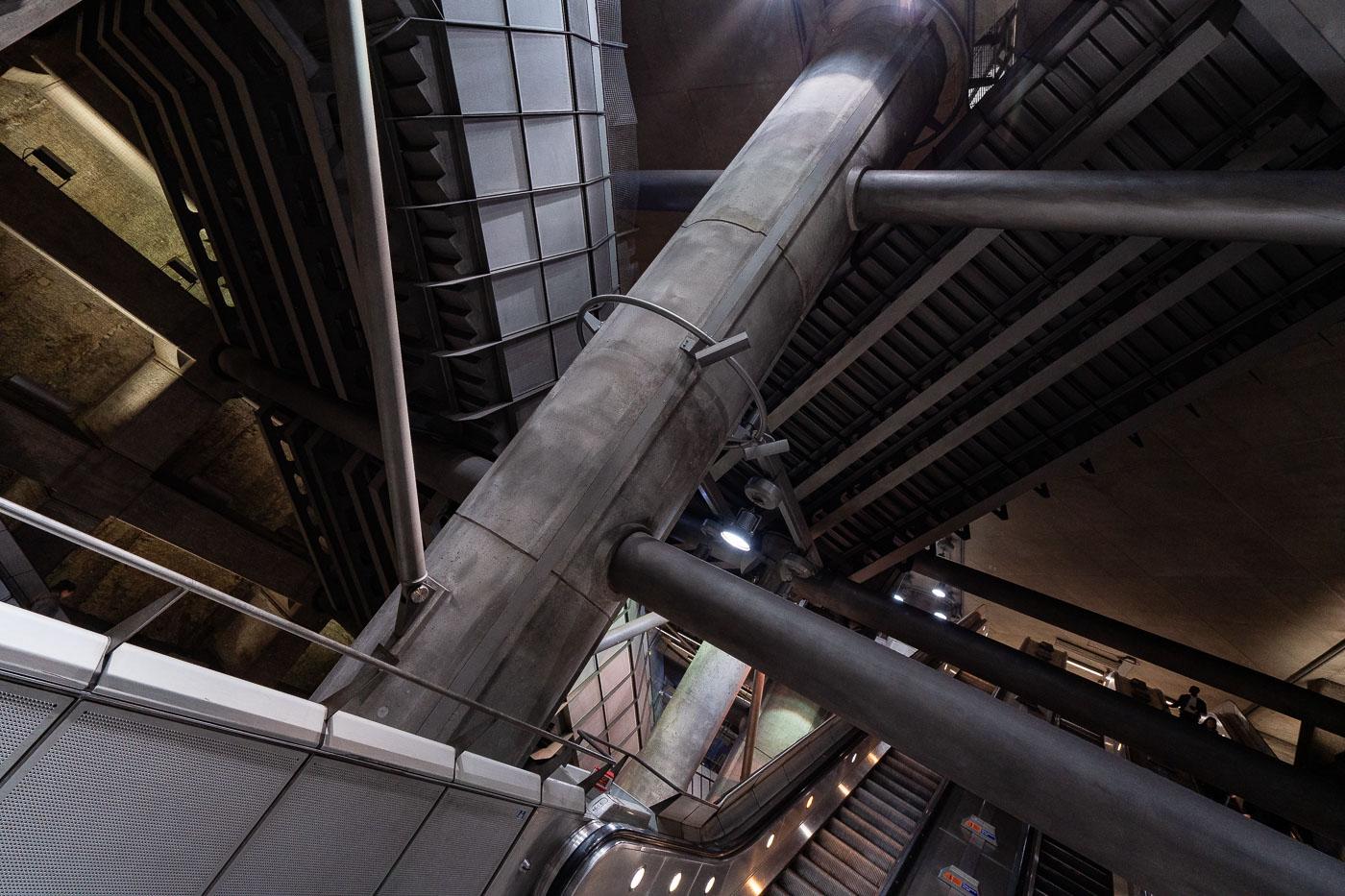
Westminster Station escalator hall in London with exposed concrete and steel structural beams.
Westminster Station in London features the Jubilee line extension concourse and escalator hall. The station was rebuilt in the 1990s as part of the line extension to serve the Underground interchange near Parliament Square.
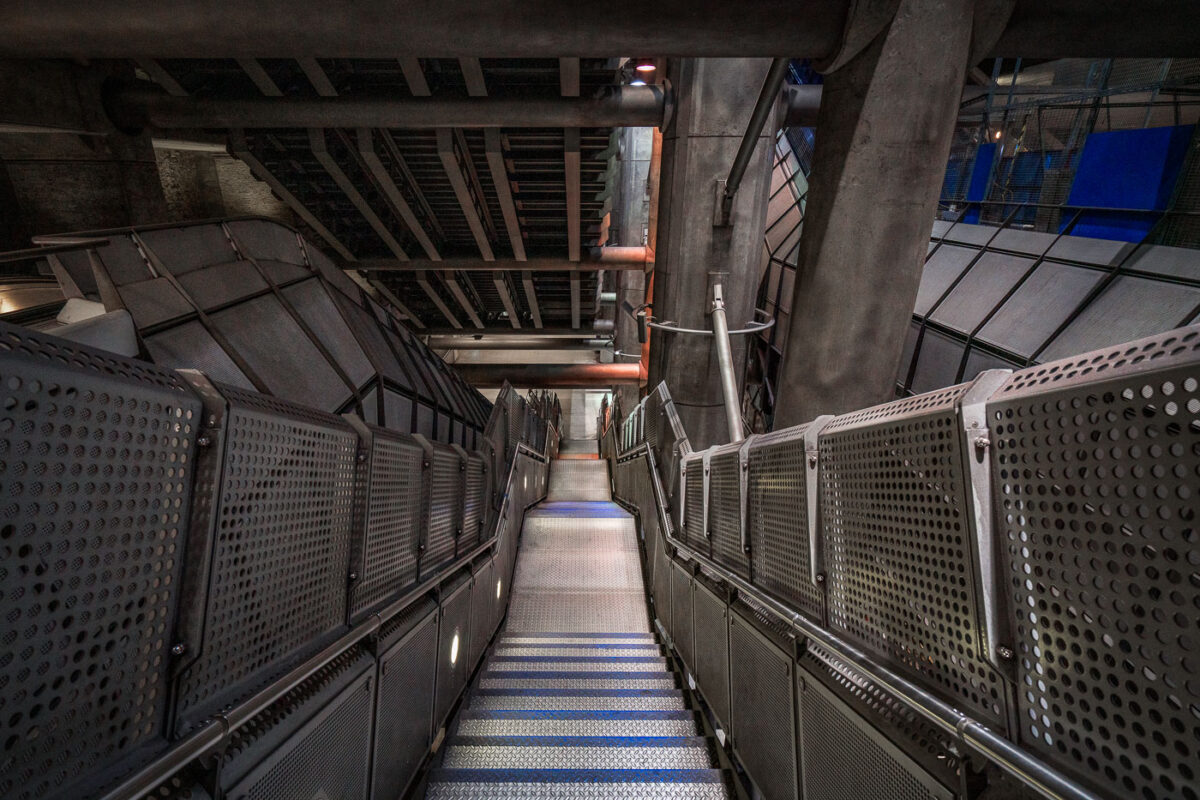
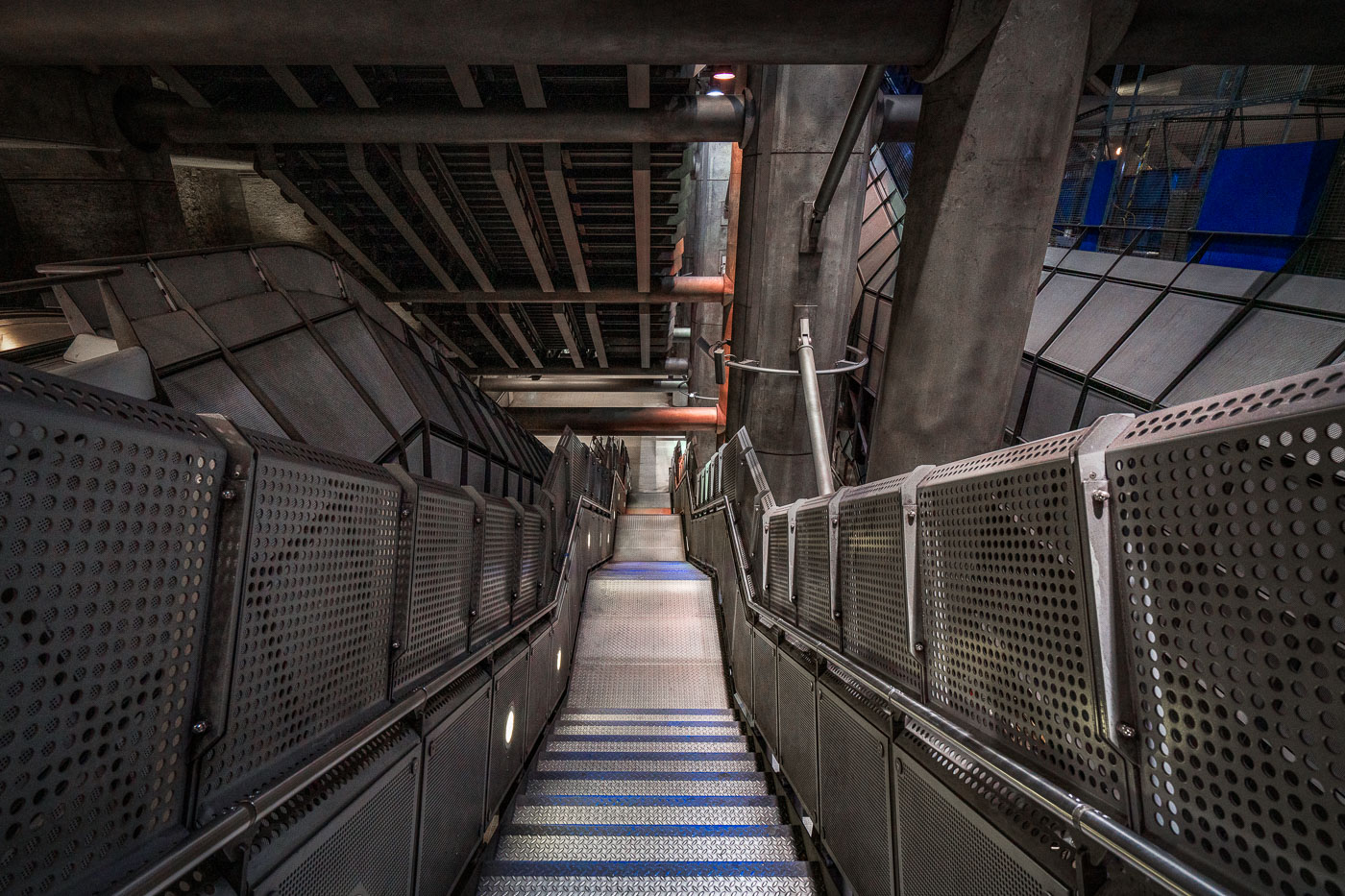
Westminster Station stairwell in London Underground with exposed concrete and perforated metal panels
Westminster Station in London has a deep stairwell leading through the Jubilee line extension platforms. The station was designed by Foster + Partners and opened in 1999 as part of the rebuilt Underground interchange beneath Parliament Square. Exposed concrete, metal panels, and steel framing define the circulation space.
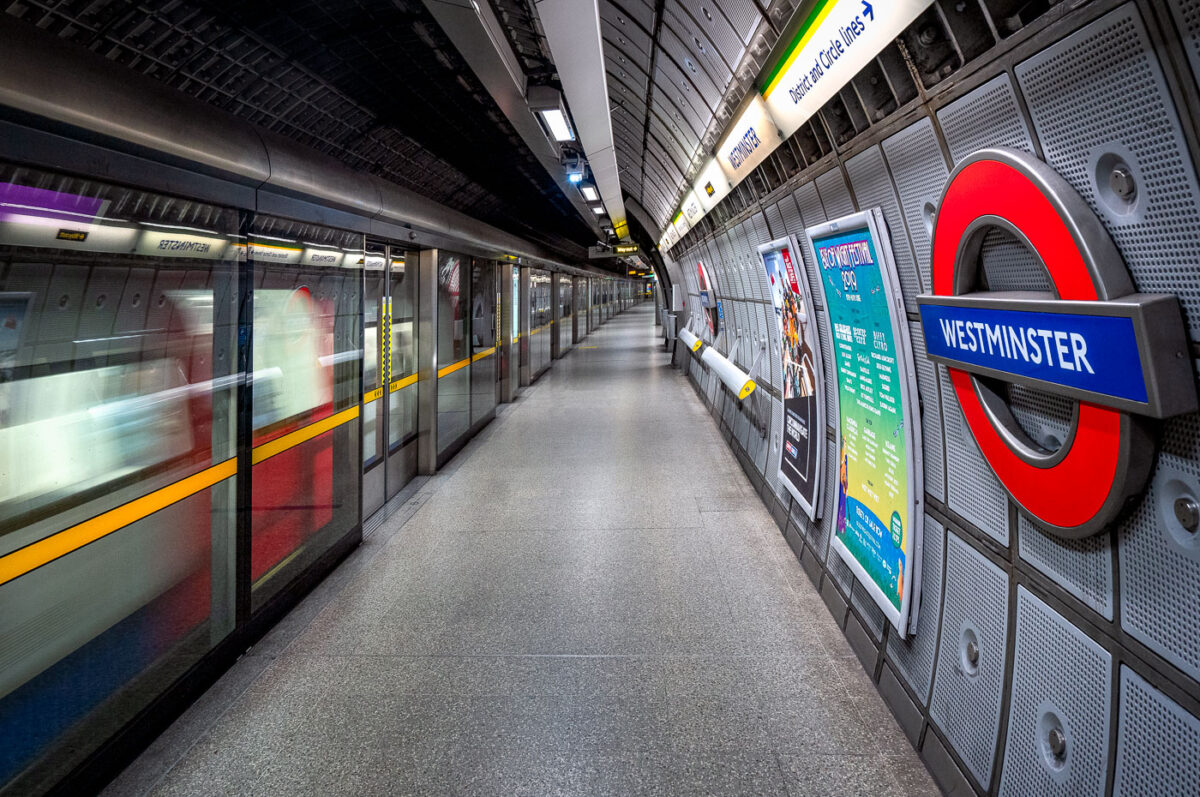
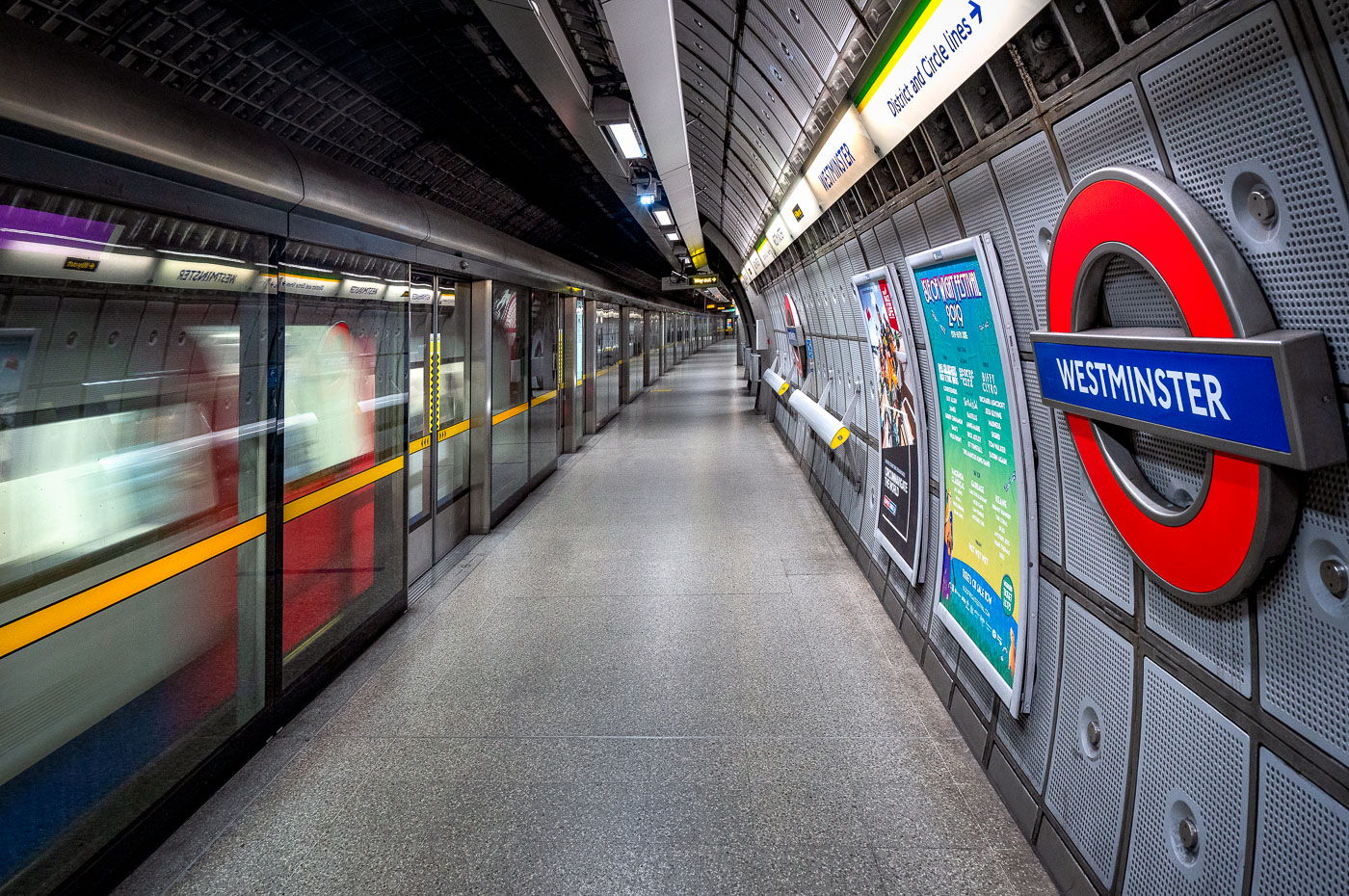
Westminster Station Jubilee Line platform in London with screen doors and curved metal wall panels
Westminster Station on the Jubilee Line in London features a deep-level platform with full-height screen doors and curved aluminium wall panels. Designed by Foster + Partners for the Jubilee Line Extension, the station opened in 1999 and serves Westminster in central London.
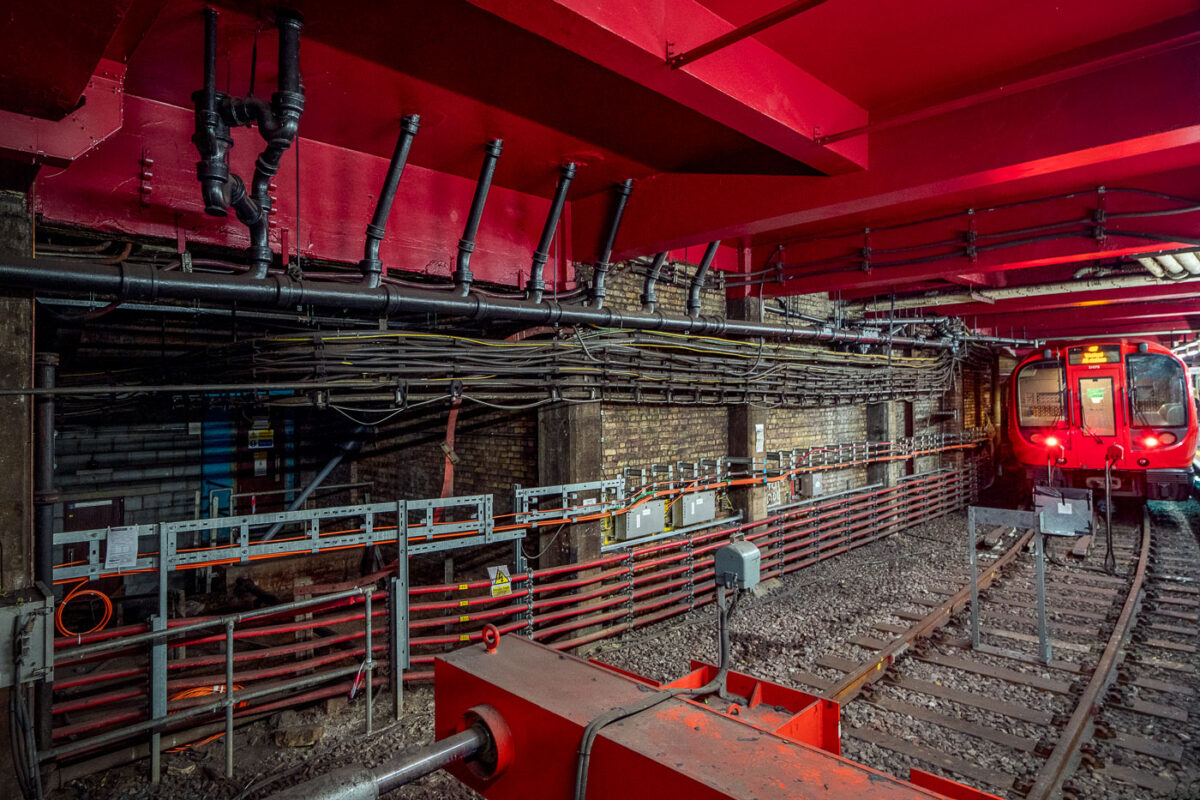
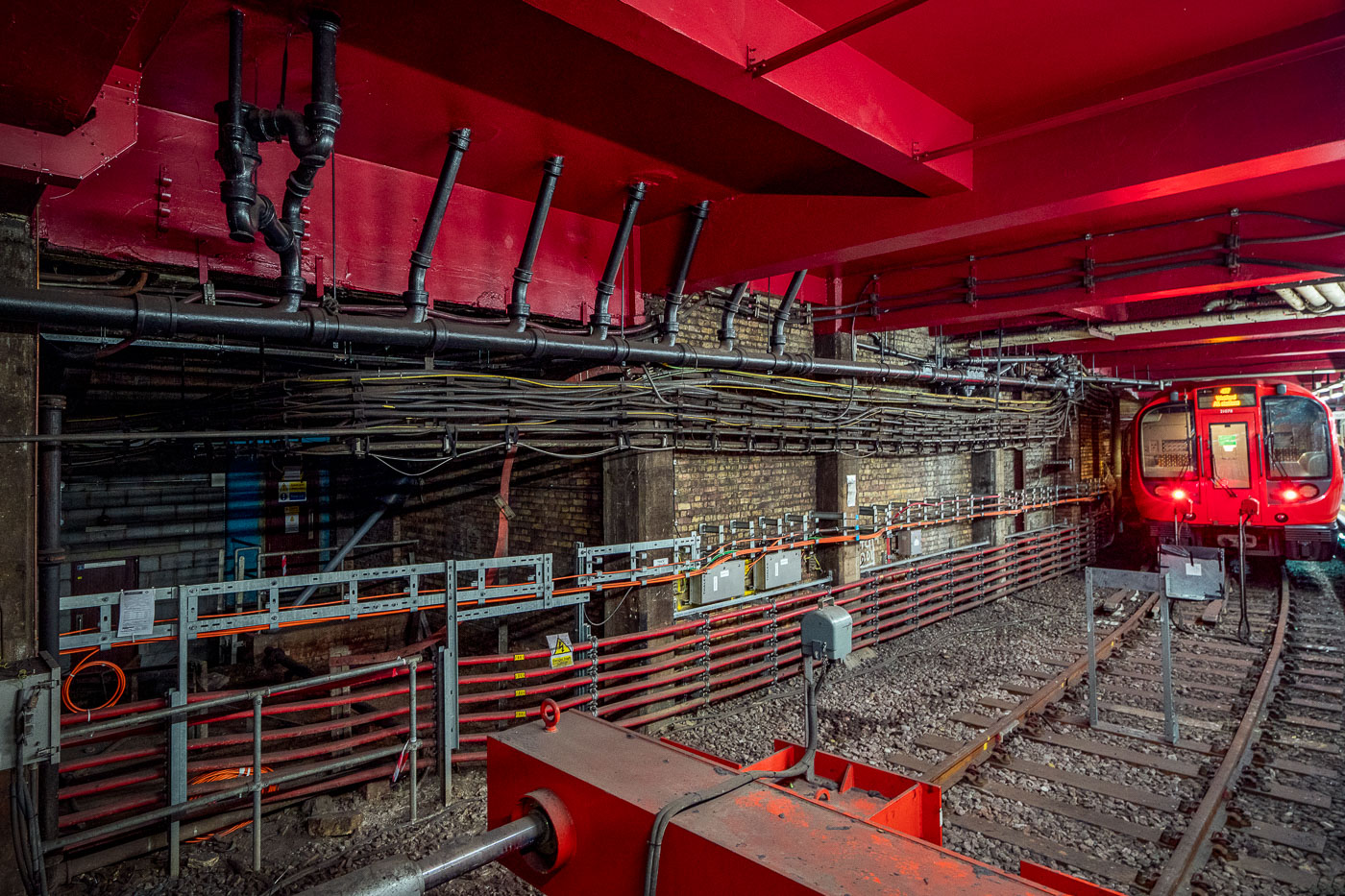
Baker Street Station tunnel infrastructure, London, with a train and exposed cabling.
Baker Street Station in London’s Metropolitan line tunnels shows exposed brickwork, pipes, cabling and modern service equipment alongside the running rails. The station is part of the world’s oldest underground railway network, with origins in the 1860s.
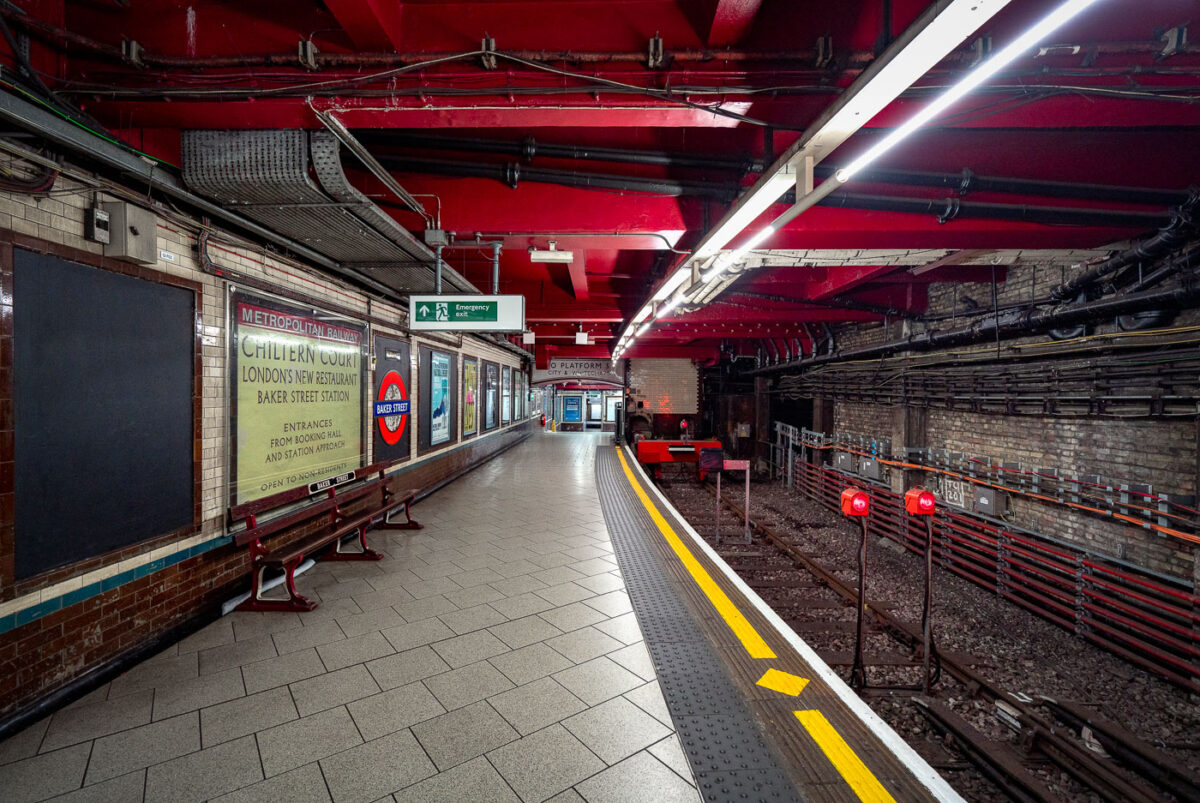
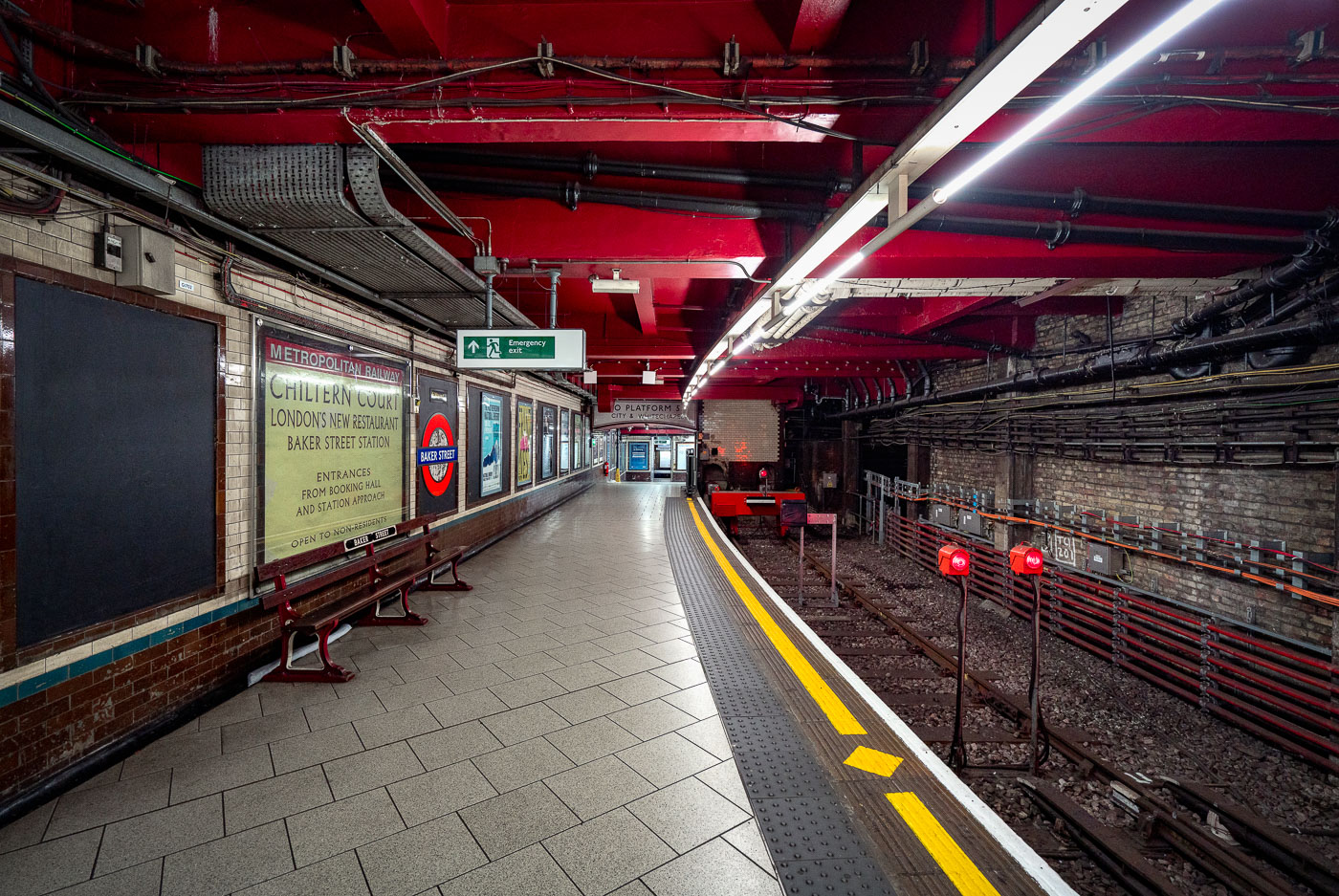
Baker Street Station Metropolitan Line platform in London with Victorian brickwork and red-painted tunnel structure.
Baker Street Station’s Metropolitan Line platform in London is one of the oldest surviving sections of the Underground. The platform retains Victorian-era brickwork and tunnel fabric alongside modern lighting, safety markings, and service signage.
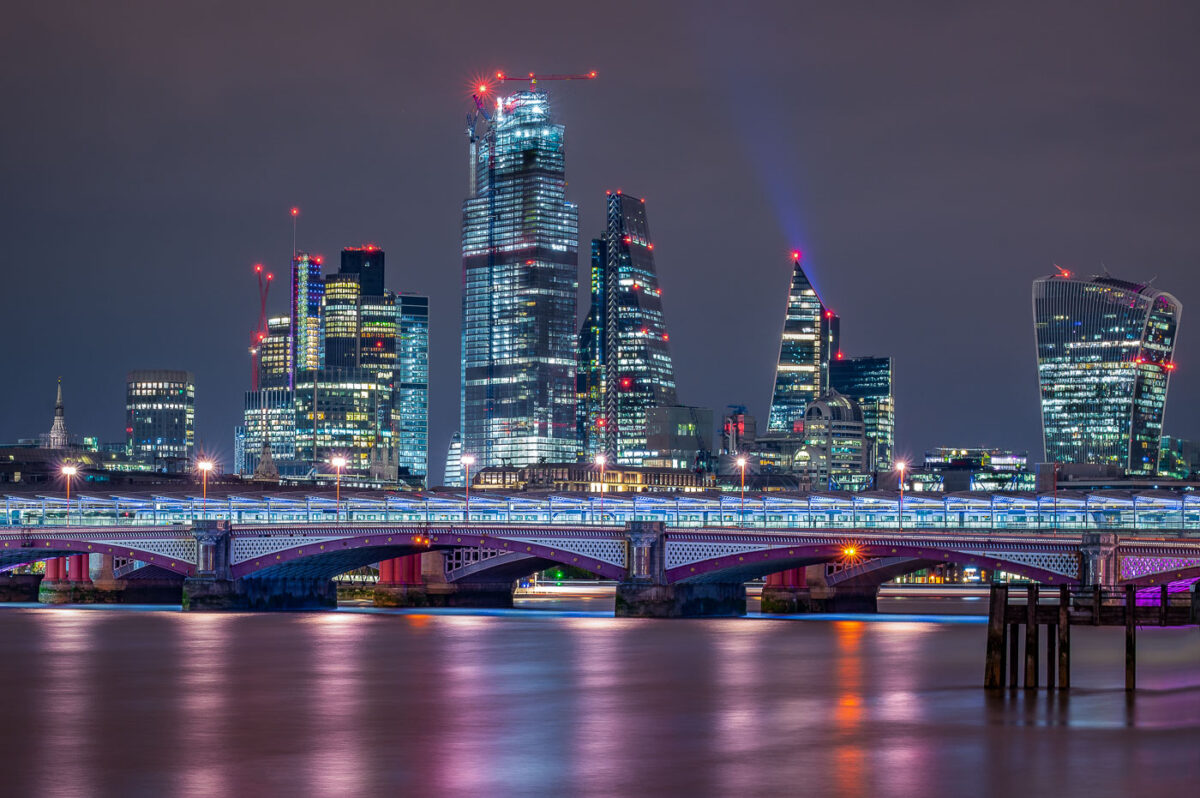
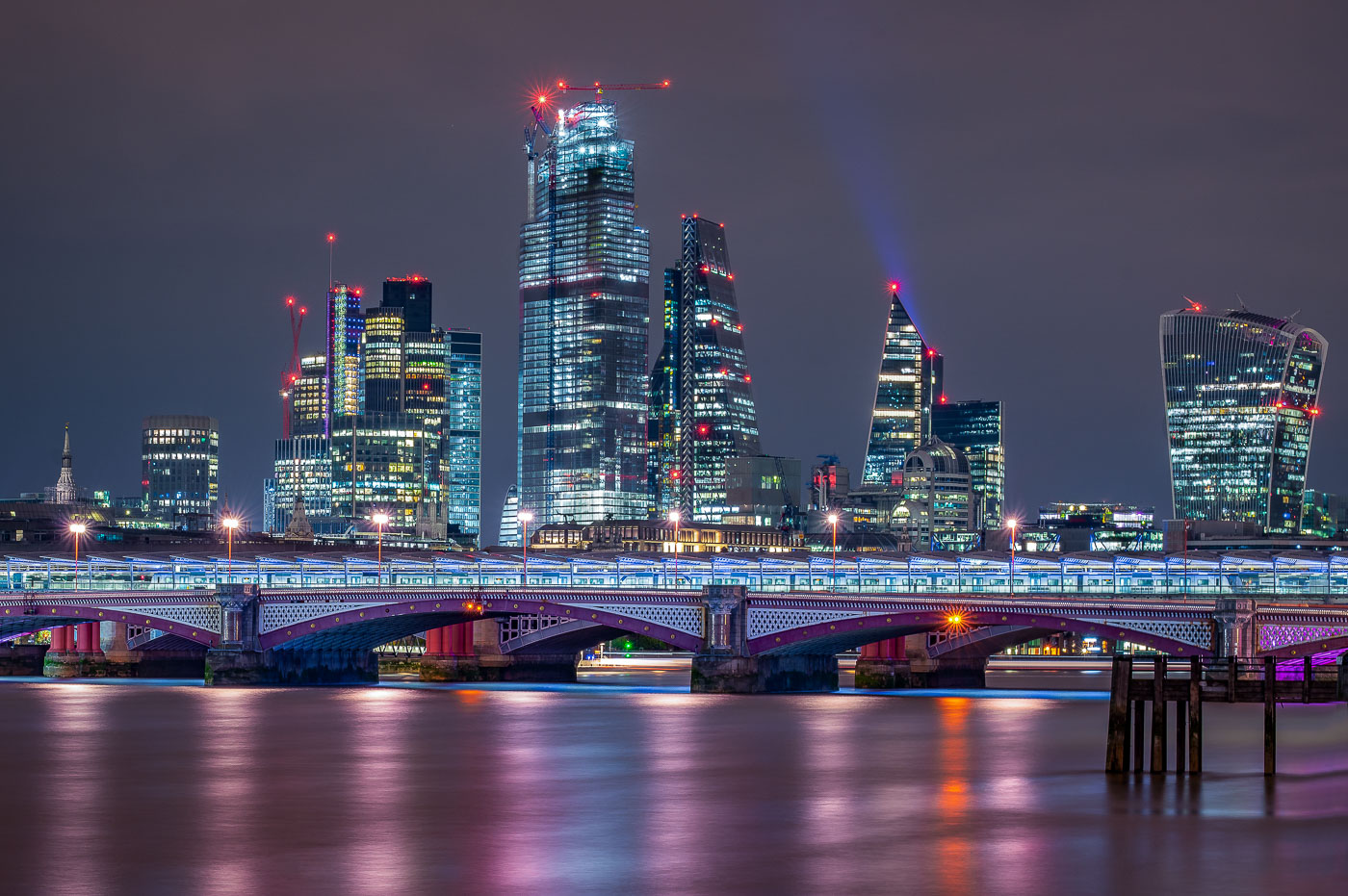
Blackfriars Bridge spans the River Thames with the City of London skyline behind it.
Blackfriars Bridge spans the River Thames in central London, with the City of London skyline behind it. The bridge carries road traffic across the river between Blackfriars and the South Bank, and the Shard and other City towers rise in the background.
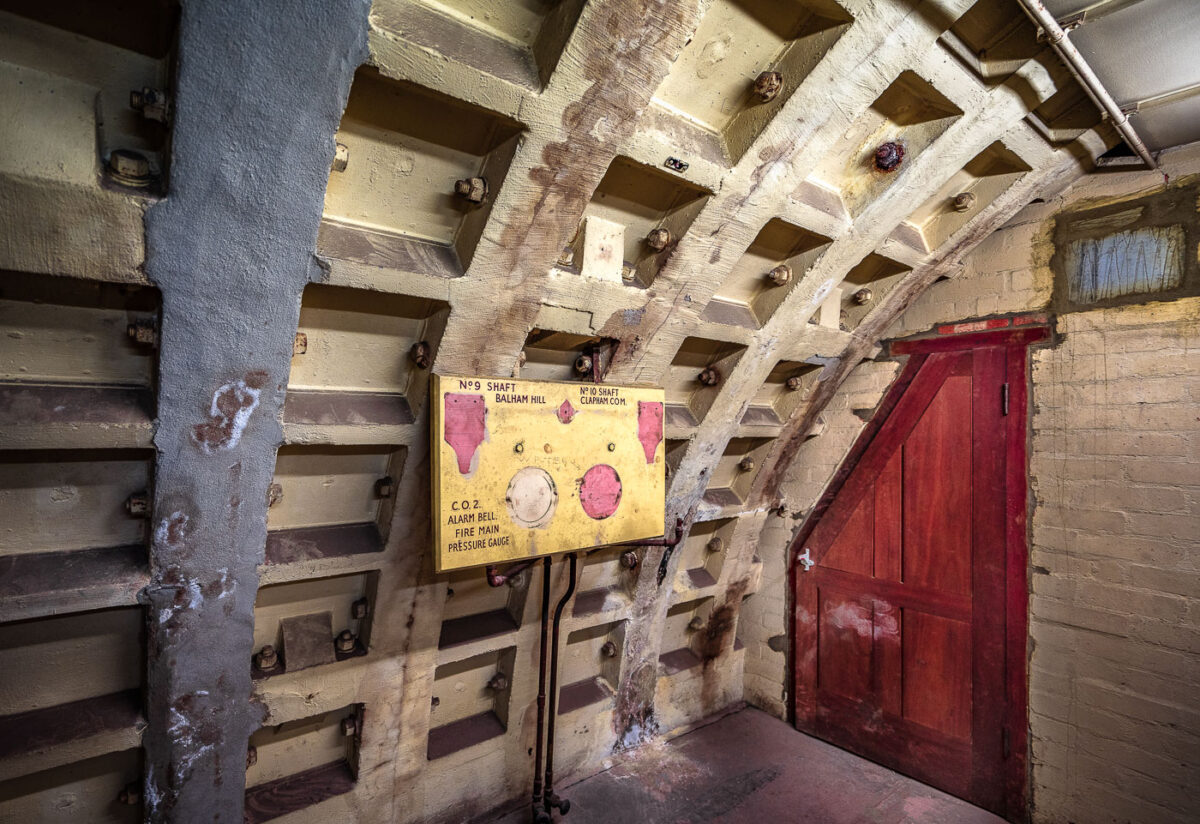
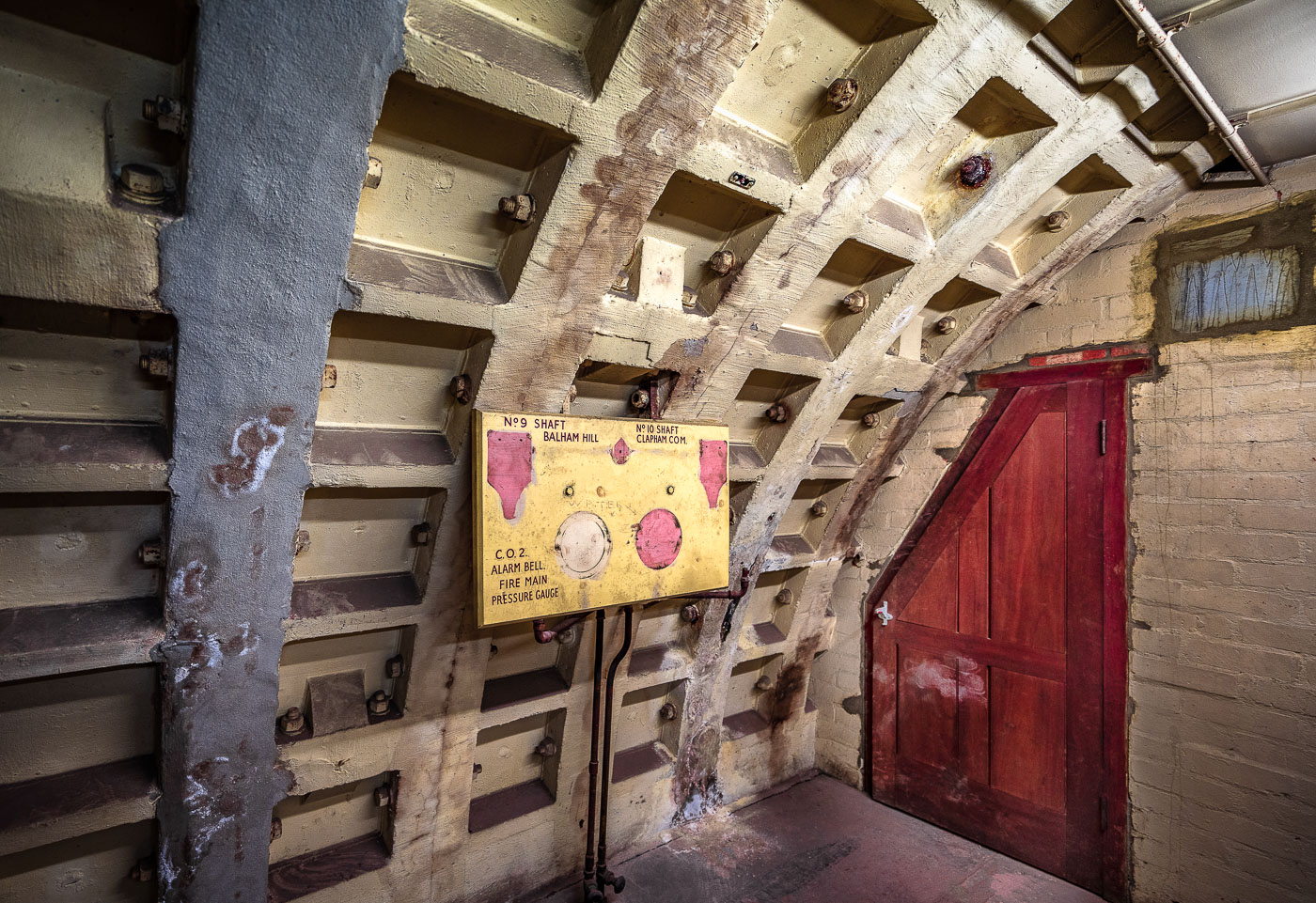
Clapham South Deep Shelter pressure panel with red door, London
Clapham South Deep Shelter in London contains this WWII pressure and alarm panel, marked for Shaft 9 at Balham Hill and Shaft 10 at Clapham Common. The panel monitored carbon dioxide, fire main pressure, and alarm systems in the deep-level shelter opened in 1942.
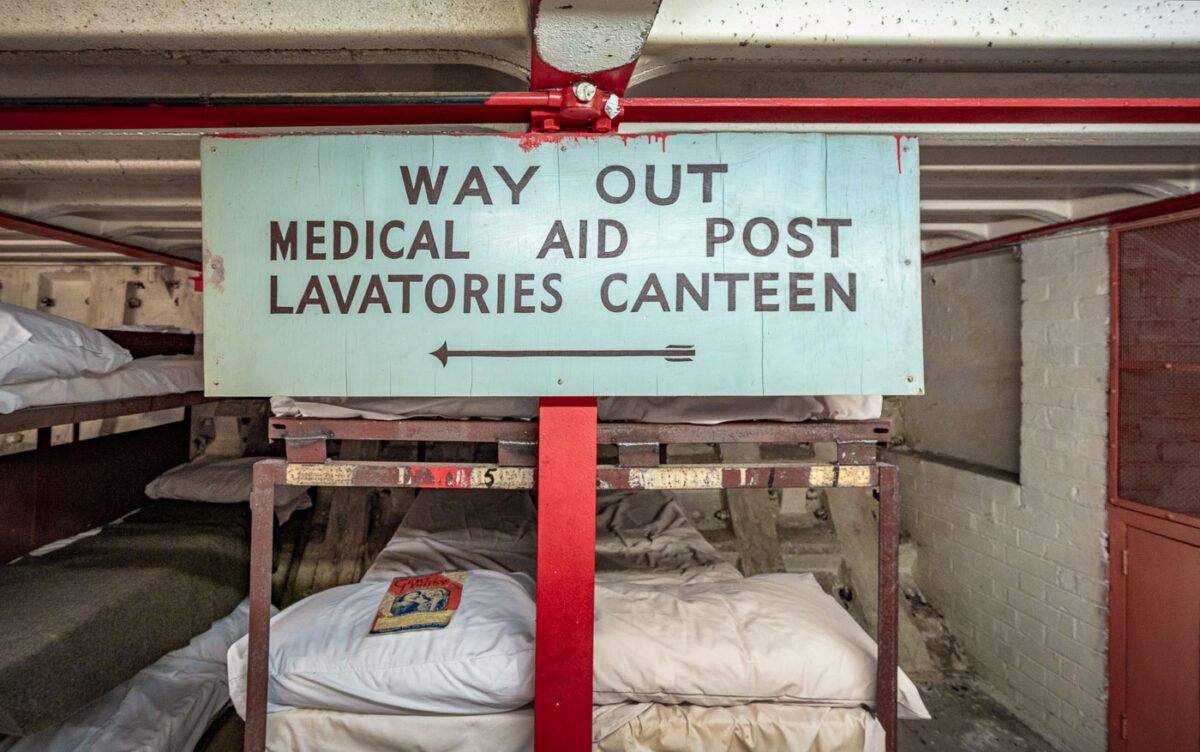
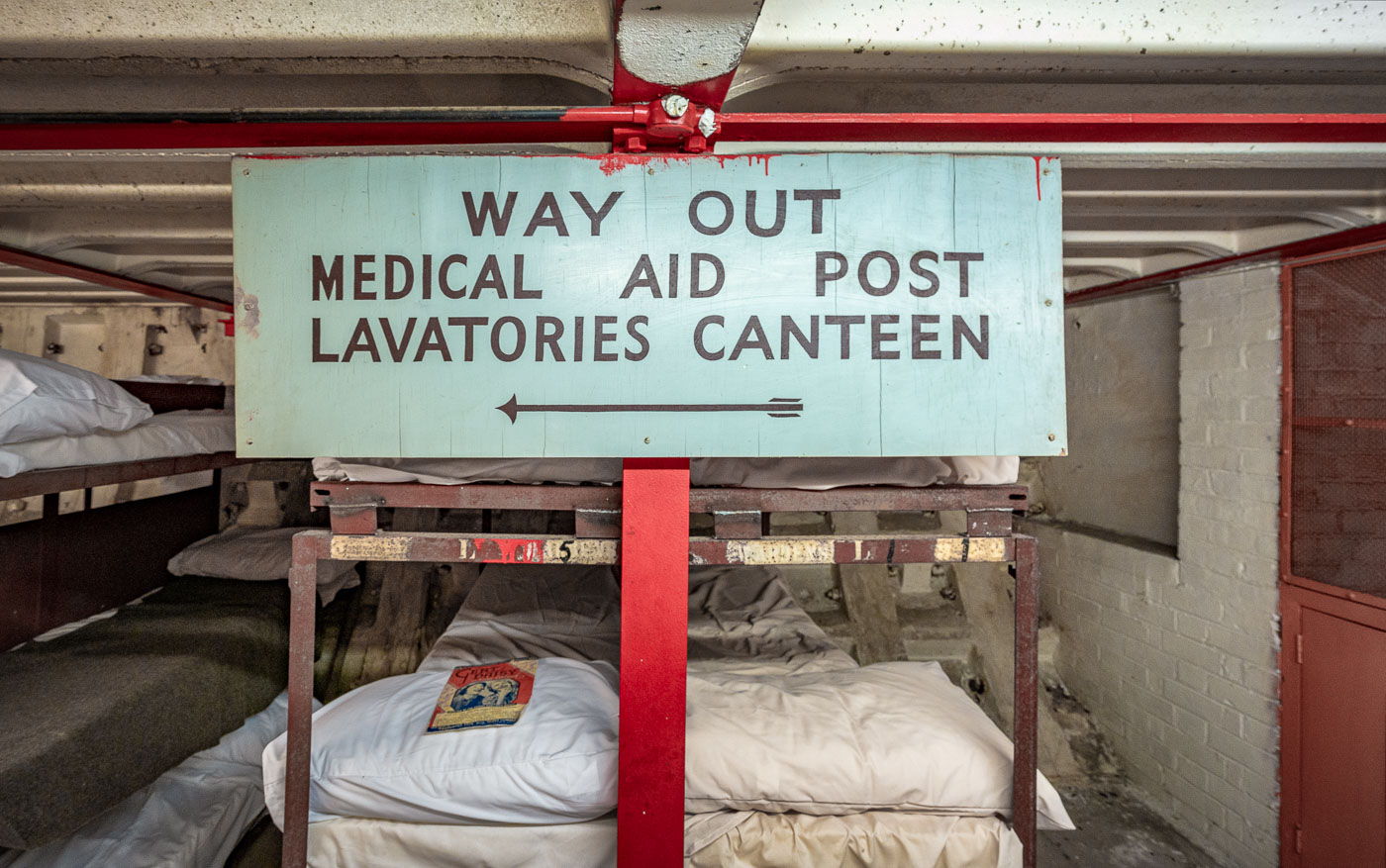
Clapham North Deep Shelter sign above bunk beds in London.
Clapham North Deep Shelter in London includes a painted direction sign for the medical aid post, lavatories and canteen. The deep-level shelter was built beneath the Underground during World War II to protect civilians during air raids.
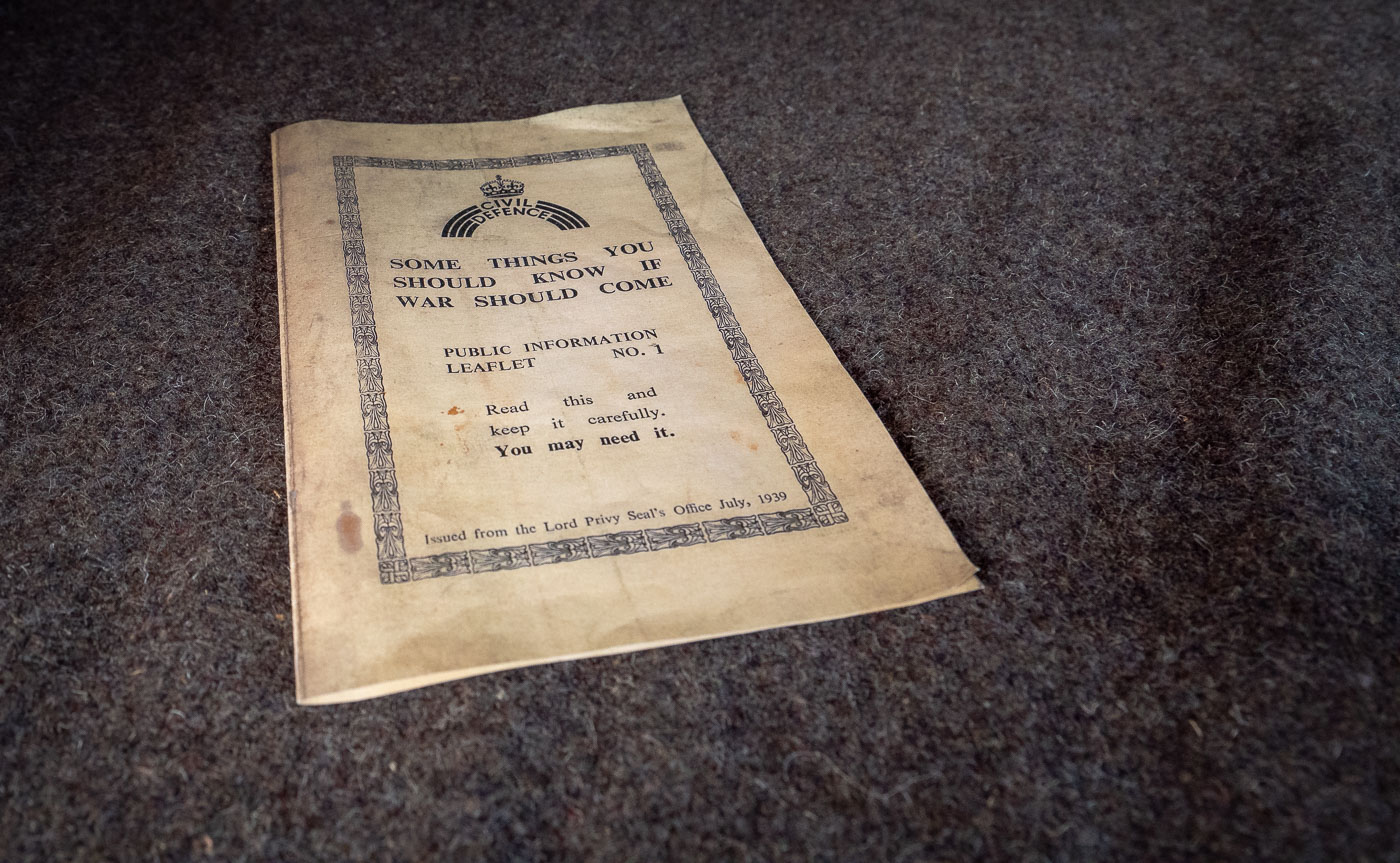
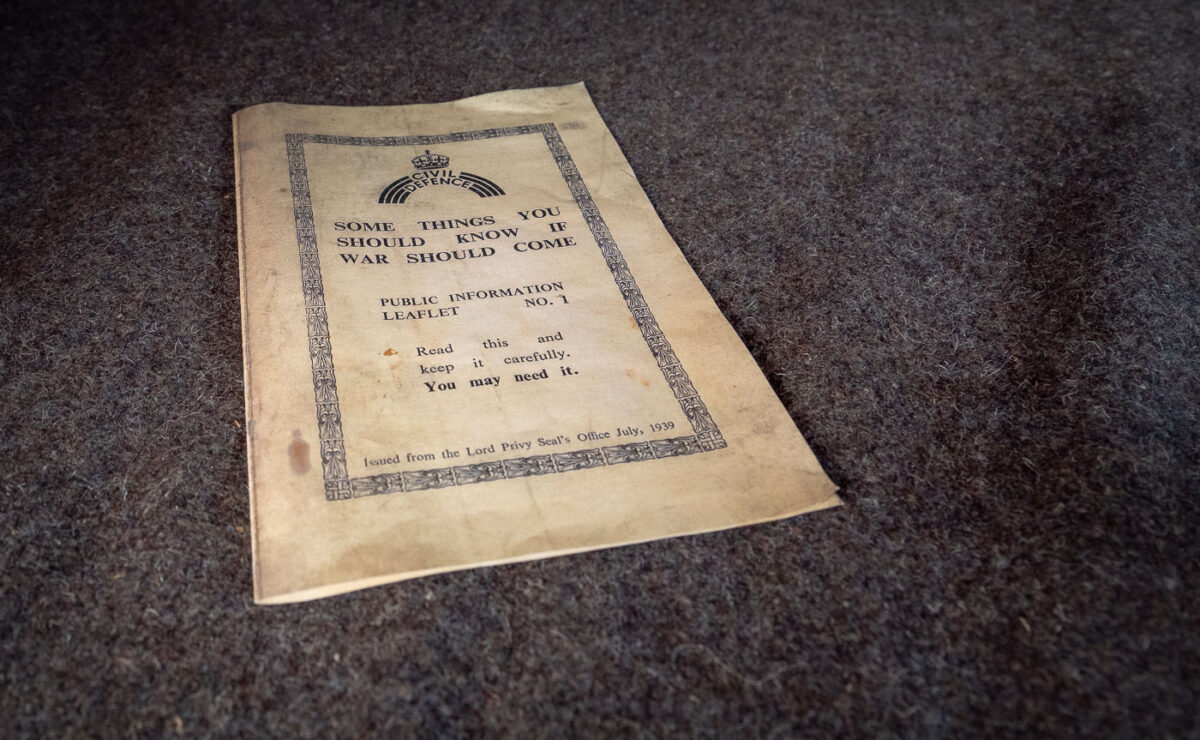
1939 Civil Defence leaflet titled Some Things You Should Know if War Should Come
The 1939 Civil Defence public information leaflet No. 1, titled Some Things You Should Know if War Should Come, was issued by the Lord Privy Seal’s Office in July 1939. It was the first in a series of pamphlets intended to prepare British civilians for blackout rules, air raids, and gas attacks before the outbreak of World War II.
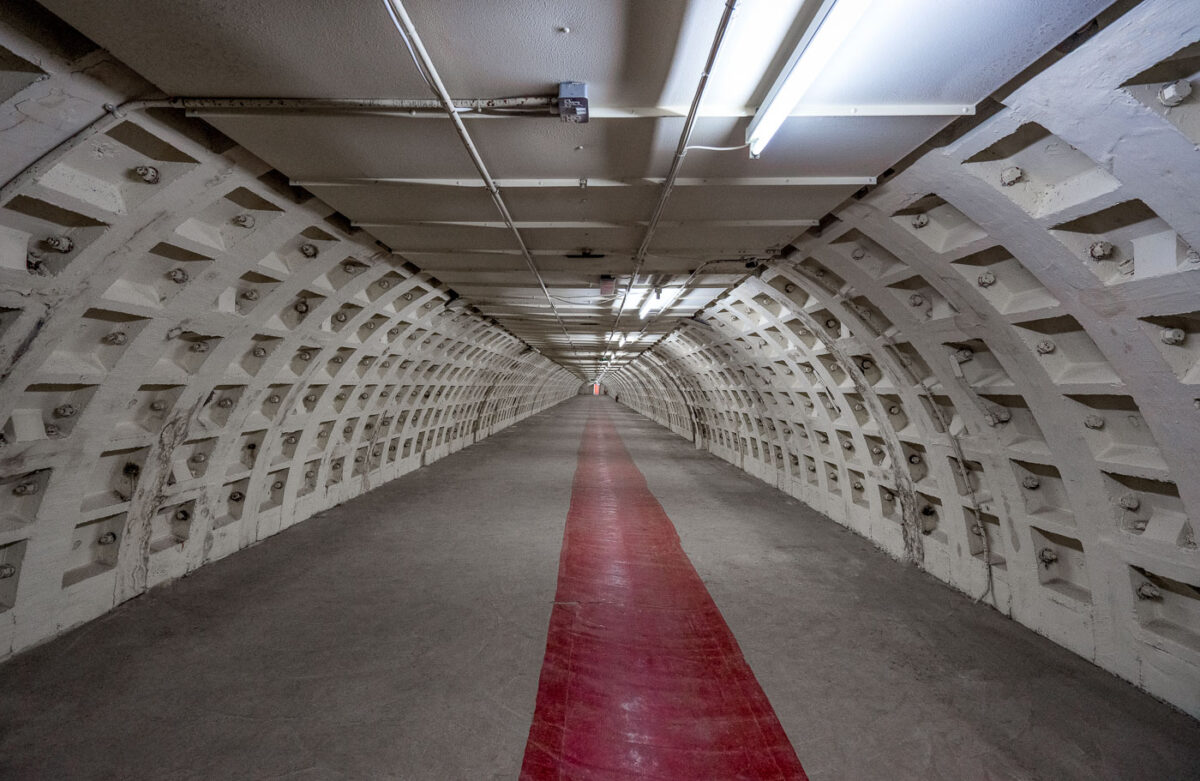
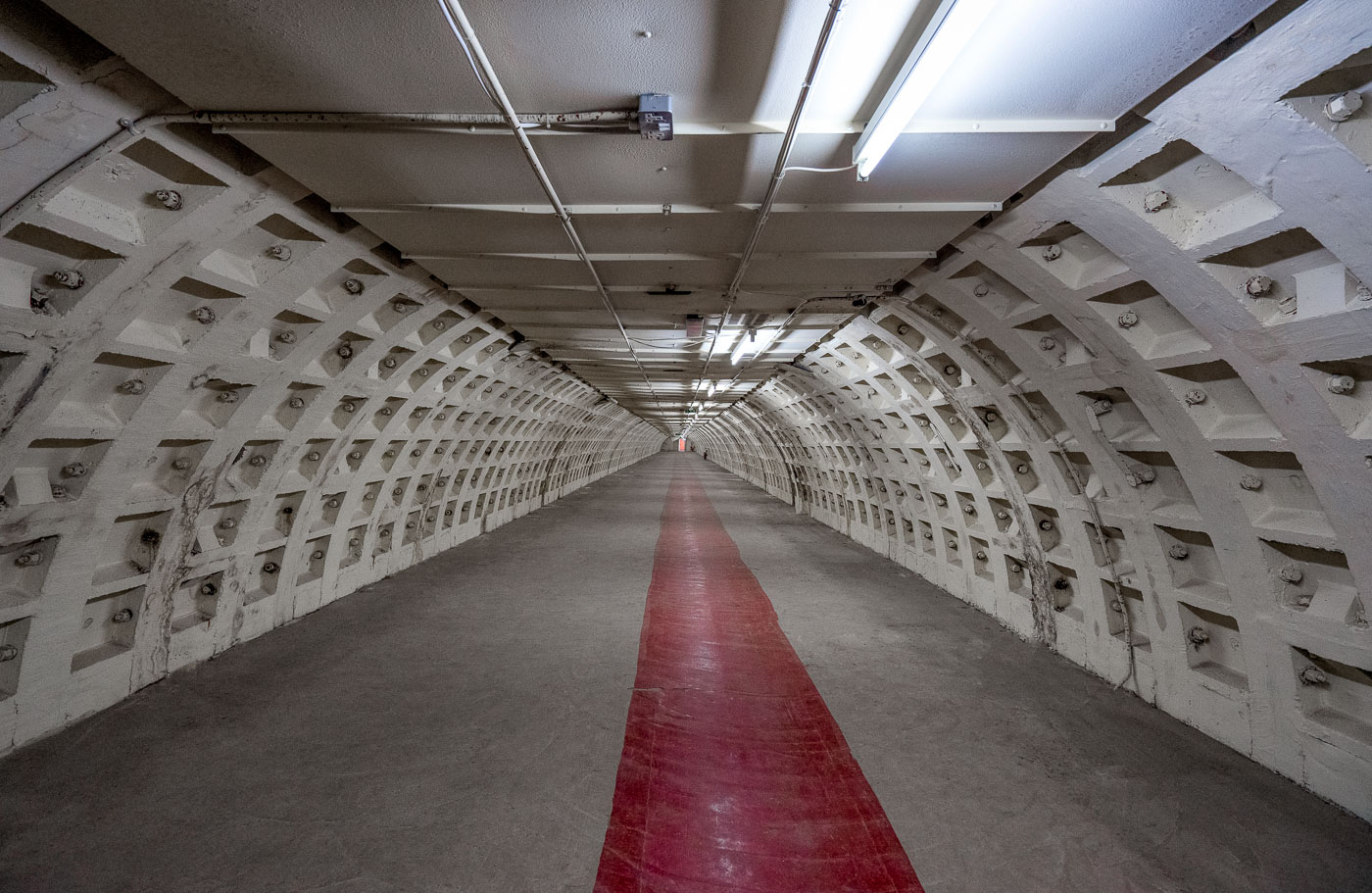
Clapham North Deep Shelter Tunnel in London with cast-iron lining and fluorescent lights
Clapham North Deep Shelter Tunnel in London is one of eight deep-level shelters built by London Underground during World War II. Completed between 1940 and 1942, it was designed to house civilians during air raids and retains its cast-iron lining and later lighting.
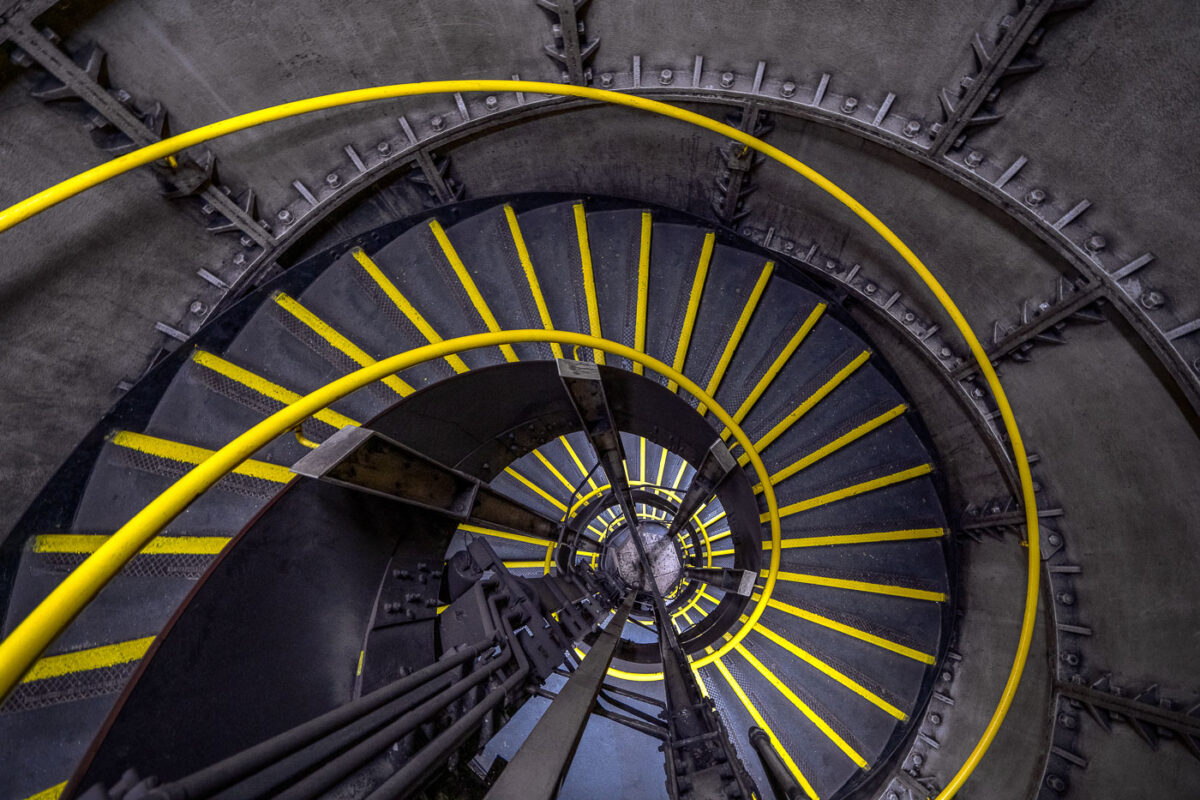
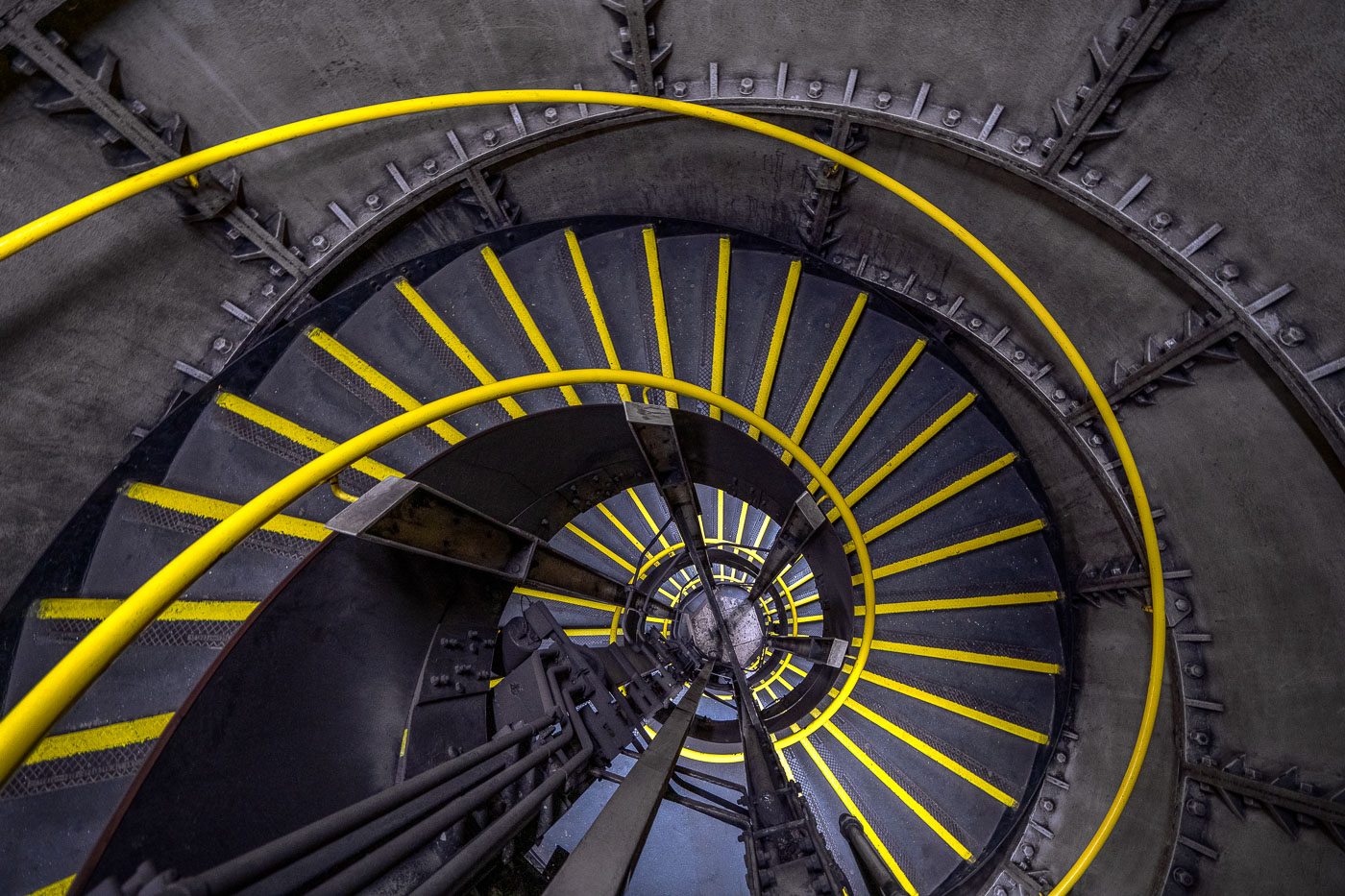
Clapham North Underground Station spiral staircase in London, with yellow-edged steps winding around a central shaft.
Clapham North Underground Station in London has a spiral emergency staircase descending to the Northern Line platforms. The cast-iron stairwell wraps around a central shaft and is fitted with yellow anti-slip strips and handrails for access and evacuation.
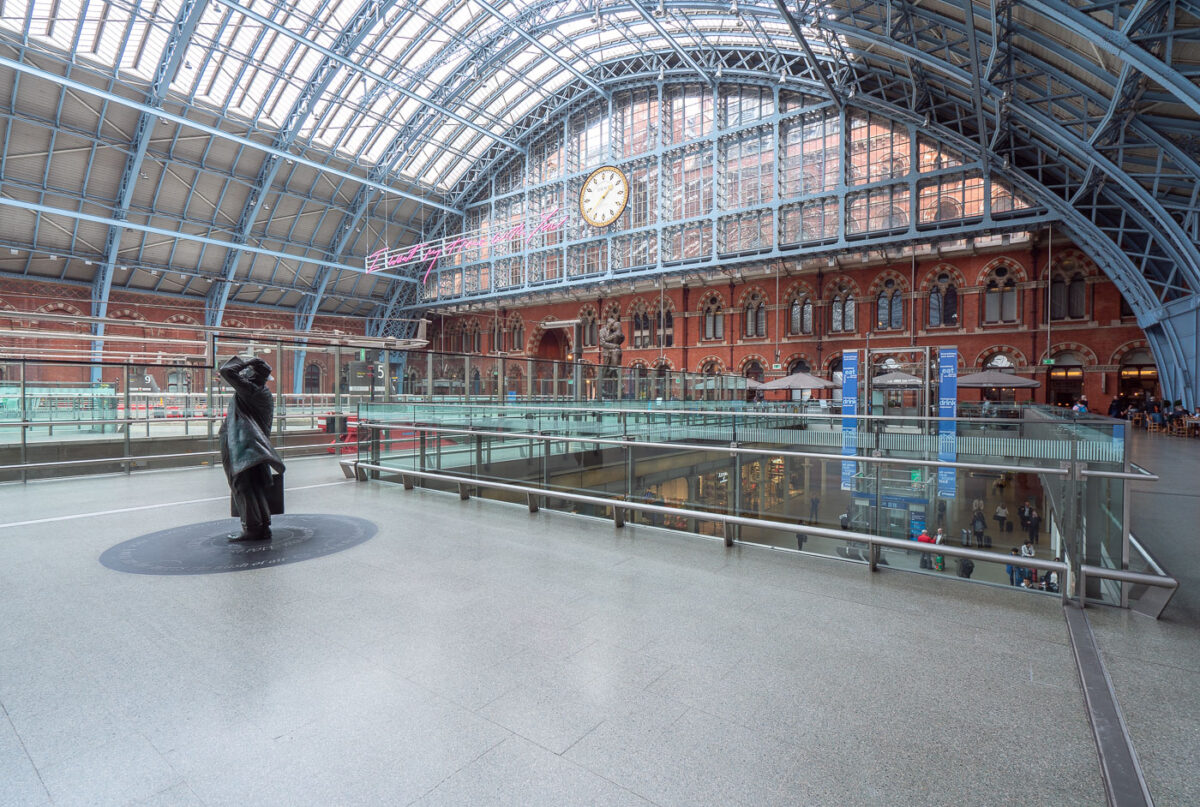
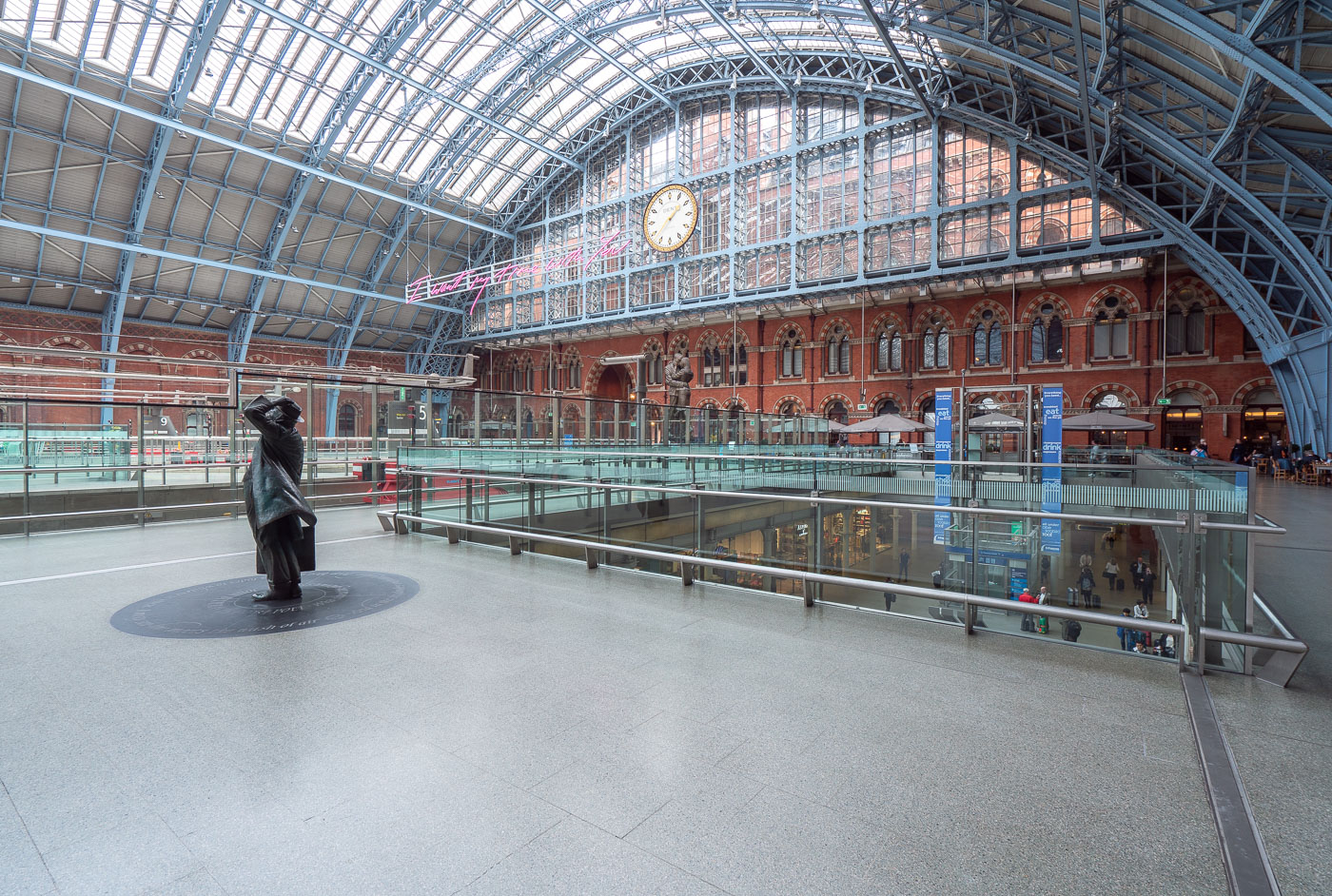
King's Cross St Pancras station interior with the Barlow Shed roof in London.
King's Cross St Pancras station in London features the main concourse beneath the Barlow Shed roof. The station opened in 1852 and serves both National Rail and the London Underground.
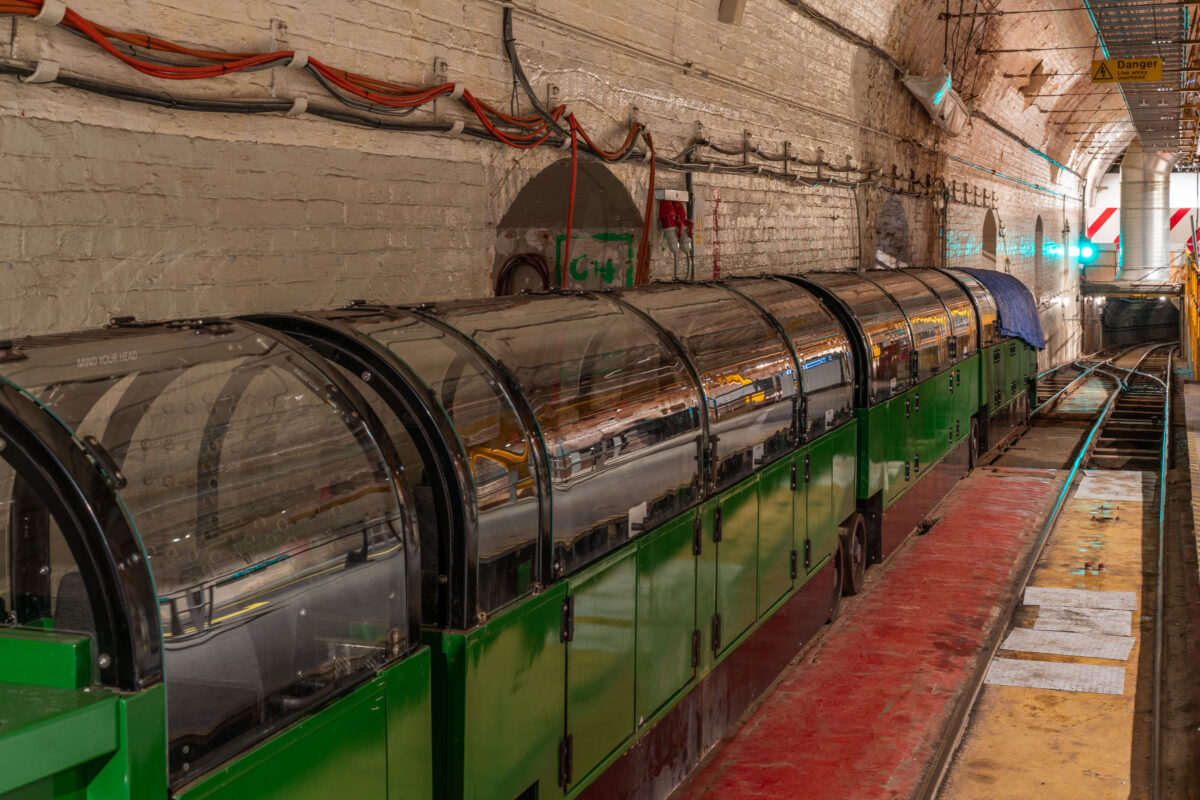
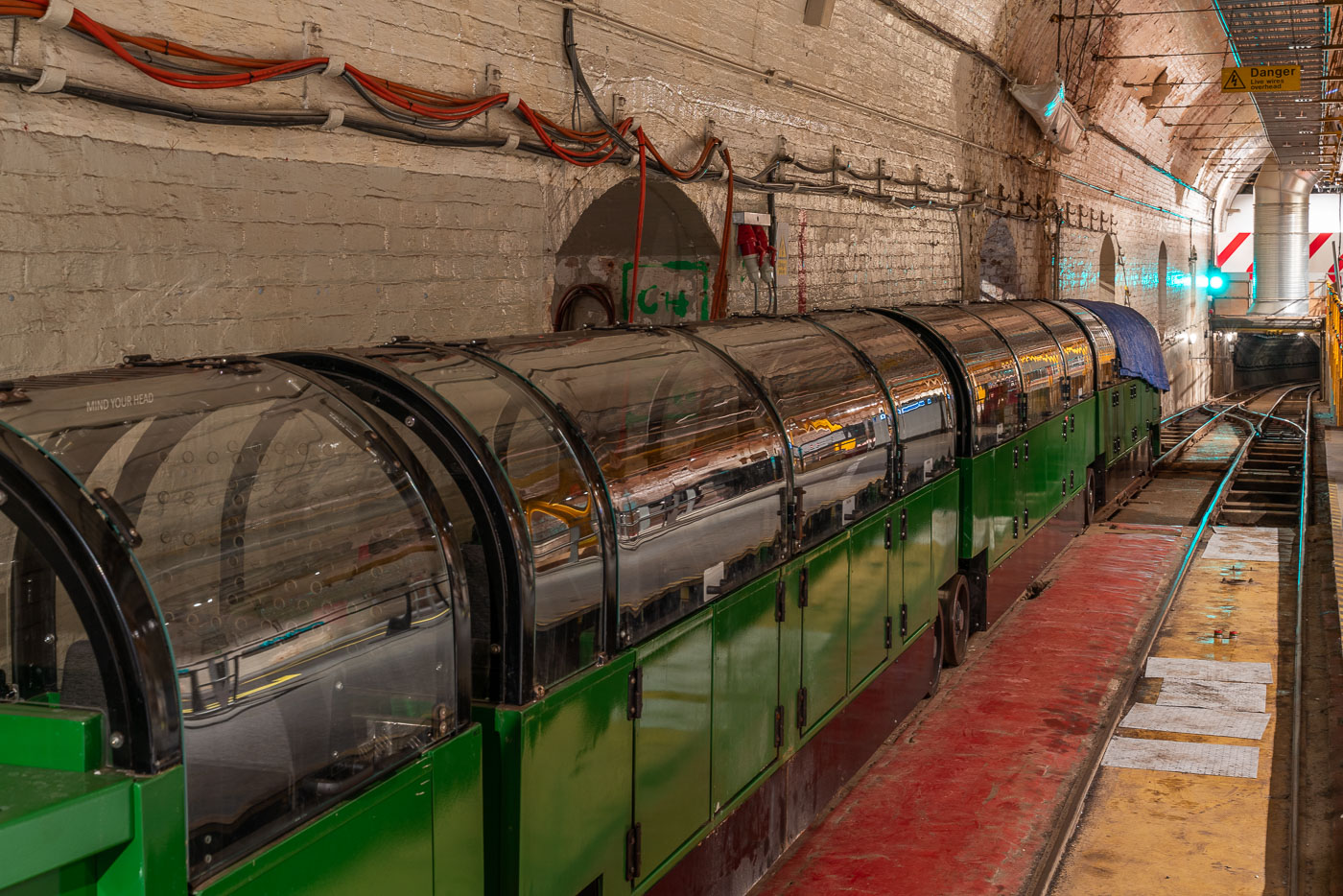
London Mail Rail train on display at the Postal Museum in London.
A preserved Mail Rail train is displayed at the Postal Museum in London. The driverless electric railway, known as the Post Office Railway, opened in 1927 and once carried mail through tunnels beneath central London.
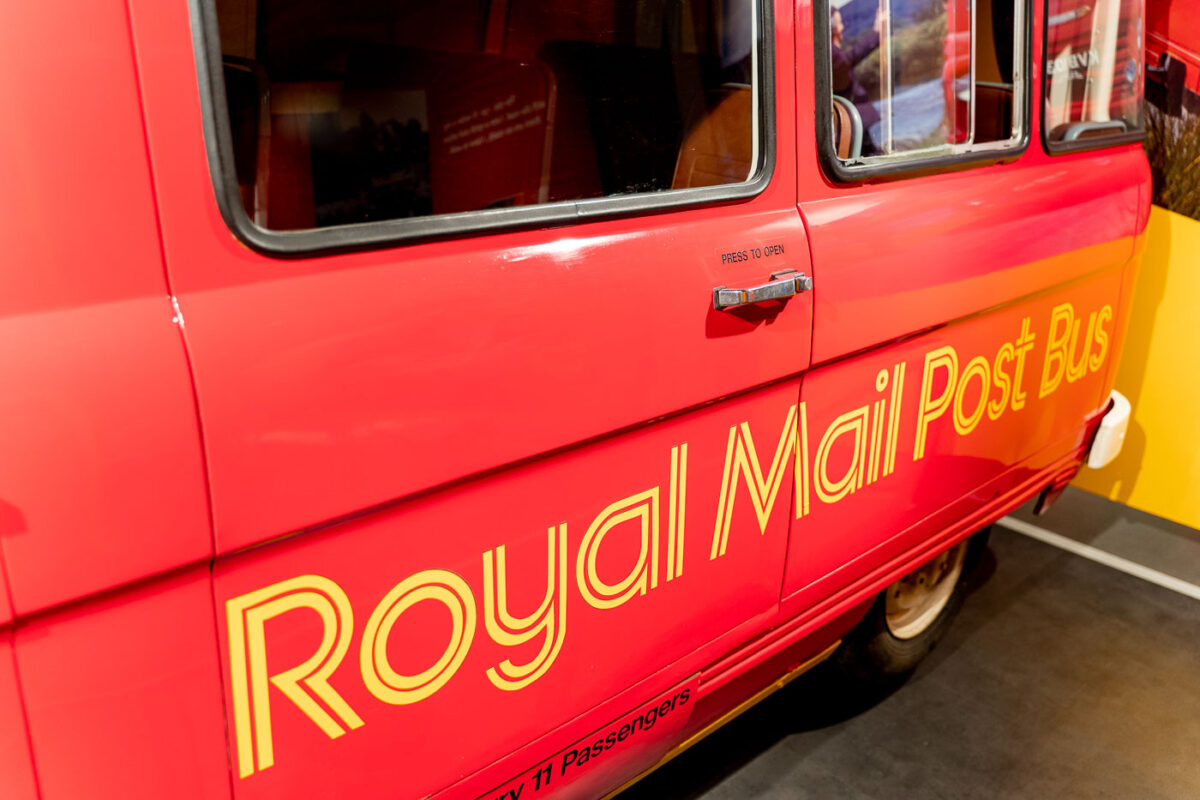
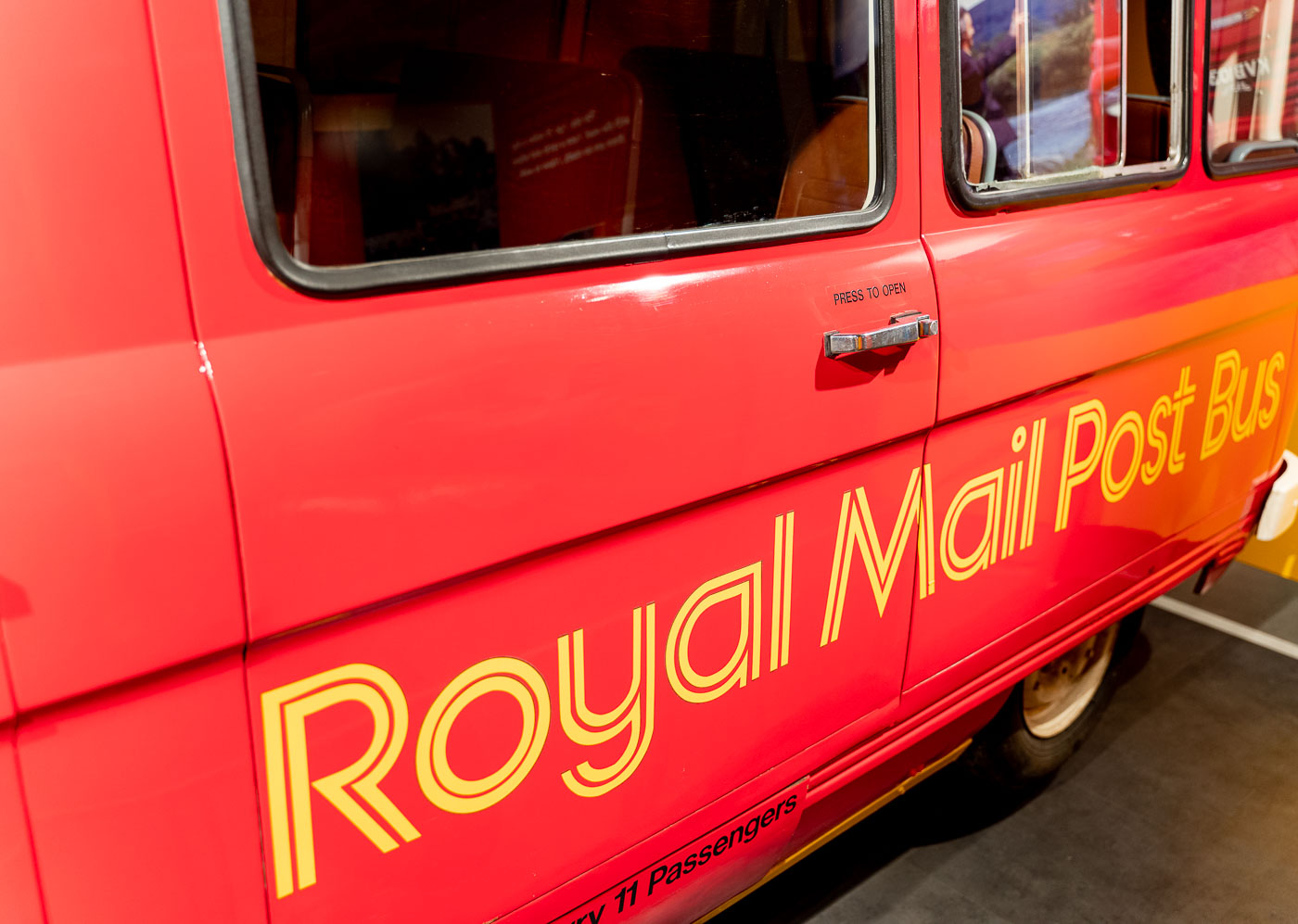
Royal Mail Post Bus on display at a museum in London.
A preserved Royal Mail Post Bus is displayed at a museum in London. The vehicle carries the red and gold Royal Mail livery associated with the rural Post Bus service introduced in 1967 to combine mail delivery with passenger transport on remote routes.
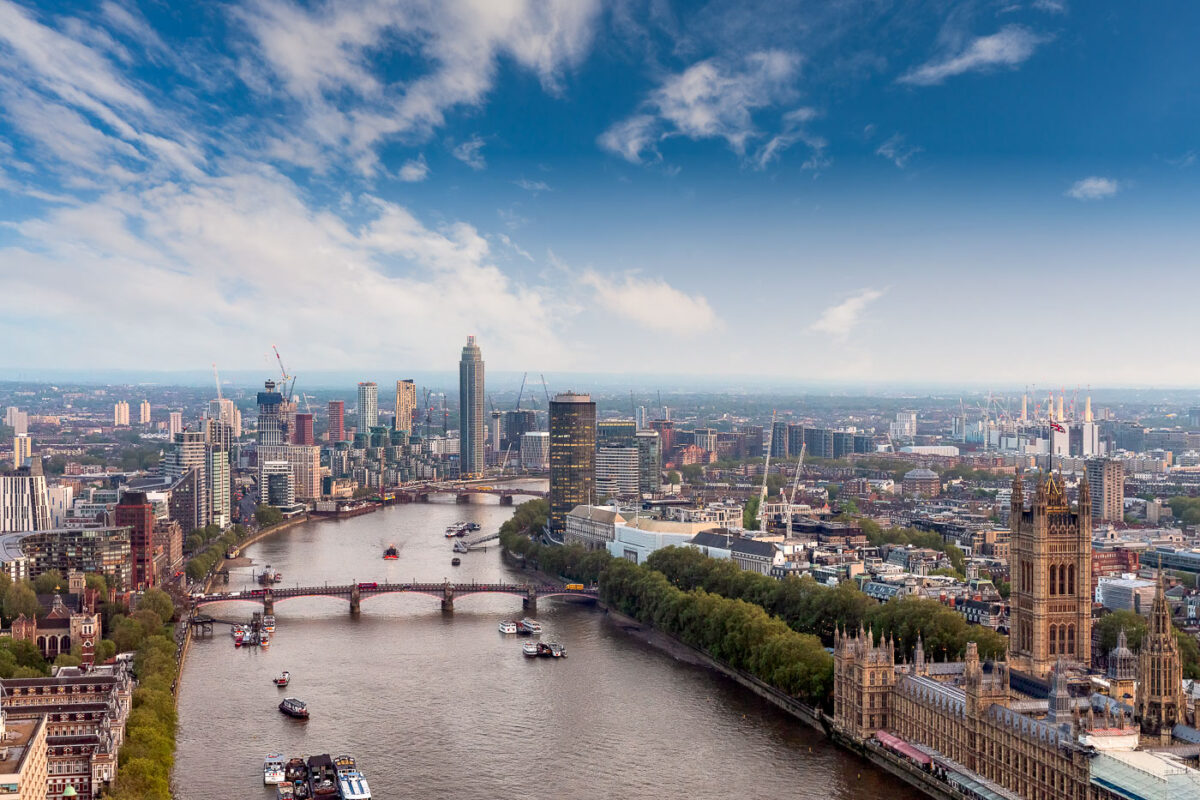
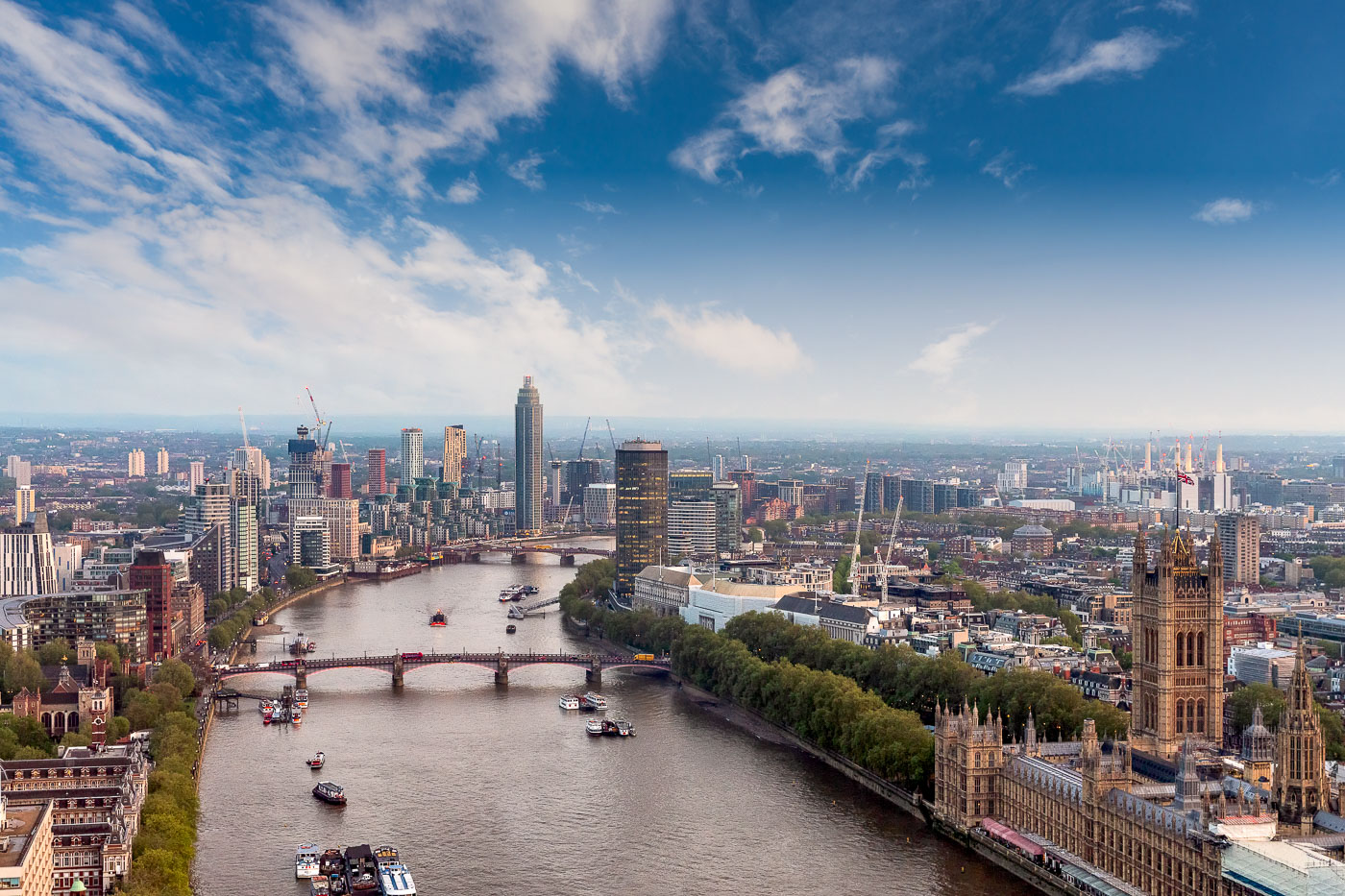
River Thames and Palace of Westminster, London, with Vauxhall towers in the distance.
The River Thames runs past the Palace of Westminster in central London, with Westminster Bridge in the foreground and Vauxhall and Nine Elms towers in the distance. Lambeth Palace and the South Bank line the opposite bank, while the London skyline stretches west toward the city’s newer high-rise districts.
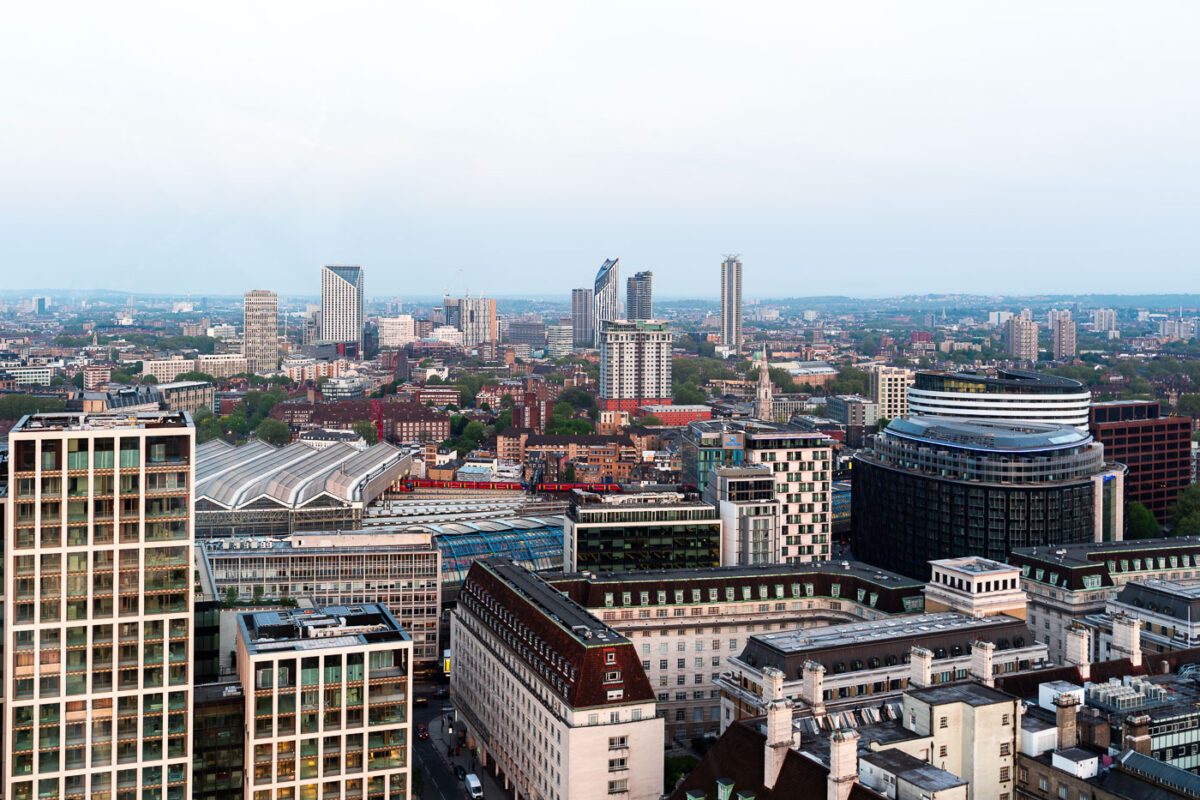
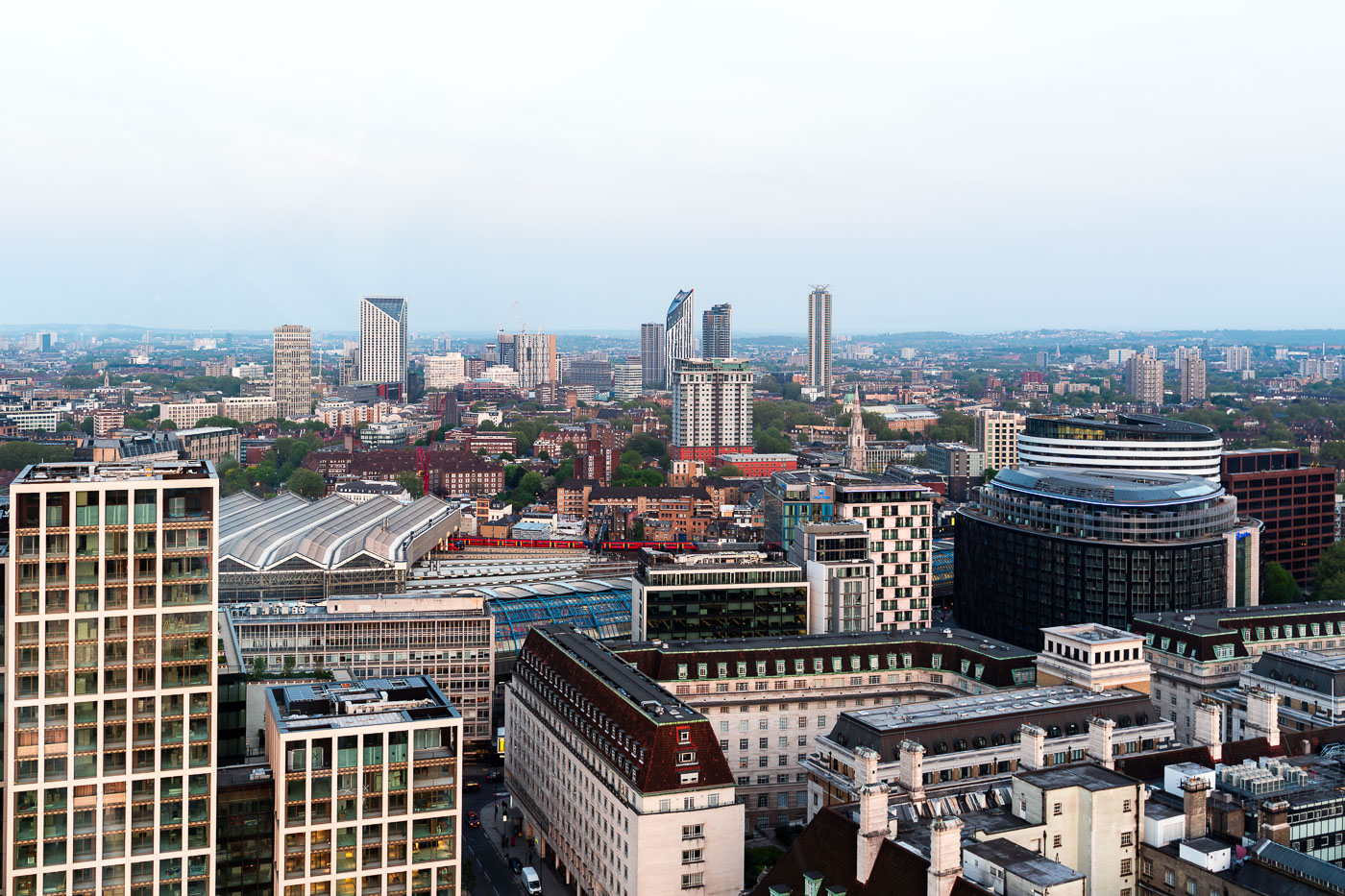
Waterloo Station and Nine Elms skyline seen from the London Eye, London
Waterloo Station and the South Bank skyline are seen from the London Eye in central London. The foreground includes the station's curved roof and surrounding buildings, with the towers of Vauxhall, Nine Elms, and Battersea beyond.
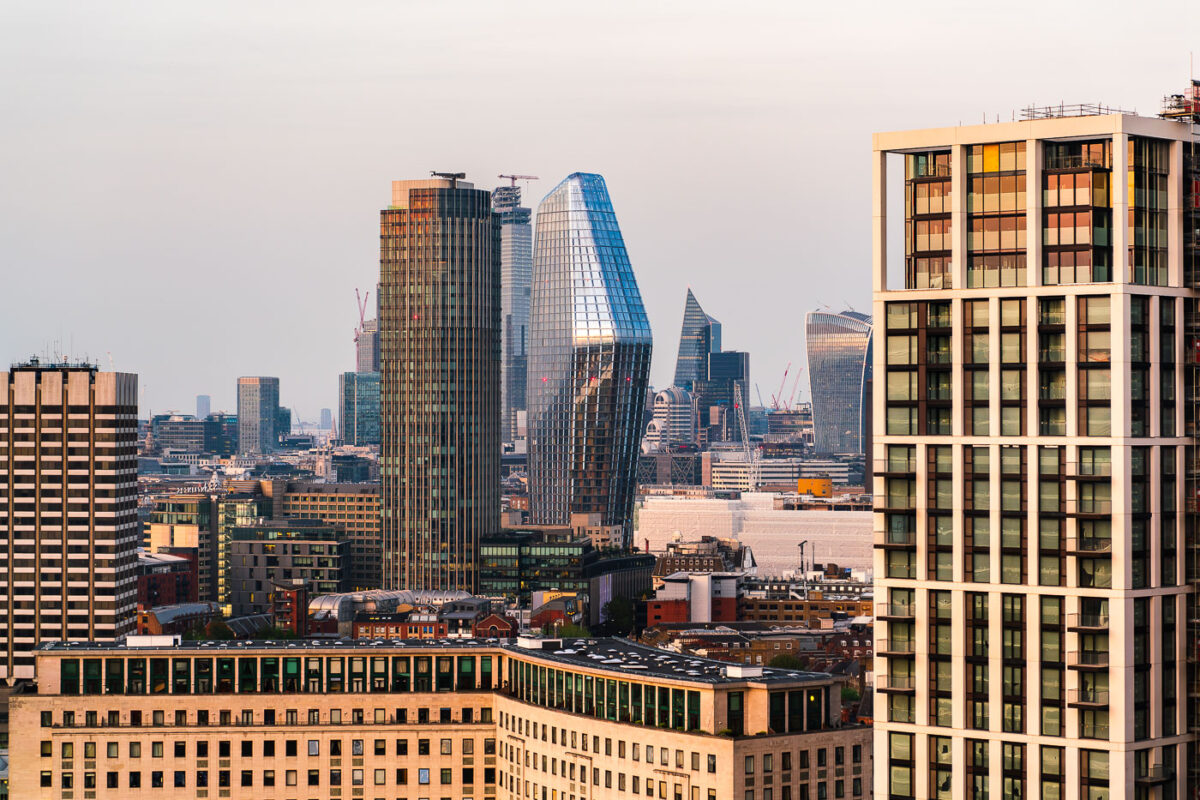
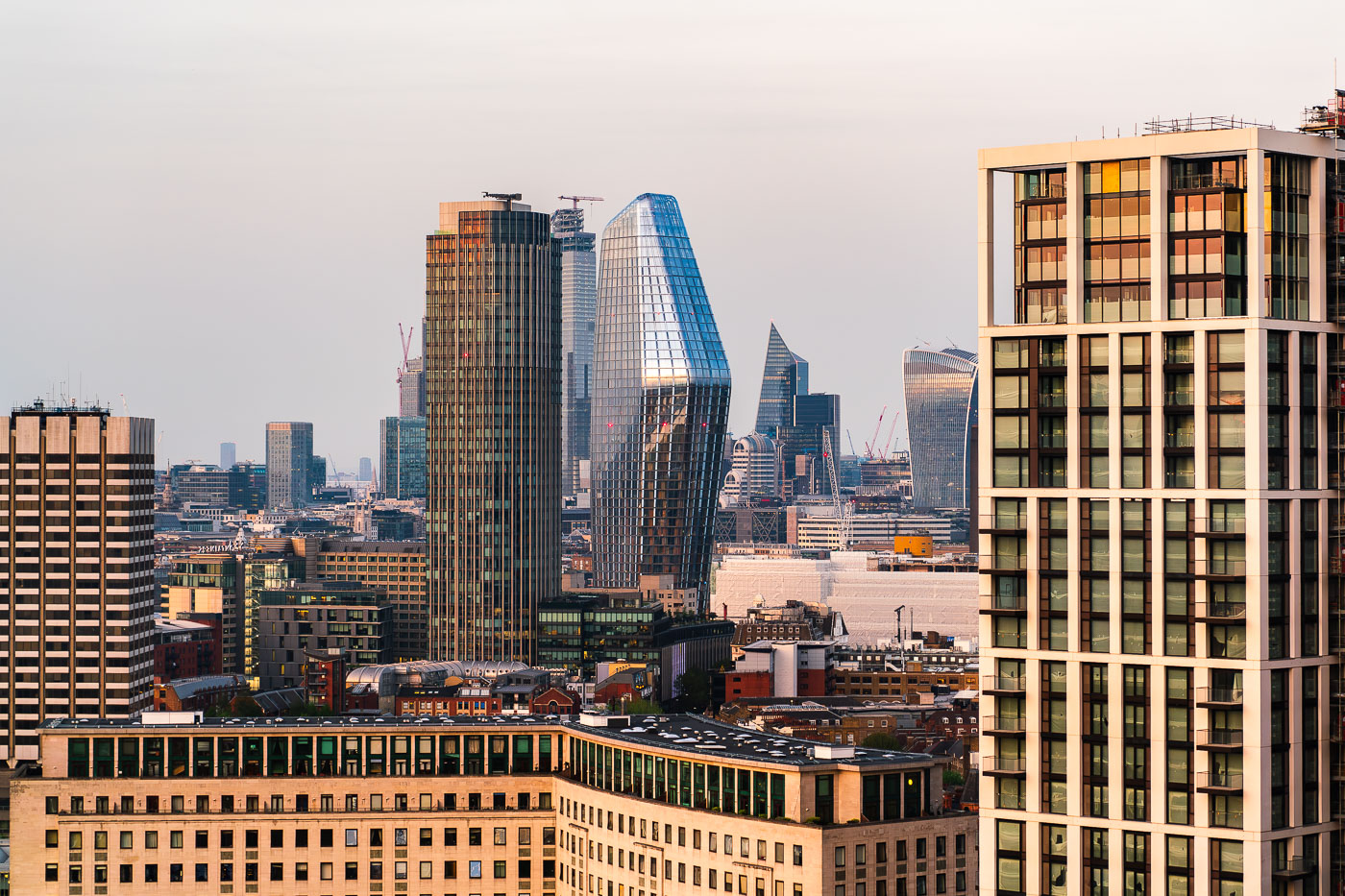
One Blackfriars and nearby London skyscrapers at dusk.
One Blackfriars stands in central London beside 22 Bishopsgate, The Scalpel and 20 Fenchurch Street. The mixed cluster of towers marks the City and Southwark skyline near the River Thames.
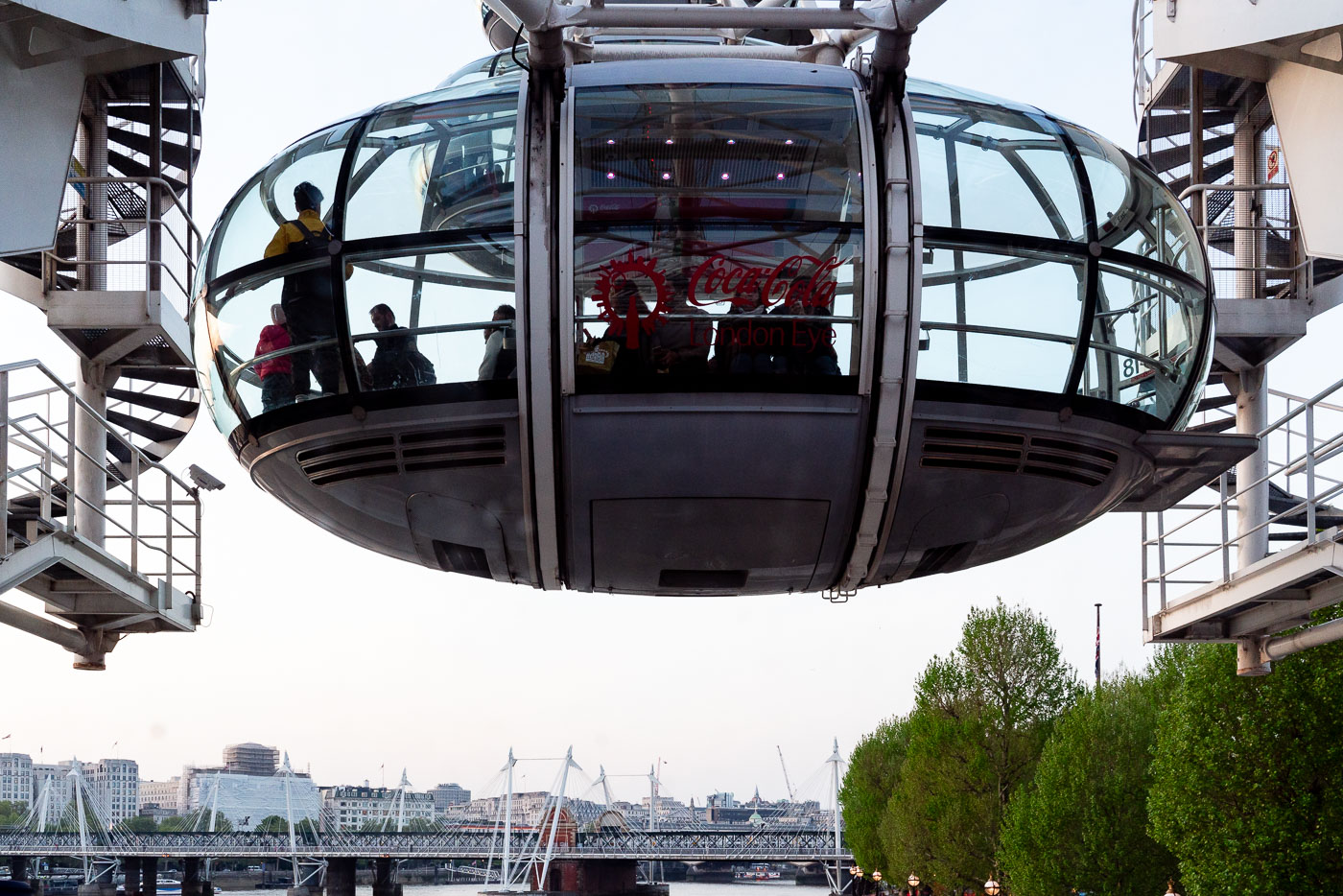
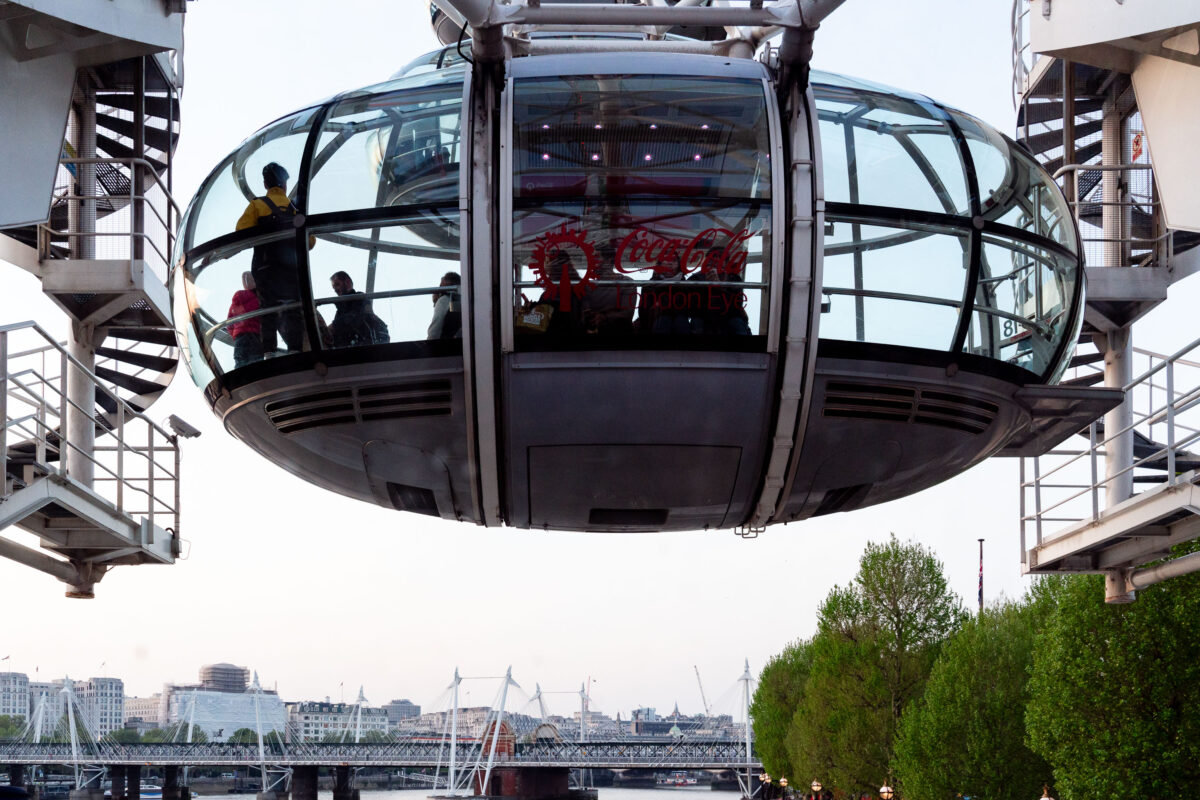
London Eye passenger capsule docked at the South Bank boarding platform in London.
The London Eye passenger capsule is docked at the South Bank boarding platform in London. Opened in 2000, the observation wheel on the River Thames was designed by Marks Barfield Architects and has 32 glass capsules.
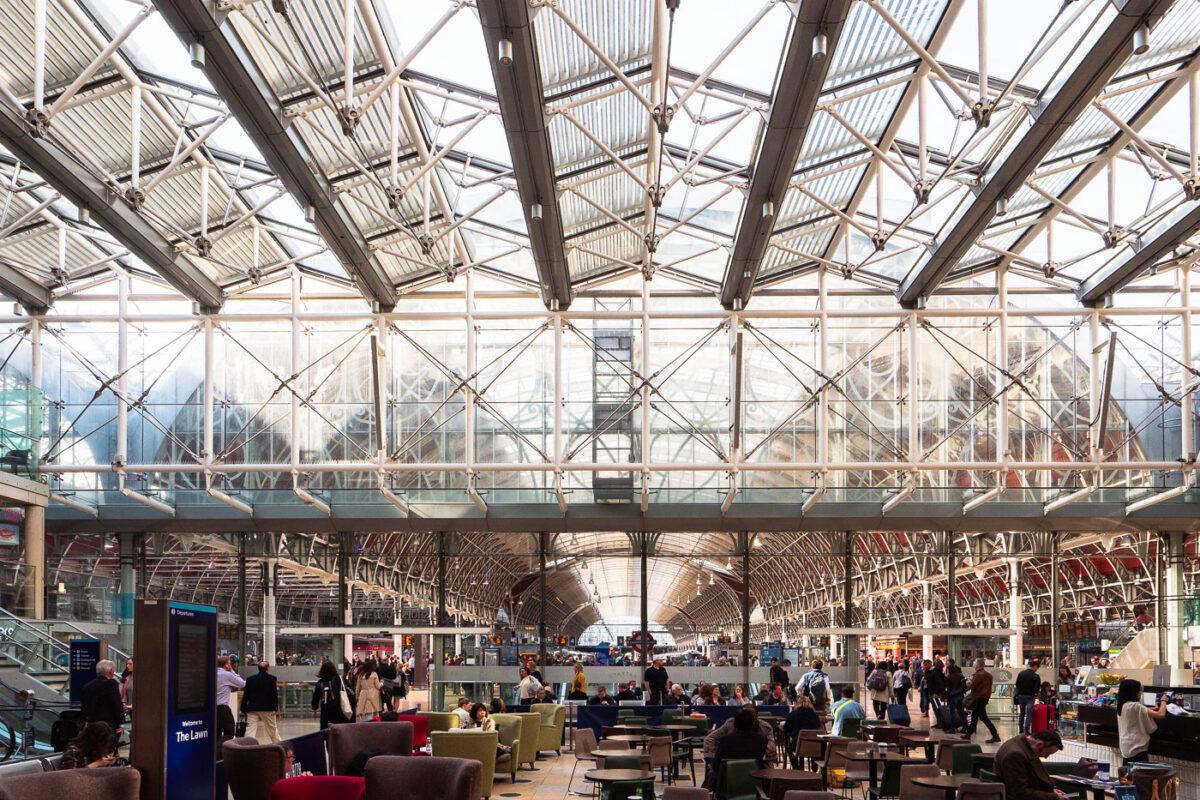
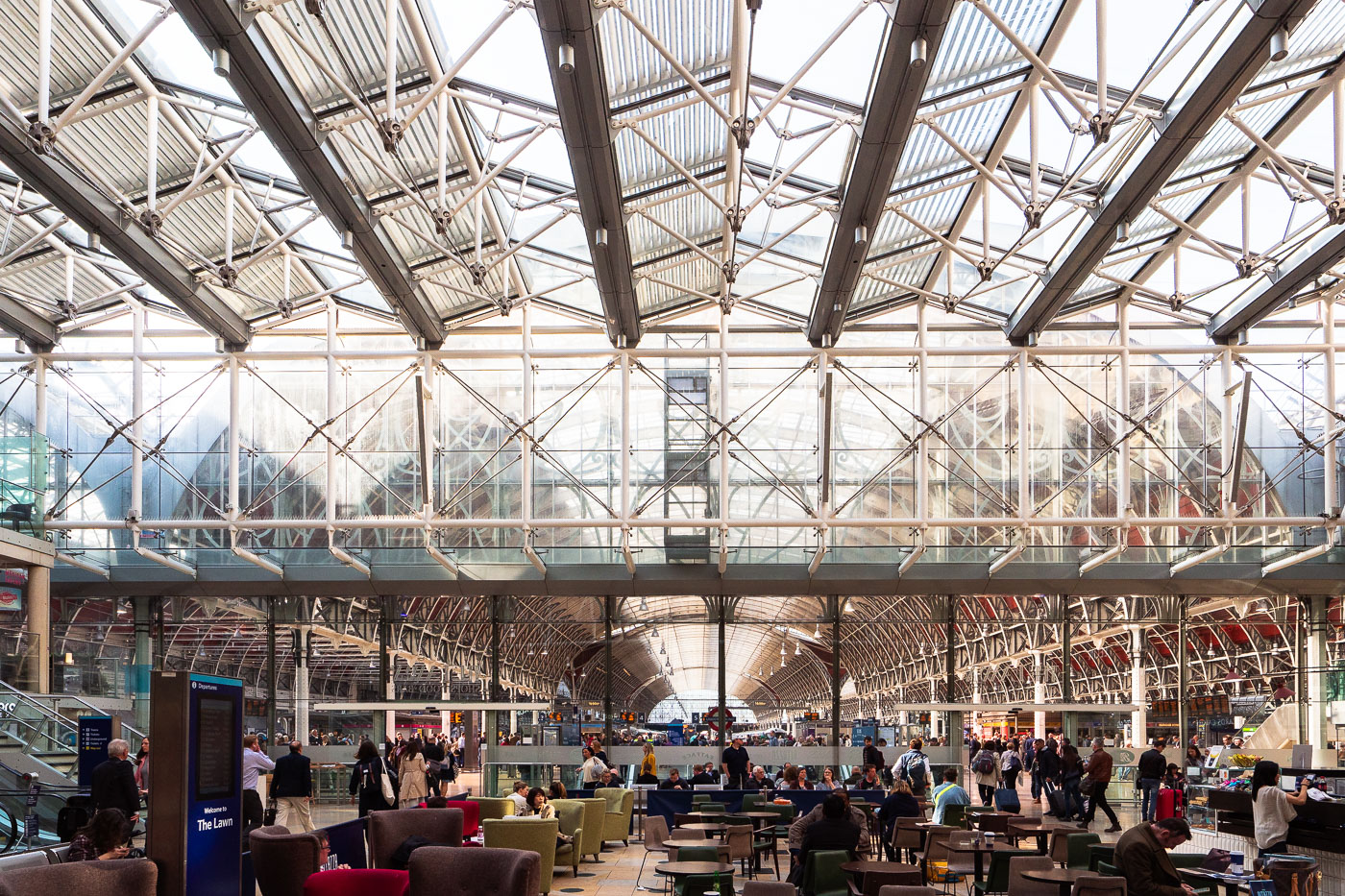
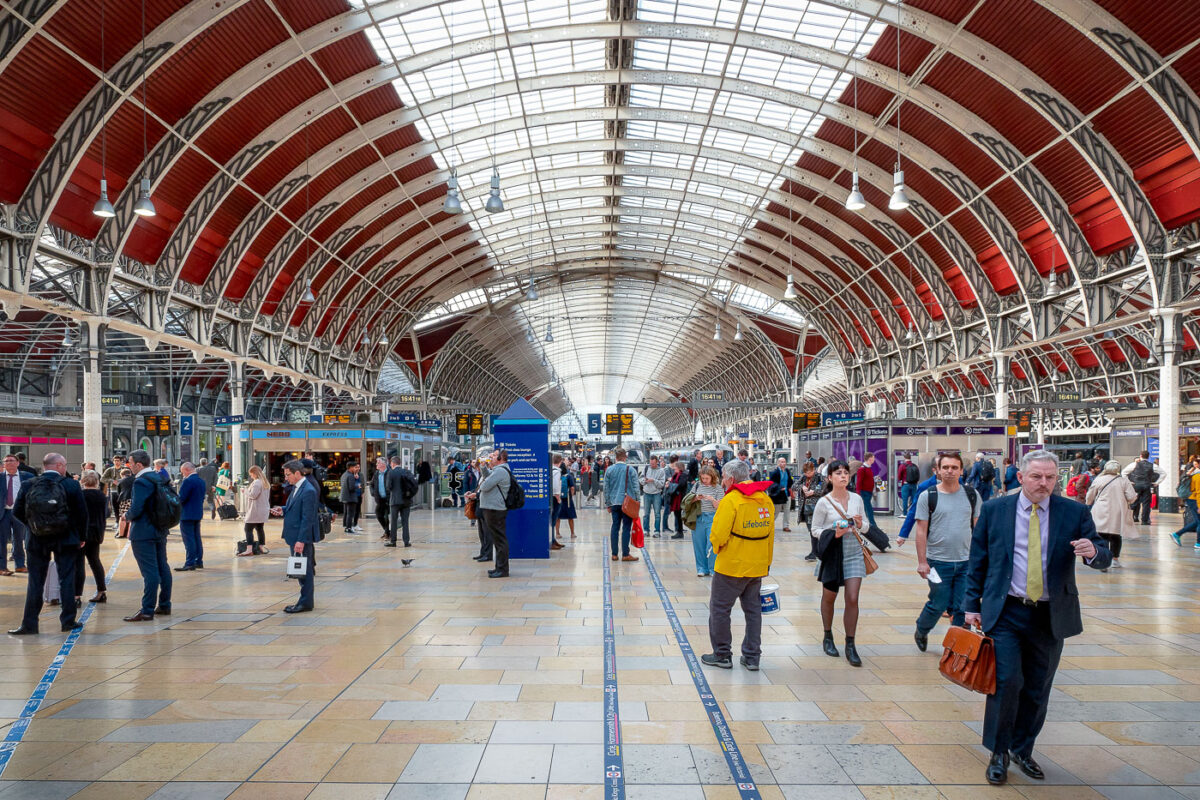
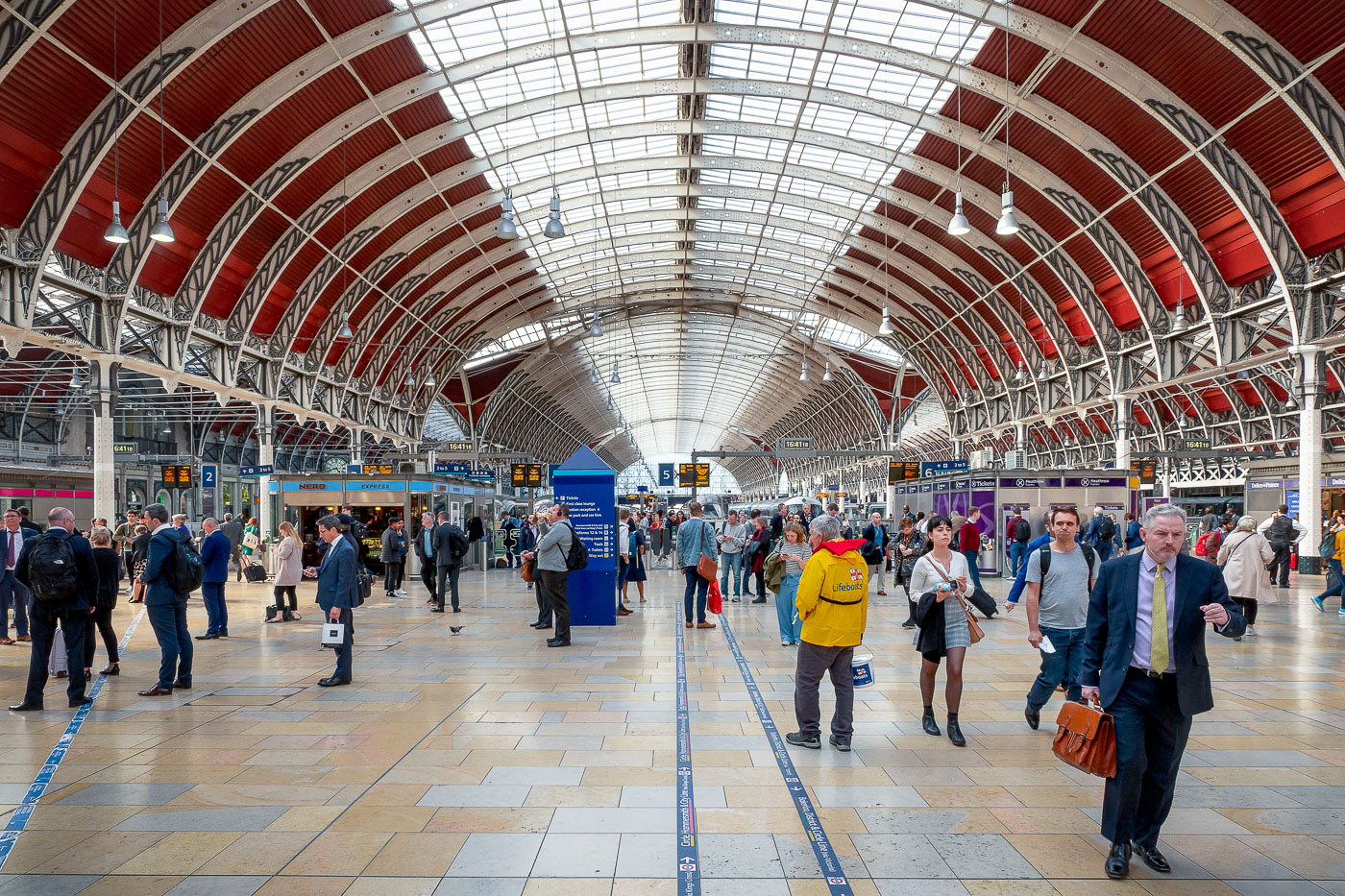
Paddington Station’s The Lawn concourse under a restored iron and glass roof in London.
Paddington Station’s The Lawn concourse in London is covered by a restored iron and glass roof associated with Isambard Kingdom Brunel’s original station design. The space sits beneath the historic train shed and is used as a public concourse with seating and retail areas.
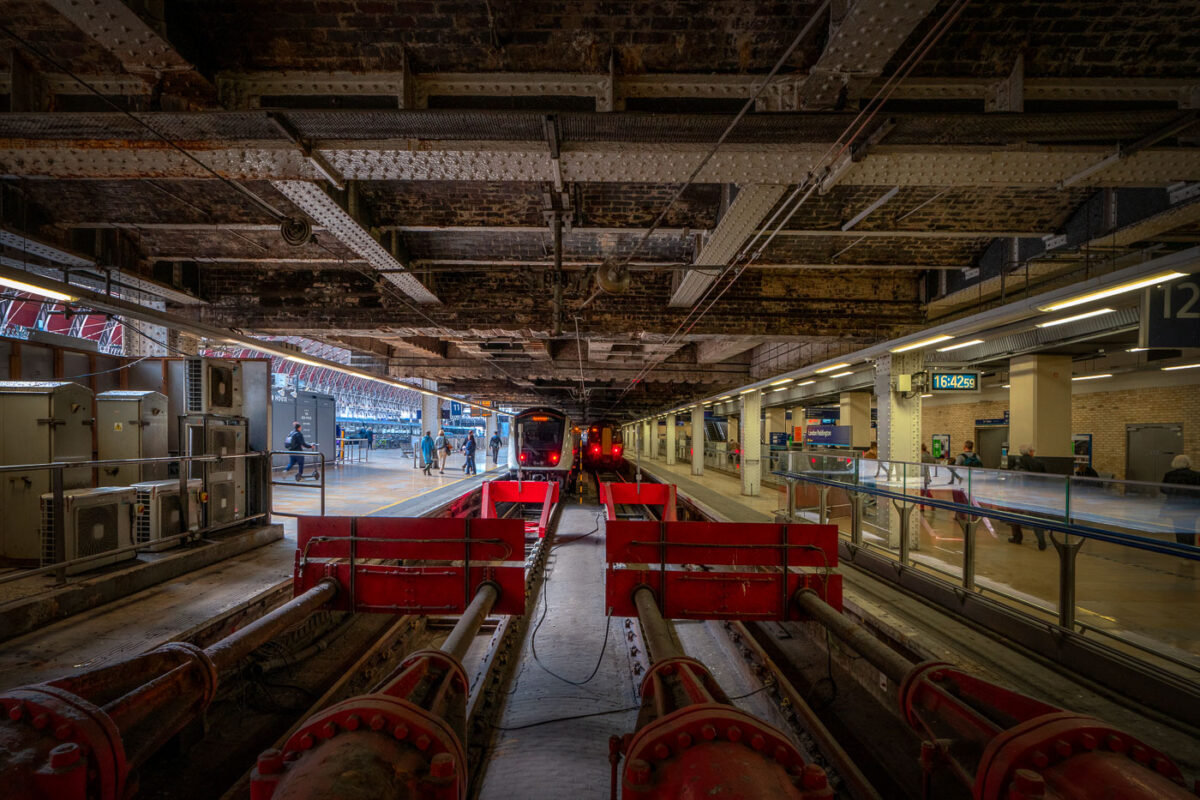
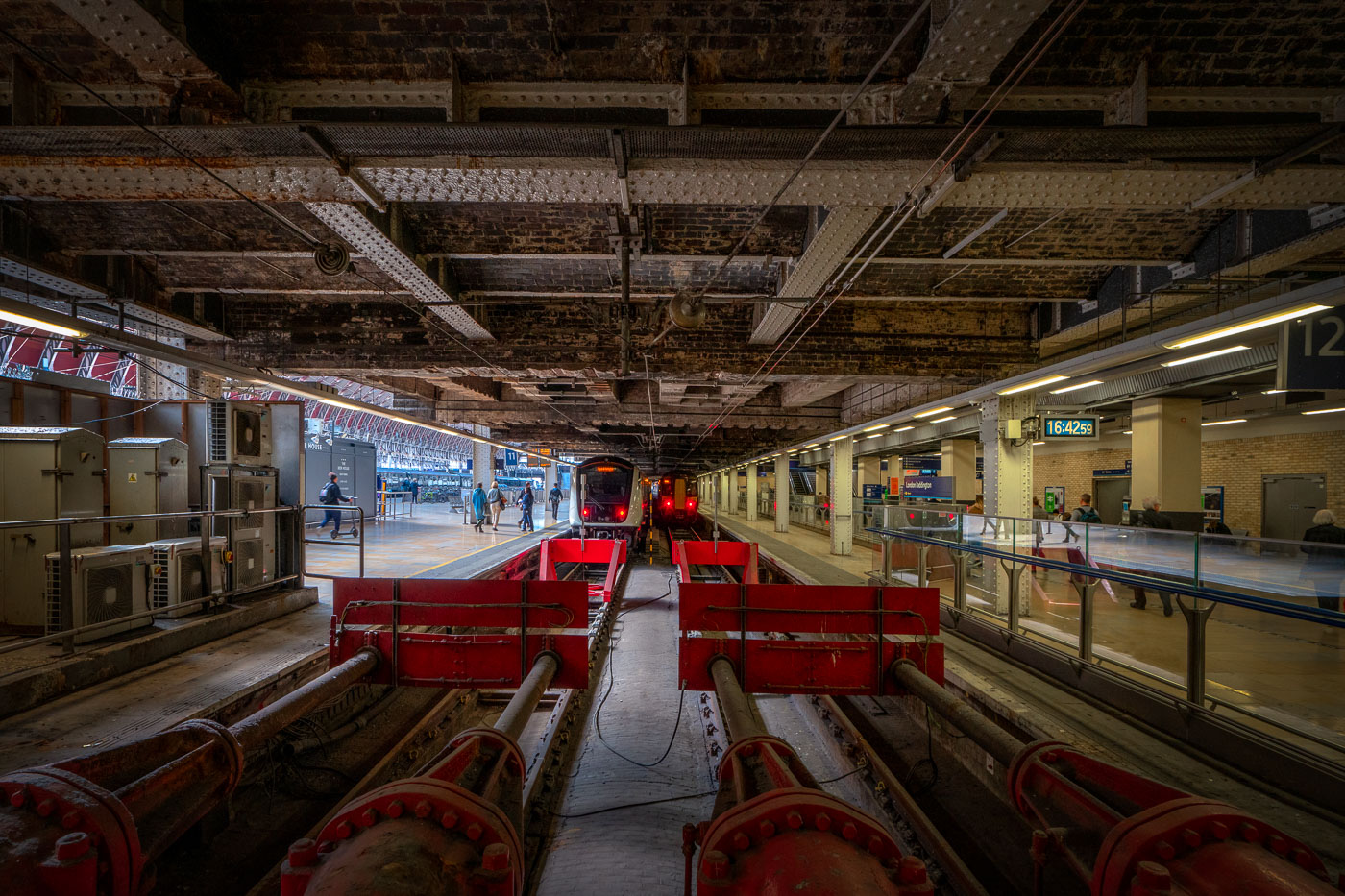
Paddington Station terminus tracks and buffer stops beneath Victorian ironwork in London.
Paddington Station terminus tracks and buffer stops in London sit beneath the station’s Victorian ironwork. The platforms serve Great Western Railway and Elizabeth line trains, with exposed beams, conduits and red hydraulic buffers visible under the roof.
Paddington Station concourse in London with travelers beneath the arched roof.
Paddington Station in London is shown inside the main concourse beneath its arched roof. The station, opened in 1854, is one of the city’s principal rail termini and a key interchange for services to the west of England, South Wales, and Heathrow Airport.
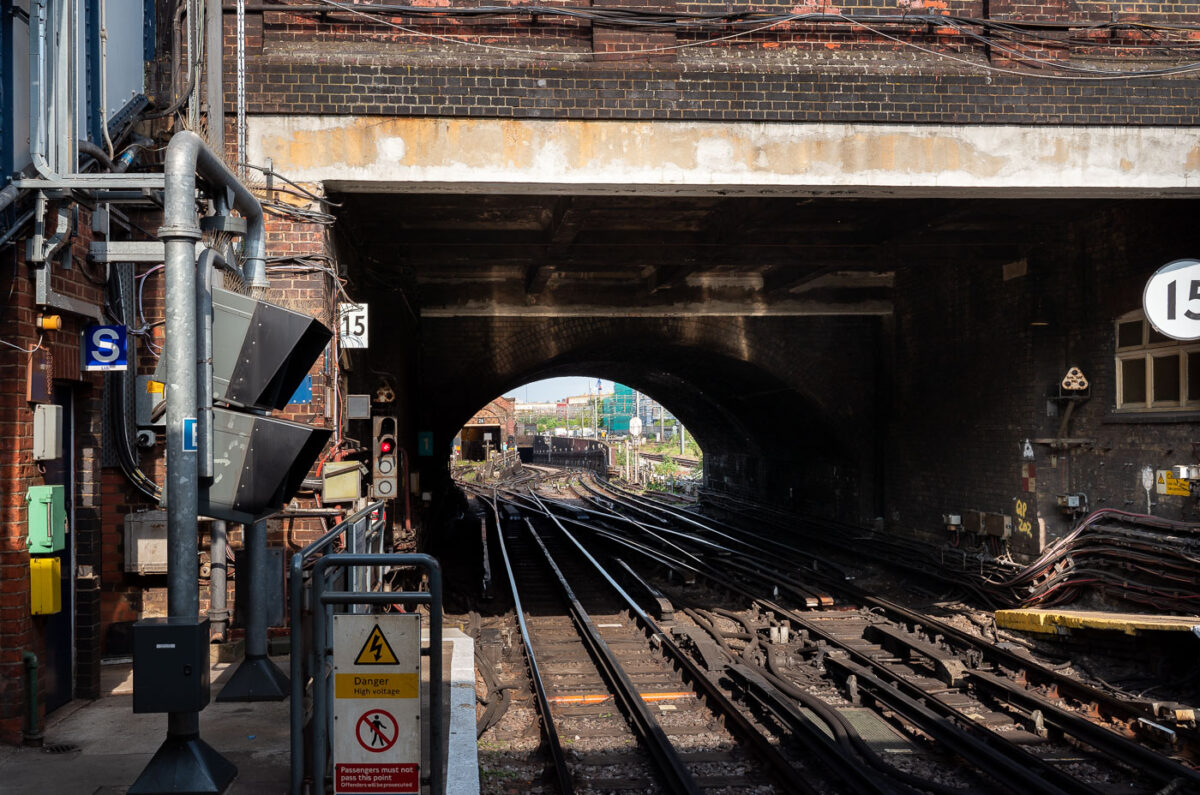
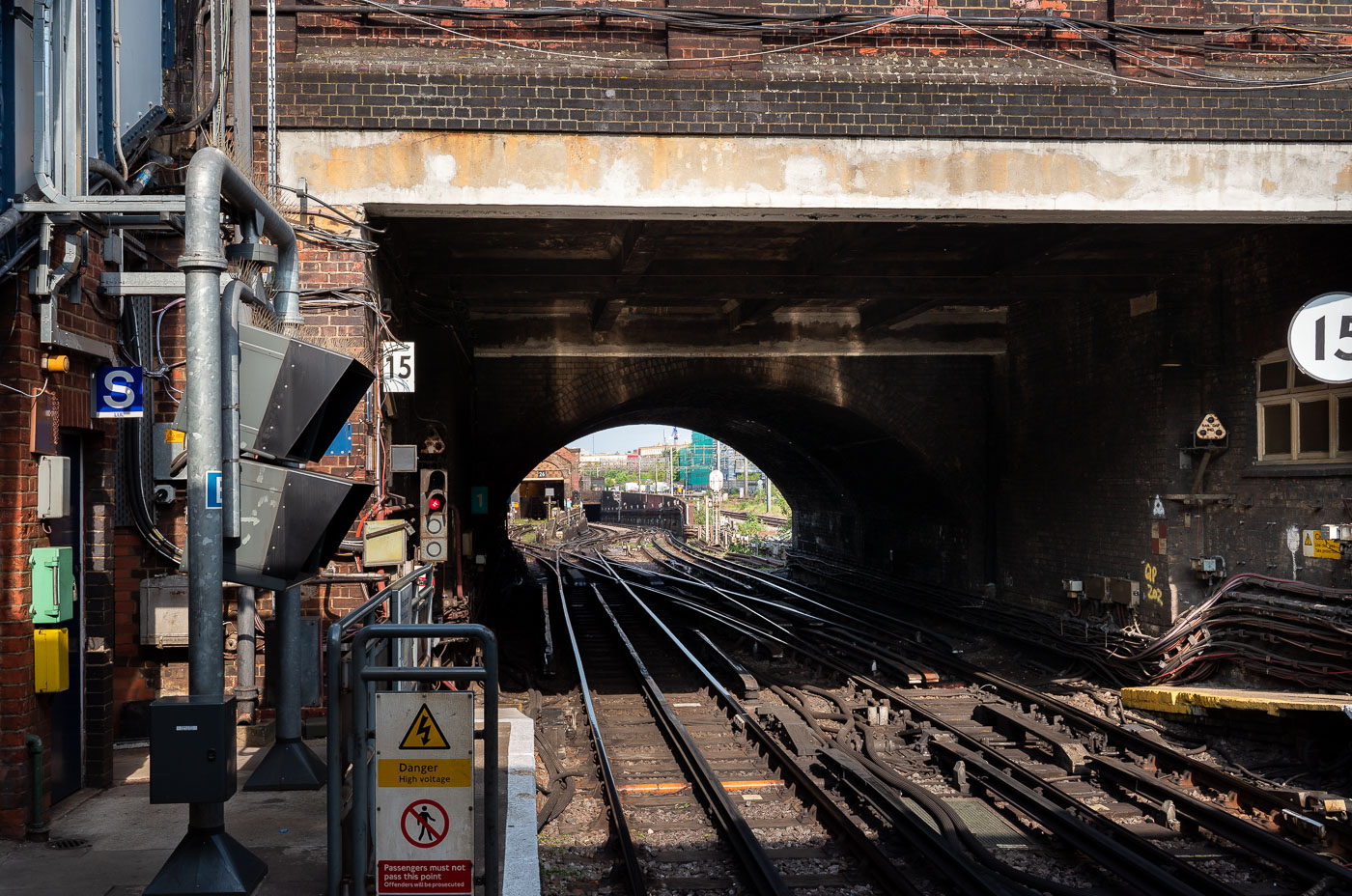
Queen's Park Station rail junction in northwest London with multiple tracks and a brick arch.
Queen's Park Station in northwest London is a junction where the Bakerloo Line meets Network Rail tracks. The station opened in 1915 and marks the western end of the Bakerloo Line's shared section with London Overground and mainline services.

Built in Minneapolis

Photographs showcasing change over time

Browse by location, move through long-running series, or start with recent work.