Place Archive

London

London is one of the world’s oldest continuously evolving cities, with a history stretching back nearly two thousand years to the Roman settlement of Londinium founded in 43 CE. Along the River Thames, layers of history remain visible in the city’s architecture and public spaces—from medieval fortresses like the Tower of London to royal landmarks including Buckingham Palace and Westminster Abbey. Today the British capital blends historic streets, museums, and cultural institutions with a dense modern skyline, making it one of Europe’s most influential political, financial, and cultural centers. Walking through London reveals centuries of change: Roman ruins beneath financial districts, Victorian bridges crossing the Thames, and neighborhoods shaped by empire, industry, and immigration. This collection documents scenes from across the city—its historic landmarks, neighborhoods, and everyday life—captured during travels through England’s capital.

63 photos

Map

Photo Map

Markers

London Photo Locations

63 geotagged photos

Photos
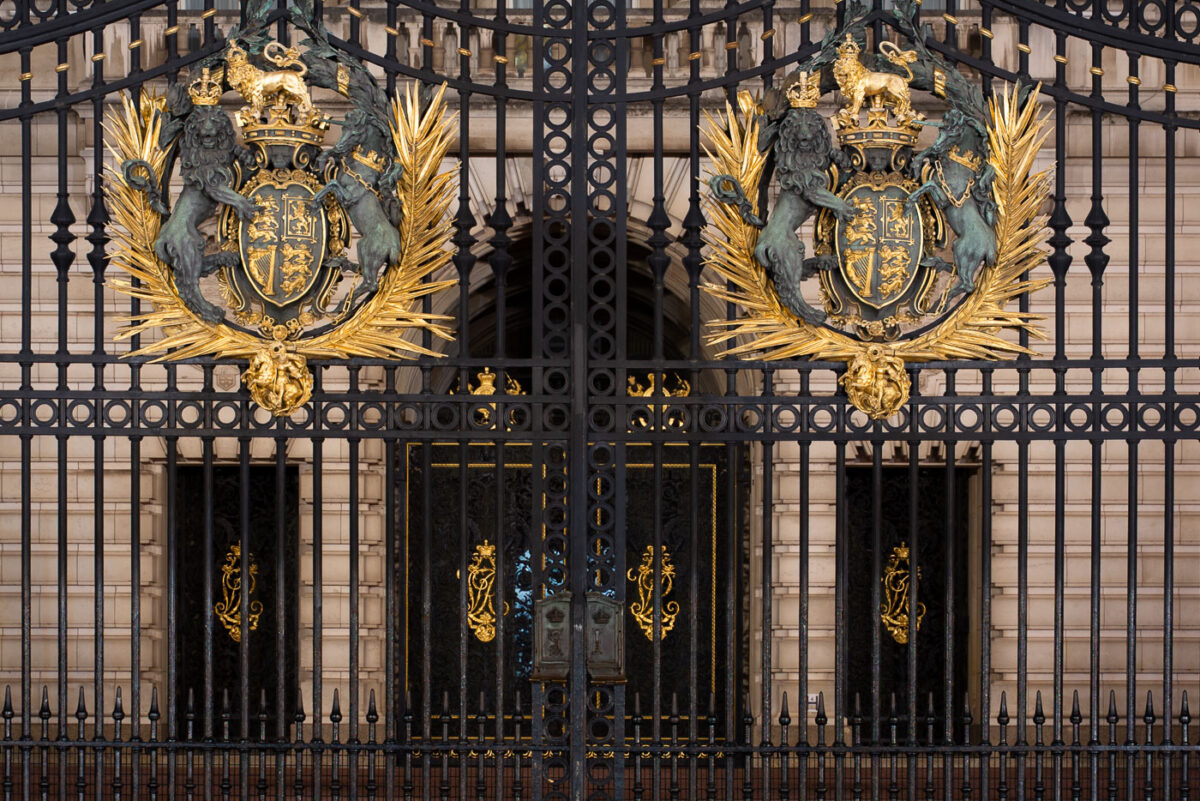
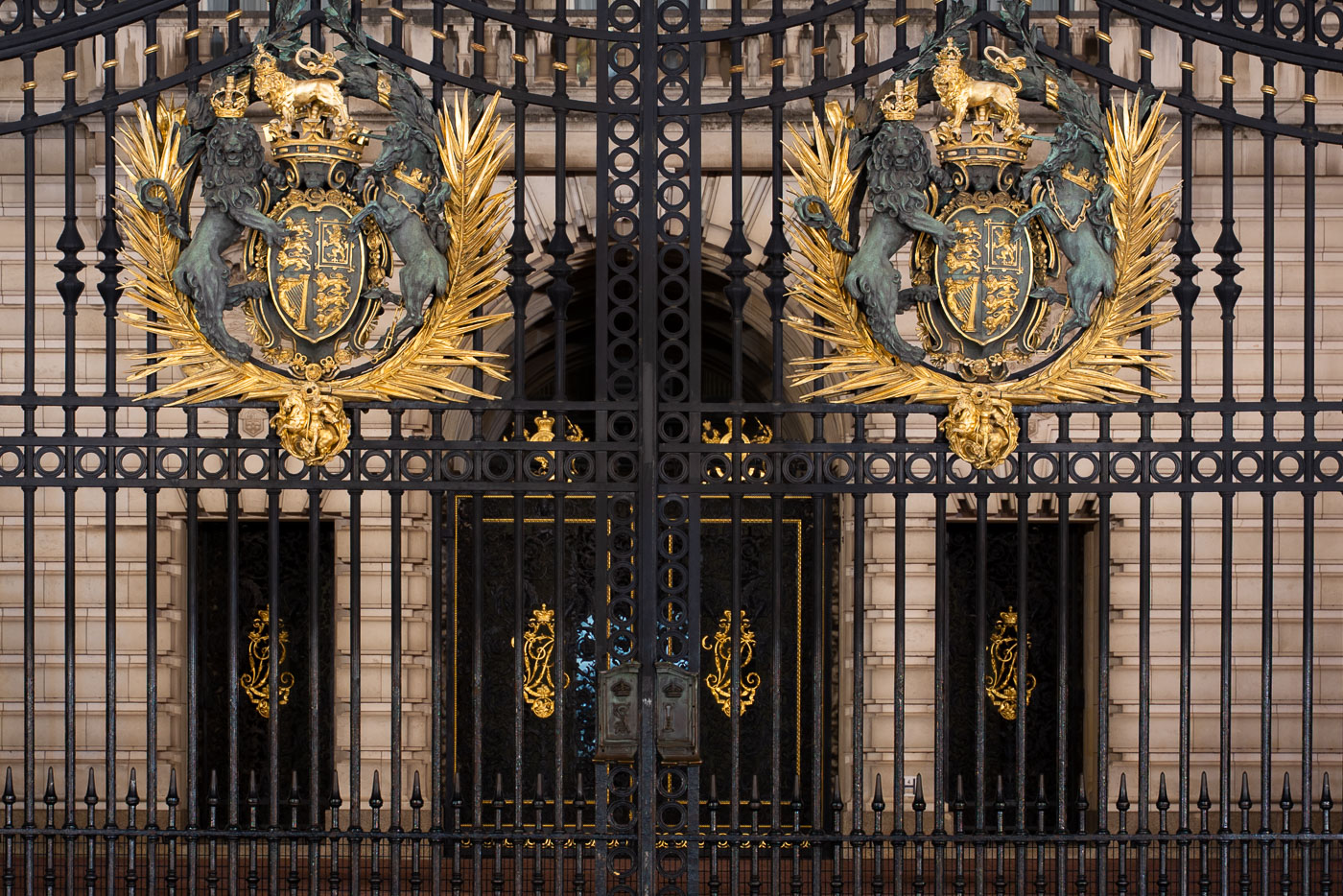
Royal Coat of Arms on Buckingham Palace gates
The Royal Coat of Arms adorns the main gates of Buckingham Palace in London, a symbol of the United Kingdom's monarchy. These ornate gates, crafted from gilded bronze and black wrought iron, feature heraldic symbols such as the crowned lion and chained unicorn, representing the union of England, Scotland, and Ireland. Installed in the early 20th century, they serve as a ceremonial entrance to the official London residence of the monarch. The gates are a prominent feature of the palace's public facade, marking the boundary between the sovereign's private domain and the public realm.
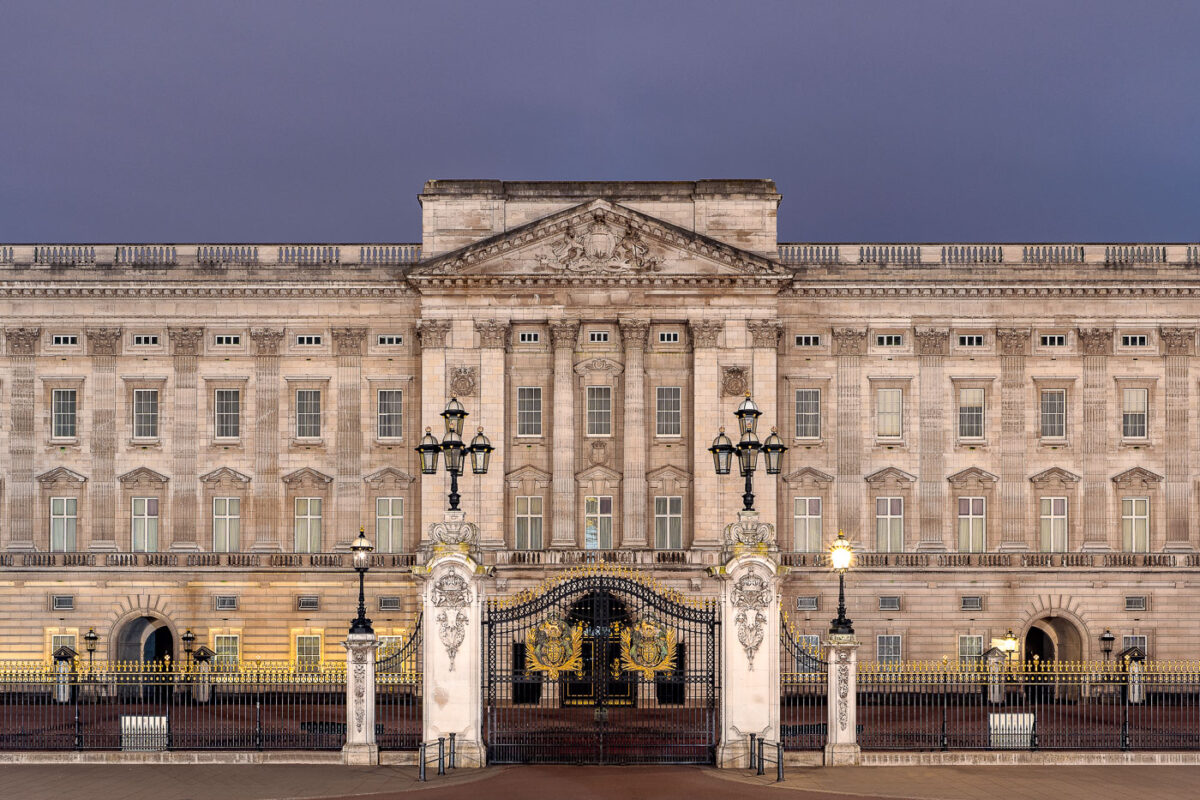
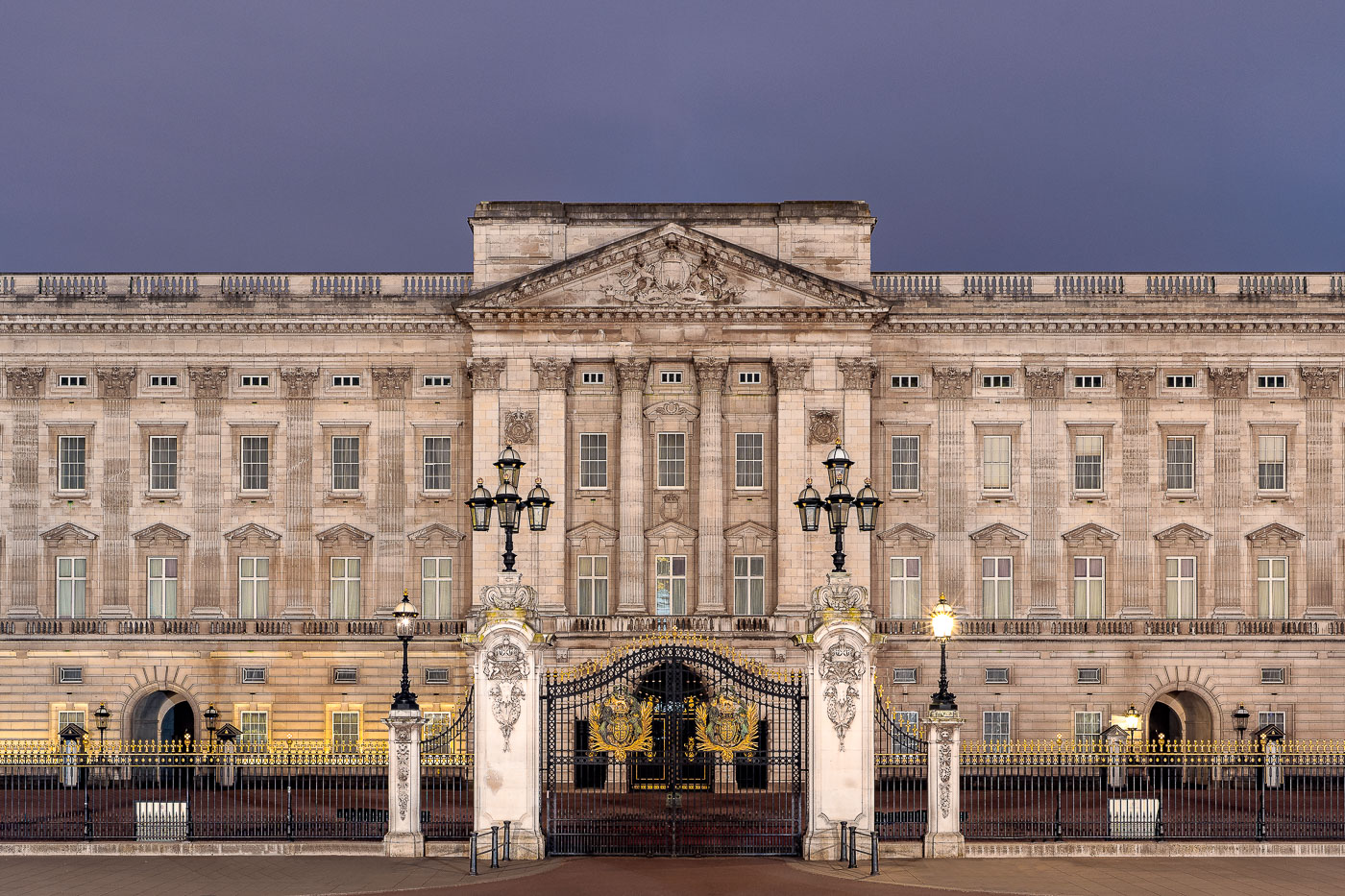
Buckingham Palace in London at night
The east facade of Buckingham Palace in London, designed by Sir Aston Webb and completed in 1913, is a neoclassical structure that serves as the administrative headquarters and London residence of the monarch. The symmetrical limestone facade, illuminated at dusk, features ornate wrought-iron gates with gilded royal crests and gas-style lamps that reflect its Edwardian-era detailing. The palace remains a functioning royal residence and a significant architectural symbol of the British monarchy.
Architecture of the Westminster Train Station
Westminster Station, a key hub on the London Underground, serves the Circle, District, and Jubilee lines. Originally opened in 1868, the station has undergone significant redevelopment, most notably with the construction of the Jubilee line extension in the late 1990s. This expansion introduced a modern architectural style characterized by exposed concrete, steel structures, and extensive use of escalators and walkways. Its strategic location near Parliament Square and the Houses of Parliament makes it a vital transit point for commuters, tourists, and government officials.
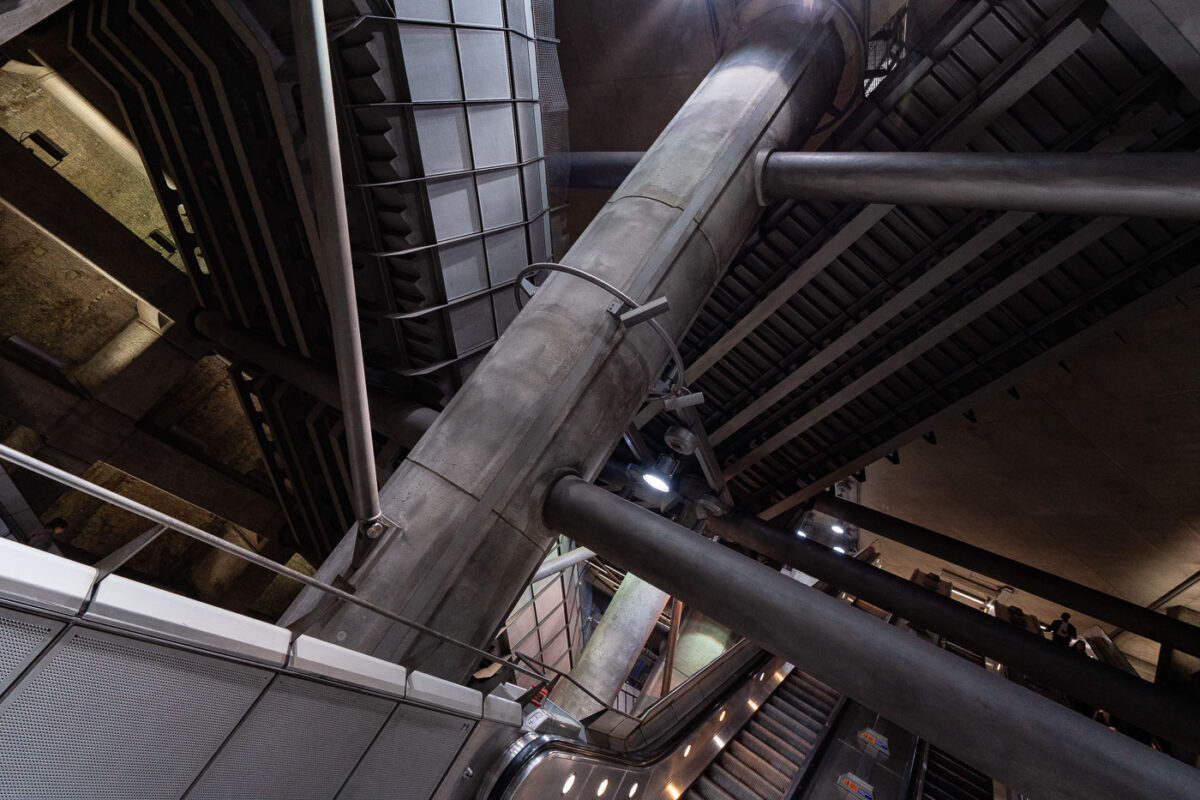
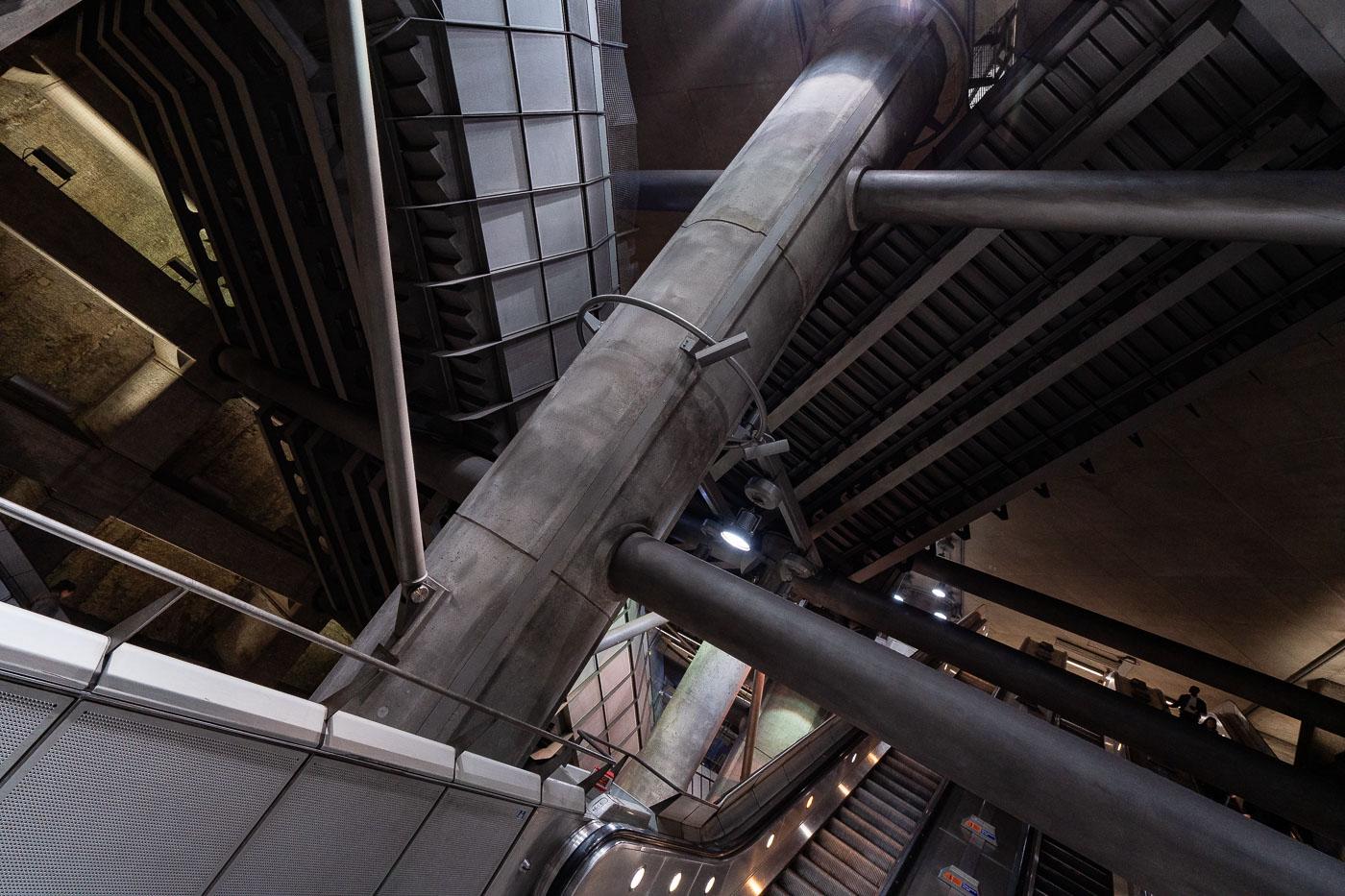
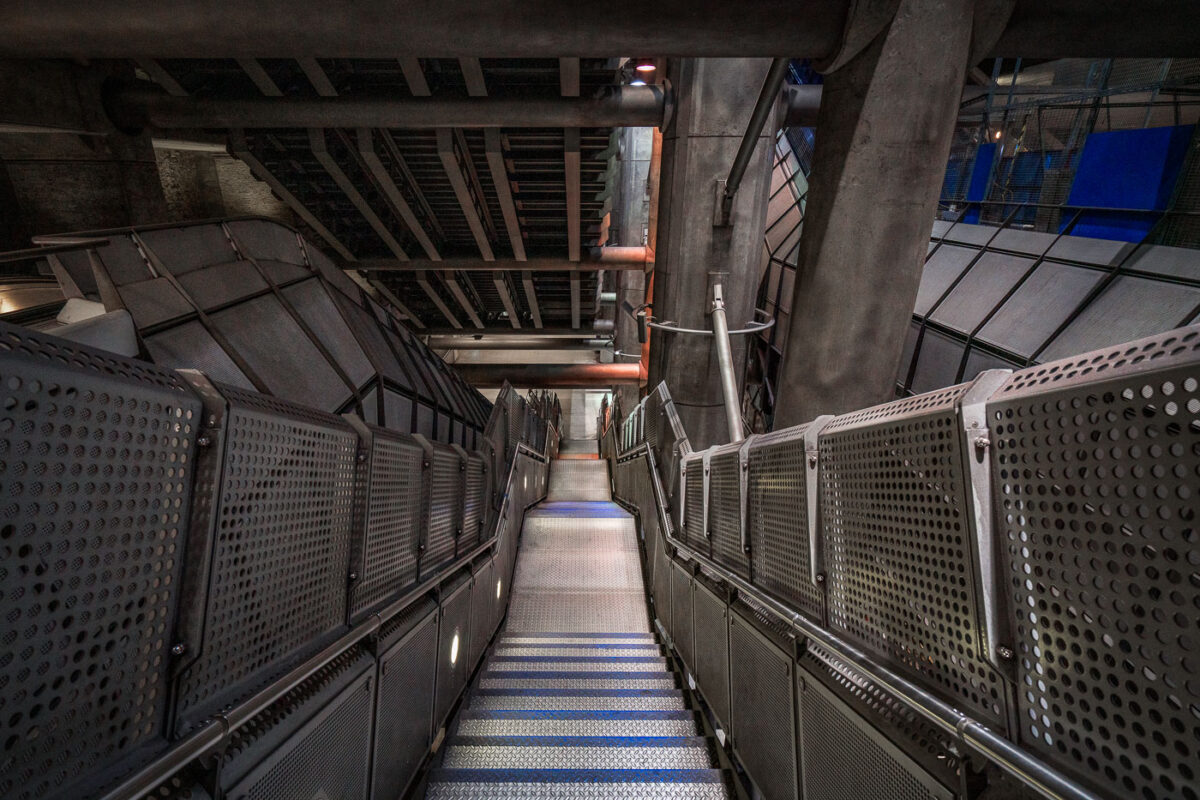
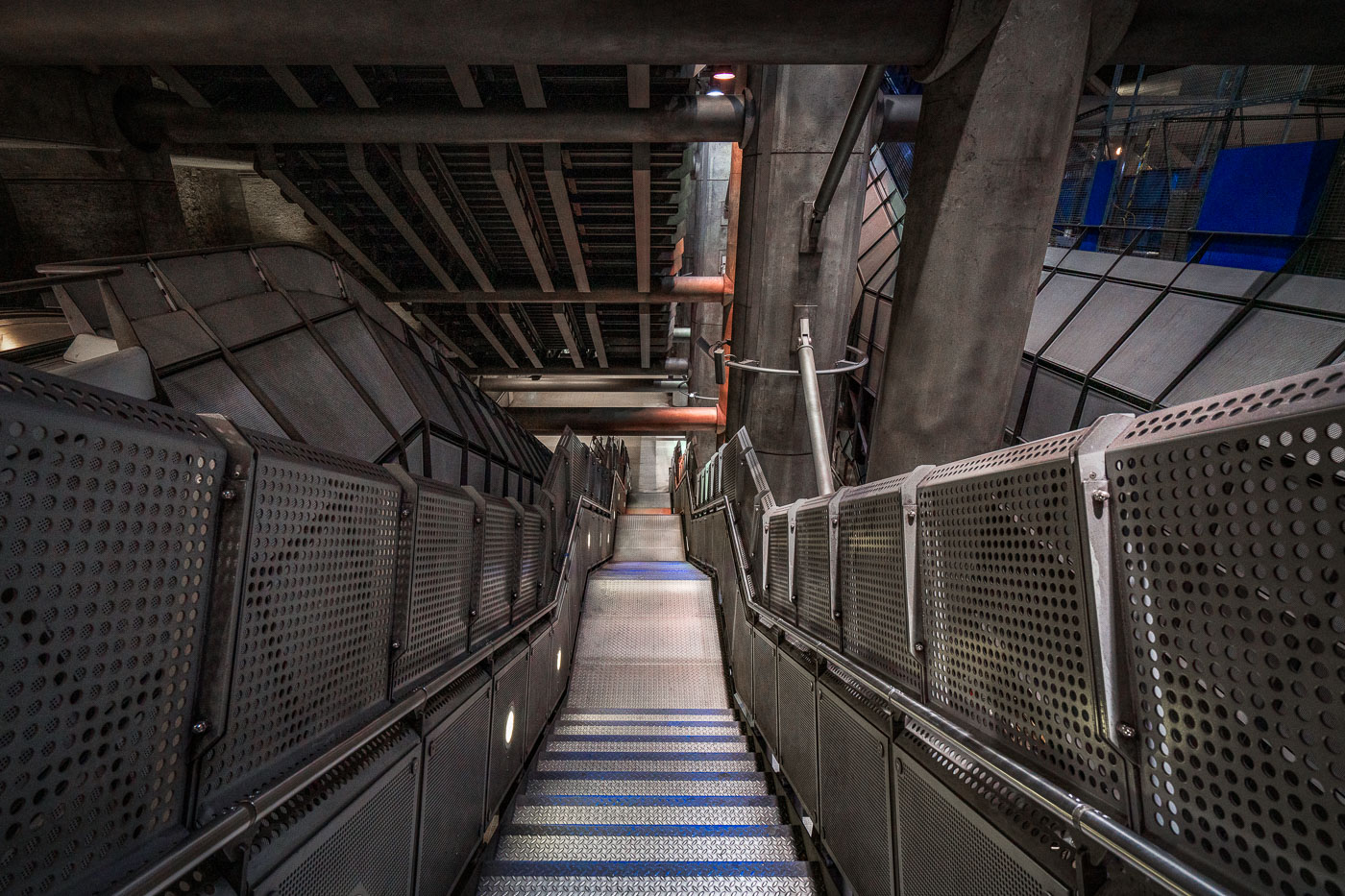
Westminster Tube Station Architecture
The Westminster Underground Station stairwell, designed by Foster + Partners as part of the 1999 Jubilee Line Extension, showcases a bold industrial aesthetic. Its construction involved significant engineering to excavate over 30 meters below ground adjacent to historic structures like the Houses of Parliament. The design features exposed concrete, perforated metal panels, and robust steel beams, creating a subterranean space that emphasizes the raw mechanics of public transit. This architectural approach integrates vertical circulation, including these steep stairways, into the station's deep underground layout, accommodating high passenger volumes while celebrating the functional aspects of the infrastructure.
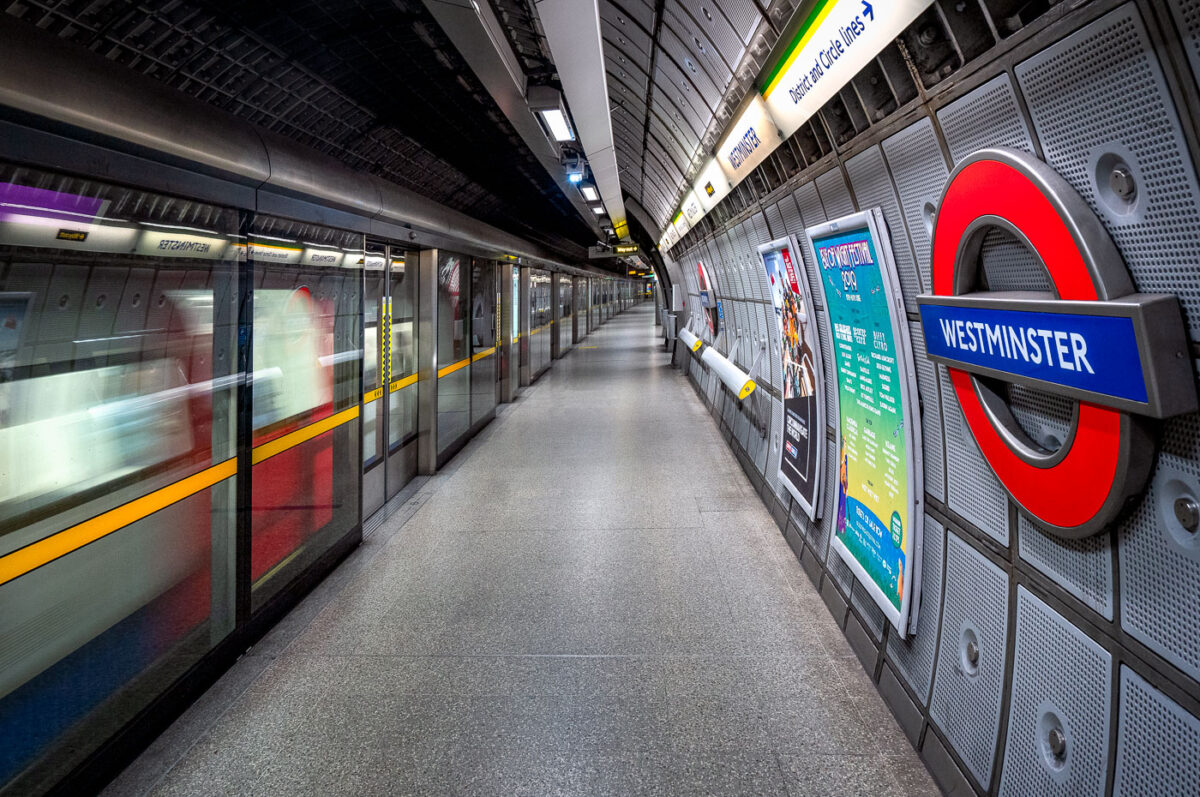
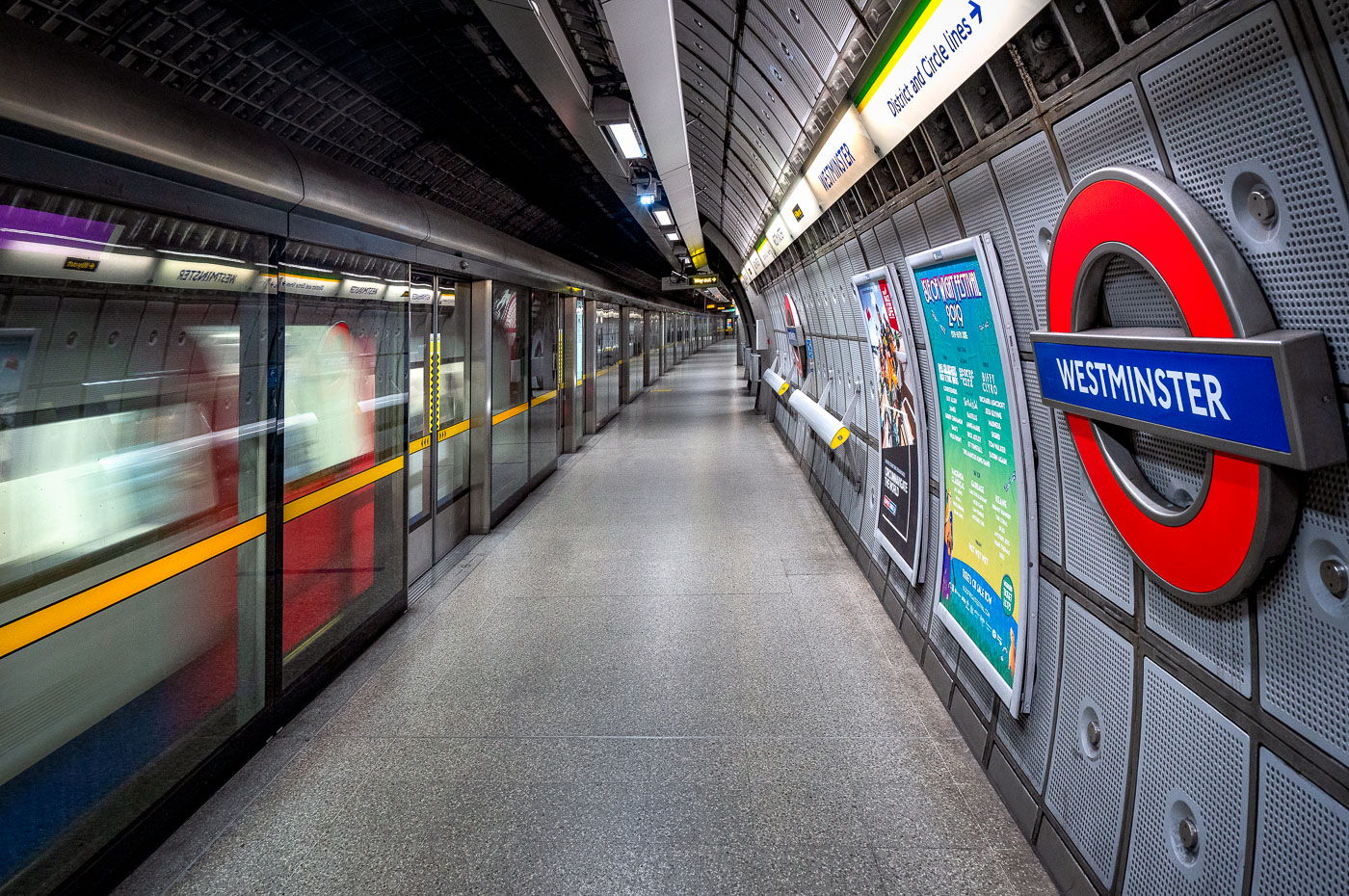
Westminster london train station
The Jubilee Line platforms at Westminster Underground Station, completed in 1999 as part of the Jubilee Line Extension, showcase the late-20th-century modernist design and deep-level engineering of London's transit expansion. Designed by Foster + Partners, the station features full-height platform screen doors for safety and an aesthetic of acoustic panels and perforated aluminum cladding. These platforms, situated approximately 30 meters below ground, manage significant passenger flow serving nearby government buildings while maintaining architectural clarity. The station's design integrates industrial functionality with modern infrastructure aesthetics through its curved walls, precise lighting, and concealed mechanical systems.
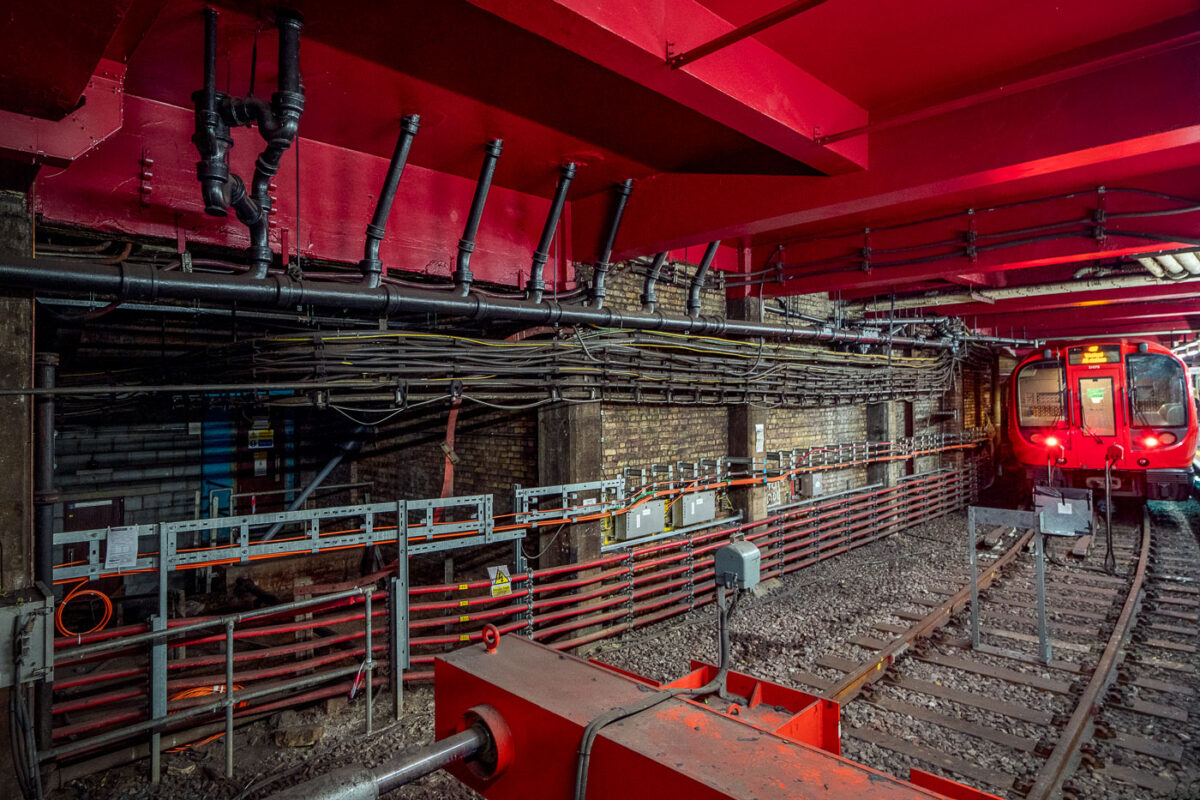
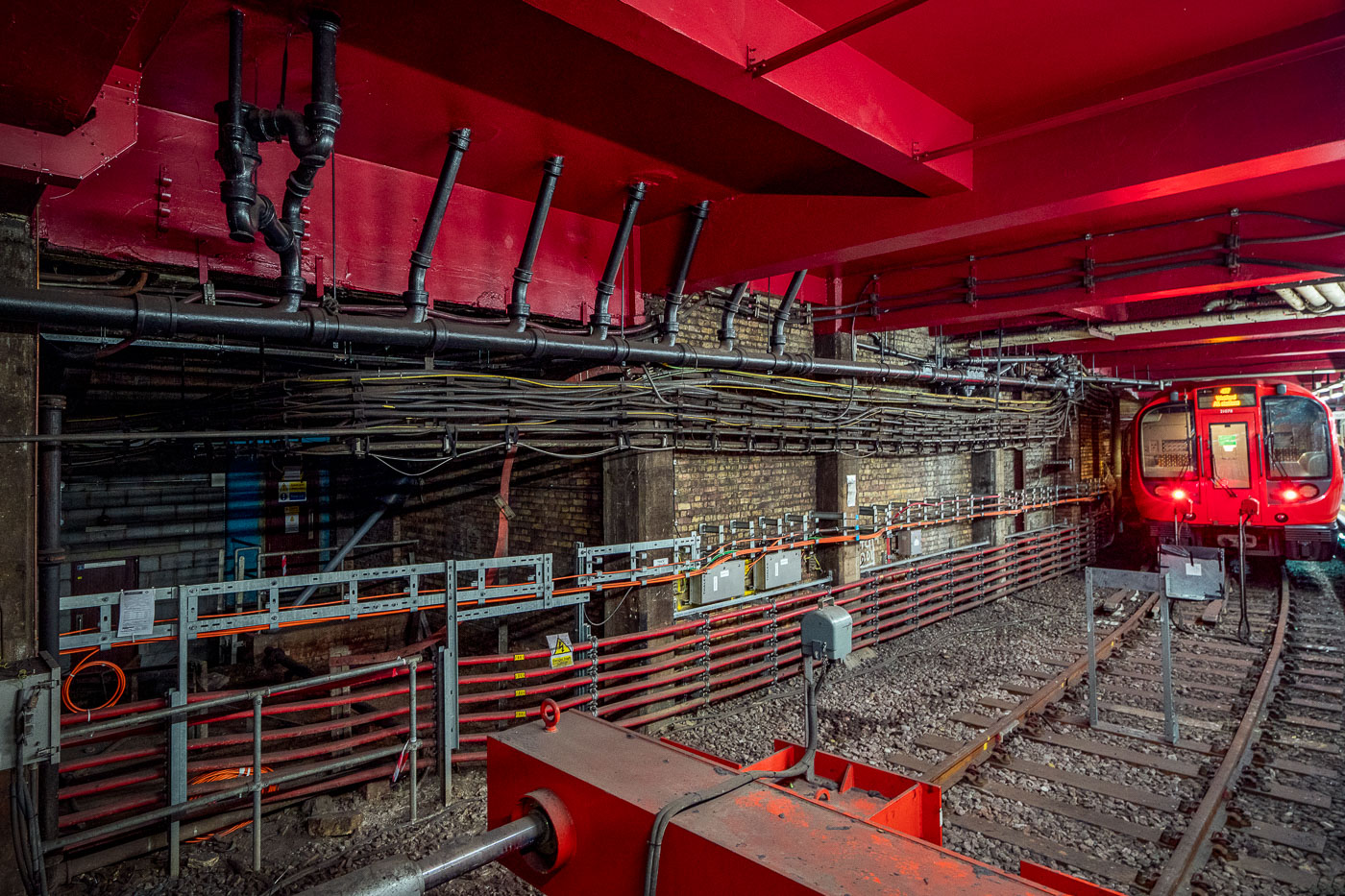
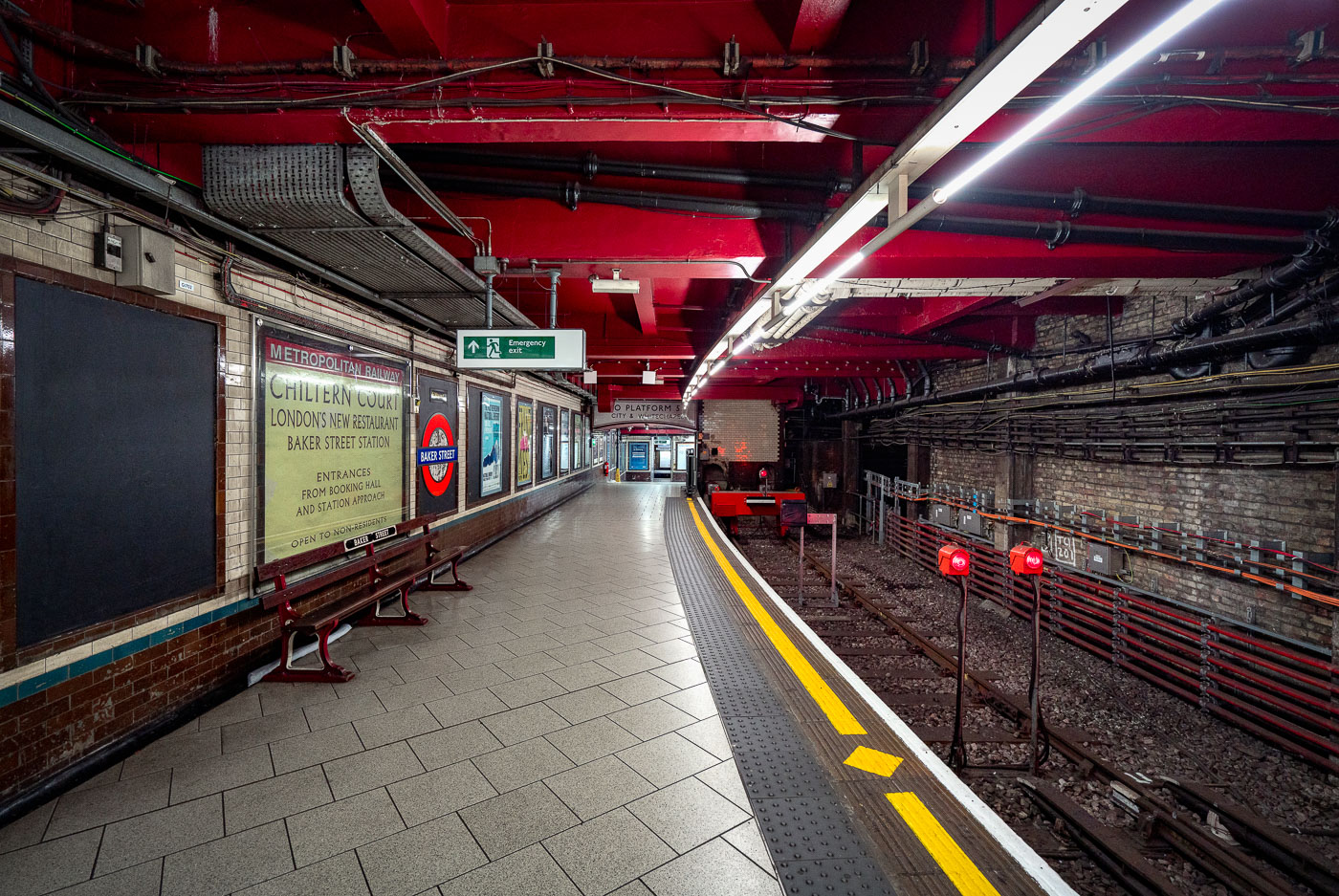
Train at Baker Street Underground Station
Beneath central London, Baker Street Station's Metropolitan Line platforms showcase the enduring engineering of one of the world's oldest underground railways. The original Victorian "cut-and-cover" construction from the 1860s is visible in the exposed brickwork and early steel framing, which once accommodated steam locomotives. Modern reinforcements and a dense network of cables for power and signaling demonstrate the station's continuous adaptation to support contemporary urban transit.
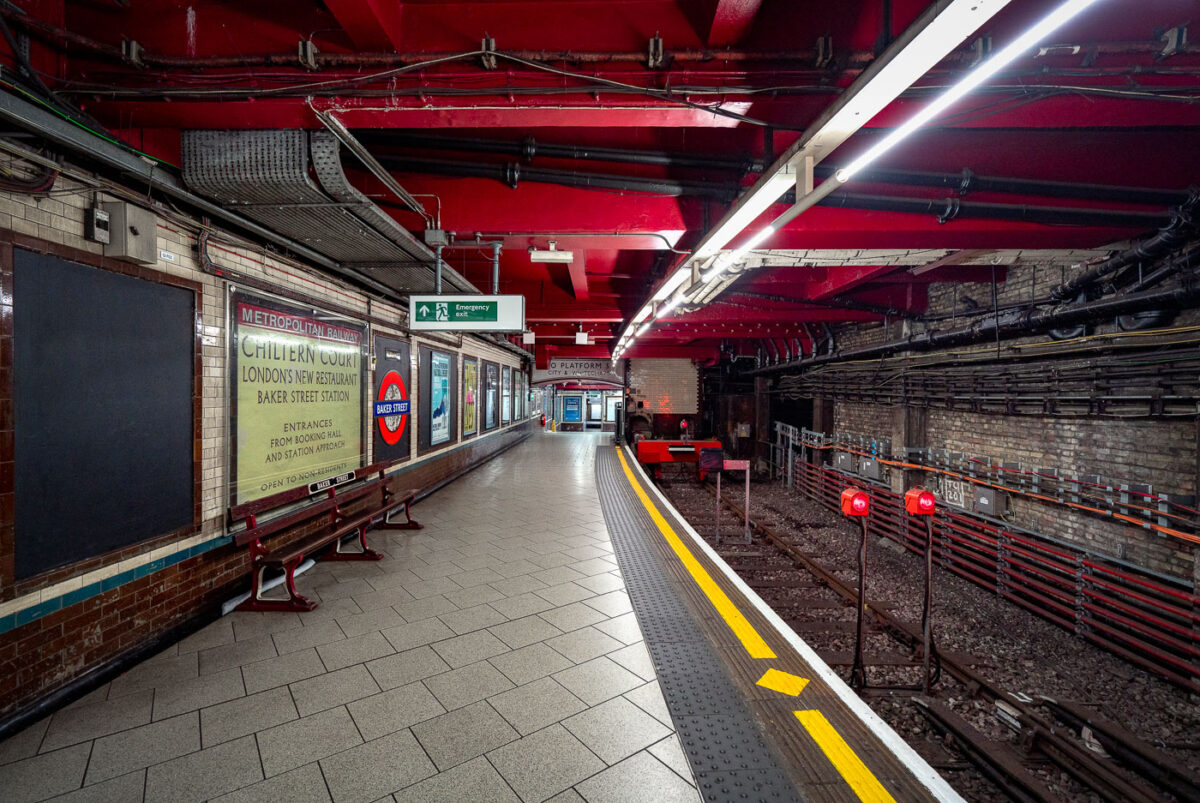
Baker Street Underground Station
Baker Street Station's Metropolitan Line platforms are among the oldest sections of the London Underground, dating back to its opening in 1863 as part of the world's first subterranean railway. The Victorian-era brickwork, constructed using the cut-and-cover method, is visible alongside modern safety features and red-painted steel reinforcements. Original signage for "Chiltern Court" and the Metropolitan Railway branding highlight the station's historical significance as a terminus for early steam-hauled trains. Today, Baker Street remains a vital interchange, serving five Underground lines while retaining the industrial atmosphere of London's pioneering public transit system.
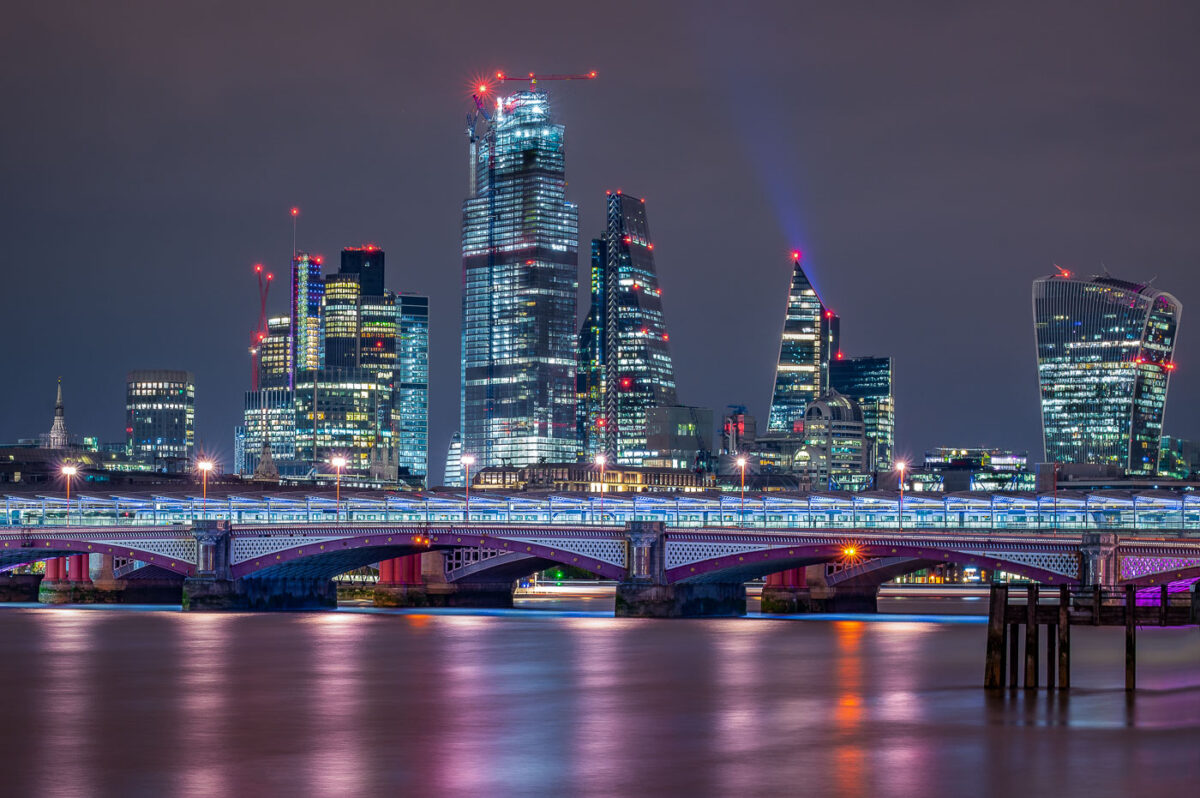
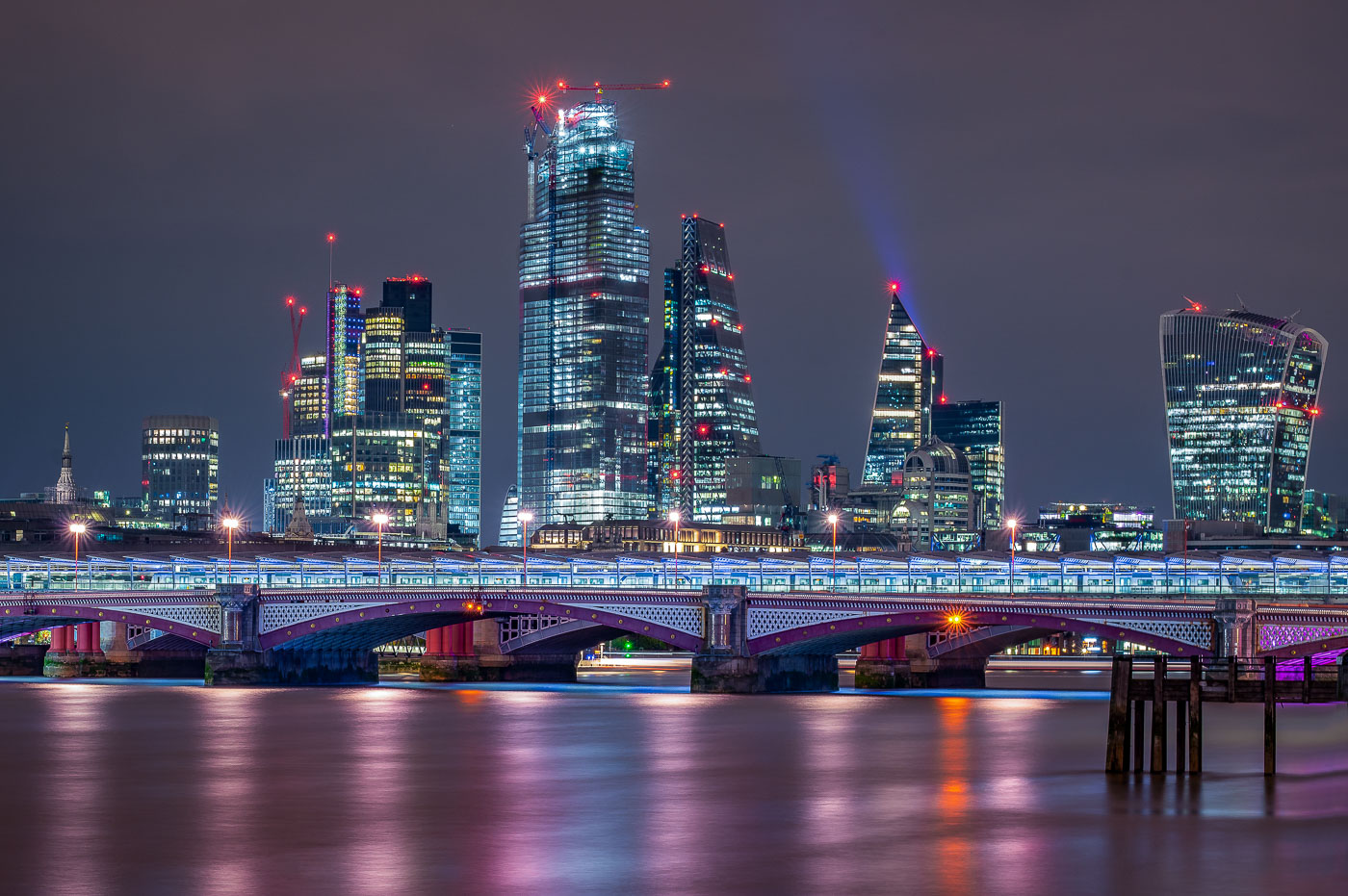
Blackfriars Bridge, a Victorian railway bridge, crosses the River Thames at night, with the modern City of London skyline featuring skyscrapers and construction cranes in the background.
Blackfriars Bridge, completed in 1869, spans the River Thames, connecting the City of London with Southwark. The bridge's design, by Joseph Cubitt, incorporates a railway station on its western side, which continues to serve commuters today. The surrounding skyline is dominated by modern skyscrapers such as the Leadenhall Building and 22 Bishopsgate, representing the ongoing development of London's financial district. Construction cranes visible on some buildings indicate continued expansion in the Square Mile, a testament to the area's enduring economic significance.
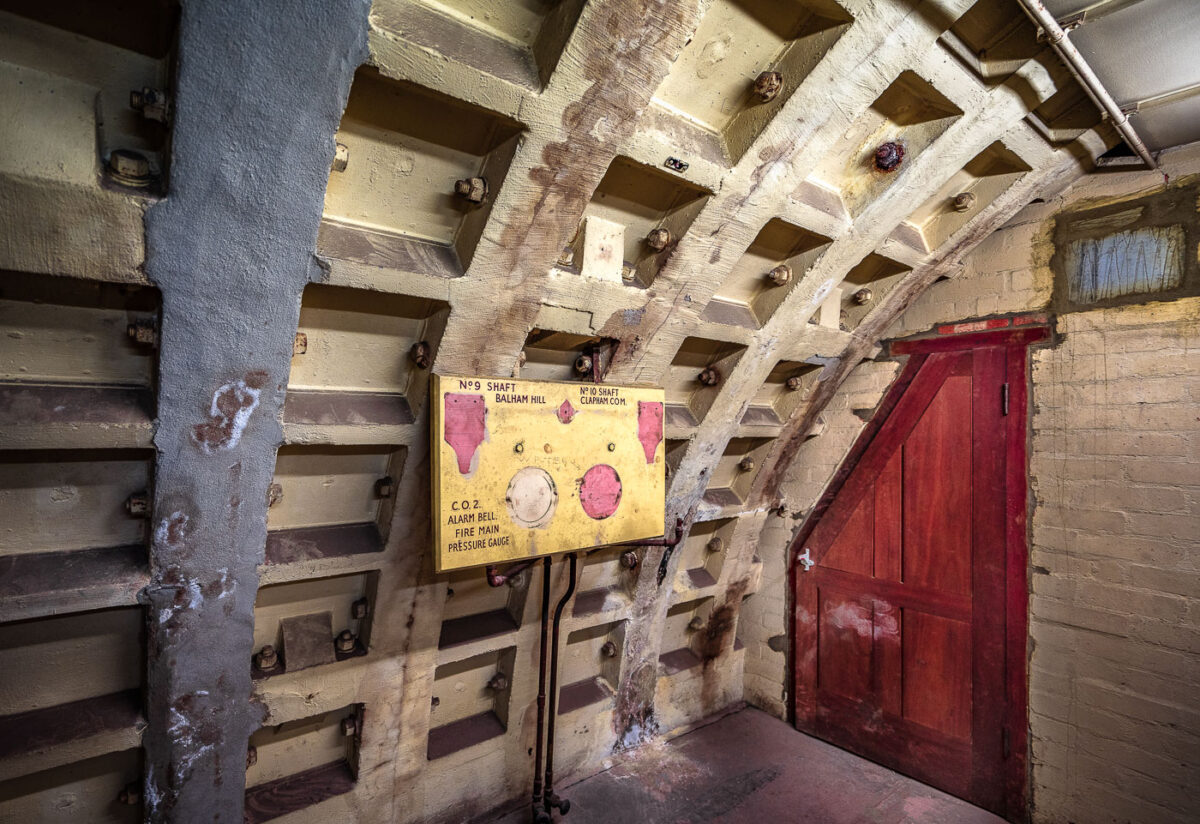
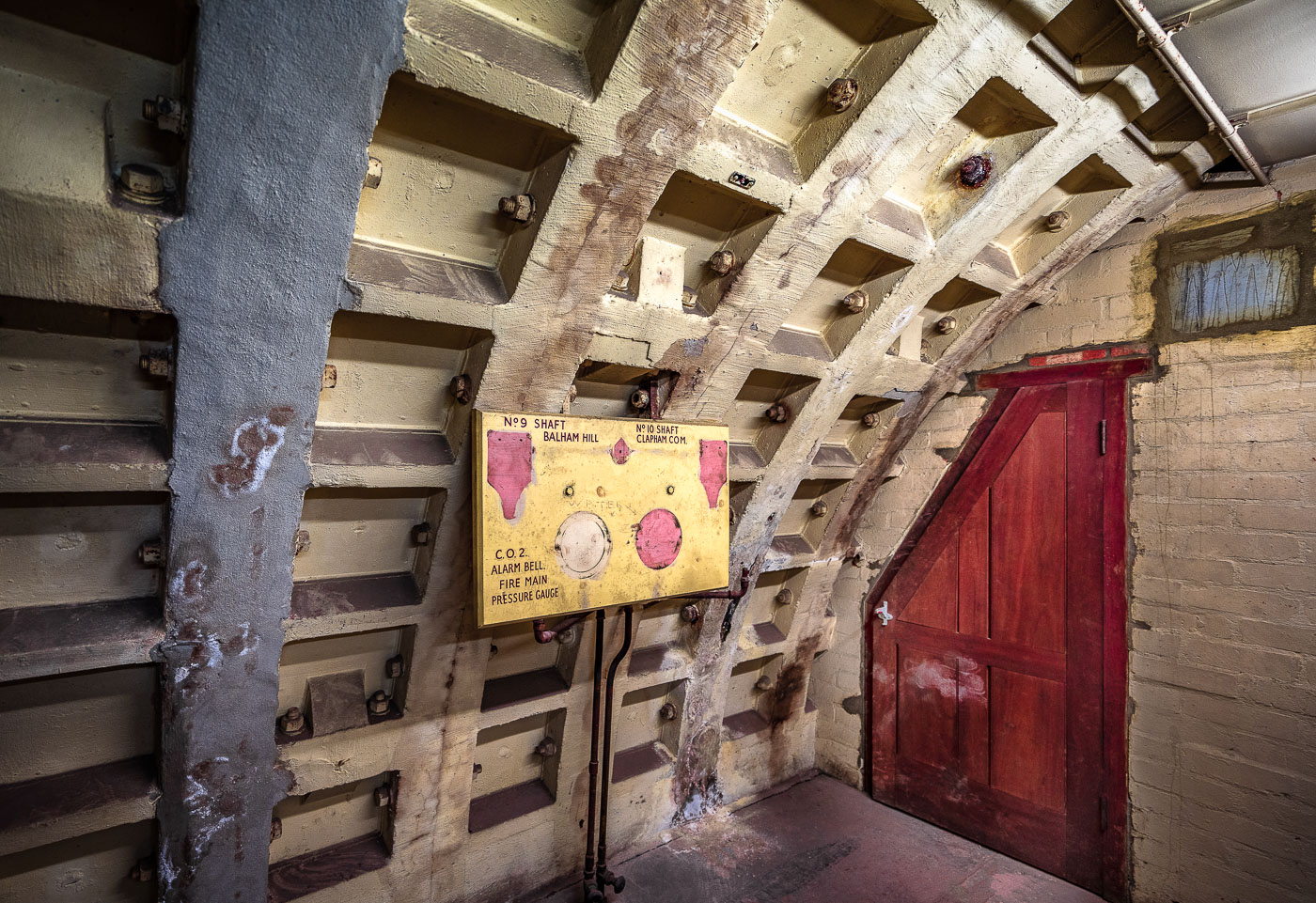
Signage inside the Clapham North Deep Shelter
This pressure control and alarm panel is a remnant of the Clapham South deep-level shelter, a crucial component of London's World War II civil defense infrastructure. Constructed 36 meters underground and completed in 1942, the shelter was designed to protect up to 8,000 civilians from air raids. The panel, marked for Shafts 9 and 10, monitored vital life-support systems including air pressure, fire mains, and COâ‚‚ levels. Its robust steel and cast-iron construction, along with visible signs of wartime paint, underscore the industrial engineering and resilience that characterized London's wartime survival efforts.
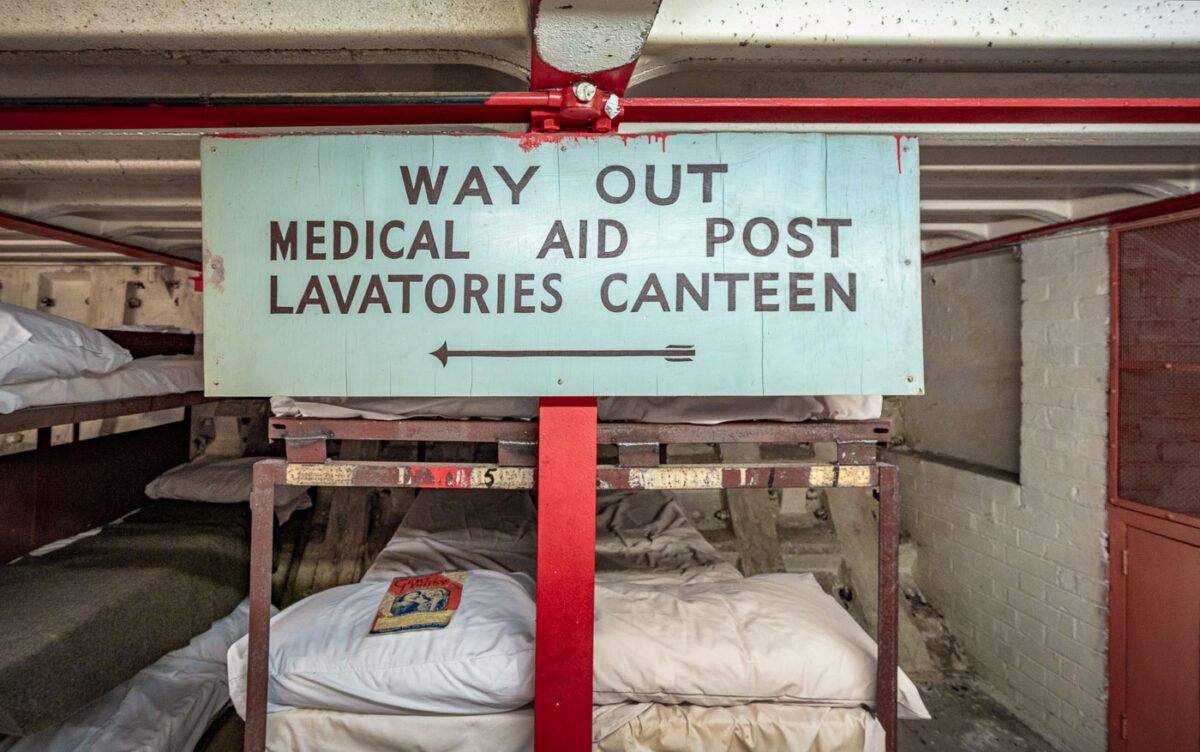
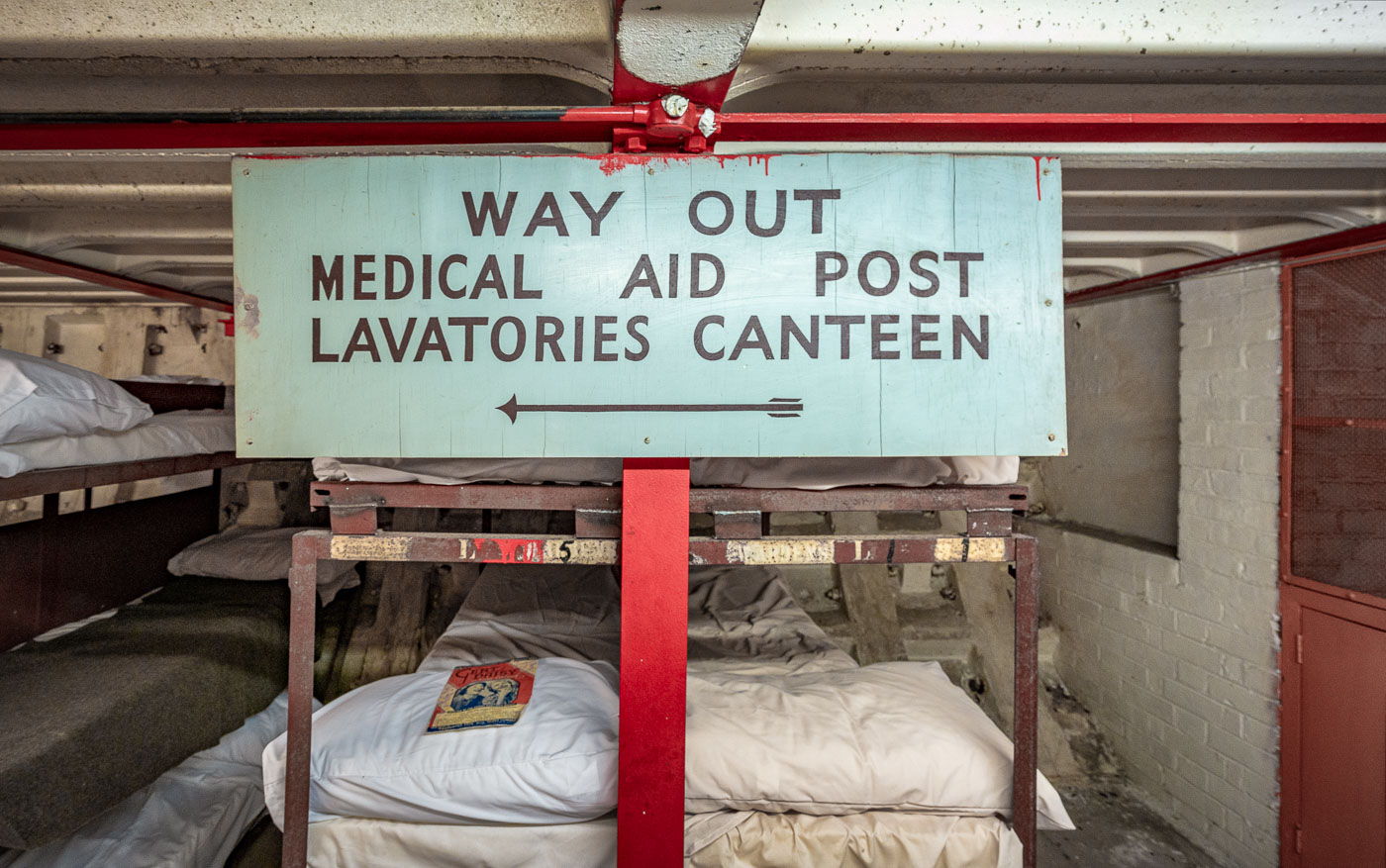
Clapham North sleeping area
A directional sign for "Medical Aid Post, Lavatories, Canteen" points the way within the Clapham North Deep Shelter. Constructed between 1940 and 1942, this subterranean bunker was one of eight built beneath London's Underground to protect civilians during World War II air raids. The sign highlights the essential services provided in these deep-level shelters, which offered a self-contained environment for thousands of Londoners. The presence of bunk beds, as seen in the foreground, underscores the shelter's role as a temporary home during the Blitz, serving as a stark reminder of wartime resilience.
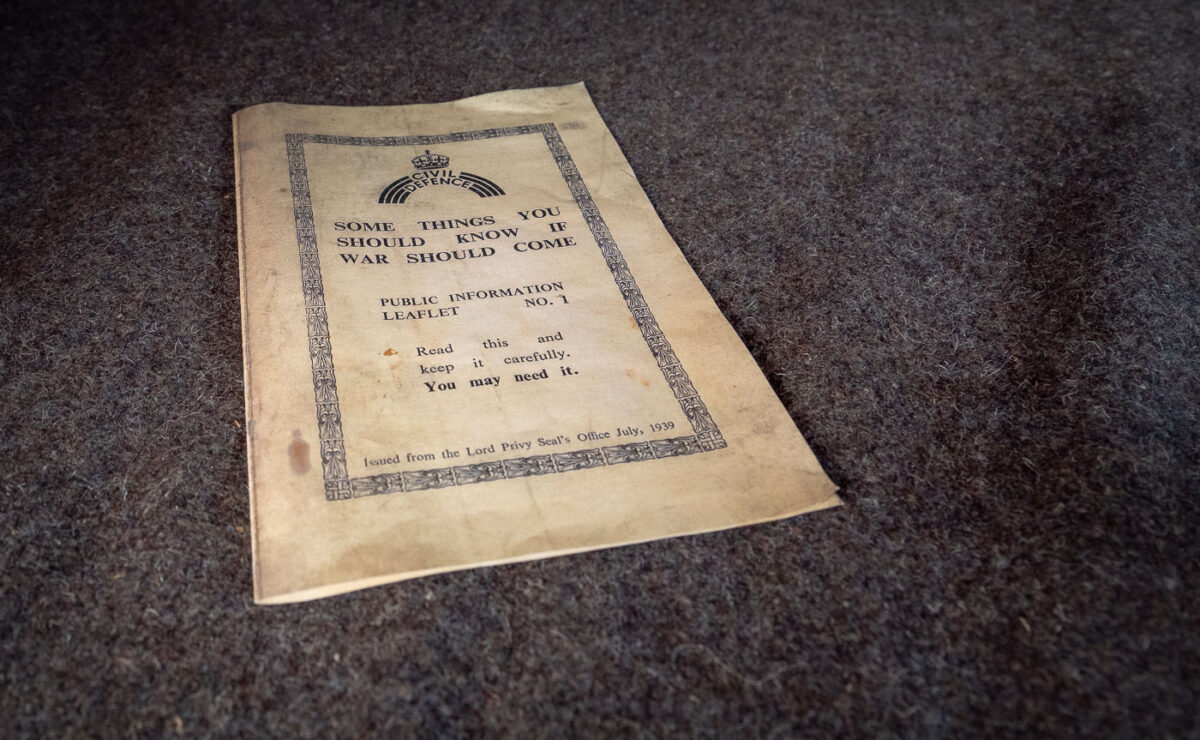
Clapham North deep shelter literature
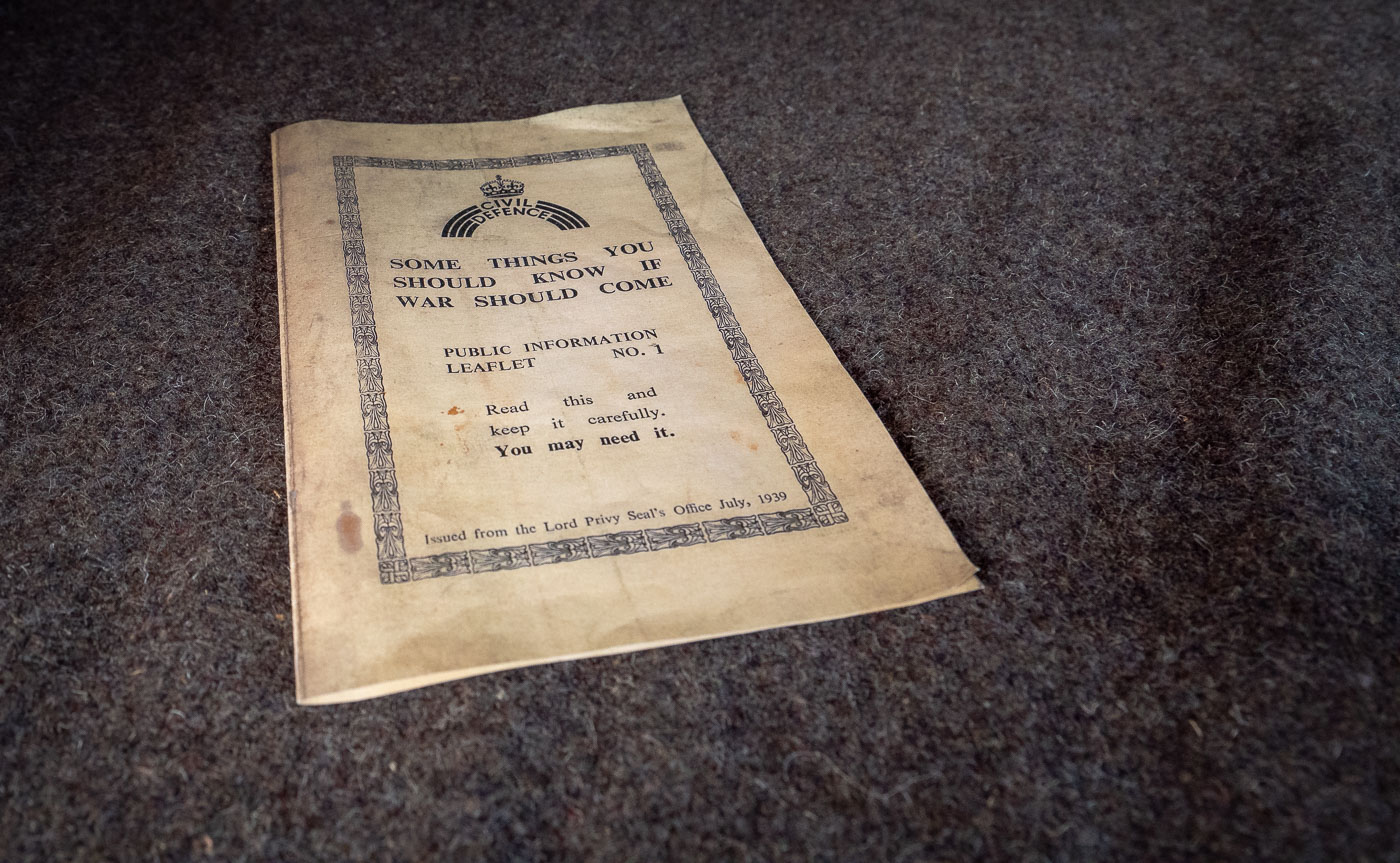
This 1939 Civil Defence leaflet, titled "Some Things You Should Know if War Should Come," was distributed by the Lord Privy Seal’s Office in July 1939, just weeks before the outbreak of World War II. It served as the first in a series of public information pamphlets designed to prepare British civilians for air raids, blackout regulations, and the potential use of gas. The leaflet's stark instruction, "Read this and keep it carefully. You may need it," underscores the government's effort to balance reassurance with the grim reality of impending conflict. Millions of these leaflets were delivered across Britain, forming a crucial part of an unprecedented civil preparedness campaign and serving as historical artifacts of the anxious period leading up to the war.
Wide shot of the The Clapham North Deep Shelter
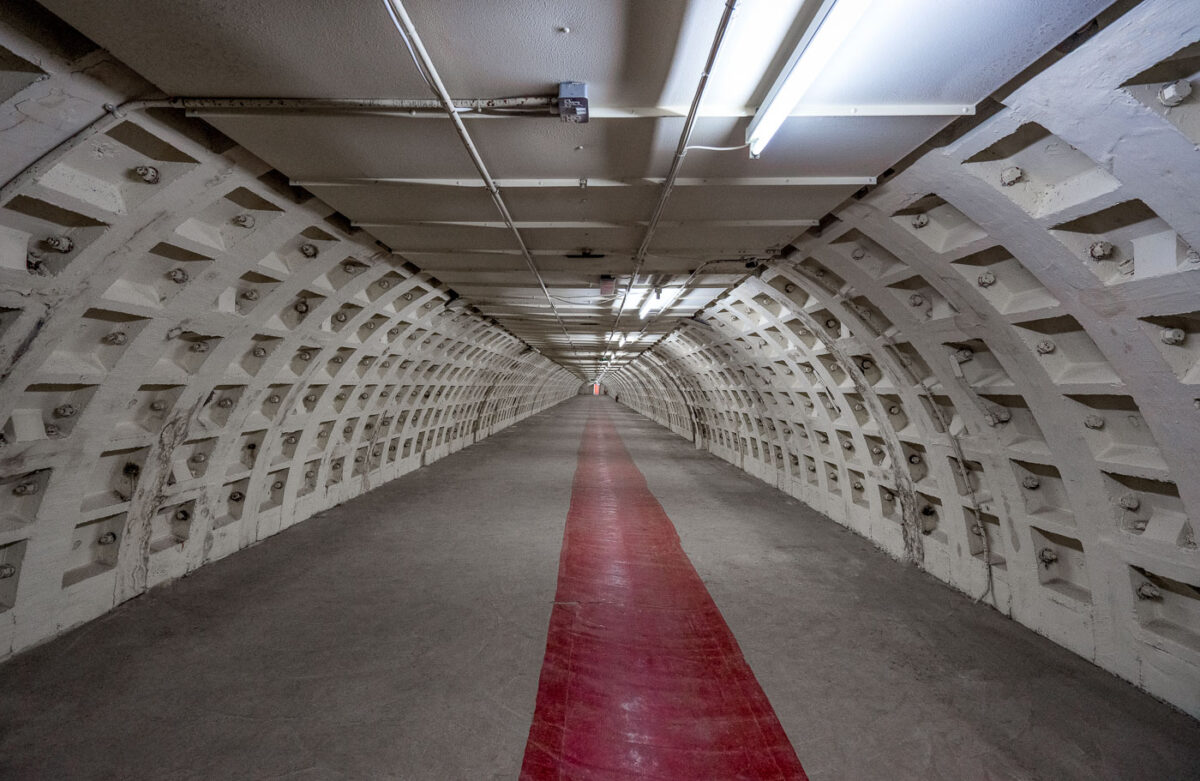
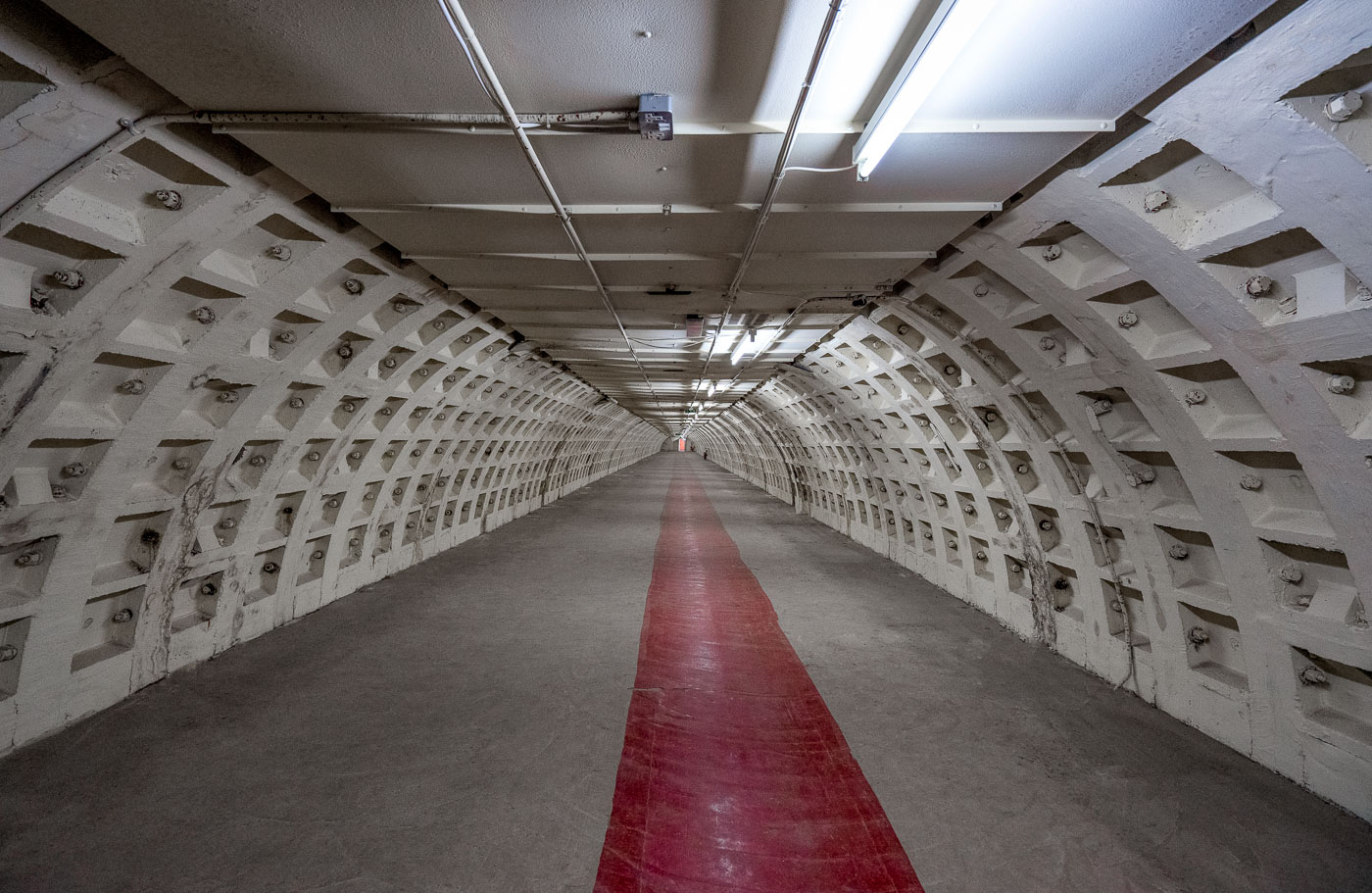
This tunnel beneath Clapham North is one of eight deep-level shelters constructed by London Underground during World War II. Built between 1940 and 1942, these reinforced cylindrical passages could accommodate up to 8,000 people during air raids, featuring essential amenities like bunks and lavatories. The distinctive bolted cast-iron lining, a common feature of wartime tunnel construction, remains intact and is illuminated by later additions of fluorescent lighting. After the war, these tunnels served various purposes, including temporary housing and archival storage, and today stand as a well-preserved example of London's wartime civil engineering resilience.
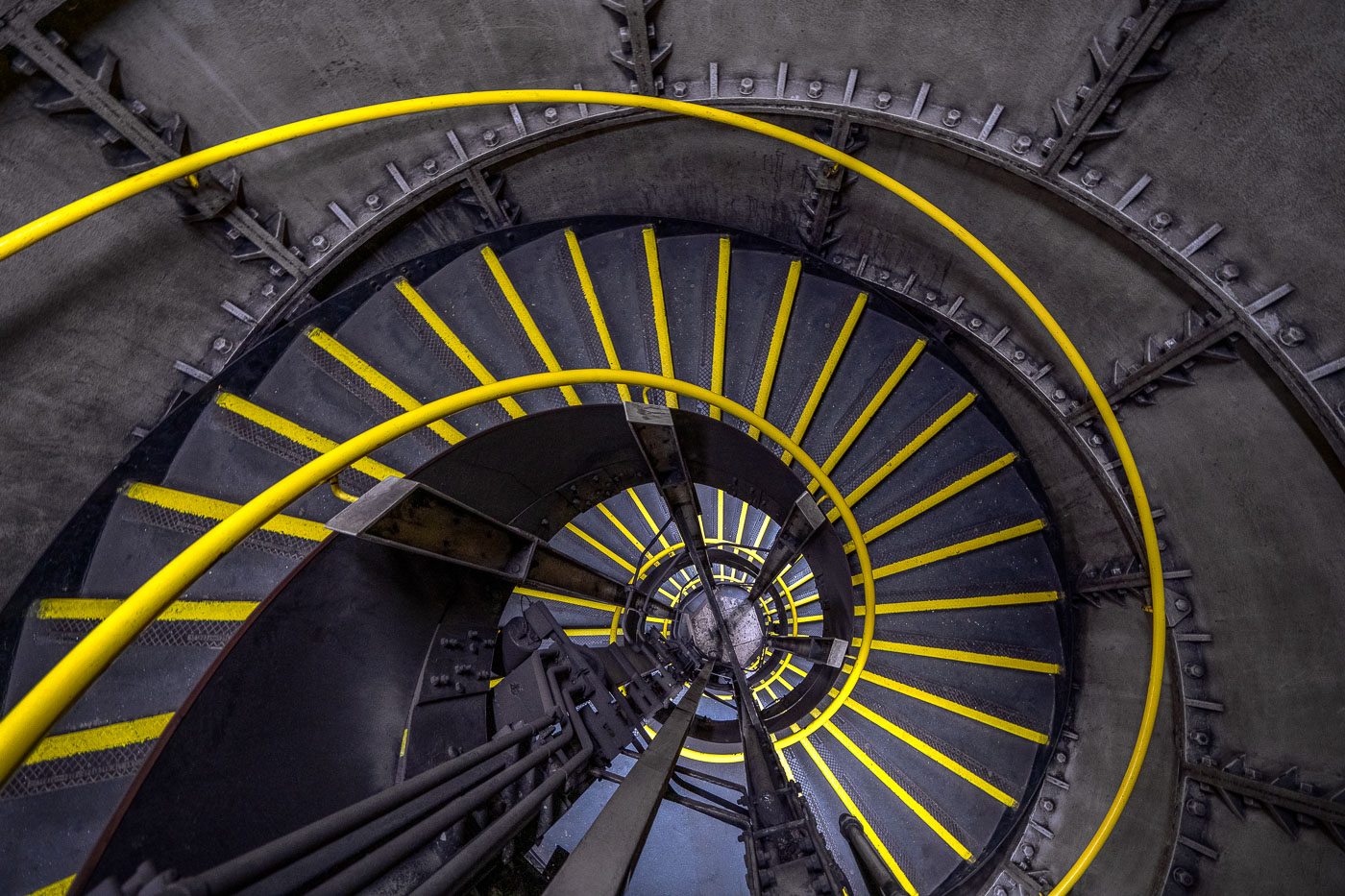
Spiral staircase in the Clapham North Deep Shelter
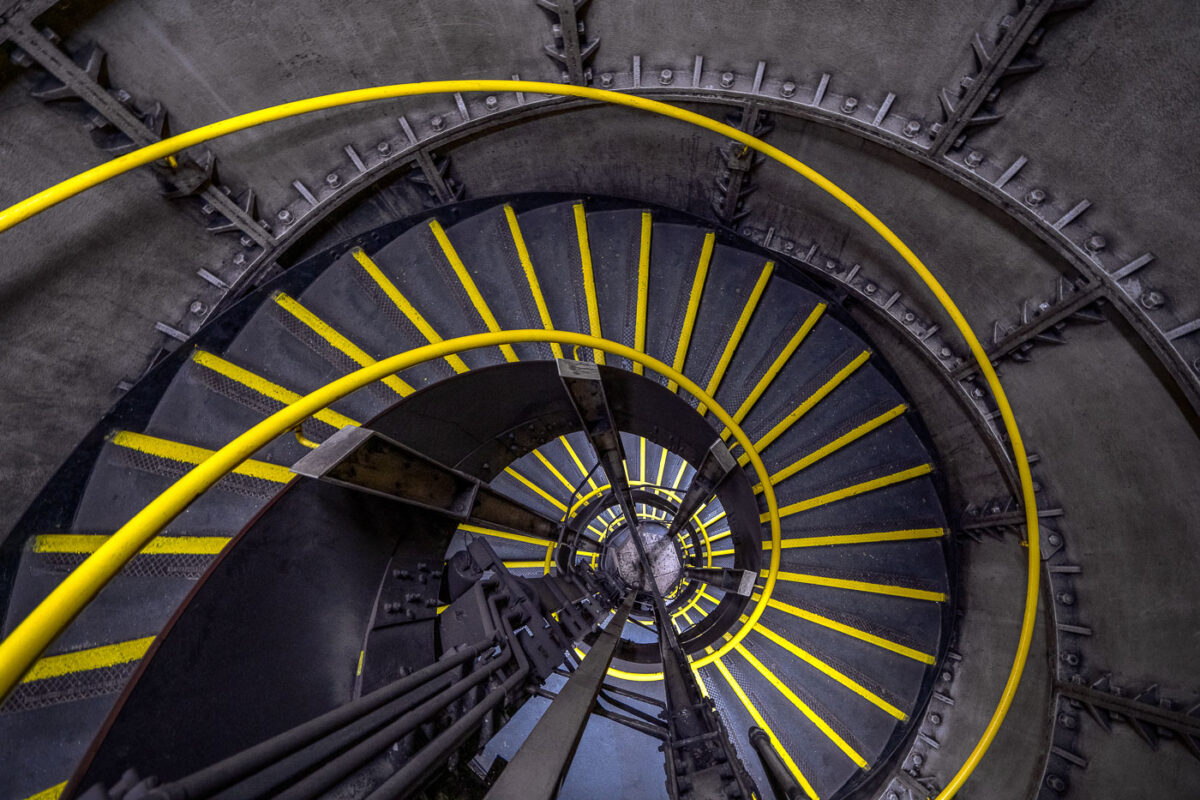
A view inside one of the distinctive spiral staircases of Clapham North Underground Station on the Northern Line, part of London’s deep-level tube network completed in the 1920s. The cast-iron stairwell descends nearly 120 feet below ground, wrapping tightly around a central ventilation column used to regulate air pressure and temperature within the tunnels. The staircase, equipped with yellow anti-slip edges and a steel handrail, was designed as an emergency exit and maintenance access route for the deep-bore platforms below. Stations like Clapham North, along with its twin Clapham Common, are known for their rare narrow island platforms and compact circular shafts — relics of early tube engineering when space and construction methods were limited. The robust riveted metalwork and industrial geometry of the stairwell reflect the period’s emphasis on function and endurance, forming part of London’s complex subterranean infrastructure still in use more than a century later.
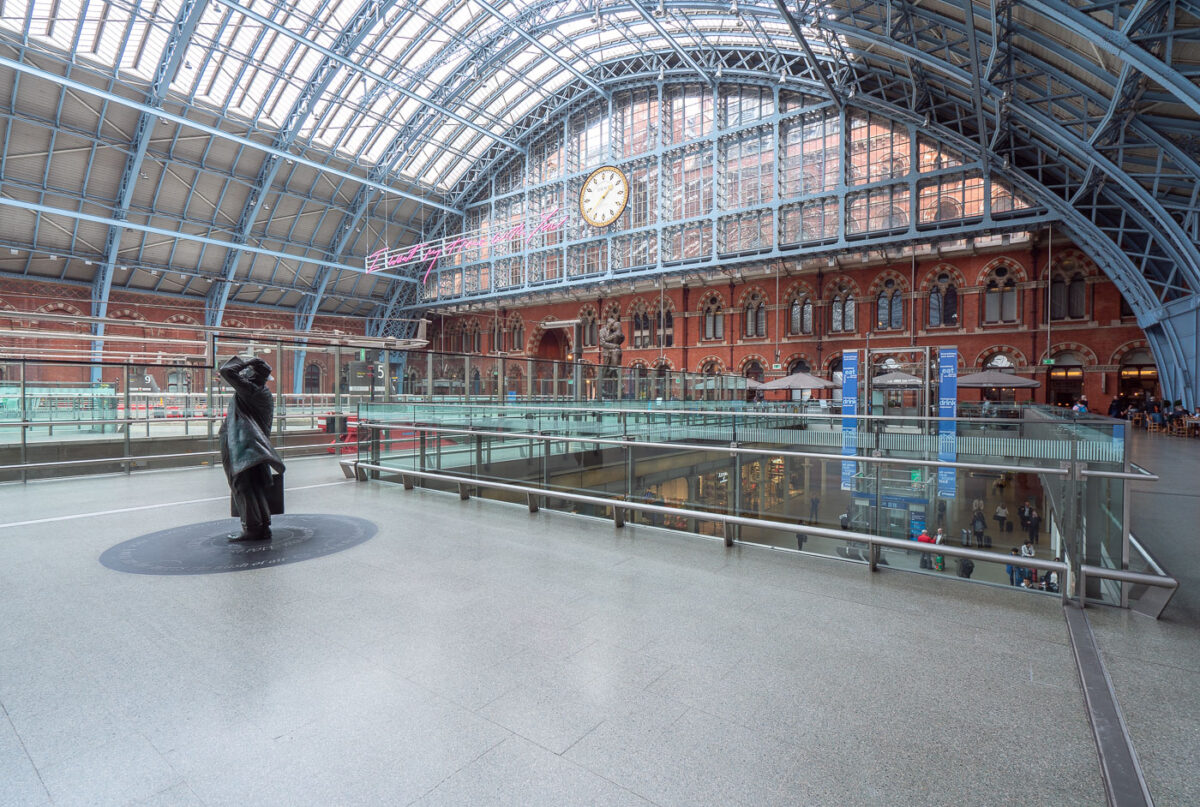
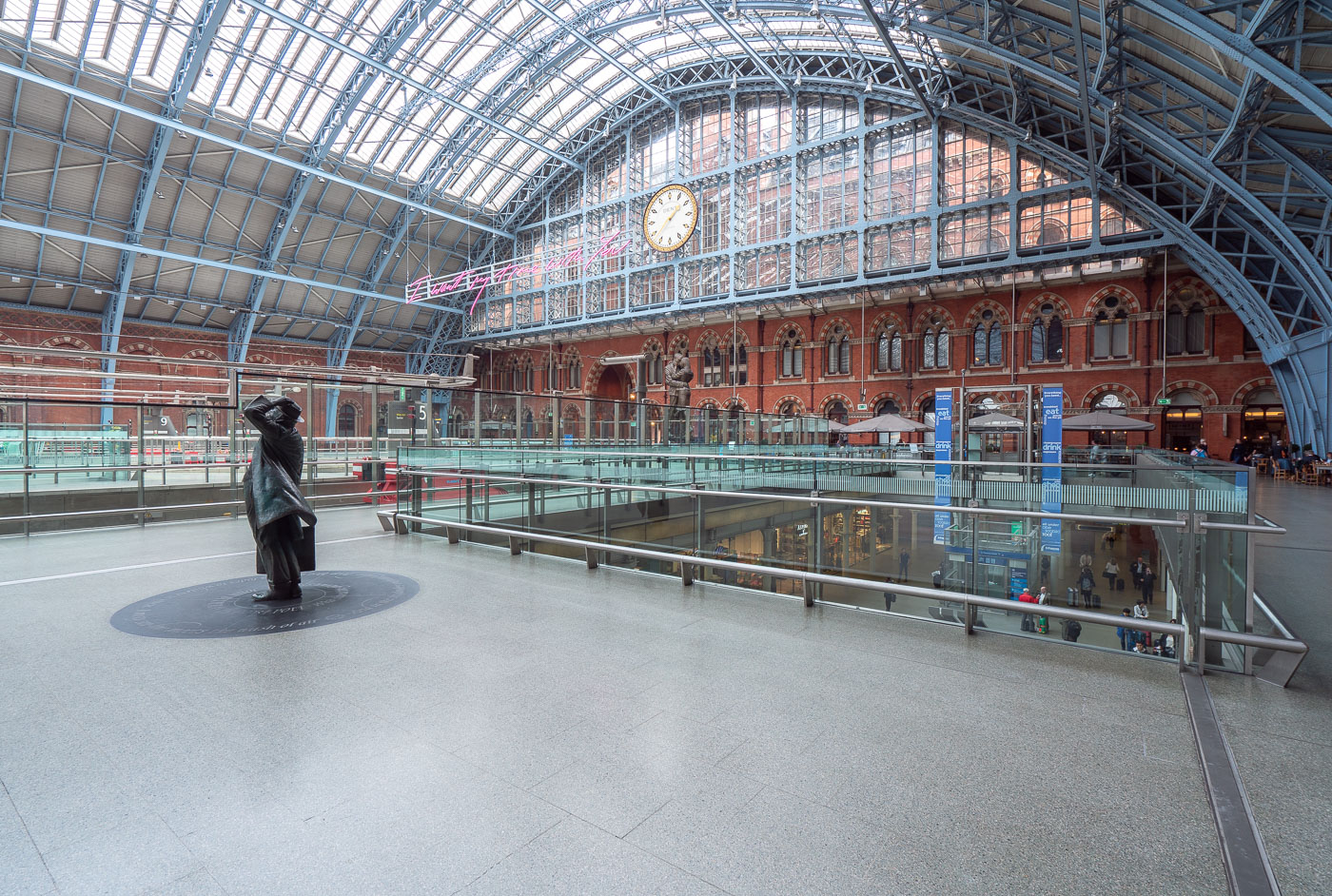
Kings Cross St Pancras London Underground Station
The interior of King's Cross St. Pancras station in London, a major railway hub that serves both national rail services and the London Underground. Originally opened in 1852, the station's iconic Barlow Shed roof, a marvel of Victorian engineering, was designed by architect William Henry Barlow and engineer Rowland Mason Ordish. Today, it remains one of the busiest transport interchanges in the United Kingdom, facilitating travel for millions of passengers annually.
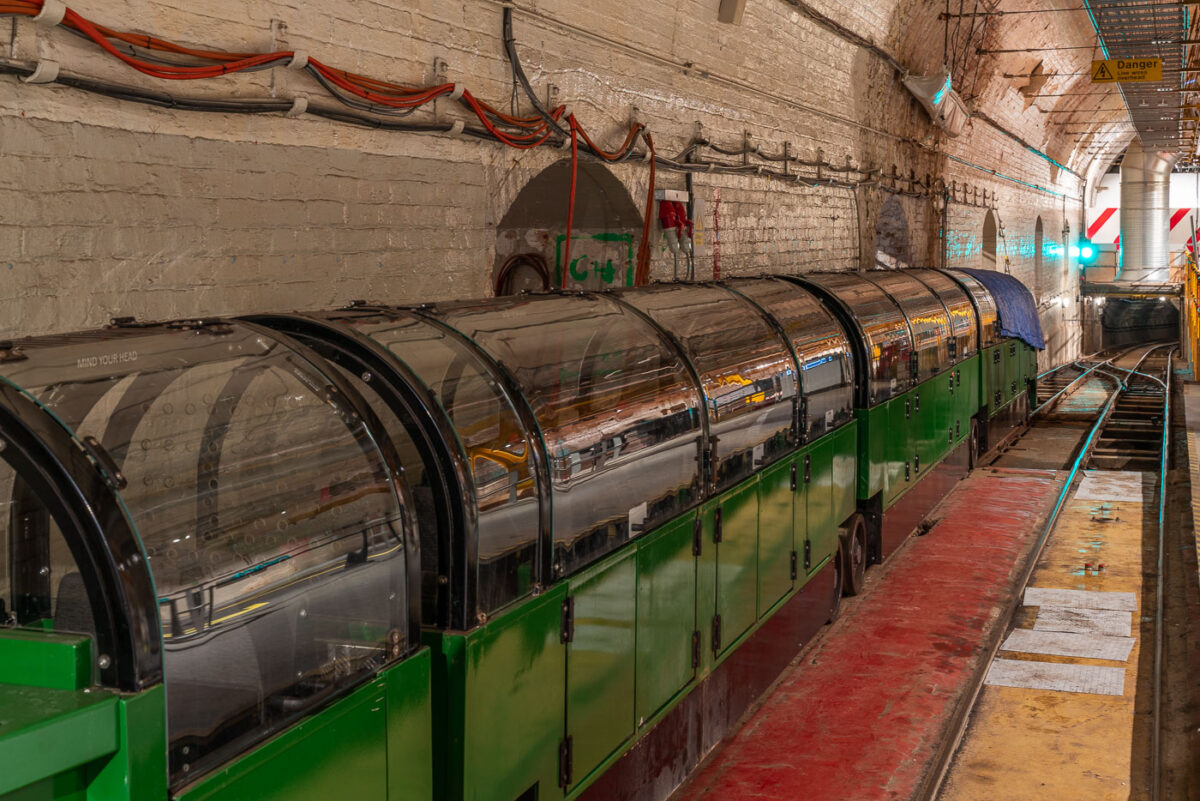
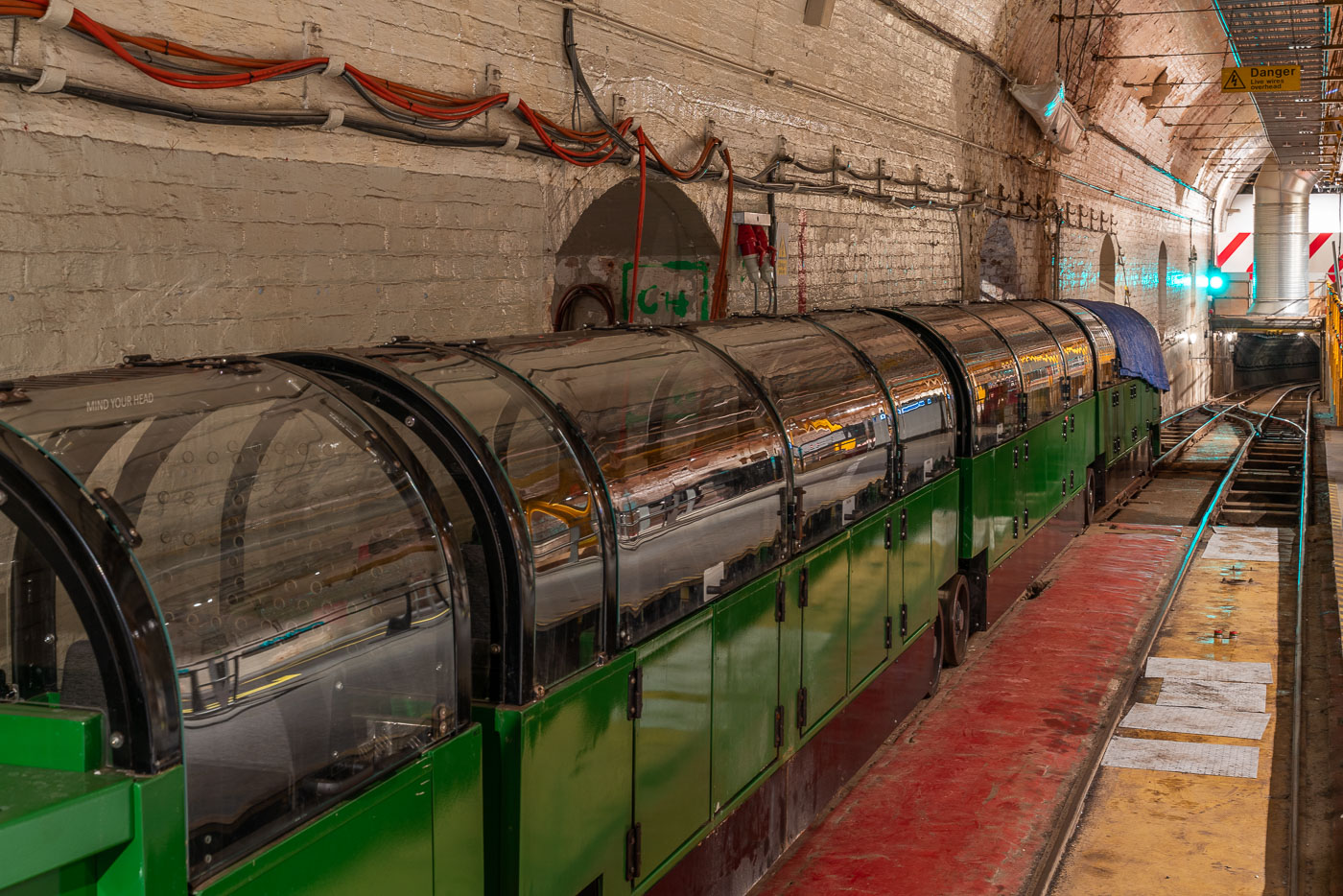
Royal Mail Rail Car at Museum
A preserved Mail Rail train, part of London's Post Office Railway, is displayed at the Postal Museum. Opened in 1927, this driverless electric railway operated for over 75 years, transporting mail through a six-mile network of narrow tunnels beneath central London. The system was designed for efficiency, carrying up to 12 tons of post at speeds of 40 mph, bypassing surface congestion. Today, visitors can experience a restored section of this innovative 20th-century transport infrastructure, which stands as a testament to Britain's engineering prowess in urban logistics.
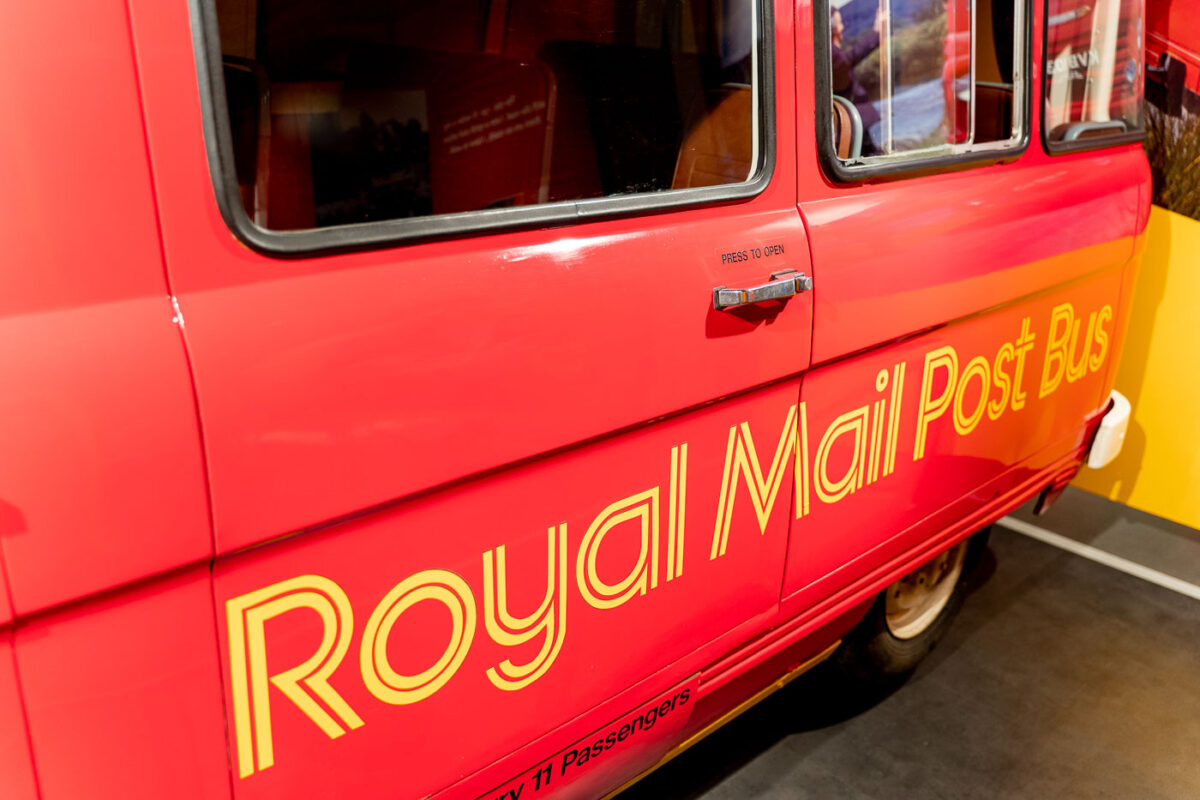
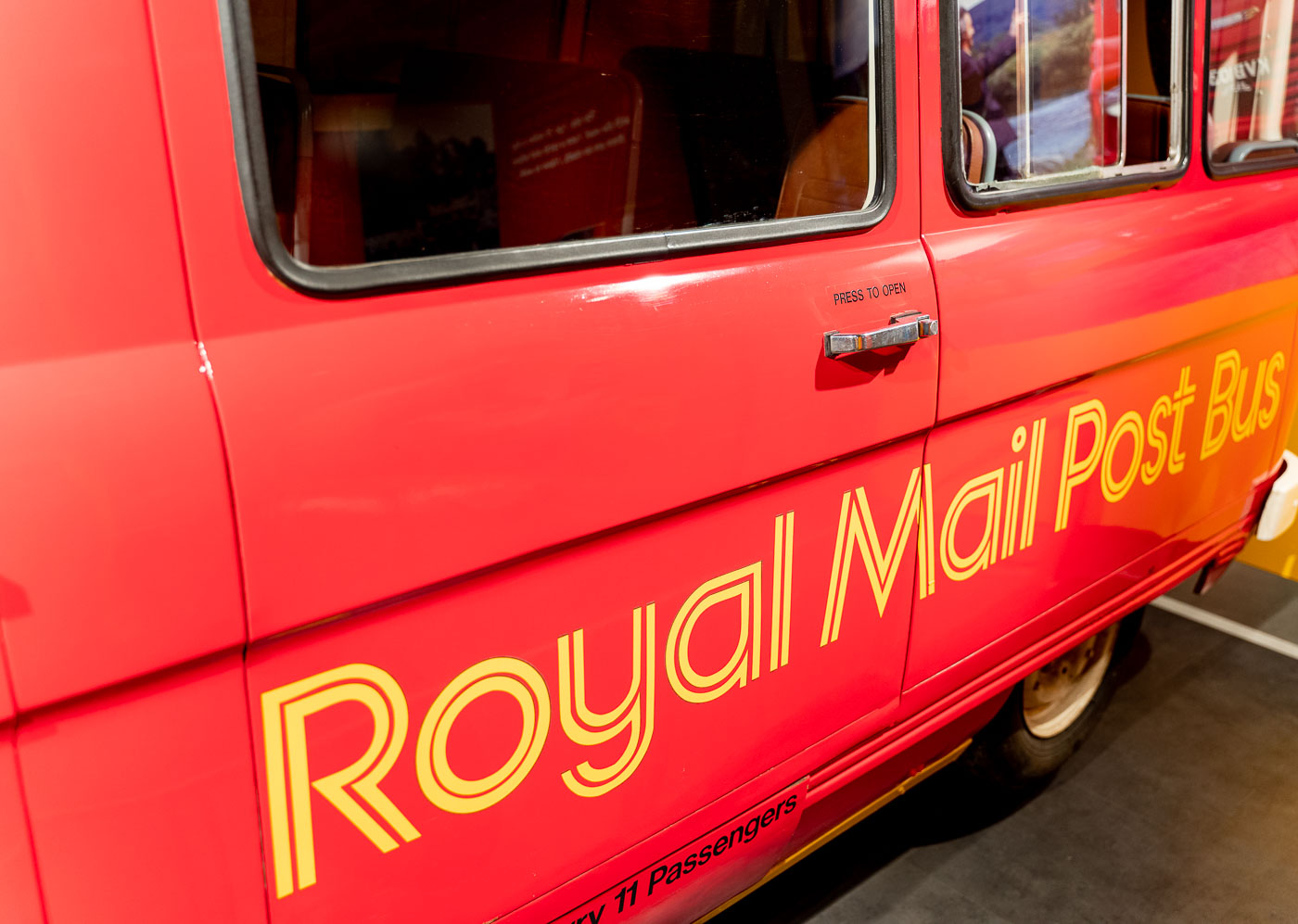
Royal Mail Post Bus in a London museum
A preserved Royal Mail Post Bus, once a familiar sight across rural Britain, is seen here on display with its signature red and gold livery. Introduced in 1967, the Post Bus service was an innovative hybrid of public transport and postal logistics, providing passenger seats on vehicles that also delivered mail along remote routes where dedicated bus services were uneconomical. Operated by Royal Mail in partnership with local councils, these vehicles—often based on small vans or minibuses—served isolated villages across Scotland, Wales, and the English countryside. Each bus carried both letters and up to a dozen passengers, connecting rural communities to larger towns while ensuring that even the most remote addresses received daily mail service. The scheme ran for over four decades before its gradual discontinuation by 2017, marking the end of a uniquely British solution to the challenges of rural mobility and communication.
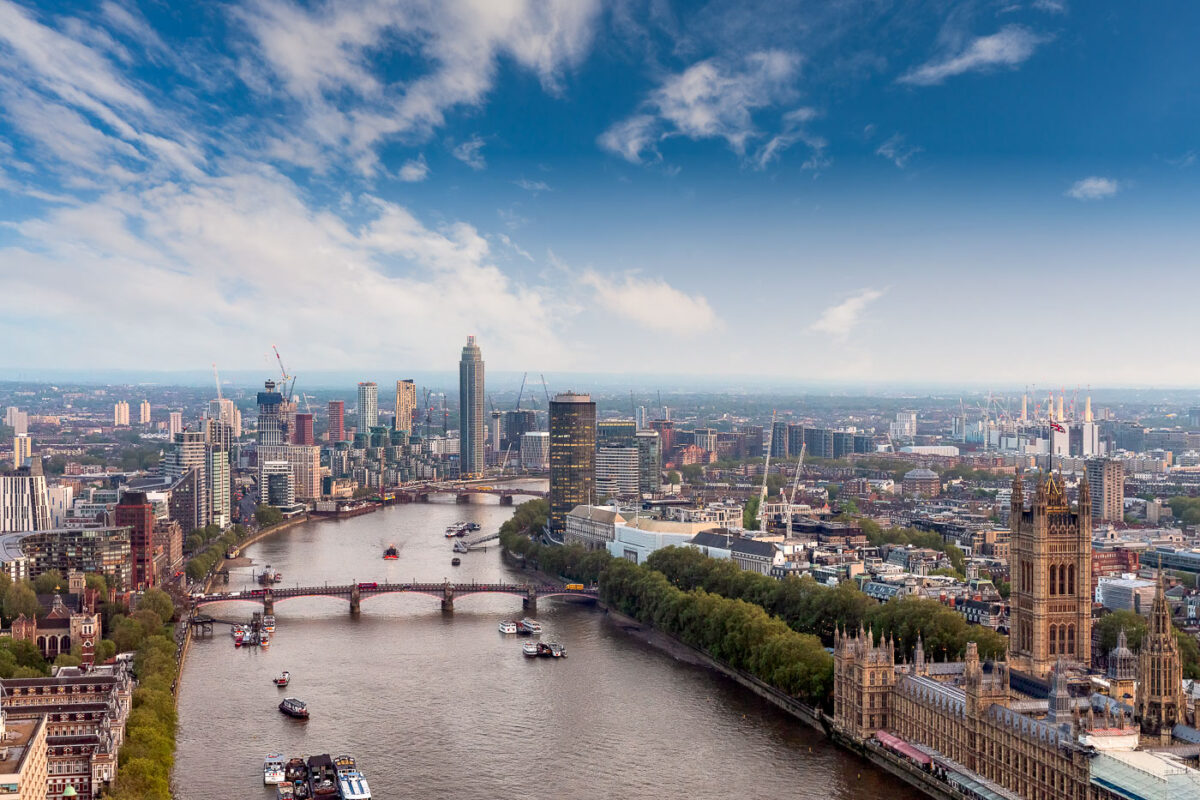
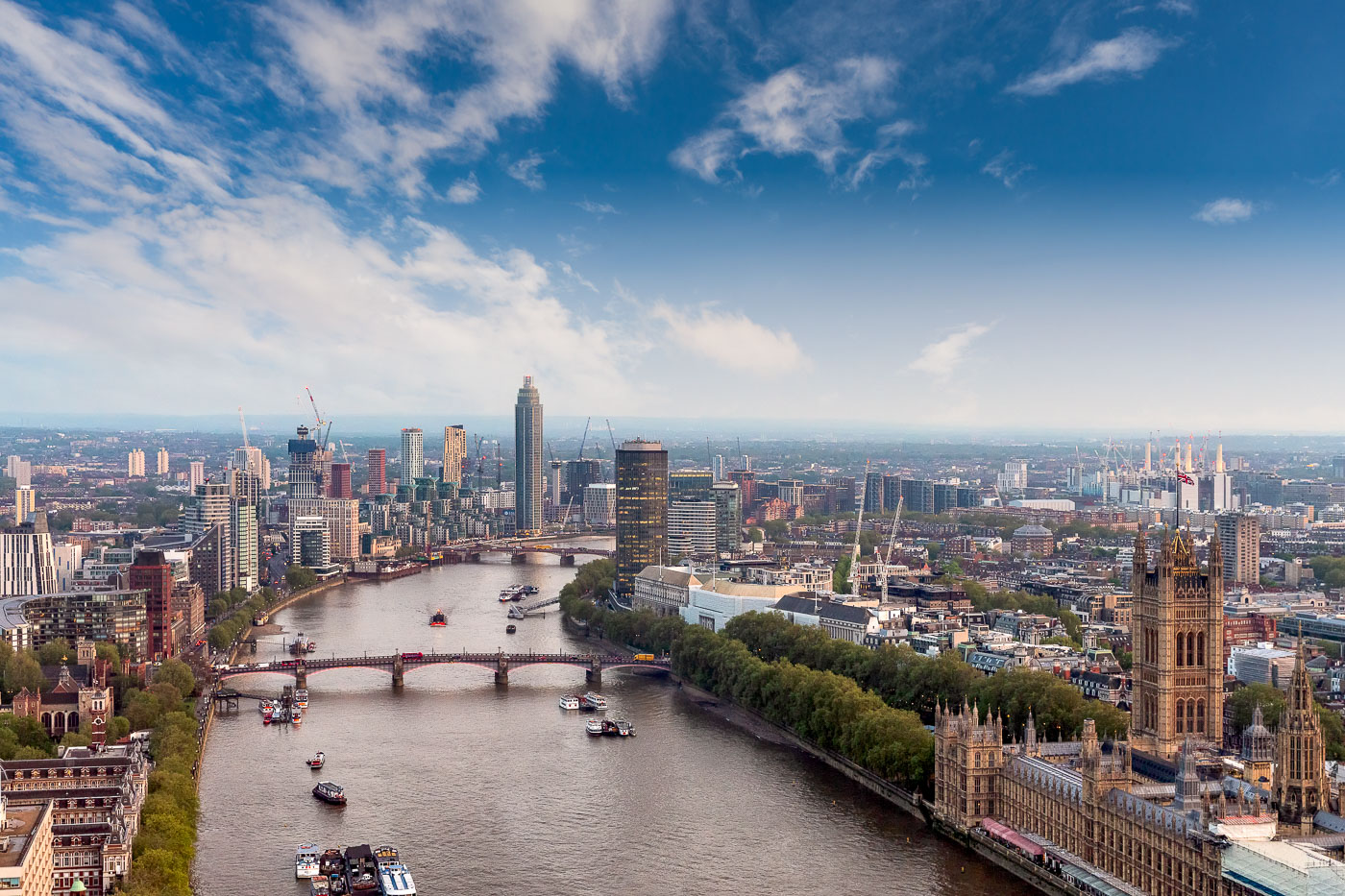
Thames River Skyline with Westminster and Vauxhall Developments
A sweeping view over central London captures the River Thames winding past Westminster toward the modern high-rises of Vauxhall and Nine Elms. On the right, the ornate Gothic Revival architecture of the Palace of Westminster anchors the historical core of the city, while Lambeth Bridge spans the river ahead. Across the Thames, cranes and towers mark London’s expanding skyline, where new residential and commercial developments rise along the South Bank. The image reflects both the enduring legacy of Victorian engineering and the ongoing transformation of London’s riverfront into a dense corridor of 21st-century architecture.
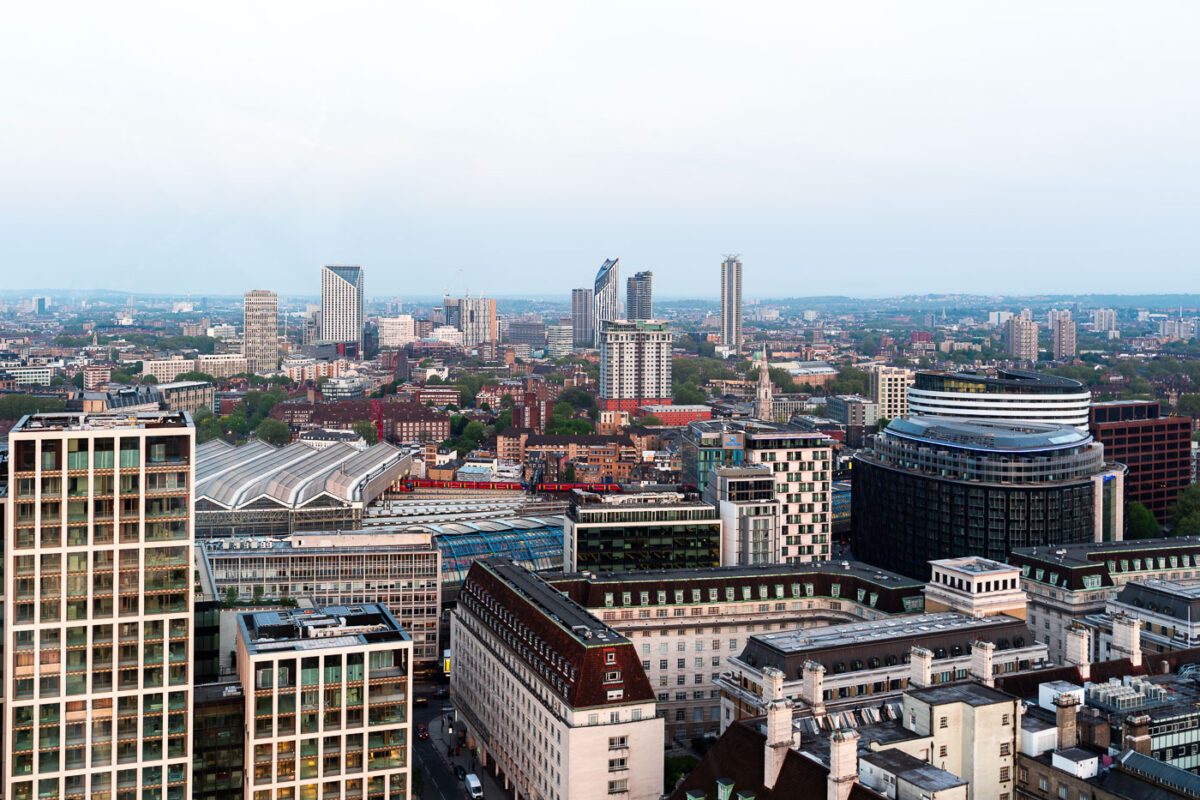
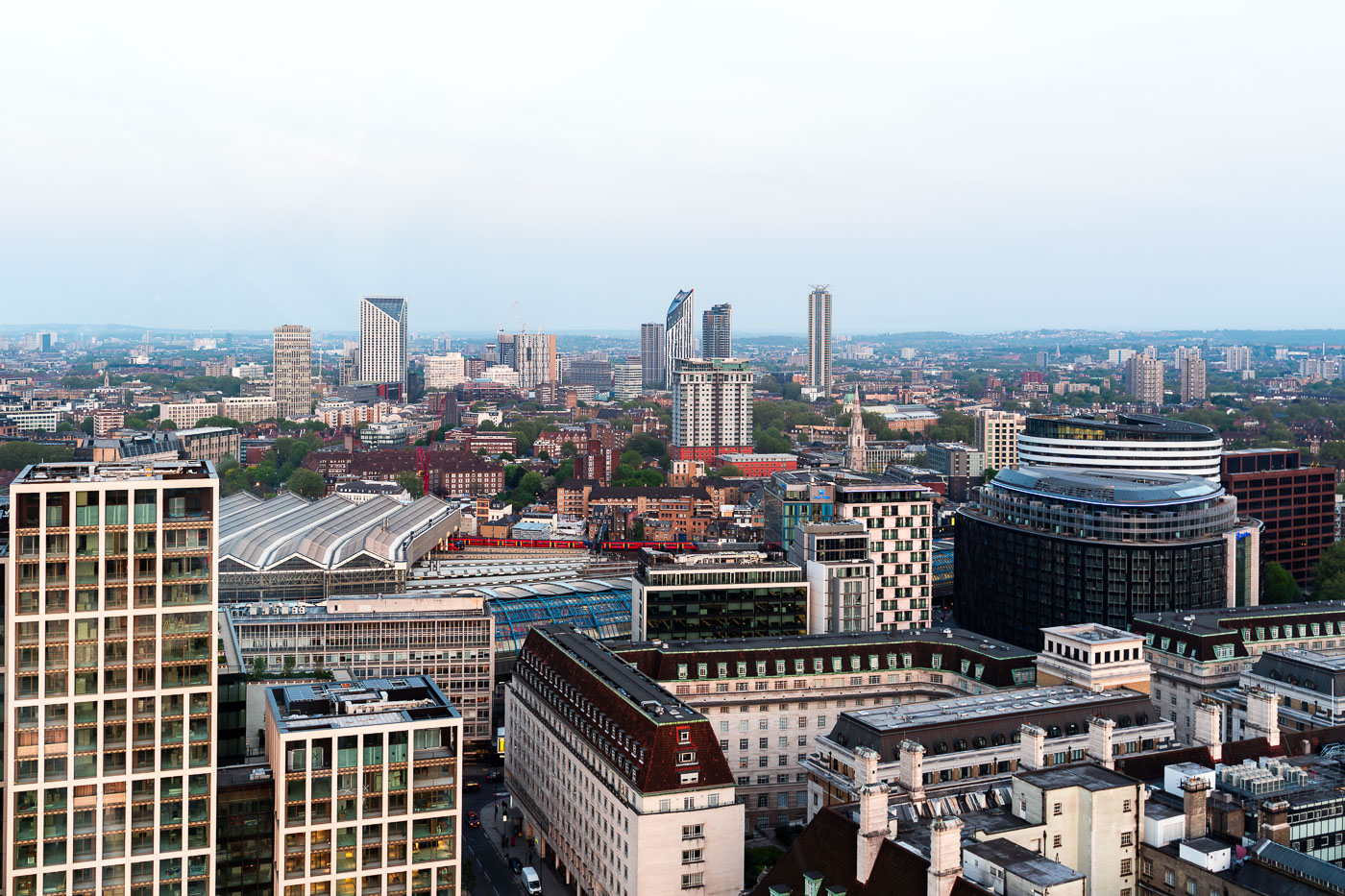
South Bank to Southwest London from the London Eye
Captured from one of the observation capsules of the London Eye, this elevated southwest-facing view looks across the South Bank and Waterloo Station toward the district of Vauxhall and the emerging skyline of Nine Elms and Battersea. The large curved glass roofs of Waterloo Station dominate the foreground, marking one of London’s busiest rail terminals. Beyond it, a mix of modern residential towers—including St George’s Wharf Tower and various recent high-rise developments—signal the transformation of South London’s riverfront. The image illustrates the urban evolution from historic masonry buildings near the Thames to new commercial and residential architecture further out, highlighting London’s shifting development landscape.
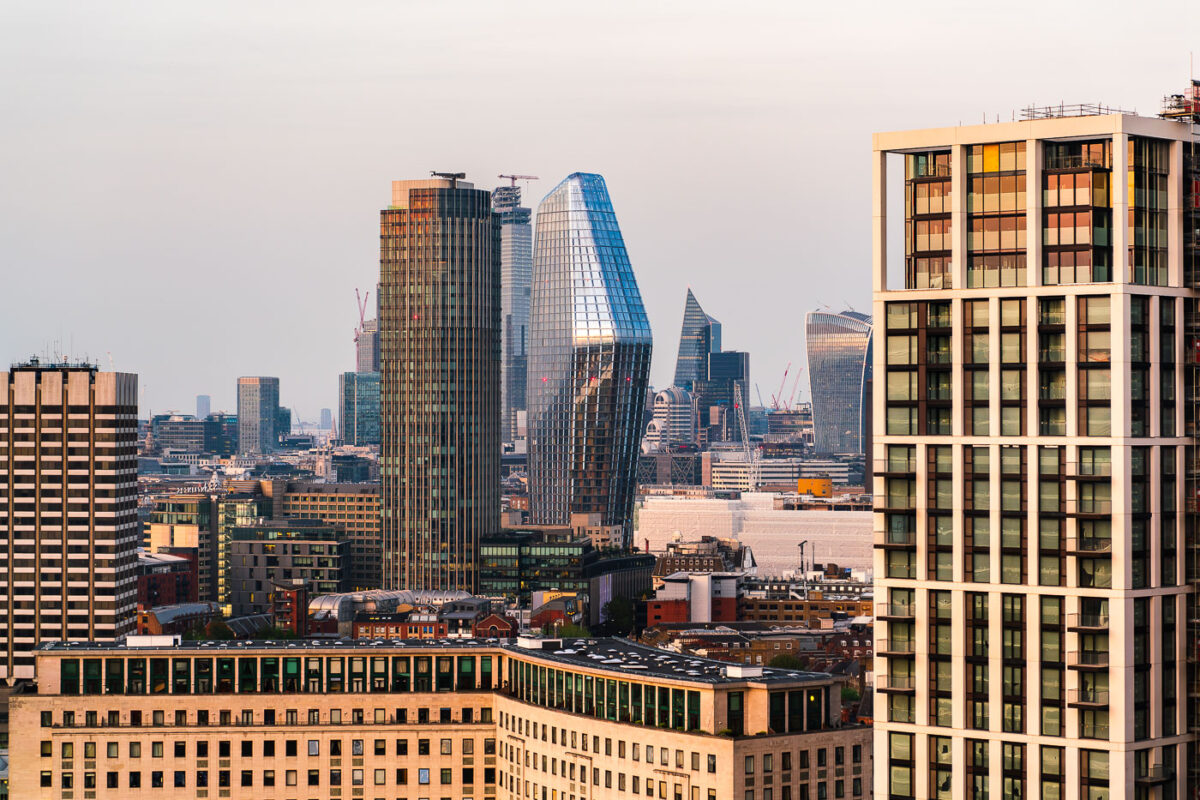
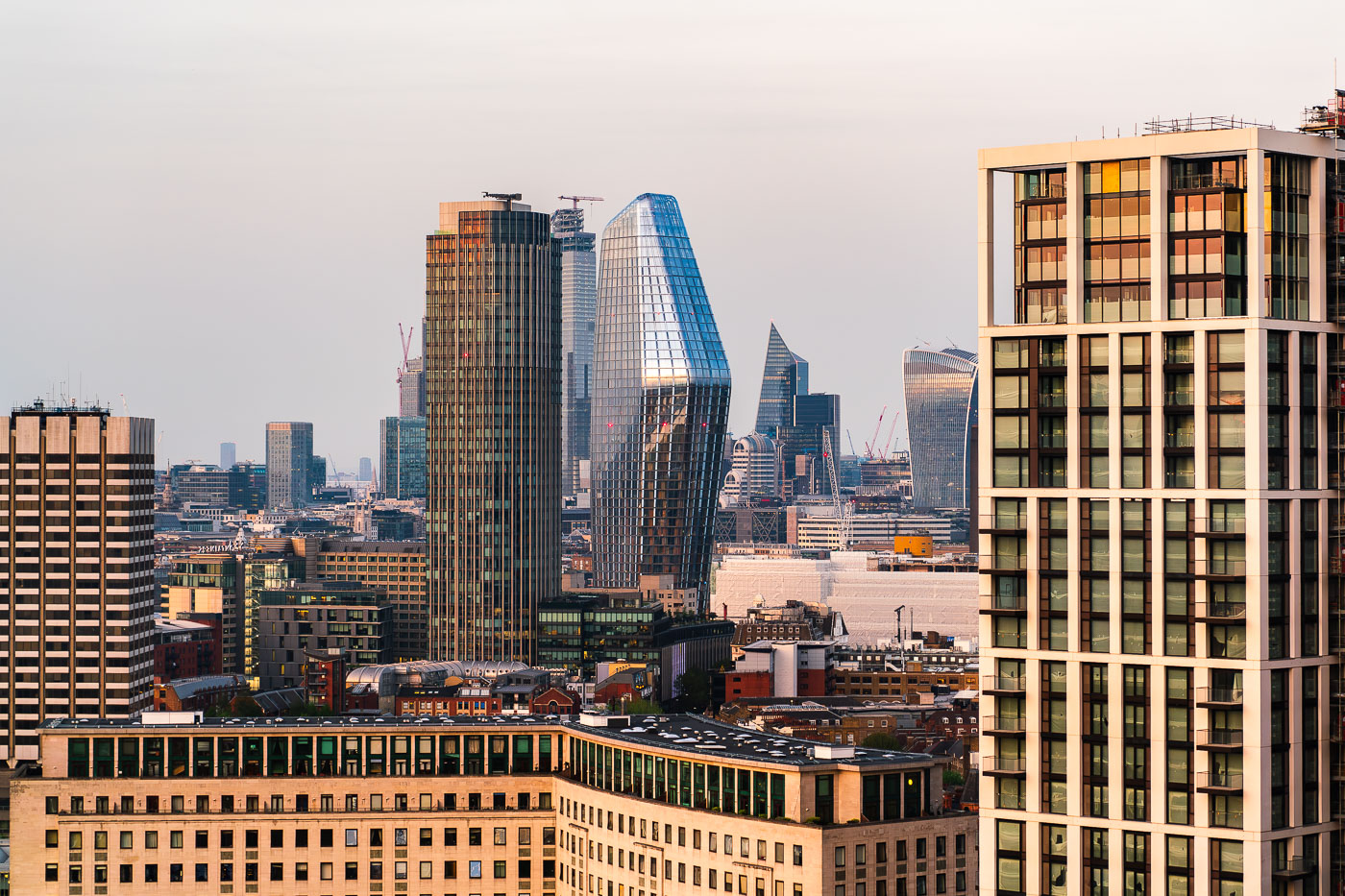
Evening Skyline of Central London
A view across central London at dusk, where residential towers and commercial high-rises stand against the soft evening light. Dominating the center is One Blackfriars, the glass-clad, sculptural tower completed in 2019, reflecting the sky with its curved façade. To its right is 22 Bishopsgate under construction, rising as one of the city’s tallest buildings. Further east, the distinctively slanted shape of The Scalpel and the concave form of 20 Fenchurch Street, commonly known as the Walkie-Talkie, mark the financial district’s development in the 2010s. The variety of architectural styles reflects London’s rapid vertical growth and economic shift toward high-density mixed-use urban living near the River Thames.
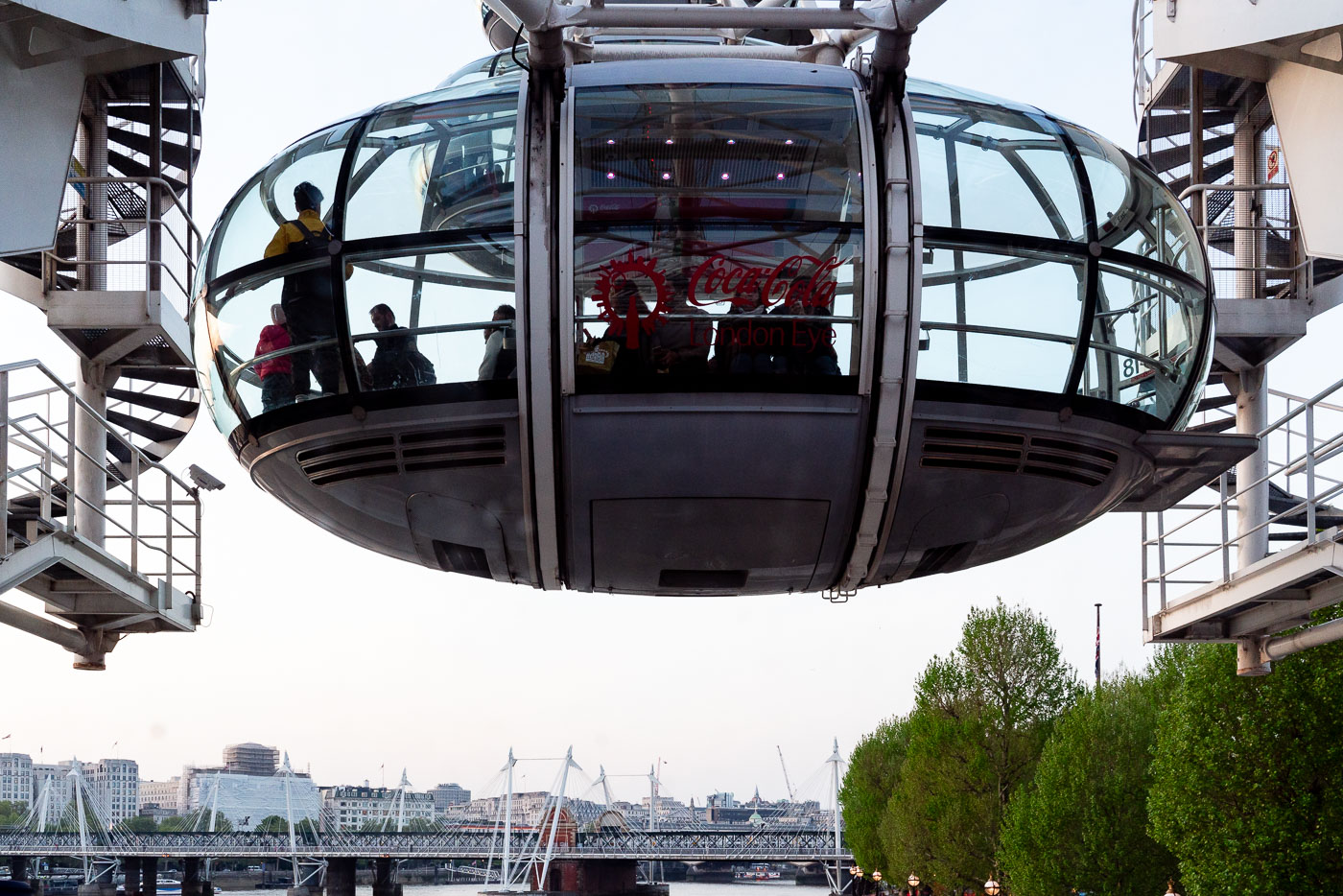
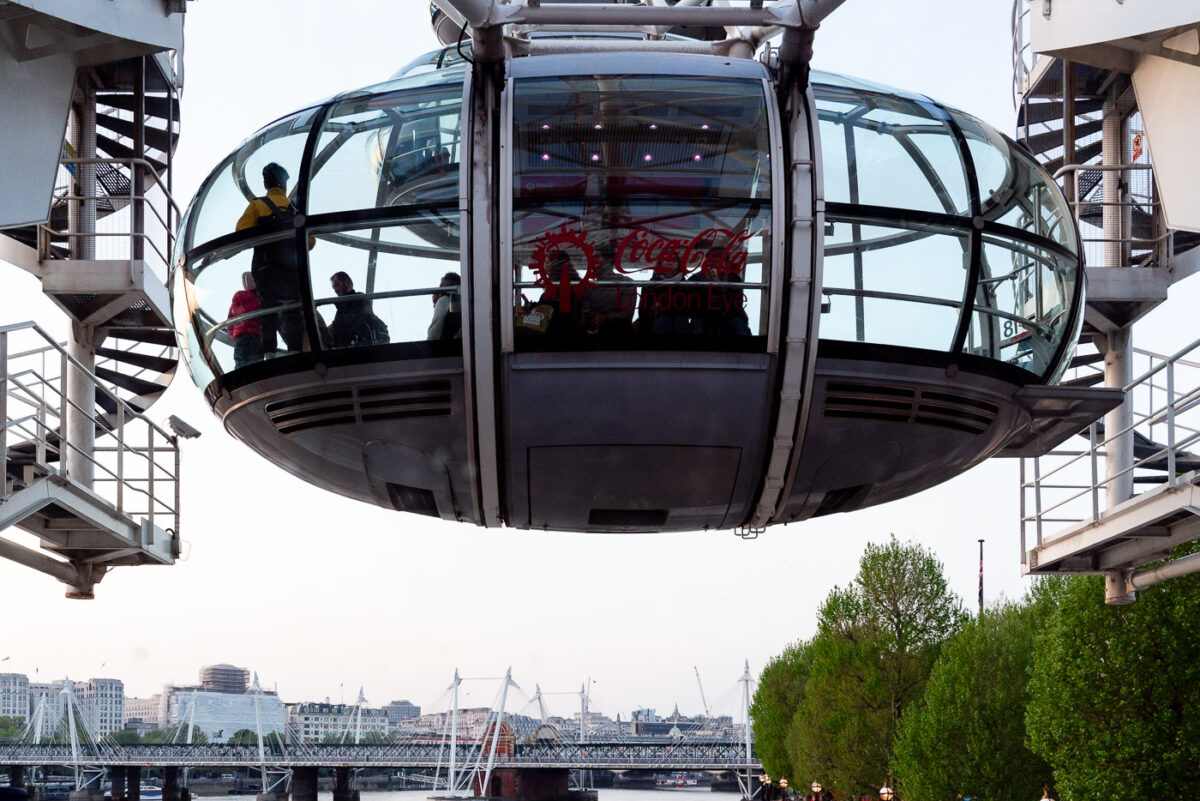
London Eye in London
A passenger capsule of the London Eye is shown docked at its South Bank embarkation point. Opened in 2000, the London Eye was designed by Marks Barfield Architects and was the world's tallest observation wheel at the time of its completion. Its 32 glass capsules, each capable of holding up to 25 passengers, offer a 30-minute rotation providing panoramic views of London. The structure, a significant piece of modern engineering and architecture, has become a prominent landmark on the River Thames.
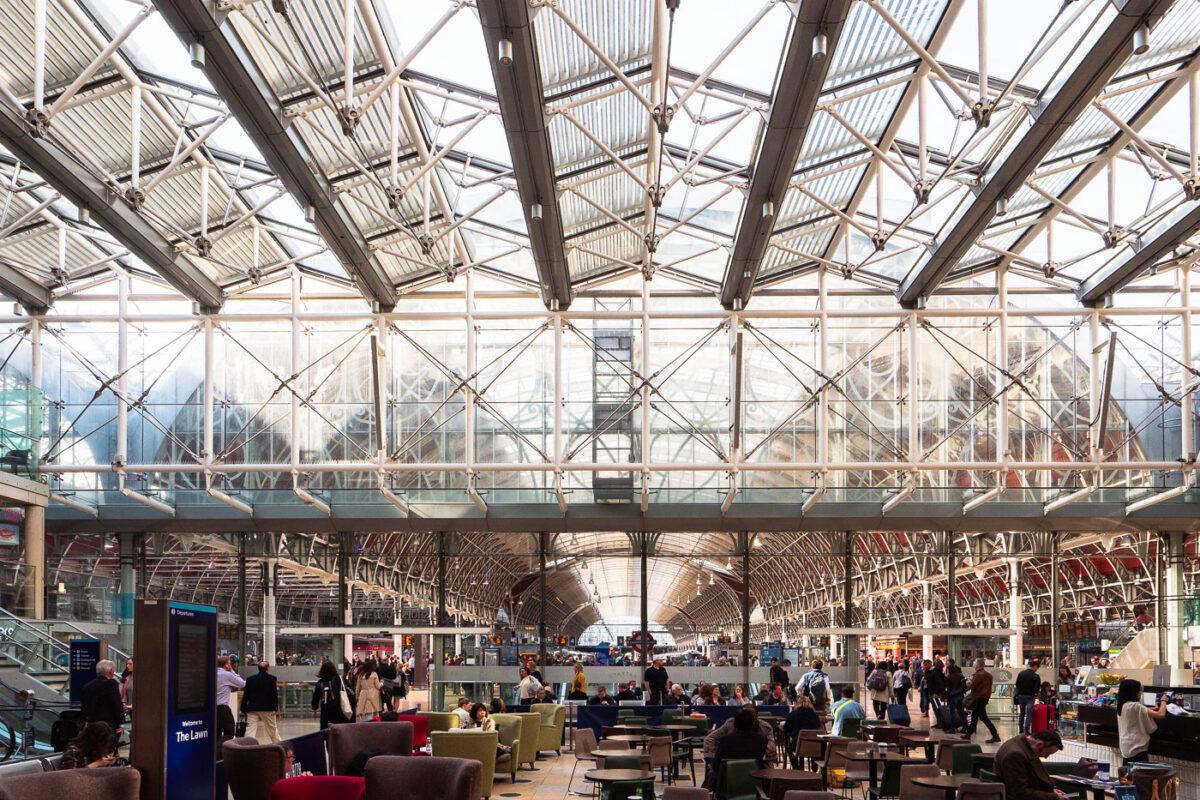
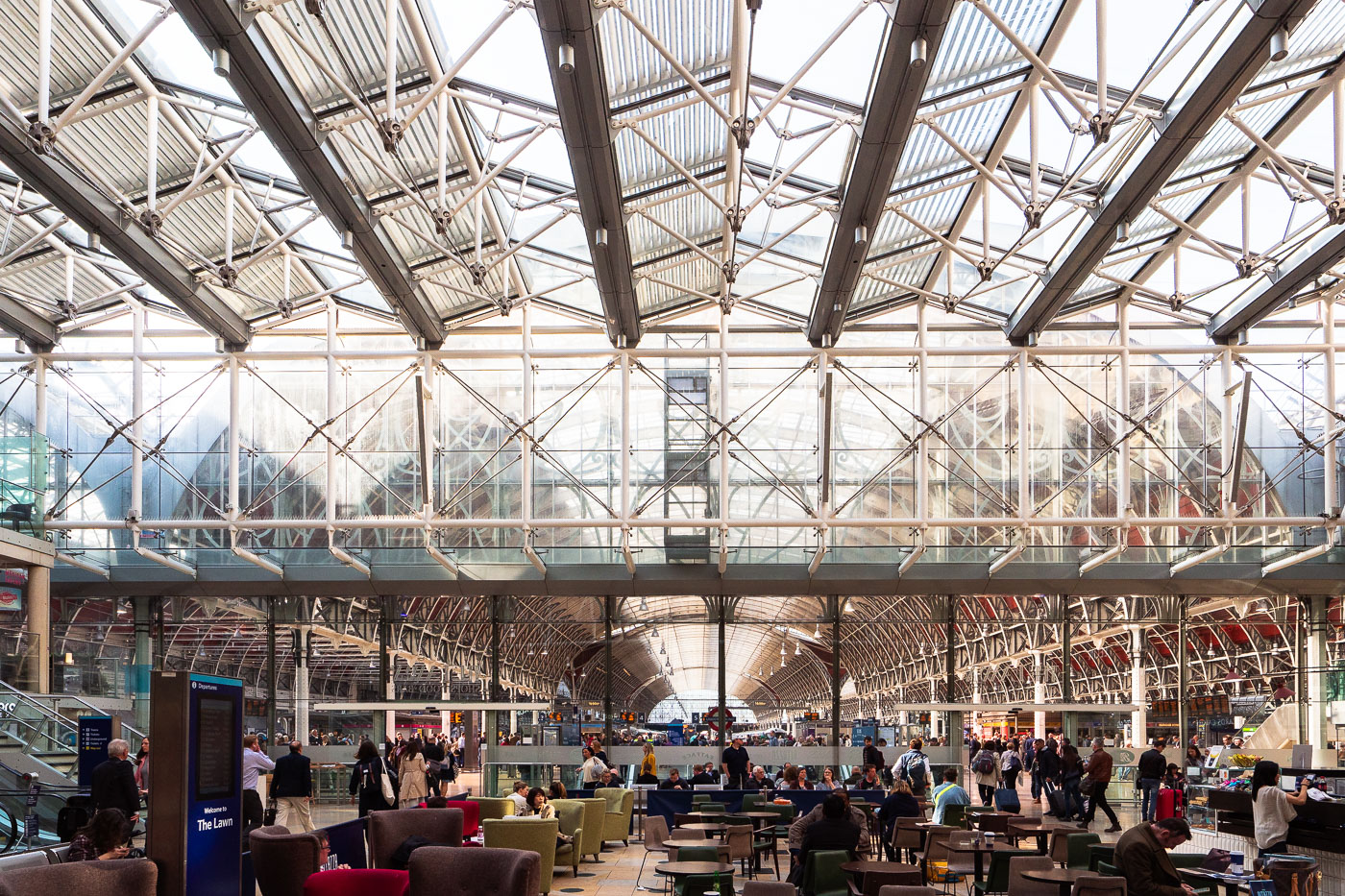
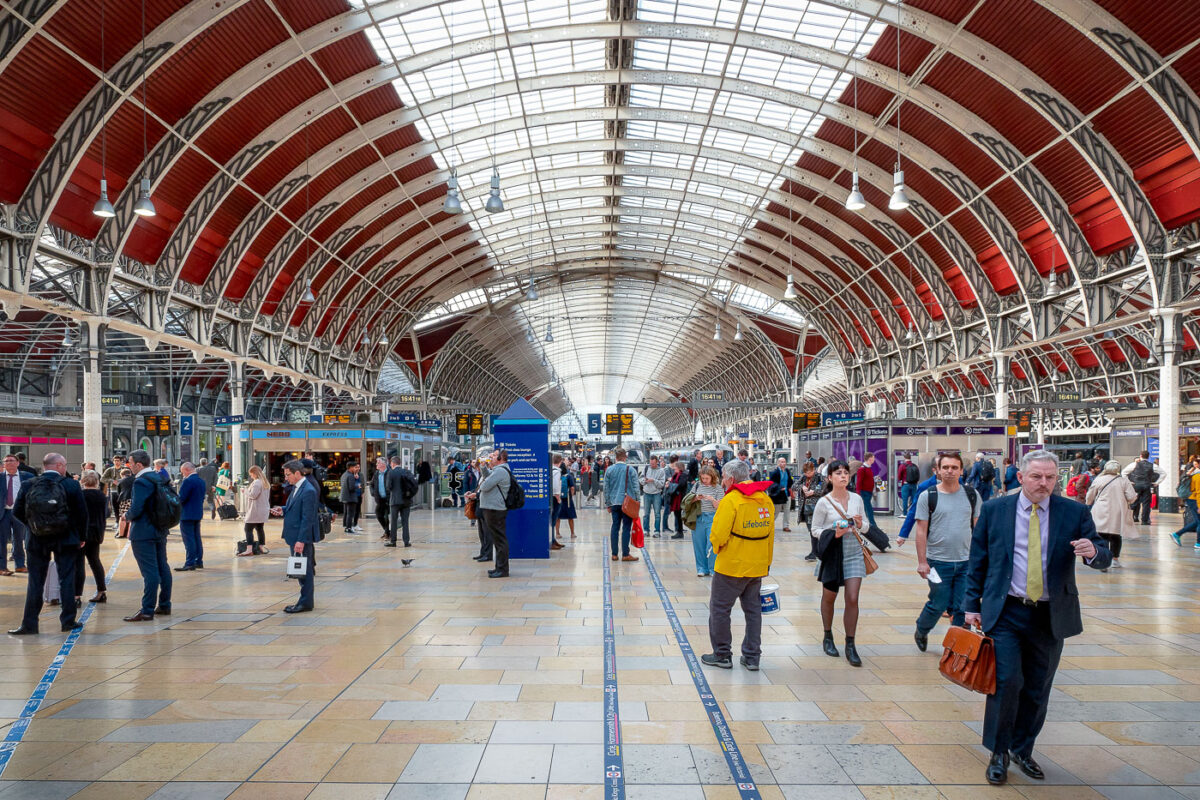
Paddington Station's Victorian iron and glass roof, designed by Brunel, covers The Lawn concourse, a restored and modernized transit hub in London.
Paddington Station's concourse, known as The Lawn, is covered by Isambard Kingdom Brunel's original 1850s iron and glass roof. This Victorian engineering marvel, characterized by its expansive arched structure, was significantly restored and modernized in the early 2000s. The renovation preserved the historic ironwork while integrating new steel and glass elements to enhance natural light and openness. Today, The Lawn serves as a bustling hub for travelers and commuters, featuring various amenities and serving as a central point within the station where historical architecture meets contemporary transit needs.
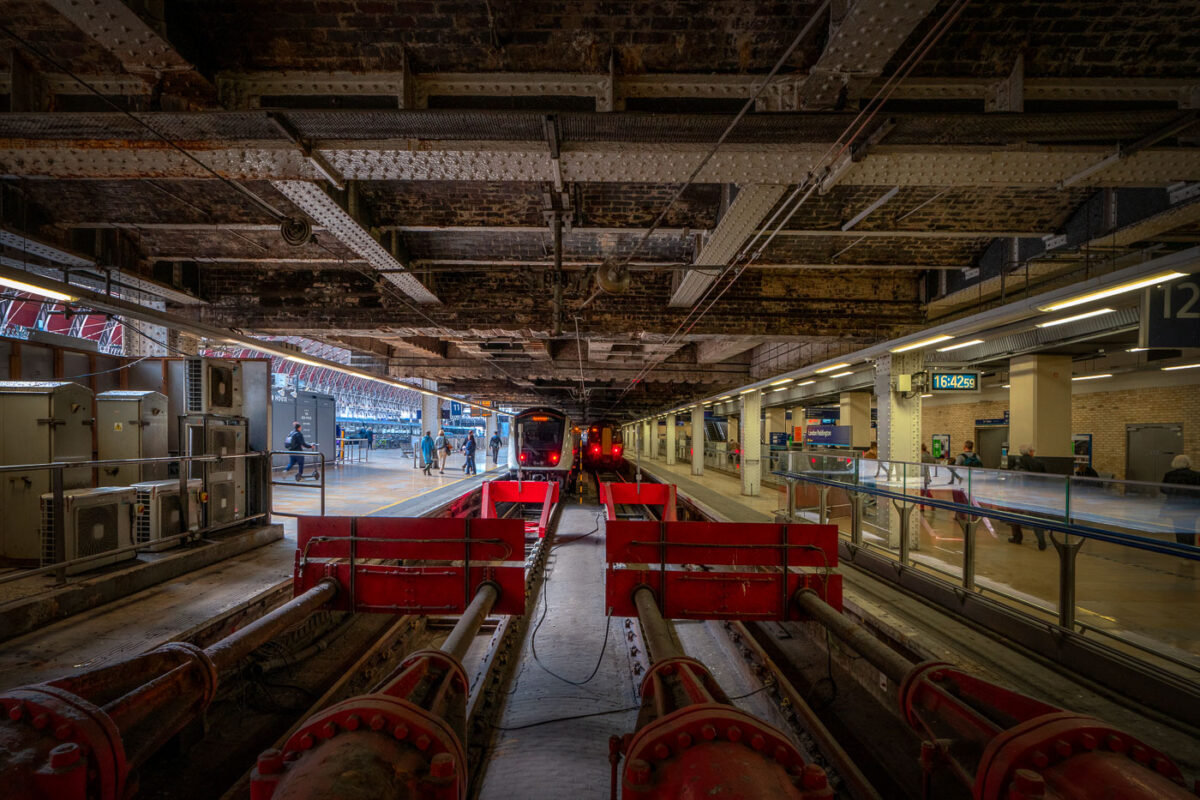
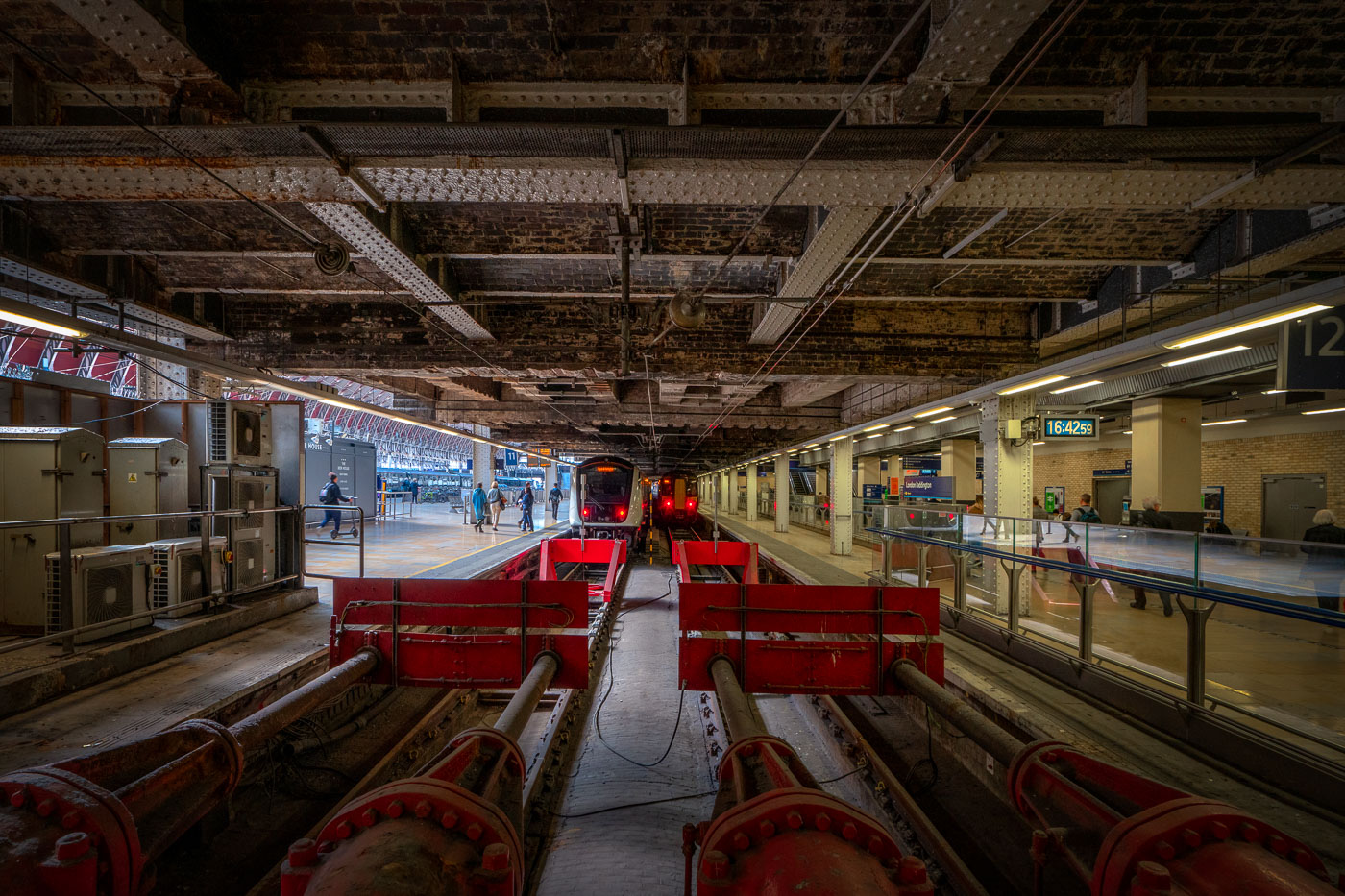
Terminus Tracks Beneath Paddington Station’s Ironwork
The buffer stops and terminating tracks beneath the iron spans of Paddington Station in London, photographed in the late afternoon light. Designed by Isambard Kingdom Brunel and opened in 1854, Paddington remains one of the city’s most architecturally significant rail termini. The exposed girders and riveted beams above reveal the original Victorian engineering still supporting modern operations, while the platforms now serve Elizabeth Line and Great Western Railway trains. The red hydraulic buffers and dense network of conduits illustrate the blend of 19th-century structure and 21st-century rail technology that defines Paddington’s evolution.
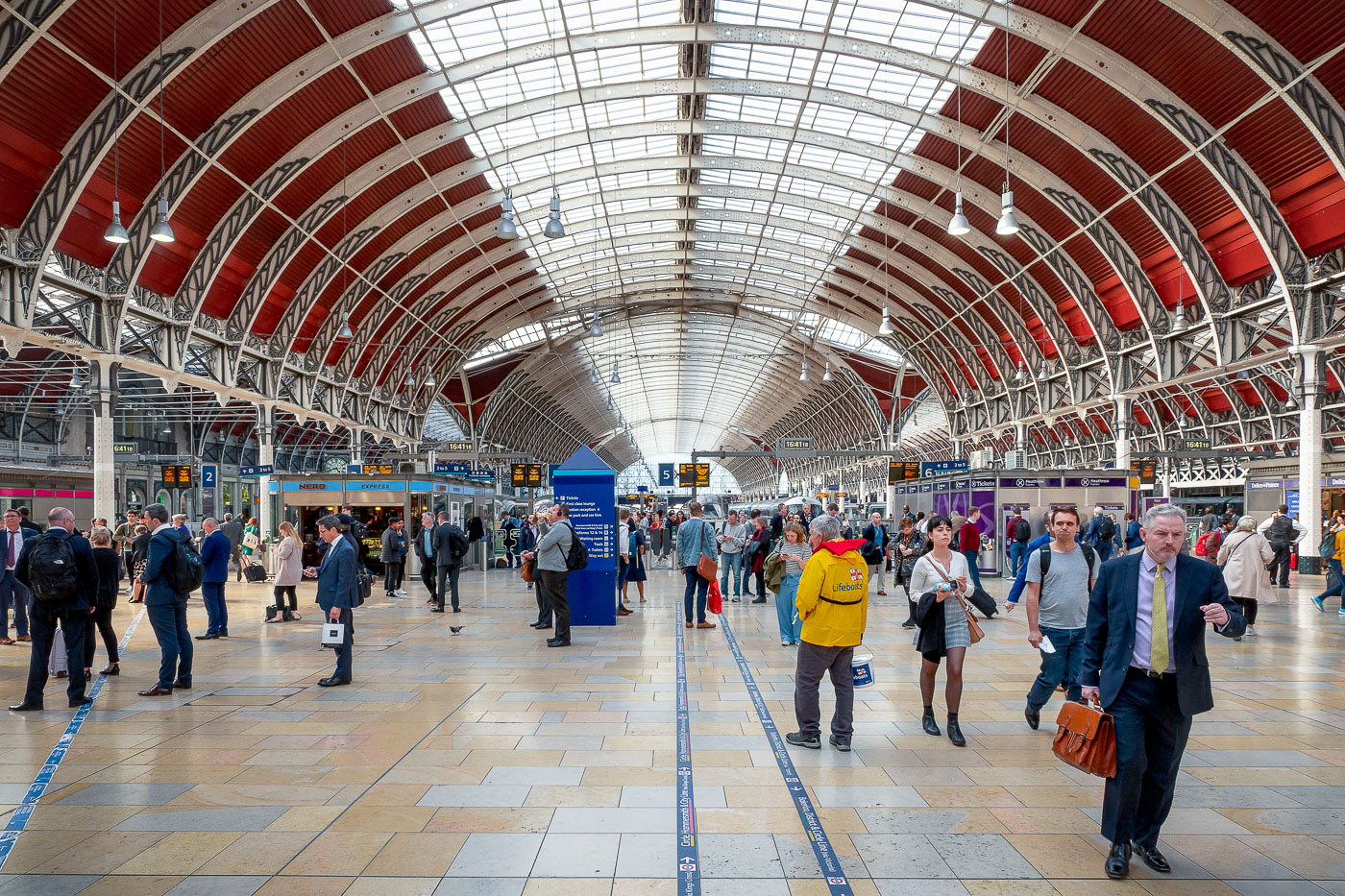
Paddington Train Station in London 2019
Paddington Station, a major railway terminus in London, is characterized by its distinctive red-and-white arched roof, a hallmark of Victorian-era engineering. Opened in 1854, it was designed by engineer Isambard Kingdom Brunel and architect Matthew Digby Wyatt. The station serves as a crucial hub for services to the west of England, South Wales, and is the London terminus for the Heathrow Express. Today, it continues to be a vital part of London's transportation network, facilitating millions of journeys annually.
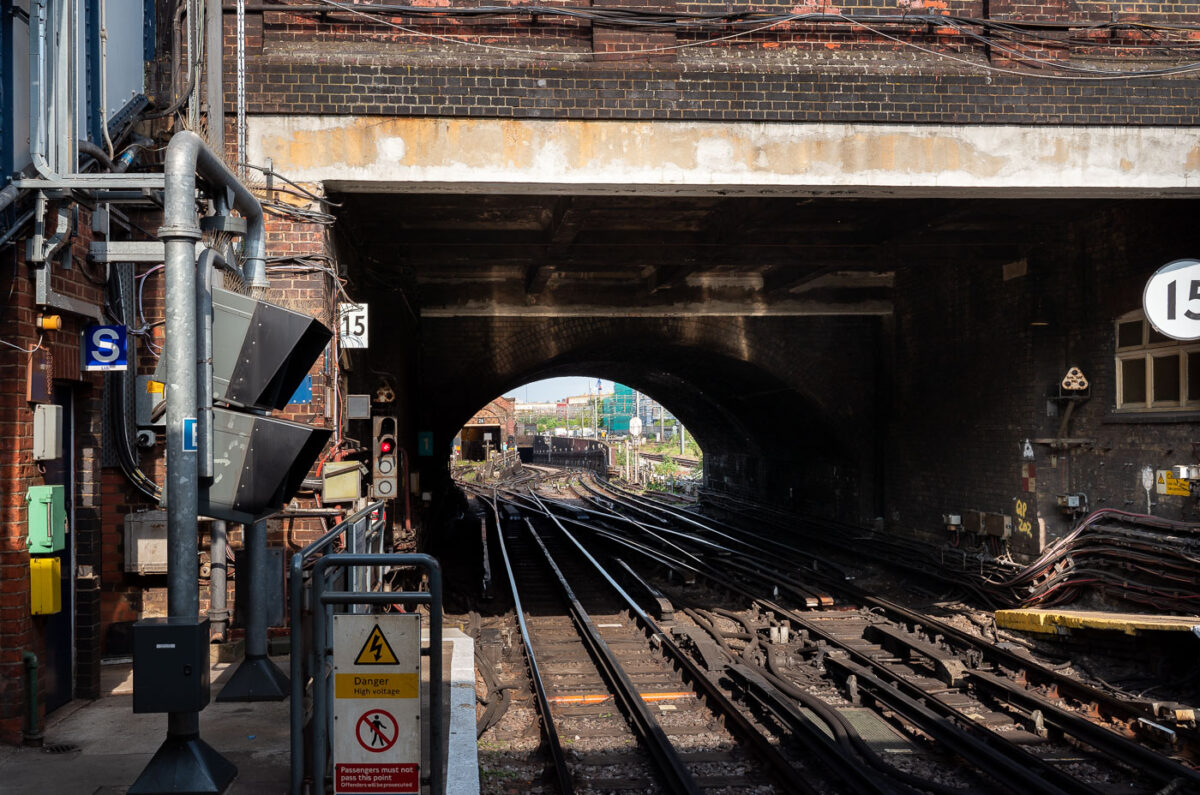
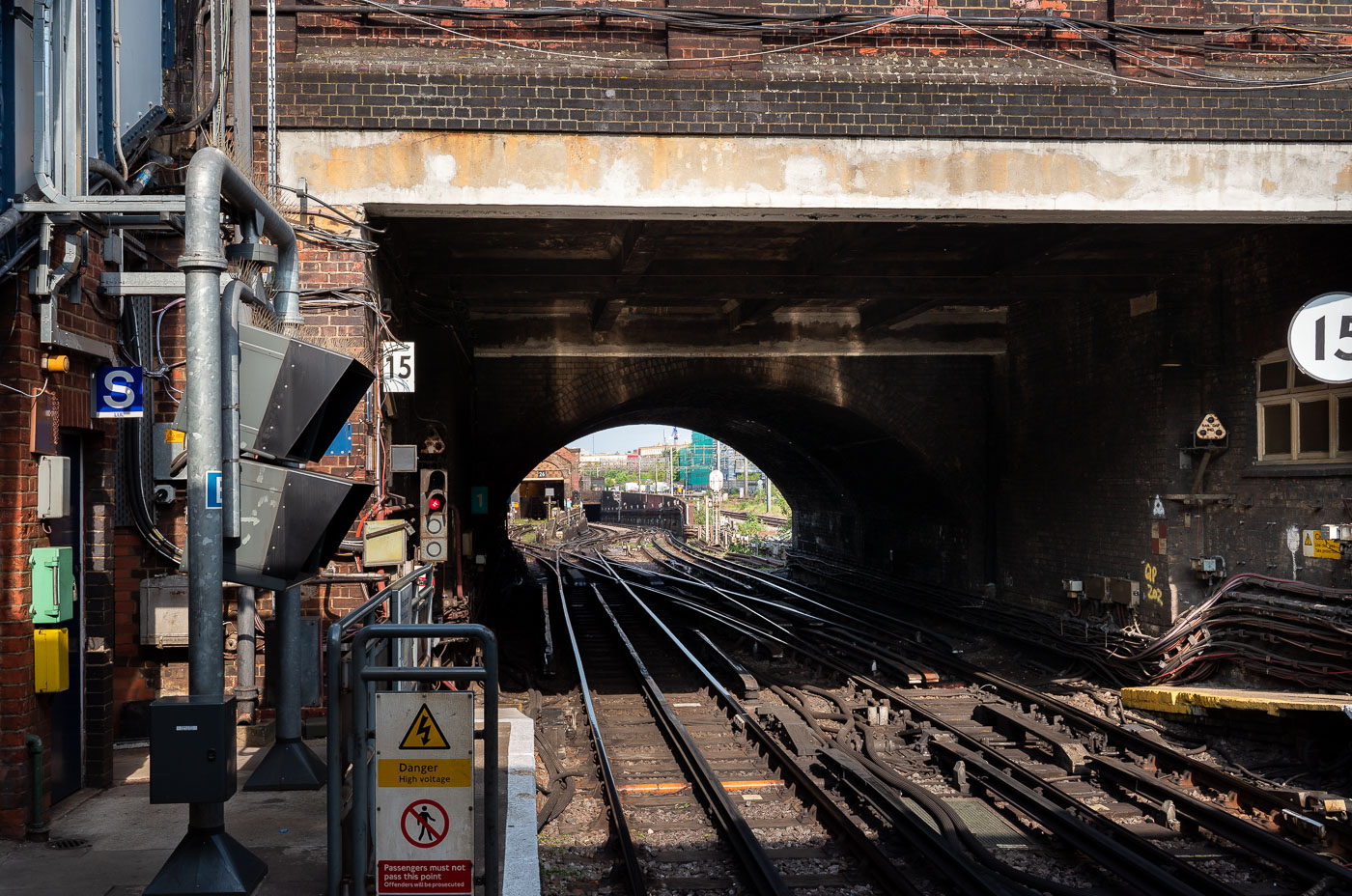
Queens Park Train Station in London
Queen's Park Station in northwest London is a critical junction where the London Underground's Bakerloo Line meets Network Rail tracks. Opened in 1915, this site serves as the operational boundary and a key depot for the Bakerloo Line. The complex arrangement of tracks, signals, and overhead electrification demonstrates over a century of railway development. It facilitates the seamless integration of underground and mainline rail services, showcasing the ongoing modernization of London's transport network.

Built in Minneapolis

Photographs made over time, focused on place, public life, and ongoing reporting.

Browse by location, move through long-running series, or start with recent work.

© 1996–2026 Chad Davis