Place Archive

Guanacaste Coast

The Guanacaste Coast features rugged rocky shorelines such as those at Playa Escondida and Jobo Bay, where tidal pools and volcanic formations meet the Pacific Ocean. Nearby, abandoned structures like the Santa Elena Resort hut at El Jobo contrast with newer developments like the Dreams Las Mareas Resort, reflecting shifts in the region’s economic and environmental landscape.

12 photos

Photos from Guanacaste Coast
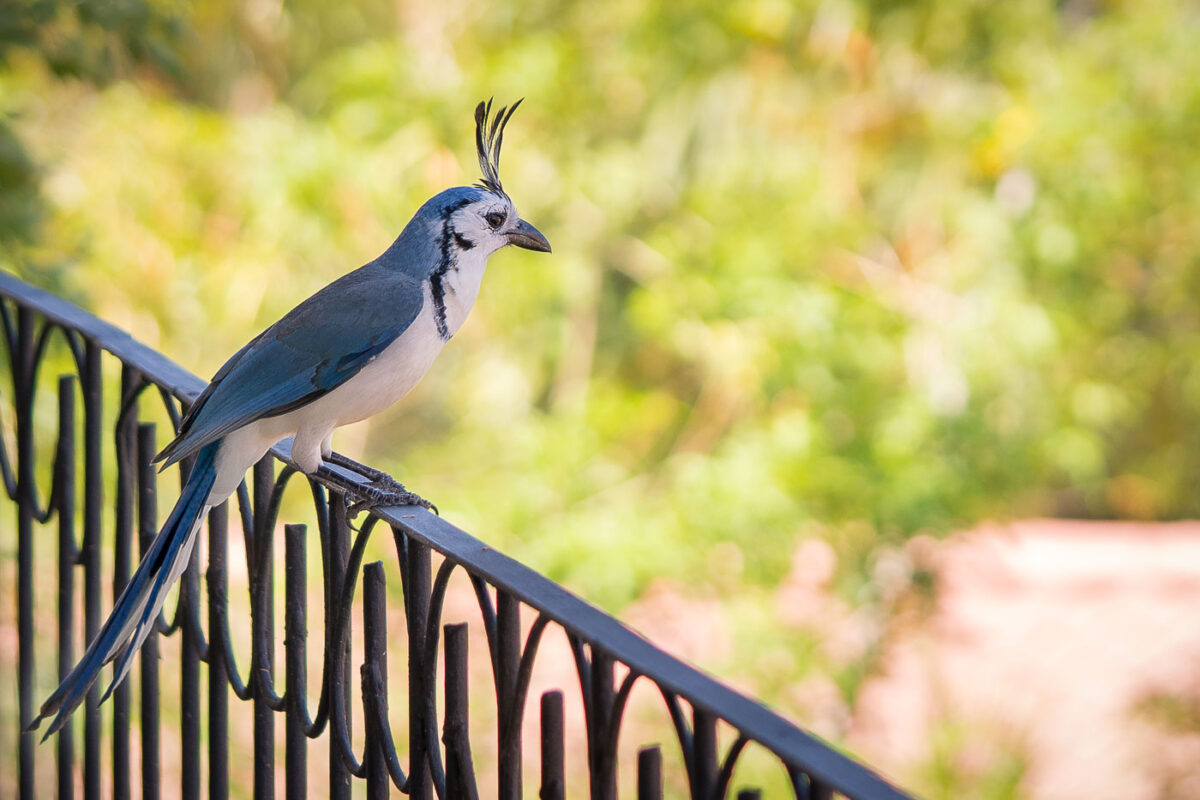
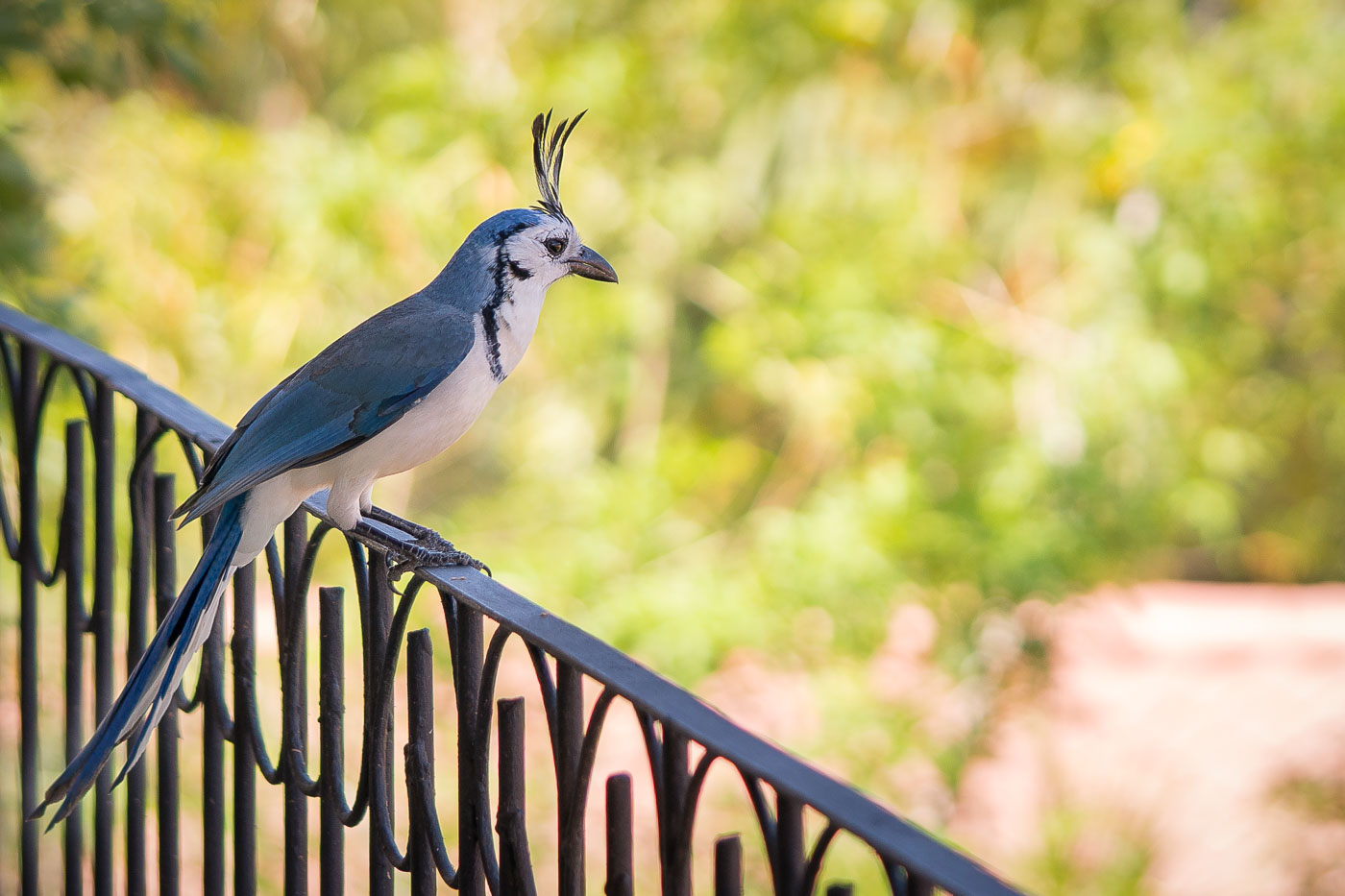
White-throated Magpie-Jay with distinctive crest perched on wrought-iron fence in Costa Rica.
The white-throated magpie-jay is a large jay native to the Pacific slope of Central America, ranging from southern Mexico into northwestern Costa Rica. It's easily identified by its long, graduated tail, curled forward-facing crest feathers, and the blue-and-white plumage with a dark necklace marking across the chest. The species favors dry forest and scrubland, and it has adapted readily to gardens, farms, and developed areas within its range. Magpie-jays are highly social, often traveling and foraging in small family groups that cooperate in raising young from previous broods.
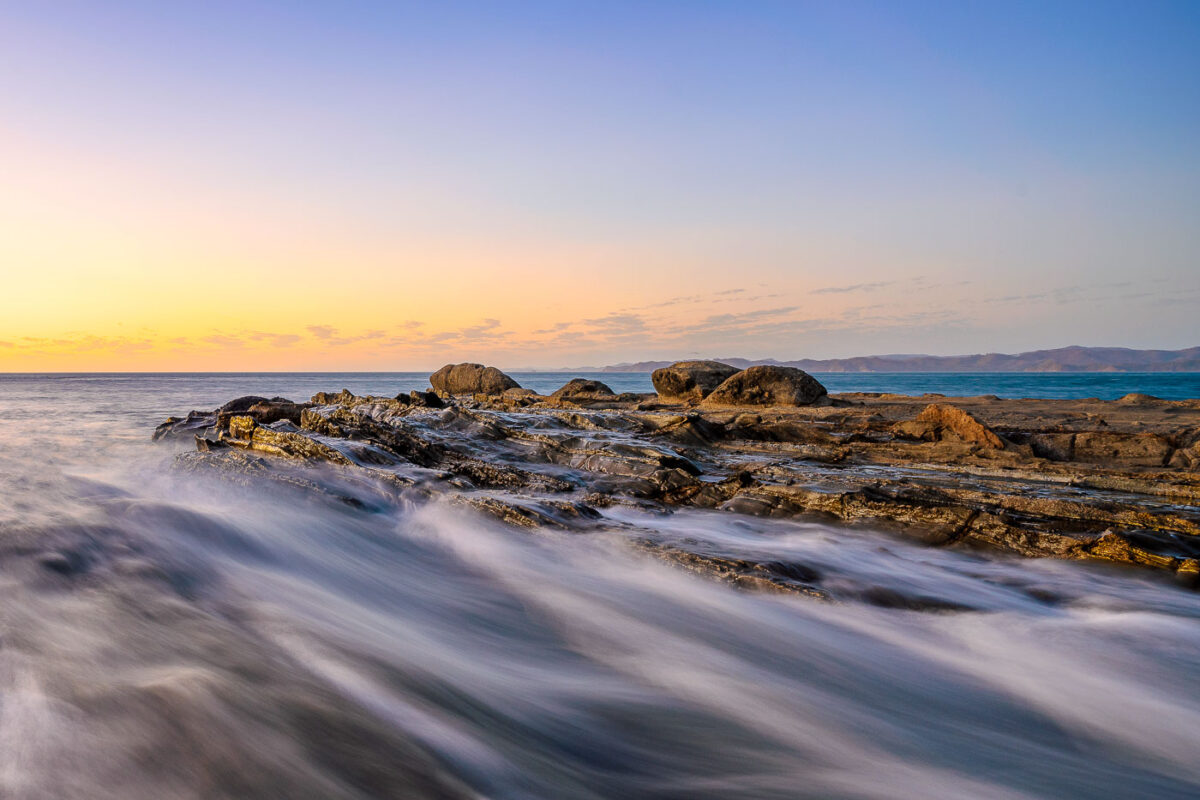
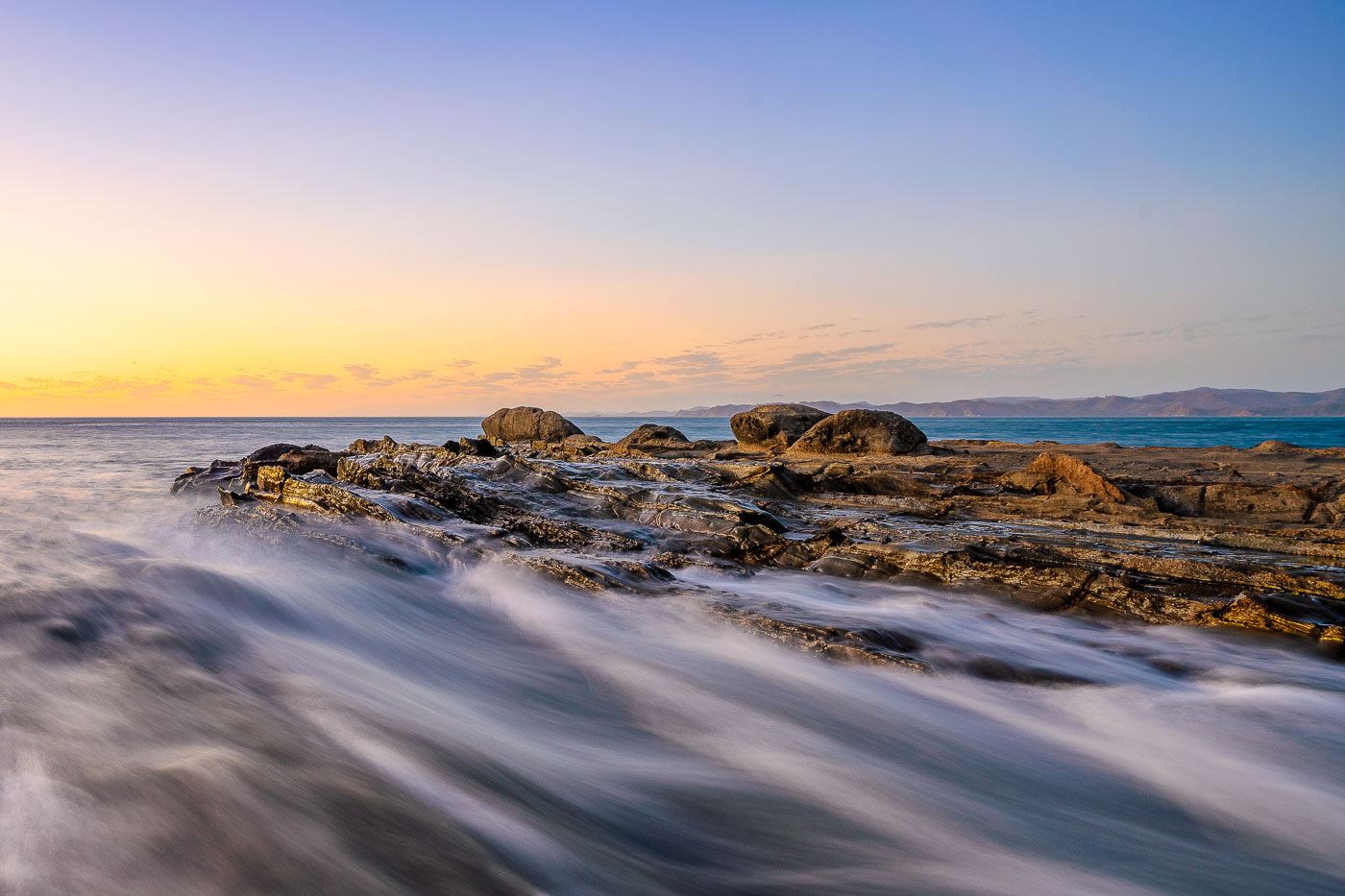
Waves wash over rocky outcrops along the Pacific coastline at Jobo Bay in Guanacaste, Costa Rica, at sunset.
Jobo Bay sits on Costa Rica's northern Pacific coast in Guanacaste province, near the village of El Jobo. The shoreline here is built on exposed sedimentary rock shelves, layered formations that erode unevenly and create the shallow channels where incoming surf collects and drains. Guanacaste's coast lies within Costa Rica's tropical dry forest zone, where lower rainfall than the rest of the country leaves rock formations like these less obscured by vegetation. The bay faces open ocean swell, with no major islands or reefs offshore to break the wave action before it reaches the rocks.
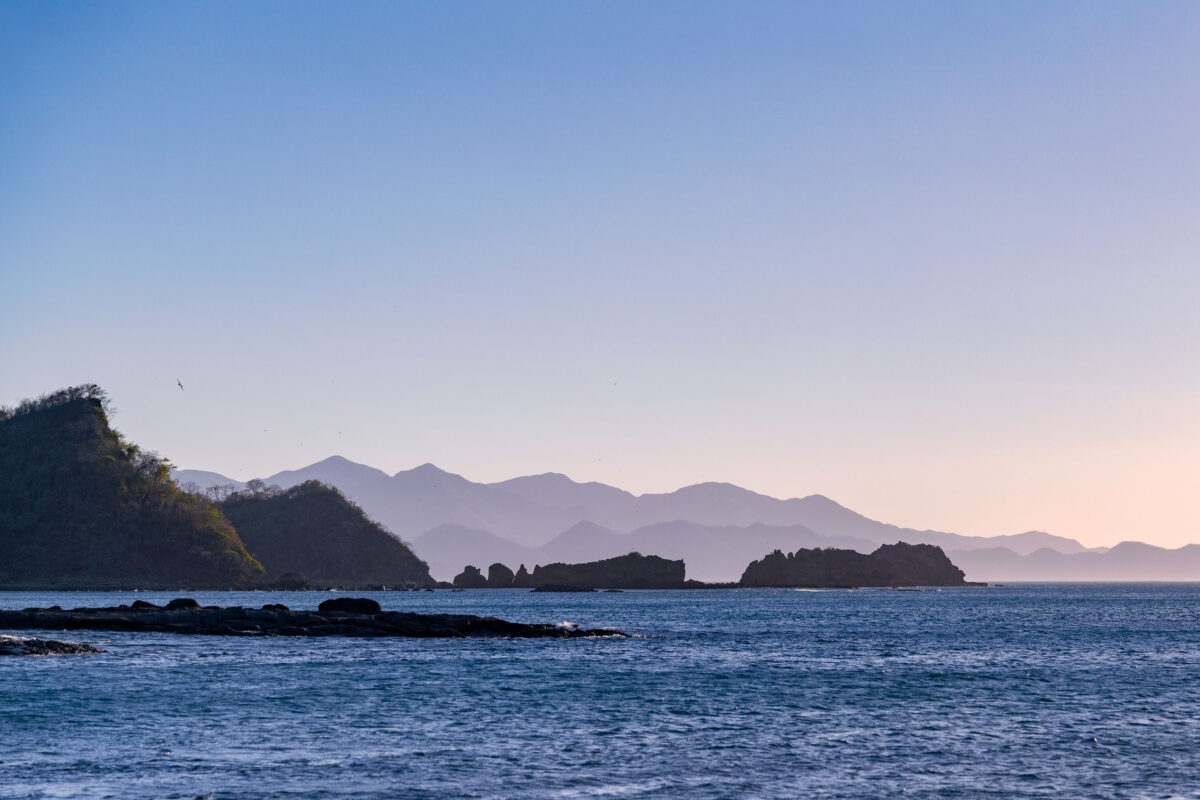
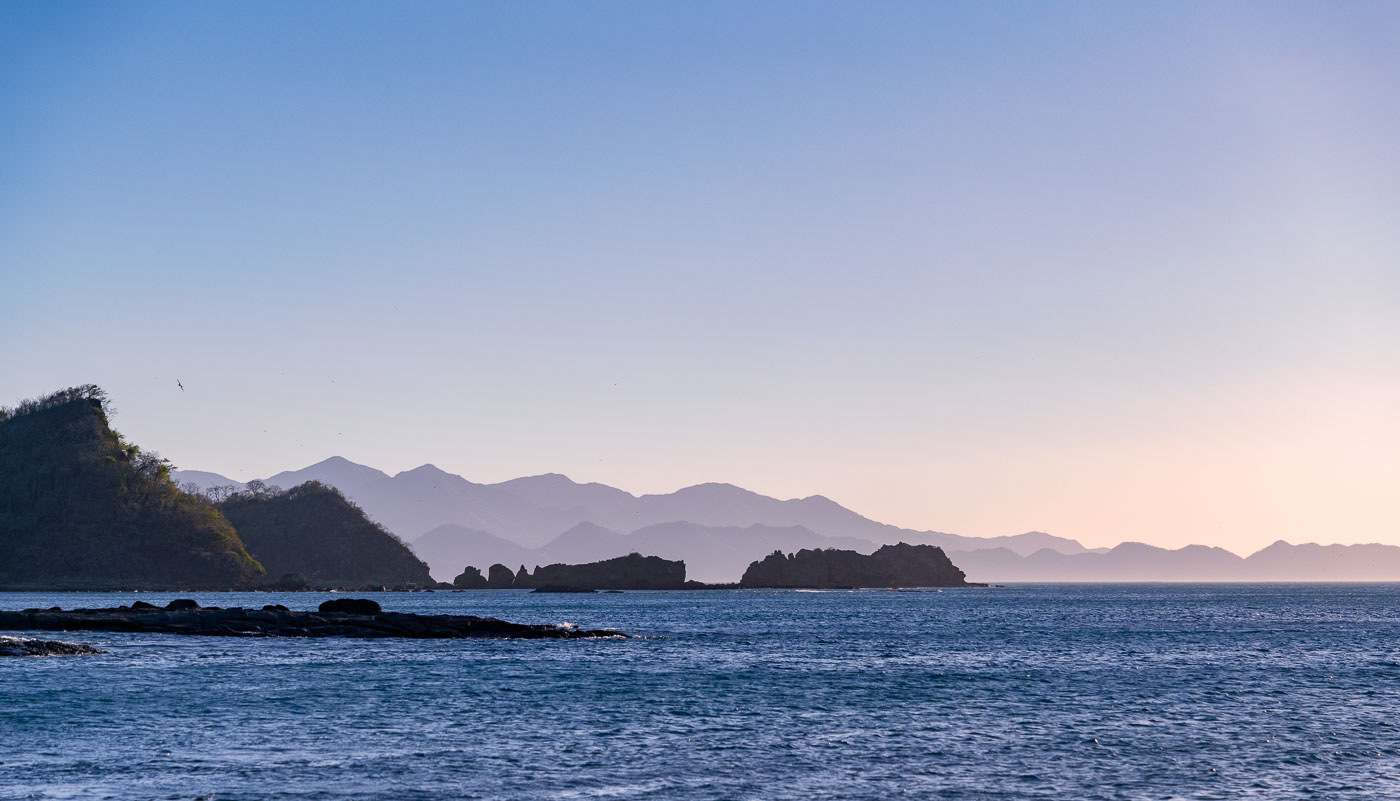
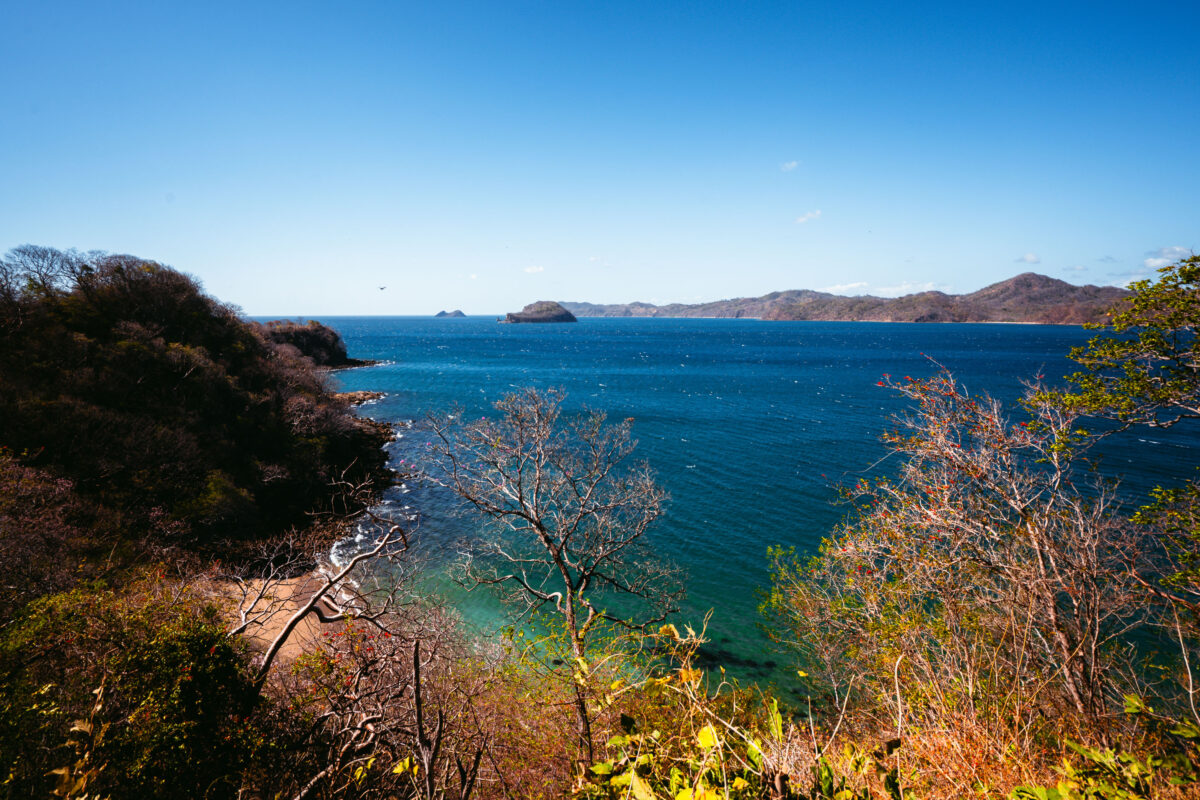
Rocky coastline with forested headlands overlooks Jobo Bay with hazy mountains across the Pacific Ocean in Guanacaste Province, Costa Rica.
Jobo Bay sits along the Pacific coast of Guanacaste Province in northwestern Costa Rica, near the small community of El Jobo. The bay forms part of the Santa Elena Peninsula's coastline, where volcanic hills meet the sea in a series of rocky points and small offshore islets. This stretch of coast lies within the Guanacaste Conservation Area, a UNESCO World Heritage Site that protects dry tropical forest and marine habitat along the shoreline. Guanacaste's Pacific coast experiences a pronounced dry season, when distant hills often take on a hazy, layered appearance as humidity and dust accumulate in the air.
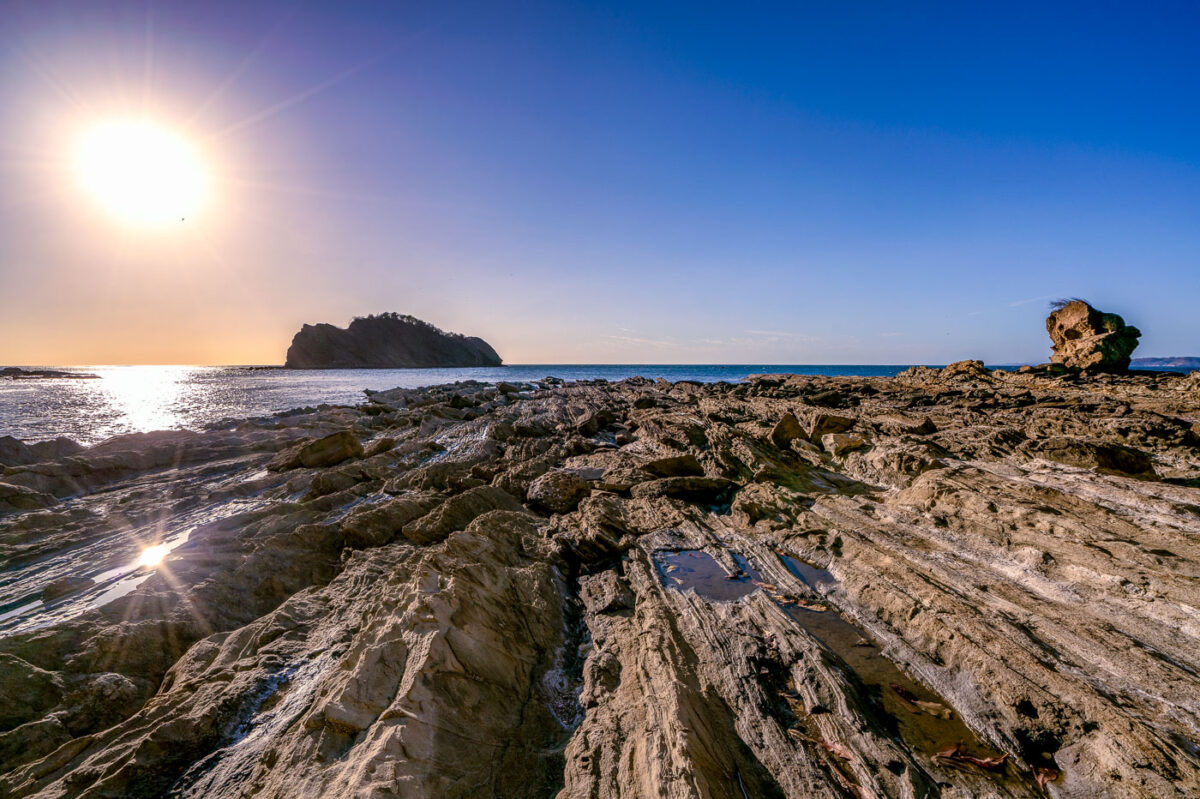
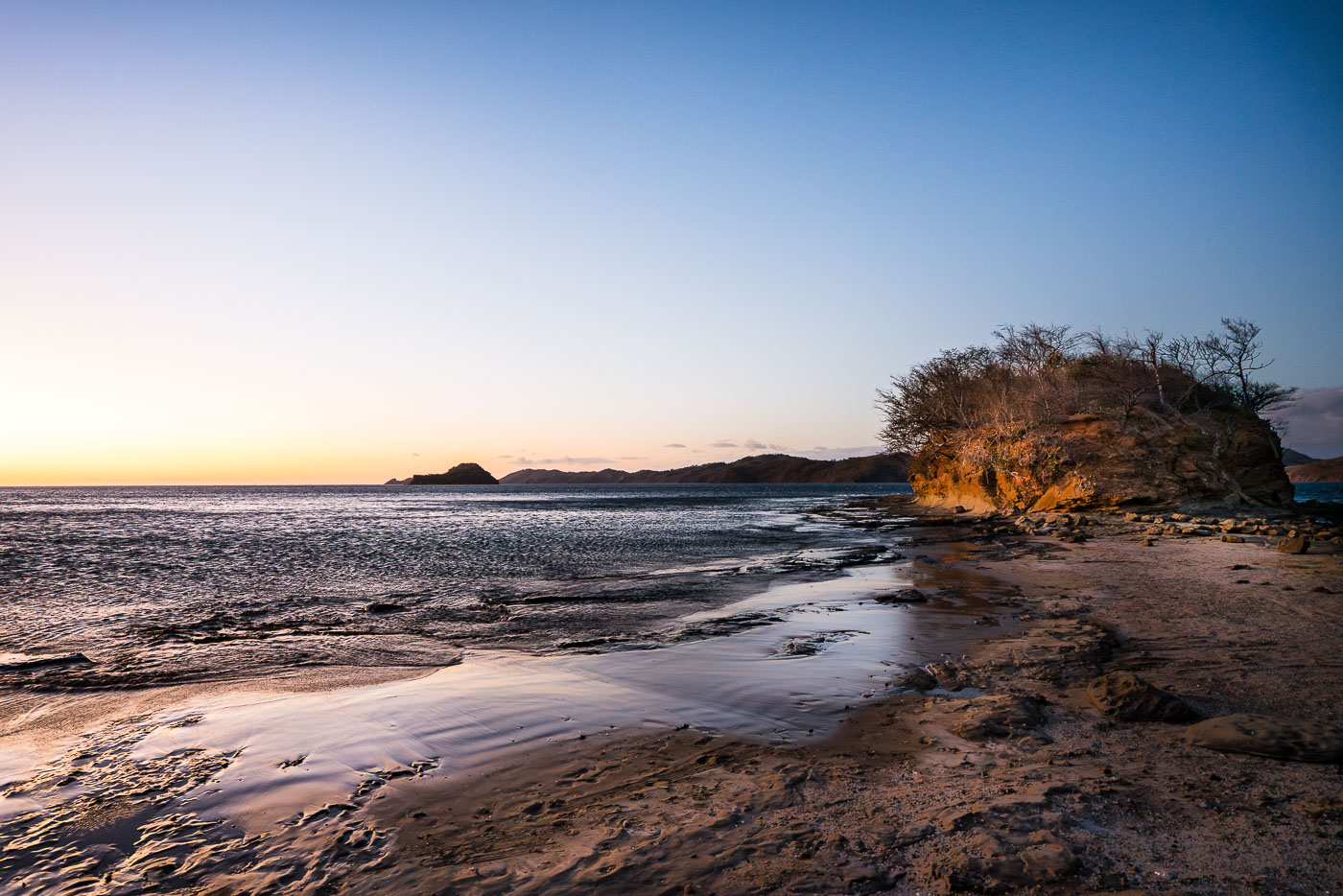
Rocky coastal outcrop overlooks Jobo Bay and the Pacific Ocean at sunset in Guanacaste province, Costa Rica.
Jobo Bay sits on Costa Rica's Pacific coast in Guanacaste Province, near the Nicaraguan border. The shoreline here is volcanic in origin, part of the same geologic activity that shaped the Guanacaste mountain range inland. Guanacaste's coast is drier than much of the rest of Costa Rica, with a pronounced dry season that leaves its tropical dry forests deciduous for part of the year. The province's beaches and bays, including this one, draw divers and anglers for the rocky reefs and sheltered coves common along this stretch of coastline.
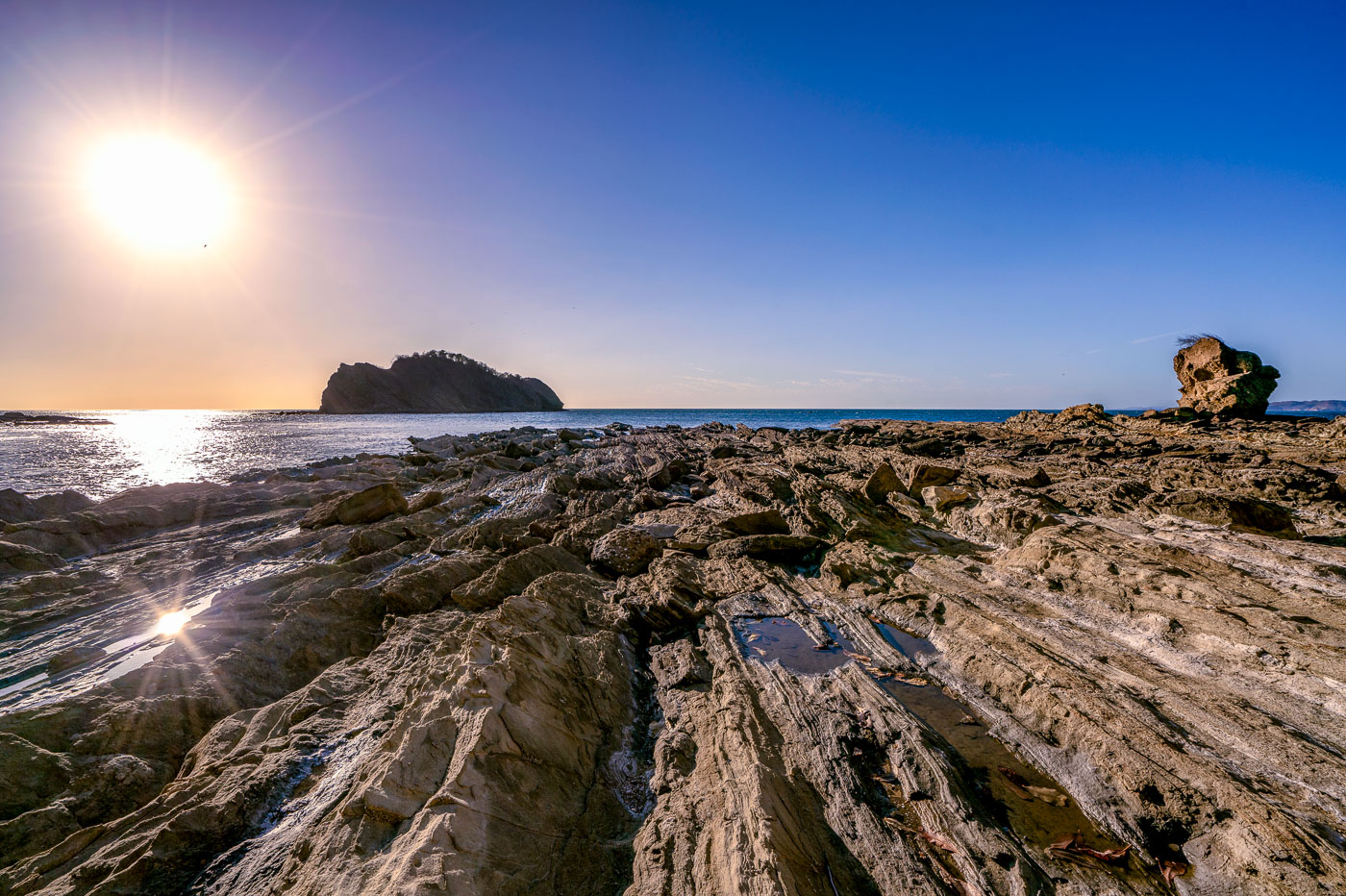
Rocky shoreline with layered stone formations and a sea stack at Jobo Bay in Guanacaste, Costa Rica.
Jobo Bay sits along the Santa Elena Peninsula in northern Guanacaste, near Costa Rica's border with Nicaragua. The shoreline's folded rock shelves formed from ancient volcanic flows that run along this stretch of the Pacific coast. Steady offshore winds common to the area have made the region a site for wind-energy development, with turbine farms built on the hills above the coastline. At low tide, the exposed rock platforms create shallow pools and channels along the bay's edge.
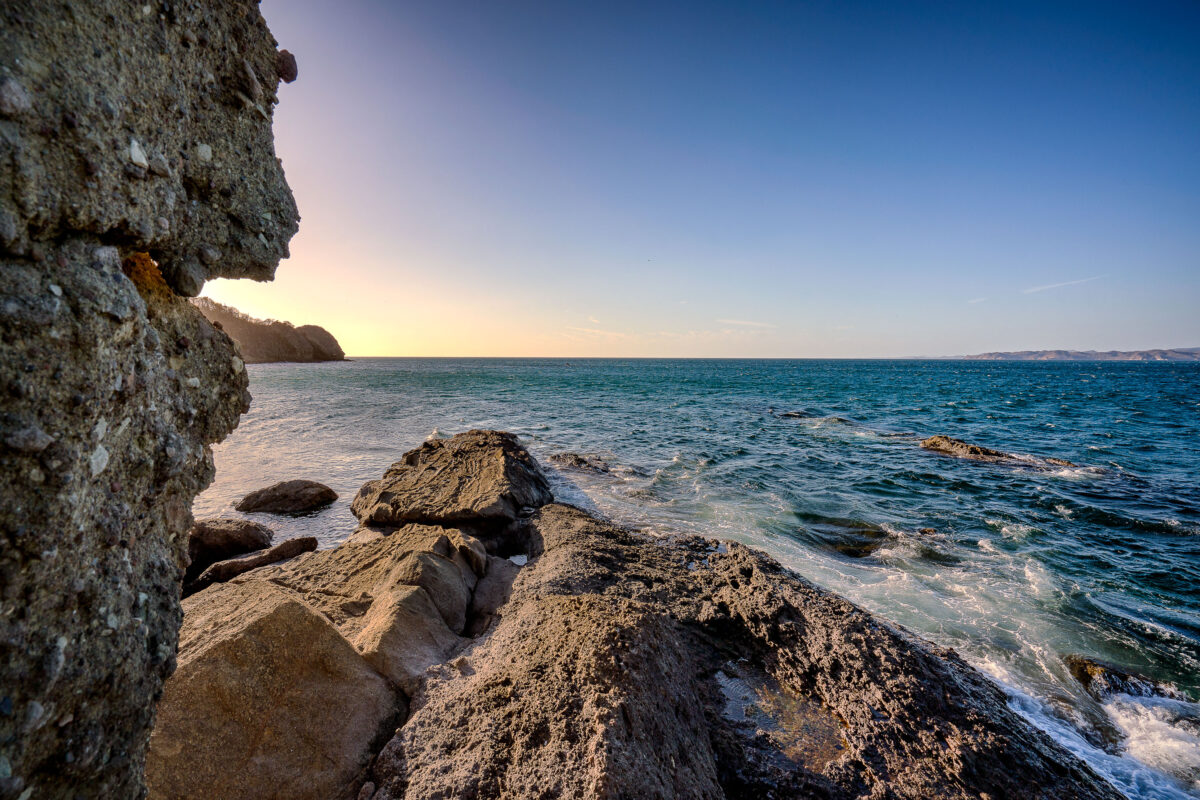
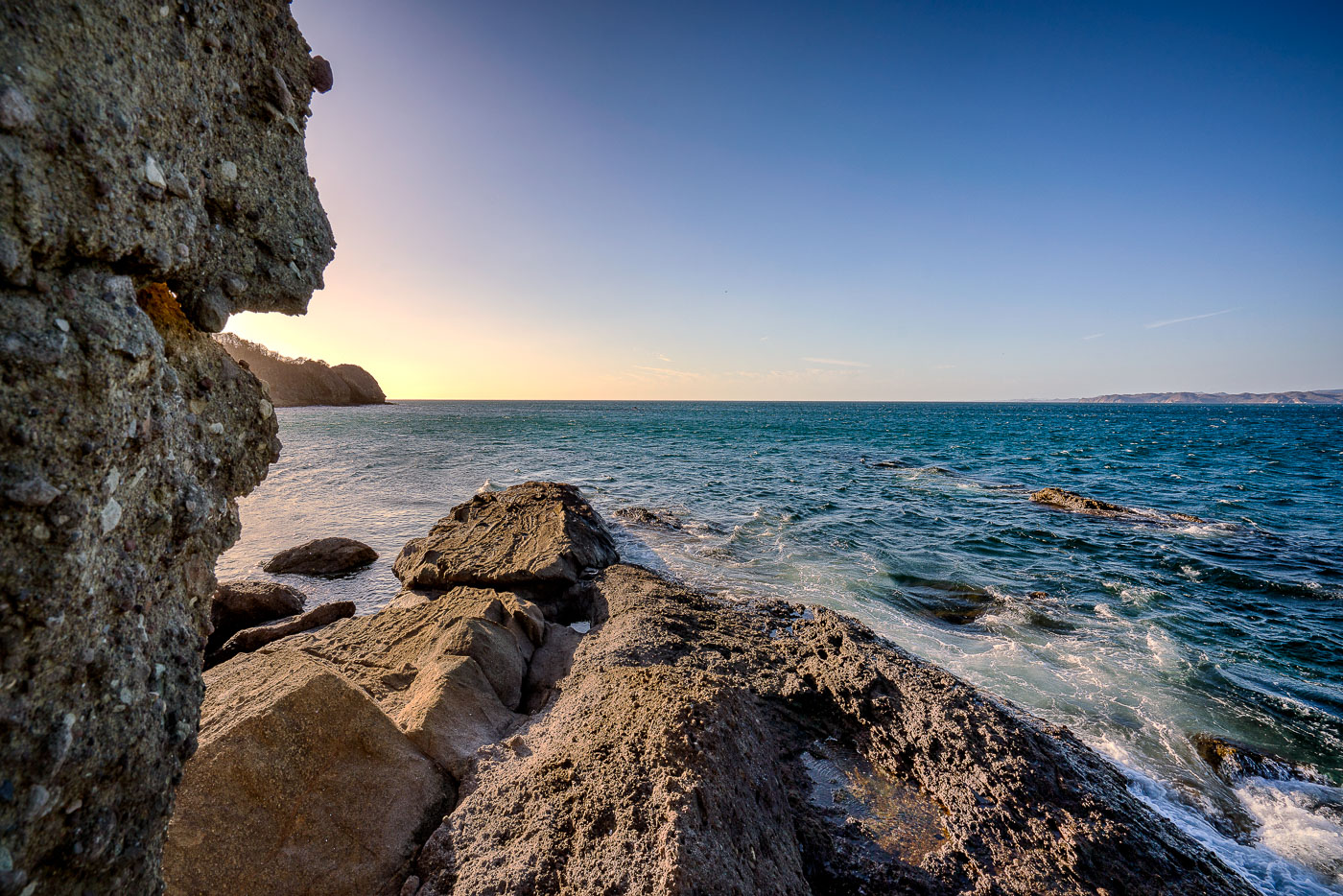
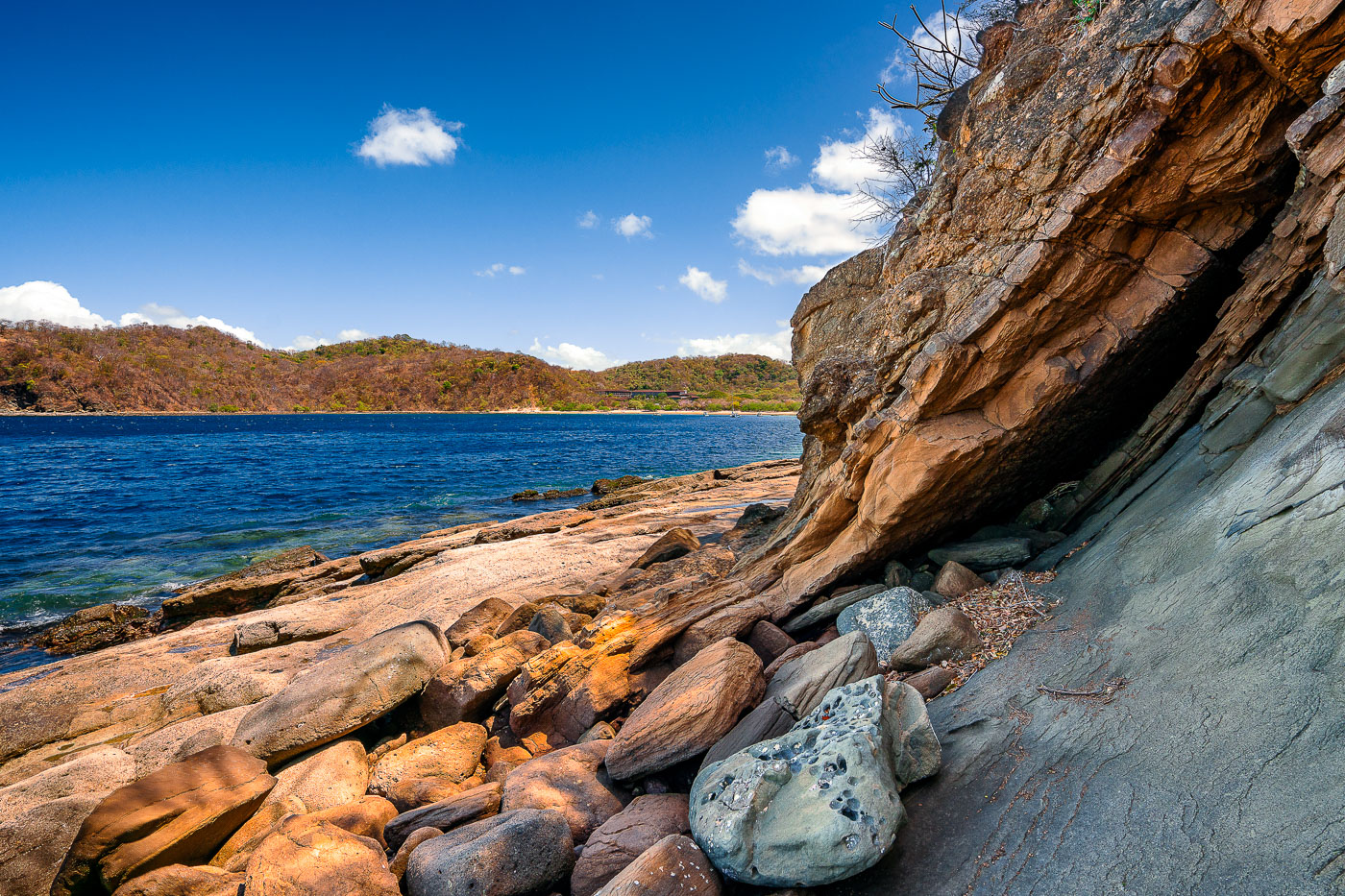
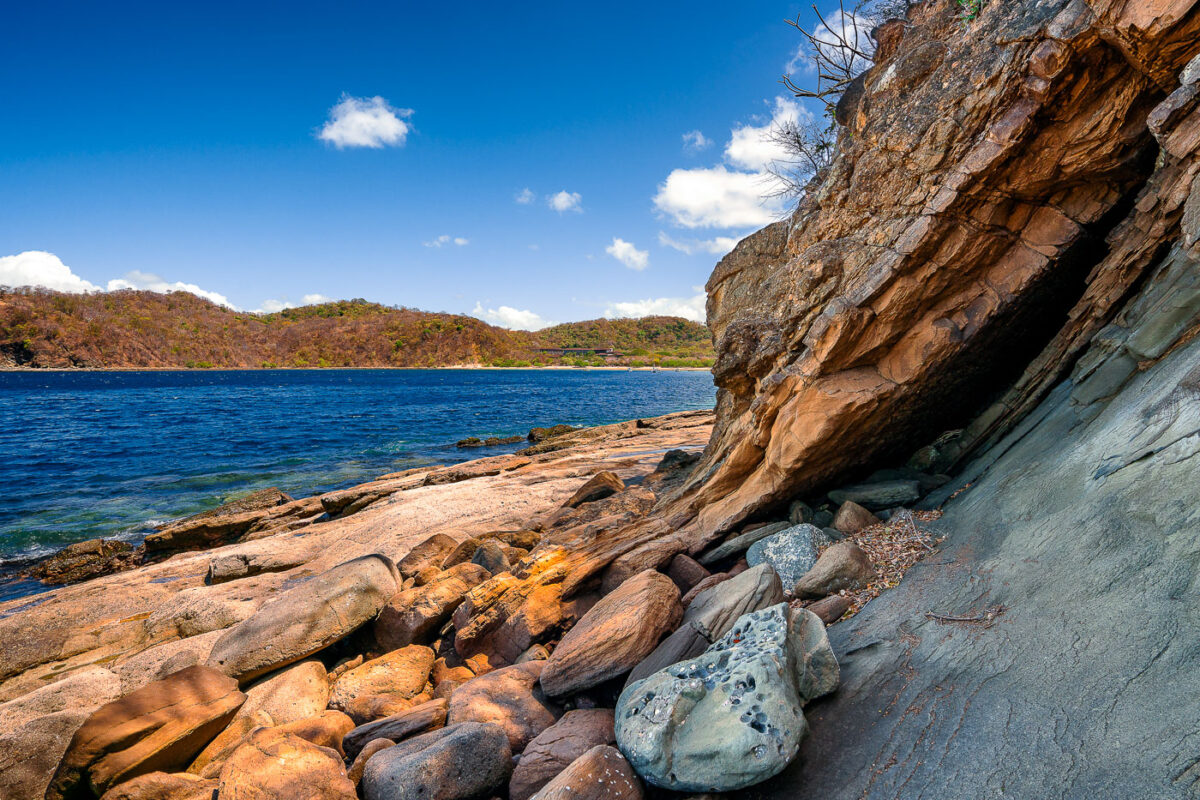
Sandstone rock overhang and boulders line the shoreline of Jobo Bay in Guanacaste, Costa Rica.
Jobo Bay sits along Costa Rica's northern Guanacaste coast, near the Nicaraguan border, in one of the country's driest tropical regions. The shoreline here is shaped by volcanic and sedimentary rock formations typical of the Santa Elena Peninsula, where tectonic uplift has exposed layered stone along the water's edge. Guanacaste's dry forest climate means much of the surrounding vegetation turns brown for several months each year, a contrast to the deep greens found elsewhere in Costa Rica. The bay lies within a sparsely developed stretch of coastline still used mainly by local fishing communities.
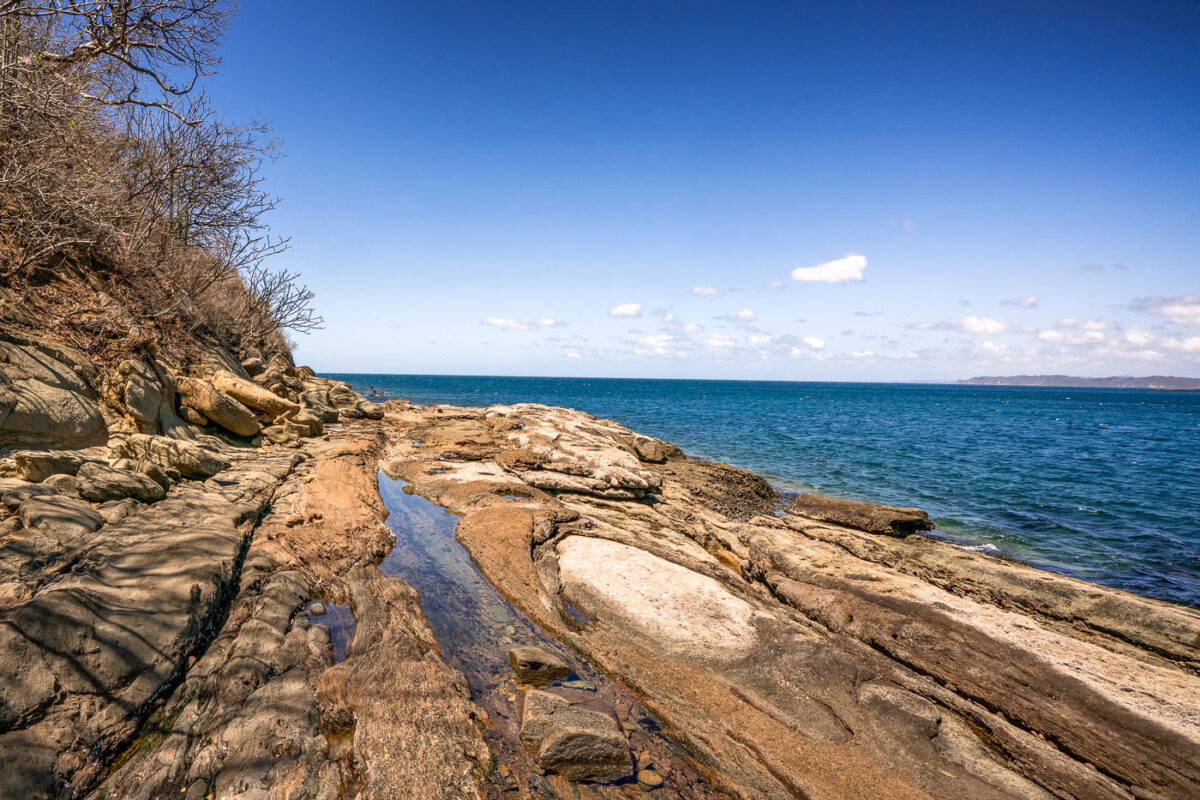
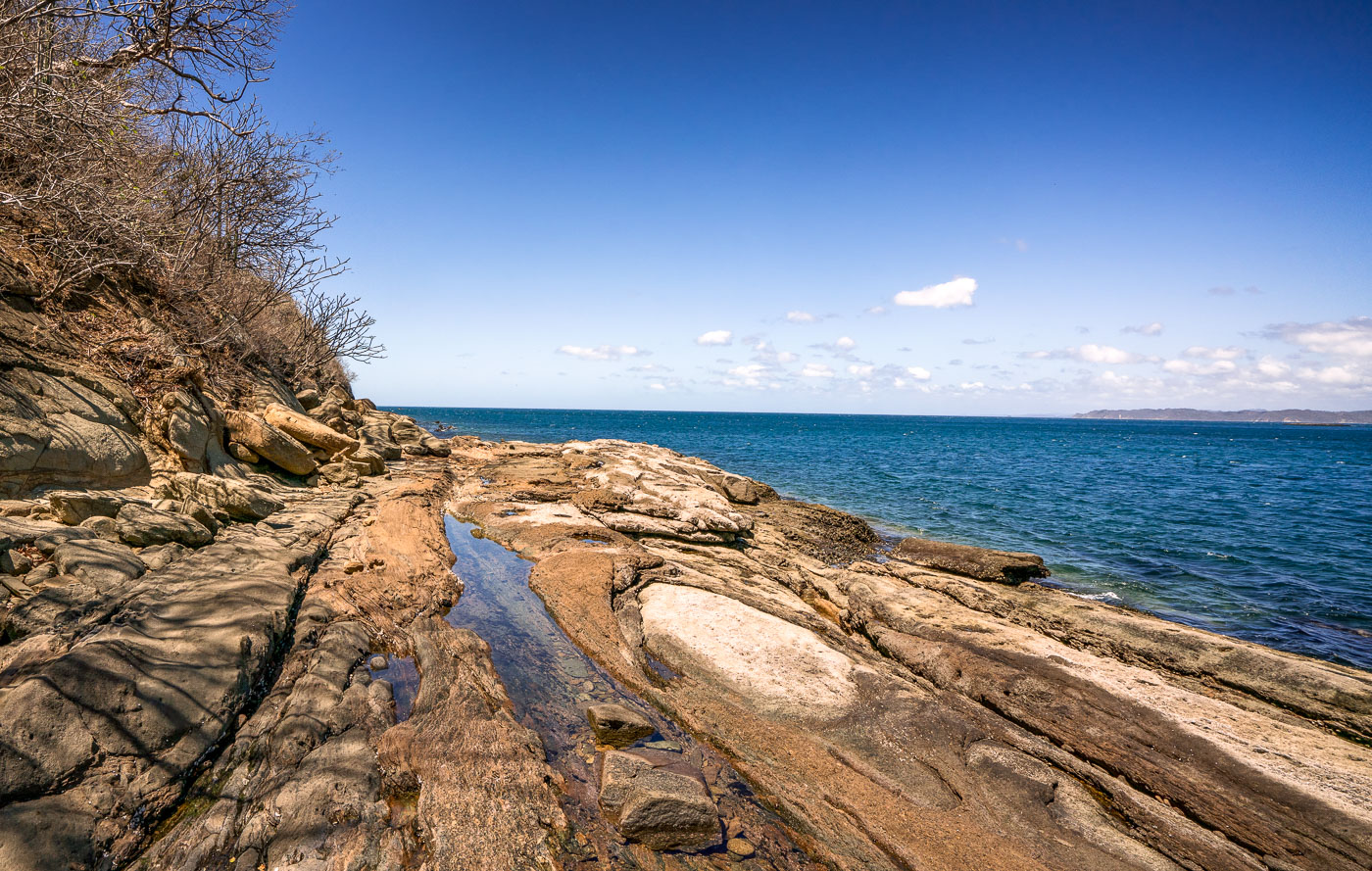
Rocky shoreline with tidal pools meets the Pacific Ocean at Jobo Bay in Guanacaste, Costa Rica.
Jobo Bay sits along the Pacific coast of Guanacaste Province, near the small town of El Jobo close to the Nicaraguan border. The shoreline here is defined by flat, stratified rock formations that form natural tidal pools as the water recedes. Guanacaste's dry forest climate, with its long dry season, leaves the coastal vegetation sparse and brush-like compared to the greener regions farther south in Costa Rica.
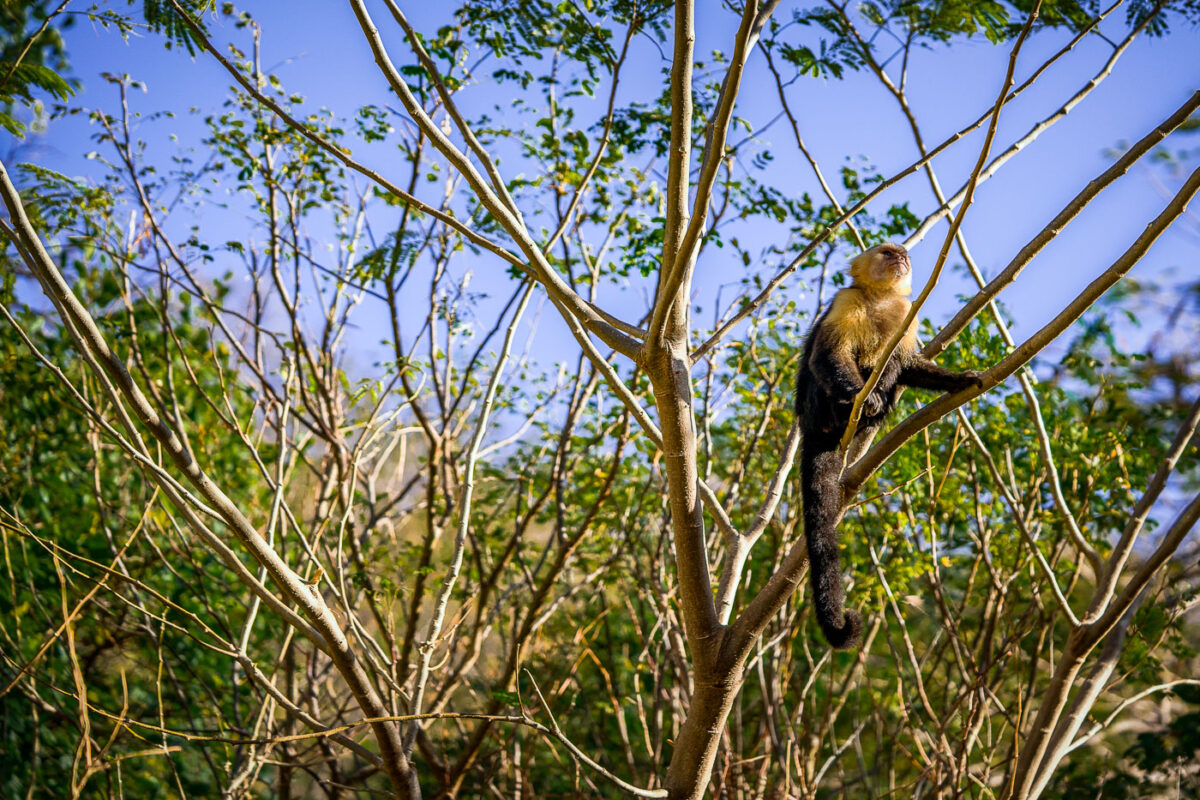
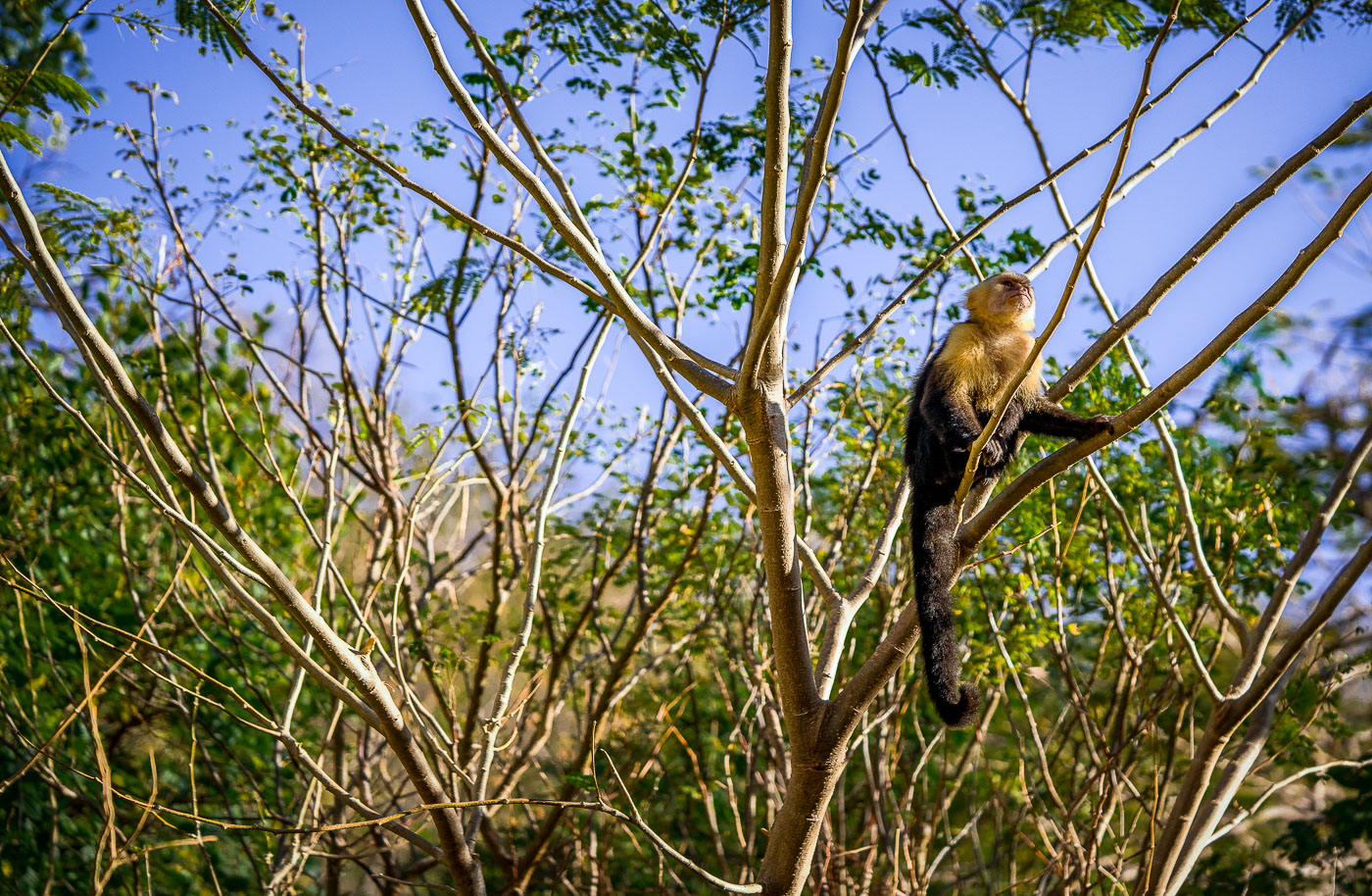
A white-faced capuchin monkey perches on a tree branch in Jobo Bay, Costa Rica.
The white-faced capuchin (Cebus imitator) ranges throughout the dry forests of Guanacaste, including the coastal scrub around Jobo Bay near the Nicaraguan border. Troops typically number between ten and twenty animals and spend most daylight hours foraging in the canopy for fruit, insects, and small vertebrates. The species is known for using tools, including rocks and sticks, to crack open nuts and shellfish — a trait documented in only a handful of primate species outside the great apes. Guanacaste's tropical dry forest, where this monkey was ed, is one of the most endangered forest types in the Americas, with less than two percent of its original range remaining intact.
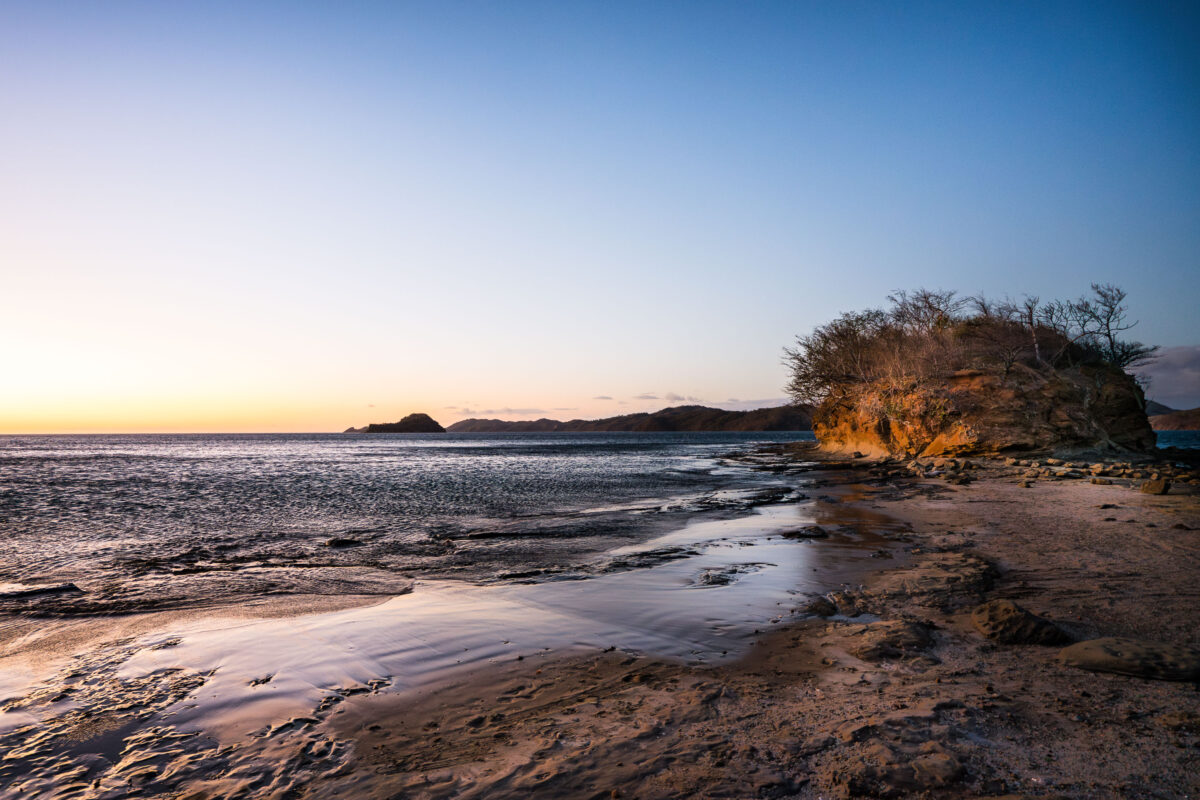
Rocky shoreline with tide pools and a sandstone outcrop at Playa Escondida, Guanacaste, Costa Rica at sunset.
Playa Escondida sits along the Guanacaste coast of Costa Rica, a stretch of the Pacific shoreline known for its rocky headlands and tide-exposed sandbars. The beach's name translates to "hidden beach," a nod to its secluded position away from the region's more developed tourist strips like Tamarindo and Playas del Coco. Low tide here exposes flat sand channels and rock outcrops that connect to the forested bluffs along the shore, conditions shaped by the area's pronounced tidal swings common to Guanacaste's Pacific-facing beaches.
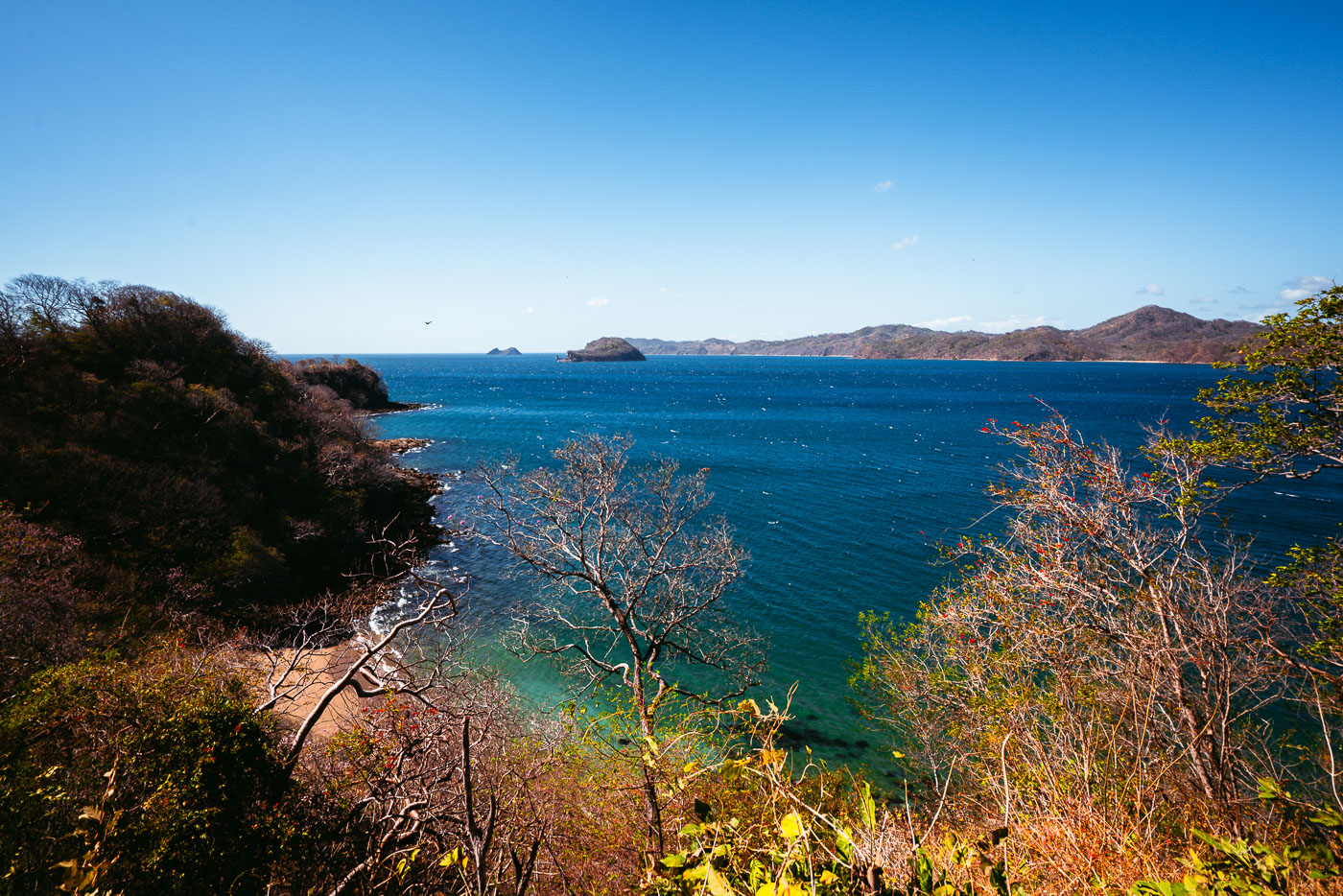
Rocky islets and the Pacific coastline visible from Mirador Junquillal overlook in Costa Rica.
Punta Junquillal sits along the Pacific coast of Guanacaste Province, within the Nicoya Peninsula's dry tropical forest zone. The small rock islets offshore are typical of this stretch of coastline, formed by volcanic rock resistant to erosion while softer surrounding material wore away over time. The surrounding dry forest sheds its leaves seasonally, usually from December through April, as trees conserve water during Guanacaste's pronounced dry season. This region's combination of rocky points and sheltered coves has made it a draw for both small-scale fishing communities and coastal tourism in recent decades.
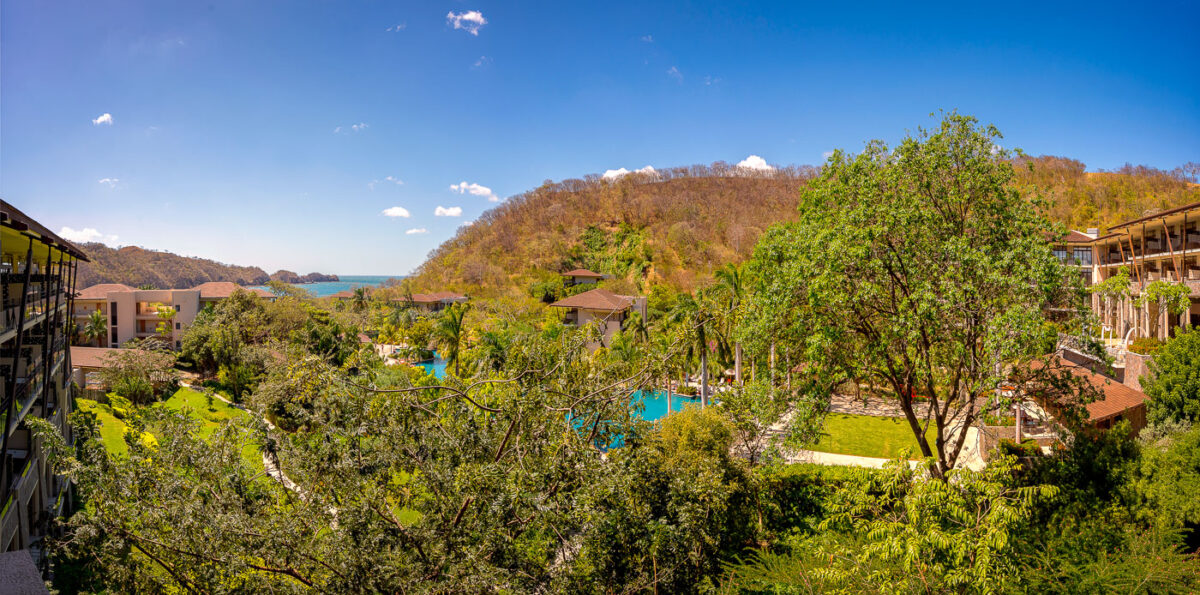
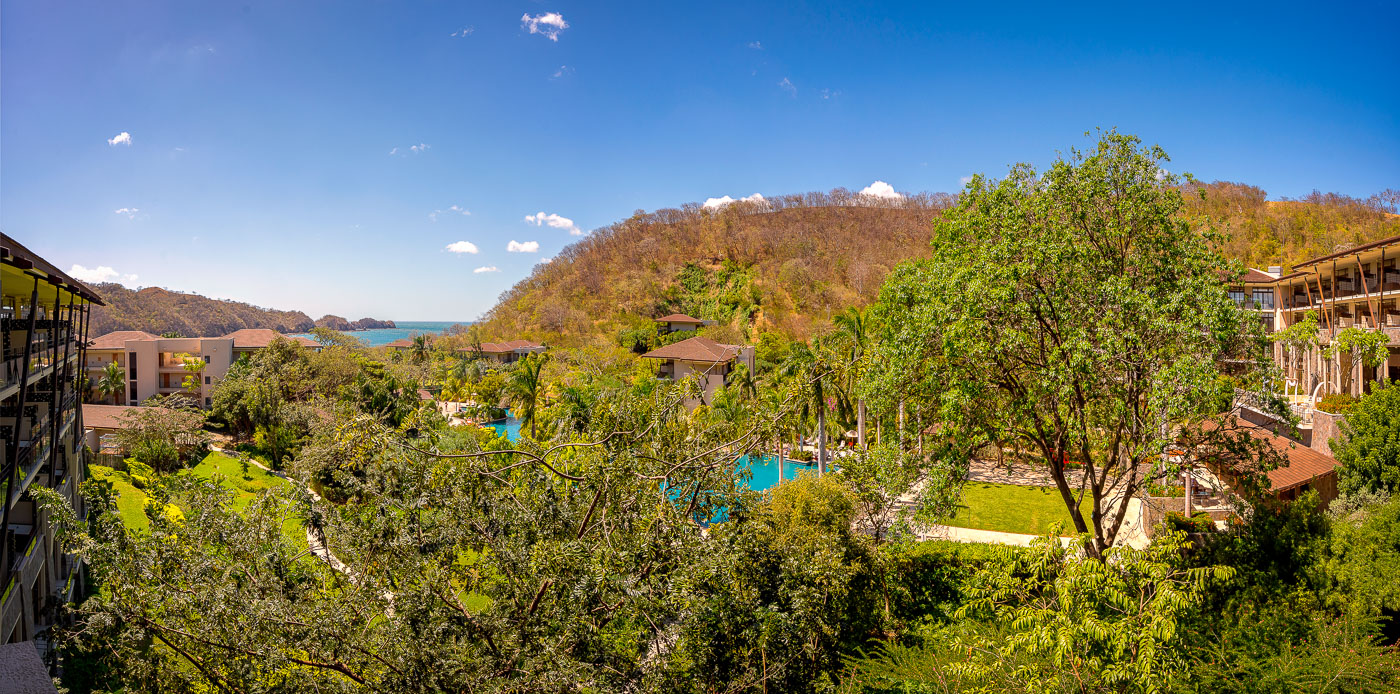
Dreams Las Mareas Resort overlooks Jobo Bay and the Pacific Ocean in Guanacaste, Costa Rica.
Dreams Las Mareas Resort sits along Jobo Bay on Costa Rica's Pacific coast, near the town of La Cruz close to the Nicaraguan border. The all-inclusive property opened in 2014, part of an effort to extend beach tourism north of more established Guanacaste destinations like Tamarindo and Papagayo. Its buildings and gardens step down a forested hillside toward the bay below.
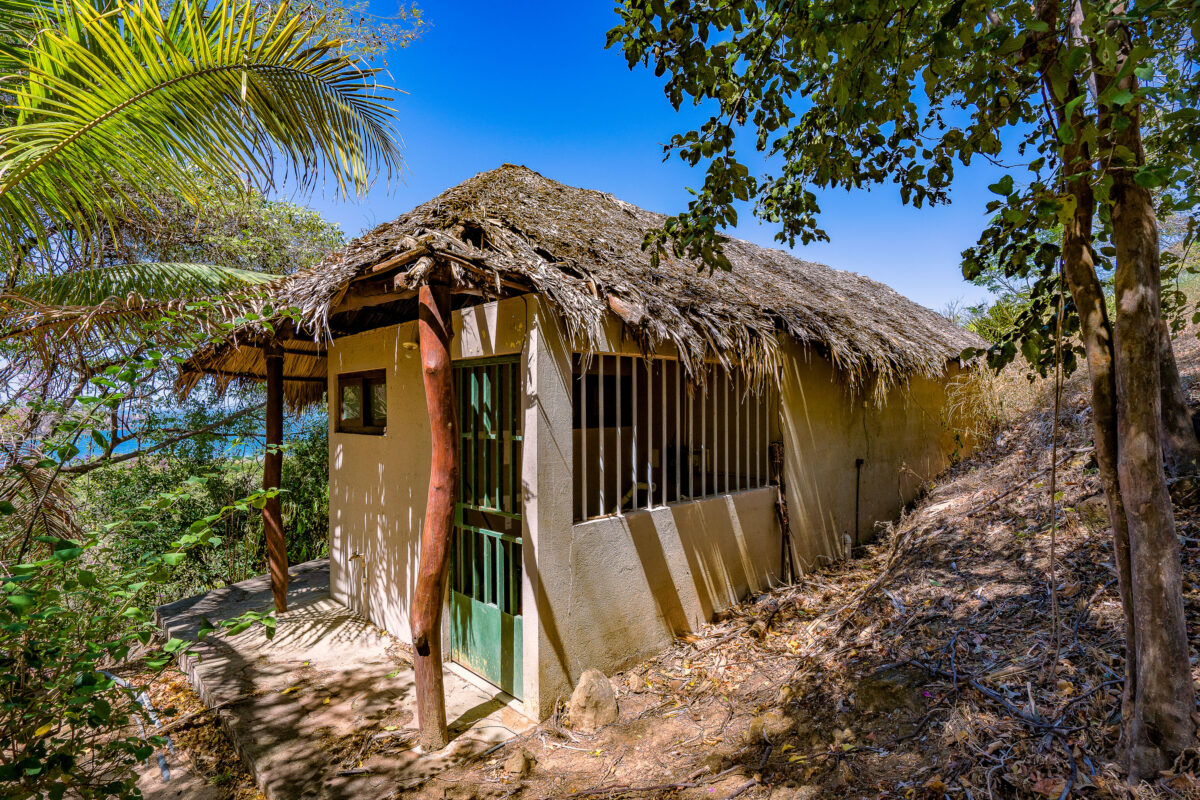
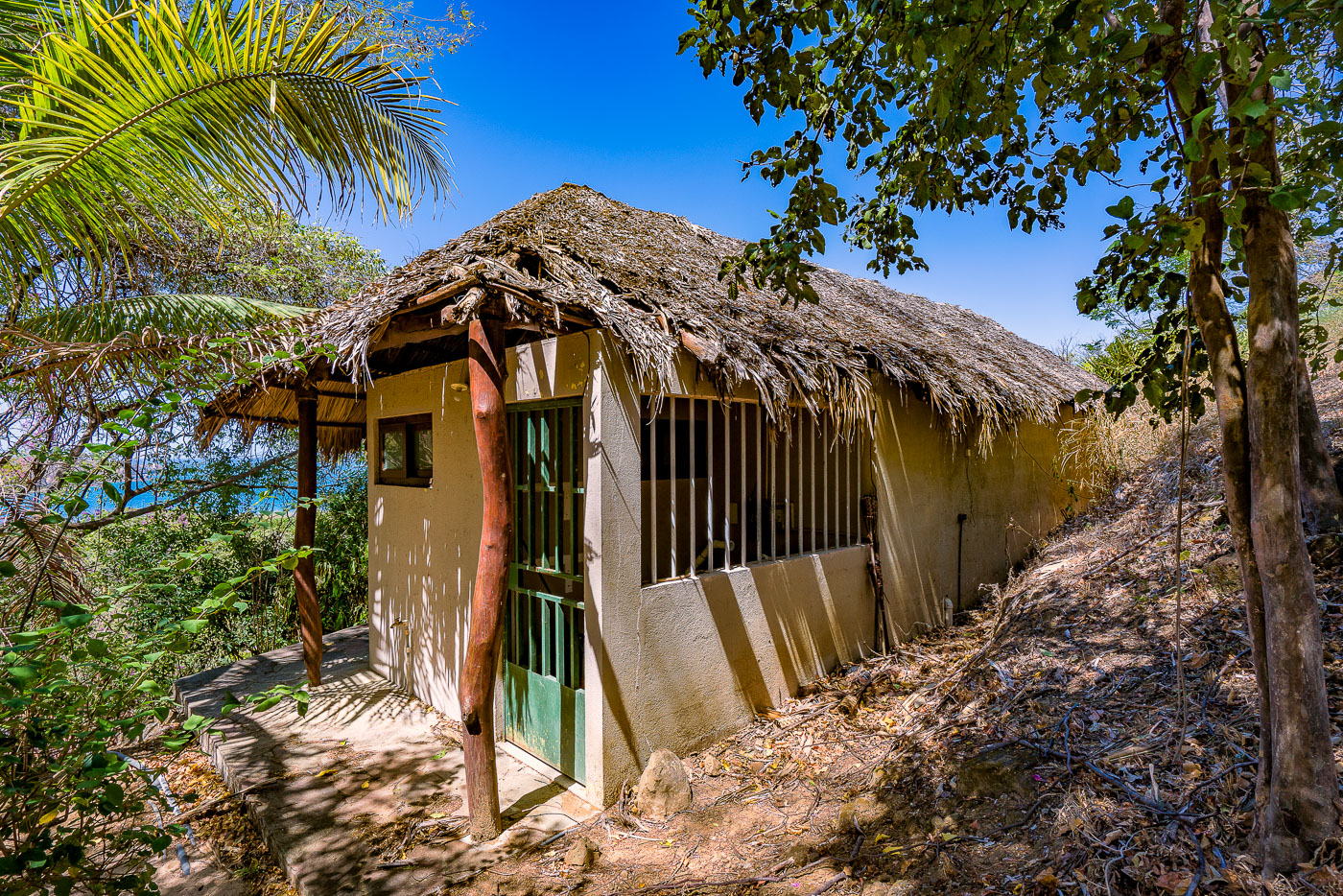
Abandoned thatched-roof hut at Santa Elena Resort on a wooded hillside in El Jobo, Guanacaste, Costa Rica.
Santa Elena Resort sits on a wooded hillside above the coast in El Jobo, a small community in Guanacaste province near the Nicaraguan border. The property has stood vacant for years, left to the surrounding palm and brush growth. This cabin's palapa-style roof, woven from dried palm thatch over a wooden frame, a building technique common to Guanacaste's coastal lodges. Guanacaste's dry tropical climate, with its long rainless season, allows palm-thatch roofing to last for several years before it needs replacing.

Built in Minneapolis

Minneapolis Photographer

Browse by location, move through long-running series, or start with recent work.