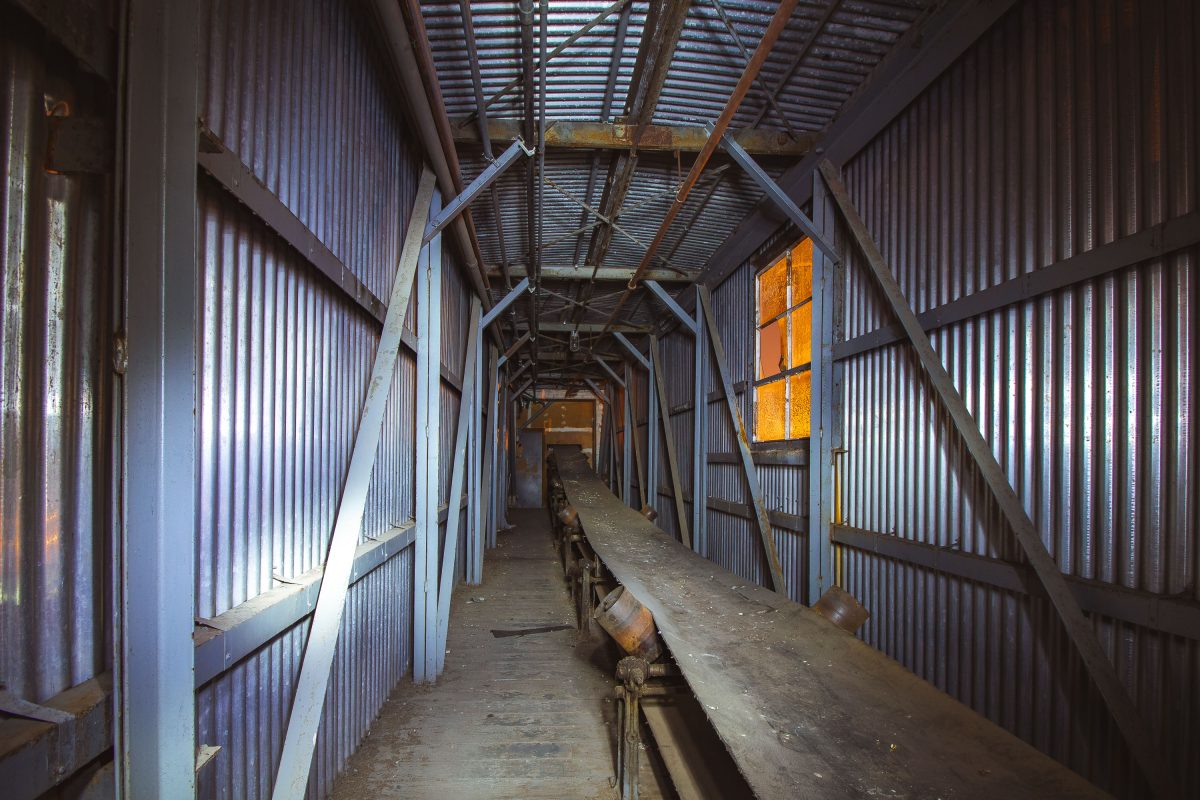
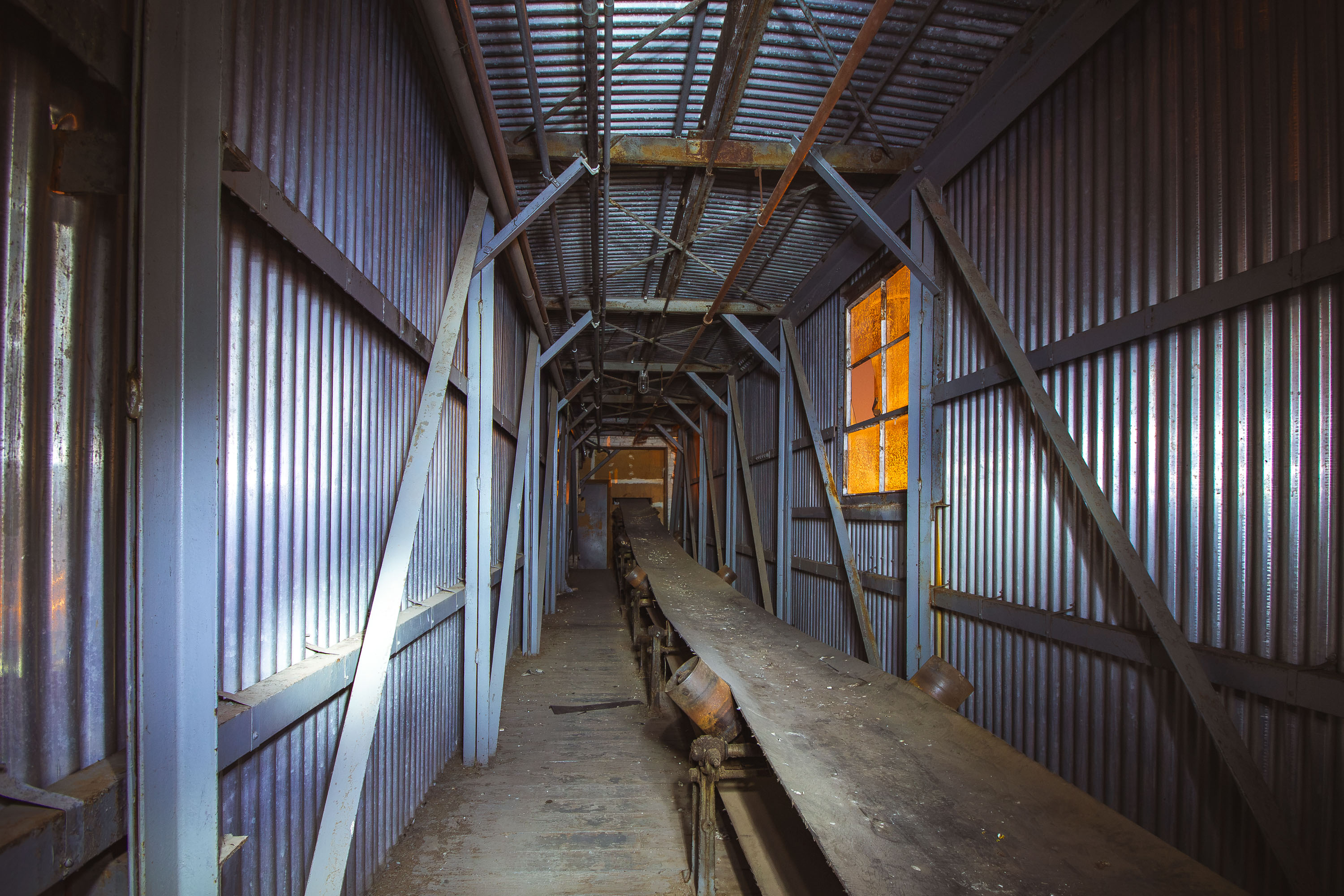
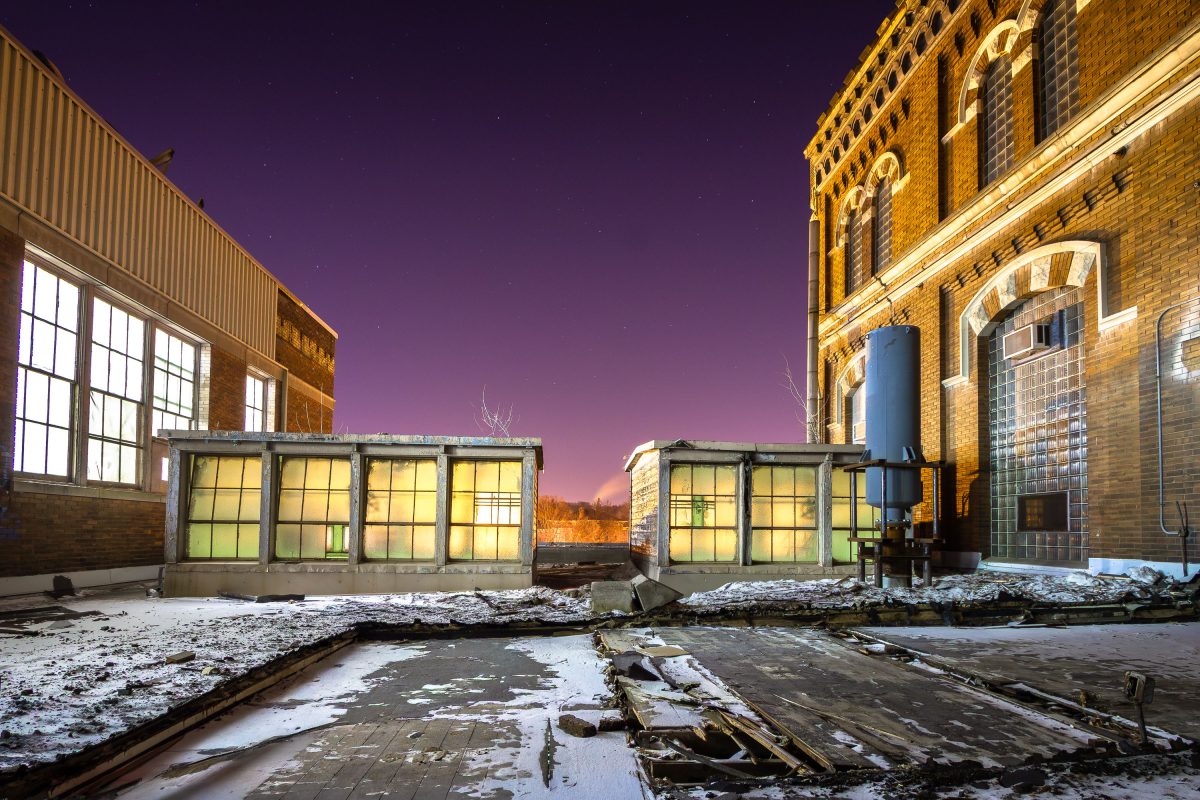
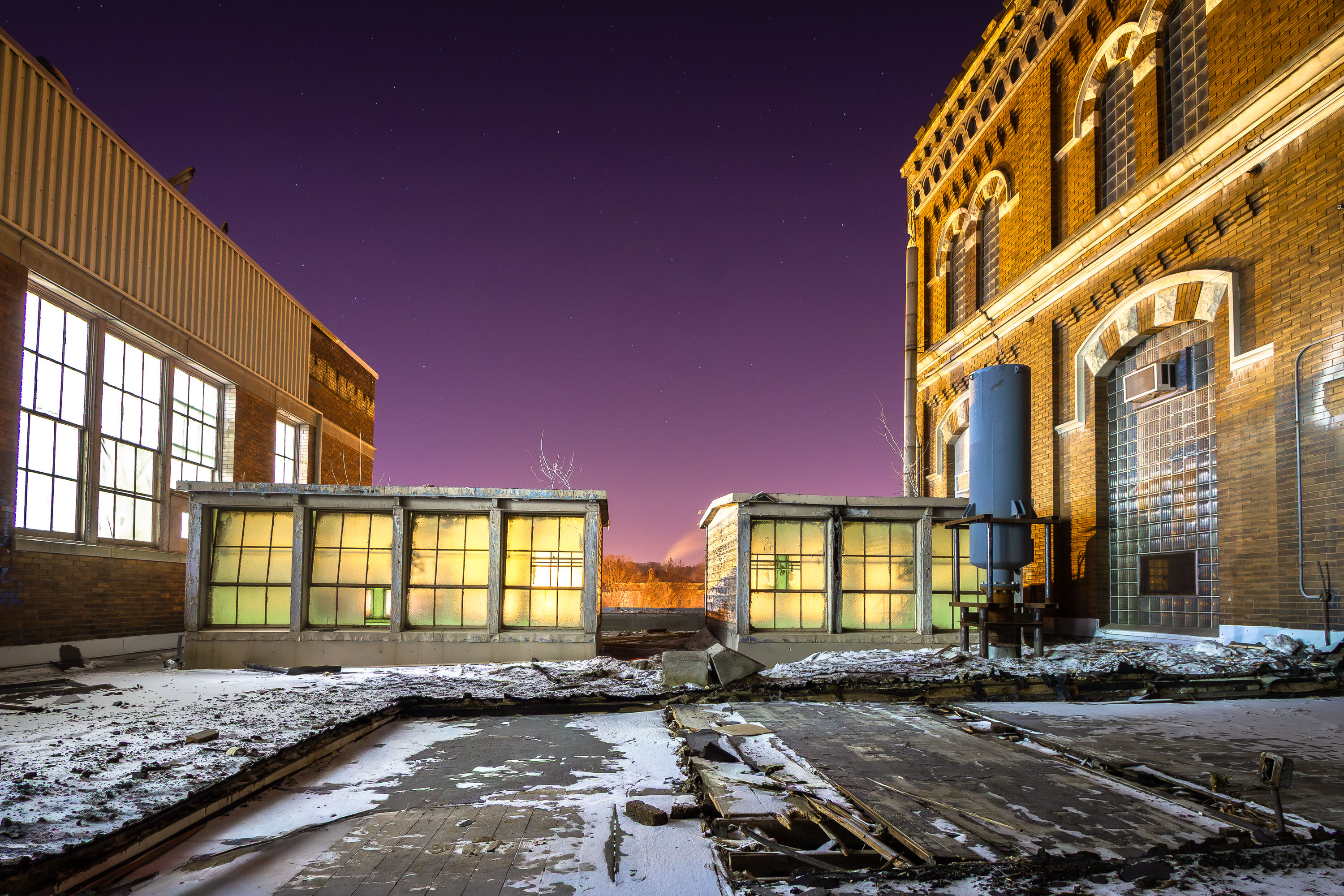
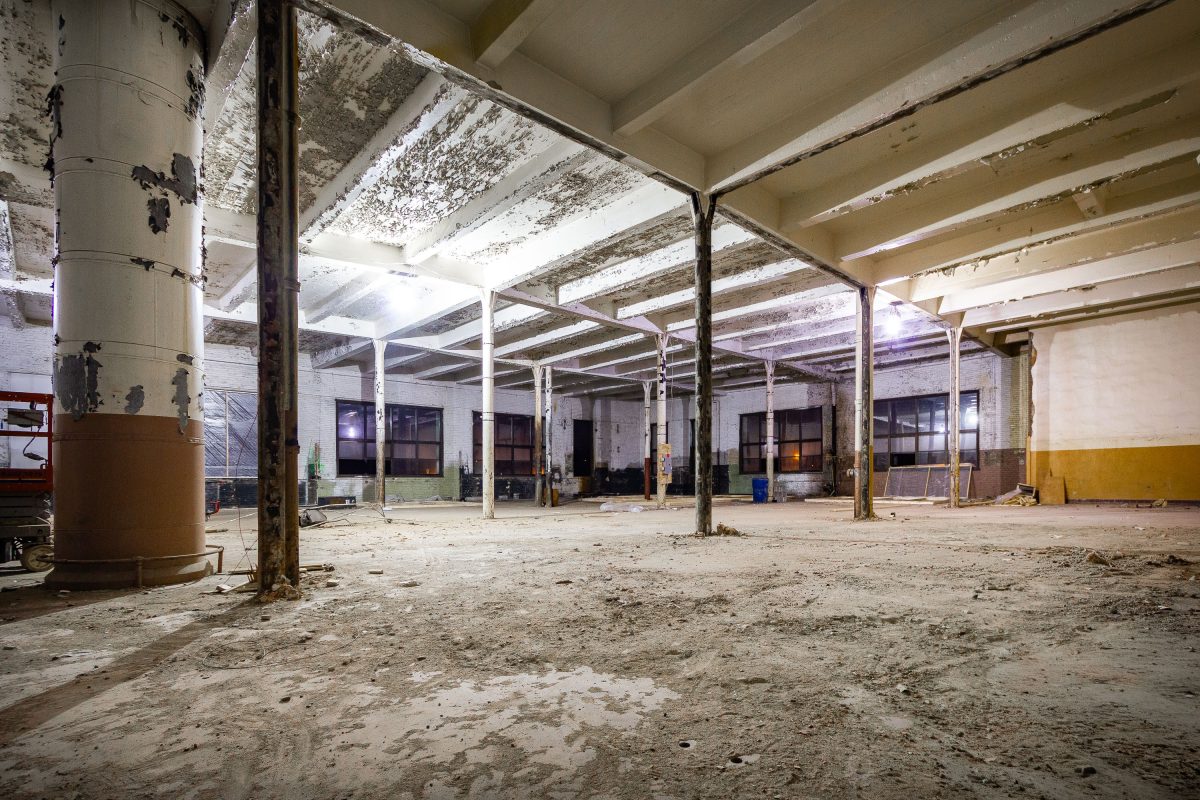
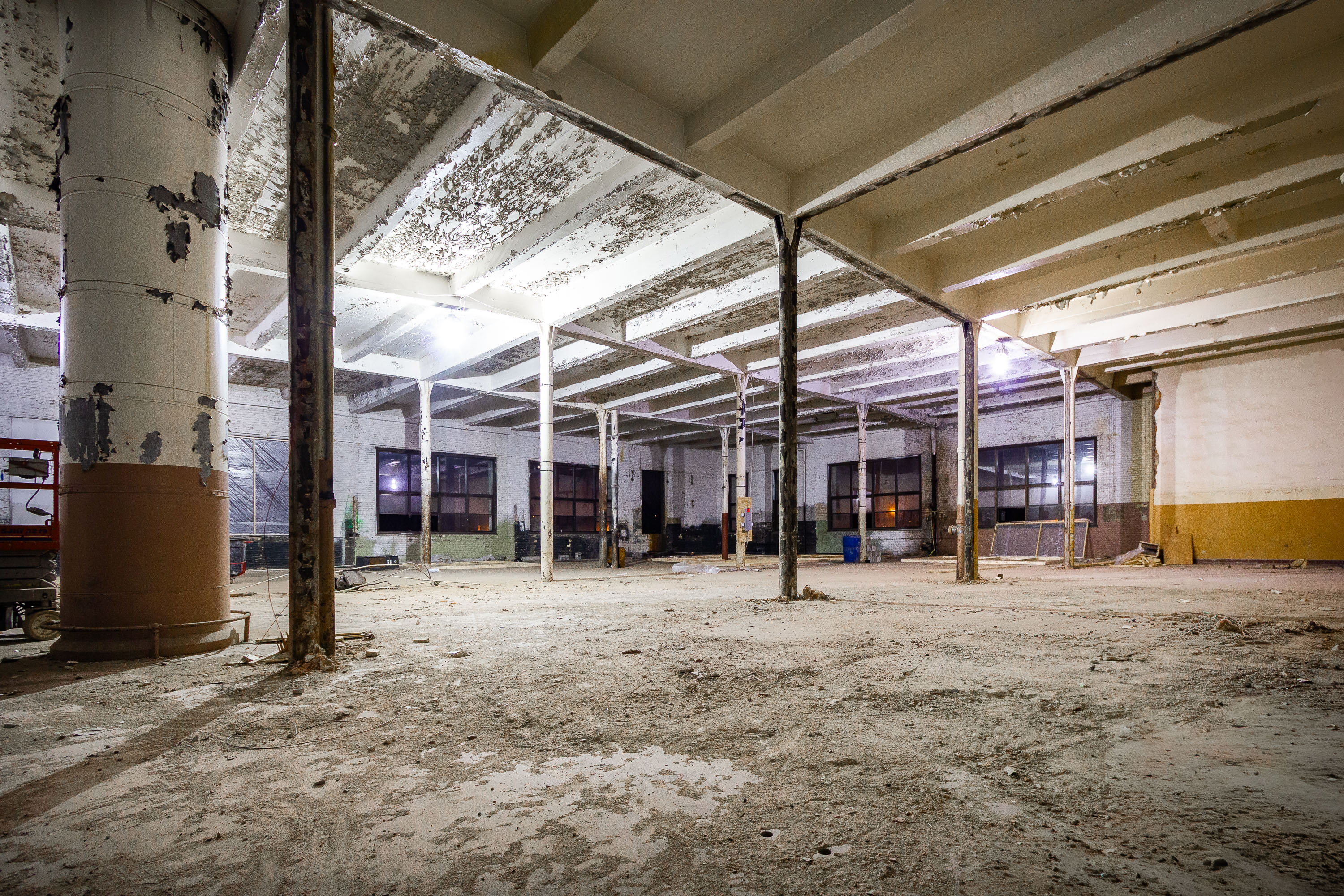
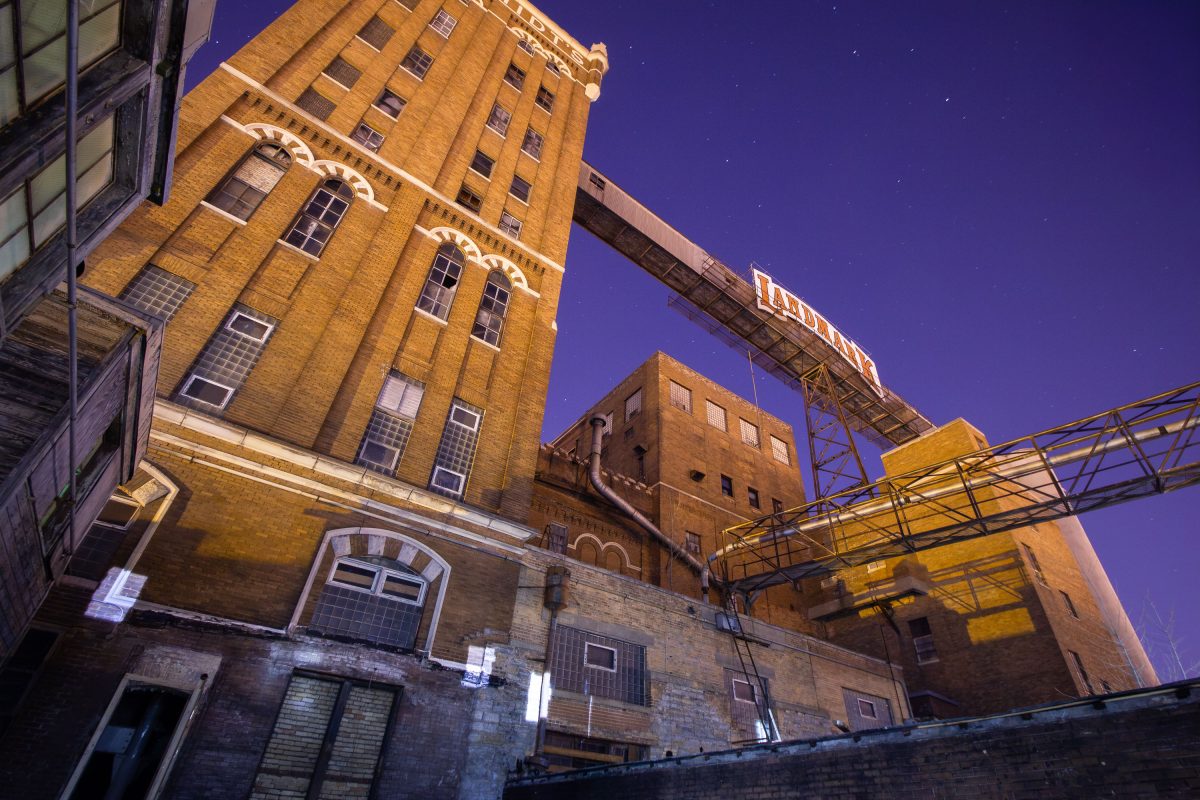
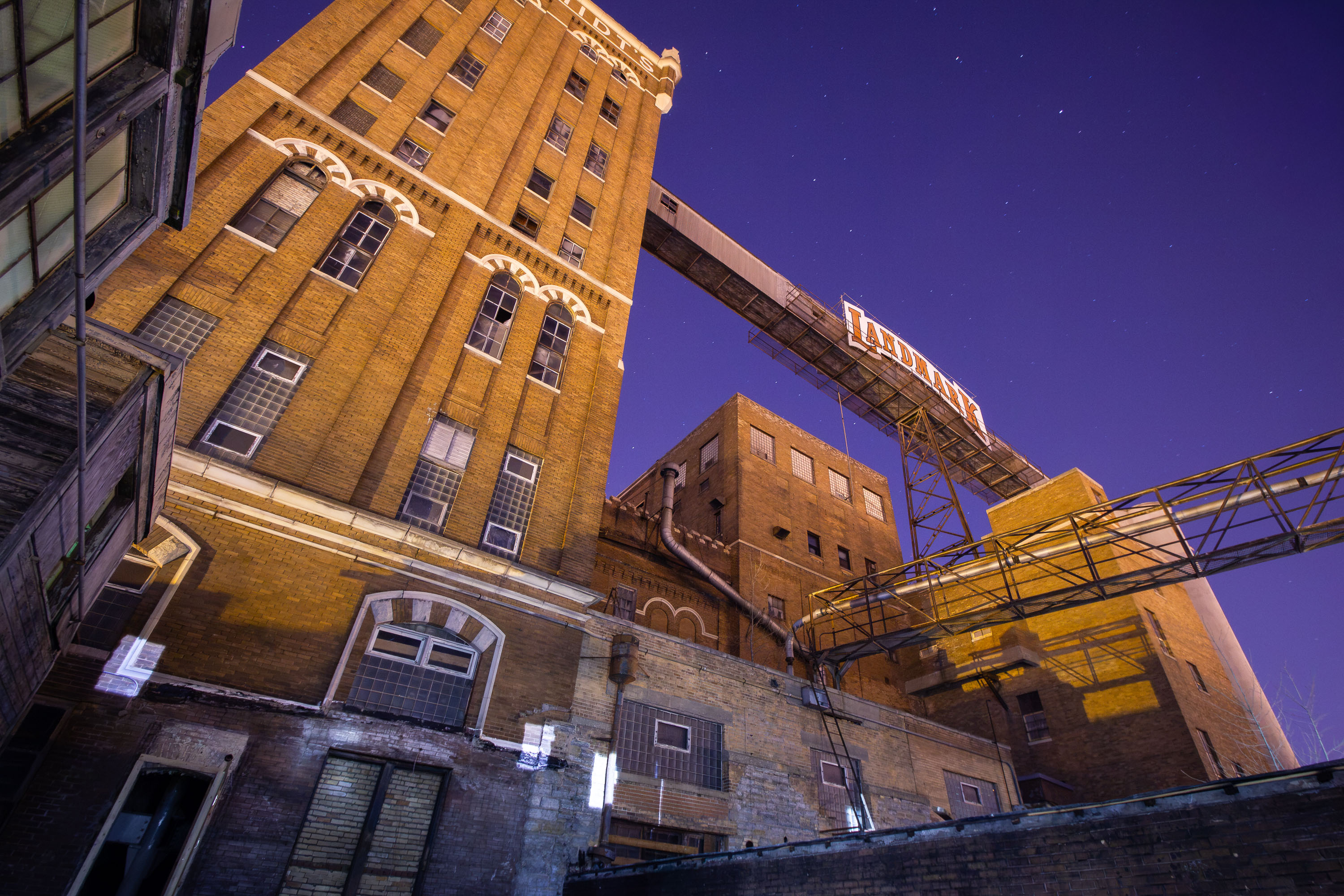
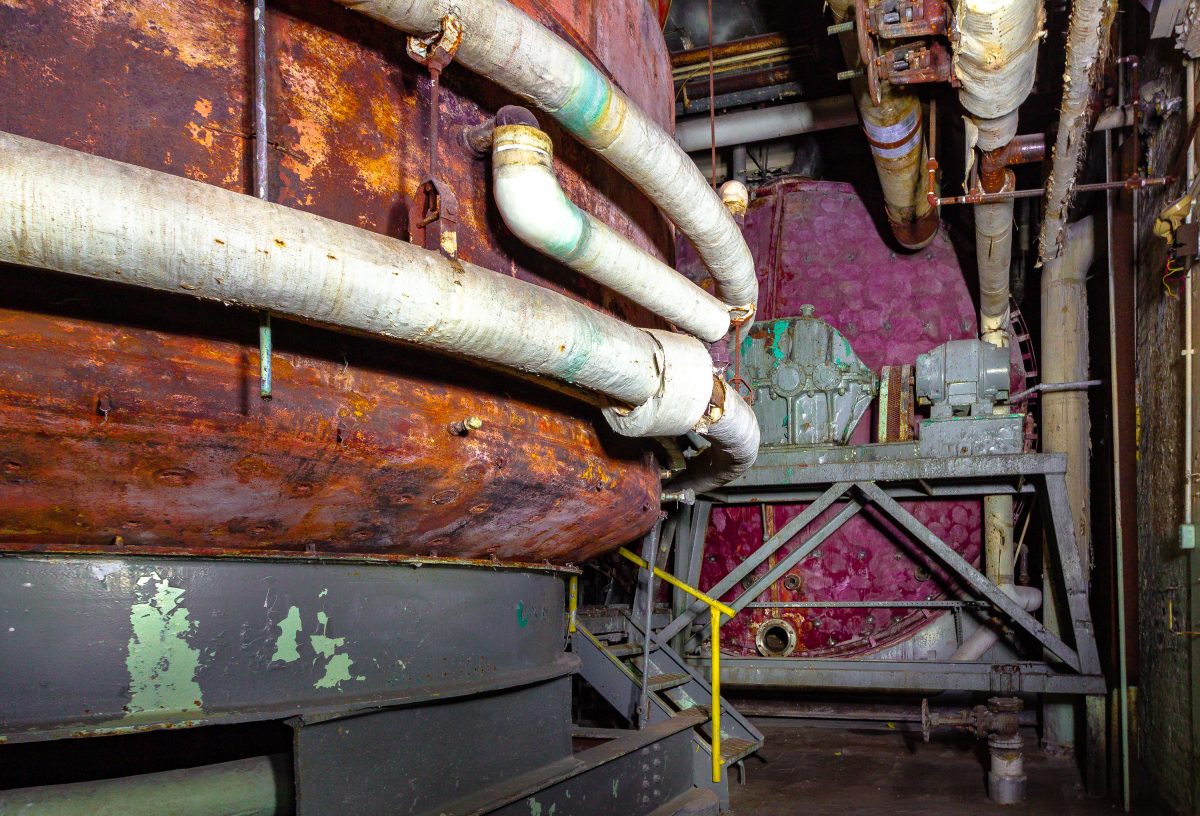
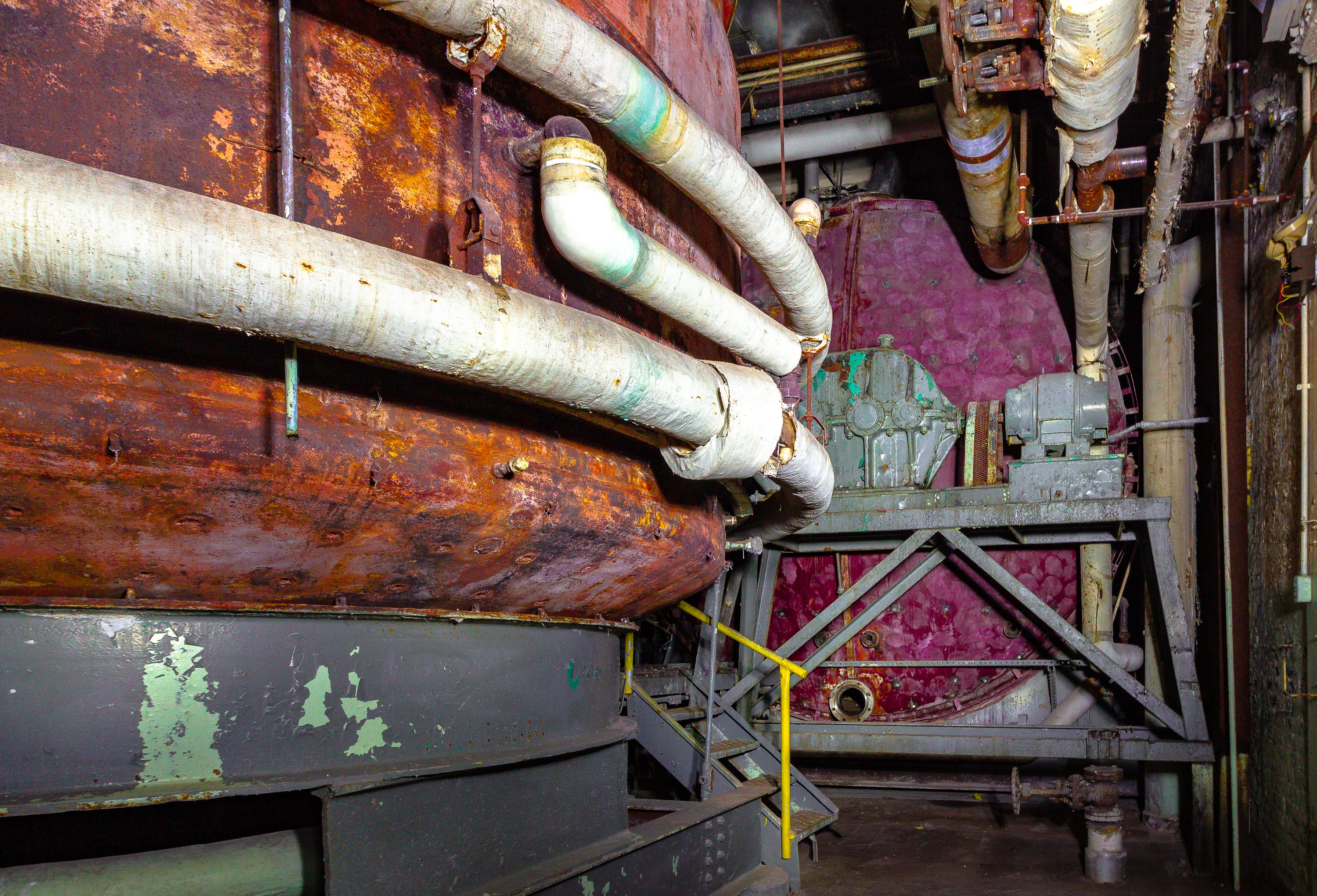
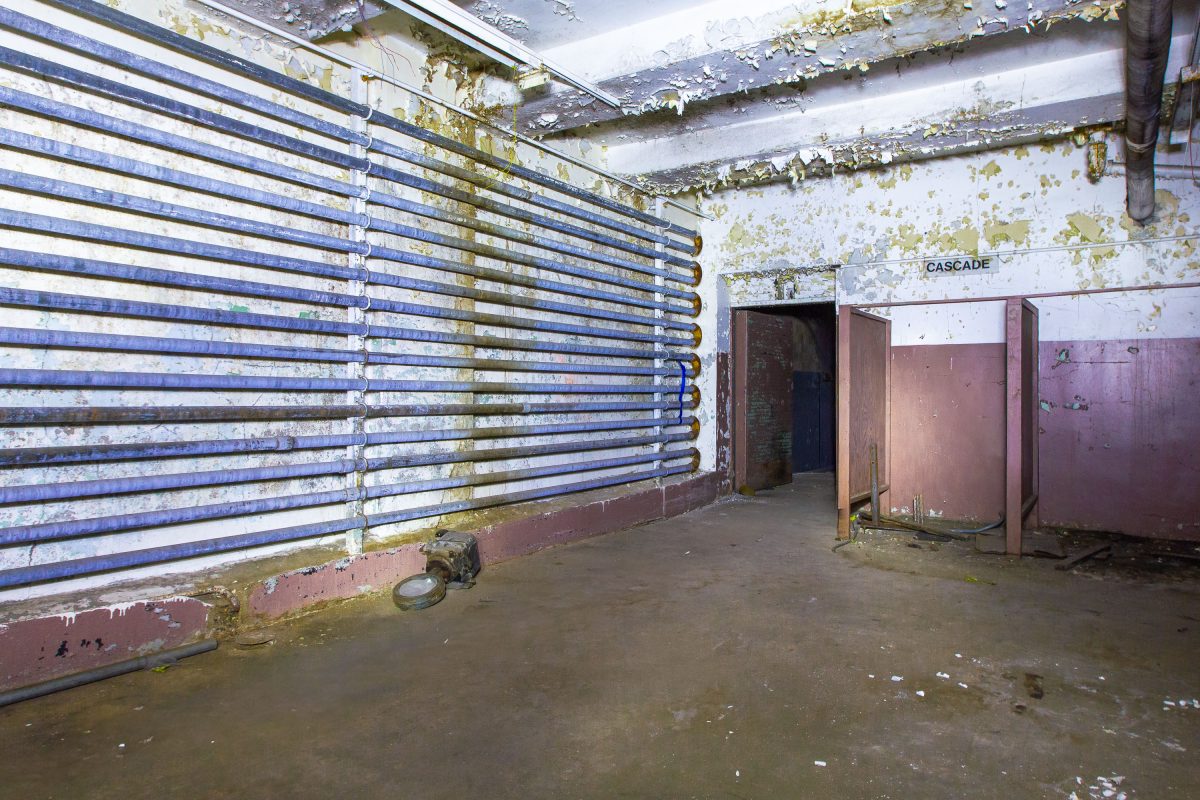
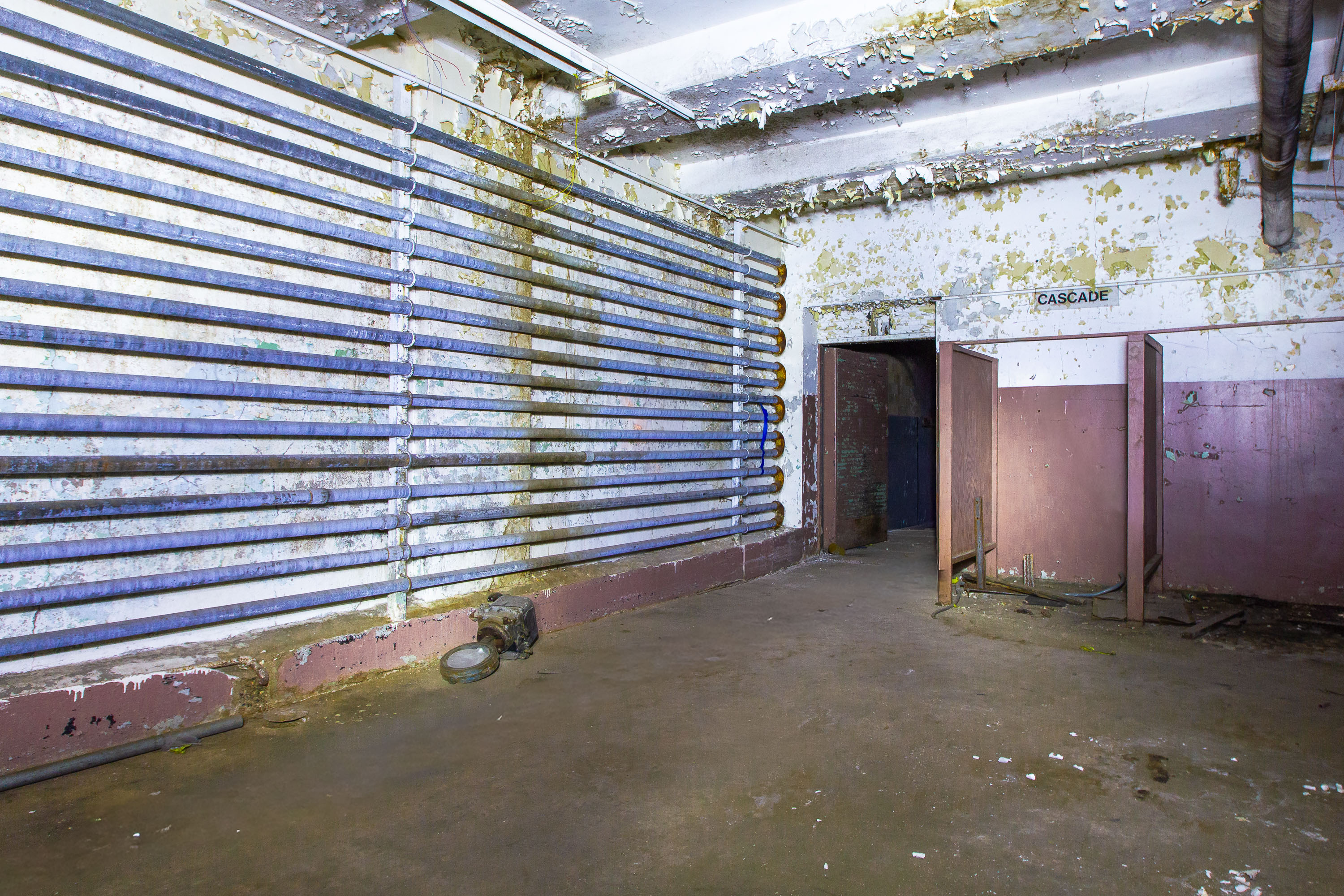
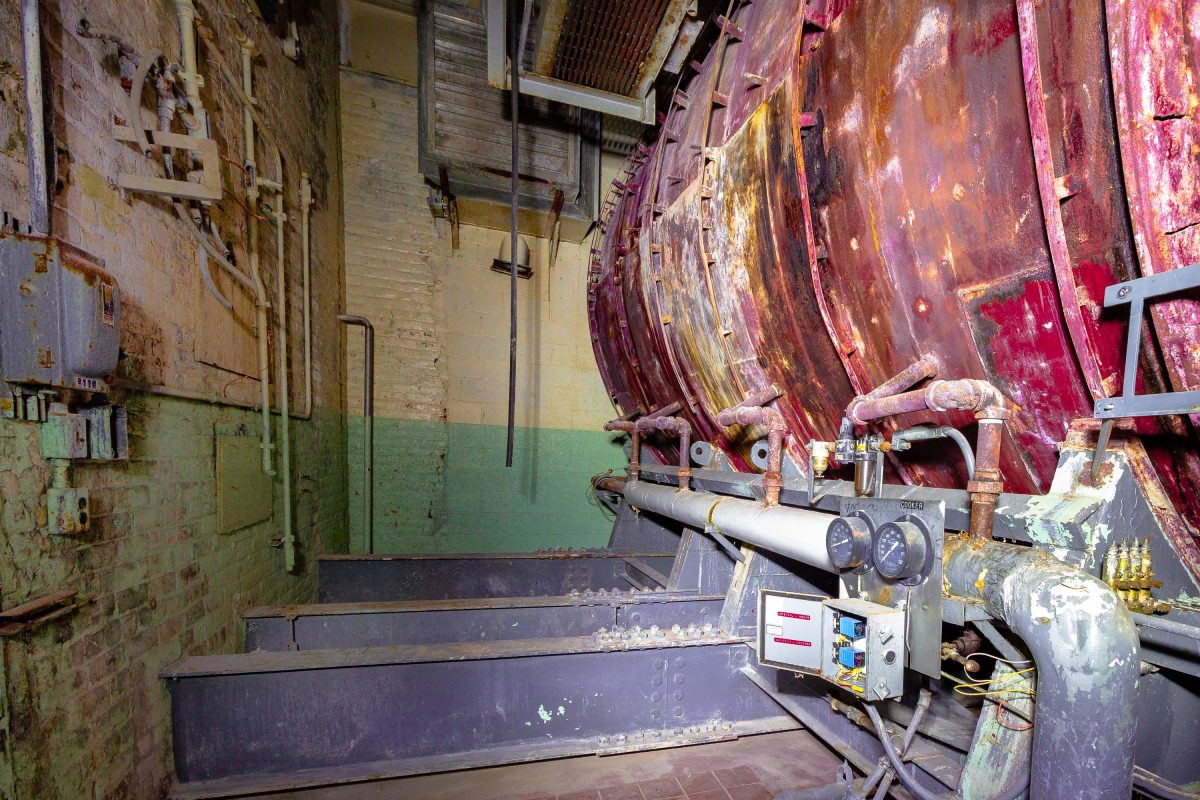
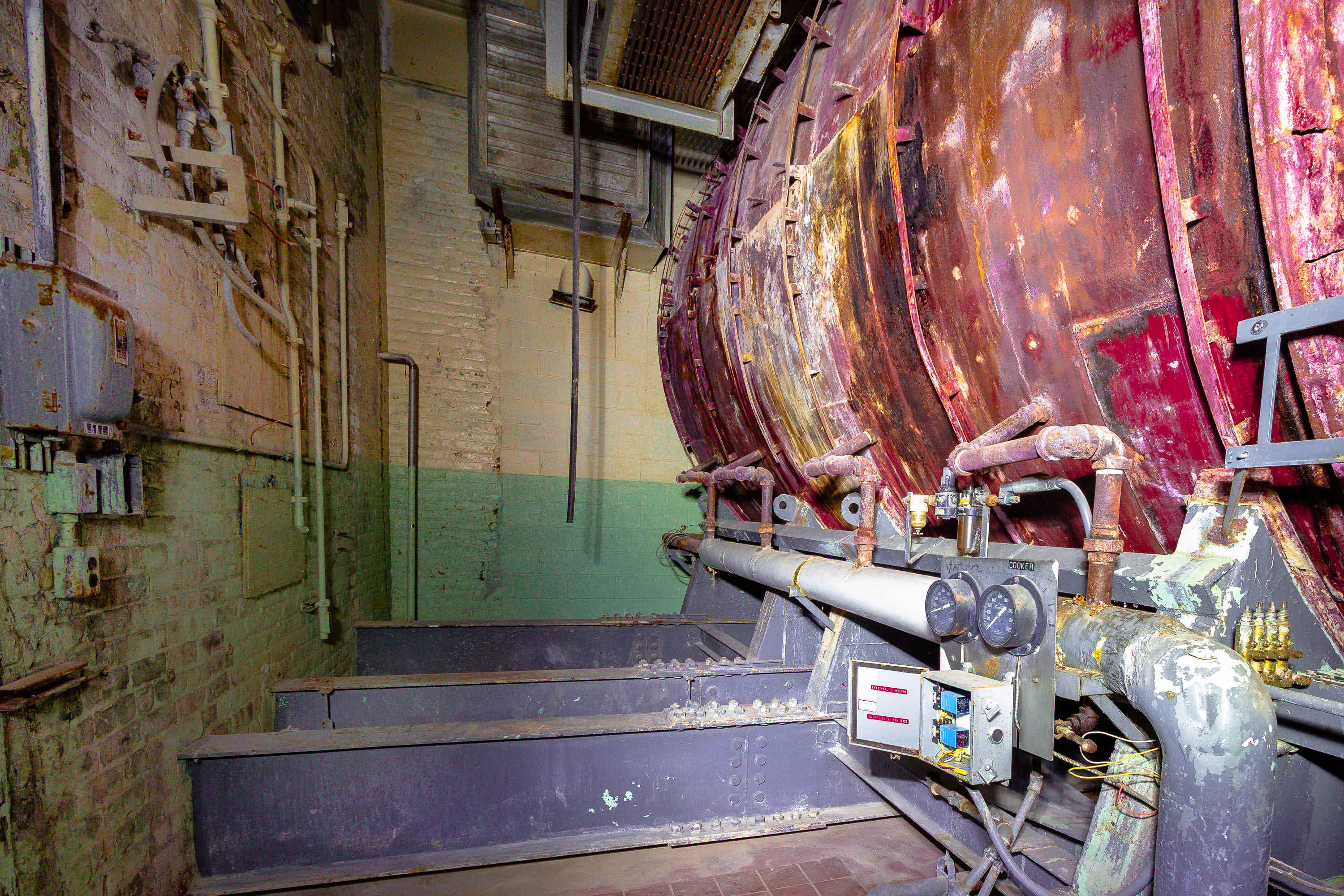
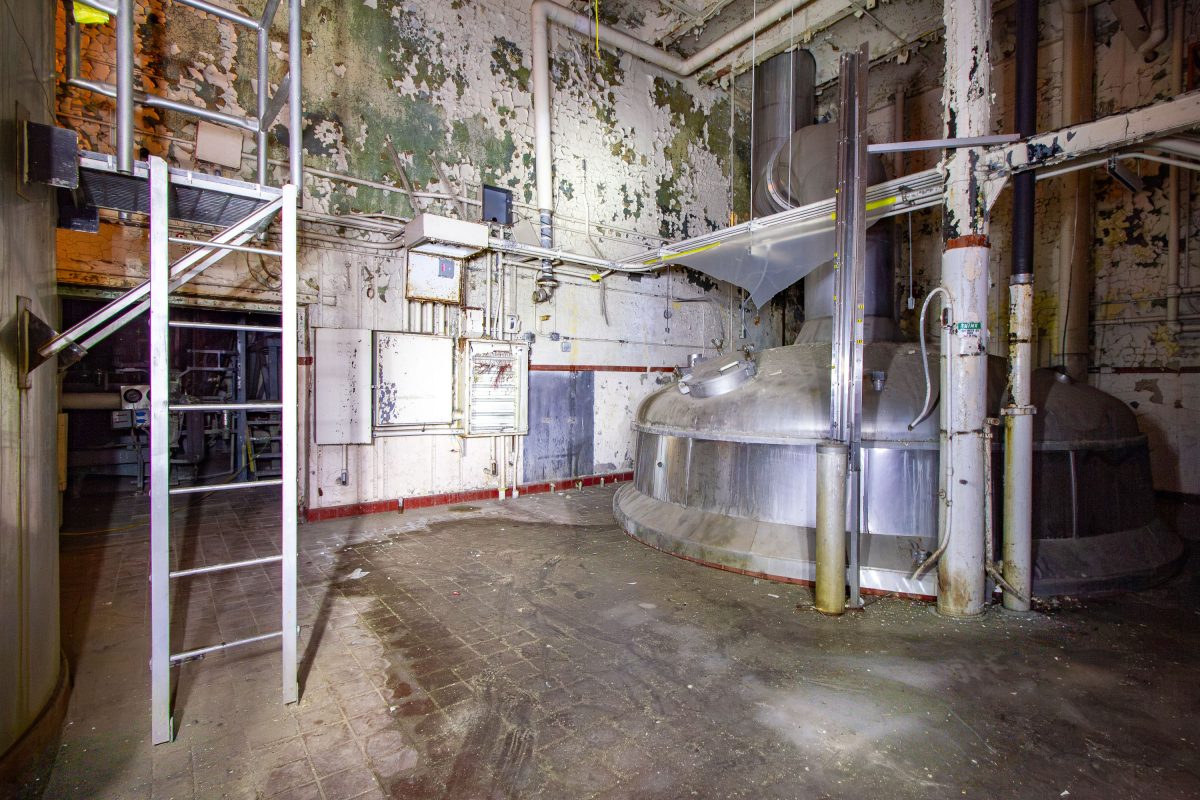
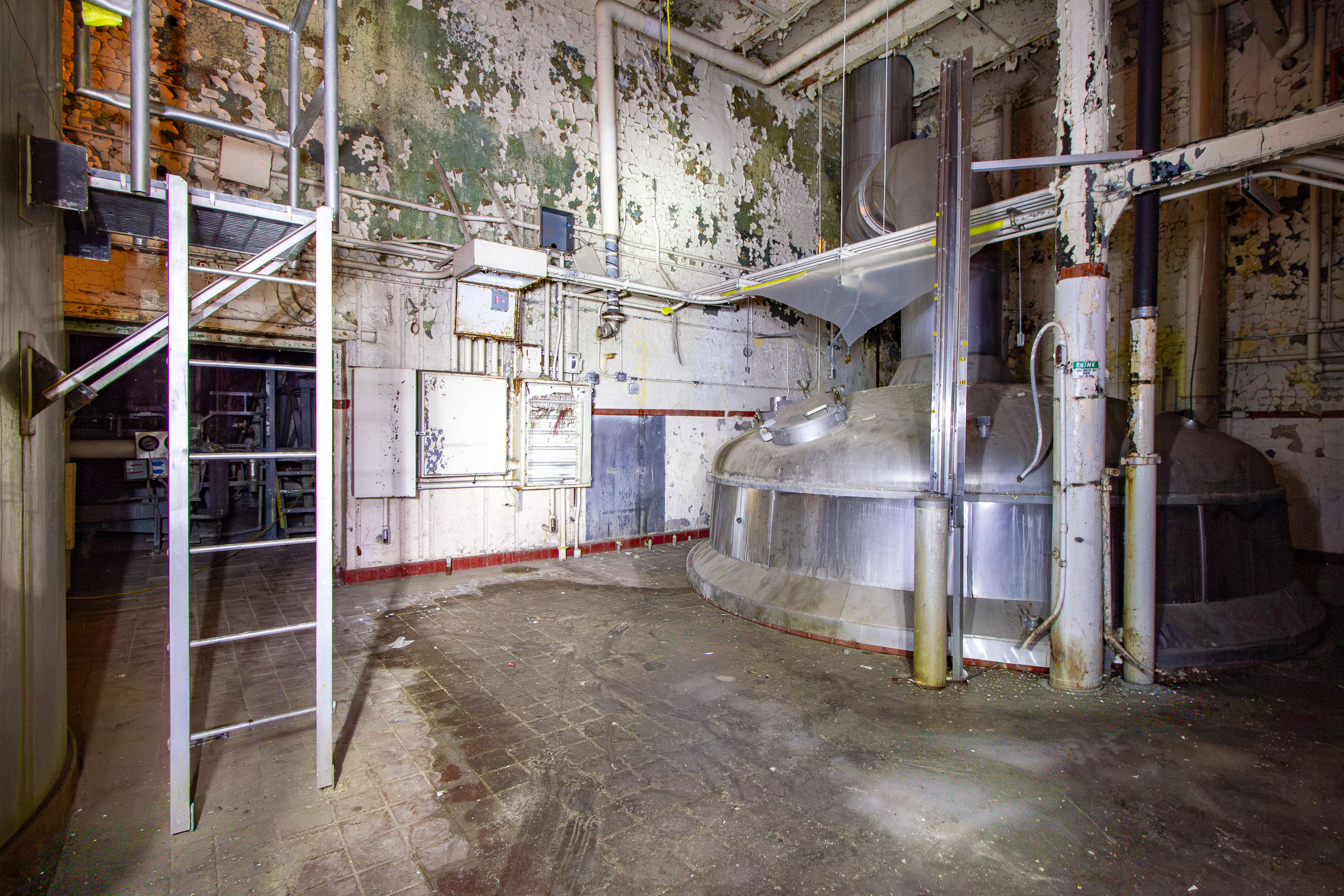
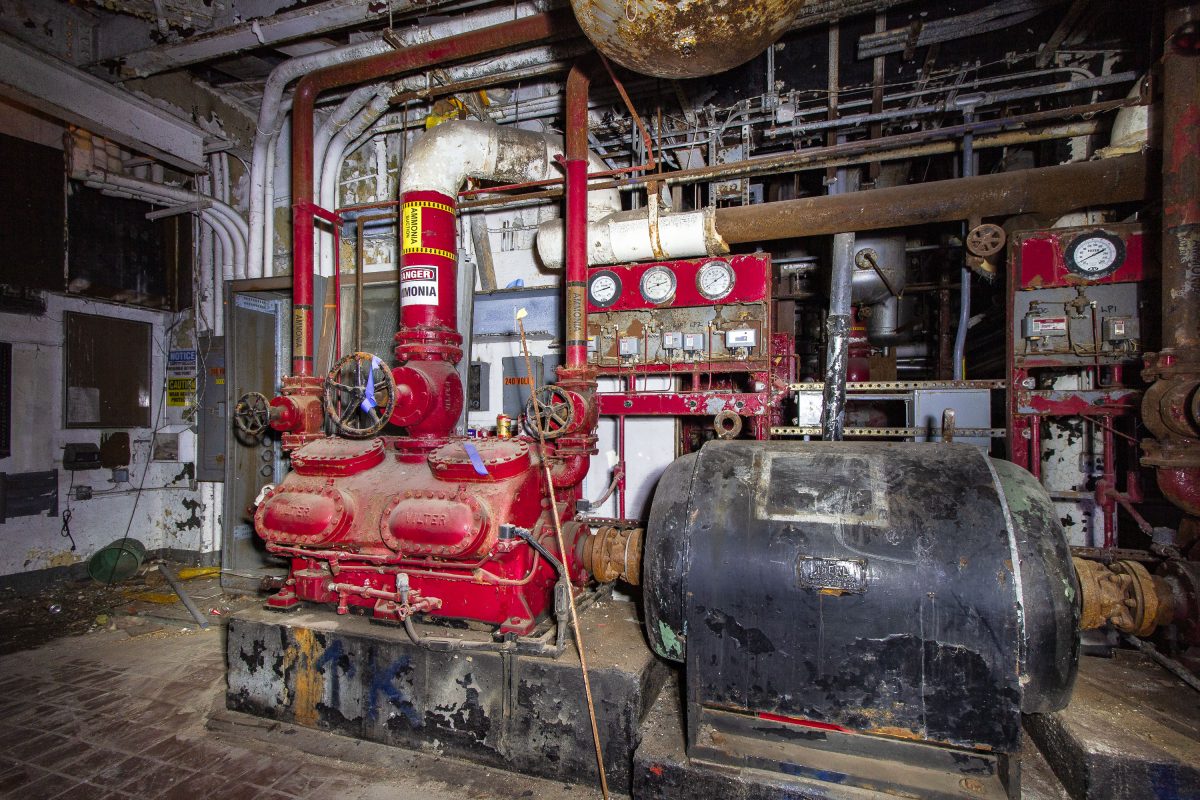
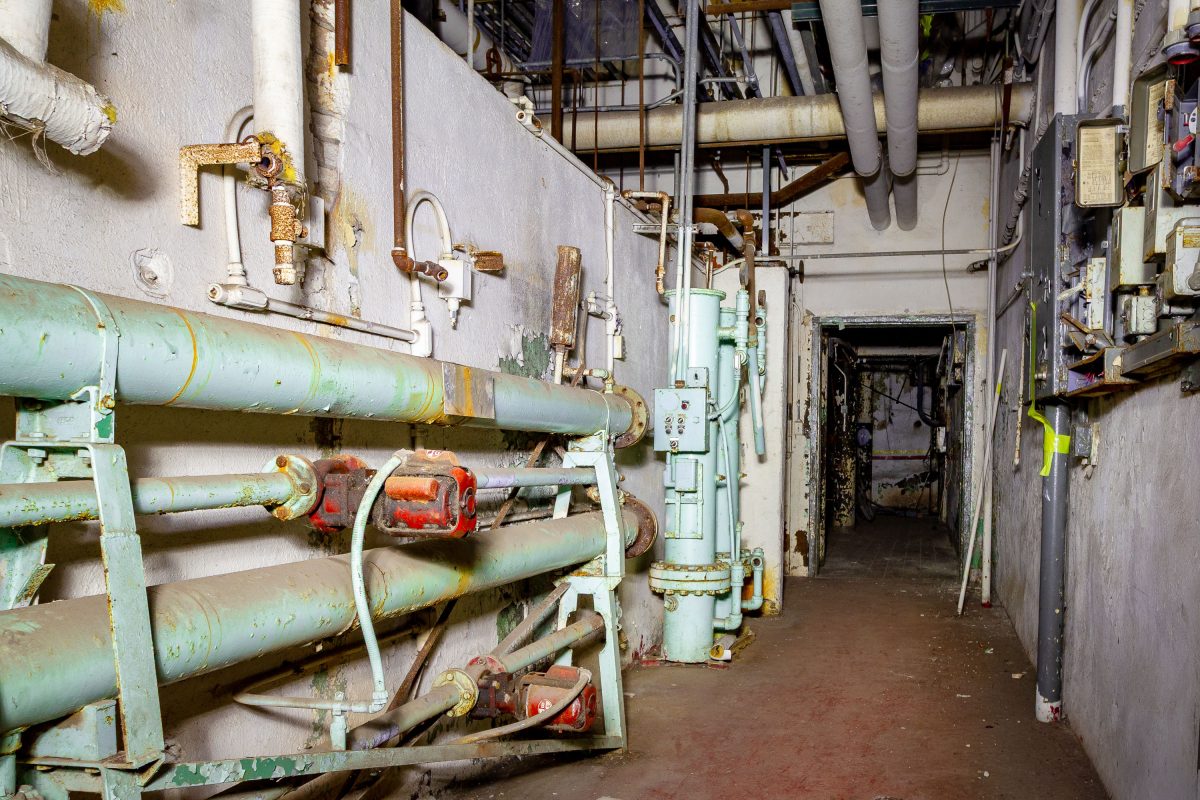
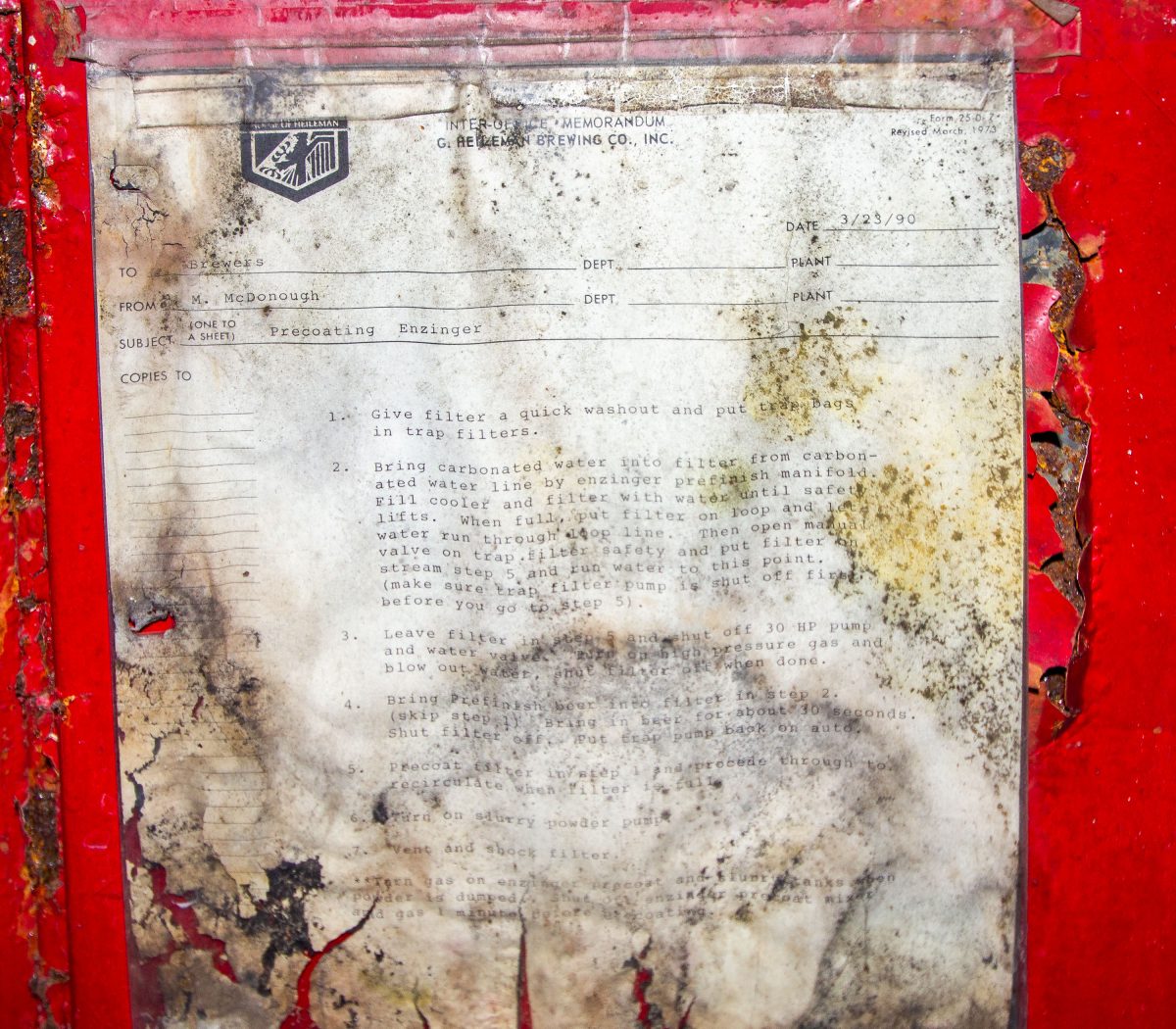
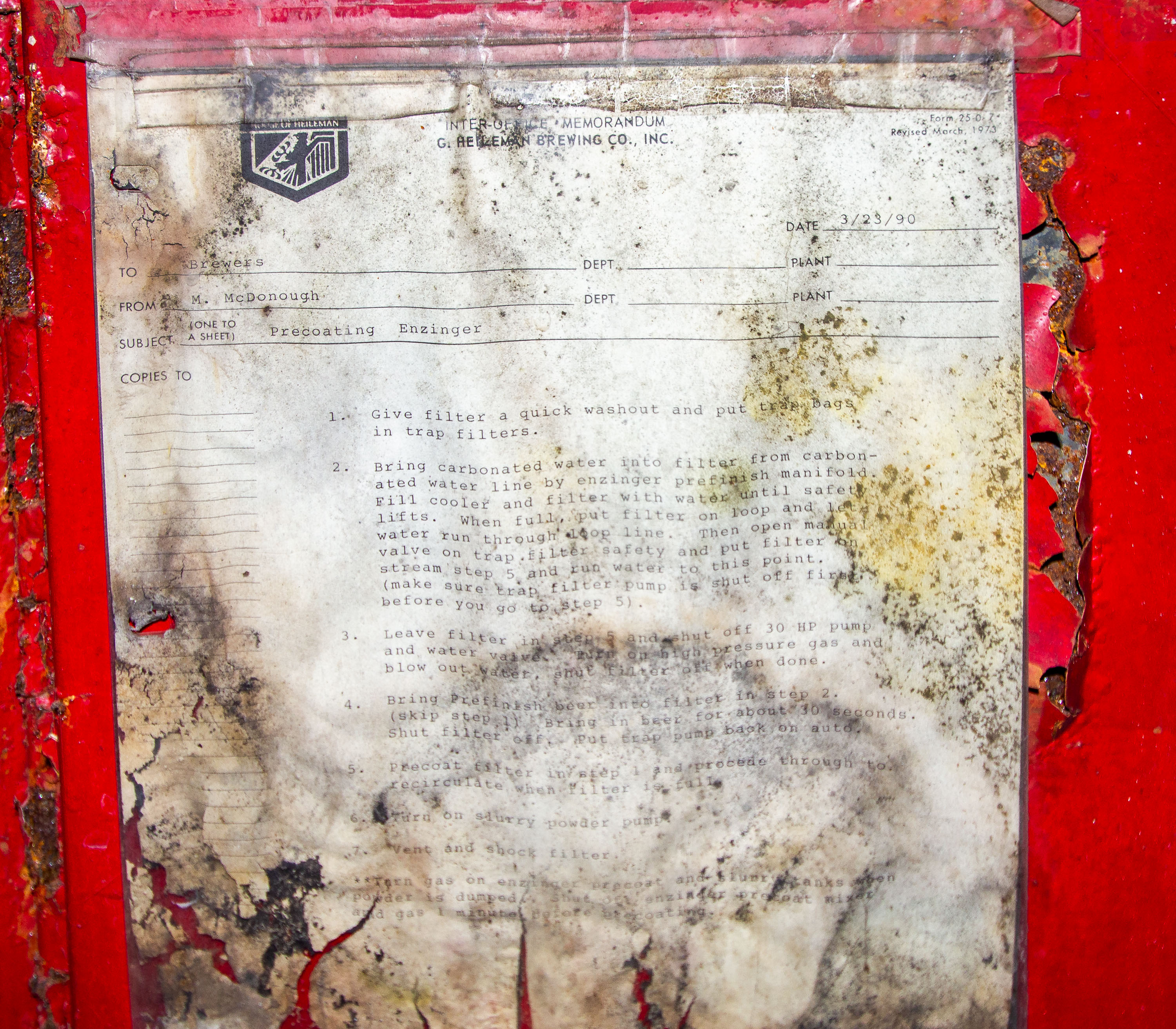
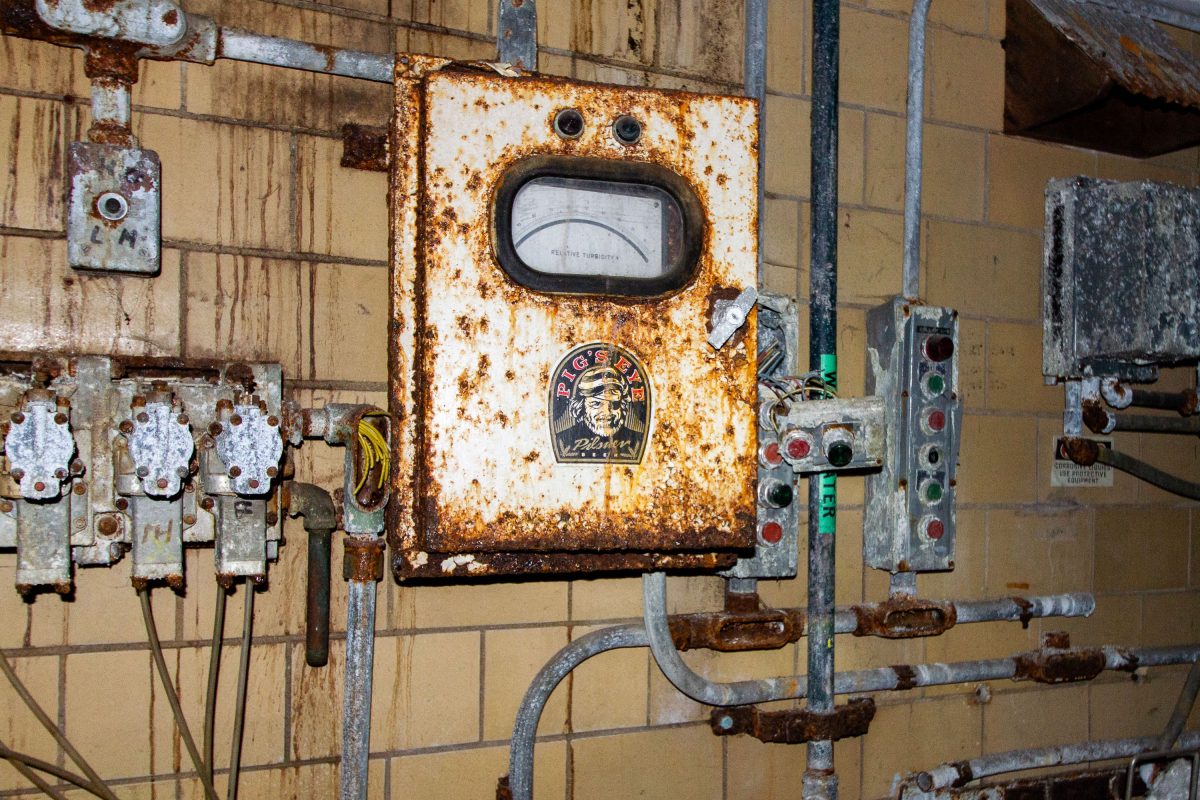
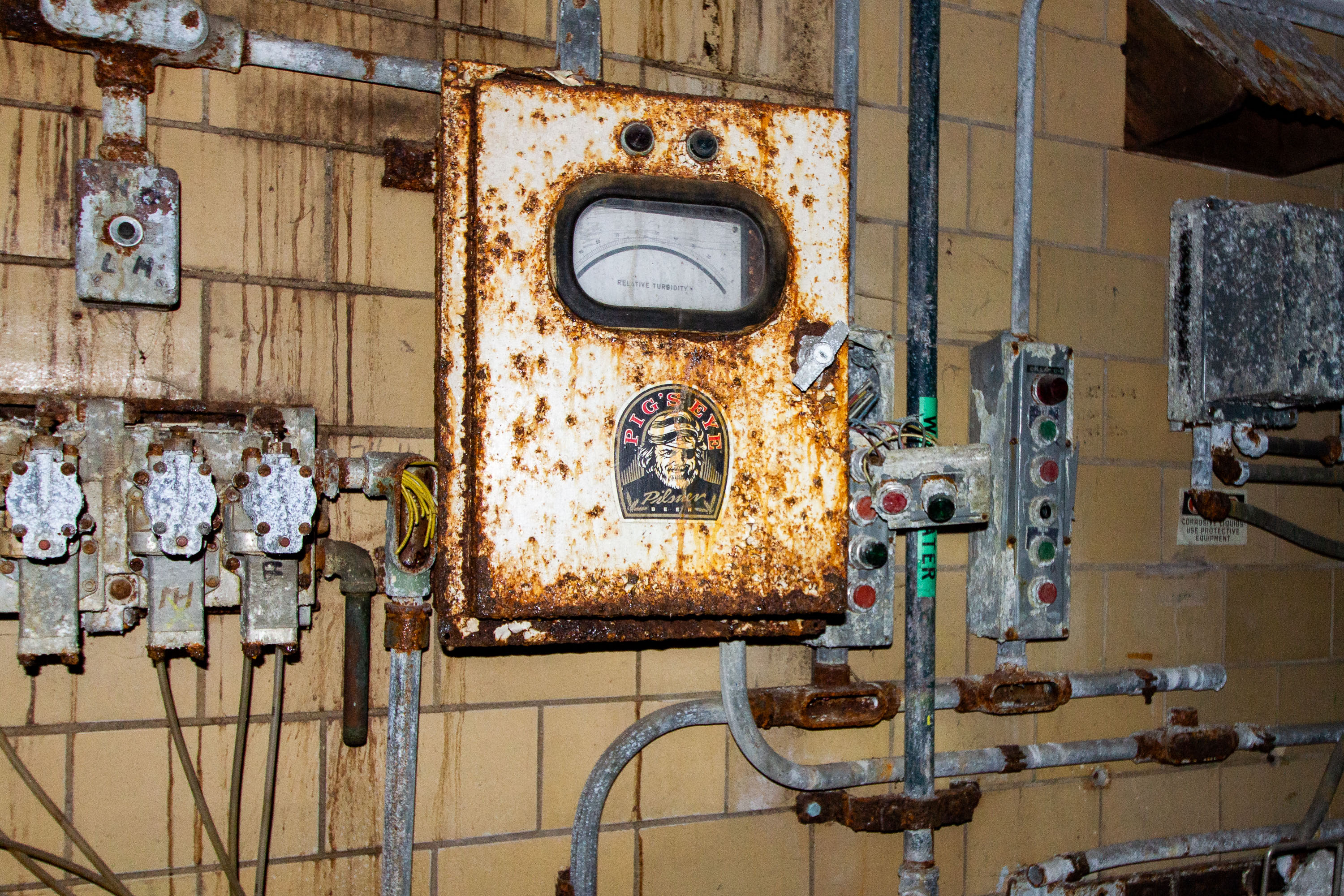
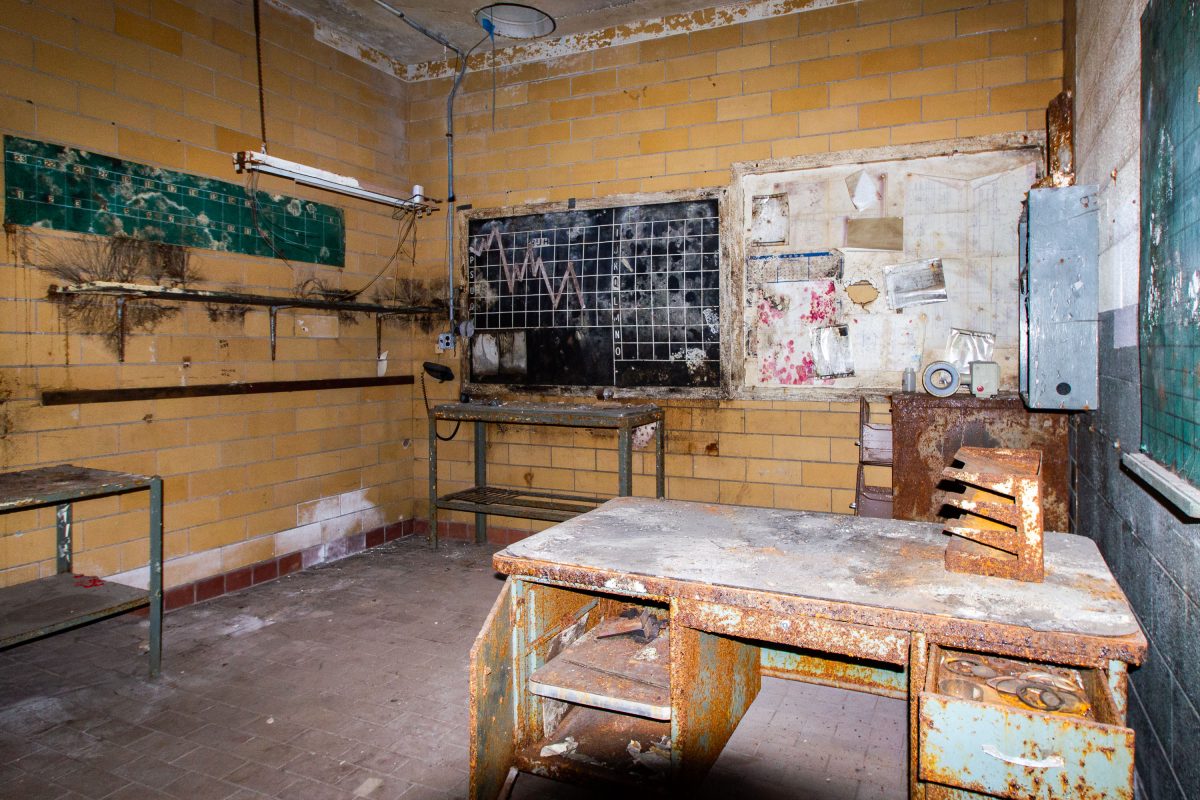
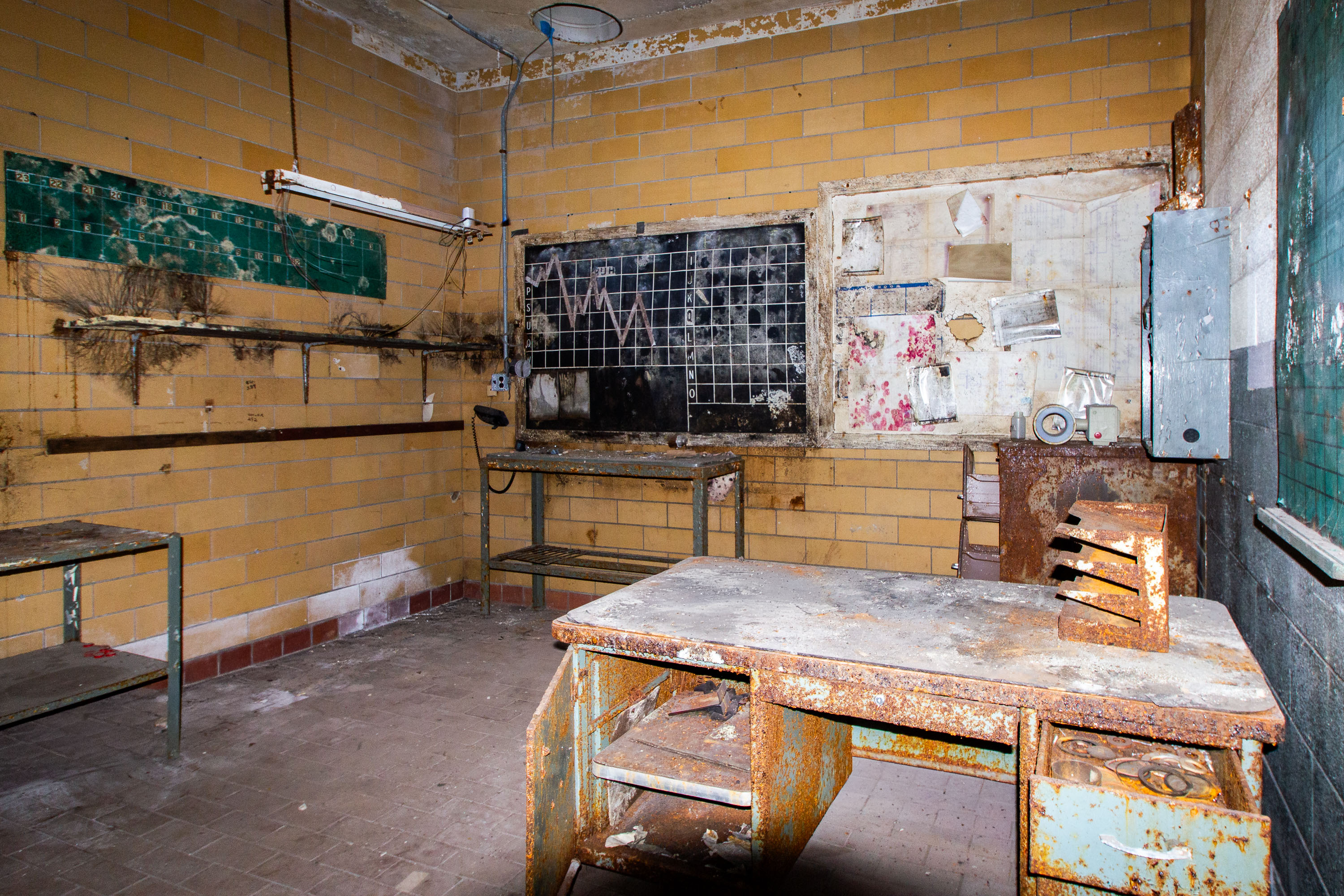
January 15, 2013 — The Schmidt Brewery complex at 882 West Seventh Street in St. Paul traces back to 1855, when Christopher Stahlmann established what grew into one of Minnesota's largest brewing operations. Jacob Schmidt bought the company around 1900, and it operated under the Schmidt name for most of the twentieth century, later passing to the Minnesota Brewing Company. Enclosed conveyor passages like this one linked the malt house, brew house, and bottling plant, moving grain and materials between production stages. Brewing at the site ended in 2002, and the complex was later listed on the National Register of Historic Places before being redeveloped into artist lofts and apartments.January 15, 2013 — The Jacob Schmidt Brewing Company operated at this West Seventh Street complex in St. Paul from the 1900s until its closure in 1990. The brewery grew out of the earlier North Star Brewery, founded in the 1850s, and by the early twentieth century had become one of Minnesota's largest beer producers. Its brick buildings, including the landmark brew house with the arched windows and painted brand signage, are listed on the National Register of Historic Places. After decades of vacancy, the complex was redeveloped in 2013 into the Schmidt Artist Lofts, a mixed-use residential project that preserved much of the original industrial architecture.January 15, 2013 — The Schmidt Brewery complex on St. Paul's West Seventh Street traces back to 1855, when German immigrant brewers founded the operation as the North Star Brewery. Jacob Schmidt took over in 1900, and the company's beer became a regional staple for much of the 20th century. Production continued under various owners until 2002, when the plant closed for good. The site sat empty for years before developers began converting the complex into the Schmidt Artist Lofts, completed in 2013, and the brewery buildings are listed on the National Register of Historic Places.January 15, 2013 — The Jacob Schmidt Brewing Company built this complex along West Seventh Street in St. Paul, with the brew house tower dating to a 1904 expansion. Schmidt brewed beer here for most of the 20th century, at one point ranking among the largest breweries in the country before the plant closed in 2002. The building sat vacant for over a decade, its "Landmark" sign a holdover from a later owner, before a renovation converted the complex into the Schmidt Artist Lofts in 2013. The site is listed on the National Register of Historic Places for its role in the region's brewing industry.January 15, 2013 — The Jacob Schmidt Brewing Company operated on West Seventh Street in St. Paul from the 1900s until production ended in 2002 under the Minnesota Brewing Company name. The complex traces its roots to the Stahlmann Brewery, founded on the site in 1855, and grew into one of the largest breweries in the Midwest by the early twentieth century. Its castle-style brew house and adjoining industrial buildings were added to the National Register of Historic Places in 1988. Boilers and mechanical equipment like this once powered the brewing and bottling lines that supplied Schmidt beer across the region before the plant's closure ended nearly a century and a half of brewing on the site.January 15, 2013 — The Jacob Schmidt Brewing Company operated at 882 West Seventh Street in St. Paul, tracing its roots to the North Star Brewery founded on the site in 1855. Schmidt acquired the operation in 1900 and built it into one of the largest breweries in Minnesota, producing beer under the Schmidt name for most of the 20th century. Pabst bought the company in 1972 and kept the plant running under contract brewing arrangements until production finally ceased in 2002. The complex was added to the National Register of Historic Places and later redeveloped into the Schmidt Artist Lofts, with much of the original brewhouse and support buildings preserved in the conversion.January 15, 2013 — The Schmidt Brewery complex on West Seventh Street traces its roots to 1855, when Jacob Schmidt began brewing on the site after taking over an earlier operation founded by German immigrant Christopher Stahlmann. By the early 1900s it had grown into one of the largest breweries in the country, producing Schmidt Beer and City Club under a sprawling campus of production and power buildings along the Mississippi River bluff. Brewing operations continued under various owners until the plant closed in 1990, ending more than a century of continuous production. The boiler and mechanical rooms housed the steam systems that powered brewing kettles, bottling lines, and refrigeration throughout the complex. In 2013 the site was redeveloped into the Schmidt Artist Lofts, and the brewery's main buildings were later listed on the National Register of Historic Places.January 15, 2013 — The Jacob Schmidt Brewing Company operated on West Seventh Street in St. Paul from 1900 until production ceased in 2002, when the Minnesota Brewing Company, its final owner, shut the plant down. Schmidt's beer had been a regional staple for much of the 20th century, at one point ranking among the largest breweries in the country by output. The brew house, listed on the National Register of Historic Places, held the kettles and tanks used to mash and boil grain into wort before fermentation. After sitting vacant for over a decade, the complex was redeveloped into the Schmidt Artist Lofts, reopening in 2013 with the old brewing equipment left in place as a reminder of the site's industrial past.January 15, 2013 — The Jacob Schmidt Brewing Company operated this complex on West Seventh Street in St. Paul from the 1900s until its closure in 2002. Ammonia compressors like this one powered the plant's refrigeration systems, a necessity for lagering beer at controlled temperatures before modern electric cooling took over. The brewery traces its roots to 1855 as the North Star Brewery, later reorganized under Jacob Schmidt in 1900, and grew into one of the largest beer producers in the Upper Midwest. Machinery of this kind remained in service for decades after brewing ceased, left in place when production ended. The property is listed on the National Register of Historic Places and has since been redeveloped into apartments known as the Schmidt Artist Lofts.January 15, 2013 — The Jacob Schmidt Brewing Company operated at this West Seventh Street site in St. Paul from 1900 until production ended in 2002 under later owner Minnesota Brewing Company. Machinery like the CO2 dehydrator unit pictured here supported the carbonation and packaging lines that once turned out beer under the Schmidt label and, later, contract brands. The complex is listed on the National Register of Historic Places for its role in Minnesota's brewing industry. Following a lengthy vacancy, developers converted the property into the Schmidt Artist Lofts, completed in 2013, preserving portions of the original industrial infrastructure within the residential redevelopment.January 15, 2013 — The former Schmidt Brewery complex sits along West Seventh Street in St. Paul, where the Jacob Schmidt Brewing Company operated for much of the 20th century after taking over an earlier plant founded in the 1850s. Production continued under various owners until the brewery closed in 2002, leaving behind a network of boiler rooms, pipe galleries, and mechanical corridors built to support large-scale brewing operations. Many of these service areas, lined with steam and process piping, were later gutted or left untouched during the site's redevelopment into artist studios and apartments starting in the 2010s. The complex was added to the National Register of Historic Places in 2006, recognizing its role in Minnesota's brewing industry.January 15, 2013 — The Jacob Schmidt Brewing Company operated at 882 West Seventh Street in St. Paul from 1900 until its closure in 2002. Panels like this one governed the plant's sluice and pumping operations, routing product between the bottling and keg lines noted on its switches. The brewery once ranked among the largest in Minnesota, producing Schmidt beer for distribution across the Upper Midwest. After decades of vacancy, the complex was redeveloped starting in 2013 into the Schmidt Artist Lofts, and the site is listed on the National Register of Historic Places.January 15, 2013 — G. Heileman Brewing Co., Inc. took over the Jacob Schmidt Brewing Company's St. Paul plant in 1972, continuing beer production there under the Schmidt name for nearly two more decades. This interoffice memorandum, dated March 23, 1990, is addressed from M. McDonough to the brewery's staff and outlines a step-by-step procedure for precoating an Enzinger filter, a rotary vacuum filter used to clarify beer before it was packaged. Heileman halted brewing at the West Seventh Street complex later that year, after which Minnesota Brewing Company took over the site. The Schmidt Brewery complex, parts of which date to 1900, is listed on the National Register of Historic Places.January 15, 2013 — The Pig's Eye Pilsner sticker on this control panel ties it to the Jacob Schmidt Brewing Company, which operated on West Seventh Street in St. Paul from 1900 until it closed in 2002. The Pig's Eye name honors Pierre "Pig's Eye" Parrant, a fur trader and bootlegger regarded as one of St. Paul's earliest settlers. The brewery's industrial complex, developed over the early twentieth century, was listed on the National Register of Historic Places in 1990. Following years of vacancy after closure, the site was redeveloped into housing known as the Schmidt Artist Lofts.January 15, 2013 — The Schmidt Brewery complex on West Seventh Street in St. Paul traces its roots to 1855, when it began as the St. Paul Brewing Company before Jacob Schmidt took control in 1900 and renamed it. By the mid-20th century it ranked among the largest breweries in the country, producing Schmidt beer along with brands like Old Style and Grain Belt after later mergers. The brewery closed production in 2002, and much of the site sat vacant for over a decade afterward. Portions of the complex are listed on the National Register of Historic Places, and the property was eventually redeveloped into artist lofts and event space starting in 2013.
Built in Minneapolis
Minneapolis Photographer
Browse by location, move through long-running series, or start with recent work.