Train Platform Photography

Explore photos and posts tagged Train Platform.

Baker Street Station – Subsurface Track and Signal Infrastruct

Baker Street Station – Subsurface Track and Signal Infrastruct

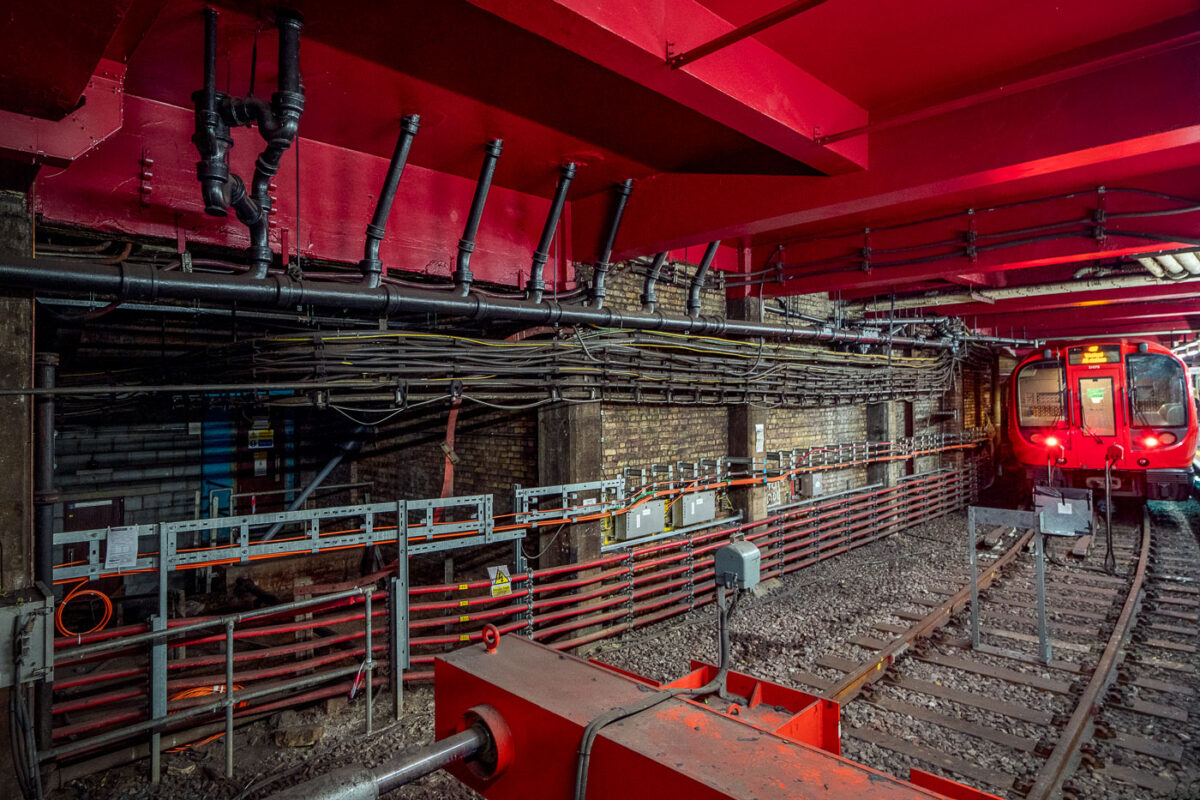
Deep beneath central London, Baker Street’s Metropolitan Line platforms reveal the layered engineering of one of the oldest functioning railway systems in the world. The exposed brick tunnel and steel framing date back to the Victorian “cut-and-cover” era of the 1860s, when steam locomotives first ran through these very corridors. The heavy red girders seen above were reinforced during modern refurbishments, supporting the city streets above while housing utilities and cable conduits that power today’s Underground network.

The train at the far end belongs to the S8 Stock series, introduced in 2010 by Bombardier for the Metropolitan Line, equipped with air conditioning and regenerative braking. The dense web of cables and control boxes along the wall carries signal, communication, and traction power circuits, all vital to the line’s safe operation. Baker Street’s infrastructure embodies London Transport’s continual evolution—from soot-covered tunnels to precision-controlled, electrically powered systems still running along the same 19th-century alignments.
Baker Street Station – Metropolitan Line Terminus Platform

Baker Street Station – Metropolitan Line Terminus Platform

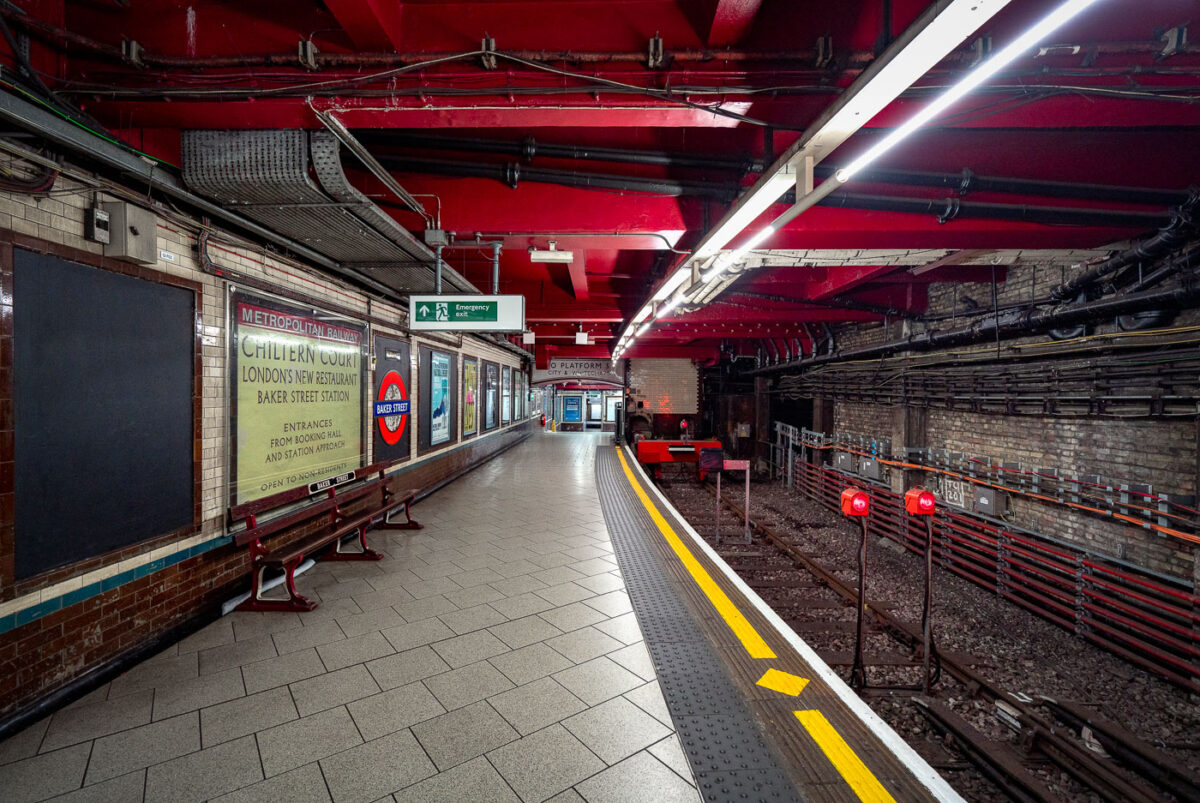
Baker Street Station’s Metropolitan Line platforms represent one of the oldest sections of the London Underground, opened in 1863 as part of the world’s first subterranean railway. The terminus platforms, seen here, retain their cut-and-cover Victorian brickwork paired with modern safety updates and striking red-painted steel reinforcements added during later refurbishments.

The station originally served the Metropolitan Railway’s steam-hauled trains running between Paddington and Farringdon before electrification in the early 20th century transformed the network. Period signage advertising “Chiltern Court” and the original Metropolitan Railway branding pay homage to its heritage, contrasting with the exposed wiring, signal lights, and tiling that reveal more than 160 years of evolving underground infrastructure. Today, Baker Street remains a key interchange, connecting five Underground lines while preserving much of the industrial atmosphere that defined London’s pioneering approach to mass transit.

Bakerloo Line Southbound Tunnel at Charing Cross Station

Bakerloo Line Southbound Tunnel at Charing Cross Station

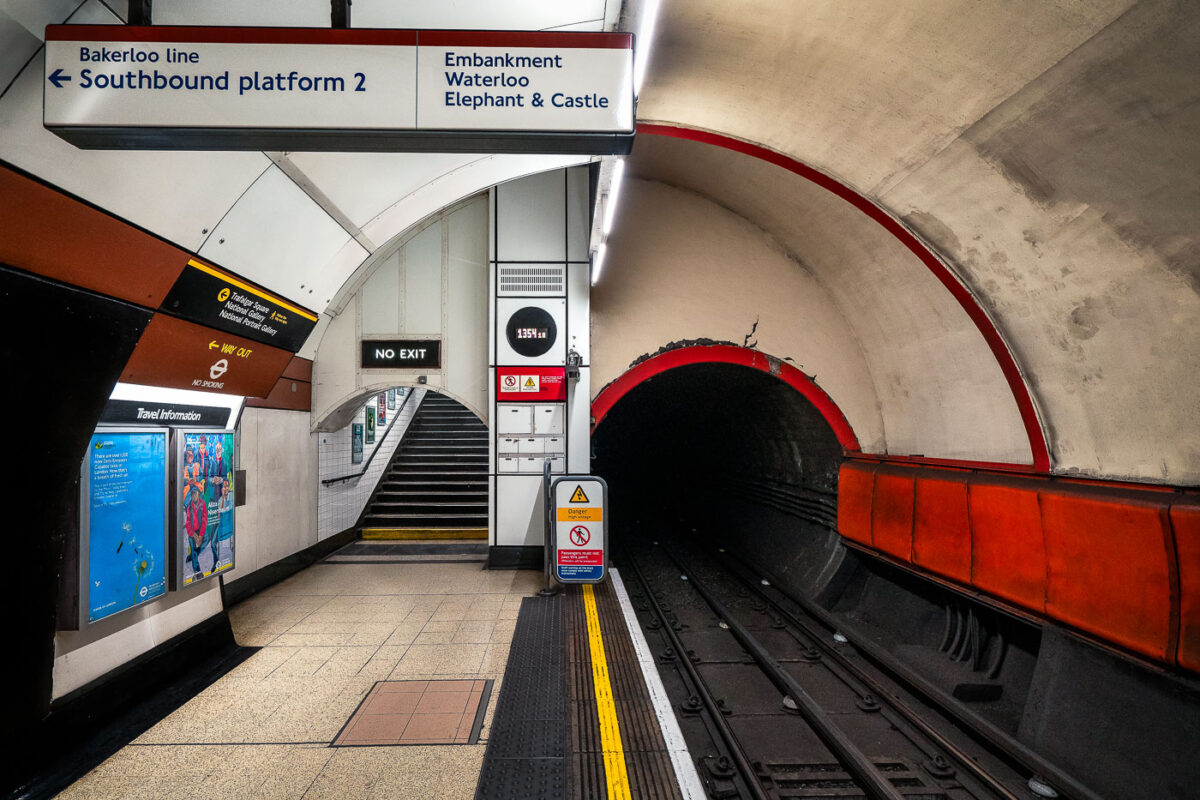
The southbound Bakerloo line platform at Charing Cross Underground Station in central London, showing the distinctive narrow tube tunnel built in the early 1900s. The red-edged lining around the tunnel mouth and the tiled passageway reflect classic London Transport design standards. Opened in 1906, the Bakerloo line was one of the early deep-level “tube” lines, and this station once served as its southern terminus before extensions carried it to Elephant & Castle. The signage and steep staircases illustrate the compact engineering that defined London’s early subterranean railways.

Southern Class 455 at London Victoria

Southern Class 455 at London Victoria

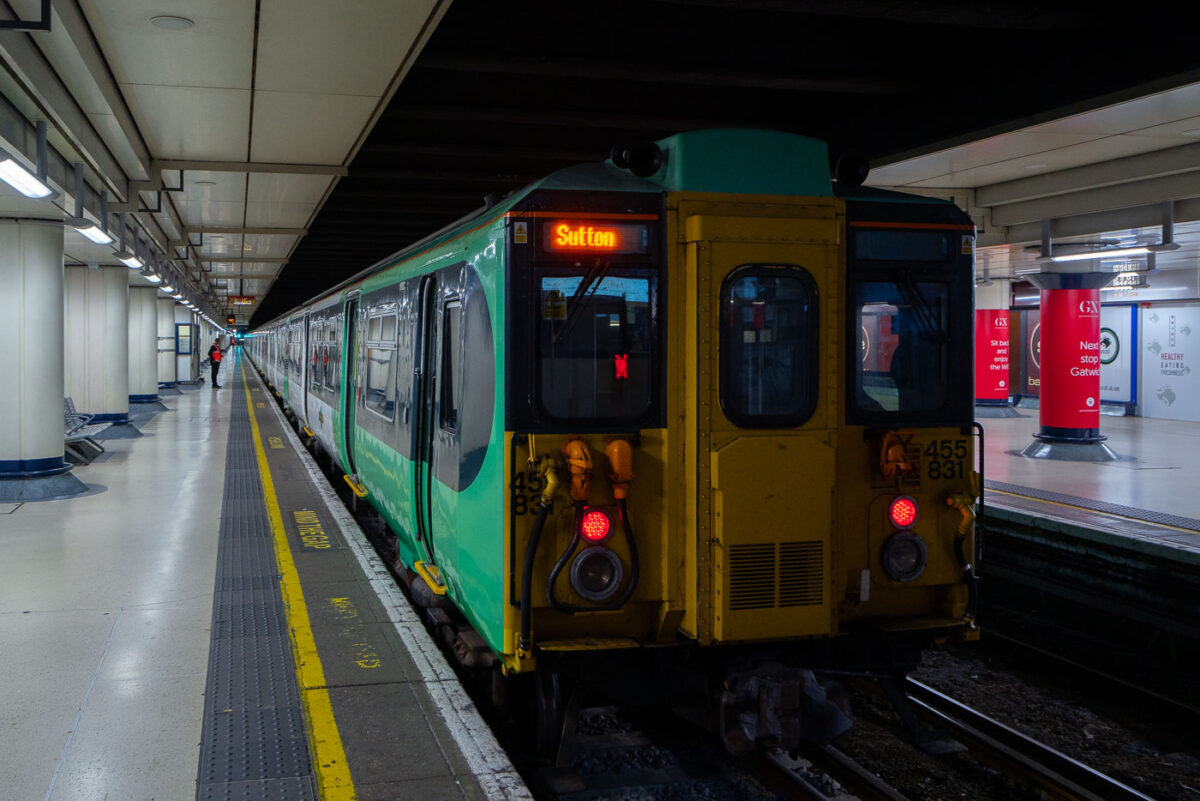
A Southern Railway Class 455 electric multiple unit prepares to depart from London Victoria station on a suburban service bound for Sutton. These 1980s-era trains, built by British Rail Engineering Limited, have long served the dense commuter corridors of South London and Surrey. The terminal’s subterranean platforms, seen here beneath the main concourse, handle both Gatwick Express and local Southern services, linking central London with its southern suburbs through one of the busiest rail hubs in Britain.

Tower Hill Underground Eastbound Platform

Tower Hill Underground Eastbound Platform

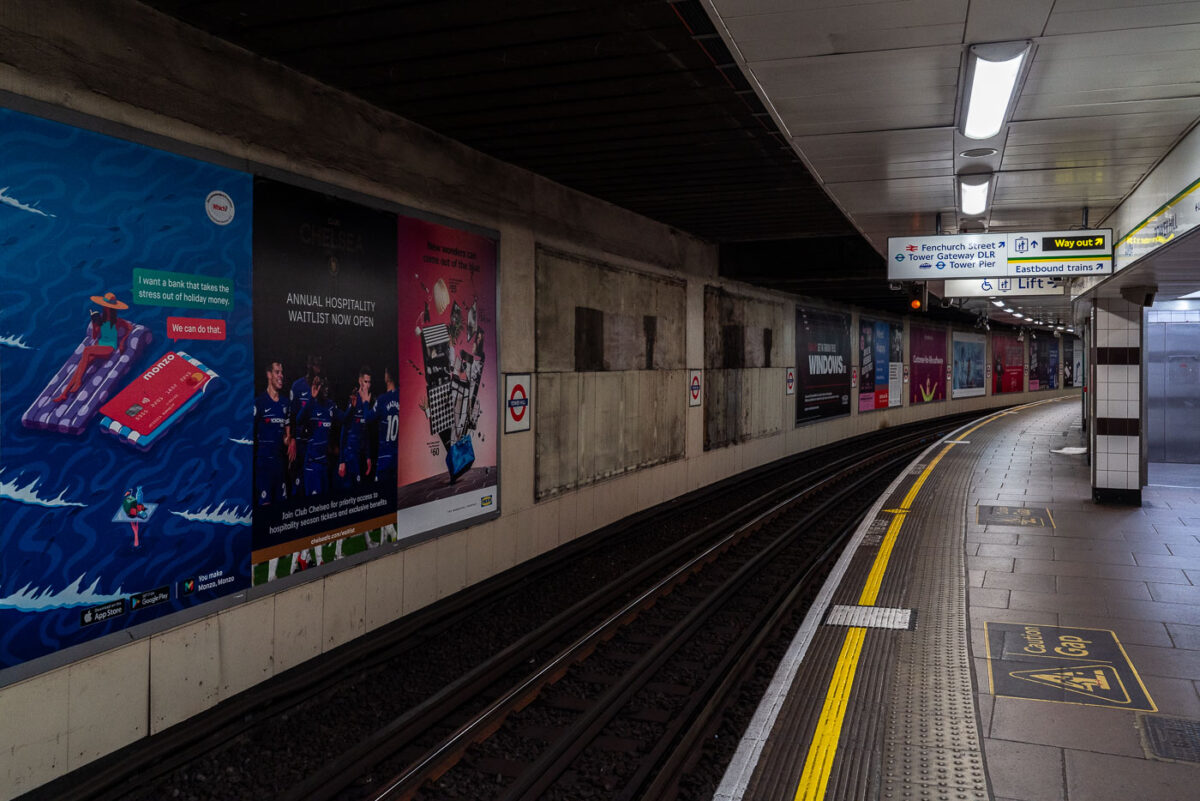
The eastbound platform at Tower Hill Underground Station, serving the District and Circle lines, curves gently beneath the City of London’s historic core. The tiled walls, layered advertising panels, and utilitarian ceiling panels reflect the practical design language of the post-war London Underground system.

Located adjacent to Tower Gateway DLR and just steps from the Tower of London, this interchange is one of the busiest tourist-access stations in central London. Its narrow curvature and close tunnel clearances are characteristic of legacy sub-surface lines built in the 19th century—still forming the backbone of the modern network more than 150 years later.

Evening Commuter Calm at Blackheath Station

Evening Commuter Calm at Blackheath Station

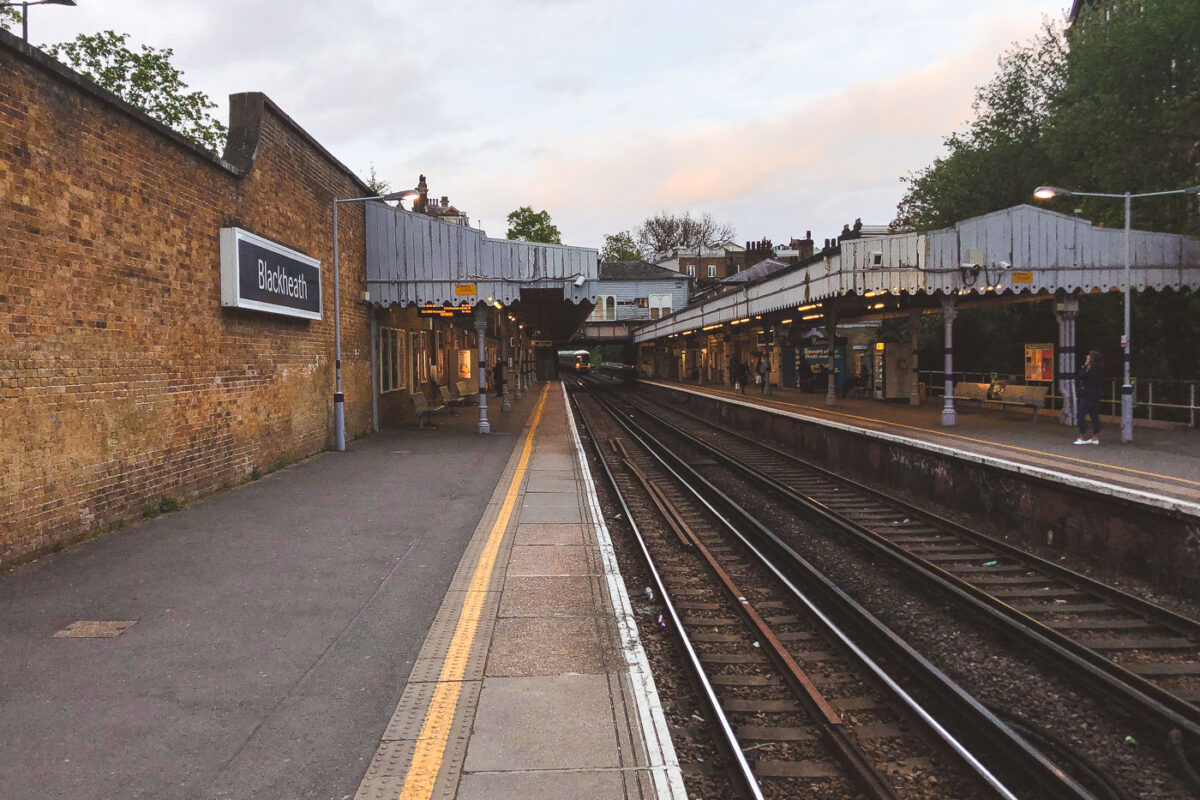
Blackheath railway station, a historic stop on the Southeastern line in southeast London, dates to the mid-19th century and still retains much of its Victorian charm. Its cast-iron canopies, decorative awnings, and brickwork walls reflect the architectural style of early suburban railway expansion. The platforms here serve frequent trains between London Charing Cross, Cannon Street, and Kent, making it a busy commuter link by day. In the quiet of dusk, however, the station takes on a tranquil character — a rare pause in the constant rhythm of London’s rail network.

Thameslink Platforms at London Bridge Station

Thameslink Platforms at London Bridge Station

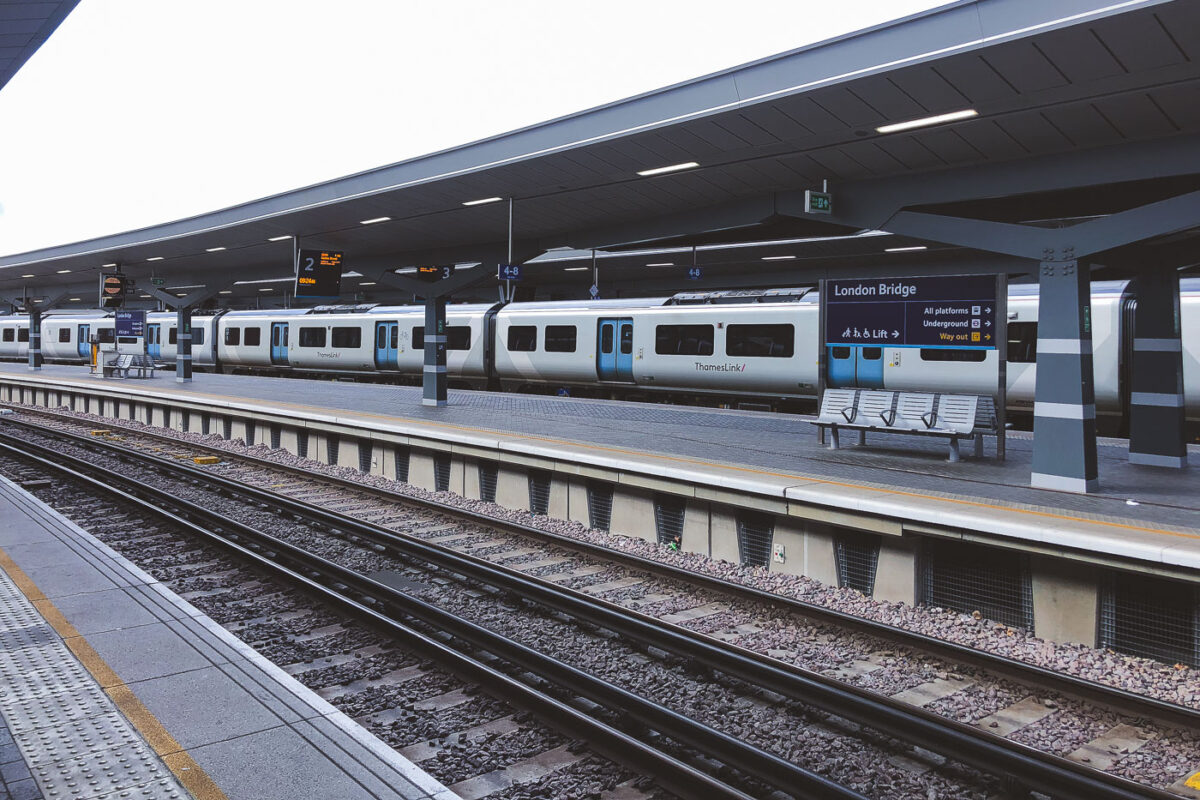
London Bridge Station’s Thameslink platforms represent one of the most advanced pieces of commuter rail infrastructure in the UK, rebuilt as part of the £1 billion redevelopment completed in 2018. The redesign introduced a vast concourse beneath the platforms, new canopies, and digital passenger systems to accommodate over 50 million travelers annually.

Visible here is a Class 700 Thameslink train, part of Siemens’ Desiro City fleet, which operates high-frequency services linking Bedford, Brighton, and Cambridge through central London via the core Thameslink route. The streamlined architecture and wide canopies were engineered to handle both heavy peak-hour volumes and seamless integration between National Rail and the London Underground’s Jubilee and Northern Lines, establishing London Bridge as a key interchange in Britain’s modern rail network.

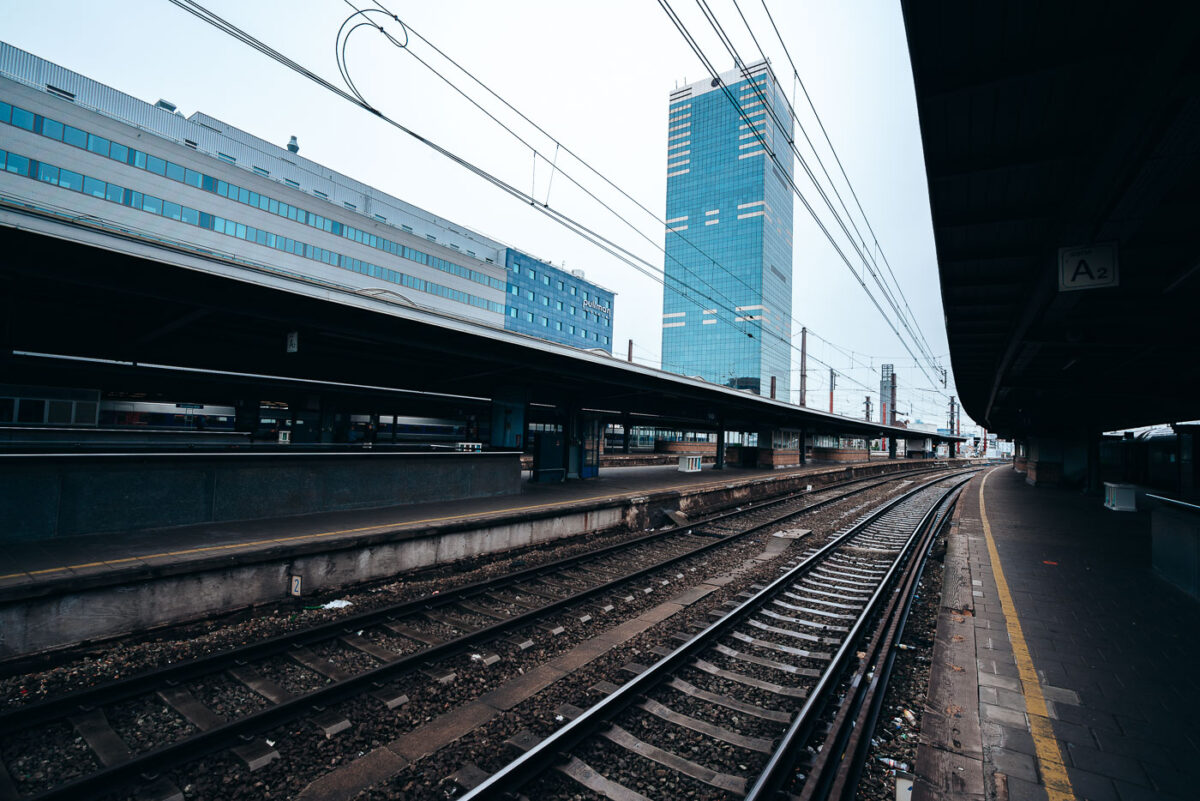
Brussels South/Midi Train Station

Brussels South/Midi Train Station

Brussels South/Midi Train Station in Belgium. September 2017.

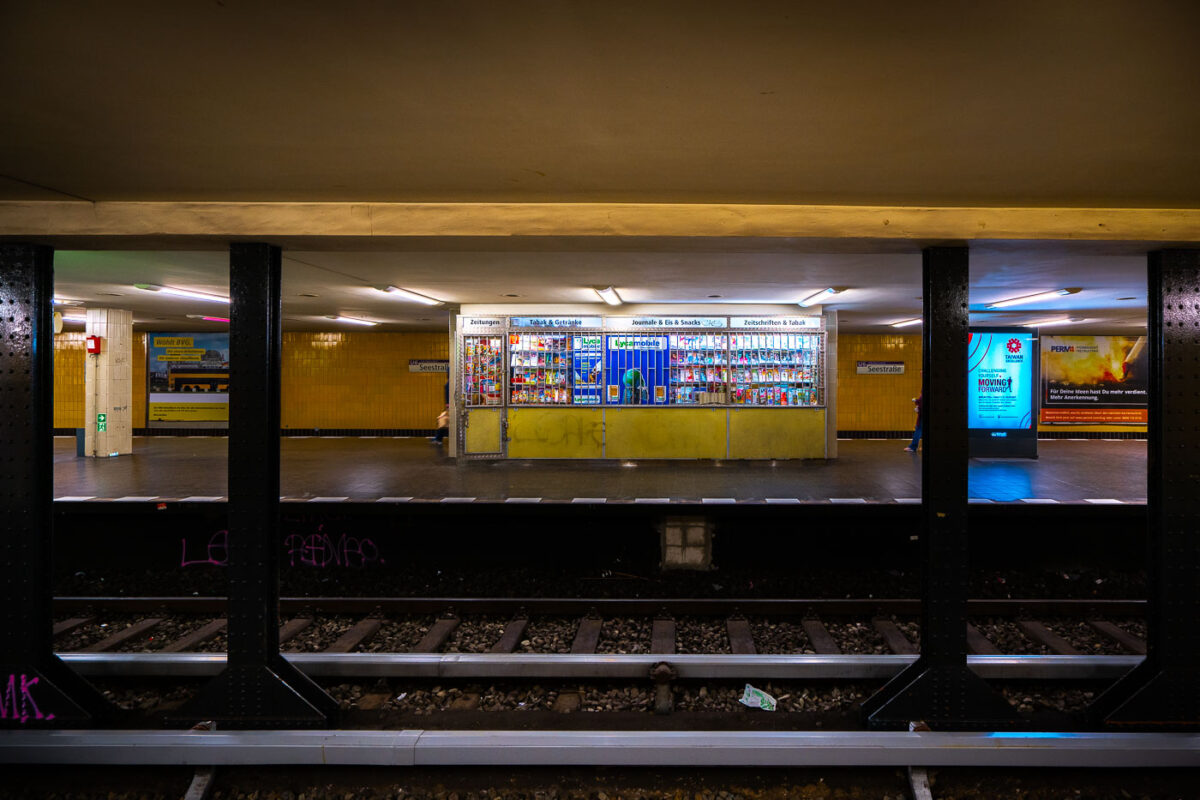
Market at the Seestrabe Station in Berlin

Market at the Seestrabe Station in Berlin

A store at the Seestrabe Station in Berlin.

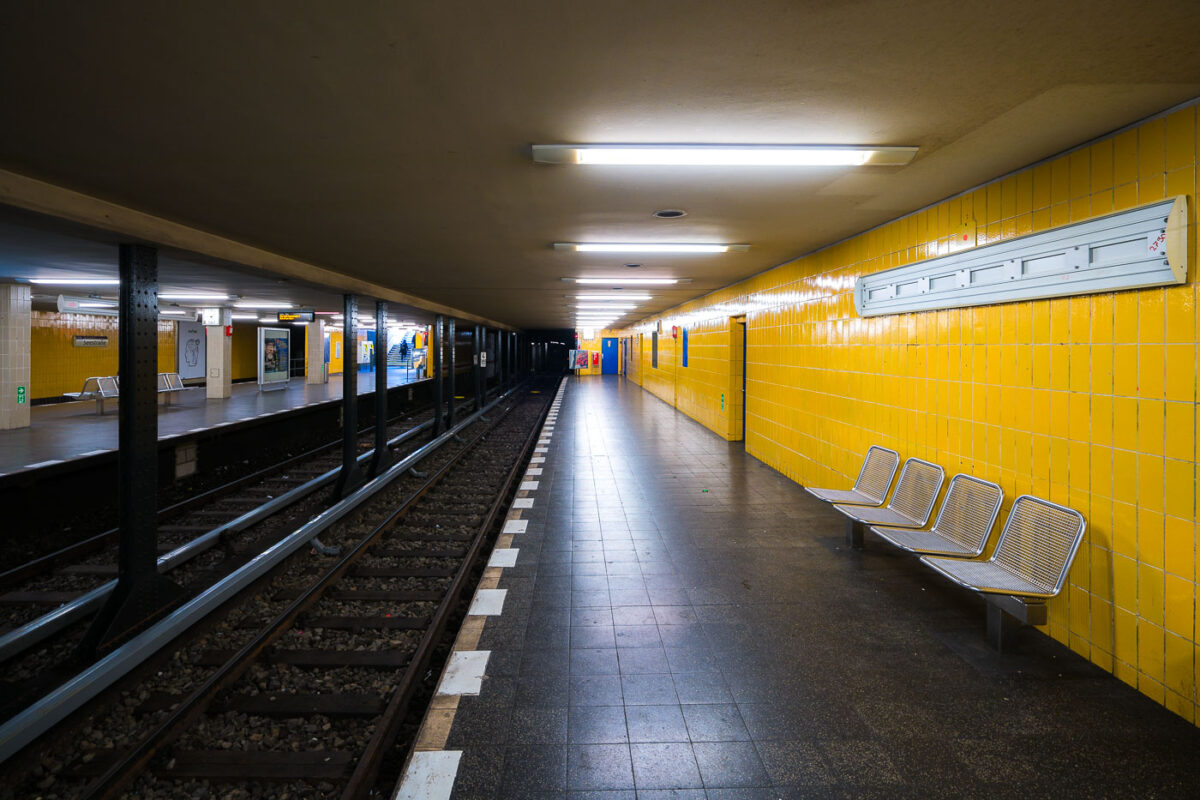
Seestrabe U-Bahn Station in Berlin

Seestrabe U-Bahn Station in Berlin

Seestraße U-Bahn Station, Berlin Germany

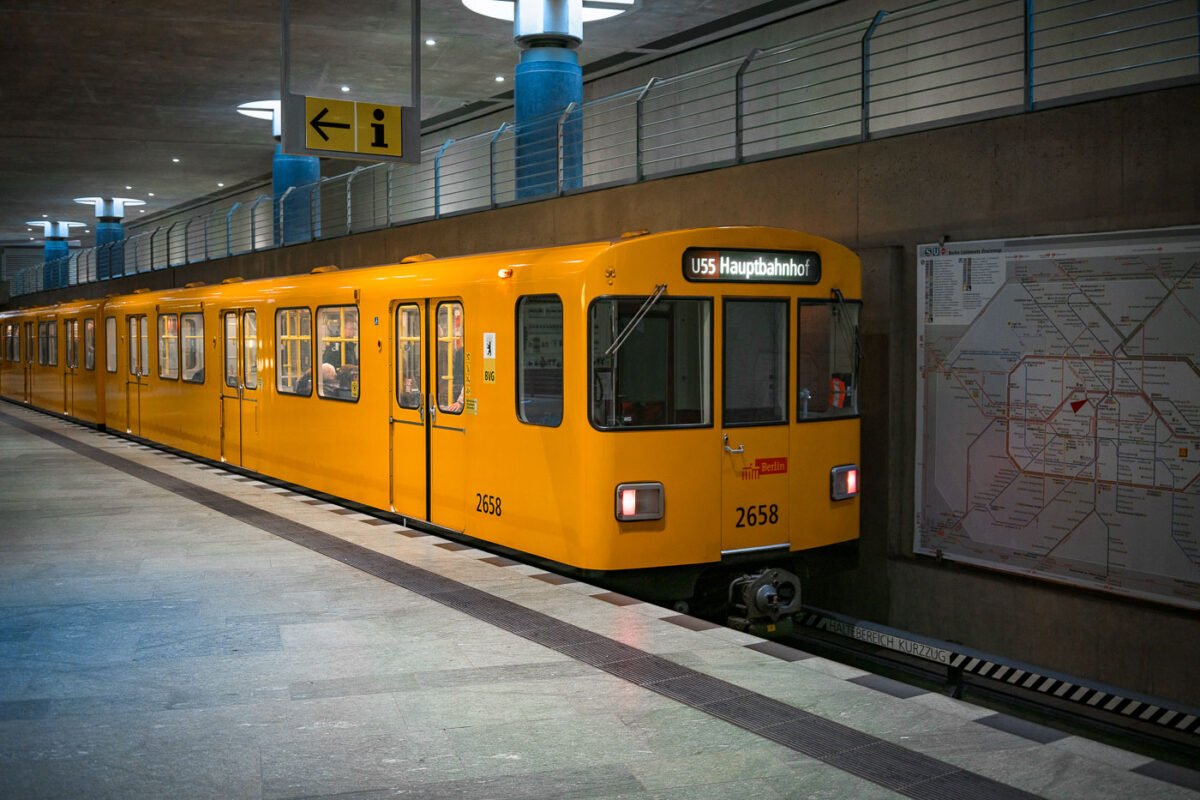
U55 shuttle at Berlin Hauptbahnhof platform

U55 shuttle at Berlin Hauptbahnhof platform

A bright yellow BVG U-Bahn train marked “U55 Hauptbahnhof” stands at the underground platform of Berlin Hauptbahnhof. An information sign with an arrow hangs above the platform, while a large network map of the S- and U-Bahn lines is mounted on the concrete wall to the right. Through the windows, a few seated passengers are visible inside the multi-door carriage numbered 2658. The U55 operated as a short shuttle between Berlin Hauptbahnhof and Brandenburger Tor, opened in 2009 to link the new central station with the government quarter. In December 2020 the shuttle was integrated into the extended U5 line, a major step in Berlin’s east‑west metro connection.

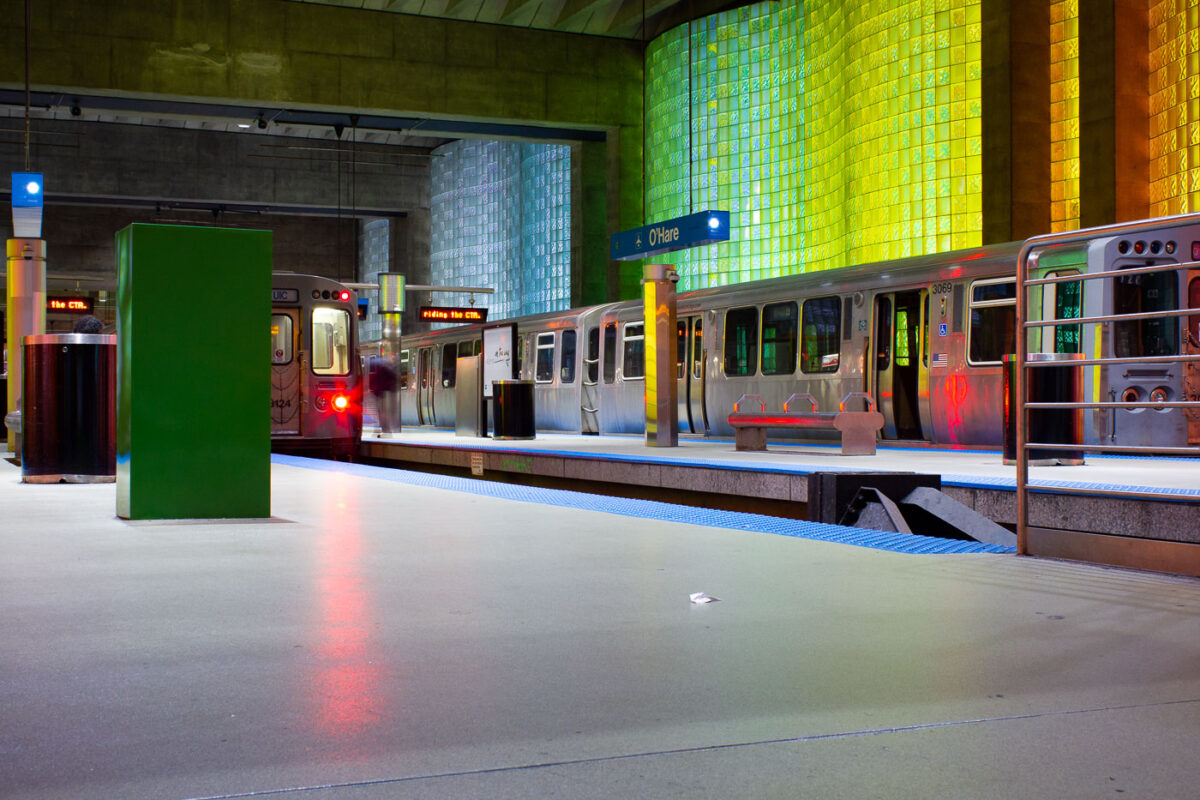
O’Hare International Airport Train Station

O’Hare International Airport Train Station

Trains at O'Hare International Airport in Chicago.

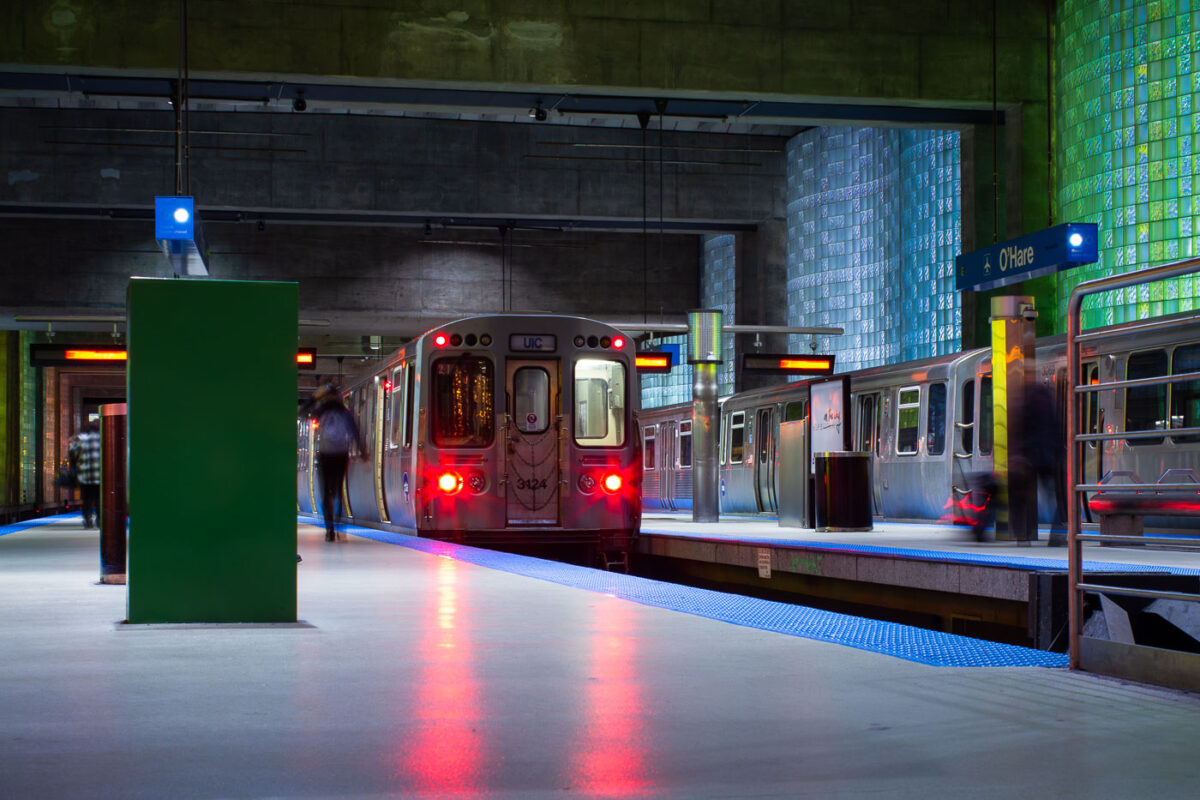
O’Hare Station with UIC bound train

O’Hare Station with UIC bound train

The O'Hare Train Station in Chicago.

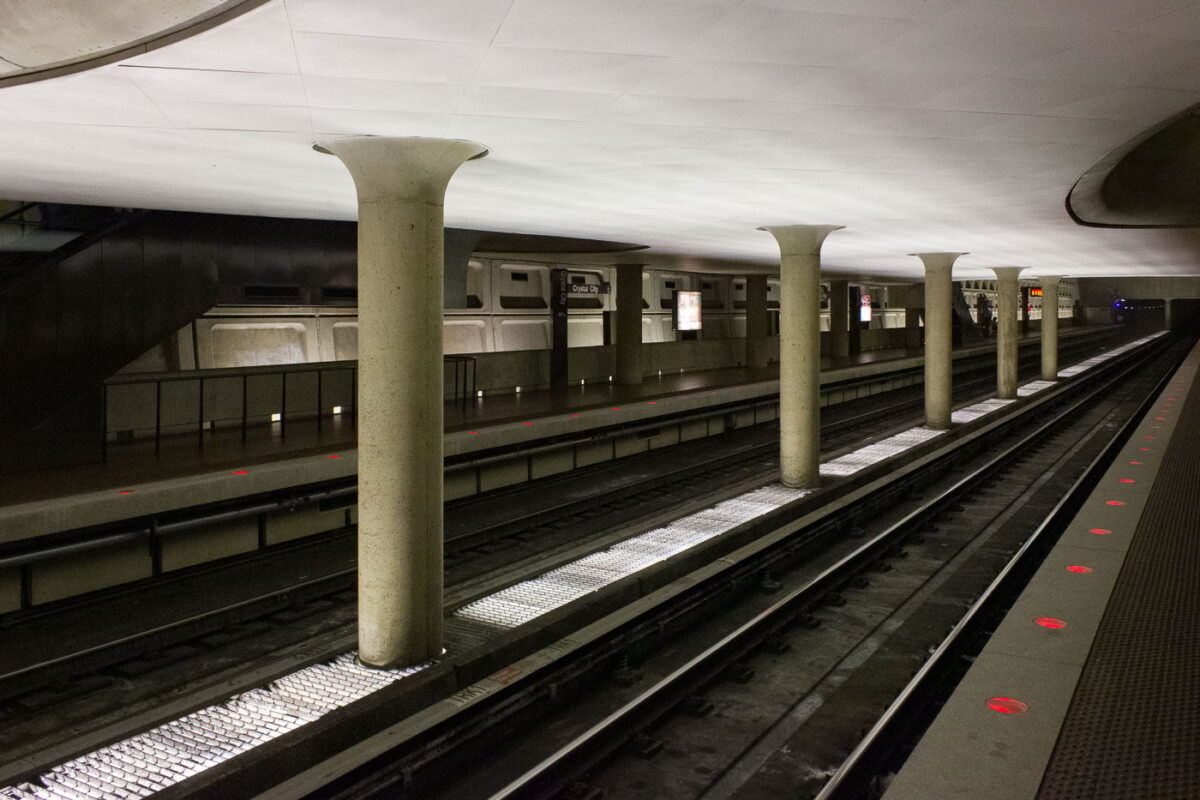
Crystal City station (Washington Metro)

Crystal City station (Washington Metro)

Crystal City is a side platformed Washington Metro station in the Crystal City neighborhood of Arlington, Virginia, United States. The station was opened on July 1, 1977, and is operated by the Washington Metropolitan Area Transit Authority (WMATA). Providing service for both the Blue and Yellow Lines, the station is located on 18th Street in between the Jefferson Davis Memorial Highway and South Bell Street. The station is also accessible from the underground network of shopping centers and restaurants extending beneath Crystal City.

This is the final indoor transfer point between the Blue and Yellow lines in the southbound direction. In inclement weather, commuters may prefer to transfer at Crystal City rather than at King Street–Old Town, which is outdoors.

The station is also served by the Metroway bus rapid transit line. Some Metroway buses terminate here rather than at Pentagon City station.
Source: en.wikipedia.org/wiki/Crystal_City_station_(Washington_Metro)

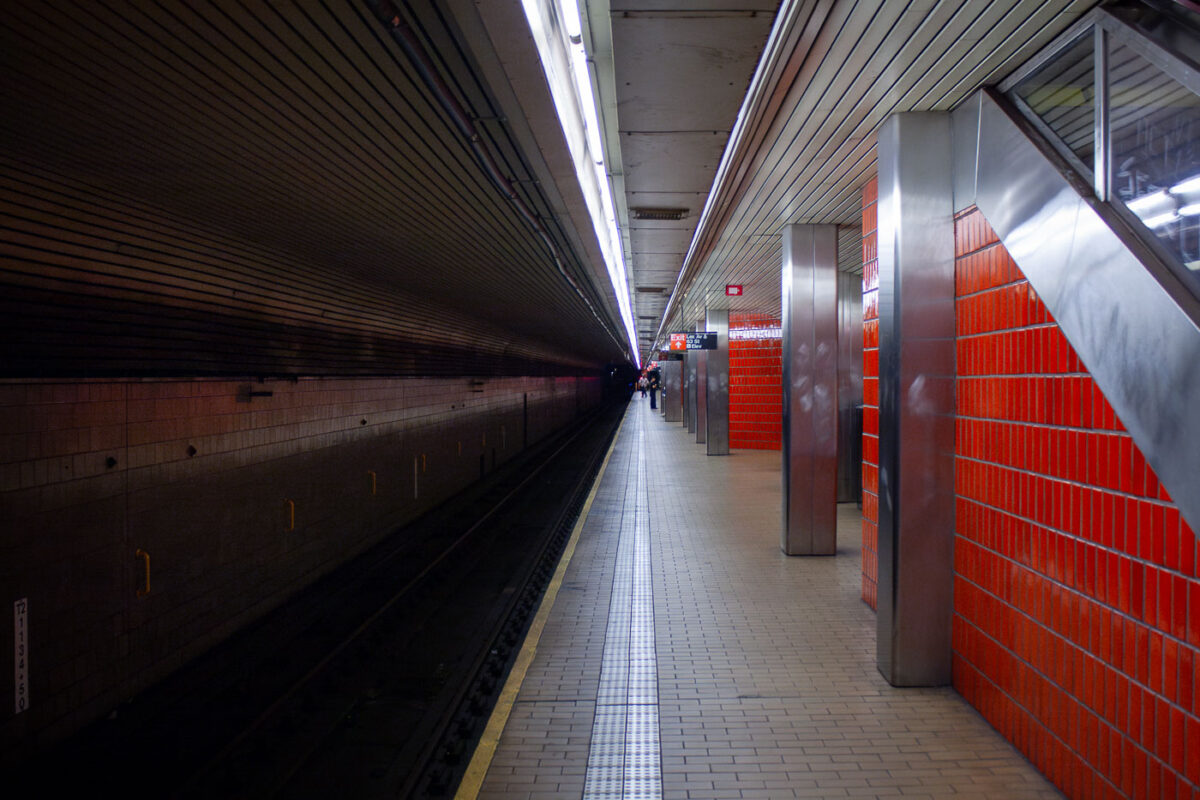
Lexington Avenue–63rd Street Subway Station – New York City

Lexington Avenue–63rd Street Subway Station – New York City

The Lexington Avenue–63rd Street station in Manhattan, part of the IND and BMT lines of the New York City Subway, is shown here in its distinctive red-tiled design. Opened in 1989 as part of the 63rd Street Tunnel project, the station serves the F and Q trains, linking the Upper East Side to Queens and the Second Avenue Subway. Its sharply linear geometry and long central platform exemplify late-20th-century transit architecture, emphasizing function and durability. The bright red glazed brick walls contrast with the metallic fixtures and fluorescent ceiling strips, creating a visual rhythm typical of New York’s underground infrastructure during the city’s major transit expansion era.

Subway train leaving in New York City

Subway train leaving in New York City

A man reads a book at a New York City subway platform in May 2005.

Loading more photos…